Backpacking Albania is still the best-value trip in Europe, but the country has changed fast. More than 12 million foreign visitors now cross the border every year — over four times the population — and it shows. Ksamil is overbuilt and under enforcement, Riviera prices in August rival Greece, the Theth road is fully paved, and the Komani ferry now takes online bookings. This guide cuts the hype and gives you a working 10-day route, real furgon fares in USD, and the hostels worth booking. Think of it as the backpacker’s cut of our full Albania travel guide.
Quick answer: backpacking Albania in 60 seconds
Plan 10 days and $45–$60 a day. Fly into Tirana, loop Shkodër → Komani Lake ferry → Theth–Valbona → back to Tirana → Berat → Gjirokastër → Sarandë, skipping Ksamil for Himarë or Dhërmi. Go in late May, June, or September. Use furgons and buses, carry Albanian lek in cash, and book the Komani ferry online before you arrive.
Three things most guides get wrong and this one gets right:
- US citizens get a full year visa-free, not 90 days.
- Ksamil is not worth the hype anymore — Himarë and Dhërmi are the honest picks.
- Riviera costs in July and August are no longer cheap. Budget by region, not country average.
Pro Tip: Walk out of Tirana International (TIA) and take the Rinas Express bus for 400 lek (about $5). It drops beside Skanderbeg Square in 30–40 minutes and runs roughly hourly, with departures timed to late arrivals. Drivers take lek, euro, or card. A taxi on the same run costs €20–€25 ($23–$29) — skip it unless you land at 3 a.m. with a group.
Is Albania cheap to backpack?
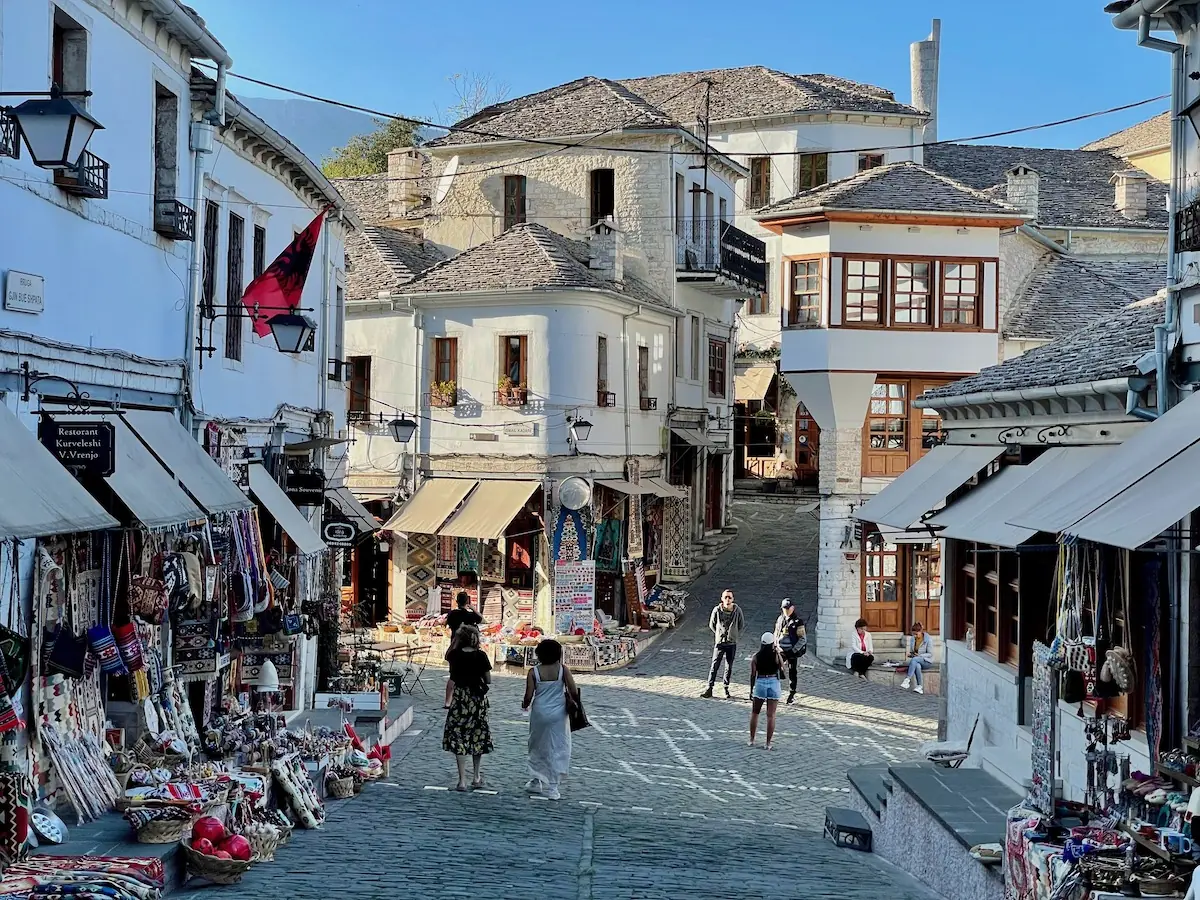
Albania is still Europe’s cheapest backpacker country outside Moldova, but the gap has narrowed sharply. Expect $45–$60 per day in Tirana, Shkodër, Berat, and Gjirokastër, and $70–$100 on the Riviera in July and August. Dorms run $12–$22, a full taverna meal is $9–$14, and a half-liter of Korça beer costs about $2.50.
Quick cost reference:
- Hostel dorm (Tirana / Shkodër / Berat): $12–$22
- Hostel dorm (Sarandë / Himarë, August): $20–$28
- Byrek from a bakery: $0.60–$1.90 (50–150 lek)
- Full taverna meal: $9–$14 inland, $16–$25 on the Riviera in peak season
- Korça beer (half-liter): about $2.50
- Espresso: $0.60–$1.50
- Bunk’Art 1 or Bunk’Art 2 ticket: 900 lek ($11) each; combined ticket about 1,600 lek ($20), valid 72 hours
- Butrint National Park entry: 1,000 lek ($12)
- Blue Eye (Syri i Kaltër) entry: 50 lek (about $0.60), plus parking
- Ksamil sunbed set (two loungers and umbrella): 1,000–3,000 lek ($12–$37); private cabanas up to €70 ($81)
- ATM withdrawal fee: 500–800 lek ($6–$10) per transaction on most machines
The sharpest price jumps have hit the Albanian Riviera. A plate of tavë kosi in Berat’s old bazaar cost me 650 lek (about $8); in Ksamil the same dish came to 1,400 lek ($17) with a cover charge nobody mentioned until the bill.
Pro Tip: Always decline dynamic currency conversion (DCC) at ATMs. When the screen asks whether you want to be charged in USD instead of lek, say no — your bank’s rate is roughly 3% better. Then minimize the number of withdrawals: Albanian ATMs add their own 500–800 lek fee per transaction, so two big withdrawals beat six small ones. Over a 10-day trip that combination saves $30–$60.
The 10-day backpacking Albania route
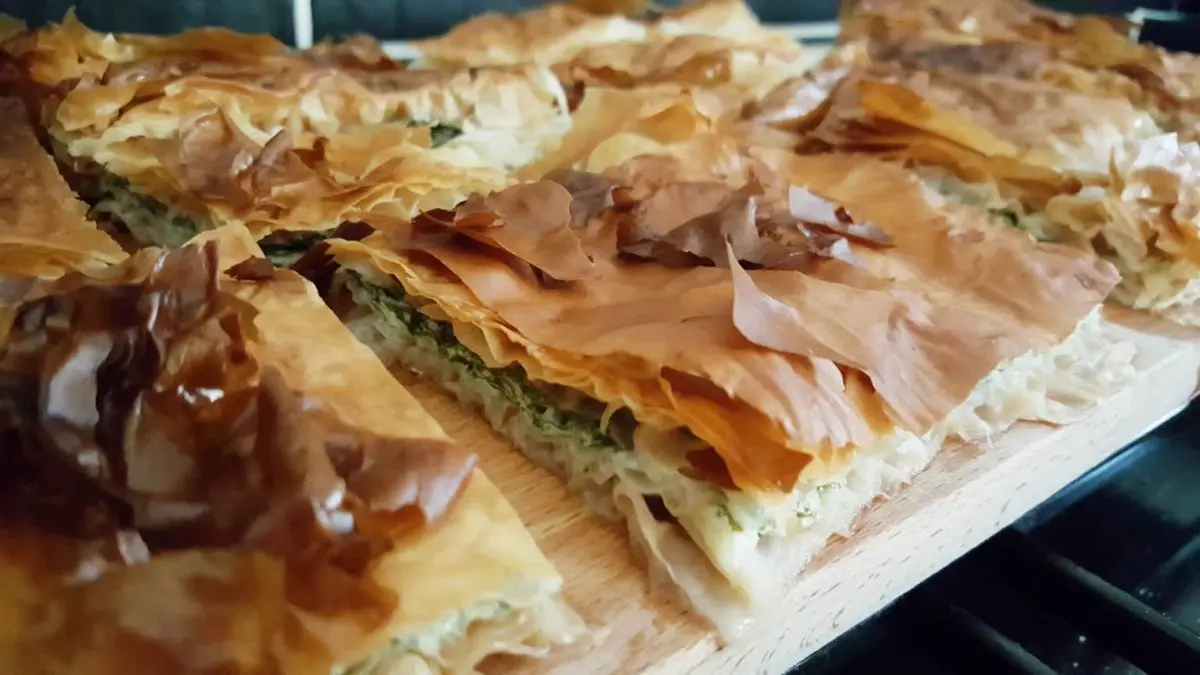
The cleanest 10-day route runs Tirana (2 nights) → Shkodër (1) → Theth (1) → hike to Valbona (1) → Komani ferry back toward Shkodër → Berat (2) → Gjirokastër (1) → Sarandë and Himarë (2). You end near the Greek border with the option to exit to Corfu by ferry or loop back to Tirana by bus in under five hours.
Day-by-day breakdown:
- Day 1 — Arrive Tirana. Walk Skanderbeg Square, Pazari i Ri, Bunk’Art 2. Sleep at Trip’n’Hostel.
- Day 2 — Tirana. Dajti Ekspres cable car in the morning, Bunk’Art 1 after, Blloku for dinner.
- Day 3 — Furgon Tirana → Shkodër (2 hours). Lake Shkodër bike ride. The Wanderers Hostel.
- Day 4 — Morning minibus Shkodër → Theth (2–2.5 hours on the paved SH21). Afternoon at the Grunas waterfall or the Blue Eye of Theth.
- Day 5 — Hike Theth to Valbona (6–8 hours). Stay at Rilindja in the Valbona valley.
- Day 6 — Valbona → Fierza → Komani ferry → Shkodër, then bus or furgon on to Berat.
- Day 7 — Berat. Mangalem and Gorica quarters, castle, Onufri icon museum.
- Day 8 — Furgon Berat → Gjirokastër via Tepelenë (about 4 hours). Castle and Zekate House.
- Day 9 — Gjirokastër → Sarandë (1.5–2 hours). Late afternoon at the Blue Eye, when the tour buses have gone.
- Day 10 — Butrint in the morning, evening bus to Himarë for one proper beach night.
Reversing the usual south-to-north flow and hitting the Alps early means you arrive at Valbona Pass in empty June light — four hikers on the ridge instead of forty. Most bloggers save the Alps for the end, which guarantees crowds.
Pro Tip: Do not try to add Korçë or Ohrid to a 10-day loop. You will spend two full days on furgons and see neither town properly. Save the east for a dedicated 14-day trip.
Getting around Albania: furgons, buses, and the Komani ferry
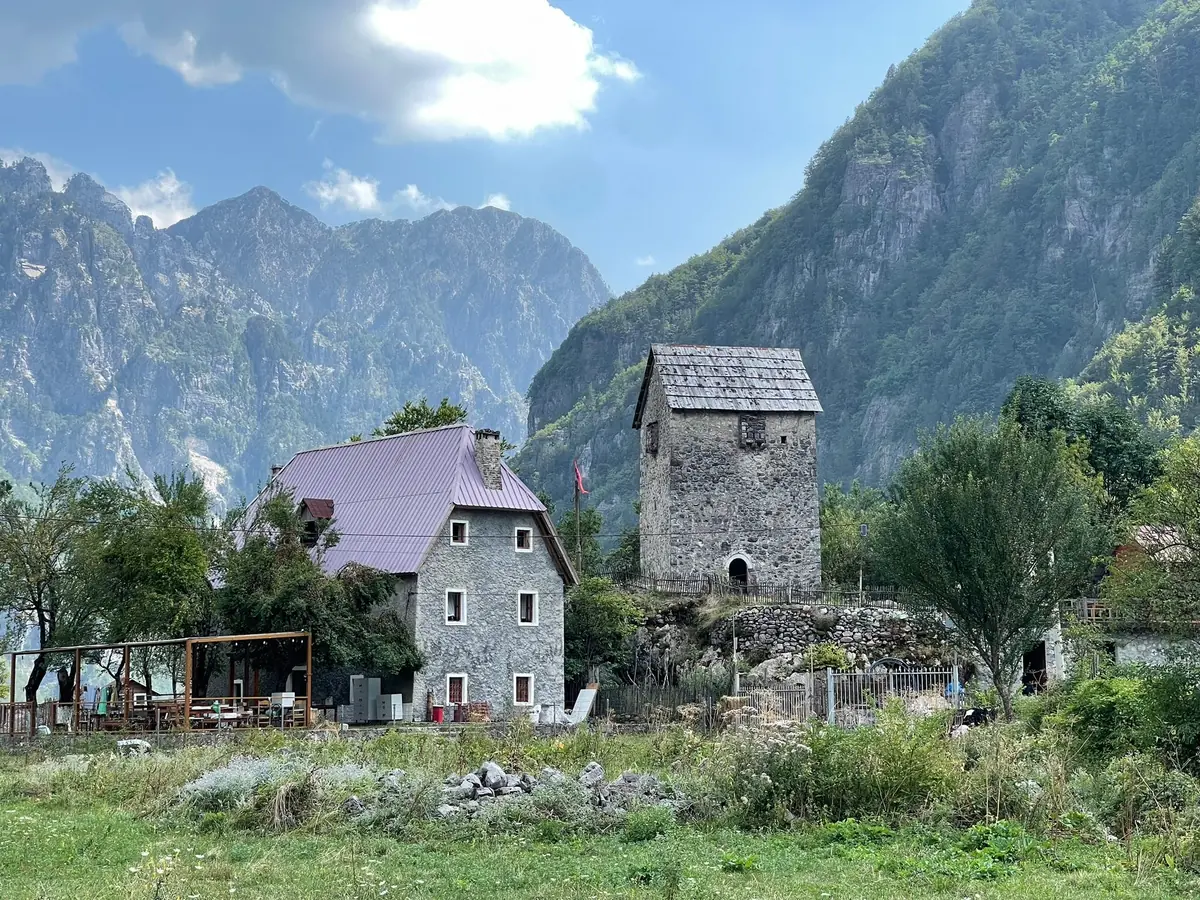
Albania has no usable passenger rail — the last scheduled services were suspended and the rebuilt Tirana–Durrës line is not expected to carry passengers for some time. You move on furgons (shared minibuses that leave when full), long-distance coaches on the main corridors, the Komani Lake ferry for the northern Alps, and Bolt rideshare inside the cities. Budget $6–$21 per intercity leg. Coaches on the big routes can now be booked online through Gjirafa Travel; furgons are still cash to the driver.
Real fares and times:
- Tirana → Shkodër: 400–500 lek / $5–$6, 2 hours, departures roughly hourly
- Tirana → Berat: 400–500 lek / $5–$6, 2–2.5 hours
- Tirana → Sarandë: 1,500–1,700 lek / $19–$21, 4h15–5h, direct coach (Tisa Travel, Olgeno Travel)
- Shkodër → Theth: 1,200 lek or €10–€15 / $15–$17, 2–2.5 hours, minibuses at 7 a.m. and 2 p.m.
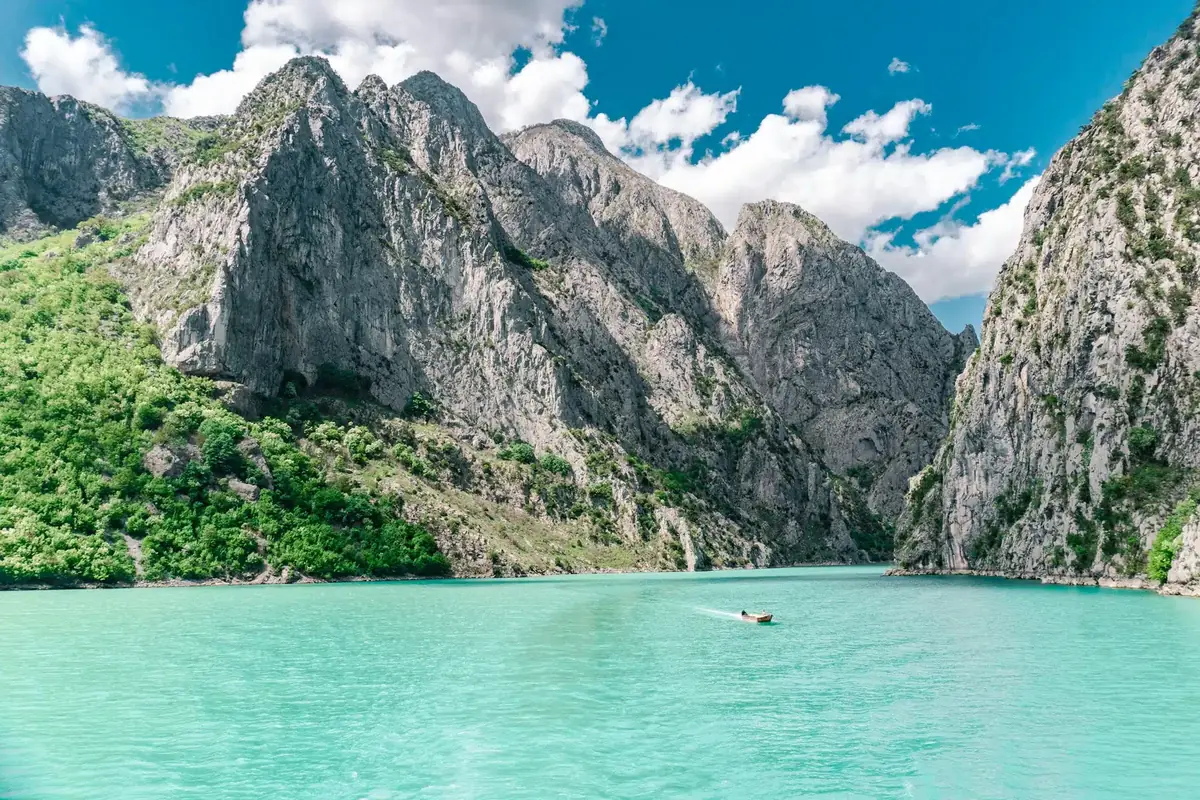
- Komani ferry (Berisha): €8.80 online / €10 cash, about $10–$12, 2.5–3 hours, departs Koman 9 a.m.
- Komani ferry (Alpin): €15–€20 / $17–$23, departs Koman 11 a.m., newer boats
- Shkodër → Koman pier transfer: about €8 / $9, leaves 6:30 a.m.
- Rinas Express (airport bus): 400 lek / $5, roughly hourly
- Tirana airport taxi: €20–€25 / $23–$29
- Bolt inside Tirana: 200–500 lek / $2.50–$6 per ride
- Sarandë → Corfu ferry: €25–€30 / $29–$35, 30 minutes by hydrofoil, passport control both sides
One detail that catches almost everyone: long-distance coaches do not leave from central Tirana. They go from the South and North Bus Terminal out near the Casa Italia outlet, roughly 25 minutes northwest of Skanderbeg Square. Get there on a 40-lek city bus toward Kamëz or pay $14–$18 for a taxi, and add 30–45 minutes of buffer in summer.
The Koman pier at 8:30 a.m. is genuine chaos — boats reshuffle passengers between Berisha, Alpin, and Rozafa as pickup trucks roll on first. Stay with your bag and ask every crew member for the boat that matches your ticket. Save your booking PDF offline; the signal at the dock is unreliable.
Furgon vs bus vs car rental vs Bolt
Four ways to move around Albania, honest trade-offs:
- Furgon — Cheapest ($5–$17 per leg). No schedule, leaves when full, cash to the driver. Best for Tirana to Shkodër, Berat, and Gjirokastër.
- Long-distance coach — Slightly pricier, runs to a posted timetable, and can be pre-booked online. Best for Tirana to Sarandë and the Riviera coast road, especially on summer weekends when seats sell out.
- Rental car — From about €25–€35/day in low season, €70–€120/day in August. Worth it only for a three-day Riviera dash (Sarandë to Vlorë loop). Skip it for the north.
- Bolt — City-only. Tirana, Durrës, and Vlorë have solid coverage; Sarandë is patchy. Cash or card in-app.
The contrarian call: do not rent a car in the north. SH21 to Theth is fully paved now, but it is a single lane in both directions with 27 hairpins on the descent from Qafa e Thores and few barriers. The minibus-plus-Komani-ferry combination delivers the same route for a quarter of the cost, with a driver who does it daily.
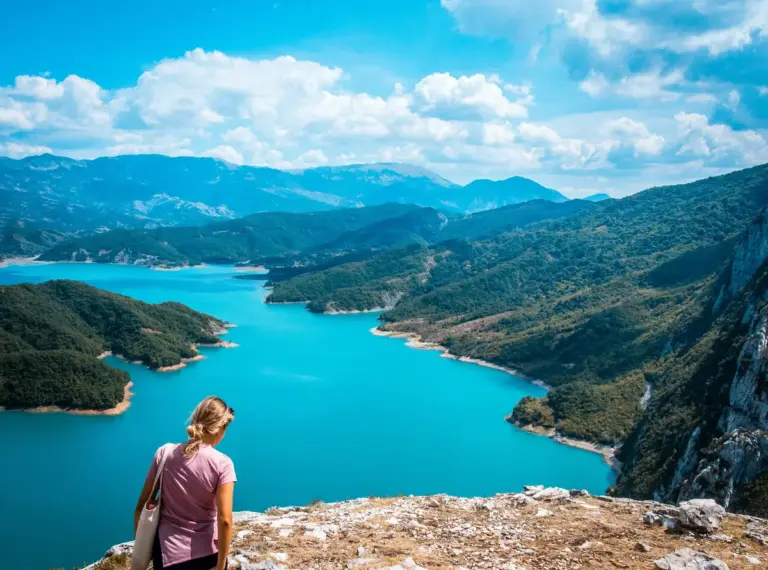
How to book the Komani Lake ferry
The Komani Lake ferry used to be the single hardest piece of logistics on this trip. It is now the easiest to get right, because the main operator sells tickets online. Four steps:
- Step 1 — Pick your boat. Berisha is the default: €8.80 online or €10 cash at the pier, departing Koman at 9 a.m. and reaching Fierza around noon, with the return leaving Fierza at 1 p.m. Alpin leaves Koman at 11 a.m. with newer boats and higher fares. Rozafa is the cheap cargo-style option on irregular days, and the small Dragobia boat runs year-round.
- Step 2 — Book ahead on the operator’s own site. Online tickets carry a discount of up to 20% over the pier price and can be paid by card or PayPal. Your Shkodër hostel can still arrange it if you prefer, and will bundle in the 6:30 a.m. transfer to Koman pier (around €8).
- Step 3 — Arrive at Koman pier by 8:30 a.m. Walk through the approach tunnel, show your PDF or voucher, find your named boat, and claim a seat on the open-air upper deck if the weather is clear.
- Step 4 — Carry cash anyway. Tickets bought at the pier, plus the onward furgon from Fierza to Valbona (about €8), are cash only. Bring small notes; nobody breaks a 5,000-lek bill happily.
The ferry season runs from roughly mid-April to early November, and dates shift year to year with water levels and demand. Check the operator’s timetable page before you lock in your Alps dates.
Pro Tip: Sit on the right-hand side of the Berisha ferry heading north. The cliffs are closer, the light is better, and you’ll get the shot of the narrow canyon where the lake bends 90 degrees.
Is Albania safe for backpackers, including solo female travelers?
Albania is one of Europe’s safer backpacker countries. It sits in the top third of the Global Peace Index — around 50th of 163 countries, well ahead of the United States at 134th — violent crime against visitors is rare, and the besa hospitality code means locals often go out of their way to help travelers. Solo female backpackers report feeling comfortable in Tirana, Shkodër, Berat, and across the Riviera, with the usual advice: Bolt over unmarked taxis, modest dress in rural villages, and watch your drink in Blloku.
What “safe” actually looks like on the ground:
- Street harassment: mild and mostly verbal. Older men stare more than younger men comment.
- Scams: almost none outside the airport taxi line and a handful of unpriced Riviera beach clubs. Ask the sunbed price before you sit down.
- Theft: petty pickpocketing in Tirana’s Pazari i Ri on Saturday mornings. Keep your wallet in a front pocket.
- Night walking: fine in Tirana (Blloku, Pazari i Ri), Shkodër old town, the Berat castle area, and central Gjirokastër.
- Drivers: aggressive inside Tirana, relaxed on the coast. Use the crosswalk at Skanderbeg Square — cars do not slow for pedestrians elsewhere.
Solo female travelers I’ve met in Tirana and Shkodër consistently say Albania feels easier than Italy or Spain. The hostel scene at Trip’n’Hostel, Milingona, and The Wanderers is social enough that nobody eats alone unless they choose to. I walked back to Milingona from Blloku at 1 a.m. on a Saturday — the only attention was a street cat.
Pro Tip: Use Bolt, not unmarked taxis, inside Tirana. Bolt rides from Blloku to Milingona or Trip’n’Hostel run 200–300 lek ($2.50–$3.70). Unmarked taxis quote tourists €8–€10 for the same trip.
When is the best time to backpack Albania?
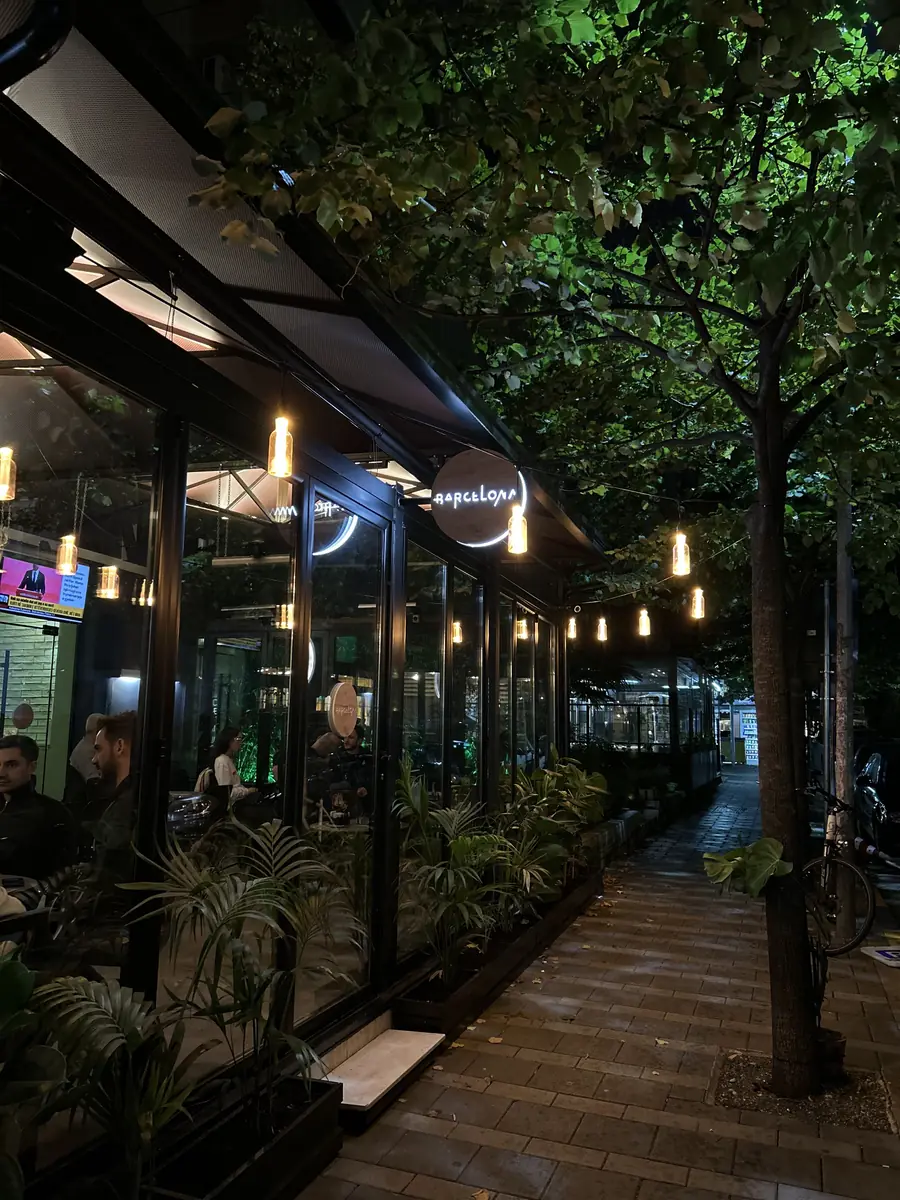
Go in late May, June, or September. Daytime temperatures sit at 70–82°F (21–28°C), the sea is warm enough to swim from mid-June, prices run 20–30% below peak, and the Theth–Valbona trail is fully open. July and August push coastal temperatures to 85–95°F (30–35°C), triple Ksamil’s prices, and fill every bed from Sarandë to Dhërmi.
Month-by-month honesty:
- April — Riviera cold, Alps trail closed, though the Komani ferry usually restarts mid-month. Skip unless you like Tirana museum weather.
- May — Second half only. Snow clears from the pass around late May. Swimming still cool.
- June — The sweet spot. Alps fully open, Riviera uncrowded, prices low.
- July — Crowds arrive. Riviera full. Inland still pleasant.
- August — Peak insanity. Ksamil at 95°F (35°C) with beach walls of sunbeds. Avoid.
- September — Almost as good as June. Sea is 77°F (25°C) through mid-month.
- October — First half fine, second half rains begin. The pass gets risky from mid-October and the ferry winds down in early November.
- November–March — Tirana and Berat only. Korçë has a small Christmas market.
The second week of June in Dhërmi is the single best calendar slot in the country — 75°F (24°C) water, €20–€25 guesthouses with balconies, three people on the beach before 10 a.m.
Where to sleep — best hostels for backpacking Albania
Book Trip’n’Hostel or Milingona in Tirana, The Wanderers in Shkodër for Alps logistics, Berat Backpackers for the mulberry garden, Rilindja in Valbona for the hike, and skip Ksamil hostels in favor of a private guesthouse in Himarë. Dorm prices average $13–$17 across the country, dropping to around $8 in Himarë outside peak and rising past $25 on the Riviera in August.
1. Trip’n’Hostel — Tirana
A two-floor house near Pazari i Ri with a garden bar that hosts family dinners twice a week. Shower pressure is weak and the Wi-Fi thins out late at night, but the social scene makes up for it. The owners run a Tirana food tour that is a genuinely good introduction to Albanian cooking, and they now operate a second, quieter property nearby if the main house is full.
- Location: Rruga Musa Maçi, near Pazari i Ri
- Cost: dorms from about €10 ($12), privates from about €15 ($17)
- Best for: First-night solo arrivals, social travelers
- Time needed: 2 nights minimum to do Tirana properly
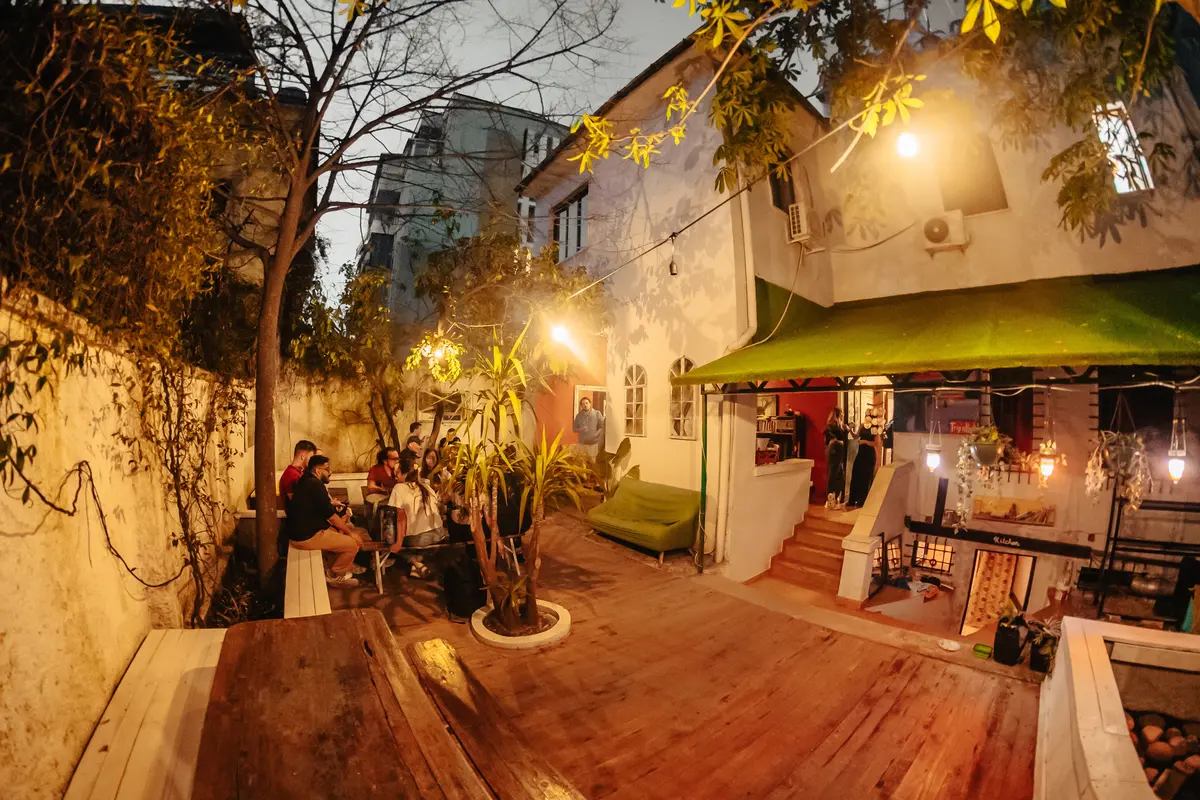
2. Milingona City Center — Tirana
Quieter than Trip’n’Hostel, cleaner bathrooms, a garden, and a bar that keeps sensible hours. The owner drew me a bus-terminal map on a napkin on my second visit and it was more useful than Google Maps — particularly now that the intercity coaches leave from the edge of the city.
- Location: about 1 km from Skanderbeg Square
- Cost: $13–$22 per dorm bed
- Best for: Solo female travelers, light sleepers
- Time needed: 2 nights
3. The Wanderers Hostel — Shkodër
The single most important hostel on this route. The Wanderers runs the Theth transfer, sorts the Komani ferry, and puts a clipboard out the night before for the early Alps run. Rooftop terrace, free breakfast, beer on tap, and staff who actually know the current road and trail conditions. In peak season it books out a week ahead.
- Location: Rruga Gjuhadol, central Shkodër
- Cost: $11–$18 per dorm bed
- Best for: Anyone doing Theth–Valbona or the Komani ferry
- Time needed: 1 night before the hike, 1 after
4. Rilindja — Valbona
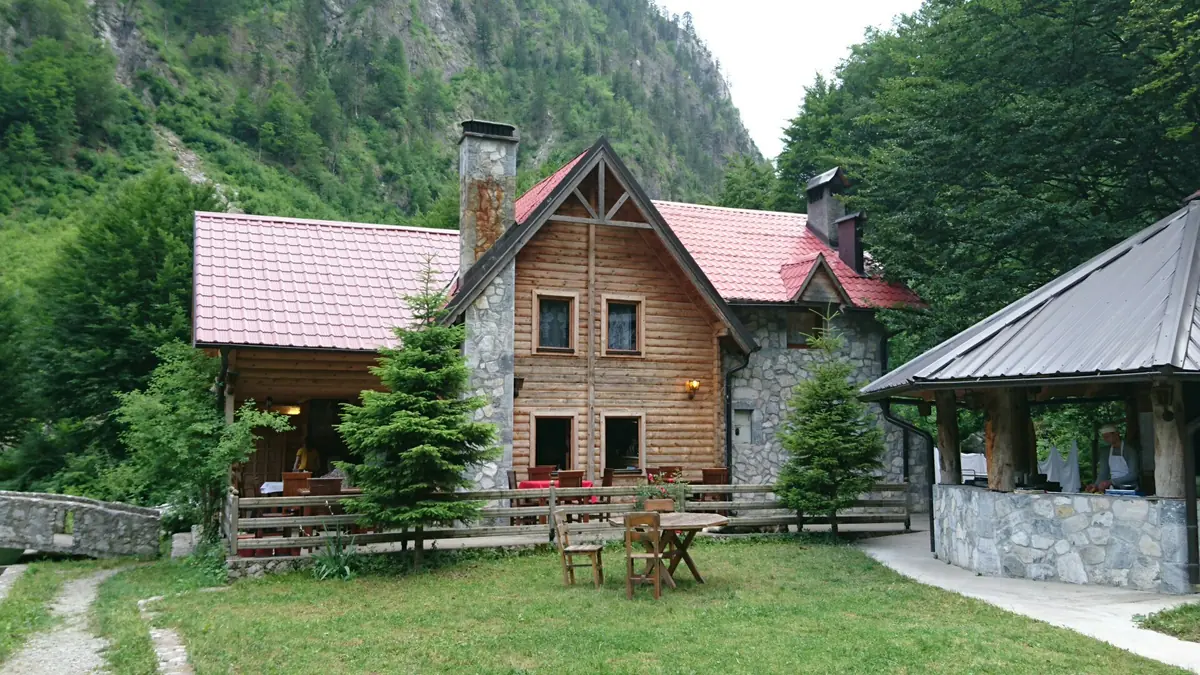
The valley’s original travelers’ base and the classic finish line of the crossing: timber-and-stone chalets, wood-stove heating, river trout at dinner, and a restaurant that functions as the valley’s noticeboard. Rooms range from dorm beds to en-suite cabins. Note that it sits a walk below the trailhead end of the path, so budget extra time or arrange a lift. Reserve two weeks ahead for July and August.
- Location: Valbona valley, roughly 9 miles (15 km) from Bajram Curri
- Cost: dorm beds from about $15; rooms €25–€45 per person with dinner
- Best for: Post-hike recovery
- Time needed: 1 night
5. Berat Backpackers — Berat
The mulberry garden, the fig tree, and the basement raki bar are the draws. Dorms are simple and the Wi-Fi is fine. The owner runs an evening walk up to the castle that beats any paid tour. Closed in the depths of winter, so check dates outside the season.
- Location: Gorica quarter, across the river from Mangalem
- Cost: $11–$18 per dorm bed
- Best for: Budget travelers, raki drinkers
- Time needed: 2 nights
6. A crash pad in Sarandë
Sarandë‘s hostels are cheap, central, and functional rather than social — fine for one night before Butrint or the Corfu ferry, which leaves from the port in the middle of town. Beds start around $14. If you want an actual beach experience, spend the money on a private guesthouse room in Himarë instead, where dorm rates start near $8 and rooms are still reasonable outside August.
- Location: central Sarandë, within 10 minutes of the ferry pier
- Cost: $8–$18 per dorm bed
- Best for: One-night stops before Butrint or Corfu
- Time needed: 1 night
Daily budget breakdown by traveler type
A strict shoestring backpacker survives on $40 a day in Albania. A comfortable backpacker using dorms, public transport, and a mix of tavernas and self-cooked meals lands at $55–$60. A couple on a shoestring sharing private rooms averages $90–$100 combined. Add $20–$35 per person per day on the Riviera in July and August.
Daily breakdown across three traveler profiles (all in USD):
- Shoestring solo ($40/day)
- Dorm bed: $13
- Food: $14 (byrek breakfast, supermarket lunch, cheap taverna dinner)
- Transport: $6 (furgon costs averaged over 10 days)
- Activities: $5
- Beer: $2
- Comfortable solo ($58/day)
- Dorm bed: $18
- Food: $22 (bakery breakfast, sit-down lunch, taverna dinner)
- Transport: $8
- Activities: $7 (one museum or site)
- Drinks: $3
- Couple on a shoestring ($95/day combined)
- Private guesthouse room: $42
- Food for two: $36
- Transport for two: $12
- Activities for two: $5
The Riviera surcharge is real and consistent: expect to add $20–$35 per person per day in July and August for inflated food prices, sunbed fees, and the 20–40% accommodation markup from Sarandë to Dhërmi.
Stacking both Bunk’Arts and a Butrint into the same week cost me 2,600 lek, about $32 — the hidden “culture tax” on back-to-back sightseeing days that nobody else in the hostel had budgeted for. Ticket prices at the headline sites have climbed faster than food or beds.
The Theth to Valbona hike
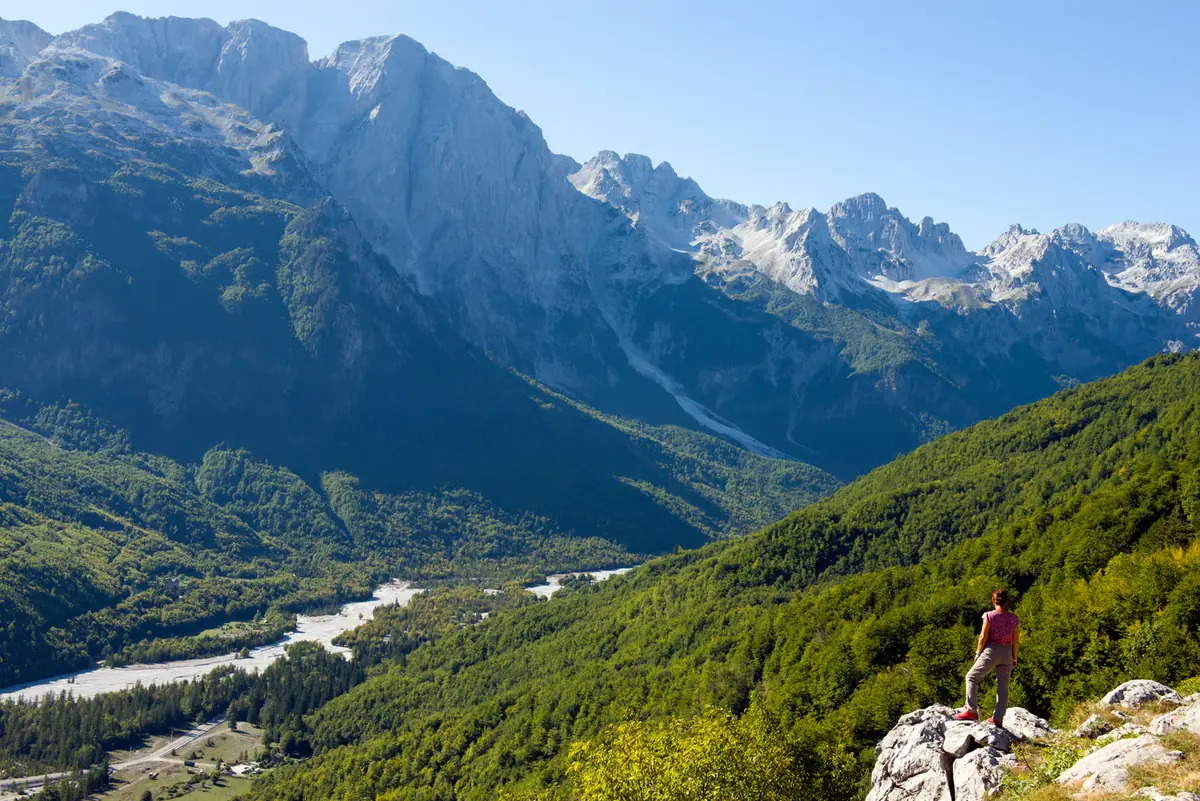
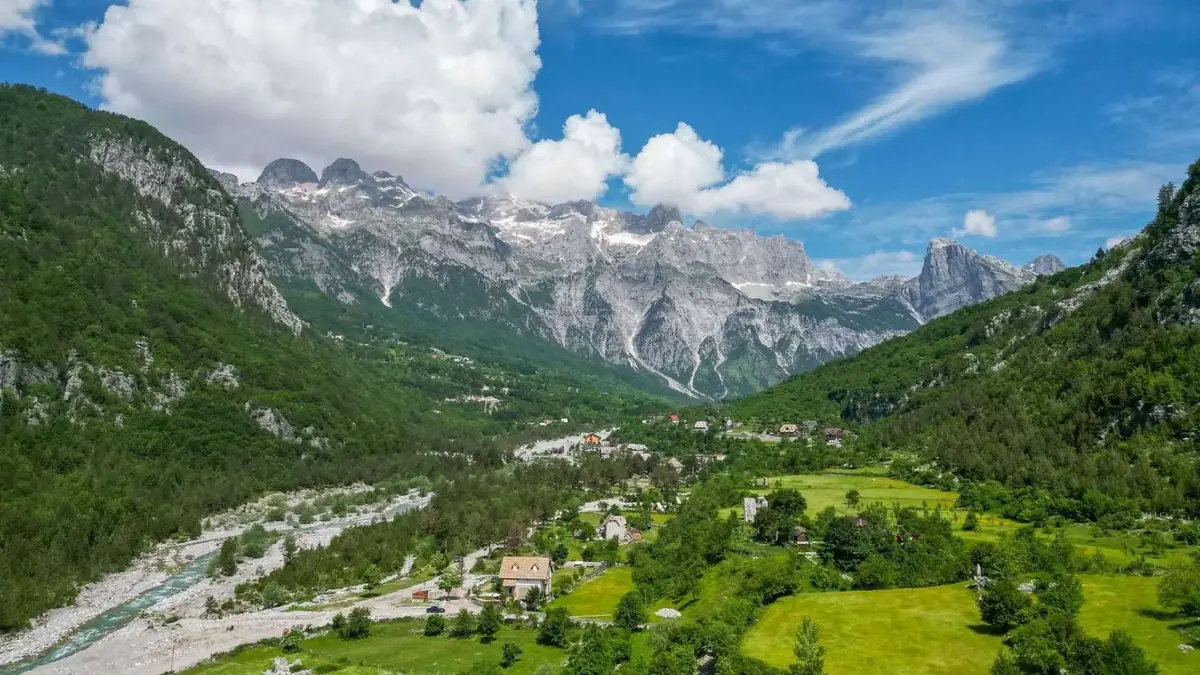
The Theth–Valbona traverse runs about 10 miles (16 km) with roughly 3,850 feet (1,175 m) of climbing, takes 6–8 hours, and tops out at Valbona Pass at 5,889 feet (1,795 m). The trail is waymarked with red-and-white blazes and is safely hikeable from about mid-June through mid-October. Start early from Theth, finish in the Valbona valley, and return toward Shkodër on the Komani ferry the next morning.
Trail facts:
- Distance: about 10 miles (16 km), trailhead to trailhead
- Elevation gain: roughly 3,850 feet (1,175 m)
- Elevation loss into Valbona: about 3,600 feet (1,100 m)
- High point: Valbona Pass, 5,889 feet (1,795 m)
- Duration: 6–8 hours including breaks
- Trail markings: red-white-red horizontal blazes painted on rocks and trees
- Season: mid-June to mid-October (snow closes the pass otherwise)
- Difficulty: moderate; the descent to Valbona is steep on loose scree
How the day actually runs:
- 7:00 a.m. — Breakfast at your Theth guesthouse (eggs, goat cheese, bread, coffee).
- 7:30 a.m. — Start walking up-valley past the church. The first hour climbs through beech forest.
- 9:00 a.m. — Break at the first spring. Refill water.
- 11:30 a.m. — Tree line opens. The rocky push to the saddle begins.
- 12:30–1:00 p.m. — Reach Valbona Pass. Someone is usually selling blueberry juice or coffee from a cooler for 300–400 lek ($3.70–$5) — the only thing between you and the long descent.
- 2:30 p.m. — Past the spring at Simoni’s café, into the switchbacks, then out onto the riverbed track.
- 3:30–4:30 p.m. — Arrive at your Valbona guesthouse, shower, dinner around 7 p.m.
Pro Tip: Most Shkodër hostels run a luggage service — a few euros a day to store your big pack, plus around €10 to send it around by road via Bajram Curri. Hike with a day pack. Your knees will thank you on the scree descent.
The trail is well-marked, but fog rolls in above the tree line in early mornings. If you can see only two blazes ahead, stop and wait 15 minutes for the mist to lift. Do not bushwhack, and do not attempt the pass before the snow has gone — there are fatalities most years from people who tried in May. Check that your travel insurance covers mountain hiking before you leave home.
The Albanian Riviera — which beach town actually wins?
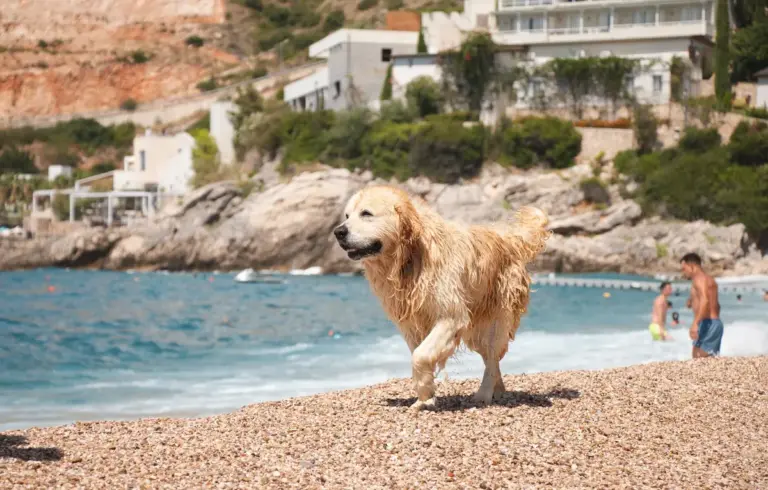
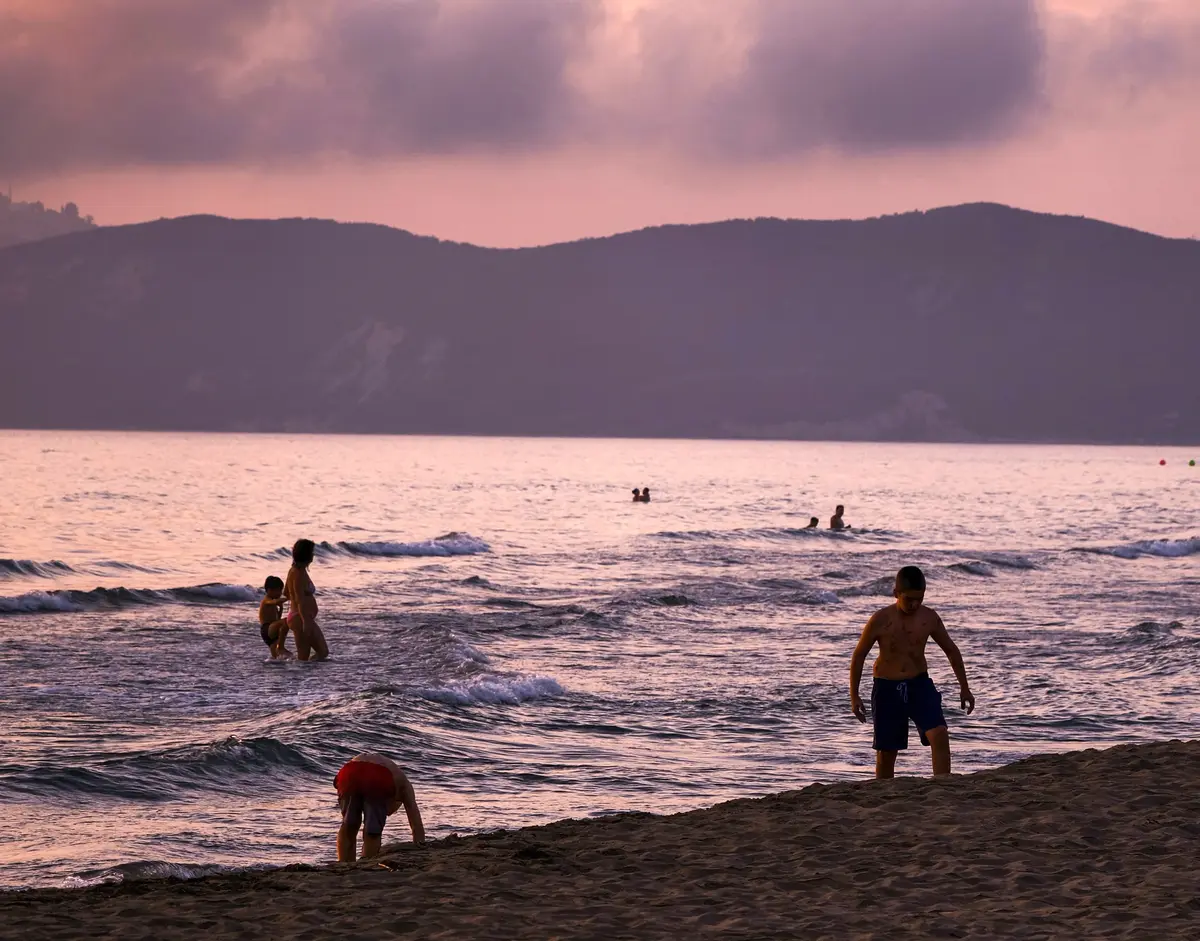
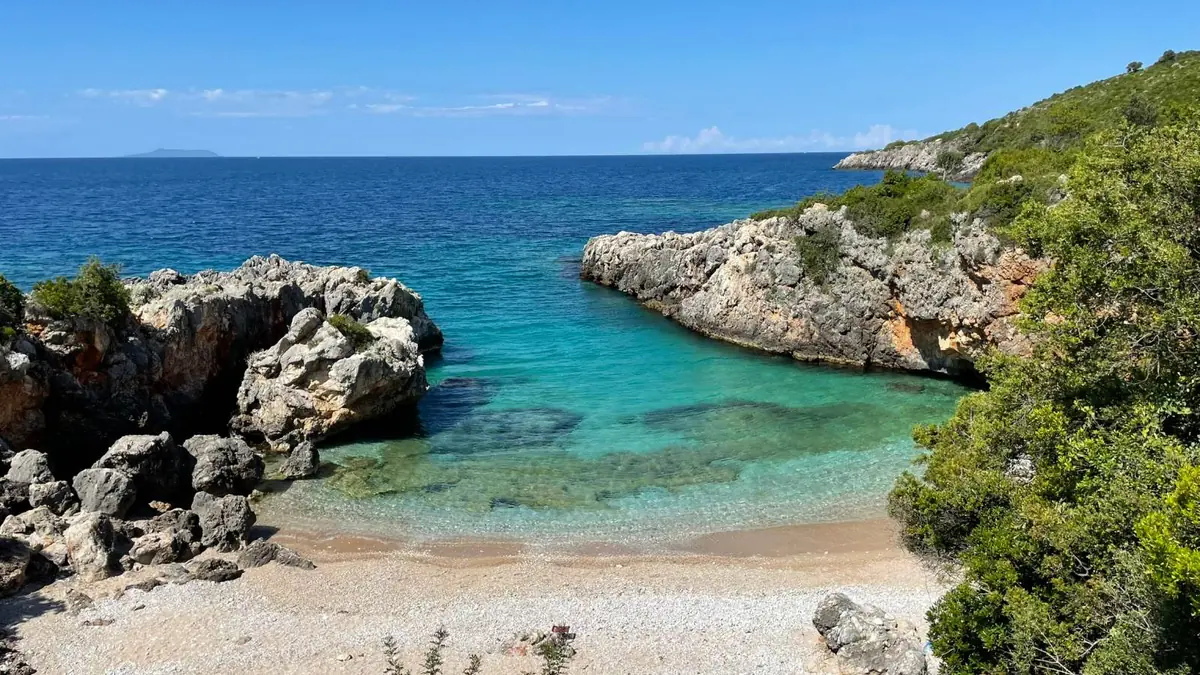
Skip Ksamil. The so-called Maldives of Europe is over-developed, loud, and largely privatized, even as authorities clear illegal piers and floating platforms and enforce rules that reserve public stretches of sand and a free strip along the waterline. Sunbed sets run 1,000–3,000 lek ($12–$37), premium cabanas reach €70, and the beaches disappear under loungers by 10 a.m. Head to Himarë for the best balance of beach and town, Dhërmi for the best water, Borsh for the longest quiet stretch of sand, and Gjipe for the hike-in payoff.
Riviera town comparison:
- Ksamil — Crowd: extreme. Water: good. Food: tourist-priced. Budget: high. Verdict: skip, or come at 8 a.m. in shoulder season.
- Himarë — Crowd: medium. Water: excellent. Food: honest tavernas. Budget: medium; Spile beach sets run 1,000–1,500 lek. Verdict: the best all-rounder.
- Dhërmi — Crowd: low-medium. Water: best in the country. Food: thin. Budget: medium to high in August. Verdict: go for the beach, not the food.
- Borsh — Crowd: very low. Water: good. Food: basic. Budget: low. Verdict: for introverts.
- Gjipe — Crowd: low. Water: great. Food: beach bar only. Budget: low. Verdict: day trip, no real accommodation.
- Porto Palermo — Crowd: very low. Water: excellent. Food: none on site. Budget: minimal. Verdict: half-day stop with the castle.
At Gjipe I paid 400 lek ($5) for a beer served from a chest freezer that predates the end of communism. The whole beach was 40 people — no sunbed mafia, no speakers, no wristbands. The 30-minute walk in from the main road keeps it that way.
Pro Tip: Prices on the Riviera are negotiable outside peak. In June, September, or on a July weekday you can usually talk 20–30% off a sunbed set. On an August weekend there is zero flex — pay the asking price or someone else will. And you can always lay a towel free on the public sections of any beach.
Must-try Albanian food (and where to actually eat it)
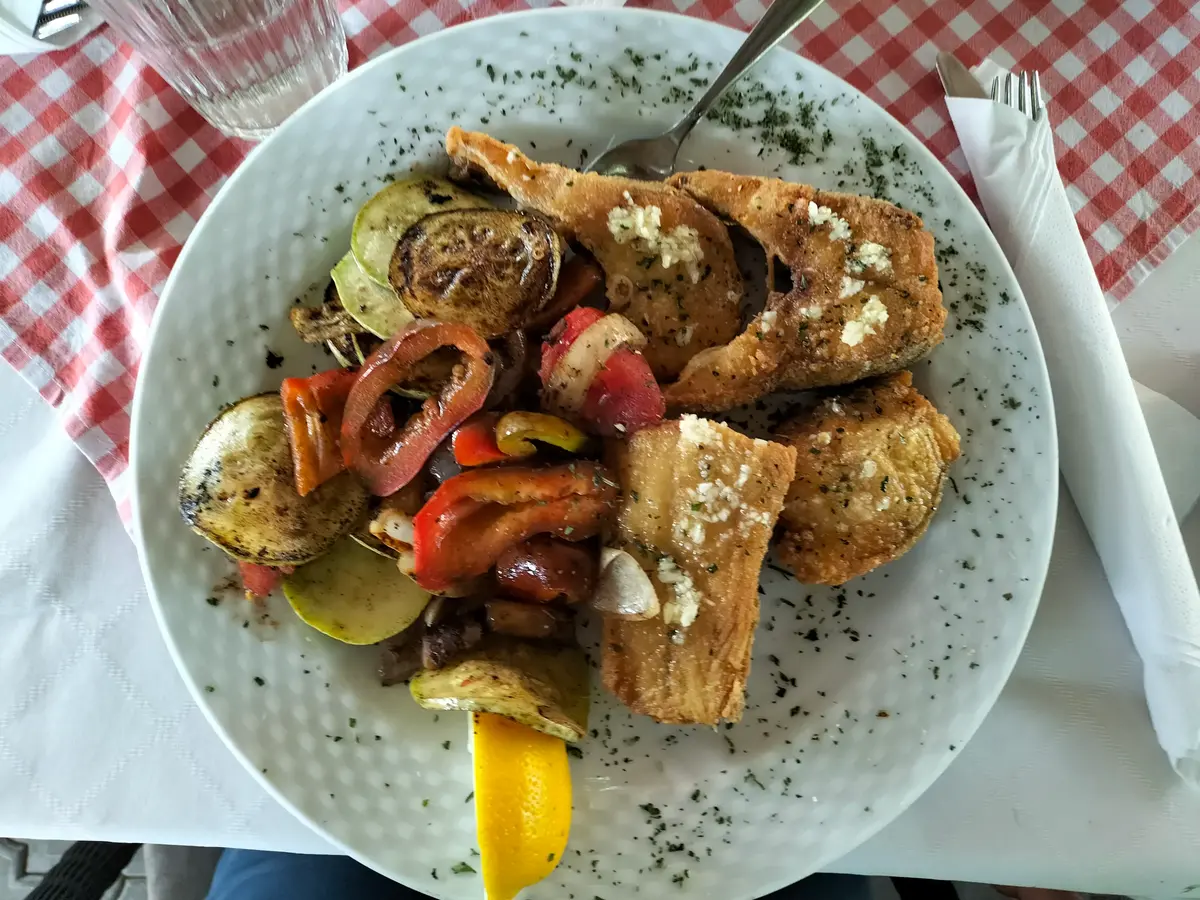
Eat byrek every morning from a bakery for under $2, order tavë kosi (baked lamb in yogurt) in Berat, try qifqi (rice-herb balls) in Gjirokastër, and always finish with a shot of raki. A full taverna meal runs $9–$14 outside the Riviera and $16–$25 in peak-season coastal towns.
The five dishes to order and where:
- Byrek — Layered phyllo pie with spinach, cheese, or ground meat. Any corner bakery. 50–150 lek.
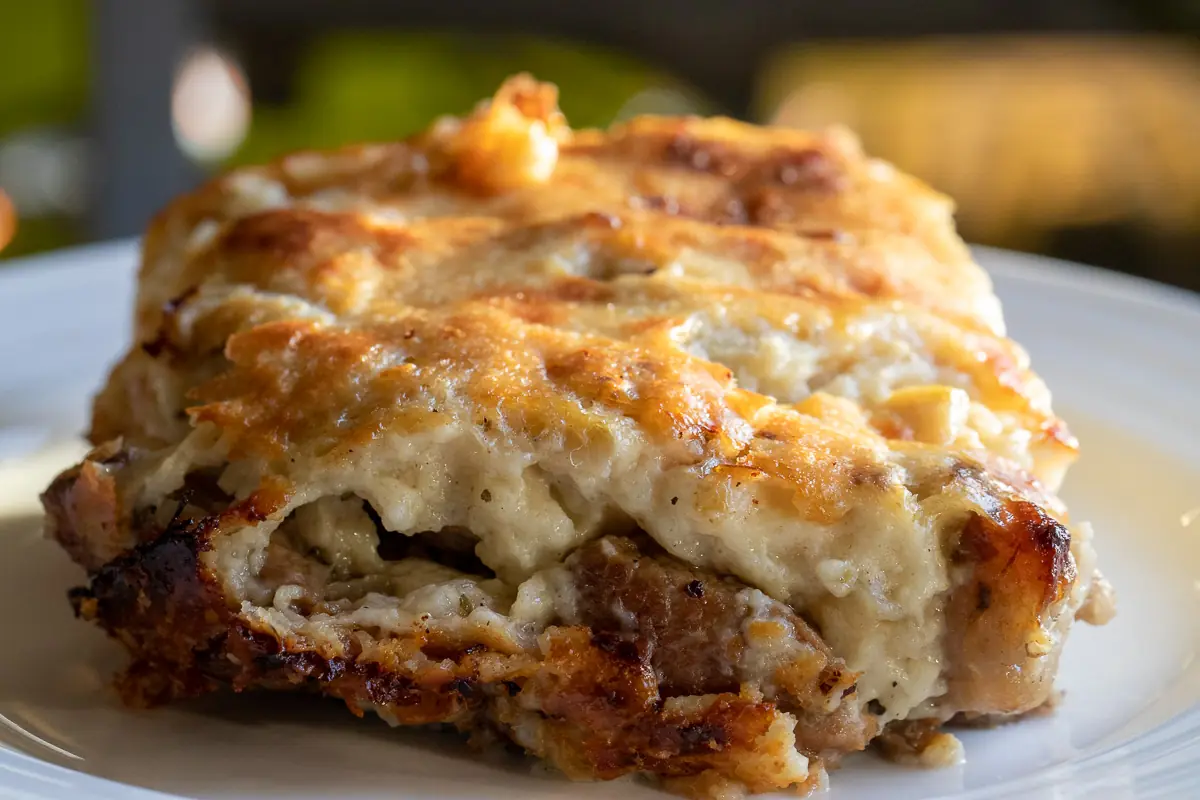
- Tavë kosi — Baked lamb with yogurt and rice. Order it at Onufri or Mangalemi in Berat. 650–1,100 lek.
- Qifqi — Fried rice and herb balls, a Gjirokastër specialty. Kujtimi near the bazaar does the canonical version. 300–600 lek.
- Fërgesë — Peppers, tomatoes, and cottage cheese baked in a clay pot. Everywhere, but best at Oda in Tirana. 400–800 lek.
- Raki — Clear grape or plum brandy, 40–50% ABV. Always offered by hosts. Around 100–200 lek a shot in tavernas, “on the house” at family meals.
In Gjirokastër a grandmother at Kujtimi served qifqi with a side of homemade raki “on the house.” The house shot is never optional — accept, sip slowly, and leave a 100-lek tip even though nobody asked for one. That is how besa works in practice.
For a benchmark splurge, take a furgon out to Mrizi i Zanave in Fishtë, about an hour north of Shkodër. Slow-food pioneer, farm-to-table, a multi-course lunch for around $30. Still one of the two or three best meals in the country, and worth booking ahead.
Cultural etiquette and the mistakes backpackers make
Older and rural Albanians often nod for “no” and shake their head for “yes” — the reverse of most cultures — which matters at furgon stops, market stalls, and family dinners. Younger city Albanians mostly use the international gestures, so read the room rather than the rulebook. Besa means hosts will refuse payment for small kindnesses; accept, then leave a tip. Dress modestly at Bektashi tekkes and Orthodox churches, never refuse offered raki outright, and tip around 10% in restaurants.
The five mistakes that mark you as a new arrival:
- Shaking your head when you mean yes in a village. Locals will take away your plate, walk away from the furgon, or close the market stall.
- Saying “Greek” for anything Orthodox. Albania is the world headquarters of Bektashi Sufism and has its own layered religious history.
- Paying at a family meal. Leave cash on the table when you go, never hand it over mid-meal.
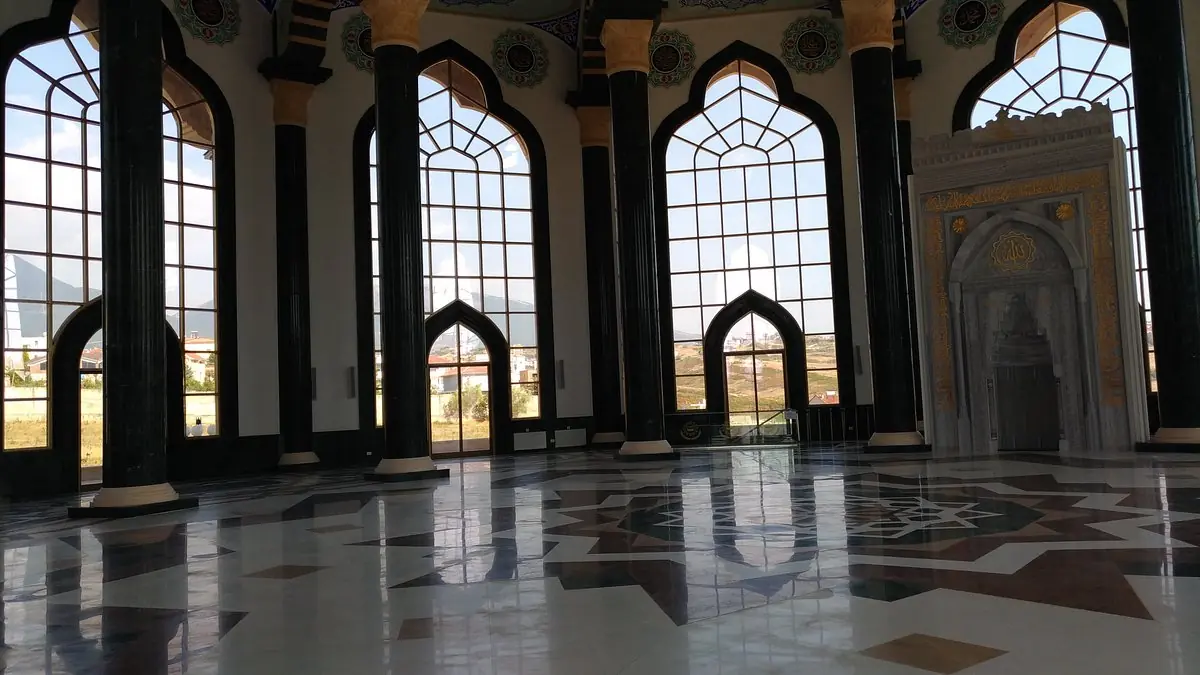
- Wearing shorts at a Bektashi tekke. Long trousers or a wrap, shoulders covered.
- Refusing raki outright. Accept, sip, leave half if you must — but do not wave it away.
I nodded “yes” to a second helping in Theth; the grandmother took the plate away. Shake your head to confirm. It takes three meals to stop feeling wrong, and by the fourth you’ll do it naturally.
Do you need a visa for Albania?
US citizens get a full year visa-free in Albania — not 90 days, despite what most guides say. Canadians, Brits, Australians, and EU passport holders get 90 days visa-free in any 180-day window. Land borders at Hani i Hotit (Montenegro), Morina (Kosovo), Qafë Thanë (North Macedonia), and Kakavijë (Greece) are routine. Kakavijë backs up on summer weekends.
Visa quick facts:
- US citizens: up to 365 days visa-free without a residence permit — one of the most generous allowances in Europe
- UK, Canada, Australia, EU: 90 days in any 180-day period
- Passport validity: at least 3 months beyond your planned departure
- Entry record: increasingly electronic, with e-gates now in use at Tirana airport, so you may not get a stamp
- Overstaying: fines from €100 to €500 and a possible multi-year entry ban — track your own dates
- Re-entry on the US exemption: plan to leave Albania for 90 days before restarting the one-year clock
Border crossings ranked by speed:
- Hani i Hotit (from Ulcinj, Montenegro) — fastest, 5–15 min, open 24 hours
- Morina (from Prizren, Kosovo) — fast, 10–20 min, open 24 hours
- Qafë Thanë (from Ohrid, North Macedonia) — moderate, 15–30 min
- Kakavijë (from Ioannina, Greece) — slowest, 30–90 min on summer weekends
- Muriqan (from Shkodër to Montenegro) — quiet alternative to Hani i Hotit
At Hani i Hotit the guard took 30 seconds, stamped nothing, and waved me through. The electronic record is what counts — do not panic if you get no stamp, but do note your entry date yourself.
Money, cards, and cash in Albania
Albania runs on cash, but less absolutely than it used to. Card acceptance in cities has jumped since a law required registered accommodation businesses and beach operators to install card terminals, and the main ferry and coach operators now sell tickets online. Furgons, village guesthouses, sunbed operators, and small tavernas are still cash only.
What to know before you land:
- Currency: the lek (ALL). Roughly 81 lek to the dollar and 94 to the euro, so 1,000 lek is about $12.
- ATMs: nearly all charge 500–800 lek ($6–$10) per withdrawal on foreign cards. Withdraw large amounts, rarely.
- Exchange offices beat banks. Independent bureaus in city centers typically take under 1%; banks and hotels take far more. Skip airport exchange entirely.
- Euros are tolerated, not welcome. Coastal menus quote them at a rate roughly 5% worse than the real one.
- No ATMs in Theth or Valbona. Carry at least $120 in lek before you head into the Alps.
- Old lek confusion: some older people quote prices “in old lek,” ten times the real figure. If a coffee sounds like 1,500 lek, it is 150.
I ran out of cash in Theth on night two. The guesthouse took euros at a rate about 5% below the real one and I lost the price of a dinner on the spread. Carry more lek than you think you need before leaving Shkodër.
Packing essentials for backpacking Albania
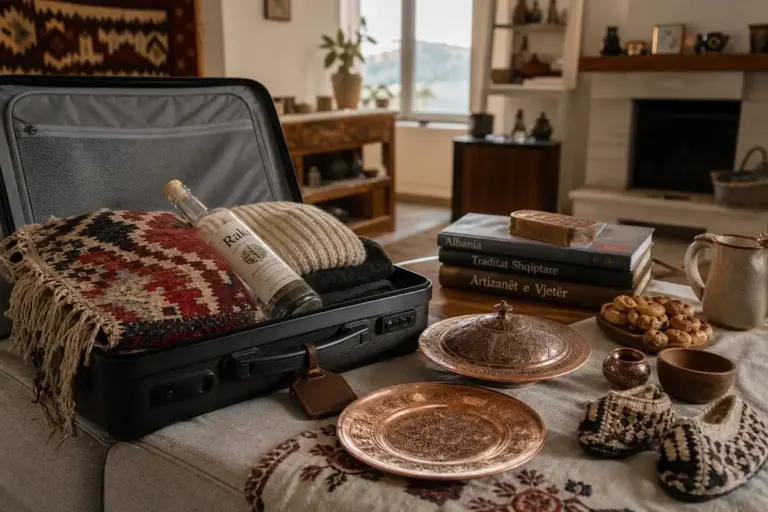
Pack for mountains and beach in one bag. A light down jacket for Valbona Pass mornings (40°F / 4°C even in June), trail shoes with grip for the scree descent, a quick-dry towel, a reef-safe swimsuit, and a power bank for Theth, where guesthouse electricity can be intermittent.
The essential 10:
- Light down or synthetic jacket (packable) — pass mornings
- Trail shoes or lightweight hikers with real tread — Theth–Valbona scree
- Quick-dry towel — hostels charge for rental
- Swimsuit and reef-safe sunscreen — Riviera
- 10,000 mAh power bank — Theth power cuts
- Universal adapter (Type C or F plug, 230V)
- Physical Visa or Mastercard plus a backup ATM card
- At least $120 worth of lek in cash before the Alps
- A local data plan: a Vodafone tourist pack (about 2,300 lek / $28 for 40 GB, or 2,700–2,900 lek / $33–$36 for 100 GB) or a pre-installed eSIM
- Small padlock for hostel lockers
Pro Tip: If you want data the second you land, buy an eSIM before you fly and skip the airport counter. If you are heading into the Alps, buy a physical Vodafone SIM instead — its coverage on the Theth–Valbona route is the best of the local networks. Signal drops at the pass itself and returns in the Valbona valley.
Backpacking Albania in 10 days costs $450–$600 if you move fast, skip Ksamil, and travel in shoulder season. Book Trip’n’Hostel in Tirana, The Wanderers in Shkodër, and Rilindja in Valbona. Take the Berisha ferry across Komani Lake, hike Theth–Valbona on the red-and-white blazes, and end with three nights in Himarë instead of fighting for a sunbed in Ksamil.
Five honest calls to save you money and regret:
- Go in June or September, not July or August.
- Skip Ksamil; go to Himarë or Dhërmi.
- Rent no car in the north; minibuses plus the Komani ferry are cheaper and safer.
- Carry at least $120 in lek before any trip to Theth or Valbona, and withdraw it in one go to dodge ATM fees.
- In the villages, do not shake your head when you mean no — there, that means yes.
My 11-day trip, including the Corfu ferry out, totaled $558 with two splurge meals and one night in a private Himarë guesthouse. The hostels are social enough that you will not eat alone unless you want to. The country is still the best backpacker value in Europe — just not as cheap as it used to be, and not as quiet.
What’s the one part of your Albania trip you’d defend against this guide — Ksamil, a rental car in the north, or the July-August date range? Tell me in the comments and make your case.