Planning a road trip from Montenegro to Albania sounds romantic until you hit a two-hour border queue at 11 AM in peak season. This guide cuts straight to the logistics: border crossings, bus terminals that have quietly moved, rental paperwork, and currency traps that have gotten more expensive, not less. Read this before you leave so you can actually enjoy the ride.
The hard truth about Balkan border crossings
Montenegro and Albania are not part of the Schengen Zone, and neither is an EU member state. Both are candidate countries in active accession talks, with Montenegro the furthest along and targeting membership before the end of the decade, but nothing about that changes what happens at the barrier today. Full passport control, vehicle checks, and separate customs procedures still apply in both directions.
Unlike crossing from France into Germany, you will stop, hand over documents, and wait. The good news is that with the right crossing and the right timing, the whole process takes under 30 minutes.
The bad news is that if you pick the wrong checkpoint on a Saturday afternoon in July, you lose half your day.
One point of confusion worth clearing up: the EU’s Entry/Exit System, which registers biometric data for non-EU travelers, does not apply at the Montenegro–Albania border. It applies when you enter the Schengen Area, which in this region means Croatia, Slovenia, or Greece. If your trip starts in Dubrovnik, you will meet EES on the way in. The Balkan legs south of Croatia remain old-fashioned stamp-and-go.
Passports, stamps, and how long you can stay
US passport holders need no visa for either country, but the two clocks run completely separately and one of them is unusually generous.
Montenegro allows 90 days within any rolling 180-day period. Albania allows US citizens up to 365 days visa-free, one of the most permissive policies in Europe. Neither allowance touches your Schengen days, so a Balkan loop preserves your Schengen budget for Italy, Greece, or Croatia later in the trip.
Carry a passport that stays valid for at least three months beyond your entry date, and expect an entry stamp on both sides. Keep the stamps legible: if you leave Albania and come back within the same trip, the dates are the only proof of your count.
The 4 border crossings: which one is right for you?
The best Montenegro to Albania crossing depends entirely on your route and whether you prioritize speed, scenery, or coastal access. There are four official road crossings between the two nations, and each serves a completely different traveler profile. Most guides still list only three, which is how people end up queuing at the coast when a faster inland option sits 30 minutes away.
| Border crossing | Best route | Traffic type | Peak wait | Best for |
| Sukobin – Muriqan | Ulcinj to Shkodër | Coastal / tourist | 30–90 min | Coastal itineraries |
| Bozaj – Hani i Hotit | Podgorica to Shkodër | Inland / commercial | 15–60 min | Speed, capital transit, buses |
| Cijevna Zatrijebačka – Grabom | Podgorica to Gusinje / Plav | Local / very light | Under 15 min | Prokletije access, avoiding queues |
| Grnčar – Vermosh | Plav to Albanian Alps | Alpine / seasonal | Under 15 min | Road trips, motorcyclists |
Sukobin–Muriqan: the coastal bottleneck
The Sukobin–Muriqan crossing is the most popular gateway for travelers coming down the Montenegrin coast, and it is the most punishing in summer. This is a joint border crossing, meaning Montenegrin and Albanian officers process you under one roof in a single stop rather than at two separate posts.
The design was intended to speed things up, and off-season it works beautifully, clearing in five to fifteen minutes. But the volume of tourist traffic funneling down from Kotor and Budva overwhelms the infrastructure from late June through August. Expect 30 to 90 minutes at peak hours, roughly 10 AM to 2 PM, and longer on summer weekends.
If you are departing from Kotor, leaving by 6:00 AM is not an overreaction. It is the most reliable way to beat the coastal gridlock.
Pro Tip: The crossing sits just south of Ulcinj. If you are staying in Budva, factor in roughly 50 miles (80 km) of coastal driving before you even reach the queue. There is also no border insurance booth here, so arrive with your paperwork already sorted.
Bozaj–Hani i Hotit: the inland fast lane
The Bozaj crossing sits about 7.5 miles (12 km) south of Podgorica and connects directly to Shkodër. It runs 24 hours a day, seven days a week, and carries the bulk of international bus traffic and freight between the two countries.
Because of that, the infrastructure is built for throughput. Wait times typically sit at 15 to 45 minutes and rarely exceed an hour even at peak periods. The scenic trade-off is real: the Albanian side traces the eastern shore of Lake Skadar with long views toward the Prokletije range, but it is nothing like the alpine or coastal alternatives.
Think of this as your highway: utilitarian, fast, and dependable. It is also the only crossing of the four where you can buy short-term border insurance on the spot if your paperwork falls apart.
Pro Tip: The driving distance from Hani i Hotit to the center of Shkodër is just 22 miles (36 km). Budget no more than 30 minutes once you clear customs.
Cijevna Zatrijebačka–Grabom: the crossing almost nobody uses
This is the newest of the four, built with EU cross-border funding and jointly operated by both countries’ police and customs on a single-stop basis. It rarely appears in travel guides at all, which is precisely why it is useful.
It cuts the drive from Podgorica to Gusinje and Plav to well under 90 minutes by routing through Albanian territory instead of the long inland loop through Kolašin and Andrijevica. If your plan involves Prokletije National Park from the Montenegrin side, or you simply want to skip the coastal circus entirely, this is the shortcut.
Traffic is light year-round. The trade-off is that facilities are minimal, and like Sukobin, there is no insurance booth.
Grnčar–Vermosh: the alpine backdoor
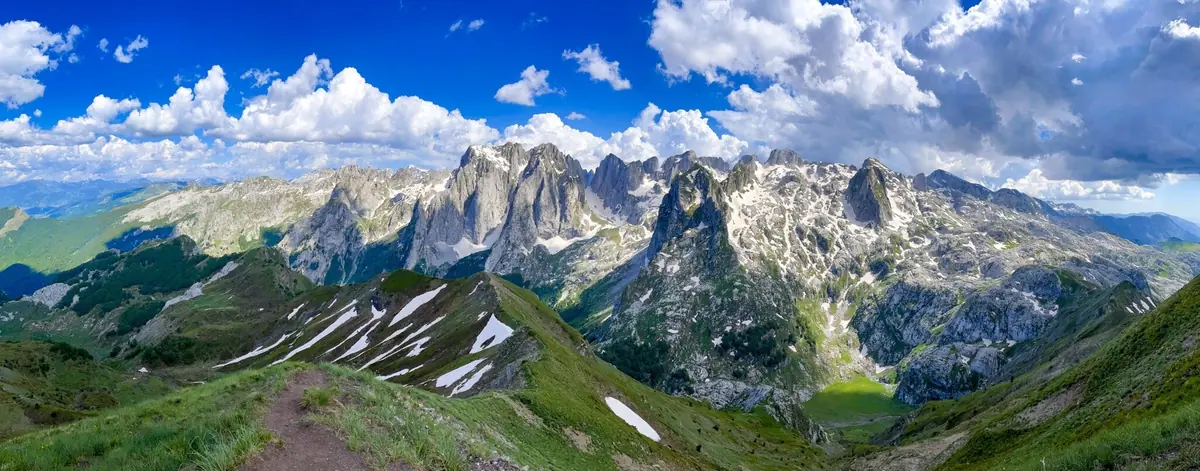
The Grnčar–Vermosh crossing runs through the fringes of the Accursed Mountains, connecting the Montenegrin town of Plav and Gusinje with the remote Kelmend region in northern Albania. Wait times are essentially nil, because almost nobody is there.
The important caveat that most write-ups get wrong: this post does not reliably operate around the clock. Hours are limited and seasonally variable, and travelers have historically arrived to find it closed with no advance notice. Treat an open barrier as a bonus, not a plan, and always have Hani i Hotit as your fallback.
The crossing feeds onto the SH20 alpine road, one of the most dramatic drives in the Balkans. See the full driving guide further below before committing to this route.
Pro Tip: Heavy snow closes the approach roads on the Albanian side most winters, and Albanian road authority bulletins regularly list Hani i Hotit to Vermosh among affected routes alongside Boga to Theth and the Qafë Thorë pass. Check current status before you commit, and never route your only exit through this crossing in winter.
Getting there without a car: how does the intercity bus network work?
The intercity bus network is the only viable mass transit option, as there is no passenger train service crossing the border. Do not spend 20 minutes searching for one, because it does not exist.
The network is surprisingly extensive, and it has modernized faster than its reputation suggests. FlixBus now operates the Podgorica–Tirana corridor alongside established regional operators such as Drita Travel, Old Town Travel, MS Tours, and Jadran Ekspres, and it reaches more than 40 destinations from Tirana. That matters for one specific reason covered below.
| Route | Typical fare | Duration | Notes |
| Podgorica to Tirana | $18–$26 (€15–€22) | 3–4 hours | About 99 miles (159 km); several daily departures |
| Podgorica to Shkodër | $12–$16 (€10–€14) | About 2 hours | Onward Shkodër–Tirana buses every 30 min |
| Kotor to Tirana | $29–$38 (€25–€32) | 6–7 hours | Morning departures only |
| Ulcinj to Shkodër | $8–$14 (€7–€12) | About 75 min | Minivan service, 1–2 daily |
The printed ticket rule nobody warns you about
Here is the single most common way travelers get stranded at a Balkan bus station. They book online with a regional operator, assume a QR code on their phone is sufficient, and get refused boarding.
E-tickets purchased through regional platforms such as Busticket4.me should be physically printed. Drivers at Podgorica’s main station and at terminals throughout Montenegro and Albania are inconsistent about scanning a smartphone screen, and some will simply close the luggage bay and drive off. Find a print shop or hotel business center the night before departure.
The exception is FlixBus, which is fully digital on this route: the QR code in the app or the emailed PDF is your ticket, and no printout is needed. If you want to skip the print-shop errand entirely, book the FlixBus departure. If you book anything else, print it.
The cash-only fee trap at the platform
Once you hand over your ticket, you face a second, entirely analog hurdle: fees that exist nowhere in your booking confirmation.
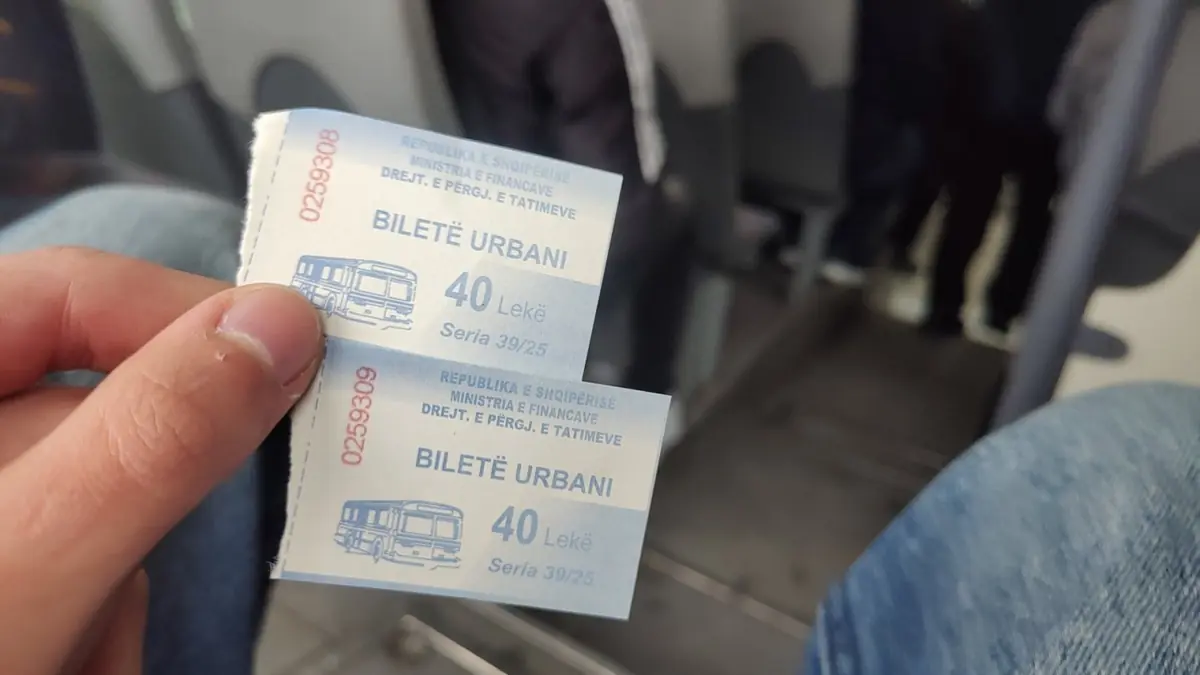
Podgorica’s main bus station charges a separate platform or entrance fee of roughly €1 to €2 for all departures, payable at the station rather than online. On top of that, expect to pay €1 to €2 in physical cash directly to the driver or attendant every time you check a bag into the undercarriage storage bay.
There is no card reader and no invoice. You hand over coins, the bay opens, and your bag goes in. Carry a supply of €1 and €2 coins before you even reach the station. Running short means negotiating across a language barrier while the bus idles behind you.
Pro Tip: Budget roughly €4 per person in loose coins for a Podgorica departure with one checked bag. Treat it as a fixed travel cost, not an optional tip.
Finding your bus at Tirana’s international terminal
This is the detail most travel content still gets badly wrong, and it will cost you a bus if you follow the old advice.
International departures no longer leave from the old terminal behind the Asllan Rusi Sports Palace. They now run from the Tirana East Bus Terminal, known locally as Terminali Lindor, at the Tirana East Gate shopping center on Rruga Nacionale along the Tiranë–Elbasan highway. It sits roughly 4.5 km from the city center, about a 15 to 20 minute ride.
Get there on city bus line 2 or line 8 from the former train station area, or by taxi for around €10 to €15. Rideshare and taxi drivers occasionally still default to the old location, so name the terminal and the shopping center, not just “the international bus station.”
There are no digital departure boards. Finding your bus means walking the lot and reading destination placards, so arrive at least 30 minutes early. Ignore anyone who approaches you offering to sell tickets or “help” you find a bus outside an official operator window; ticket-sale hustling at Albanian bus stations is one of the more persistent tourist scams in the country, and operators warn about it directly.
In Podgorica, the main station is better organized but similarly low-tech. It sits at Trg Golootočkih Žrtava, about 900 meters from the center. Confirm your bay with station staff on arrival rather than relying solely on your ticket.
Private transfers: when does the math actually work?
A private transfer makes financial sense when you are traveling with a group or carrying extensive luggage. The direct comparison looks like this: €15 to €22 per person for a bus versus roughly €70 to €140 for a private cross-border vehicle carrying up to four passengers.
For a solo traveler on a tight budget, the bus wins every time. For a family of four with luggage, the calculus flips completely.
Divide €120 by four passengers and you are paying €30 per head for door-to-door service, zero luggage fees, and a driver who already has the paperwork in order for both sides. Experienced cross-border operators know the lane protocols at each checkpoint and which crossing is moving on a given morning.
The time savings at the border alone can justify the premium, often 30 to 60 minutes compared with the tourist queue, before you count the door-to-door convenience.
| Modality | Estimated cost (Podgorica to Tirana) | Duration | Luggage |
| Intercity bus | $18–$26 per person | 3–4 hours | €1–€2 cash fee per bag |
| Private transfer | $82–$164 total vehicle | 2.5–3.5 hours | Included |
| Rental car | $35–$60 per day plus $47–$70 cross-border pack | About 3 hours | Included |
Renting a car across the border: what they don’t tell you
Most rental agencies will not volunteer this, but one-way international drops carry fees that can double your rental cost. Picking up a vehicle at Tirana International Airport and returning it in Kotor can trigger repatriation charges that exceed the base rental entirely.
Get a written, itemized quote before signing anything. A second complication is that many local agencies in Montenegro and Albania outright prohibit cross-border transit in their standard agreements.
Violating that clause exposes you to full liability for the vehicle if anything goes wrong on foreign soil. Always confirm cross-border permission in writing via email before you pay the deposit, and declare your route at the time of booking rather than at the counter.
Green Card insurance: the document that gets you through the gate
Standard rental insurance does not follow you across the border, and neither does your US credit card’s collision coverage. The moment you cross from Montenegro to Albania, or the reverse, your domestic rental policy is legally void.
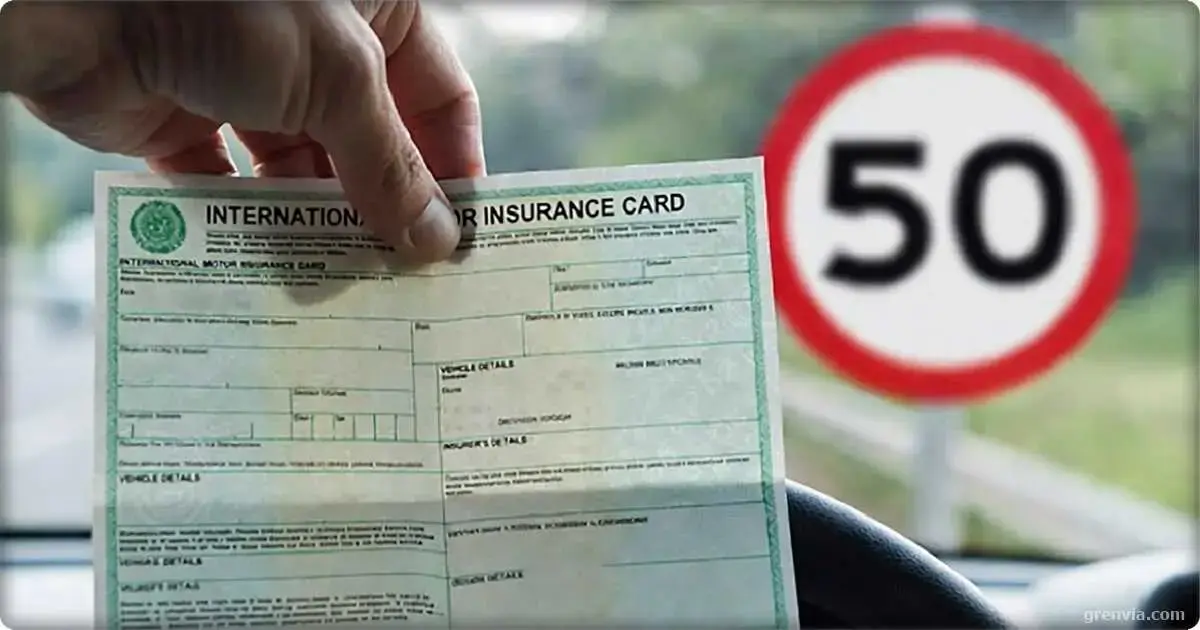
Border officers check for a specific document: the International Motor Insurance Certificate, universally called the Green Card. Both countries are full members of the Green Card system, so this is a standard product, not an exotic one, and there is no separate “special Albania insurance” despite what some agencies imply. It covers the vehicle rather than you, so personal travel insurance remains a separate purchase.
Two practical updates matter here. First, Montenegro now accepts Green Cards presented in PDF form, so a digital copy is legally valid, though carrying a printout costs nothing and removes any argument at the barrier. Second, most rental companies bundle the Green Card with a cross-border authorization letter and charge €40 to €60 for the pair. Request both several days before departure and confirm in writing that the certificate names both countries.
If the agency cannot provide them, change agencies. Without the authorization, your rental agreement and insurance are void the moment you cross.
Pro Tip: Short-term border insurance is sold at a booth on the Albanian side of Hani i Hotit for roughly €15 for a two-week policy. It is not available at Sukobin, Cijevna, or Grnčar. Bring euros in cash if you plan to rely on it, and treat it strictly as a fallback rather than a strategy.
Driving the SH20: what makes it the most dramatic road in the western Balkans?
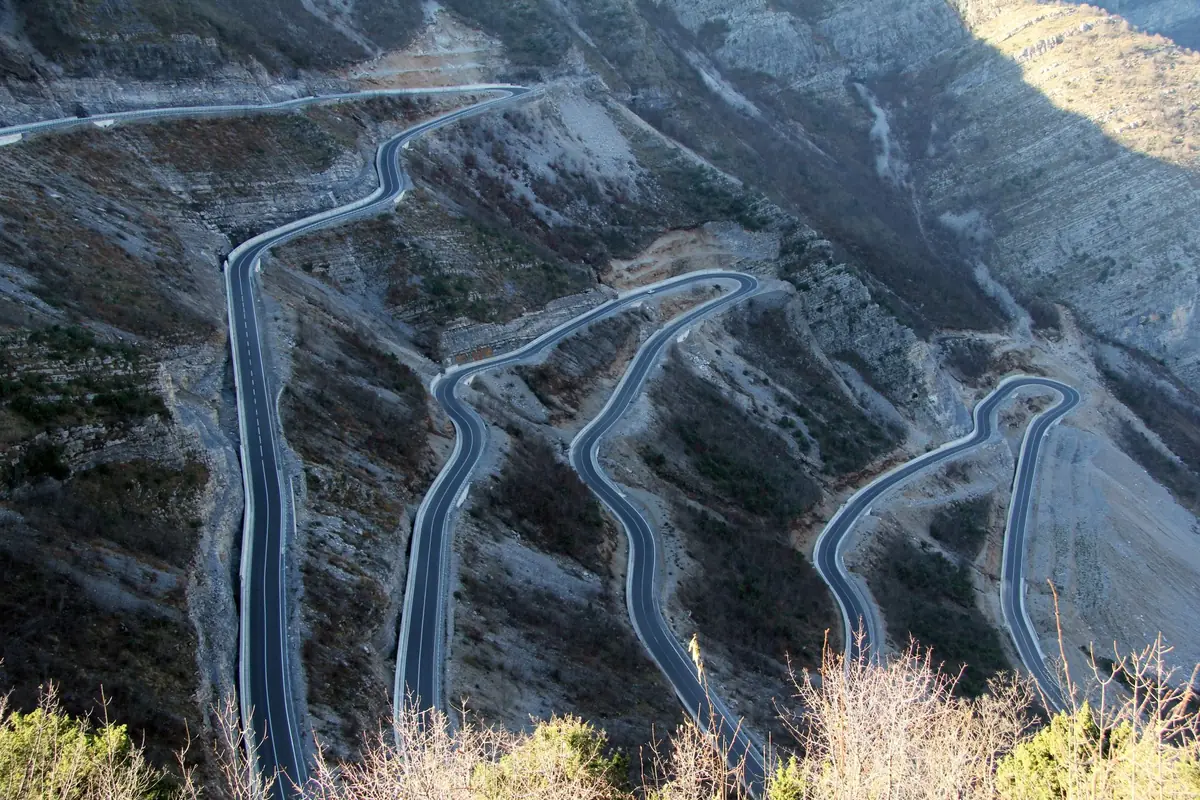
The SH20 is the alpine road that runs north from Hani i Hotit through Tamarë to Vermosh and the Grnčar crossing, roughly 40 miles (65 km) of near-continuous switchbacks. It climbs to the Leqet e Hotit pass at about 2,244 feet (684 m) before dropping into the Cem River canyon on relentless hairpins.
Here is the correction that changes trip planning: the SH20 is now fully paved end to end. It was a notorious dirt track for years and still carries that reputation online, but the asphalt is in genuinely good condition and wide enough for two vehicles for almost its entire length. Only a short gravel stretch of a few hundred meters remains immediately before the Grnčar border post.
The limestone peaks of the Accursed Mountains rise on both sides, pale and jagged. The canyon floor disappears into a shadowed, densely forested gorge far below, and Cold War–era concrete bunkers built during the Hoxha regime punctuate the verges every few kilometers with a surreal, ominous presence.
In summer, a standard car handles this route without drama, which means you do not need to pay for a 4×4 you will not use. What you do need is a vehicle with confident brakes and a driver comfortable with sustained mountain descents.
Pro Tip: Use low gears on the descent rather than riding the brakes. Overheated brakes halfway down the canyon are the actual risk on this road, not the surface. If you are in an automatic, use the manual or L setting.
Winter driving in the mountains: a serious warning
The coastal areas of both countries stay mild year-round, with Durrës in winter typically running between the low 40s and upper 50s Fahrenheit (roughly 5–14°C). The mountain interior is a different climate category entirely.
Northern Albanian mountain routes take heavy snowfall, and Albanian road bulletins regularly report Hani i Hotit to Vermosh, Bajram Curri to Valbonë, and Boga to Theth as affected, with the Qafë Thorë area blocked by avalanche risk. Assume the SH20 north of Tamarë is unreliable from December through February and plan an alternative.
The legal requirements for winter driving differ sharply on each side of the border, which trips people up. In Montenegro, winter equipment is mandatory from 15 November to 1 April under the Road Traffic Safety Law: winter tires marked M+S or carrying the 3PMSF snowflake on all wheels, with chains carried and fitted on snow-covered mountain sections. Fines apply. In Albania, there is no fixed calendar mandate; the requirement is situational, driven by conditions and road signs, with chains for the drive axle expected to be carried in mountain areas.
The secondary hazard is black ice on shaded sections. Bridges and north-facing switchbacks hold a thin, nearly invisible layer long after air temperatures rise above freezing. A warm, clear afternoon does not mean a safe road.
Pro Tip: If you rent in Montenegro between mid-November and April, confirm the car is fitted with compliant winter tires and that chains are in the trunk. Agencies do not always supply them by default, and the fine is yours, not theirs.
Crossing from Euro to Albanian Lek: the currency traps
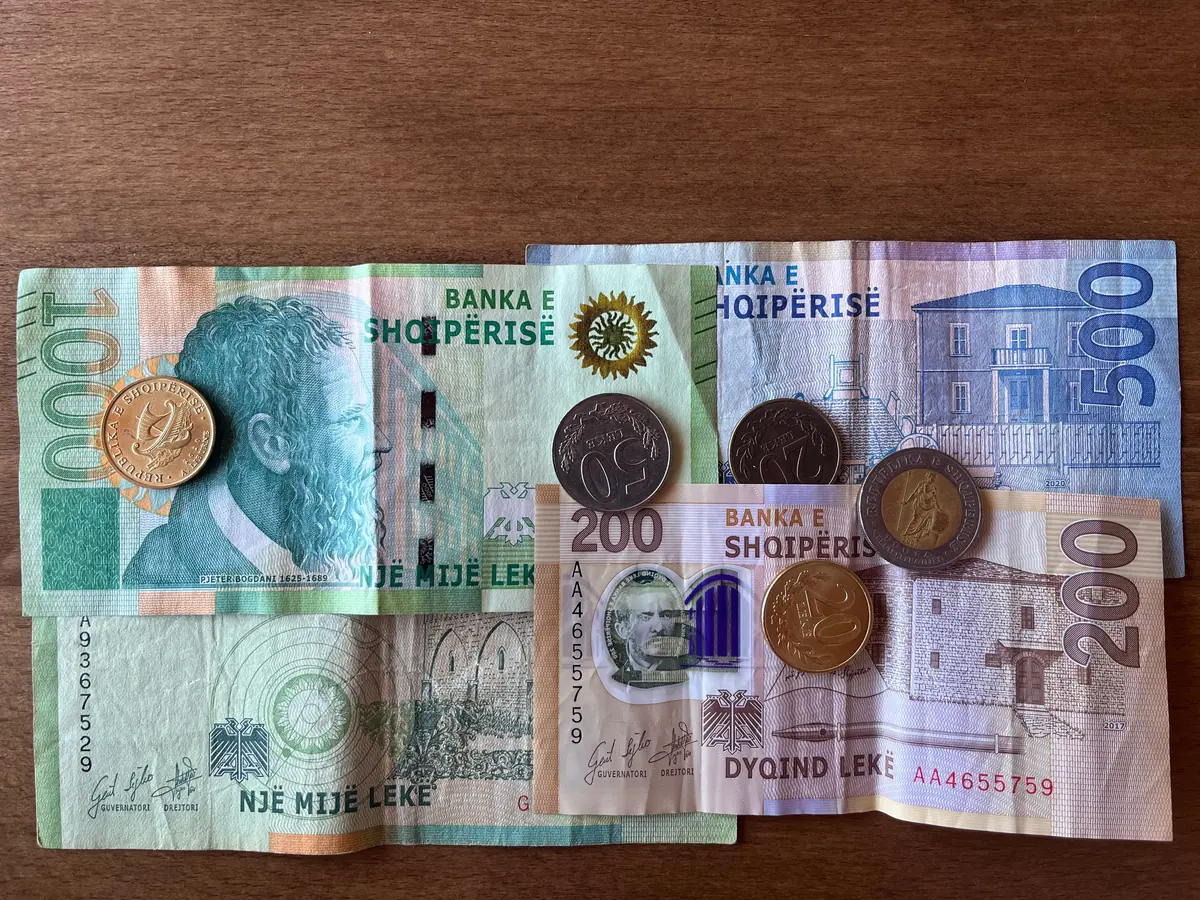
Montenegro uses the Euro despite not being an EU or Eurozone member. The moment you cross into Albania, the currency changes to the Albanian Lek, a closed currency you cannot meaningfully pre-purchase outside the country.
This is where the single biggest financial change of the past few years bites travelers. The lek has strengthened to record levels against the euro, driven by tourism receipts, remittances, and a construction boom, and now trades in the mid-90s per euro, with record lows dipping below 94.
Albanian merchants will happily accept euro cash, but they apply a flat 100-to-1 rate. Against a market rate in the mid-90s, that is a hidden premium of roughly 5 to 7 percent on every transaction, and it has grown as the lek has appreciated. The old advice that this costs you “a couple of percent” is out of date.
That gap compounds quietly across every meal, taxi ride, and market purchase for days. Always pay in lek, and exchange at a bank or licensed exchange office in Shkodër or Tirana on arrival rather than at an airport kiosk.
How to beat the ATM currency conversion trap
The ATM itself is often the biggest single financial hazard of the trip. When withdrawing lek, the screen will frequently offer to “lock in” your exchange rate or charge your account in US Dollars.
This is Dynamic Currency Conversion, and it exists entirely to benefit the operator. Always decline by selecting the option to continue without conversion, or to be charged in the local currency.
That forces the transaction to settle in lek and lets your home bank apply its wholesale rate, which is almost always significantly better. Withdraw larger amounts less frequently to dilute fixed fees, and use ATMs attached to a bank branch rather than standalone machines in tourist strips, which carry the steepest surcharges.
Card acceptance in Albania has improved considerably in cities and along the coast, but cash still rules in the north, in the mountains, and at anything involving a bus.
| Financial objective | Recommended action | Where it applies | Expected savings |
| Avoid the 100-to-1 merchant rate | Pay in lek, never in euro cash | Throughout Albania | 5–7% per transaction |
| Defeat DCC traps | Decline USD conversion at the ATM | All ATMs in Albania | Up to 7% per withdrawal |
| Manage micro-transactions | Carry €1–€2 coins before crossing | Bus stations at every hub | Prevents boarding denial |
| Cut ATM fixed fees | Fewer, larger withdrawals at bank-attached ATMs | Shkodër, Tirana, coastal towns | Several euros per trip |
A sane itinerary framework: 12 to 15 days
The most reliable mistake first-time Balkan travelers make is underestimating driving times. A 60-mile (97 km) route that takes 55 minutes in the US can take two hours on mountain switchbacks.
A 12-to-15 day framework allows for a genuinely paced journey without grinding through a new town every night. Allocate roughly five days for Montenegro to see the Bay of Kotor, the Lovćen switchbacks, and Durmitor National Park if you want the interior.
Then budget a full seven to ten days for Albania. Use Shkodër as an entry point, spend a day or two in the Albanian Alps, then hit Tirana, the Berat corridor, and the southern Riviera towns.
The Bay of Kotor: how to enjoy it without the cruise crowds
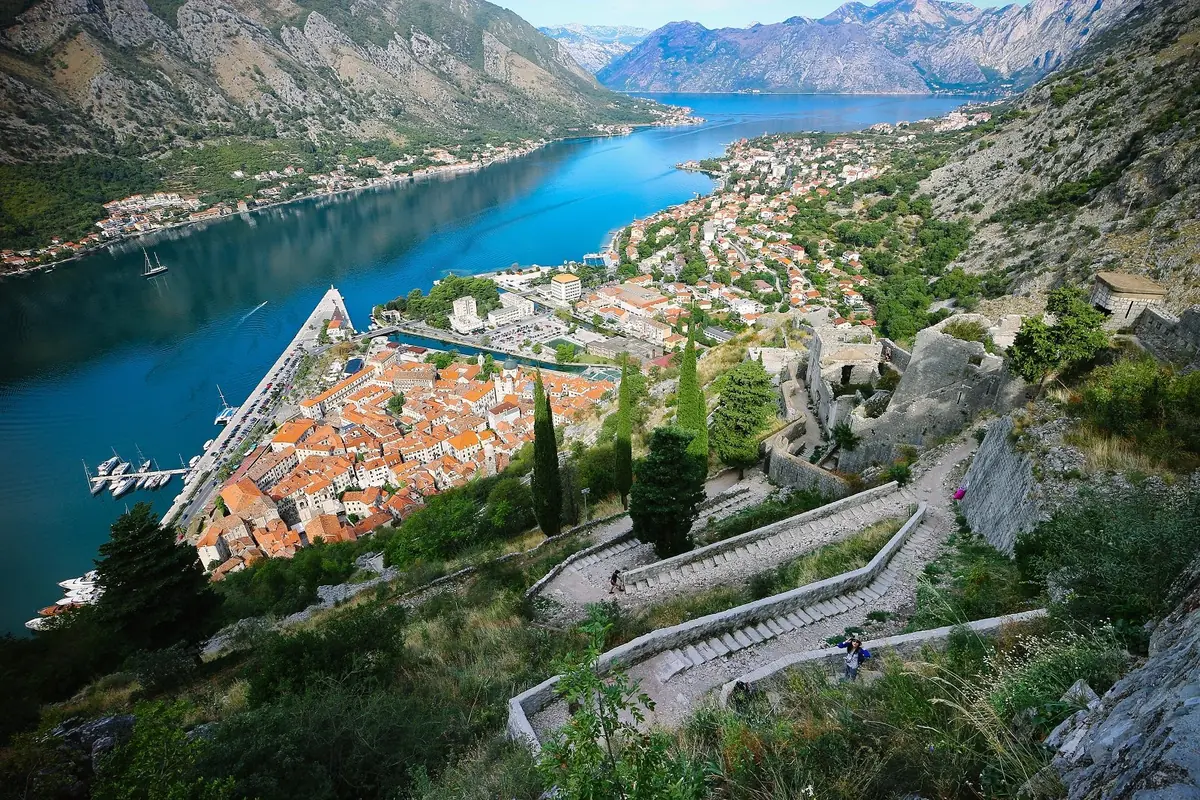
The Bay of Kotor is one of the most arresting landforms in the Mediterranean, a fjord-like inlet framed by karst mountains with medieval walled towns clinging to the shoreline.
It is also one of the most cruise-saturated destinations in the region. By 10:00 AM in summer, Kotor’s old town absorbs thousands of passengers from ships anchored in the bay, and the narrow stone alleys become nearly impassable.
The climb to San Giovanni Fortress is the payoff: 4.5 km of walls and roughly 1,350 uneven stone steps rising to 280 m (about 919 ft) above the old town. Plan on 45 to 90 minutes up. Two things have changed and they matter for timing: there is now a staffed turnstile with an entrance fee of around €15 in peak season, cash at the gate, and staff are typically in place from just before 8:00 AM. The old trick of slipping up before opening no longer works reliably.
Off-season, entry is generally free. And year-round, the Ladder of Kotor, the centuries-old trade path starting just outside the North Gate, is free and delivers comparable views from a different angle.
Pro Tip: Budva, 15 miles (24 km) south of Kotor, is heavily commercialized in peak season. If you want a quieter base on the Montenegrin coast, Petrovac is 10 miles (16 km) further south with a fraction of the crowds and lower prices. May, June, and September deliver the same weather with roughly half the density of August.
Shkodër: the cultural gateway Albania deserves
Most travelers treat Shkodër as a transit stop after crossing from Montenegro to Albania. That is a significant mistake.
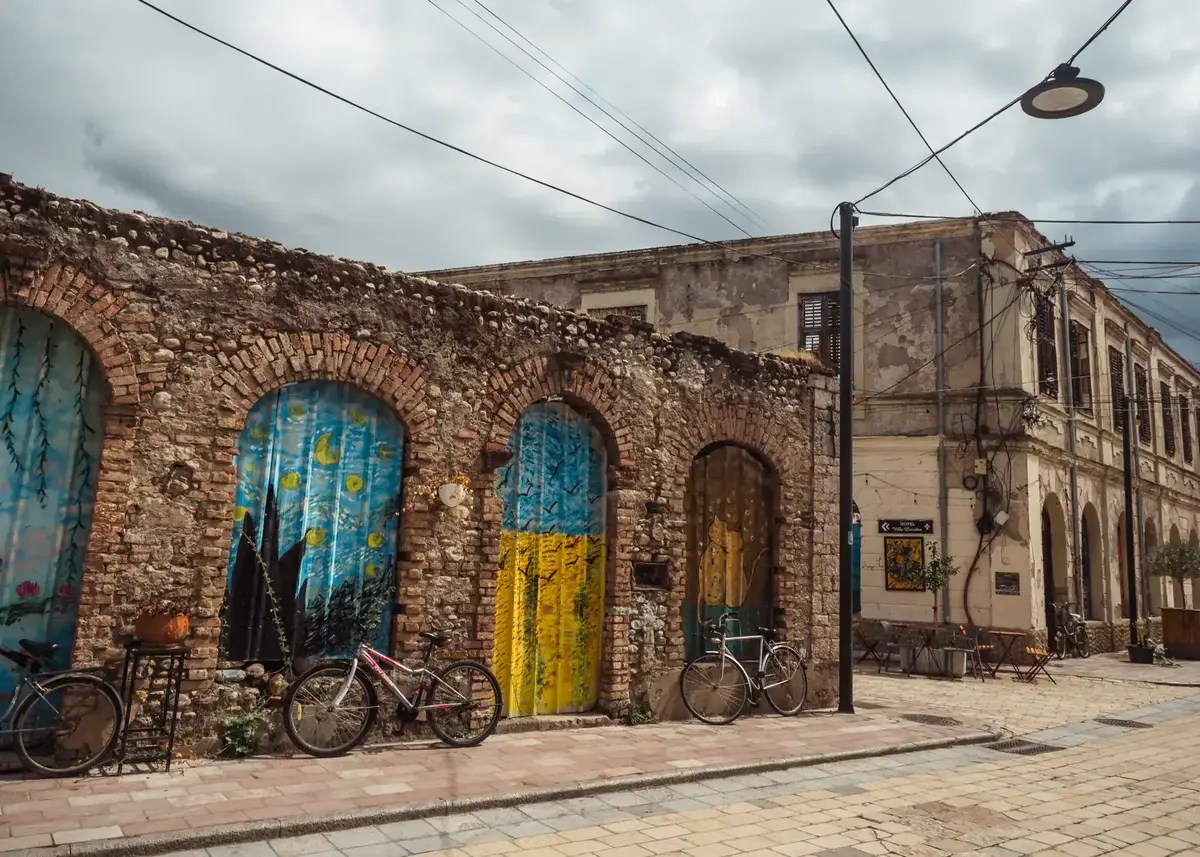
The city sits where the Austro-Hungarian empire’s southern reach met deep Ottoman influence, and that layered history is physically present in the streetscape. In the evening, the bells of Catholic churches and the call to prayer from the Ebu Bekr Mosque overlap in the air simultaneously, a sound specific to this city.
Rozafa Castle was built on Illyrian foundations above the confluence of three rivers, with commanding views across the lake toward Montenegro. Its on-site museum costs around 200 lek on top of castle entry, and the model of the fortress in its 18th-century state is worth the ten minutes.
The Marubi National Museum of Photography houses one of the most remarkable photographic archives in the Balkans, a dynastic collection spanning generations that documents Albanian life through the 19th and 20th centuries with rare intimacy. Entry runs 700 lek, roughly $8, and it is compact enough to see properly in an hour. Admission is free on the last Sunday of each month.
Rent a bicycle to explore. Shkodër has a genuine cycling culture and a flat urban core that makes it one of the most pedestrian and bike-friendly cities in the region.
- Location: Shkodër, northwestern Albania, 22 miles (36 km) from the Hani i Hotit border crossing.
- Cost: Budget $45–$90 per night for accommodation; meals average $7–$16.
- Best for: History enthusiasts, photographers, cultural travelers.
The Albanian Riviera vs. Montenegro’s coast: making the right call
The honest comparison is that Montenegro’s coast is more developed, better signposted, and more expensive. Albania’s Riviera is rawer, cheaper, and less crowded if you know where to go, though “cheap” is doing less work every year as visitor numbers climb past nine million annually.
Around Himarë, Livadhi and Llaman beaches offer long, gradual entries and a fraction of the summer density found in Budva. Ksamil, near the Greek border, draws the biggest crowds for its turquoise shallows and offshore islets.
Ksamil is also where the most visible policy change on the coast is playing out. Albanian authorities have been clearing piers, floating platforms, and unauthorized structures from the beaches, and the government has moved to shift management of Ksamil and Dhërmi from private operators to municipal control, alongside restrictions on beach-bar music. Expect the lounger-scrum reputation to ease gradually, but plan for peak density if you visit in July or August regardless.
If the coast starts feeling repetitive, redirect north. Durmitor National Park in Montenegro contains the Tara River Canyon, which reaches roughly 4,265 feet (1,300 m) and is the deepest river canyon in continental Europe. The park is one of the least-developed wilderness areas in the region, and the contrast with the Riviera is complete and deliberate.
Montenegro to Albania: quick answers
How long does the Montenegro to Albania border crossing take?
Off-season, five to fifteen minutes at any of the four crossings. In July and August, expect 30 to 90 minutes at Sukobin–Muriqan during the 10 AM to 2 PM window and 15 to 60 minutes at Bozaj–Hani i Hotit. The two eastern crossings rarely exceed 15 minutes at any time of year.
Which crossing is fastest?
Bozaj–Hani i Hotit for anyone traveling between Podgorica and Shkodër or Tirana. It runs 24/7 and is built for freight volume, so it absorbs tourist traffic better than the coastal route.
Can I take a rental car from Montenegro into Albania?
Yes, but only with written cross-border authorization from the rental company plus a Green Card insurance certificate naming both countries. Budget €40 to €60 for the pair and request them at booking, not at pickup. Crossing without them voids your rental agreement and your insurance.
Is there a train from Montenegro to Albania?
No. There is no cross-border passenger rail service. Buses, private transfers, and driving are the only options.
Do I need Albanian lek, or can I use euros?
Use lek. Merchants accept euros at a flat 100-to-1 rate, which costs you roughly 5 to 7 percent against the real market rate. Withdraw lek from a bank-attached ATM and decline the dynamic currency conversion offer.
What is the best time of year to make the crossing?
Late May to mid-June and September. You get summer weather, open mountain roads, and border waits closer to off-season figures. Winter closes the alpine routes and brings mandatory winter-equipment rules in Montenegro from mid-November through the start of April.
Pack your bags
The Montenegro to Albania overland route is not difficult, but it requires preparation that most travel blogs skip, and several of the details they do publish are simply out of date.
Know which of the four crossings suits your route. Print your ticket unless you booked FlixBus. Carry euro coins for platform and luggage fees. Head to the Tirana East Terminal at TEG, not the old Asllan Rusi site. Decline the ATM’s conversion offer, and pay in lek. Get the Green Card and the cross-border authorization before you leave the rental lot.
Do those six things, and what remains is one of the most geographically diverse, historically layered, and underrated overland journeys in Europe. Once you are across the barrier, our full Albania travel guide covers what to do with the rest of your trip.
Which crossing are you planning to use for your Montenegro to Albania road trip? Are you driving yourself or taking the bus? Let me know in the comments below.