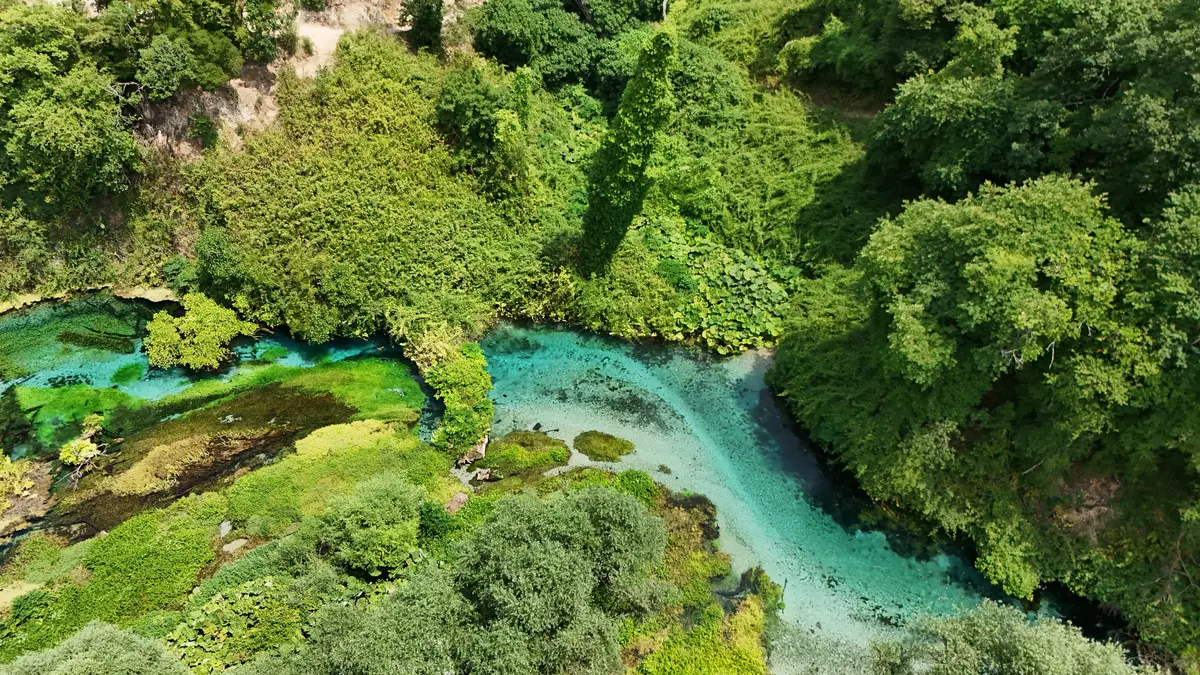
The Blue Eye Albania is a spring so clear that divers have dropped past 160 feet without finding the bottom. It’s also smaller than the photos let on, swarmed by midmorning in summer, and now closed to swimmers. Here’s how to see it at its best — and whether it earns the detour at all.
Is the Blue Eye Albania Worth Visiting?
Yes — if you’re already in southern Albania and you arrive early. The Blue Eye is a short, scenic stop, not a full day out: a 1.4-mile (2.2 km) walk to a vivid spring you’ll photograph in 20 minutes, then move on. It isn’t worth a four-hour drive from Tirana on its own.
The honest read is that this is a roadside detour, not a destination. Travelers who build a whole day around it tend to leave underwhelmed — the spring’s deep-blue center is only about 6.5 feet (2 m) across, and once you’ve seen it, you’ve seen it. Travelers who fold it into a route between Sarandë, Ksamil, or Gjirokastër almost always come away glad they stopped.
Two things decide whether you love it or shrug: timing and expectations. Go at opening and it’s quiet, the water is at its bluest, and the walk through the trees is pleasant. Show up at noon in August and you’re queuing for a spot on a small metal balcony with a few hundred other people.
Pro Tip: Build the Blue Eye into a week-long Albania itinerary rather than a special trip. As a 2-3 hour stop it’s a clear yes; as a standalone outing from far away, it’s a clear no.
What Is the Blue Eye, Exactly?
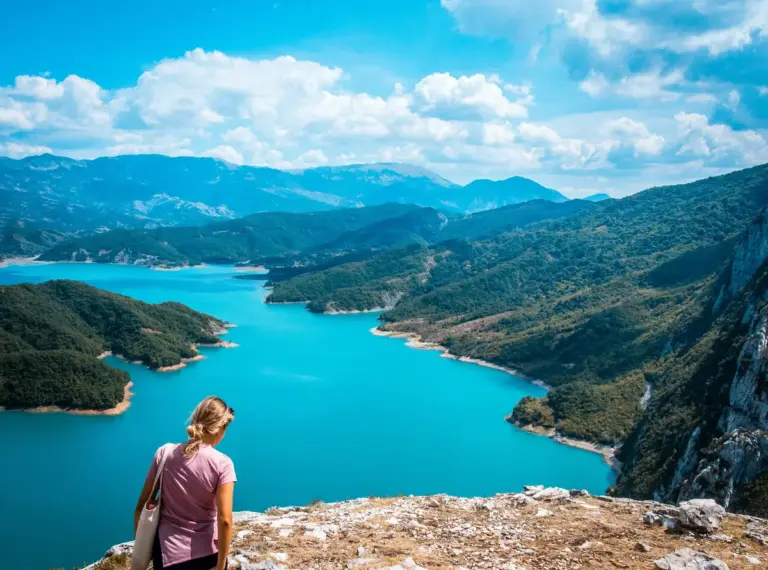
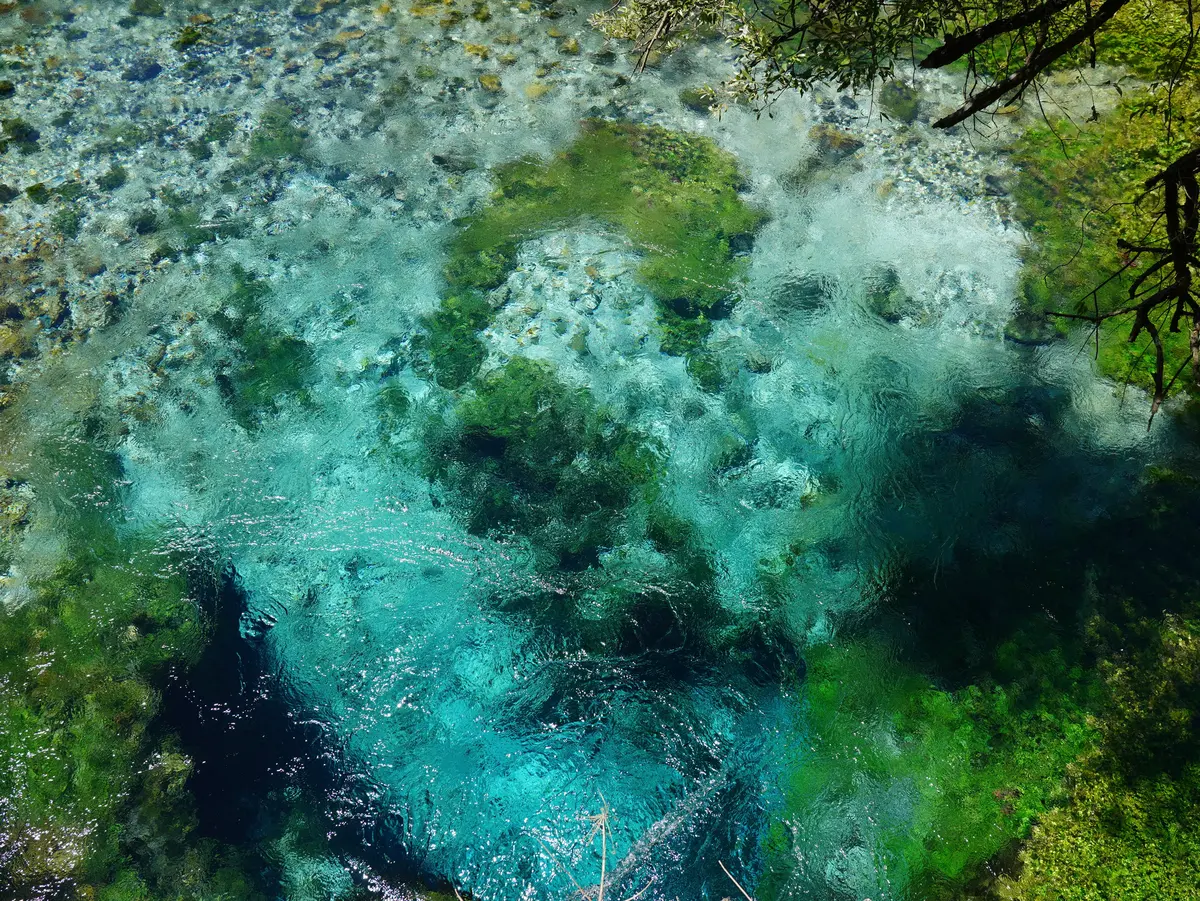
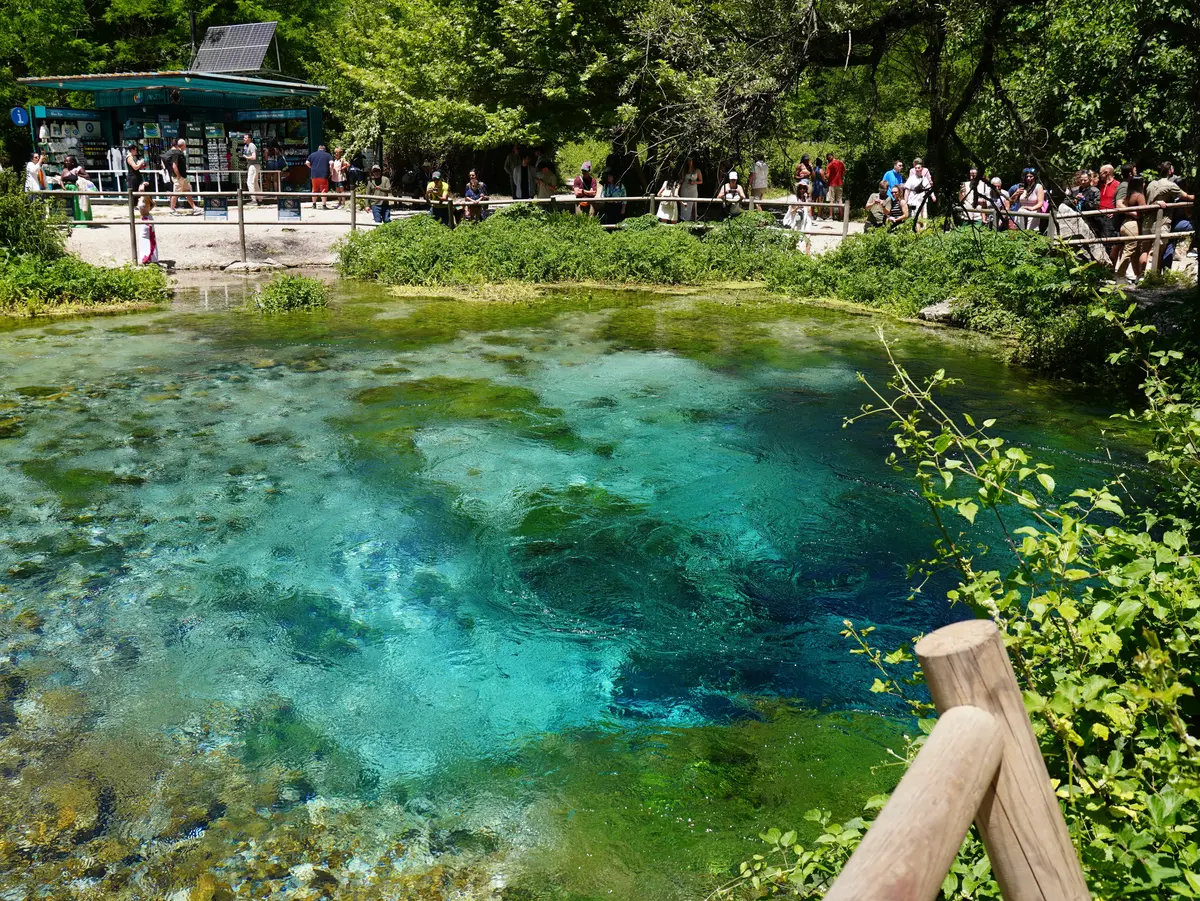
The Blue Eye, or Syri i Kaltër, is a karst spring near the village of Muzinë in southern Albania, where groundwater forces up through a deep limestone vent. The dark blue center looks like a pupil ringed by a paler iris of turquoise — that’s where the name comes from. It feeds the Bistricë River, which runs about 16 miles (25 km) down to the Ionian Sea.
The numbers are the draw. Divers have reached around 164 feet (50 m) without touching the bottom, and the true depth is still unknown — Albania’s protected-areas agency lists it at up to 148 feet (45 m), while the often-repeated figure of 100 meters has never been confirmed. The water sits at roughly 50°F (10°C) year-round, cold enough to take your breath even in July.
The spring also moves a surprising amount of water. It’s commonly cited at about 18,400 liters per second (close to 4,900 gallons), though peer-reviewed estimates of the average flow run lower. Either way, the upward push is strong enough that anyone who used to jump in got shoved back toward the surface within seconds.
- Location: near Muzinë, Finiq municipality, Vlorë County, southern Albania
- Type: karst spring feeding the Bistricë River
- Depth: 164+ feet (50+ m), bottom unreached
- Water temperature: about 50°F (10°C) year-round
Can You Swim in the Blue Eye Albania?
No. Swimming is officially prohibited. After the site was reclassified as a Natural Park — expanding it to roughly 725 acres (293 hectares) under government decision VKM No. 60 — both swimming and diving were banned to protect the spring. Enforcement is patchy, and some people still dip into the river downstream, but rangers do step in and warning signs are posted.
This trips up a lot of travelers, because older guides and viral videos still show people leaping off the platform. Those clips predate the ban. The small metal balcony over the spring is now a viewing point only, even though you’ll occasionally see someone climb the handrail.
There’s a practical reason the swim ban bothers fewer people than you’d expect: the water is brutally cold. Visitors who did get in before the rules changed rarely lasted ten minutes before their feet went numb. The color is the reward here, not a swim.
If you came to Albania specifically to swim in a blue spring, you want the other one — the Blue Eye near Theth, up in the northern Alps, where swimming is still allowed. More on that below.
Pro Tip: Don’t plan your visit around getting in the water. Treat the Blue Eye as a look-and-photograph stop, and save the swimming for Theth or the coast.
How Do You Get to the Blue Eye From Sarandë?
By car it’s about 14 miles (22 km) and 30-40 minutes from Sarandë on the SH99. Your realistic options are a rental car, the KMG shuttle (around $15-18 round-trip), or a taxi (around $38-44 round-trip with the driver waiting). Skip the public bus — most Sarandë-Gjirokastër routes now take the Kardhiq bypass and no longer stop at the turnoff.
That last point is the one that strands people. Plenty of blog directions still tell you to flag a Sarandë-Gjirokastër furgon, ask to be dropped at the Blue Eye junction, then walk in. The new bypass road changed that, and most drivers no longer pass the turnoff at all.
By Car or Rental
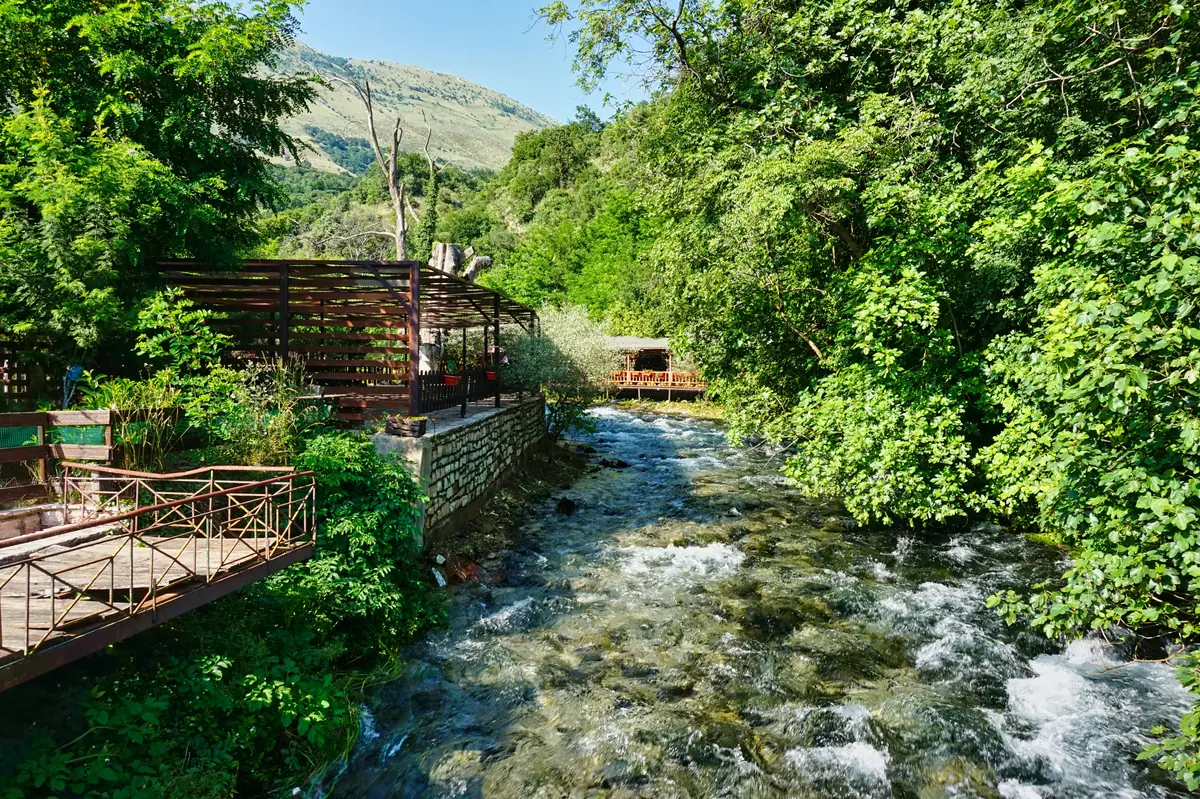
The simplest option by far. From the parking area it’s a flat, paved 1.4-mile (2.2 km) walk to the spring, or you can ride the tourist train or rent a scooter for the last stretch. Use the official large car park; see the warnings section below about a parking scam near the entrance.
By Shuttle or Taxi
The KMG shuttle runs from Sarandë roughly every 30 minutes from around 8 a.m. and costs about $15-18 round-trip — the easiest no-car option. A taxi runs about $38-44 round-trip with an hour or two of waiting time built in, which makes sense when you split it among a few people.
By Bus (Why It No Longer Works)
Public furgons between Sarandë and Gjirokastër are cheap (around $3 one-way) but unreliable for this trip, since most now bypass the spring. Where a bus still runs the old road, departures are limited and you’ll face a roughly 1.2-mile (2 km) walk from the highway. Confirm locally before you count on one, and don’t build your day around it.
Here’s how the Blue Eye sits relative to the main southern hubs:
| From | Distance | Drive time |
|---|---|---|
| Sarandë | 14 mi (22 km) | 30-40 min |
| Ksamil | 21 mi (34 km) | about 1 hr |
| Gjirokastër | 17-23 mi (27-37 km) | 45-60 min |
| Tirana | 168-174 mi (270-280 km) | 4-4.5 hr |
How Much Does It Cost to Visit the Blue Eye?
Almost nothing to get in: 50 lek per person, about $0.55, cash only. The extras add up modestly — roughly $1 per car, $2-9 for parking depending on how long you stay, plus optional add-ons like the tourist train or a scooter. Bring lek in small notes, because the on-site ATM is unreliable and cards aren’t accepted anywhere on site.
- Entrance: 50 lek per person (about $0.55), cash only
- Car: about 100 lek (about $1)
- Parking: 200-800 lek (about $2-9) by duration; campervans around 800 lek per 24 hours
- Tourist train: 300 lek one-way / 600 lek round-trip (about $3.30 / $6.60)
- E-scooter: roughly $5-6 per hour
- KMG shuttle from Sarandë: about $15-18 round-trip
- Taxi from Sarandë: about $38-44 round-trip
Pro Tip: The nearest reliable ATM is back in Sarandë. Pull out small lek notes before you drive out, since the booth, the train, and the café all want close-to-exact cash.
When Should You Go to Beat the Crowds?
The park has logged more than 78,000 visitors in a single August and a record 4,220 in one day, so timing is everything. Arrive by 8 a.m. and you may have the viewing platform to yourself; by 10 it’s three people deep, and by midday in summer it’s a slow shuffle for a photo. Early morning also gives you the calmest water and the best light on the blue.
Season matters almost as much as the hour, and the pattern here mirrors the best time to visit Albania more broadly. Spring and fall bring smaller crowds, mild temperatures, and full water flow after the rains. July and August are hottest, busiest, and the only time the place feels overrun.
- Spring (April-June): green surroundings, strong flow, manageable crowds — the sweet spot
- Summer (July-August): hot, very crowded midday; go at opening or not at all
- Fall (September-October): quieter again, comfortable walking weather
- Winter (November-March): coldest and quietest, with some services scaled back
There’s a real trade-off built in. The blue looks most intense under direct overhead sun, which is exactly when the crowds peak. Most people decide the quiet of an early arrival beats the marginally brighter color at noon.
Blue Eye Sarandë vs. Blue Eye Theth: Which One?
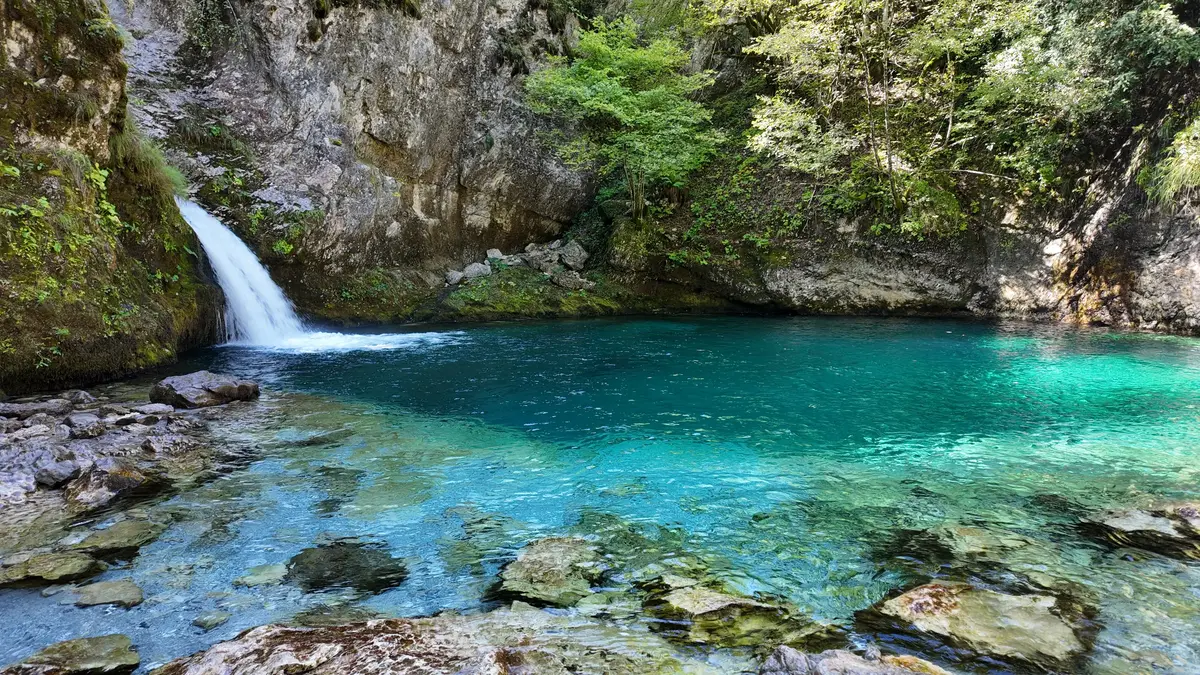
Albania has two Blue Eyes, and travelers mix them up constantly. The southern one near Sarandë — the subject of this guide — is the easy-access, no-swimming, busier spring. The northern one near Theth, in the Albanian Alps, is a colder pool you have to hike to; it’s free, and swimming is allowed.
| Blue Eye (Sarandë) | Blue Eye (Theth) | |
|---|---|---|
| Region | South, near Sarandë | North, Albanian Alps |
| Access | 1.4-mi (2.2 km) paved walk | about 2-hr round-trip hike |
| Swimming | Banned | Allowed |
| Water temp | about 50°F (10°C) | about 41-45°F (5-7°C) |
| Entry fee | 50 lek (about $0.55) | Free |
| Best for | Easy roadside stop | Hikers who want to swim |
Pick by trip, not by name. On a coastal or southern road trip, the Sarandë spring is the obvious one. If you’re already trekking between Theth and Valbona in the north, that Blue Eye is worth the hike — and it’s the only one where you can actually get in the water.
What to Pair With Your Blue Eye Visit
The Blue Eye works best as one beat in a fuller southern-Albania day. Everything below is within an easy drive, and stringing two or three together turns a 20-minute spring into a trip worth the miles.
- Butrint National Park: a UNESCO-listed archaeological site with Greek, Roman, and Venetian ruins, about 40 minutes south toward Ksamil
- Ksamil: the closest thing to Caribbean water in Albania, with small swimming coves and islets, roughly an hour away
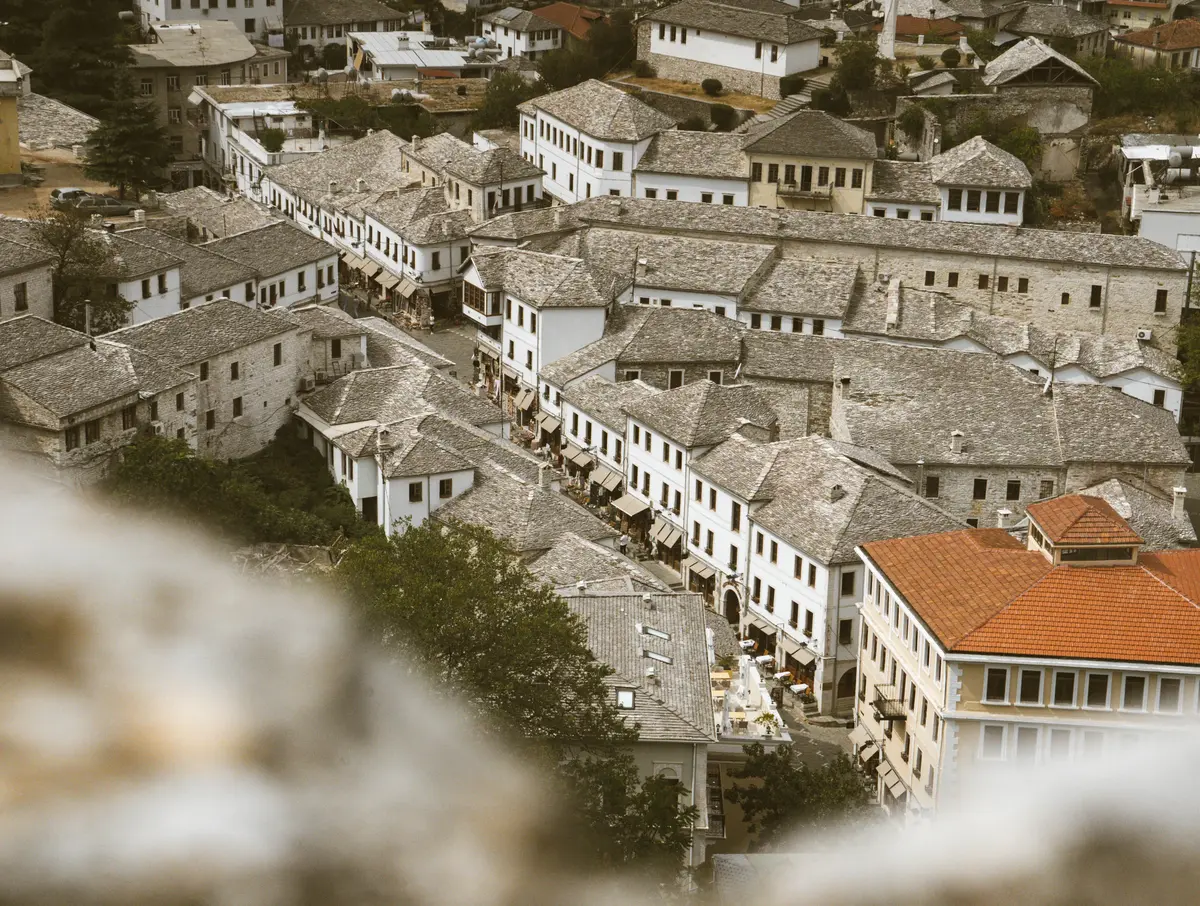
- Gjirokastër: an Ottoman-era stone city and UNESCO site, 45-60 minutes north, good as a base or a lunch stop
- Lëkursi Castle: a hilltop fortress above Sarandë with a wide view over the bay and Corfu, best at sunset
A common and well-paced route runs Gjirokastër in the morning, the Blue Eye late morning, then down to Ksamil or Sarandë for the afternoon and a Lëkursi sunset.
What to Know Before You Go
A handful of practical realities catch first-time visitors off guard. None are dealbreakers, but knowing them ahead of time saves money and frustration.
- Cash only, and the on-site ATM is often out of service — bring lek from Sarandë
- Watch for a common parking scam: there have been reports of someone posing as an official and charging for parking near the entrance. Use the official large car park and ignore anyone waving you toward an informal lot
- The first half-mile of the walk is open and hot in summer with little shade — bring water and a hat
- Wildfire risk is real here in dry summer months; one blaze near the spring forced the evacuation of hundreds of visitors and briefly closed the access road, so check conditions before you go in peak heat
- The on-site restaurant is hit-or-miss; some find it cold and overpriced, so manage expectations or eat in Sarandë or Gjirokastër
- Hours run roughly 7 a.m. to 7 p.m., though they shift seasonally — early is better for crowds anyway
Pro Tip: Save Albania’s emergency number, 112, before any rural drive. Mountain roads in the south have patchy signal and few services between towns.
Quick Questions About the Blue Eye
Is the Blue Eye Family- and Stroller-Friendly?
Mostly yes, and it’s one of the easier stops if you’re visiting Albania with kids. The main path is paved and flat enough for a sturdy stroller, and the tourist train covers the distance if little legs give out. The viewing balcony is small and gets crowded, and there’s no barrier-free swimming, so keep a close hold on kids near the water’s edge.
What Are the Opening Hours?
Roughly 7 a.m. to 7 p.m. daily, with some sources listing longer summer hours and shorter winter ones. The gate and fee booth follow daylight more than a fixed clock, so an early arrival is rarely a problem — and it’s the best move for beating crowds regardless.
Is the Tourist Train Worth Paying For?
For most people, no. The walk is a flat, pleasant 1.4 miles (2.2 km) each way, and it’s part of the experience. The train (about $3.30 one-way) earns its price mainly for anyone with limited mobility, very young kids, or a tight schedule trying to beat a tour-bus wave.
Can You Visit the Blue Eye as a Day Trip From Corfu?
Yes, but it’s a long day. Ferries from Corfu to Sarandë take about 30-90 minutes depending on the boat, and from there the Blue Eye is another 30-40 minutes by car or shuttle. It’s doable, but you’ll spend most of the day in transit — better paired with Sarandë or Ksamil than done alone.
The Honest Bottom Line
The Blue Eye Albania rewards a smart visit and punishes a lazy one. Arrive early, bring cash, drop any plan to swim, and treat it as one stop on a southern-Albania route rather than the reason for the trip. If you’re still shaping the rest of the route, our Albania travel guide covers the wider trip.
TL;DR: The Blue Eye Albania is worth a 2-3 hour stop, not a standalone day-trip from Tirana. Go before 9 a.m., bring cash for the 50-lek entry, skip the public bus (most now bypass the turnoff), and pair it with Sarandë, Ksamil, or Gjirokastër. Swimming is banned — head to the Theth Blue Eye if you want to get in the water.
Which way are you leaning — folding the Blue Eye into a Sarandë beach day, or routing through Gjirokastër on the way north? Tell me where the rest of your trip is taking you and I’ll help you slot it in.