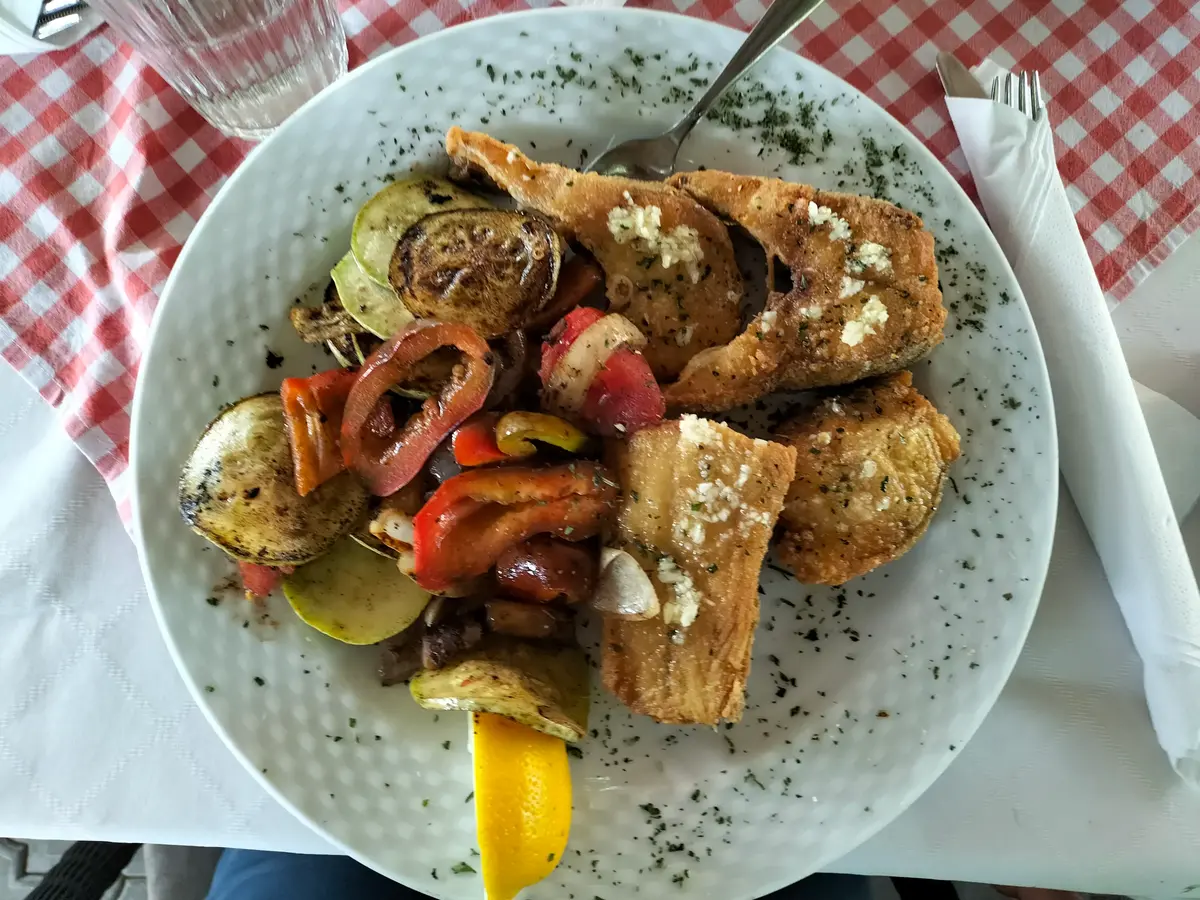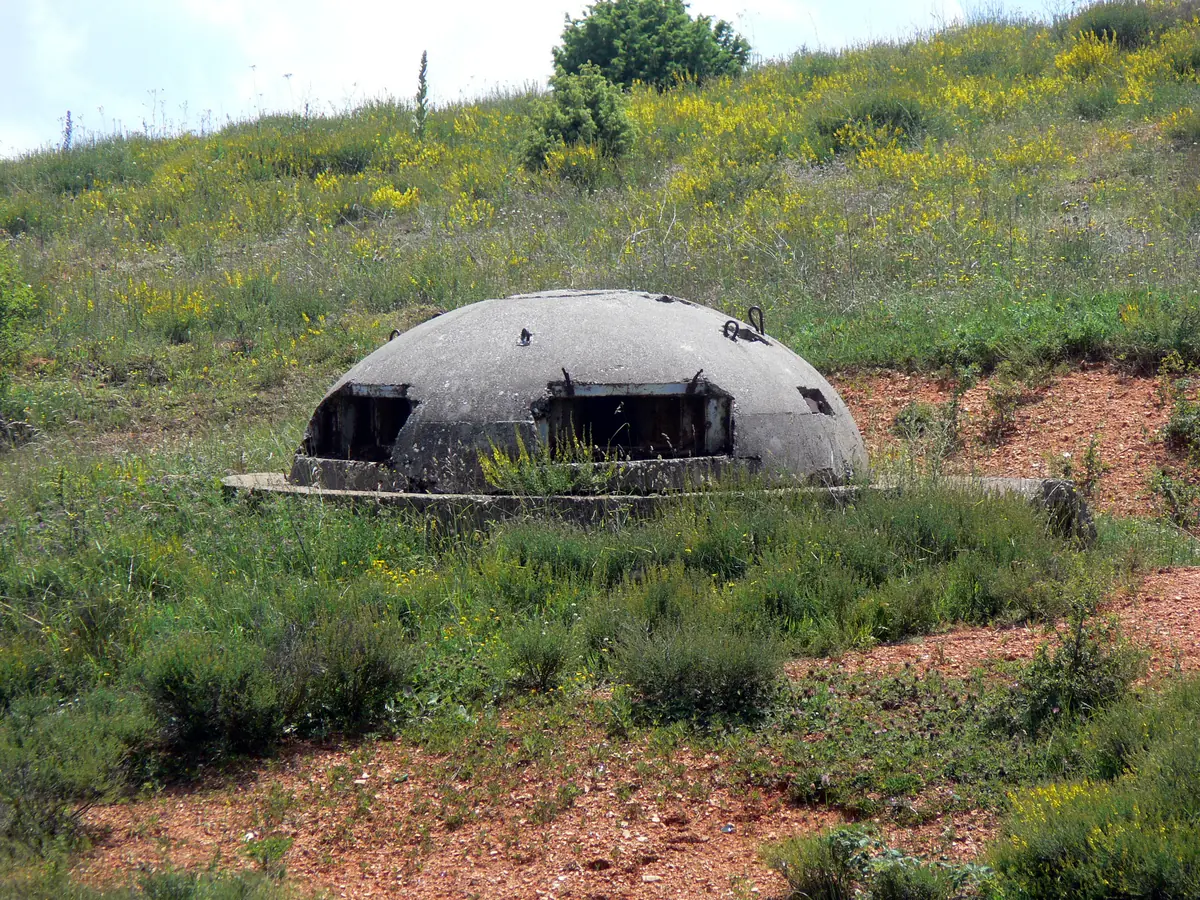
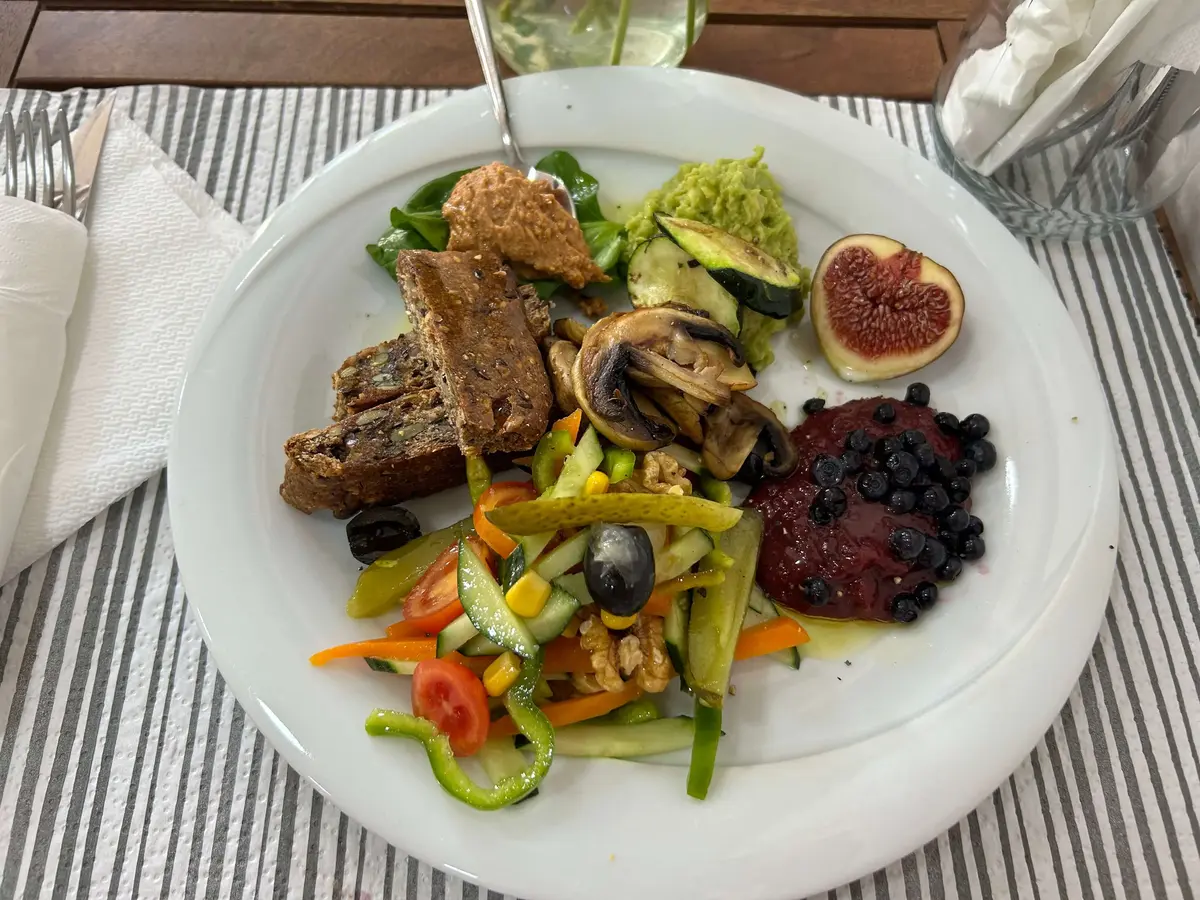
Vegan in Albania sounds like a gamble — a Balkan country where cheese and lamb anchor half the menu. It’s easier than that reputation suggests, as long as you plan and learn one phrase. Cities are workable; mountain villages test your patience. Here’s exactly what to order, where, and what it costs.
Is It Actually Hard to Be Vegan in Albania?
No — not in the cities. In Tirana, Sarandë, Berat and Shkodër, you’ll eat well with minimal effort: call it a 7 out of 10. Villages and the far mountains drop to about a 4, where salad, beans and stuffed peppers become your whole rotation. Everywhere, one habit matters: always ask for no cheese.
Two things make the cities easy. Albanian cooking leans on beans, vegetables and olive oil, so the base of countless traditional dishes is already plant-based. And the produce is excellent — Mediterranean tomatoes, peppers, eggplant and stone fruit peak from May through October, so even a plain grilled-vegetable plate tastes like something.
The honest downside is monotony. After several days you’ll have eaten stuffed peppers and stuffed eggplant more times than you’d like, and the salad-that’s-just-tomato-and-cucumber gets old fast. Protein beyond beans and lentils takes effort; tofu and meat substitutes barely exist outside a few Tirana supermarkets.
Pro Tip: The word “vegan” isn’t widely understood outside Tirana. Describing what you don’t eat — pa mish, pa djathë (no meat, no cheese) — works far better than the label.
The Cheese Problem: Why You Must Say Pa Djathë
The cheese arrives uninvited. You order a plain tomato-and-cucumber salad, and it comes crowned with crumbled feta the cook never thought to mention — because in an Albanian kitchen, cheese isn’t an ingredient you’d flag any more than salt. It’s background music.
This is the single most common way a vegan meal goes wrong here, and it happens even to travelers who order in Albanian. It’s not a language failure; it’s habit. Say pa djathë up front, every time, even when the dish sounds obviously plant-based.
Pro Tip: Say pa djathë even for dishes that couldn’t possibly contain cheese in your mind. Salads, stuffed vegetables and byrek are the usual ambush points.
A handful of other animal products hide in plain sight:
- Byrek: the flaky pastry is usually filled with cheese or meat; even “spinach” byrek often has feta. Ask for onion or tomato versions, cheese-free.
- Fërgesë: this pepper-and-tomato dish contains gjizë (curd cheese) unless it’s specifically veganized.
- Qifqi: Gjirokastër’s fried rice balls are bound with egg.
- Tarator: a cold summer soup made from yogurt — not vegan.
- Bread and cornbread: sometimes brushed with butter or made with it.
- Tavë kosi: the national dish, and a trap — lamb baked under yogurt and egg.
- Drinks: cappuccino defaults to cow’s milk, and some wine is filtered with isinglass (fish bladder).
Which Traditional Albanian Dishes Are Already Vegan?
Plenty of them, thanks to a cooking tradition built on beans, vegetables and olive oil. White bean stew (fasule), stuffed peppers, roasted red peppers, okra, grilled vegetables and stuffed grape leaves are all naturally plant-based — as long as you confirm no cheese, egg or butter snuck in. Lenten dishes are your safest bet.
The safest strategy is to lean on dishes that were plant-based long before anyone used the word “vegan” — many of them Lenten (kreshmë) recipes. Confirm no cheese, egg or butter and these are reliably yours:
- Jani me fasule (fasule): white bean stew, a national staple, traditionally vegan.
- Fasule pllaqi: baked white beans in tomato and olive oil, a Lenten classic.
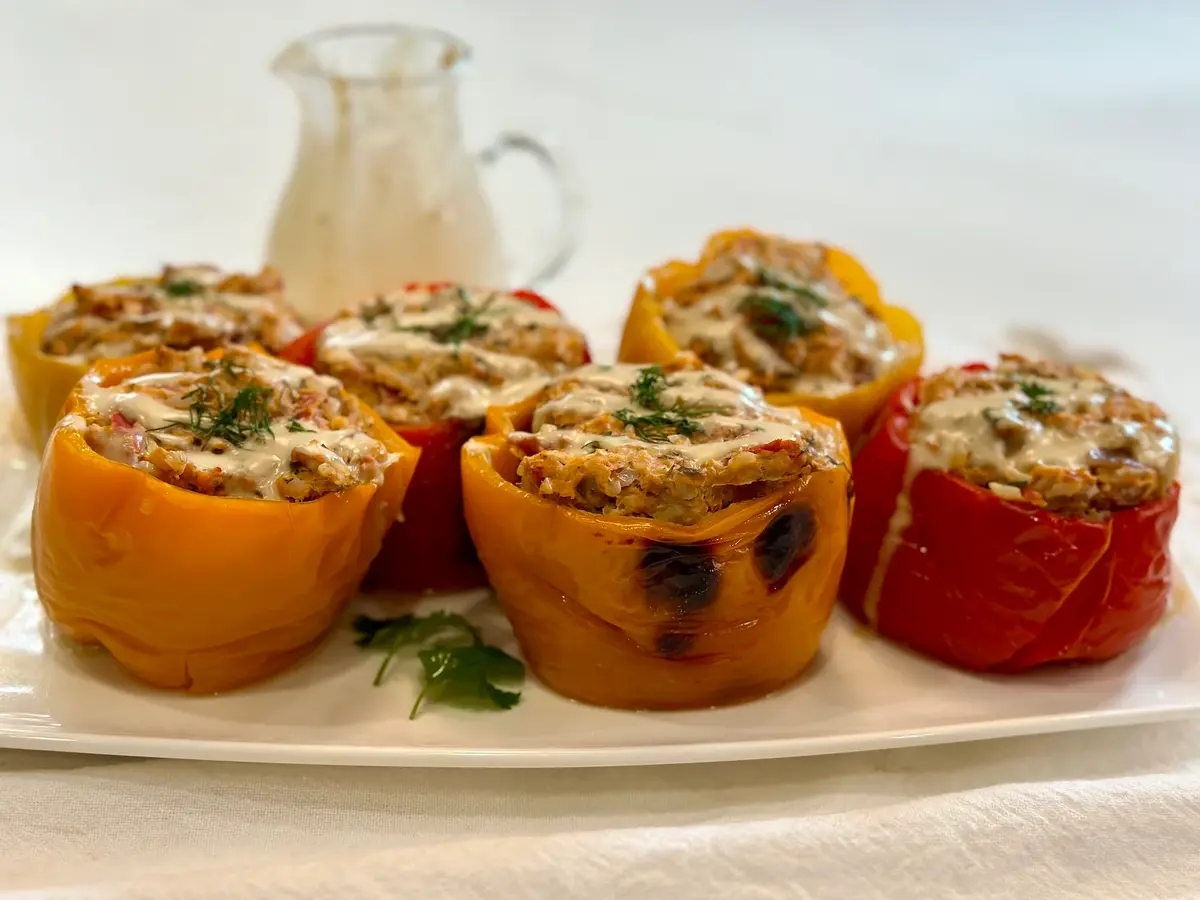
- Speca të mbushur: peppers stuffed with rice, herbs and mint (ask: no cheese).
- Patëllxhanë të mbushur: stuffed eggplant, but sometimes filled with meat, so clarify.
- Speca të pjekur: roasted red peppers in olive oil.
- Bamje: okra stew — check the broth is water- or oil-based, not meat.
- Japrak (dolma): grape leaves stuffed with rice and herbs, usually vegan.
- Tavë me presh: a slow-cooked leek casserole, another Lenten dish.
- Perime në zgarë: simply grilled vegetables, dressed in olive oil.
- Turshi: pickled vegetables, a reliable side anywhere.
One thing works in your favor everywhere: Albanian cooks use olive oil, not butter, as the default fat. That single habit makes far more of the menu accidentally vegan than in most of Europe.
Where to Eat Vegan in Tirana’s Blloku District
Tirana is the easy answer to almost every vegan question in Albania. Nearly all the fully vegetarian and vegan kitchens in the country sit here, most packed into Blloku — the district once reserved for communist elites, now the city’s café-and-restaurant core. HappyCow lists around 69 places in Tirana, more than the rest of the country combined, though many are omnivore spots with veg options rather than dedicated vegan kitchens.
Start here, and start with the two that matter most.
Veggies — Tirana’s Dedicated Vegetarian Kitchen
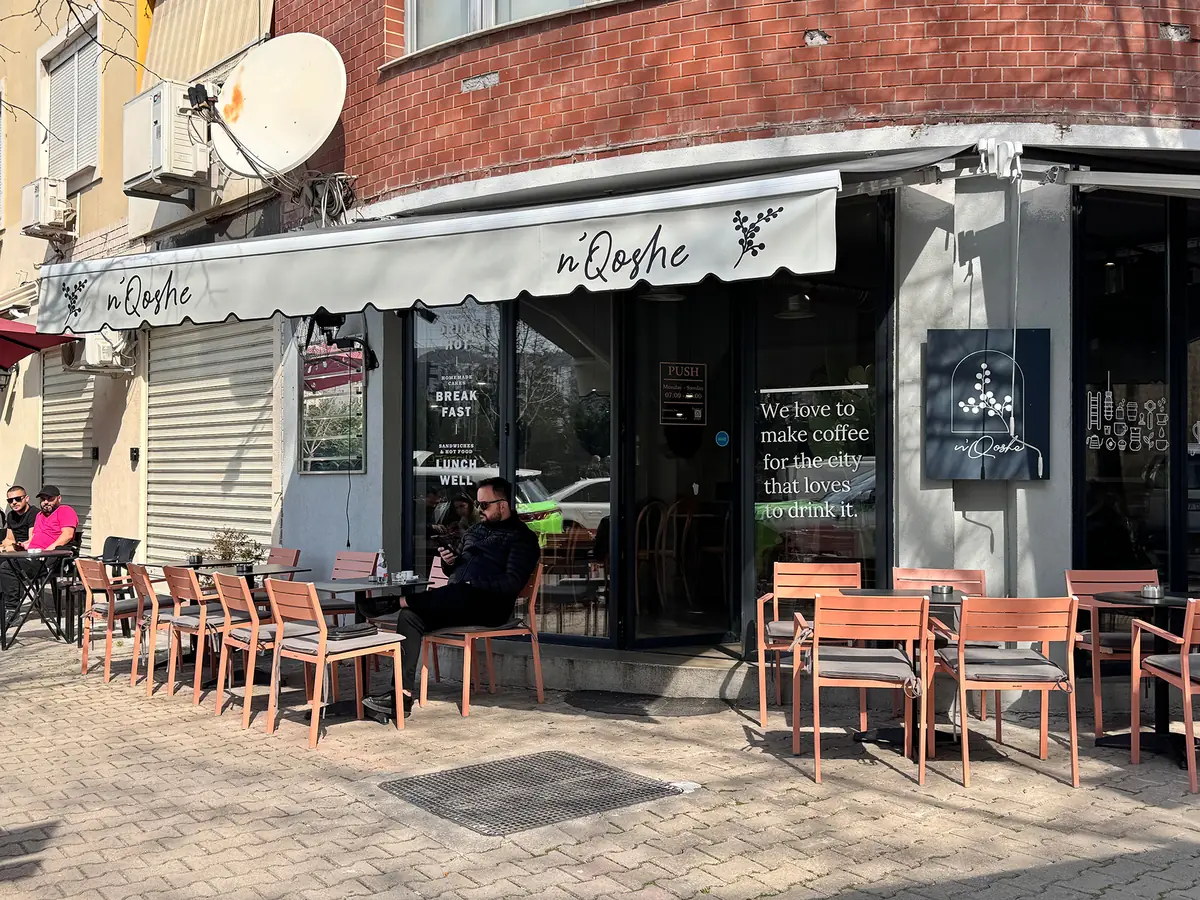
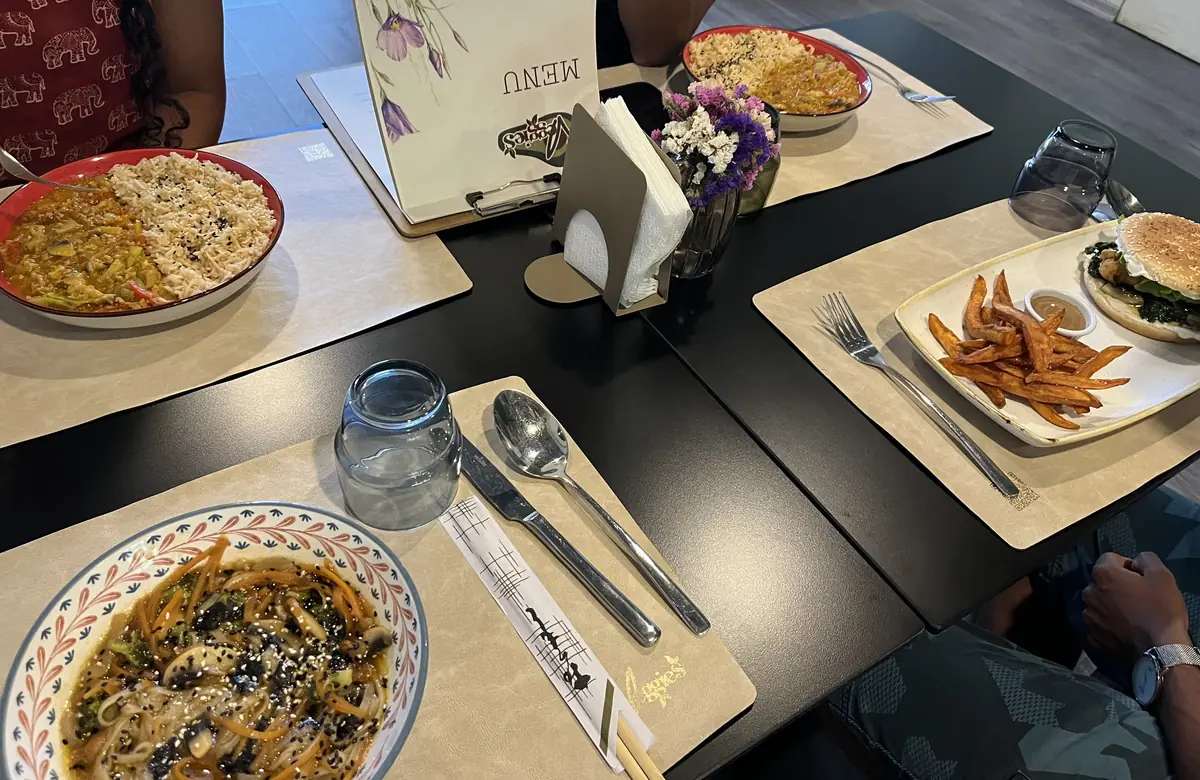
This is the name that comes up first, every time, and for good reason: it’s one of the only fully vegetarian kitchens in the city, with vegan dishes clearly flagged. The room sits in Kompleksi Nobis by the artificial-lake park, and it fills with a mix of expats and younger locals. Order the Shiva Bowl or the vegan burger.
The catch is the bill. Veggies is expensive by Albanian standards — a full meal for two, say two burgers, spring rolls, a beer and water, runs around 2,700 lek (~$33). That’s nothing in New York and a lot in Tirana. Go when you want a guaranteed, no-hunting vegan meal and don’t mind paying for the certainty.
- Location: Rruga Sami Frashëri, Kompleksi Nobis, Blloku, Tirana
- Cost: ~600-1,000 lek ($7-12) per bowl; about 2,700 lek (~$33) for two with drinks
- Best for: A reliable sit-down meal when you’re tired of scanning menus
- Order: The Shiva Bowl or the vegan burger
Mullixhiu — The Splurge Worth Booking Ahead
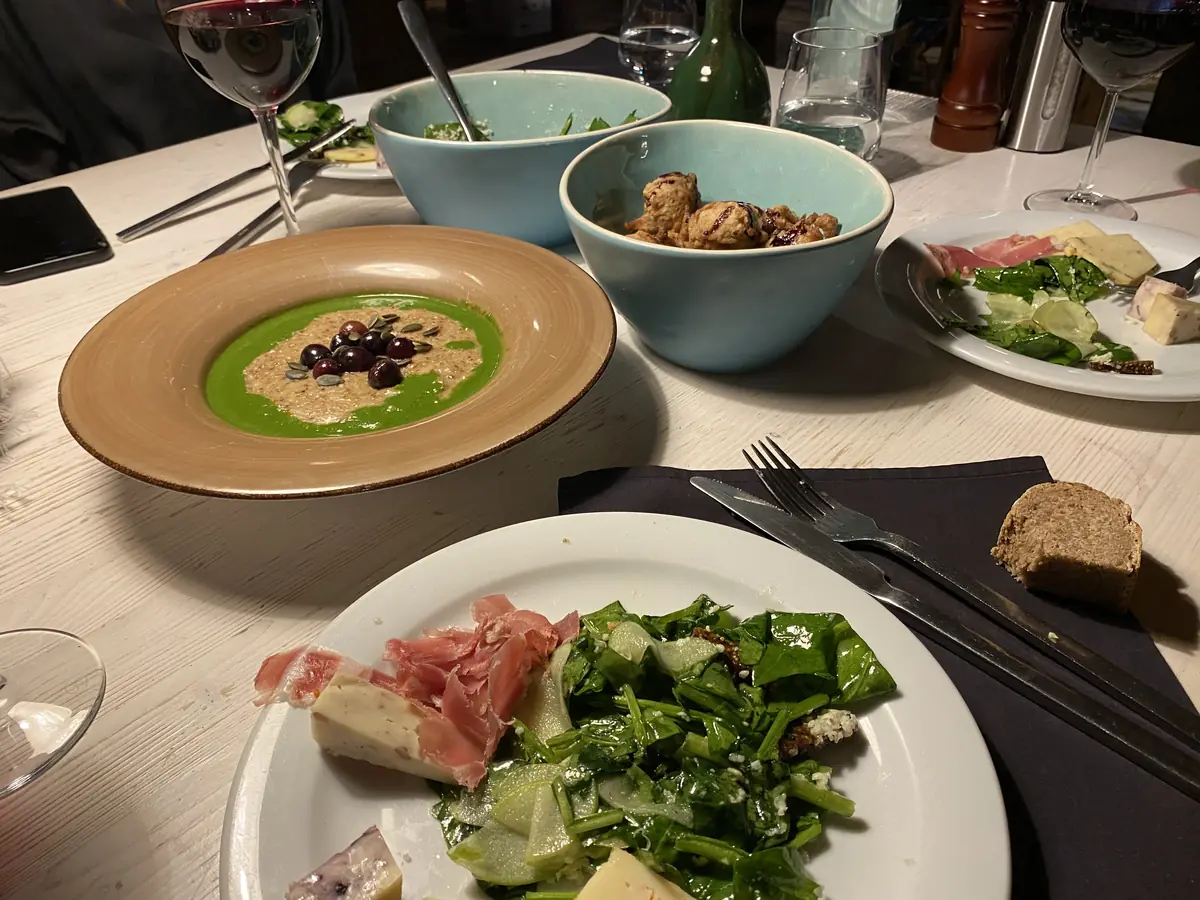
Chef Bledar Kola trained at Noma in Copenhagen and Fäviken in Sweden before coming home to open Mullixhiu by the artificial lake. The seven-course seasonal tasting menu runs about €30 (~$33) — a fraction of what that pedigree costs anywhere else in Europe. It isn’t a vegan restaurant, but the kitchen will build a plant-based version around what’s in season if you ask ahead.
Pro Tip: Request the vegan menu at least 48 hours out. Mullixhiu cooks to the season, not off a fixed vegan card, so the kitchen needs lead time to compose your courses.
- Location: Shëtitorja Lasgush Poradeci, by the artificial lake, Tirana
- Cost: Seven-course tasting menu around €30 (~$33)
- Best for: A special dinner, or vegans who plan ahead
- Book: Ask for the vegan version 48+ hours in advance
A few more spots round out the city. Falafel House is a fully vegan takeaway counter near Rinia Park — a few dollars for a wrap, no seating, exactly what you want at midnight. Happy Belly, also signed as Eat Smart, is an eight-seat bowl and smoothie bar on Rruga Ibrahim Rugova with a menu that changes daily and stays open from 10 a.m. to 2 a.m. Green & Protein, on the same street, does health-focused bowls and wraps with vegan items clearly marked. For traditional Albanian food with an actual labeled vegan section, Oda near Pazari i Ri is the reliable pick. Gjelbër does vegan bowls and wraps but has changed ownership — worth a look, worth verifying on arrival. And when you just need coffee with oat milk, the Mulliri Vjetër chain and the dairy-free bakery Panja have you covered.
Beyond Tirana: Sarandë, Berat and the North
Here’s a mistake worth avoiding: don’t plan your beach dinners around Ksamil. It’s fish-focused and overpriced, and vegans get stuck with a sad plate of tomatoes. Eat in Sarandë up the road instead. Outside the capital the pattern holds — the bigger and more touristed the town, the easier you’ll eat, and the traditional restaurants in the old UNESCO towns are quietly some of the most vegan-adaptable places in the country.
Sarandë and the Riviera
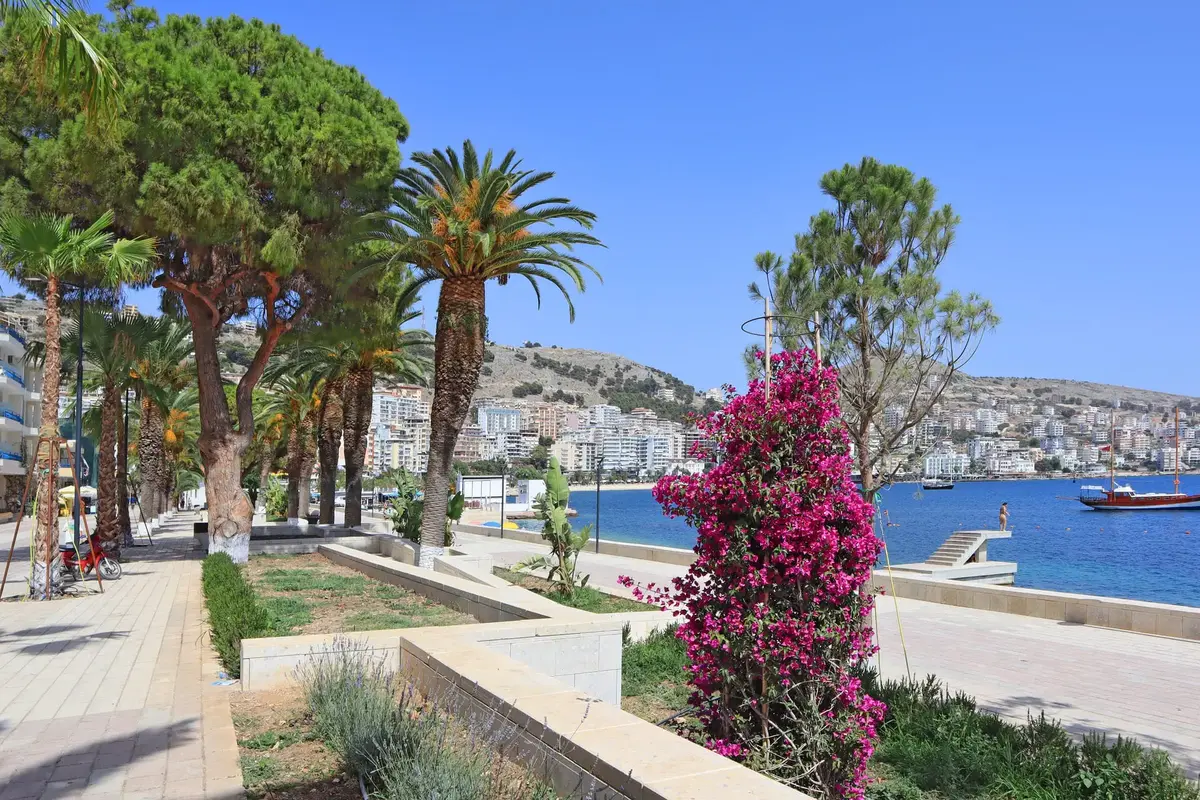
Sarandë has the best coastal vegan scene, small as it is. Green Life Market has run as a fully plant-based, seasonal spot — call ahead, since seasonal Riviera places open and close with the tourist calendar and some sources list it as closed. Salad Farm is the dependable backup for bowls and fresh plates. Prices along the Albanian Riviera run 20-40% above Tirana, so factor that in.
Berat — Traditional Kitchens That Adapt
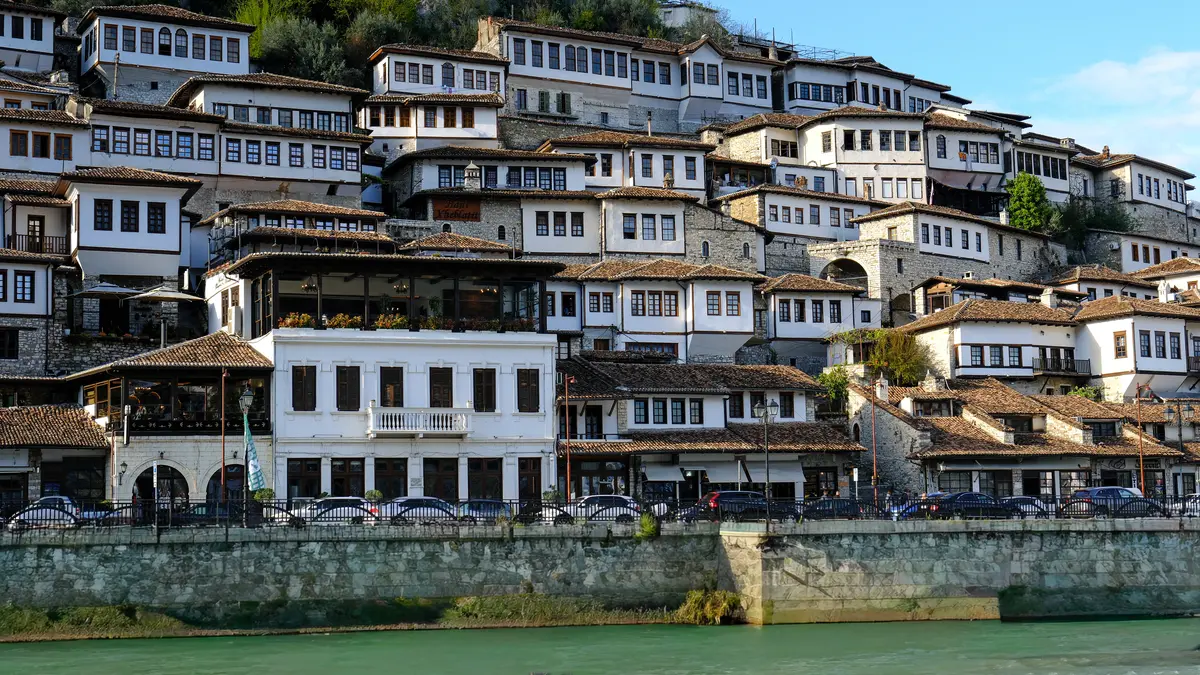
Berat, a UNESCO town of white Ottoman houses stacked up a hillside, has old Orthodox roots — which means the local kitchens genuinely understand plant-based cooking through the fasting tradition. Temi Albanian Food and Friendly House both do vegan-on-request well. Ask for the kreshmë (Lenten) options and watch a cook light up.
Gjirokastër — Stone Town, Watch the Rice Balls
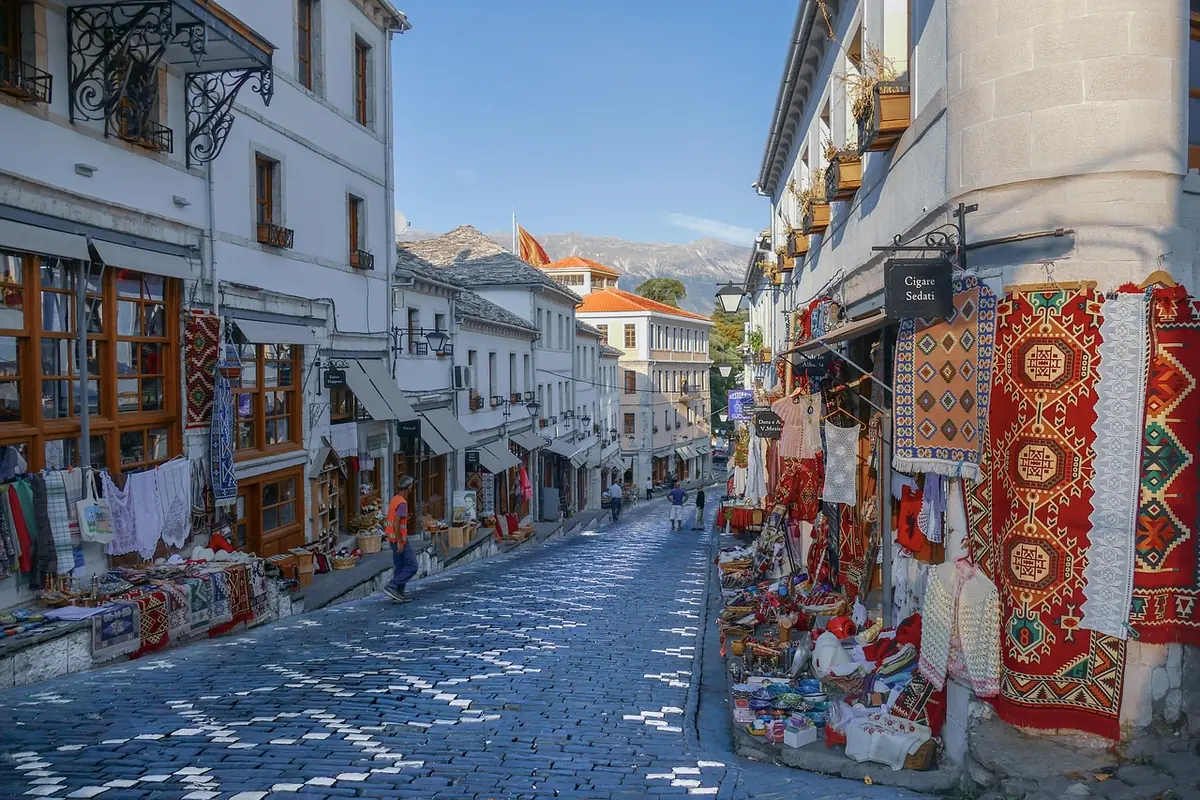
Gjirokastër‘s grey stone houses and slate roofs are a different world from Berat’s white ones. Taverna Tradiçionale actually prints “vegan” on its physical menu — a rarity anywhere in Albania — and Te Kube is another solid option. One warning specific to here: skip the qifqi, the local rice balls. They look innocent but they’re bound with egg.
Shkodër and the Northern Cafés
Shkodër, the northern hub near the Montenegrin border, punches above its size for veg-friendly cafés. Te Fisi does a proper vegan combination platter. M’Kanda makes vegan pistachio ice cream and sorbet — a real treat in a country where dairy-free desserts are rare. Stolia and Shega e Egër round out the options.
The Mountains: Theth and Valbonë
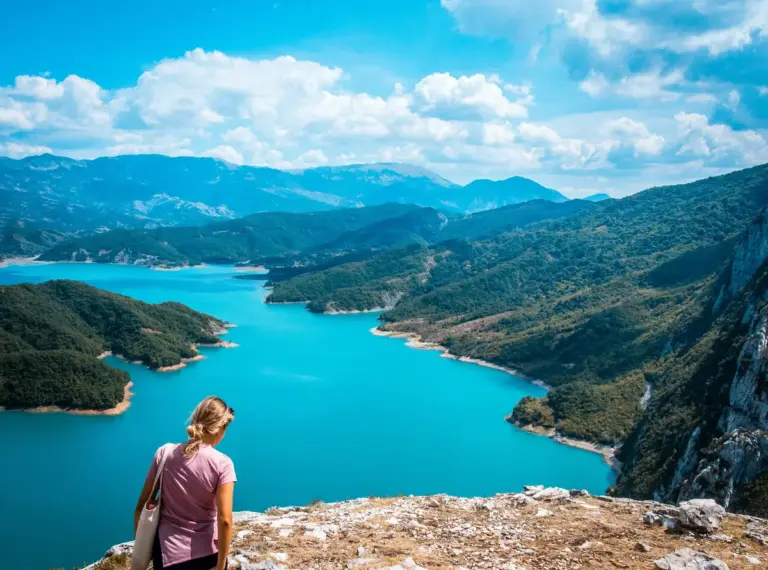
This is where vegan travel gets lean. In Theth, Valbonë and the smaller mountain villages you eat what the guesthouse cooks, and that means stuffed peppers, beans, bread and salad on repeat for days. Gjeçaj Guesthouse in Theth is used to the request. Stock up on nuts, fruit and bread before you head up — supply, not willingness, is the constraint here.
How Much Does Eating Vegan in Albania Cost?
Cheaply. A traditional plate of stuffed vegetables, salad and bread runs about 500 lek (~$6); a mid-range restaurant meal lands around 600-1,000 lek ($7-12). Even Tirana’s dedicated vegan spots stay reasonable by Western standards. Budget under $20 a day and you’ll eat well, with room for coffee and a beer.
Here’s the rough breakdown, at roughly 80-85 lek to the US dollar:
- Street byrek (cheese-free): 30-100 lek (~$0.40-1.20)
- Traditional sit-down vegan plate: around 500 lek (~$6)
- Mid-range restaurant meal: 600-1,000 lek ($7-12)
- Dedicated vegan spot for two (e.g. Veggies): about 2,700 lek (~$33)
- Plant-milk surcharge at cafés: ~300 lek (~$3.70)
- A full day of eating on a budget: under $20
A note on money, because it trips people up. Older guides convert at 100 lek to the dollar, which undersells your buying power — the real rate is stronger for US travelers. Cash still rules for small vendors and markets; card acceptance is climbing in Tirana but patchy elsewhere. Skip the Euronet ATMs, which tack on a fee of around €5 (~$5.50) per withdrawal, and use bank machines like BKT, Credins or Raiffeisen instead.
How Do You Say “No Cheese” in Albanian?
“No cheese” is pa djathë (pah JAH-thuh), and it’s the single most useful phrase you can carry. The word “vegan” barely registers outside Tirana, so skip it. Instead, list what you don’t eat: pa mish (no meat), pa djathë (no cheese), pa qumësht (no dairy). That gets you a clean plate almost anywhere.
The full cheat sheet:
- I am vegan: Unë jam vegan (male speaker) / Unë jam vegane (female speaker)
- Without animal products: pa produkte shtazore (more widely understood than “vegan”)
- No meat: pa mish
- No cheese: pa djathë
- No milk or dairy: pa qumësht
- No eggs: pa vezë
- No fish: pa peshk
- I am vegetarian: Unë jam vegjetarian
The nuance that saves meals: “vegetarian” is understood almost everywhere, “vegan” often isn’t, and listing your exclusions beats both. When in doubt, say pa mish, pa djathë and you’ll be handed something you can actually eat.
The Fasting Tradition That Makes Albania Vegan-Friendly
Some of the best vegan cooking in Albania has nothing to do with veganism. It comes from fasting.
Orthodox Christians observe Great Lent — Kreshma e Madhe, the 40 days before Easter — by cutting out meat, dairy, eggs and fish entirely. In towns with old Orthodox communities like Korçë, Berat and Gjirokastër, cooks know exactly how to build a plant-based kreshmë plate without blinking. The Balkan word for this fasting food is posno; use it and an older cook will understand you immediately.
The Bektashi order, a mystical branch of Islam headquartered on the eastern edge of Tirana under Baba Mondi (Edmond Brahimaj), fasts on vegan food and plum juice for the first stretch of Muharram. Albania’s prime minister has floated plans for a sovereign Bektashi micro-state — about 27 acres (11 hectares) carved out of Tirana, which would make it the smallest country on earth, home to the order’s roughly 115,000 followers. Whatever comes of that plan, it’s pushed the Bektashi vegan fasting tradition into wider view.
Albania is constitutionally secular, religious practice runs low, and interfaith mixing is the norm — which is partly why no one blinks at a dietary request rooted in someone else’s tradition. Veganism as an ethical identity is a newer, mostly urban idea here. Older generations frame plant-based eating through fasting and thrift, not ideology. Lean into that framing and doors open.
Settling In: Groceries and Plant Milk for Long Stays
For a long stay, self-catering is the easy mode. Beans, lentils and fresh produce are cheap and everywhere; processed substitutes like tofu, seitan and vegan cheese are the scarce, pricey exceptions. If you cook, you’ll eat better and spend almost nothing.
Where to shop:
- Conad (Italian chain): the broadest vegan range — Valsoia products, plant milks, tofu, vegan cheese. Priciest of the bunch.
- Spar: Alpro plant milks, canned beans, snacks; Violife vegan cheese has turned up as far north as Shkodër.
- Big Market / Tirana Cash & Carry: cheapest staples — rice, dried beans, oil.
- Rossmann (German drugstore): tofu, meat substitutes, protein bars, spreads.
- BioJu, Baronesha, Neranxi (Organic Shop): Tirana bio stores with tofu, plant milk, seeds and vegan cheese — pricier, and stock runs out.
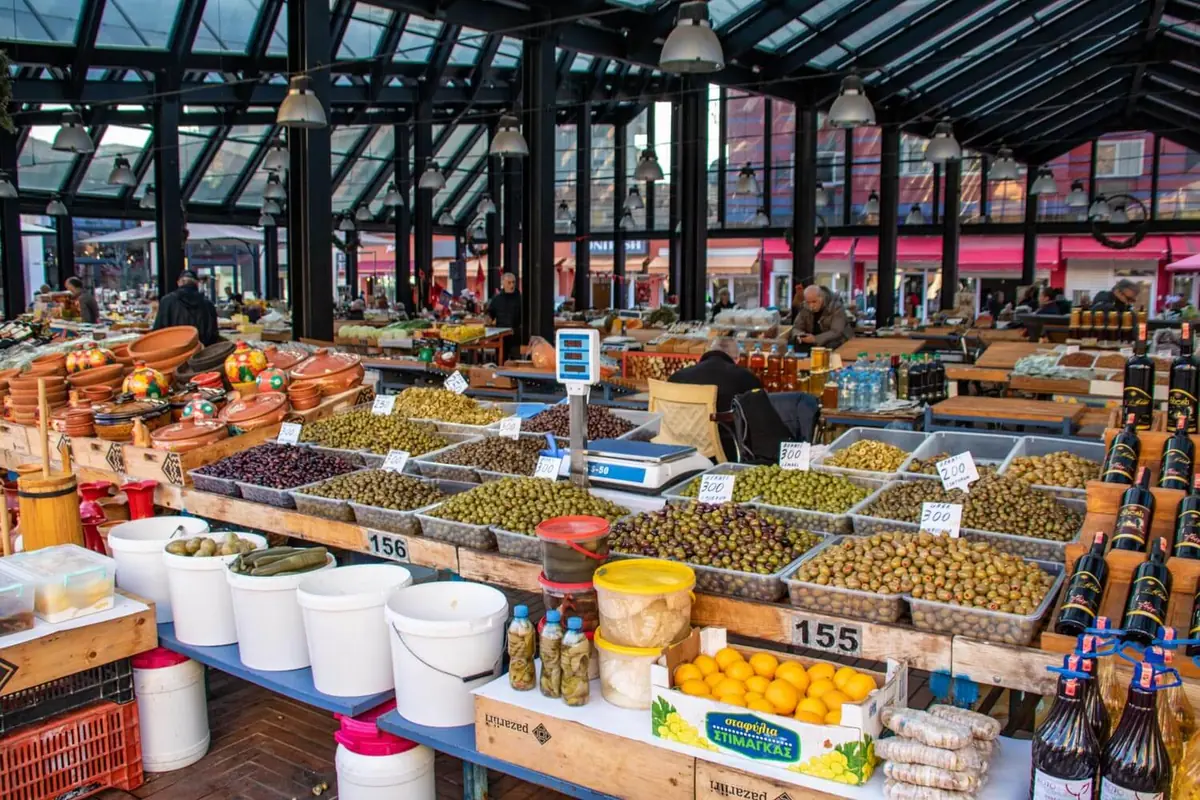
For produce, the market beats the supermarket on both price and quality. Pazari i Ri, Tirana’s New Bazaar between Skanderbeg Square and the Lana River, opens at 7 a.m. and has the best pickings before 10 a.m.
Pro Tip: Hit Pazari i Ri before 10 a.m. for the freshest produce; vendors start discounting in the late afternoon if you’d rather trade quality for a deal.
For coffee, the Mulliri Vjetër café chain carries soy and oat milk, usually for a surcharge of around 300 lek (~$3.70). If you’re staying a month, bring or buy your own oat milk and brew at home — that café markup adds up.
What I’d Tell a First-Timer
Being vegan in Albania is not the ordeal its reputation suggests. It’s easy in Tirana and the coastal cities, leaner in the mountains, and the whole thing hinges on two words at the table.
TL;DR: Vegan in Albania is comfortable in the cities and thin in the villages. Learn pa djathë, lean on naturally vegan bean and vegetable dishes, base yourself in Tirana’s Blloku, budget under $20 a day, and carry cash.
The freshness of the produce will spoil you — olive oil instead of butter, tomatoes that actually taste like tomatoes, beans stewed slow all afternoon. The monotony is real too; after a week of stuffed peppers you’ll crave anything else. Both things are true, and neither should stop you.
If the rest of the trip is still taking shape, our complete Albania travel guide covers the routes, seasons and logistics around the food.
Which dish are you most curious to try — the leek casserole, the stuffed grape leaves, or something you spotted on a menu I didn’t name? Drop it in the comments.