Yes, you can bring your dog to Albania from the United States, and the paperwork is lighter than most travelers expect. You need three things: an ISO-standard microchip, a rabies vaccination given at least 21 days before you arrive, and a veterinary health certificate written by a USDA-accredited vet and endorsed by USDA APHIS within 10 days of travel. There is no quarantine, no import permit for a personal pet, and no rabies blood test for a direct trip from the US.
The part almost no guide explains properly is the trip home. Albania is not on the CDC’s list of countries at high risk for dog rabies, so bringing your dog back into the United States takes one free online form and nothing else. That single fact makes Albania one of the easiest long-haul destinations in Europe for an American traveling with a dog, provided you don’t quietly break the rule with a connecting flight. That trap, and how to avoid it, is covered further down.
Is Albania Actually Dog-Friendly?
Albania is genuinely dog-friendly by Balkan standards, and it is getting friendlier every year. Dogs are a normal sight on café patios in Tirana, on the beach promenades in Saranda and Vlora, and on hiking trails in the northern mountains. Albanians tend to be relaxed around dogs, and feeding neighborhood strays is a widespread and openly practiced habit.
That said, “dog-friendly” here does not look like Portland or Austin. Indoor restaurant seating is usually a no. Off-leash beach time is easy in the shoulder season and awkward in July, when sunbeds cover every inch of sand. Rural guard dogs are working animals, not greeters. And veterinary infrastructure thins out fast once you leave the capital.
The sweet spot for a dog trip lines up with Albania’s shoulder seasons: late April through mid-June, or September into late October. Coastal temperatures are comfortable, the crowds are gone, hotels are cheaper and more flexible about pets, and the beaches are effectively open to dogs. July and August bring 90°F-plus heat, packed shorelines, and pavement hot enough to burn paw pads by mid-morning.
What Albania Requires to Let Your Dog In
Albania’s rules are modeled on the European Union’s pet travel framework, even though Albania is not an EU member. The requirements below come from the model animal health certificate published by USDA APHIS for pets traveling from the United States to Albania, which is the document your vet will actually fill out.
| Requirement | Timing | Detail |
|---|---|---|
| ISO 11784/11785 microchip | Must be implanted before the rabies vaccination | 15-digit chip; a non-ISO chip means you must carry your own scanner |
| Rabies vaccination | Dog at least 12 weeks old at the time of the shot; at least 21 days must pass after the primary vaccination | Boosters count as a new primary vaccination if the previous one lapsed |
| Veterinary health certificate | Issued by a USDA-accredited vet and endorsed by APHIS within 10 days of travel | Valid for 10 days to the border check, then four months for onward movement |
| Rabies titer test | Not required on a direct route from the US | Only triggered by transiting a country outside the EU’s approved list |
| Import permit | Not required for a personal pet | Commercial imports are a different process |
| Quarantine | None for a compliant dog | Albania does not quarantine dogs that meet the rules |
| Tapeworm treatment | Not mandatory | The certificate includes a box for “not treated” |
| Number of dogs | Up to five under non-commercial rules | More than five requires a competition or event exemption |
The order of operations matters more than the paperwork
The most common and most expensive mistake is doing things in the wrong sequence. The microchip has to go in first. If your dog was vaccinated for rabies and then microchipped afterward, that vaccination does not count for international travel. You have to revaccinate after the chip is in place, then wait out the 21 days again.
Check your dog’s records for the chip implantation date and the vaccination date before you book anything. If the vet’s paperwork doesn’t show the chip number and an implantation date that precedes the shot, fix that first.
The 21-day rule, and why some sites say 30
You will find pages claiming Albania requires a 30-day wait after the rabies shot. That number comes from a different rule and gets copied around carelessly.
The model health certificate on the APHIS site is explicit: at least 21 days must have elapsed since completion of the primary anti-rabies vaccination. The 30-day figure belongs to the rabies antibody titration test, where the blood sample must be drawn no less than 30 days after the vaccination. Two different clocks, two different purposes.
Count the 21 days backward from your actual arrival date, not your booking date, and give yourself a few days of padding in case a flight gets rescheduled.
Does Albania require a rabies titer test?
No, not for a dog flying from the United States directly to Albania, or routing only through EU countries or other countries on the EU’s approved list.
APHIS words it precisely: pets originating in the US that travel directly to Albania, or transit only countries on the EU’s approved annex or anywhere in the European Union, do not need a titer test. Everything else does. The practical consequence is that your connecting airport can create a blood-test requirement that a nonstop routing would not, which is why the layover section below deserves attention before you buy tickets.
If you do get caught by that rule, there is an alternative to the blood test: an owner’s declaration confirming the dog stayed within the transport or the airport perimeter and had no contact with rabies-susceptible animals. APHIS publishes that form alongside the health certificate. It is workable, but it depends on your dog genuinely never clearing customs at the connecting airport.
How the USDA APHIS process actually works
This is a two-layer document, and understanding that saves a lot of confusion.
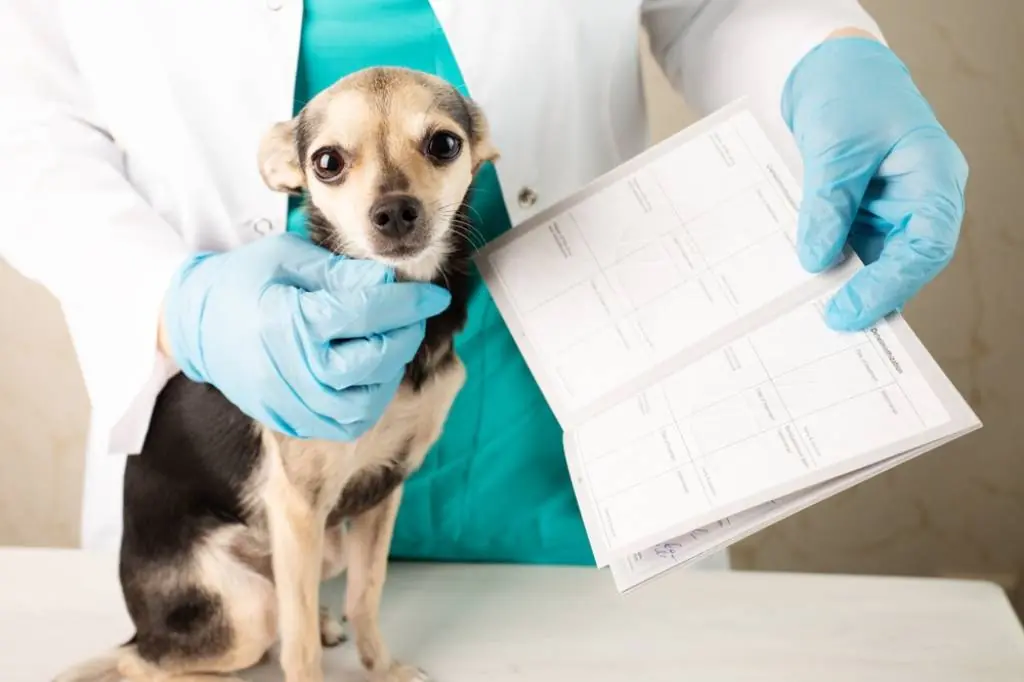
Layer one is your vet. The exam and the certificate must be done by a USDA-accredited veterinarian, which is a specific federal credential, not just any licensed vet. Call ahead and confirm, because plenty of clinics don’t have one on staff. APHIS maintains a lookup tool for finding accredited vets near you.
Layer two is the federal endorsement. Your vet submits the completed certificate to APHIS through VEHCS, the Veterinary Export Health Certification System. For Albania, APHIS accepts electronic signature from the vet and returns a digitally endorsed certificate, which means your vet can print the finished document straight from the system. No mailing, no overnight courier, no embossed seal to protect in transit.
Print the endorsed certificate and carry it in your hand luggage. Never in a checked bag.
An EU pet passport is not a substitute
The blue EU pet passport is issued to pets that reside in the European Union. American dogs don’t qualify for one and can’t get one before departure. Albania recognizes the EU passport when an EU resident presents it, but that has no bearing on a dog flying out of Denver or Newark. Your document is the APHIS-endorsed health certificate.
Banned breeds, breed rules, and the fine print
Albania does not publish a national banned-breed list, and pit bull type dogs are not prohibited at the national level. Municipal ordinances can differ, so it’s worth a quick check if you’re settling in one city for a while.
Your bigger constraint is almost always the airline, not the country. Carriers maintain their own restricted-breed lists and separate rules for snub-nosed dogs, and those lists are enforced far more aggressively than anything you’ll meet at the Albanian border.
Bringing Your Dog Back to the United States
This is where Albania quietly beats most of Europe, and it is the section worth reading twice.
Albania does not appear on the CDC’s list of countries considered high risk for importing dog rabies. Neither do Greece, Italy, Montenegro, Kosovo, or North Macedonia. That means a Balkan road trip keeps your dog on the simplest possible path home.
The only document you need
For a dog that has been exclusively in dog rabies-free or low-risk countries during the six months before entry, the CDC Dog Import Form receipt is the only required documentation to enter or return to the United States.
The form is completed online, it is free, and the receipt arrives by email after you confirm your address. You can print it or show it on your phone. The receipt stays valid for six months from issuance and can cover multiple entries in that window, as long as the dog hasn’t been to a high-risk country in the meantime.
Your dog also has to meet three baseline conditions on arrival: appear healthy, be at least six months old, and have a microchip that a universal scanner can read.
What you do not need
No rabies titer test. No CDC-registered animal care facility reservation. No Certification of US-Issued Rabies Vaccination form. And no restriction on where you land, since a dog coming from a low-risk country can enter at any airport, seaport, or land border crossing.
Two housekeeping notes. The country of departure listed on your receipt must match the country your dog actually flies out of, so if plans change and you end up leaving from Athens instead of Tirana, submit a new form. And a recent update to the CDC’s form system changed the appearance of the receipt without changing any requirement; previously issued receipts remain valid until they expire.
The layover trap that can undo all of it
Here is the detail that separates a genuinely useful guide from a rewritten press release, and the reason to plan your routing before your paperwork.
The CDC treats a dog as having entered a country if it clears customs there. A layover counts. And the six-month lookback applies to every country your dog has been in before arriving in the US, regardless of where the current itinerary begins.
Turkey is on the CDC’s high-risk list. Istanbul is one of the most convenient connections between the US and Tirana, and it is frequently recommended as a way to sidestep EU transit paperwork. But if your dog clears Turkish customs on either the outbound or the return leg, it falls under the high-risk country requirements when it re-enters the United States. That is a completely different and considerably heavier process.
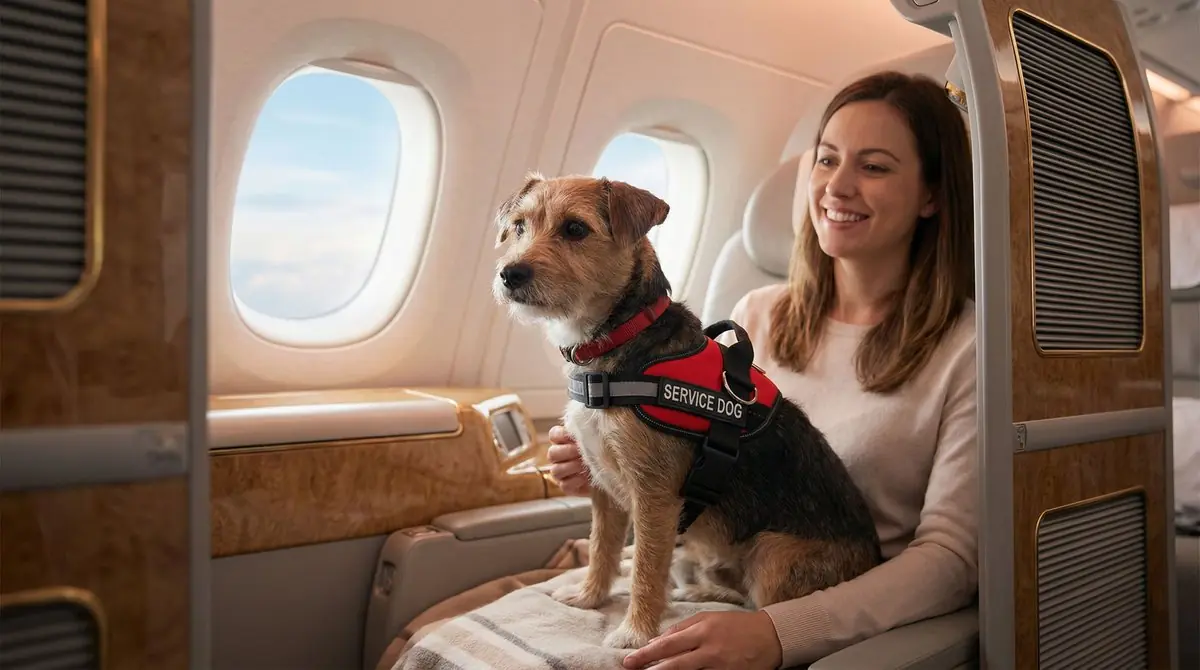
Whether the dog clears customs depends on how it travels. Dogs riding in the cabin or switching between airlines are often required to clear customs; dogs traveling as checked baggage or cargo that stay in airline custody through the connection frequently are not. The CDC’s own guidance says to ask your airline directly if you’re unsure.
There is also a hard sequencing rule buried in the CDC’s layover guidance that catches people out. If your dog is US-vaccinated and there is any chance it will end up on the high-risk path, the required documentation has to be obtained before the dog leaves the United States. It cannot be issued retroactively. Get it wrong and your dog is treated as foreign-vaccinated on the way home, which means a titer test, a registered facility reservation, and a specific arrival airport.
The clean advice: if you route through Istanbul, confirm in writing that your dog will not clear Turkish customs, and consider having your vet complete the US-issued rabies vaccination certification before departure as insurance. If that sounds like more risk than you want to manage, connect through the EU instead and handle the transit certificate.
Flying to Tirana With a Dog
Tirana International Airport Nënë Tereza (TIA) is the only realistic air entry point, and there are no nonstop flights from the United States. You are connecting somewhere, and that connection choice drives your paperwork.
| Airline | Cabin | Hold | Cabin limit | Notes |
|---|---|---|---|---|
| Air Albania | Yes | Yes | 8 kg (about 17.6 lb) including carrier; carrier 40 x 30 x 23 cm (roughly 16 x 12 x 9 in) | Reserve pet space at least 6 hours before departure; pets are charged as excess baggage, not free allowance |
| Turkish Airlines | Yes | Yes | Same 8 kg and 40 x 30 x 23 cm limits | Hold crates up to 75 x 75 x 125 cm; snub-nosed breeds barred from the hold; restricted breed list applies; pet lounge at Istanbul |
| Lufthansa, Austrian, ITA Airways and other EU carriers | Yes | Usually | Typically around 8 kg including carrier | Convenient schedules, but the route triggers EU entry paperwork |
| Wizz Air | No | No | Not applicable | Carries no pets at all except recognized guide and assistance dogs |
Wizz Air deserves its own line because it flies a large share of the budget routes into Tirana and travelers routinely assume a small dog in a carrier will be fine. It will not. The airline’s policy is that animals are not permitted on board apart from registered guide and assistance dogs, and there is no cargo option.
Cabin, checked baggage, or cargo
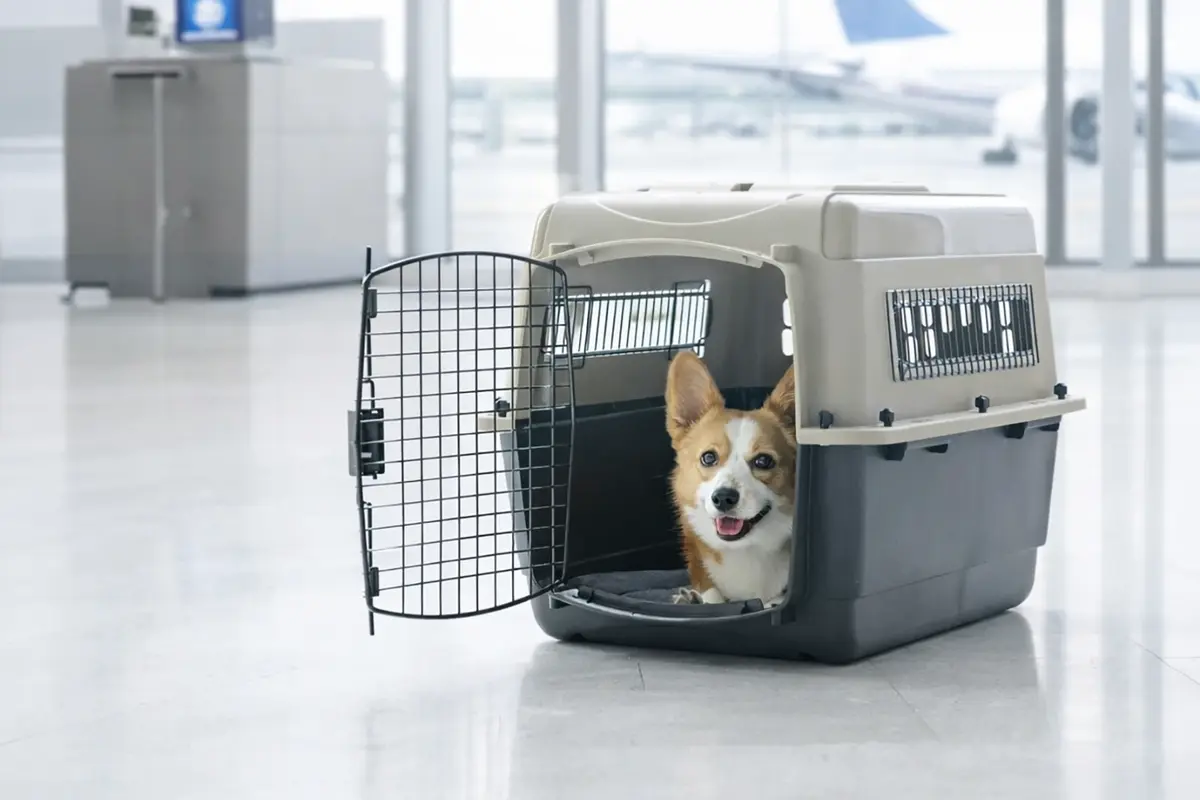
An 8 kg combined limit including the carrier means roughly a 12-pound dog. Anything larger flies in the hold as checked baggage or as freight.
The hold is safer than its reputation. The compartment used for animals is pressurized and temperature-controlled, and airlines move large numbers of pets this way every year. But it comes with real constraints: brachycephalic breeds are widely refused in the hold, summer heat embargoes can shut the option down entirely on Mediterranean routes, and crate specifications are strictly enforced.
Book pet space at the same moment you book your own seat. Cabin slots are capped per flight and they fill. Then call the airline’s dedicated pet or cargo desk, not general reservations, and get the confirmation in writing.
The EU hub question
EU entry rules apply at the first point of entry into the European Union, not at your final destination. Connect through Frankfurt, Vienna, Rome, or Athens and your dog is technically entering the EU, which means you need an EU transit health certificate in addition to the Albanian one. APHIS states this directly: a pet transiting an EU country en route to a non-EU country needs a transit health certificate, and it is the same certificate you would use if the EU country were the final destination.
That is extra paperwork, not a barrier. Your accredited vet handles both certificates in the same appointment. Weigh it against the Turkish routing and the CDC complication described above, and pick your poison deliberately rather than by accident.
Arriving by Ferry, Car, or Land Border
Plenty of American travelers reach Albania overland from Montenegro or Greece, or by sea from Italy or Corfu. Dogs travel well on all of these routes.
The Saranda to Corfu crossing takes roughly 30 to 55 minutes depending on the vessel. Pets are generally welcome and often travel free, but they must be leashed and muzzled or kept in a carrier, and they are not allowed in indoor passenger lounges. Bring a basket muzzle even if your dog has never worn one; crews apply the rule inconsistently, and being the person without one is a bad position at a boarding gate.
Longer overnight ferries connect Durres with Bari and Vlora with Brindisi in Italy. Those operators offer kennels and, on some ships, pet-friendly cabins. Book the pet space in advance, because kennel capacity is limited and cannot always be reserved online.
Albania has land crossings with Montenegro, Kosovo, North Macedonia, and Greece. Checks on the Albanian side are often quick and sometimes cursory. Do not read that as permission to travel without documents. The inconsistency runs both directions, and an officer who does want to see a microchip scan and a health certificate will not be talked out of it.
Keep every document in a waterproof folder in the vehicle or your day bag, along with a photo of each page on your phone.

The Greece and Italy Trap Nobody Warns You About
If your itinerary includes leaving Albania for an EU country, stop and read this before you book anything, because it has a three-month lead time and no last-minute fix.
Albania is not on the EU’s list of approved third countries for pet travel. Bosnia and Herzegovina, Montenegro, North Macedonia, Serbia, and the United States all are. Albania is not.
Entering the EU from a country that isn’t on that list requires a rabies antibody titration test showing a result of at least 0.5 IU/ml, performed at an EU-approved laboratory. The blood sample must be drawn at least 30 days after the rabies vaccination, and you must then wait three full months from the date of the blood draw before your dog can enter the EU. You will also need an EU animal health certificate issued by an official veterinarian, and entry has to happen at a designated travelers’ point of entry.
So the day trip from Saranda to Corfu that looks so appealing on a map is, on paper, an EU border crossing from an unlisted country.
The workaround is planning. Have your USDA-accredited vet run the titer test in the United States before you leave, at least three months before you expect to cross into Greece or Italy. US laboratories are EU-approved, the result doesn’t expire as long as boosters stay current, and it converts a hard stop into a non-issue. Confirm the details with your accredited vet and with the veterinary authority of the EU country you plan to enter, since certificate models and entry-point lists are periodically updated.
If a Balkans loop is what you’re after and you’d rather skip the blood test entirely, route through Montenegro, North Macedonia, or Bosnia instead. All three sit on the EU’s approved list, and all three sit off the CDC’s high-risk list, which keeps both ends of your trip simple.
What Actually Happens at the Border
At Tirana International Airport, collect your dog first. Cabin pets stay with you; dogs that flew as checked baggage are usually delivered to an oversized baggage area next to the main carousels, and staff will point you there.
Then proceed to border control and declare the animal. A veterinary officer or customs officer scans the microchip, confirms the number matches the certificate, checks the rabies dates, and looks the dog over. For a compliant dog with organized paperwork, the whole interaction typically takes a few minutes. Your own entry requirements as an American are far simpler and handled at the passport desk as usual.
Two things make it faster. Have the documents out of the folder and in your hand before you reach the desk. And if you’re arriving late at night or very early, contact the airport or your airline in advance to confirm a border veterinary officer will be on duty. Arrange your airport transfer ahead of time as well, since not every driver will take a dog without warning.
Day-to-Day Life With a Dog in Albania
Once the paperwork is behind you, the trip looks much like any other Albania trip, with a handful of dog-specific adjustments.
Veterinary care
Serious veterinary capability is concentrated in Tirana. Vet Hospital Tirana, on Rruga Hiqmet Buzi in the Sauk area, is the country’s largest facility and the only 24-hour emergency animal hospital in Albania. It runs digital X-ray, an intensive care unit, a full surgical suite, plus a boarding hotel and a pet store on site. The number is +355 67 239 1111.
Outside the capital, expect competent general practice in Durres, Vlora, Shkoder, and Saranda, and very little after hours or on Sundays. If your dog takes regular medication, bring the full supply for the trip plus a two-week buffer, along with a written prescription and your vet’s contact details. Do not plan on refilling a specific US brand locally.
Food and supplies
Tirana pet stores stock the major international brands, and delivery apps cover the capital reasonably well. Coastal towns carry the basics. If your dog is on a prescription or limited-ingredient diet, bring it with you. Sourcing a specific therapeutic formula in Albania on short notice is not realistic, so build the food, medication, and gear into your Albania packing list early.
Where to stay
Short-term rental platforms are the path of least resistance, and listings with private yards or terraces are common and popular with dog owners. Filter for pet-friendly and then message the host directly, since Albanian hosts are often more flexible than the listing filter suggests, especially outside peak season.
International hotels in Tirana generally accept dogs with a fee. Guesthouses and agrotourism farm stays along the Riviera and in the northern mountains are frequently relaxed about dogs, particularly in shoulder season when they’re glad of the booking. Ask about size limits before you pay.
Beaches
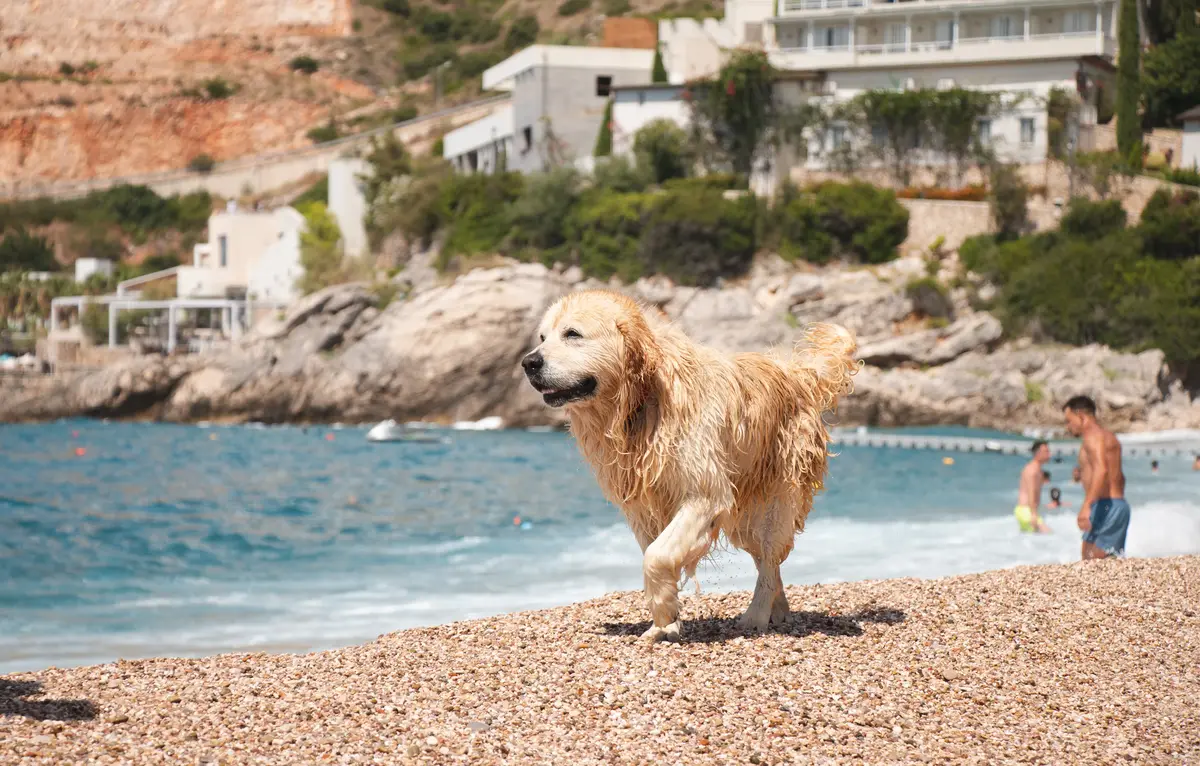
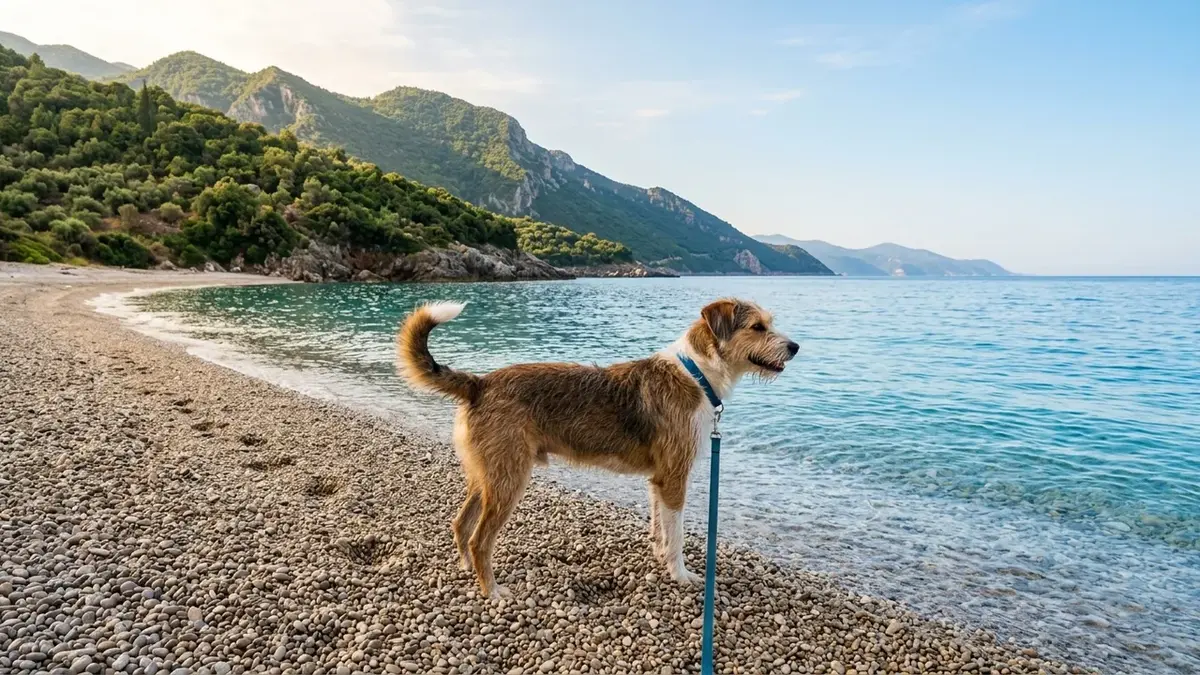
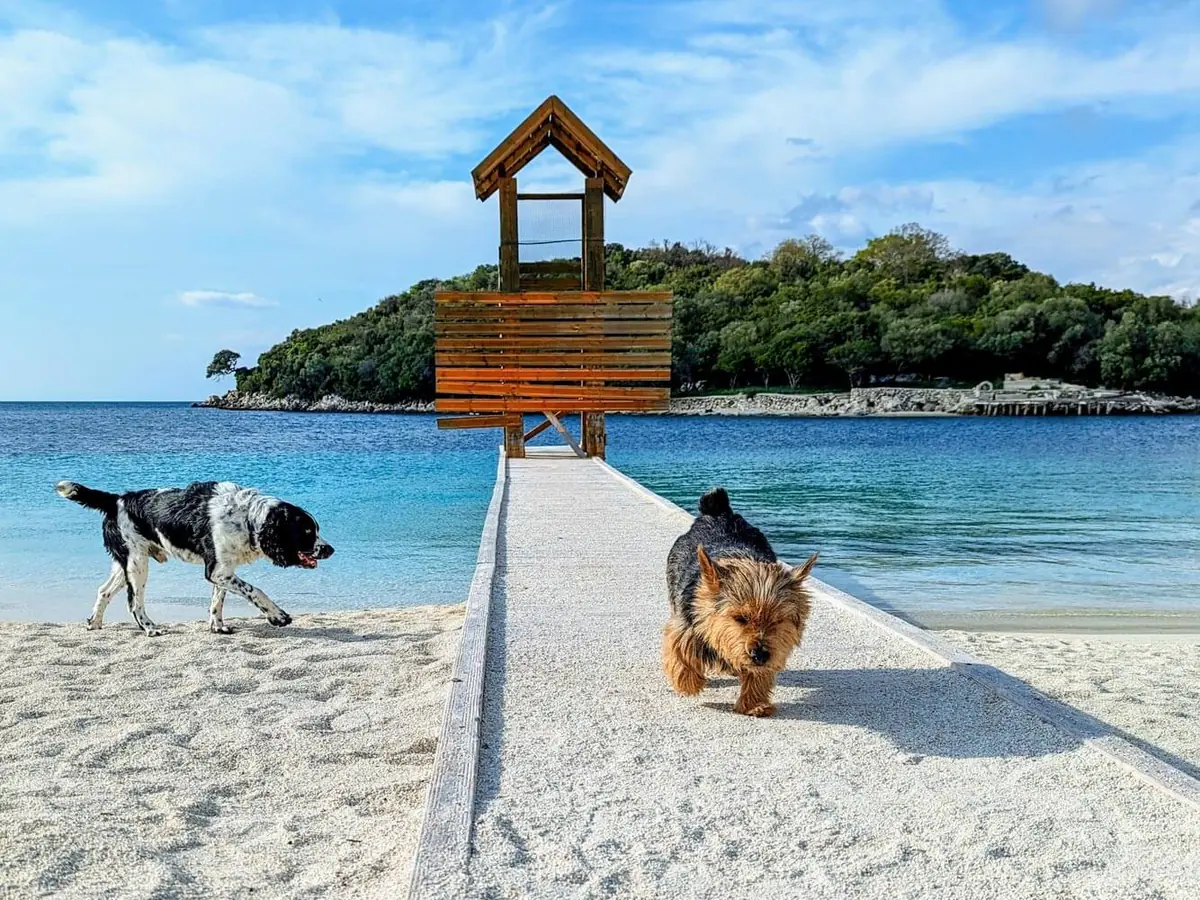
Ksamil, Borsh, Dhermi, Jale, Gjipe, and Livadhi, all strung along the Albanian Riviera, are the names that come up most often among dog owners. In the off-season these beaches are effectively yours, and leash enforcement is nonexistent. In July and August, sunbed operators cover most of the accessible sand and access with a dog becomes genuinely difficult. Borsh is the longest beach in the country and holds up best under crowds.
Restaurants, cafés, and parks
Albania’s outdoor café culture works in your favor. Well-behaved dogs on patios are normal across Tirana’s restaurant scene and in tourist towns, and nobody will make a scene. Indoors is a different matter and usually a no. Ask, don’t assume.
For green space, the Grand Park around Tirana’s artificial lake is the obvious daily walk in the capital. Farther afield, Theth and Valbona in the northern Alps, the Llogara pass, the Blue Eye spring, and Lake Shkoder all work well with a dog. Butrint National Park, the UNESCO archaeological site near Saranda, permits leashed dogs, as does Gjirokaster Castle.
Getting around the country
Rent a car. This is the single biggest quality-of-life decision for a dog trip in Albania, and it isn’t close.
Intercity minibuses, called furgons, operate on driver discretion. Some will take a leashed dog, some will insist on a carrier, some will refuse outright. Buying a second ticket helps. City buses generally don’t accept dogs that aren’t in a carrier. Taxis and rideshares vary; ask when you book rather than at the curb.
Health Risks That Catch American Owners Off Guard
Leishmaniasis
This is the one that deserves your attention, and it is barely mentioned in most Albania travel content.
Canine leishmaniasis is endemic across the Mediterranean basin, including Albania and the wider Balkans. It’s transmitted by phlebotomine sandflies, which are active from roughly May through October and bite most heavily at dusk and dawn. There is no cure. Treatment manages the disease; it does not eliminate the parasite. Dogs that come home infected can carry it for life.
Prevention is straightforward and highly effective, and it is standard practice for every dog living in southern Europe. Following LeishVet’s published guidance:
Permethrin spot-on treatments give repellent protection for about three to four weeks and should be applied at least two days before you arrive in an endemic area. Deltamethrin or flumethrin collars protect for several months, up to about eight, and should go on one to two weeks before exposure so the compound distributes across the skin. Field studies on these collars have shown protection rates well above 90 percent.
A word of caution on the vaccine question, because outdated advice circulates widely. CaniLeish, for years the default recommendation, was withdrawn from the European market and is no longer available. LetiFend is the vaccine most commonly offered in Europe now. Neither is routinely stocked by US veterinarians, and vaccination is meant to complement repellents, not replace them. Talk to your vet well before departure about what’s realistically obtainable.
Behavioral precautions help too: keep your dog indoors from dusk through the early night during sandfly season, and use screens or fine netting on windows where you’re staying.
Ticks, fleas, and heartworm
Ticks are abundant, particularly in scrub and long grass along the coast and in the hills. Keep your normal preventive protocol running and check your dog thoroughly every evening. Heartworm is present in the region; if your dog isn’t already on year-round prevention, start before you go.
Heat
Summer inland temperatures regularly clear 95°F, and coastal pavement gets brutal. Walk early and late, carry water on every outing, and use the back-of-the-hand test on asphalt before you set out. Cars parked in Albanian summer sun become dangerous within minutes.
Strays and rural dogs
Free-roaming dogs are common in cities and along roads, and they are one of the first things Americans ask about when weighing safety in Albania. Most are habituated to people, well-fed by locals, and completely uninterested in you. Problems tend to arise between dogs rather than with people, particularly if your dog is intact or reactive.
Livestock guardian dogs in rural and mountain areas are a different situation. They are working animals protecting flocks and they take that seriously. On mountain trails, keep your dog leashed and close, give herds a wide berth, and carry a walking pole. A calm, unhurried retreat resolves nearly every encounter.
Leash Laws, Muzzles, and Local Rules
Enforcement is light and inconsistent, but the practical norms are clear. Keep dogs leashed in city centers and in any enclosed public space. Carry a muzzle for ferries and public transport, where operators can and do require one. Clean up after your dog, which is increasingly expected in Tirana even if the habit isn’t yet universal.
Albania strengthened its criminal penalties for animal cruelty in recent years, though animal welfare organizations continue to point out gaps in how those protections apply to stray animals. If you’re staying longer term, registering your dog locally is worth asking your vet about.
What It Costs
Treat these as planning estimates and confirm current prices with your vet, your airline, and Albania’s National Food Authority (AKU), which oversees pet import rules. They sit on top of your usual Albania travel budget.
| Item | Typical range |
|---|---|
| Microchip (if needed) | $30 to $50 |
| Rabies vaccination | $20 to $50 |
| Accredited vet exam and health certificate | $100 to $200 |
| APHIS endorsement fee | Varies by certificate type; confirm when your vet submits |
| Airline pet fee, each way | $70 to $200 and up |
| EU transit certificate (if routing through the EU) | Usually bundled with the main certificate visit |
| Rabies titer test (only if EU entry is planned) | A few hundred dollars including draw and shipping |
| Sandfly collar or spot-on treatment | $25 to $60 |
| CDC Dog Import Form | Free |
The costs that hurt are the avoidable ones: a rebooked flight because the 21-day window was missed, an emergency titer test that forces a three-month delay, or a canceled EU leg because nobody checked the listed-country rule.
A Timeline You Can Actually Follow
| When | What to do |
|---|---|
| Four months or more before travel | If any EU country is on your itinerary after Albania, schedule the rabies titer blood draw now. The three-month clock starts at the draw. |
| Eight to ten weeks out | Confirm the microchip is ISO-standard and was implanted before the rabies shot. Revaccinate now if the sequence is wrong. Book flights and reserve pet space simultaneously. |
| Four to six weeks out | Confirm your vet is USDA-accredited and book the certificate appointment. Get the airline’s pet confirmation in writing. |
| Two to four weeks out | Fit the sandfly collar or apply the spot-on. Buy and fit the travel carrier so your dog has time to get comfortable in it. |
| Within 10 days of travel | Vet exam, health certificate issued and submitted through VEHCS, APHIS endorsement returned, certificate printed. |
| One to two weeks before flying home | Submit the CDC Dog Import Form and save the receipt to your phone and in print. |
| Travel day | Documents in hand luggage, water and a collapsible bowl, and the airline’s pet desk number saved in your contacts. |
Why These Rules May Change
Albania is deep in EU accession negotiations. All 33 negotiating chapters are now open, the country cleared the interim rule-of-law benchmarks required to begin closing chapters, and the government has set a target of concluding talks by 2027 with membership in 2030. Analysts consider that timeline ambitious rather than assured.
For dog owners, accession would be genuinely good news. It would move Albania onto the EU’s pet travel framework, bring EU pet passports into play, and eliminate the titer-test requirement for crossing into Greece or Italy. It could also change what US travelers need on the way in.
Until that happens, verify before you fly. The two pages that matter are the APHIS country page for Albania and the CDC’s dog importation section, both of which are updated when rules change. Airline pet policies shift even faster, particularly weight limits, breed restrictions, and seasonal heat embargoes, so reconfirm those directly with the carrier close to departure.
The Short Version
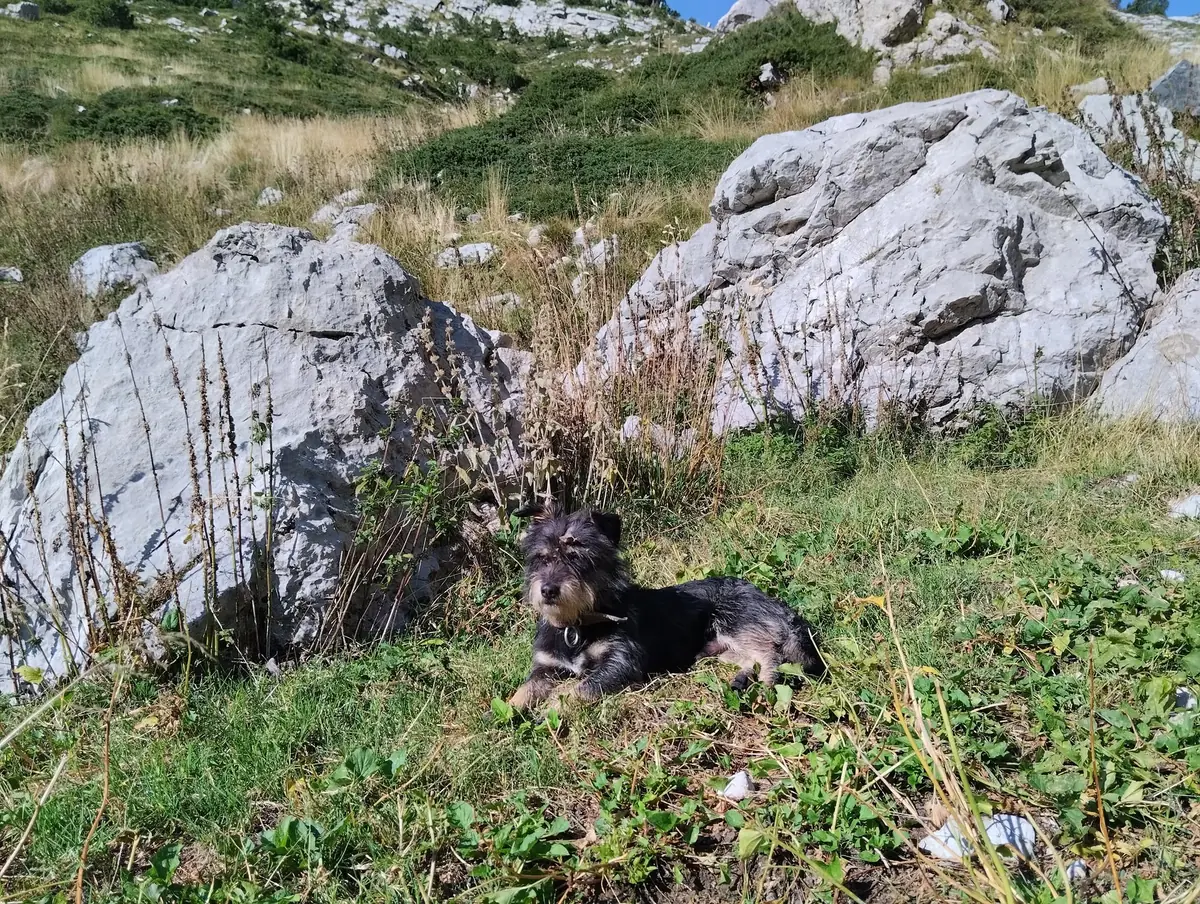
Albania is one of the most rewarding places in Europe to travel with a dog, and one of the least complicated on paper. Chip your dog, vaccinate for rabies at least 21 days out, get a USDA-accredited vet to write the health certificate and APHIS to endorse it within 10 days of travel, and you’re in. Fill out one free CDC form and you’re home.
The complications aren’t at the Albanian border. They’re in the routing. Pick a connection that doesn’t put your dog through a high-risk country’s customs, and settle the EU titer question before you leave if Greece or Italy is on the itinerary. Handle those two decisions early and the rest of the trip is a dog on a beach with nobody else on it. If you’re still shaping the route, a two-week road trip maps neatly onto the slower pace a dog needs.