Most guides to Albania with kids open on the beaches. Open on the tape measure instead.
Albanian law sets a height threshold for children in the front seats of a car. Rental companies, airport transfer services and family blogs all print the same number: 135 centimeters. The Road Code says 1.50 meters. That is a gap of about six inches, it sits directly on the average seven-year-old, and it lands on the one family that read the wrong figure and left the booster in the garage.
That gap is the whole trip in miniature. Albania is cheap, it is better with children than most of Europe, and the crime you are quietly worried about is mostly not there. What it charges you is logistics: the seat you have to fly with, the cash you have to carry, the border your rental contract will not let you cross, the mountain road that empties a six-year-old’s stomach forty minutes in. Settle the car and the rest of the trip falls into place. Get it wrong and you will spend the first two days rebuilding your itinerary in a hotel lobby.
The Number Every Rental Site Prints Is the Wrong One
Here is the correction, laid flat.
What almost every English-language page prints: 135 cm, presented as Albania’s child restraint threshold.
What the Albanian Road Code says: 1.50 meters (4 feet 11 inches), in Article 170 of Law 8378/1998 as amended. Children over three may not travel in the front seats when their height does not exceed 1.50 m.
What broke: 135 cm is the EU and UK standard. Somebody applied it to Albania, and it has been copied ever since. Nobody traced it to Albanian law, because it isn’t in there. One rental aggregator, Localrent, has 150 cm and matches the statute — the rest are quoting each other.
The rest of Article 170 is worth having in plain terms. A child under three may not travel without a proper restraint at all. A rear-facing seat is banned in a front seat with an active airbag. The fine runs 5,000 to 15,000 lek, roughly $45 to $140 at the rate used throughout this guide, and it can carry a license suspension of six to twelve months.
One thing the law as I can trace it does not settle: what a four-year-old needs in the back seat. Article 170 is explicit about front seats and about under-threes. It is not explicit about a rear-seat booster for an older child, and I’m not going to fill that silence with a guess. Bring a seat for every child who uses one at home and the question never comes up.
Which brings up the supply problem. Three separate rental operations — Avis Albania, Finalrentals, Albania Visit — all say they may offer a child seat, and all hedge on availability and condition. That hedge is the answer. Families report bringing their own, and airlines generally carry a car seat and a stroller free of charge, so the cost of bringing yours is inconvenience, not money. A thread on the Tirana travel forum describes buying secondhand in the city instead, with prices around $35 to $100 and a blunt assessment of what each end of that range gets you — a no-name seat at the bottom, a Chicco at the top. That’s one thread, so treat it as a fallback rather than a plan.
Fly with the seat. It is the single highest-leverage piece of luggage on this trip, and it is legally load-bearing.
Your Rental Contract Decides Where You Can Go
The Balkan loop is the fantasy: Albania, Montenegro, North Macedonia, maybe a day in Greece, one car, two weeks. Some of that is bookable. A large piece of it is not, and the constraint is contractual rather than geographic.
The sourced pieces, flat:
Many Greek and other regional rental companies flatly refuse to let their cars enter Albania at all. Several Albanian companies prohibit their cars from entering Greece. At least one prohibits both Kosovo and Greece, and breaching it voids the insurance — not a fine, no coverage. For Montenegro and North Macedonia you need a green card plus a written permit from the rental company, and the paperwork runs somewhere around $45 to $120 depending on the operator; a green card alone runs about $22 to $55. Kosovo is the easy one: an insurance certificate at the border, roughly $16, no green card.
Corfu is the trap nobody flags. It’s sold everywhere as an easy day trip from Saranda, and it is — but Greece is in the Schengen zone, so a Corfu hop means a full exit from Albania and a Schengen entry, with everyone’s passport, on both ends of the same day.
Now the part that is mine rather than the dossier’s, so weigh it accordingly. Put those together and the shape of a workable trip narrows a long way before you’ve booked anything. If your rental bars Greece, the drive-to-Greece leg is gone, and Corfu becomes a passenger day trip rather than a driving day. If you want Montenegro or North Macedonia, that has to be declared and paid for at the rental desk, not decided at the border. Kosovo stays cheap and easy. The version of this trip that actually clears every contract is usually Albania plus one northern neighbor, with Corfu as a boat day — and that is a conclusion I’ve assembled from separate rules, not something any single source states. If a company will write Greece into your agreement, I haven’t found it; ask before you book rather than after.
Two gaps sit right next to that reasoning, so I’ll name them. Nothing I can trace gives an Albania-specific documentation rule for a child traveling with one parent or with grandparents. Greece and other Schengen countries may want a notarized consent letter from the absent parent, and airlines have their own policies on top. If your family isn’t two parents and their own kids, verify that with your carrier and with Greek entry requirements before the Corfu tickets, not at the port.
Then the license. The US Embassy in Tirana states that a US or international license is valid for a non-resident driver, which means a US license is legally sufficient for a tourist. Rental desks demand an International Driving Permit anyway, routinely, and the desk is where your trip actually lives or dies. Get the IDP from AAA before you leave — it costs about $20, takes minutes, and cannot be issued once you’re already abroad. It is the cheapest insurance policy in this guide.
Albania Is About the Size of Maryland. Don’t Plan Like It.
The country covers roughly 11,000 square miles. That reads like a two-hour drive from anywhere, and it isn’t, because the road network doesn’t behave like an interstate grid.
Budget mountain segments at 25 to 30 mph. A 125-mile day on paper can eat six hours in practice. The surface is usually fine; the geometry is the problem.
Drivers report the same three things consistently: aggressive overtaking, livestock on the road, and speed limits that drop without much warning. Police document checks are frequent and, by every account I found, professional and quick — 90 seconds to three minutes with papers in order. Keep the rental agreement, the green card and the IDP in the glovebox rather than in a suitcase in the trunk.
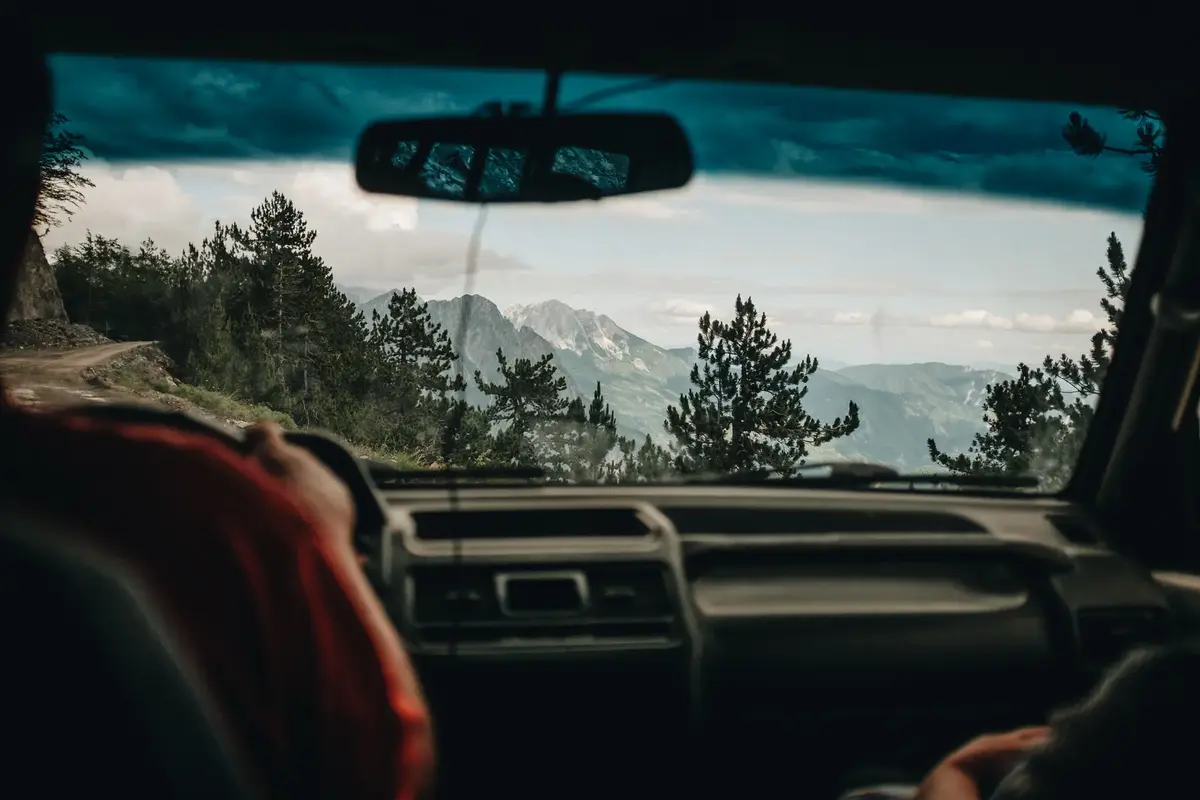
The switchbacks cause carsickness. That isn’t a soft warning, it’s the most reliably repeated driving detail in the entire file. Pack for it: medication if your kids use it, a front-facing view for whoever is worst affected, and a schedule with room for stops. A mountain day with a sick child is a lost day.
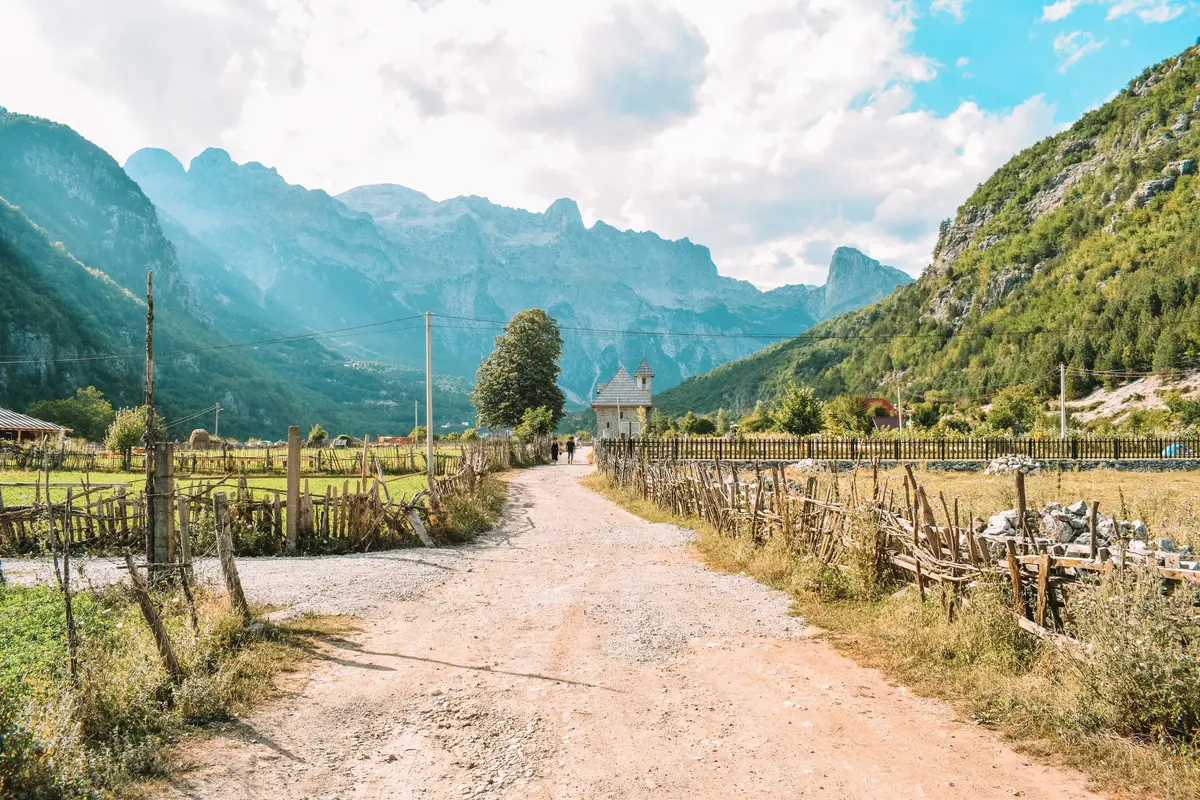
One myth to dispose of, because it changes what you rent. The road to Theth does not require a four-wheel drive. SH21, over the Qafa e Thorës pass, was fully paved in September 2021. One family drove it from Shkodër in a two-wheel-drive Hyundai Elantra and reported no trouble; a rental company confirms it more recently in a standard compact. The confusion is a road-numbering error that has spread through guide after guide: SH20 is a different road, running to the Montenegrin border at Vermosh. If a page tells you that you need a 4×4 for SH20 to Theth, it has merged two roads and you can discount everything else it says about driving here.
Theth and Valbona: What a Child Can Actually Walk
The famous Valbona-to-Theth pass hike is the reason most families come north, and it is not a family hike by default.
The numbers: 6 to 9 miles depending on where you start and stop, five to eight hours at adult pace and up to ten at a slow family one, topping out near 5,900 feet, rated moderate to hard with sections of loose scree. That’s a long day for a fit twelve-year-old and an impossible one for a six-year-old.
Two things make it tractable. Luggage goes by mule or horse, which is standard and arranged locally, so nobody carries a full pack. And a taxi from the Valbona side cuts about two and a half hours of riverbed walking that is the least interesting part of the route anyway. Do both and the hike becomes the ridge section, which is the part worth having.
Families with toddlers skip the pass entirely and stay in Theth village, walking to the Shala River instead — one family did it with a child just under two. That’s the right call. There is no partial credit on a scree traverse.
The Komani Ferry Is Two and a Half Hours of Standing Room
The Komani Lake crossing is the most photographed transport in Albania and the one most likely to go badly with children, so here’s how it actually runs.
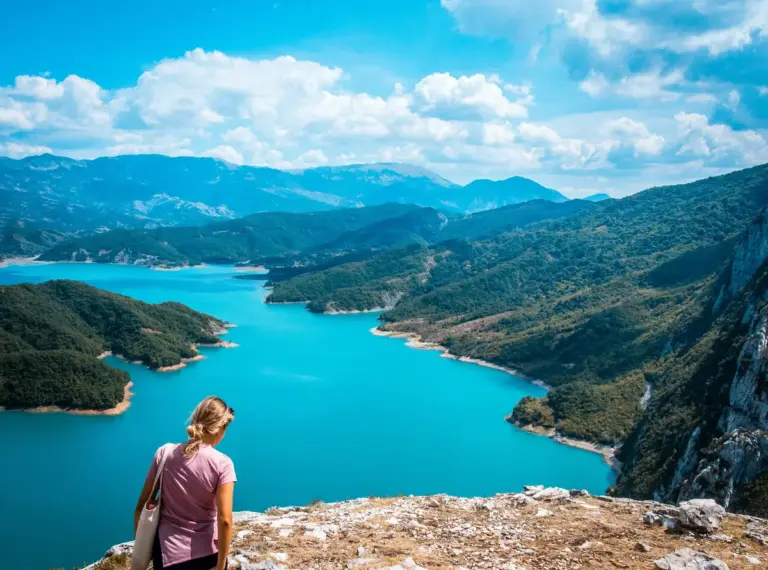
The Berisha ferry takes cars and passengers, departs Koman around 09:00, takes about two and a half hours, and returns from Fierza around 13:00. It runs from mid-April to early November. The smaller Dragobia passenger boat operates year-round. Book online in advance — there’s roughly a 20% discount for doing so, and more importantly, you cannot enter the ferry terminal by car without a reservation. Turning up and hoping is not an option here.
What passengers report: crowded enough that people stand for most of the crossing, no air conditioning in August, toilets described as basic and stretched, litter in the water, and a boarding process that several people described as chaotic. The access road doesn’t help — the last 20 miles or so takes about an hour and a half on rough turns, which is a carsick child arriving at a boat with nowhere to sit.
If you’re bringing kids, the family consensus is to take the shorter Shala River boat rather than the full car ferry, bring your own food, bring motion sickness tablets, and treat the onboard café as a bonus rather than a lunch plan. Boat trips start around $12 per person.
The Things That Can Actually Hurt a Child Here
The fear that brings people to this search is crime, and it’s misdirected.
Albania’s intentional homicide rate runs somewhere between about 1.4 and 1.7 per 100,000 depending on which recent count you use. The US rate is near 5.7. Albania is materially safer on the metric people are actually thinking of when they ask whether it’s safe. The State Department has Albania at Level 2, Exercise Increased Caution, which is the same level as France, Germany and the United Kingdom. The current advisory and any live security notices are at travel.state.gov — check it before you fly, as you would for anywhere.
The road numbers are a mess, and I’d rather show you the mess than pick a side. The officially reported Albanian figure is about 7 road deaths per million residents, which would be among the safest in Europe and is widely regarded as undercounted. A WHO-based estimate puts it near 10 per 100,000, against roughly 13 per 100,000 in the US. Those two figures aren’t even on the same scale — one is per million people, the other per hundred thousand — which tells you how far apart the sources are. Nobody can hand you a trustworthy single number. Drive as though the higher estimate is the real one.
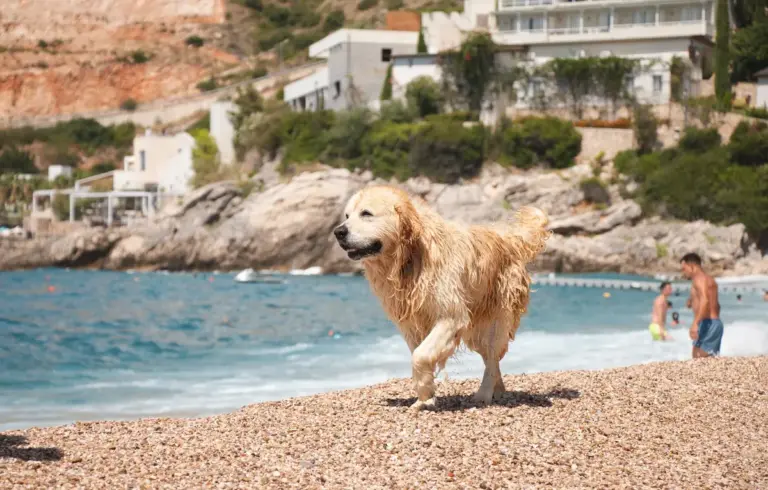
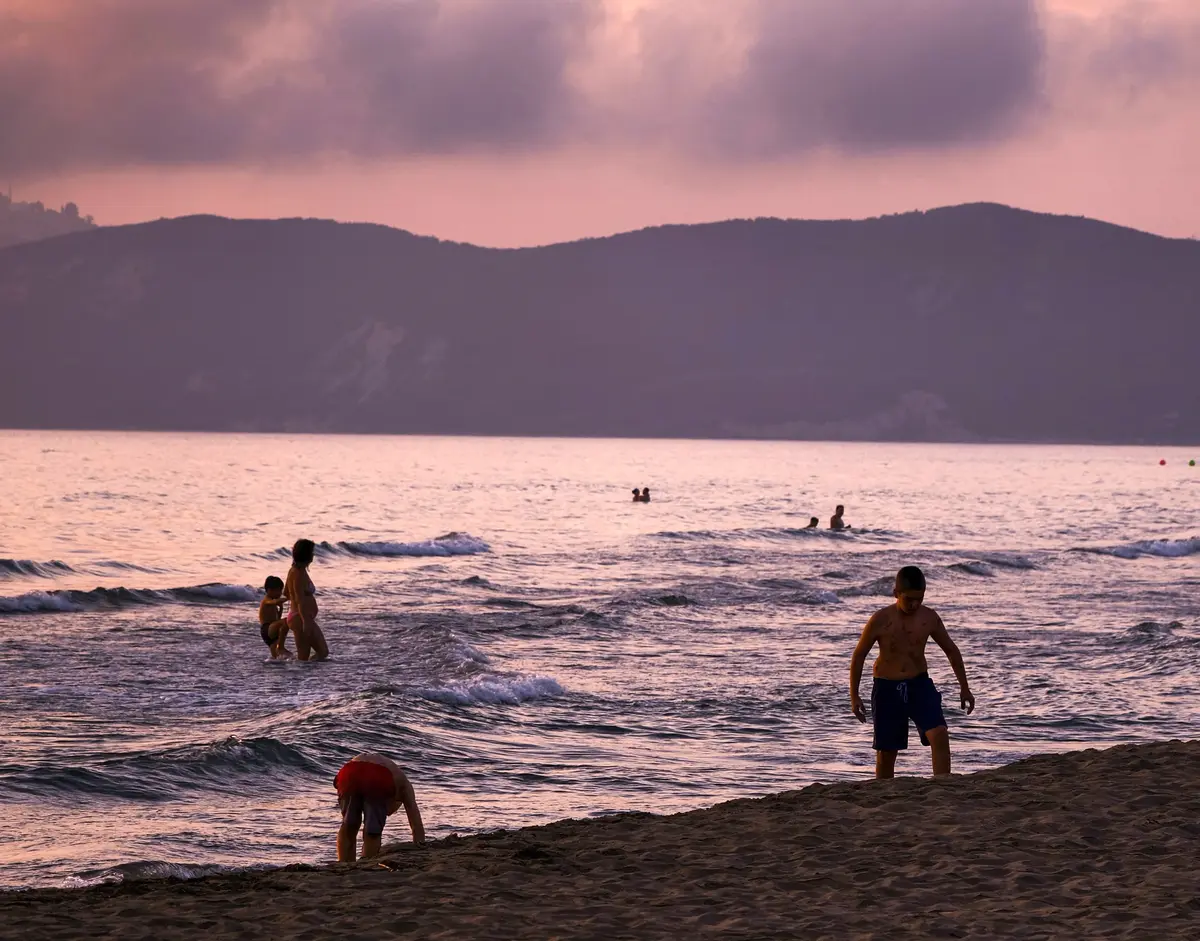
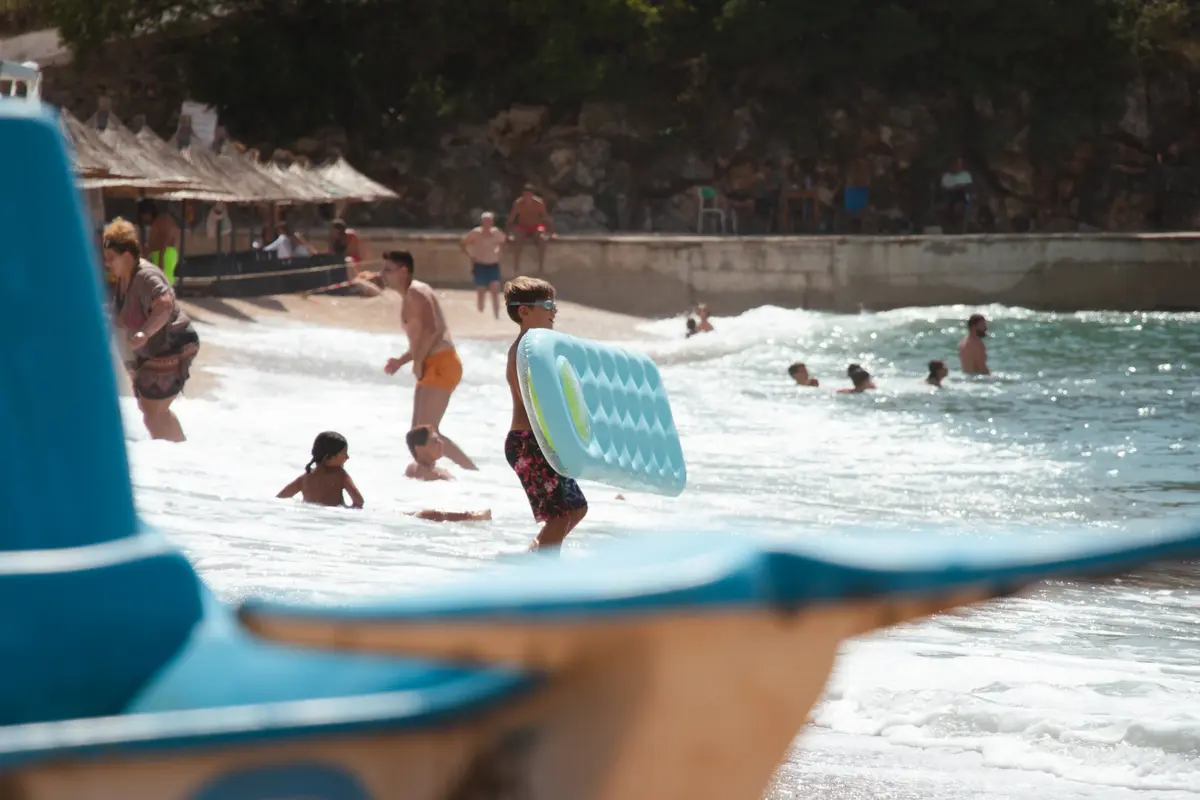
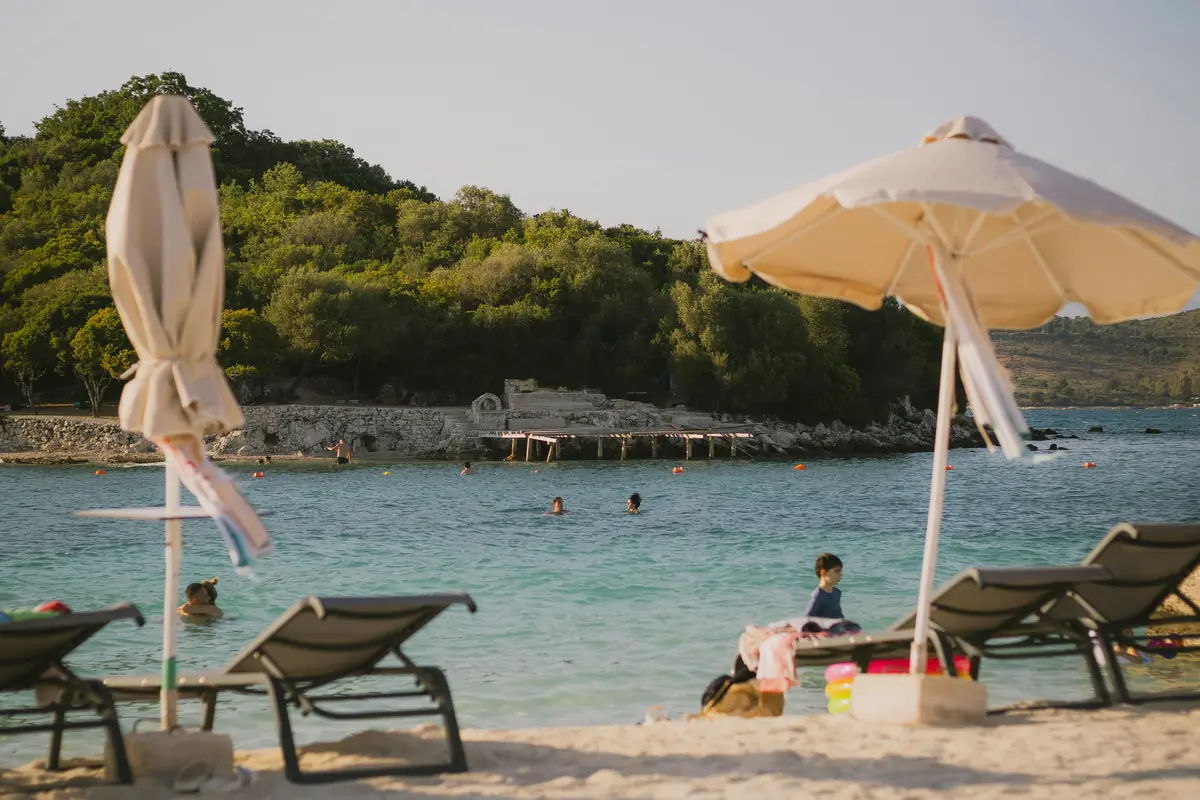
The sea is the other real hazard, and the specific issue is that most Albanian beaches have no lifeguard. Not a shortage of lifeguards. None. Some geography helps: Ksamil’s main beaches are genuine sand, which is rare here, with a shallow slope running 60 to 100 feet out and calm water — Beach 7, Bora Bora and Puerto Rico all get named by families with small children. Adriatic beaches near Vlorë have a shallower entry than the Ionian ones further south. Dhërmi has been reported with sudden drop-offs. Assume you are the lifeguard, everywhere.
The Blue Eye spring is a hard no for swimming. It’s banned as a protected area, and it is also genuinely dangerous: the upwelling pushes about 18,400 liters a second at around 50°F, and wardens do enforce it. Kids will want to get in. Settle that in the car, not at the water. Entry is cheap — most sources say 50 lek, a bit under a dollar, though one says 200 — and parking runs somewhere between about $1 and $7.50 depending on where you leave the car. Cash only. It’s about a mile and a quarter walk from the parking area, which matters if someone is being carried.
Tap water: Tirana’s meets standards and locals drink it. Outside the capital, families are consistently advised to use bottled for younger children, and sources conflict enough that I’d follow that advice rather than argue with it. Mountain spring water in Theth and Valbona is reported safe and drunk freely.
Medical care is the question that keeps parents up, so: your US health insurance almost certainly does not travel. Buy travel medical cover with evacuation included before you leave. Private hospitals in Tirana — American Hospital and Hygeia are the two named repeatedly — are where expatriates and travelers go rather than the public system, and Tirana is a long drive from the Riviera or the northern mountains. Keep routine CDC vaccinations current, and if you’re doing rural or mountain time, read CDC’s rabies guidance first; stray dogs are common.
Carry Cash, and Ask the Price Before You Sit Down
Every figure in this guide uses roughly 106 lek to the dollar.
Cards work in Tirana, in hotels and in larger restaurants. Outside that, cash. Beach clubs, rural fuel stations, park gates and small-town restaurants all expect lek, and card acceptance drops off sharply the moment you leave the capital. Take out more than feels necessary before you head to the coast or the mountains.
Then there’s the sunbed economy, which is the single most common complaint from families at Ksamil and the one nobody warns you about. The beach is not free. Two loungers and an umbrella typically run 1,500 to 4,000 lek in peak season — about $14 to $38 a day. Premium clubs charge above that, and a private cabana can reach 7,000 lek, around $66. Himara is materially cheaper at 1,000 to 1,500 lek, roughly $9 to $14. The free public sand is described by regulars as shrinking every year, and one reviewer’s summary of high-season Ksamil is that finding a square meter to lay a towel is impossible.
Two operational details. Prices are frequently verbal and unposted, so ask before anyone sits down — this is the friction, not the cost. And they’re negotiable, with 20% to 30% off common in June, September and on weekdays.
Phones: Albania is not in the EU roaming zone, so “roam like at home” doesn’t apply and most US plans don’t include it for free. Check your specific plan, because this varies by carrier and by tier and nobody can answer it for you generically. A travel eSIM runs anywhere from about $1 to $13. A local Vodafone or One tourist package with 40 to 100 GB costs roughly $17 to $27 at a city store and closer to $27 to $32 at Tirana airport, and it requires in-person passport registration that takes 15 to 40 minutes. Buy it in town, not at arrivals. Vodafone has the best coverage in the mountains and along the coast, which matters if you’re driving to Theth.
Tipping is not American. Round up, or 5% to 10% in a restaurant. Leaving 20% marks you.
Two Attractions Where the Posted Hours Are Wrong
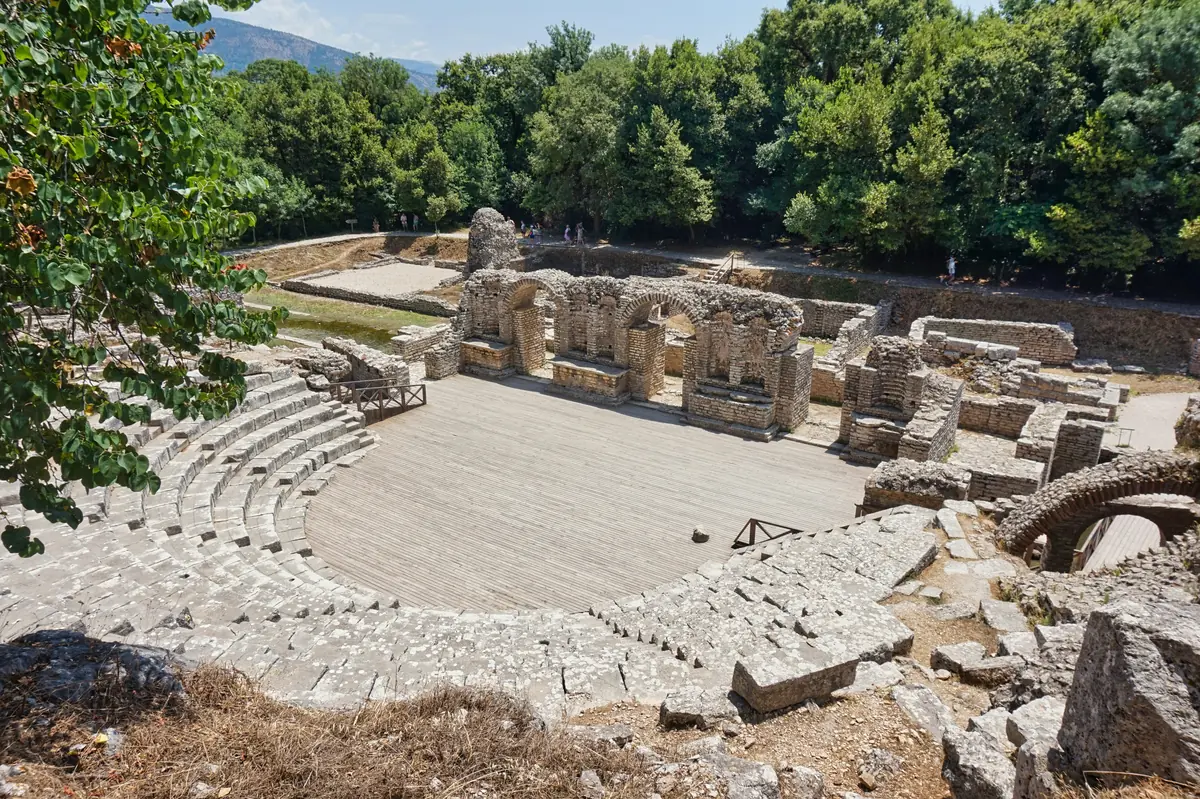
Butrint is the archaeological site everyone visits from Saranda, and half the pages about it say it’s open until sunset. It isn’t, and sunset is not a closing time on any published document. From April 1 to October 31 it opens at 08:30, last entry is 18:00, and the gates close at 20:00. From November 1 to March 31 it opens at 09:00, last entry is 15:00, closing at 17:30. The distinction between last entry and closing time is exactly the kind of thing that strands a family who arrived at 18:30 in July.
Pricing is good news for families: adults 1,000 lek, about $9. Children 12 to 18 pay half. Under-12s are free. Groups of ten or more pay 800 lek each. Bring cash — the gate often requires it.
The Dajti Ekspres cable car in Tirana has two traps. The first is scheduling: Tuesday is its regular closing day, unless the Tuesday is a public holiday, in which case it runs. It operates 09:00 to 18:30 Monday through Friday and 09:00 to 19:00 on weekends. Children up to three ride free. Wheelchairs and bicycles are not permitted.
The second is that the operator publishes no ticket prices anywhere online, and tickets are sold only at the lower station. That is a genuine gap, not an oversight on my part — I can’t tell you what a family of four pays, and neither can anyone else who hasn’t stood at the window. Anyone quoting you a firm price got it from another blog.
While we’re here: guides routinely give the cable car’s top station as about 5,290 feet (1,613 m). That figure is the elevation of Maja e Dajtit, the mountain’s summit, which is not where the cable car stops. Independent measurements put the top station at roughly 3,400 feet (around 1,030 to 1,050 m). The operator’s own site publishes no elevation at all, which is why the copied numbers range from 1,030 to 1,613 across different sites — a spread that wide means nobody is measuring, everybody is quoting.
Where to Sleep, and What $80 a Night Actually Buys
Ksamil guesthouses and apartments are the value center of this trip. Around $65 to $90 a night gets a boutique room with a balcony, pool access and breakfast. List on Booking.com rather than Airbnb — Albanian owners list there first, so the inventory is deeper.
Choose the base by how you want to move. Ksamil is walkable but gridlocked in August — traffic backs up all the way from Saranda and there’s effectively no parking after 10 a.m., so if you’re there in peak season you want to be able to leave the car parked all day. Saranda is a taxi-to-everything base, bigger, with more services and less charm. Apartments with a kitchen and a washing machine — which matter more with kids than any amenity a hotel advertises — cluster in Ksamil, Saranda and Tirana.
Two warnings on listings. “Beachfront” on parts of the Riviera can mean a cliff staircase between you and the sand, which is a different proposition with a toddler and a beach bag. Check recent photos, not the description. And old-town lodging in Berat or Gjirokastër means cobblestones and steps: a carrier works there, a stroller does not.
Book coastal apartments for August months ahead; they sell out. And book refundable, which is not generic advice here — Theth and Llogara passes close after snow, mountain roads wash out in spring and fall, and the ferry access road can be slowed or cut. Refundable rates are the mechanism that lets you change plans when the road does.
June and September are the family sweet spot: warm, roughly half the crowds, cheaper loungers, and you can park.
Getting There Is the Most Expensive Decision You’ll Make
There has never been a nonstop flight from the United States to Tirana. Everyone connects — Istanbul, Frankfurt, Vienna, Zurich, Rome or London are the usual points. From the East Coast that’s 11 to 14 hours of total travel; from the West Coast, 16 to 21. Round-trip economy runs about $500 to $700 in shoulder season and $700 to $1,200 or more at peak, with February and March cheapest and June and July dearest. Book around six weeks out.
The only North American nonstop that has existed is a weekly seasonal Air Transat service from Toronto, which runs a limited summer window. Check whether it’s operating for your dates before you build a trip around it.
For a family of four, the flights will dwarf everything else. Sunbeds, meals and site entries here are a fraction of US or Western European prices; the airfare is the budget.
Entry itself is the easiest part of the trip. US citizens need no visa and may stay up to a year without a residence permit. Your passport needs three months’ validity, not six. The six-month figure that appears everywhere is airline check-in policy rather than Albanian law, which matters only if your passports fall in that three-to-six-month window — in which case call your carrier, because the airline can stop you at check-in even though Albania would have let you in. Border officers increasingly log entries electronically without stamping, so keep your boarding pass as proof of your entry date.
Tirana is six hours ahead of Eastern time and nine ahead of Pacific. With kids, that means the first day is a write-off. Plan a beach or a park, not a drive.
What Albania Doesn’t Stock
Baby changing facilities are essentially absent. Not scarce — absent, in restaurants, in cafés, at sites. Parents describe the lack of any toilet arranged for a parent with a child as the most consistent daily friction of the trip. Plan on a mat in the back of the car.
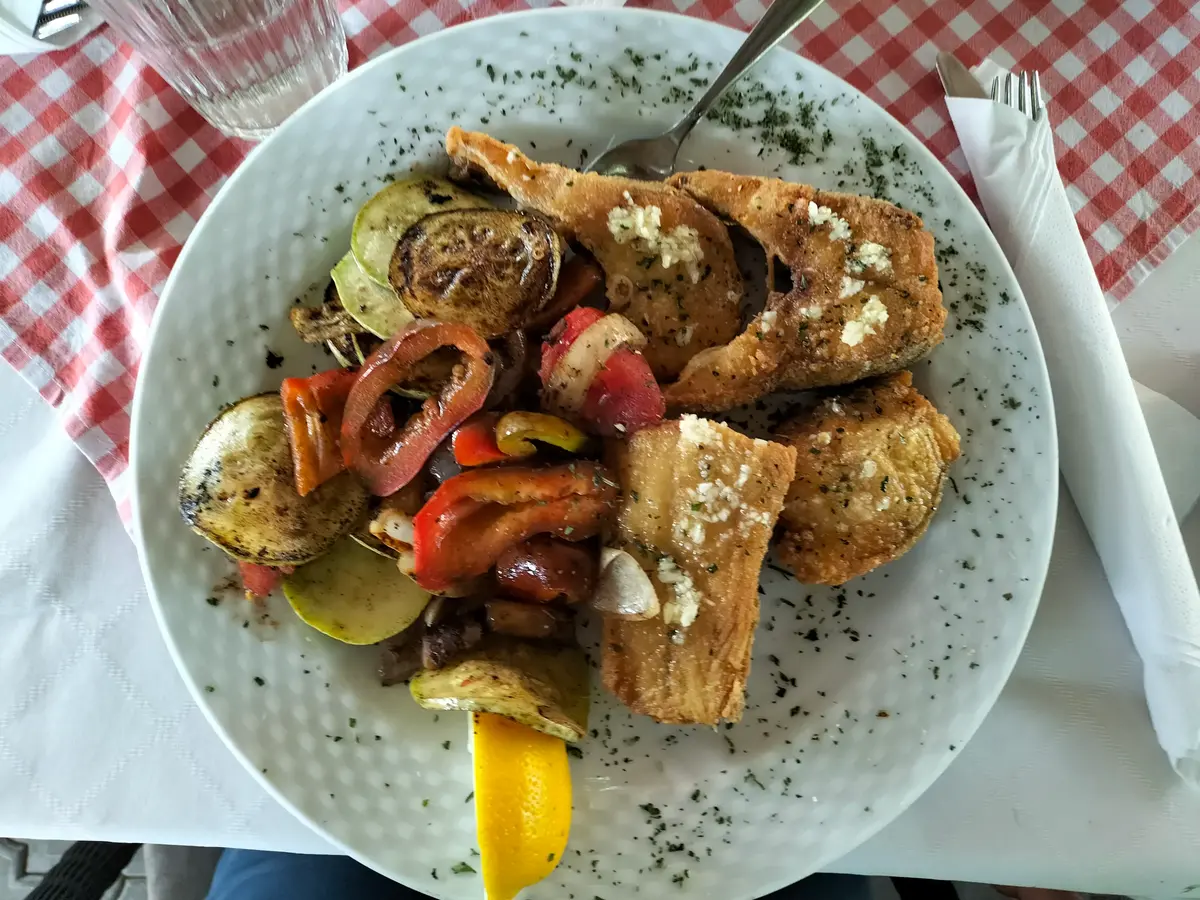
High chairs are usually available. Kids’ menus don’t exist, and that turns out to be fine: Albanian restaurants serve communal, shareable plates, and parents of picky eaters found this easier than a menu of chicken fingers, not harder.
The warmth is real and heavily corroborated across every family account I read. Strangers talk to your children, Albanian kids run loose around restaurant tables, and nobody minds a toddler in a nice restaurant. It’s the best thing about traveling here. It is also not the part you have to plan.
Sockets are Type C and F at 230 volts. A plug adapter covers phones, laptops and anything dual-voltage. Single-voltage American appliances — some hair tools especially — need an actual converter, not an adapter.
Who Should Book Somewhere Else
This trip is right for families with kids around five and up who are willing to drive, willing to carry a car seat through an airport, and comfortable with a day going sideways.
It’s wrong for several groups, and I’d rather say so than sell it.
Families with babies and young toddlers who depend on infrastructure will spend the trip working around what isn’t there. Anyone expecting a turnkey August resort week will find gridlock, sold-out apartments and a beach they have to negotiate for. Anyone unwilling to rent a car will be limited to a small number of bases, since the good parts of this country are the parts between the towns.
And this is a hard country for limited mobility. Every constraint above stacks in the same direction: the historic centers, the mountain villages, the cable car and the walk-in at the spring all assume everyone in the party is on their feet and steady. There is very little step-free anything, and no venue I looked at advertises otherwise. If a grandparent is traveling with you, or if anyone tires easily, build the trip around Tirana and the coast and treat the north as optional.