A two weeks in Albania road trip is the rare European itinerary that still feels like a discovery — Ottoman stone towns one day, glacial alpine valleys the next, and a Mediterranean coast that costs a fraction of Croatia’s. This is the loop, day by day, with every cost in USD and every driving hour pressure-tested on the ground.
Quick answer: the 14-day Albania road trip in one paragraph
The classic two weeks in Albania road trip is a clockwise loop from Tirana — north to the Alps first, then south down the interior, then back up the coast: Shkodër, the Lake Koman ferry, Valbona and Theth (days 1–5); Berat and Gjirokastër (days 6–9); the Blue Eye, Butrint, Ksamil and the Albanian Riviera (days 10–13); and back to Tirana over the Llogara Pass on day 14. Total driving is roughly 850 to 900 miles (1,350–1,450 km). Going north first is the right call because it puts the Lake Koman ferry early in the trip, while you still have buffer days if weather closes the pass.
Is two weeks actually enough for Albania?
Two weeks is the sweet spot for a first trip to Albania. It’s enough to drive the full loop — north Alps, central old towns, and the Riviera — without the death-march pace of a 10-day trip. To make 14 days work, you’ll need to skip Durrës entirely, limit the Riviera to two beach towns, and resist anyone selling you a Kosovo or Corfu add-on.
A 7-day version forces you to choose between the Albanian Alps and the south coast — it cannot do both. A 10-day version technically fits the loop, but the Valbona–Theth hike gets squeezed into a single buffer-free window, which is risky if the weather turns. At 14 days you finally have slack: a rest day in Berat, two real beach days, and a forgiveness window if the Lake Koman ferry sells out the morning you wanted it.
Pro Tip: The Lake Koman ferry alone eats nearly a full day of buffer because you have to be at Koman dock by 8:30 a.m. for a 9 a.m. departure. Anyone who tells you the Alps loop fits into 48 hours has not actually done it.
Renting a car and driving in Albania: what US travelers need to know
Yes, rent a car. Albania’s bus and furgon network can’t reach Theth, Valbona, or half the Riviera. Americans get an unusually generous entry deal — a US passport buys up to 365 days visa-free, with no e-visa and no advance registration — so the paperwork that trips people up isn’t immigration, it’s the rental desk: you need your US license, an International Driving Permit, and a credit card that can absorb a large security hold.
The first time you see a Mercedes pass three cars at once into oncoming traffic on a blind curve, you’ll think it’s a fluke. It is not a fluke. Hold your line and they always make it back.
Quick logistics:
- Advertised daily rate, shoulder season: $25–45 economy, before insurance
- All-in daily rate with zero-deductible coverage: roughly $35–55 shoulder, $60–85 in July and August
- Fuel cost: roughly $8.80 per gallon (about $2.30 per liter, or 185–190 lek)
- IDP from AAA: $20, same-day in person, bring two passport-style photos — it cannot be issued once you’ve left the US
- Security hold: typically €800–1,500 on a credit card in the main driver’s name; Amex is frequently refused
- TIA airport pickup options: Sixt, Europcar, Hertz, plus locals like MeritRent and Local Rent
- Insurance to ask for by name: full CDW with zero deductible
- Blood-alcohol limit: 0.01%, which in practice means zero
Skip the SUV upsell unless you’re planning the Theth valley in late October or later. Here is the correction that matters most, because half the internet still gets it wrong: the mountain road to Theth is the SH21, not the SH20, and it has been fully asphalted since 2021. A standard sedan handles the 47-mile (76 km) climb from Shkodër in about 2 to 2.5 hours. The “you need a 4×4!” warning floating around older blogs describes a road that no longer exists, and it is costing readers $200 in unnecessary upgrades. What is still gravel are the tracks inside Theth village, out to the Blue Eye trailhead and Grunas Waterfall.
Tolls are almost a non-issue, and that surprises people. There is no vignette in Albania. You will pay roughly $3 (250 lek) each way at the Llogara Tunnel on the Riviera run, and about the same on the short A1 Thumanë–Kashar section near the airport. Everything else on this loop — the entire SH8 coast road, the old Llogara Pass, the SH21 to Theth — is free. Carry small lek notes; booth card readers are inconsistent.
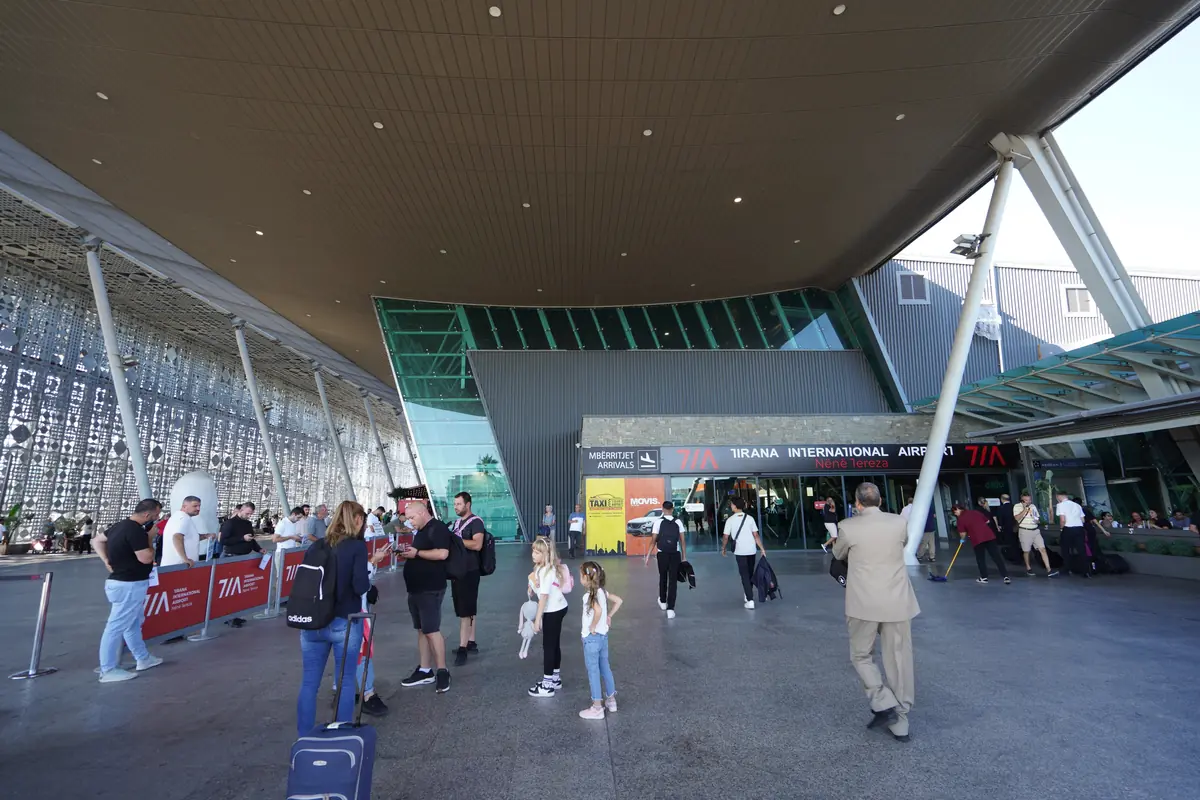
Pro Tip: The fuel station roughly 1 mile before TIA on the airport approach road is meaningfully cheaper than the one inside the airport perimeter. Every rental company makes you return the car full, so it pays to know. Also install an eSIM before you fly — Albania is outside EU roaming, and US carrier day-passes get expensive fast over 14 days.
Is it actually safe to drive in Albania as a foreigner?
Driving in Albania is safer than its reputation suggests, but it is not the same as Western Europe. The three real hazards are aggressive overtaking on two-lane mountain roads, livestock on rural shoulders at dawn and dusk, and the unlit edges of the Llogara Pass after dark. Drive only in daylight, never trust a Google Maps ETA on the SH8 in summer, and you will be fine.
I added 90 minutes to every Google Maps estimate on the SH8 between Sarandë and Vlorë in July. I needed every one of them.
The high-risk roads to know:
- SH8 Riviera, June through August: tour buses, scooters, and slow rentals turning a 1-hour drive into 3
- SH8 Llogara switchbacks: fine in daylight, dangerous after dark with no edge lighting — the tunnel is the sane choice in fog or rain
- SH21 to Theth: fully paved, but 27 hairpins on a 15–18% gradient below the Qafa e Thores pass reward engine braking and an early start
Police stops are rare and usually a document check. Hand over your license, IDP, and rental contract. They will wave you on within 60 seconds. Missing documents is the one thing that turns a check into a fine — expect around 10,000 lek (roughly $125) if you can’t produce an IDP.
Days 1–2: Tirana — and why one night isn’t enough
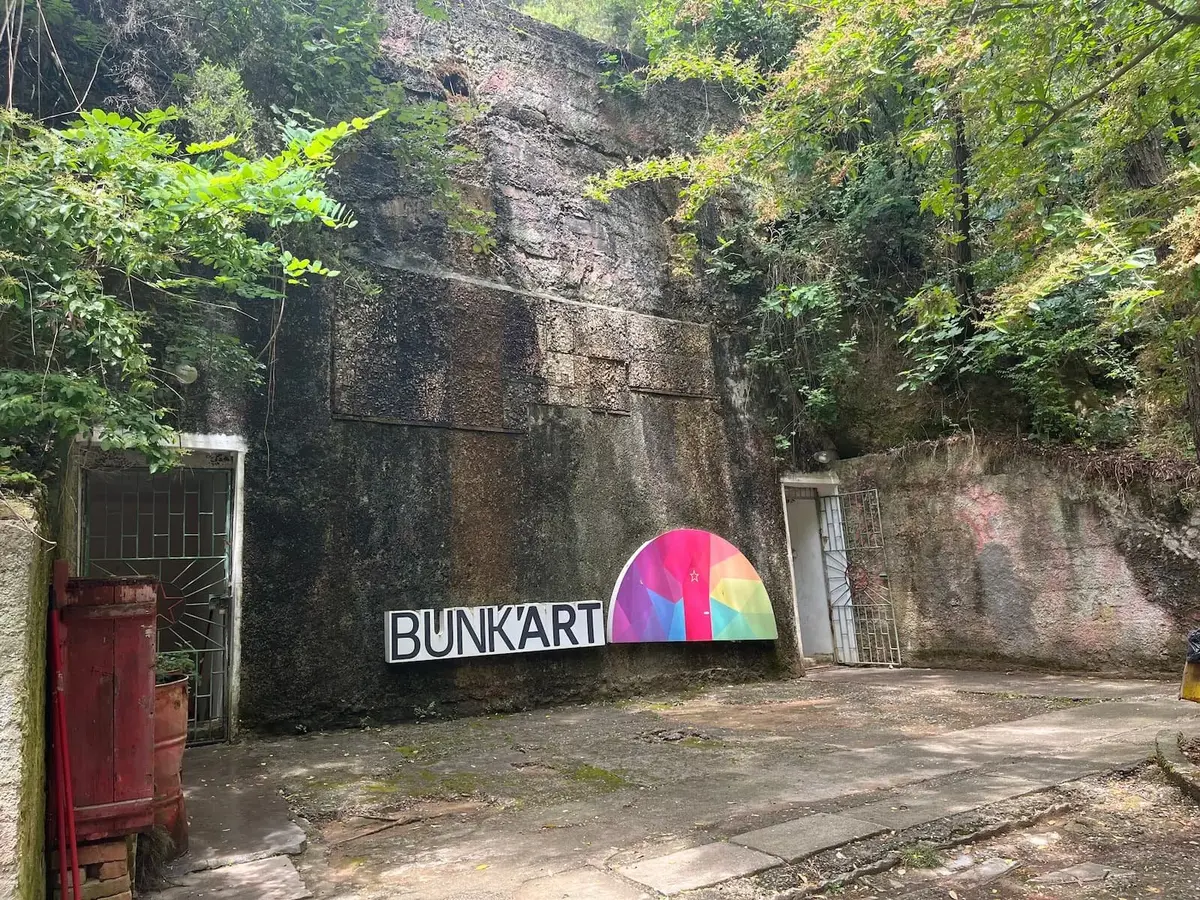
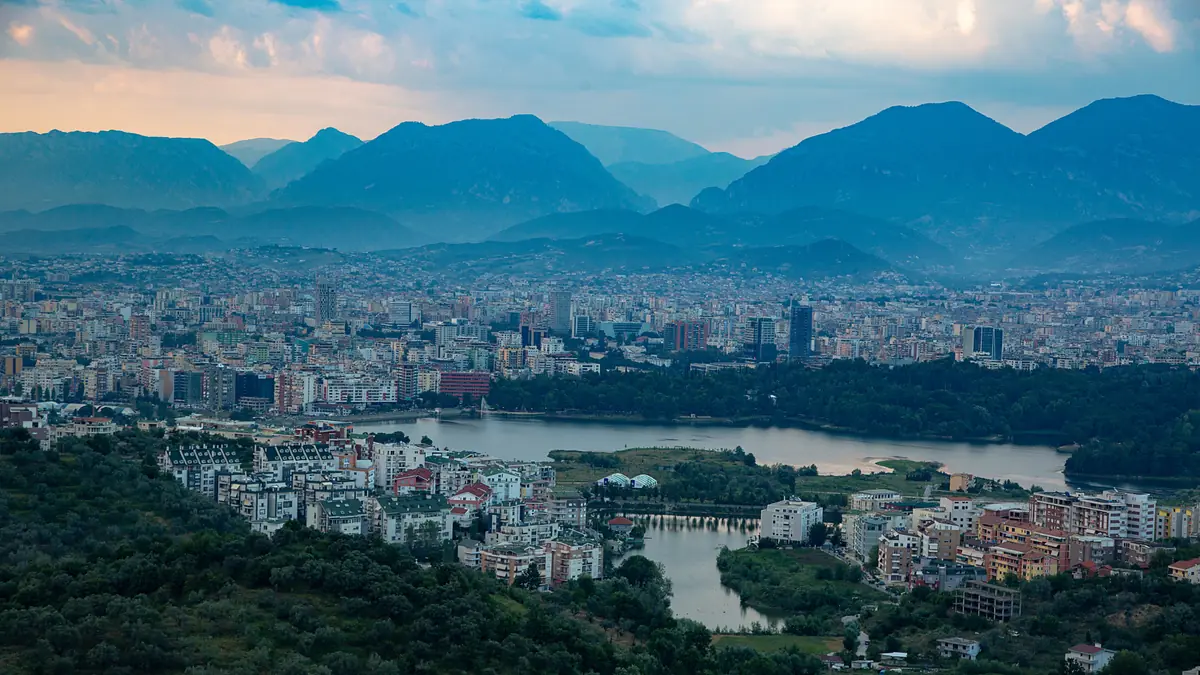
Spend two nights in Tirana, not one. The capital has been transformed by a wave of public-art and pedestrian projects, and you need a full day to do Bunk’Art 1, the Mount Dajti cable car, Skanderbeg Square, and a serious dinner at Mullixhiu or Oda — plus a buffer day for jet lag and rental car pickup the morning of day 2.
The standard advice is “fly in, grab the car, drive straight to Shkodër.” This skips a city that has quietly become one of the more interesting capitals in Europe. Bunk’Art 1 alone is a 2-hour walk through Enver Hoxha’s Cold War tunnel network — 106 rooms across five underground floors. Mount Dajti is a 15-minute cable car ride to a 3,450-foot (1,050 m) balcony above the city. The food at Mullixhiu rewards a real evening, not a rushed lunch.
One planning correction that will save you a wasted walk: the National History Museum on Skanderbeg Square is closed for a full rebuild, and the reopening is years out, not months. The mosaic facade is still there and still worth a photo, but the collection is gone for now. Substitute Bunk’Art 2 and the House of Leaves, both a five-minute walk from the square and both better on the communist period anyway.
US travelers should know that there are no nonstop flights from the US. The most common routings into TIA from JFK, EWR, or ORD are via Istanbul on Turkish Airlines, Vienna on Austrian, Munich or Frankfurt on Lufthansa, and Rome on ITA. Round-trip fares typically run $600 to $1,200.
- Rogner Hotel Tirana: from about $150/night, central, full-service, garden and pool
- Maritim Hotel Plaza: from about $110/night, walking distance to Skanderbeg Square
- Trip’n’Hostel: from about $30/night dorm, social, near Blloku district
What to actually do on day 2:
- Bunk’Art 1: 900 lek (about $11), allow 2 hours — the combo ticket with Bunk’Art 2 is 1,300 lek and saves you $6
- Mount Dajti cable car: 1,400–1,500 lek (about $17–19) round trip, and closed on Tuesdays
- Bunk’Art 2 on Skanderbeg Square: 900 lek, 60–90 minutes, the Sigurimi secret-police story
- House of Leaves surveillance museum: 700 lek (about $9), closed Mondays
- Dinner at Mullixhiu (modern Albanian) or Oda (traditional): $25–35/person with wine
Pro Tip: The Bunk’Art 1 tunnel holds around 61°F inside regardless of the season — bring a layer even if it’s 95°F outside. I watched a couple in tank tops bail after twenty minutes. City bus L11 from behind Skanderbeg Square drops you at the door for 40 lek, about 50 cents.
Days 3–5: Shkodër, the Lake Koman ferry, and the Accursed Mountains
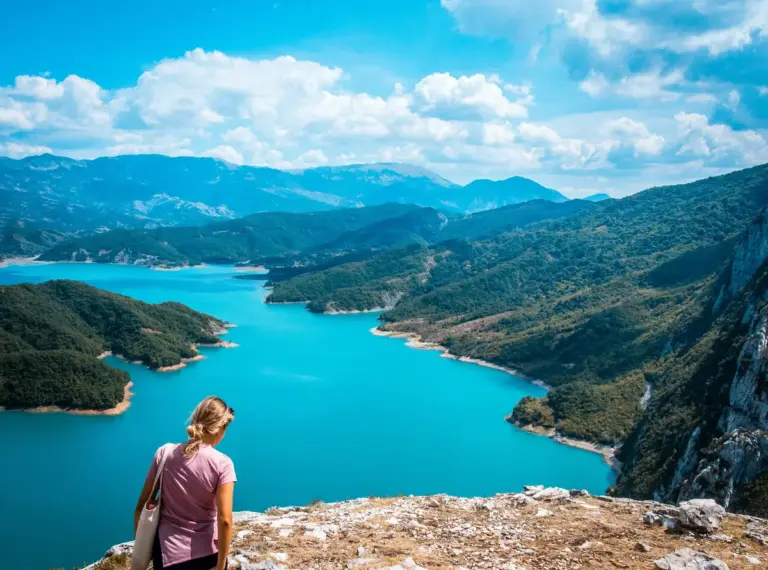
The northern loop is the trip’s high point and its most stressful logistics. Drive Tirana to Shkodër on day 3 (60 mi / 95 km, 2 hours via SH1), leave the rental car at your Shkodër guesthouse, catch the 9 a.m. Lake Koman ferry from Koman dock on day 4, transfer on to Valbona, hike the Valbona–Theth pass on day 5, and ride the minibus down the SH21 to Shkodër on the morning of day 6.
That one decision — leaving the car behind — is the piece every other guide gets wrong. If you ferry the car to Fierza and then walk over the pass to Theth, your car is stranded on the wrong side of a mountain with no road between the two valleys. Parking at a Shkodër guesthouse is usually free, and a foot-passenger ferry ticket costs about a quarter of what the car costs.
Day 3: Tirana to Shkodër, with a Rozafa Castle stop
Leave Tirana by 10 a.m. The drive is straightforward on the SH1 motorway. Stop at Rozafa Castle on the southern edge of Shkodër (around 400 lek / $5, allow 90 minutes) for the view over the lake and three rivers converging. Sleep in Shkodër — Mira Mare Lake Hotel is the easy pick at around $80/night. Book your ferry tickets tonight through your guesthouse if you haven’t already.
Day 4: The Lake Koman ferry and the transfer to Valbona
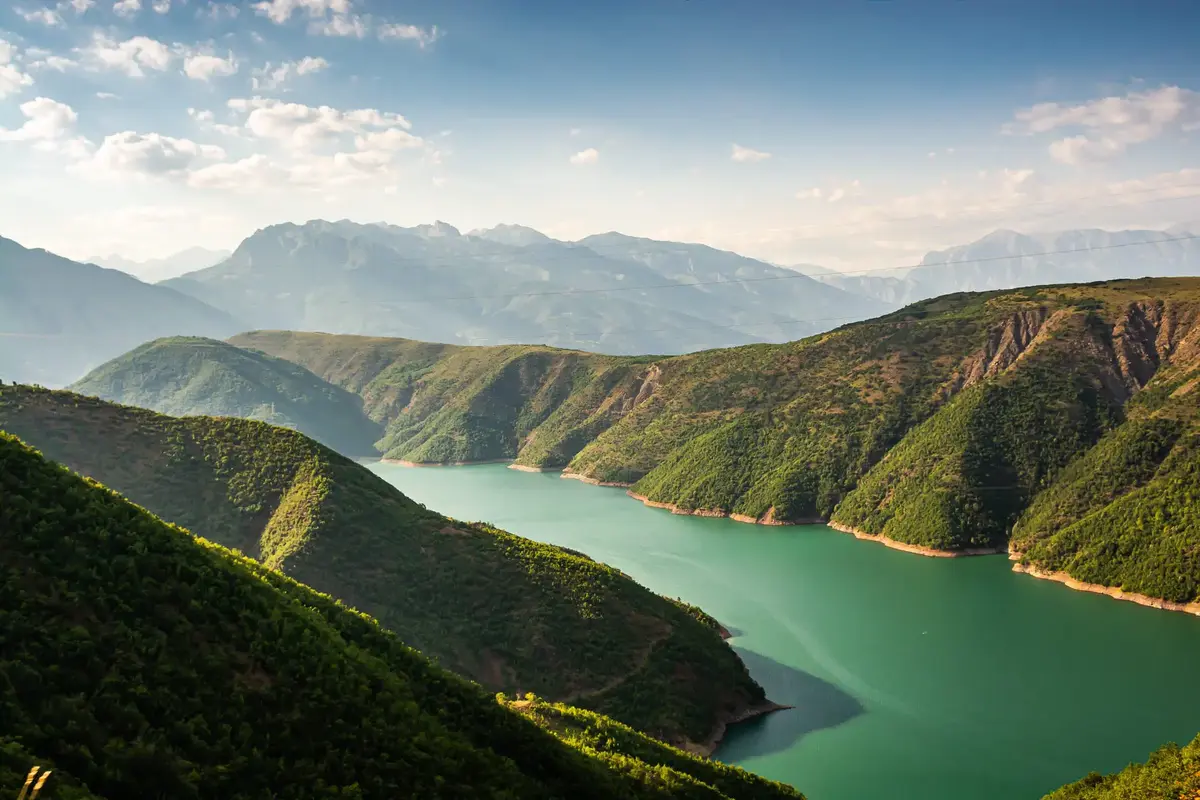
This is the day you cannot mess up. Book the ferry online in advance — Berisha is the main operator and gives a discount for paying by card or PayPal on its own site. The Berisha minibus leaves Shkodër around 6:30 a.m. and reaches Koman dock by about 8:30 a.m.; the road is only 25 miles but takes 90 minutes of switchbacks.
The ferry numbers:
- Departure: 9 a.m. sharp from Koman dock, daily from roughly mid-April to early November
- Arrival in Fierza: about 11:30 a.m., a 2.5-hour crossing; the return leaves Fierza at 1 p.m.
- Foot passenger: about $10 online, $12 cash at the dock
- Car, if you insist: €7 per square meter online and €8 cash — a typical 5 m² rental works out to roughly $42–46, and only about five cars fit per sailing
- Shkodër–Koman minibus: about $9; Fierza–Valbona connecting minibus: about $9–12
- Other operators: Alpin (newer boats, higher fares), Rozafa, and Dragobia, a passenger-only sister boat that runs year-round
The boarding ramp at Koman dock is pure chaos at 8:45 a.m. — vans, hikers, livestock, and motorcycles all pushing onto a ferry the size of a New Jersey Transit boat. Be there by 8:15 a.m. or you’ll be standing for two and a half hours.
Sleep in Valbona at Rilindja Guesthouse or Bujtina Arturi — half-board (dinner and breakfast) runs roughly $28 to $45 per person. Bring cash: there is no ATM in Valbona or Theth, and cards are not accepted in either valley.
Day 5: The Valbona to Theth hike over the pass
The hike numbers:
- Distance: 9 to 11 miles (15–17 km) point to point
- Time: 6 to 8 hours
- Elevation gain: about 3,300 feet (1,000 m), topping out at 5,890 feet (1,795 m) on the Valbona Pass
- Season: roughly mid-June through early October; snow lingers on the pass into June
- Luggage transfer Valbona to Theth: about $30–40, arranged by your guesthouse
- Trailhead shortcut: a lift to Rragam saves the first 2.5 flat miles, roughly $25–35 for the car
You can do the Valbona–Theth hike without a guide — the trail is well-marked with red and white blazes — but most people send their luggage ahead and walk light. Sleep in Theth at Bujtina Polia or any of the guesthouses clustered along the main track, again at roughly $28 to $45 per person half-board.
On the morning of day 6, the Berisha minibus leaves Theth for Shkodër at 11 a.m. (there’s a second run in the late afternoon) and costs about $15 for the 2 to 2.5-hour descent. If you want an earlier start — and on day 6 you will — ask your guesthouse the night before to arrange a private transfer instead. It runs roughly $60 to $70 for the whole car and buys back two hours of daylight for the drive south.
Day 6: The drive south — Shkodër to Berat via a quick Krujë detour
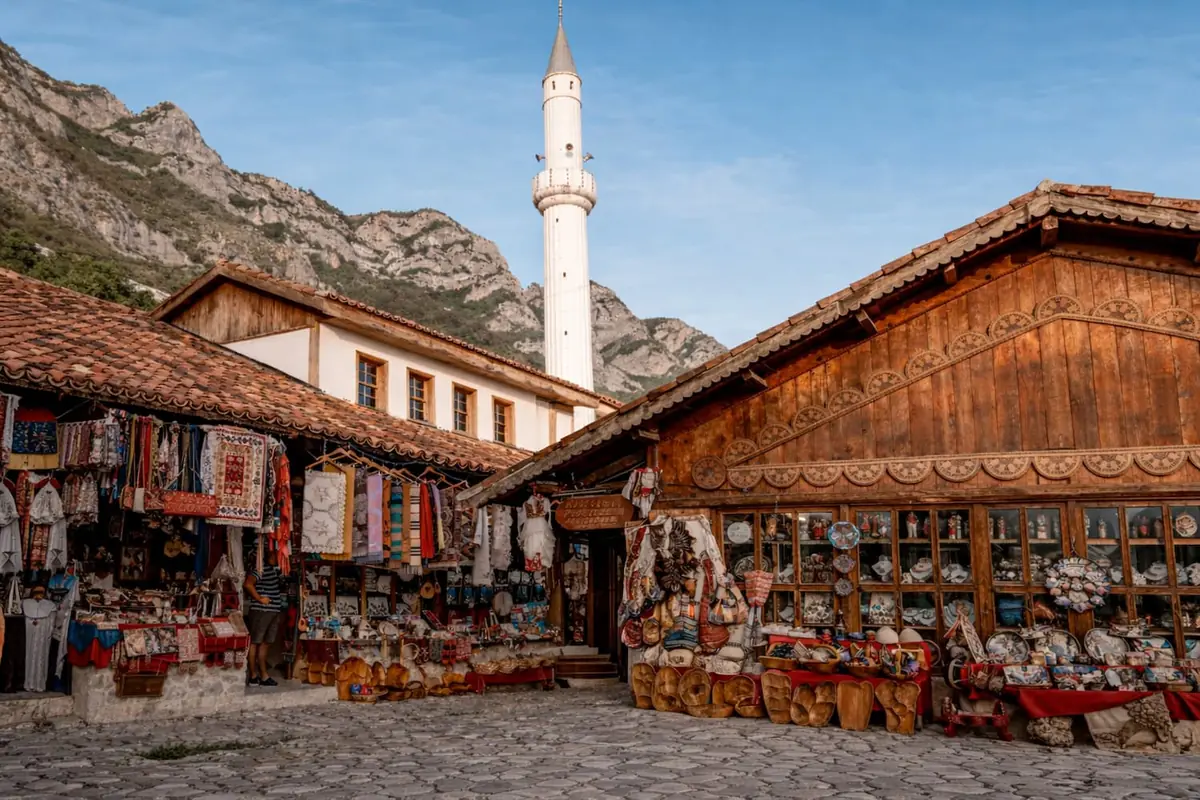
Day 6 is your longest travel day: down from Theth in the morning, collect the car in Shkodër, then Shkodër to Berat is 130 mi (210 km) and 3.5 hours on the SH1 motorway. Break it with a 90-minute stop in Krujë, where the bazaar built into the hillside under Skanderbeg’s fortress is one of the few places in Albania where the souvenir scene is actually charming rather than aggressive.
What to see in Krujë (90 minutes is enough):
- Krujë Castle and Skanderbeg Museum: around 500 lek (about $6); the Ethnographic Museum is a separate ticket
- Old Bazaar: best place to buy a real qeleshe felt cap or a hand-hammered copper coffee pot
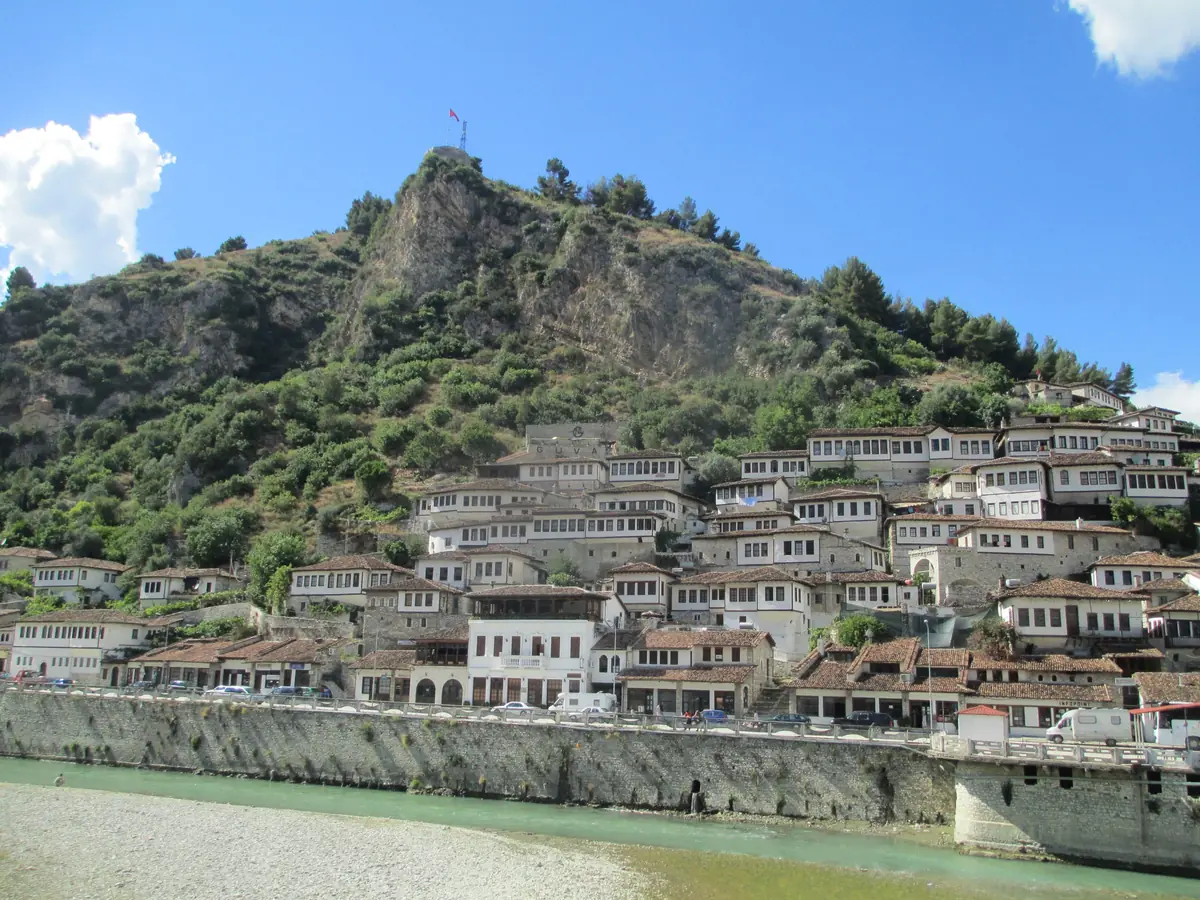
Arrive Berat by early evening and check into Hotel Mangalemi or Hotel Belagrita in the Mangalem quarter for a balcony view of the famous “city of a thousand windows.”
Pro Tip: The cobblestones in Krujë’s bazaar are slick even in dry weather. Leather soles are a bad call. I watched a tour group lose three people to bruised tailbones in twenty minutes.
Days 7–8: Berat — the city of a thousand windows
Berat earns two nights, not one. Day 7 is the climb to Berat Castle (Kala) — a real inhabited fortress, not a museum — with the Onufri Icon Museum tucked inside. Day 8 is a half-day at the Apollonia archaeological park (45 minutes’ drive each way) followed by a slow afternoon and a long dinner at Lulu in the Gorica quarter.
Apollonia is the gap on every other Albania itinerary. It’s a 2,500-year-old Greek-Roman city, almost completely empty of tour buses, sitting in fields of poppies 45 minutes from Berat.
Berat at a glance:
- Berat Castle (Kala) entry: about 300 lek ($4), cash only, allow 3 hours
- Onufri Icon Museum: about 400 lek ($5), audio guide 100 lek more
- Apollonia archaeological park: about 600 lek ($7.50), 45 mins drive each way
- Hotel Mangalemi: from about $80/night, Ottoman house, balconies over the river
- Hotel Belagrita: from about $70/night, smaller, family-run
- Dinner at Lulu: tave kosi for around $9 a plate
The smell of grilled qofte at sunset in the Mangalem alleys is the single most evocative sensory memory I have of Albania. It comes out of every other doorway.
Day 9: Berat to Gjirokastër — the stone city of the south
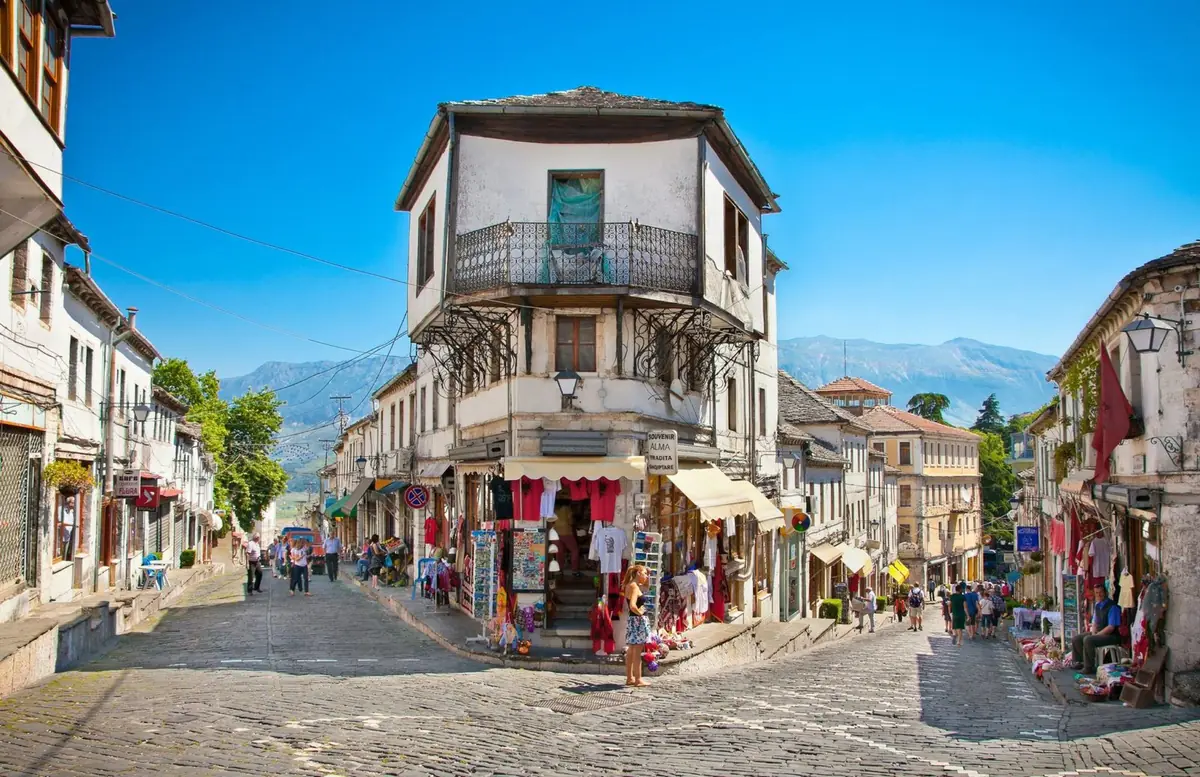
Berat to Gjirokastër is 95 mi (150 km), about 3 hours via the SH4. Arrive by lunch and spend the afternoon climbing the steep stone lanes to Gjirokastër Castle, the largest in the Balkans. The whole UNESCO old town is a living museum — Ottoman stone houses still inhabited, Cold War tunnels under the castle, and Ismail Kadare’s birthplace as a quiet pilgrimage for anyone who has read his work.
What to see and where to stay:
- Gjirokastër Castle: 200–400 lek ($2.50–5) depending on season and ticket desk, allow 2 hours; museums inside are separate tickets
- Cold War Tunnel tour: about 200 lek ($2.50), 30 minutes
- Zekate House (Ottoman tower house): about 200–300 lek ($2.50–4)
- Kadare house museum: free or small donation
- Stone City Hostel: from about $25/night dorm
- Kerculla Resort: from about $95/night, hillside views over the old town
- Dinner at Antigonea: traditional Albanian, $18/person with wine
The stone streets here are not figurative. They are slabs of slate the size of dinner plates and they are diabolical in flip-flops. Closed-toe shoes with grip are the only sane choice.
Day 10: The Blue Eye, Butrint, and arrival in Sarandë
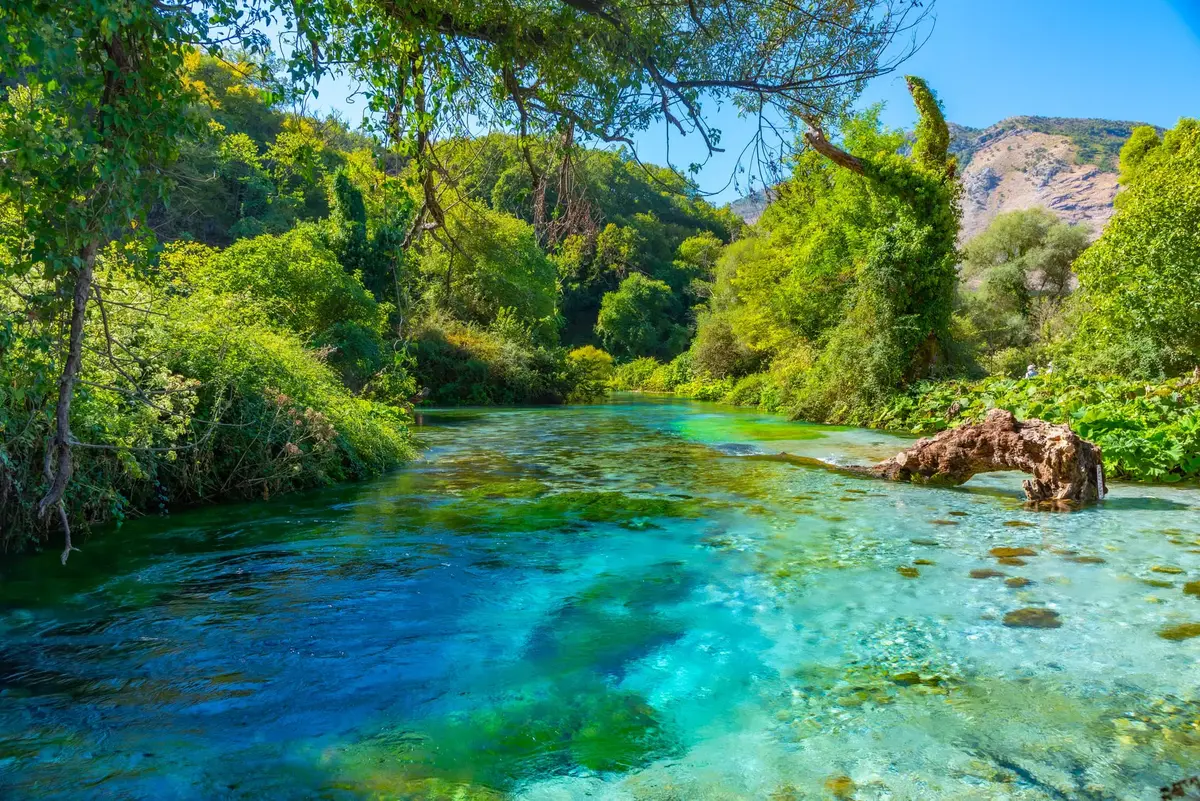
Drive Gjirokastër to Sarandë in three hops on day 10. Hit the Blue Eye (Syri i Kaltër) for an hour at opening, continue 45 minutes south to the Butrint archaeological park, then double back 20 minutes north to Sarandë for two nights at a sea-view hotel like Hotel Brilant Antik.
Here’s a price correction worth pocketing: the Blue Eye costs 50 lek — about 60 cents — plus 100 to 300 lek for the car and parking, all cash. Guides quoting $5 are years out of date. It’s a karst spring pushing out 18,400 liters a second, at least 165 feet (50 m) deep, and no diver has found the bottom. Note that swimming is now officially prohibited as a protected natural monument, and enforcement has tightened. Open from about 7 a.m., and absolutely overrun after 10 a.m., so be there at opening.
The water is 50°F year-round. People still dare each other in. They get out screaming. It is genuinely cold enough to hurt — bring a towel even if you’re sure you won’t get wet.
Butrint deserves its UNESCO status. Greek theater, Roman forum, Venetian fortress, all on a peninsula sticking into the lagoon across from Corfu. Entry is 1,000 lek (about $12); in the summer season the gates open at 8:30 a.m. with last entry at 6 p.m. The on-site museum is excellent. Allow 3 hours minimum. Entry is free on the last Sunday of each month, which is either a bargain or a crowd warning depending on your temperament.
A note on where to base: Sarandë vs. Ksamil. Sarandë has the food options, the real waterfront, and the ATMs. Ksamil is 10 minutes south and has the postcard beaches but almost no infrastructure. Stay in Sarandë and day-trip to Ksamil.
If you want to add Corfu, hydrofoils cross in 30 minutes for roughly $30 to $45 one-way, run by Finikas Lines, Ionian Seaways and Albania Luxury Ferries. Albania is outside Schengen, so there’s passport control in both directions even for a day trip. Skip it on a 14-day itinerary — you don’t have the slack.
Days 11–12: The Albanian Riviera — Ksamil, Himarë, and the contrarian’s Dhërmi
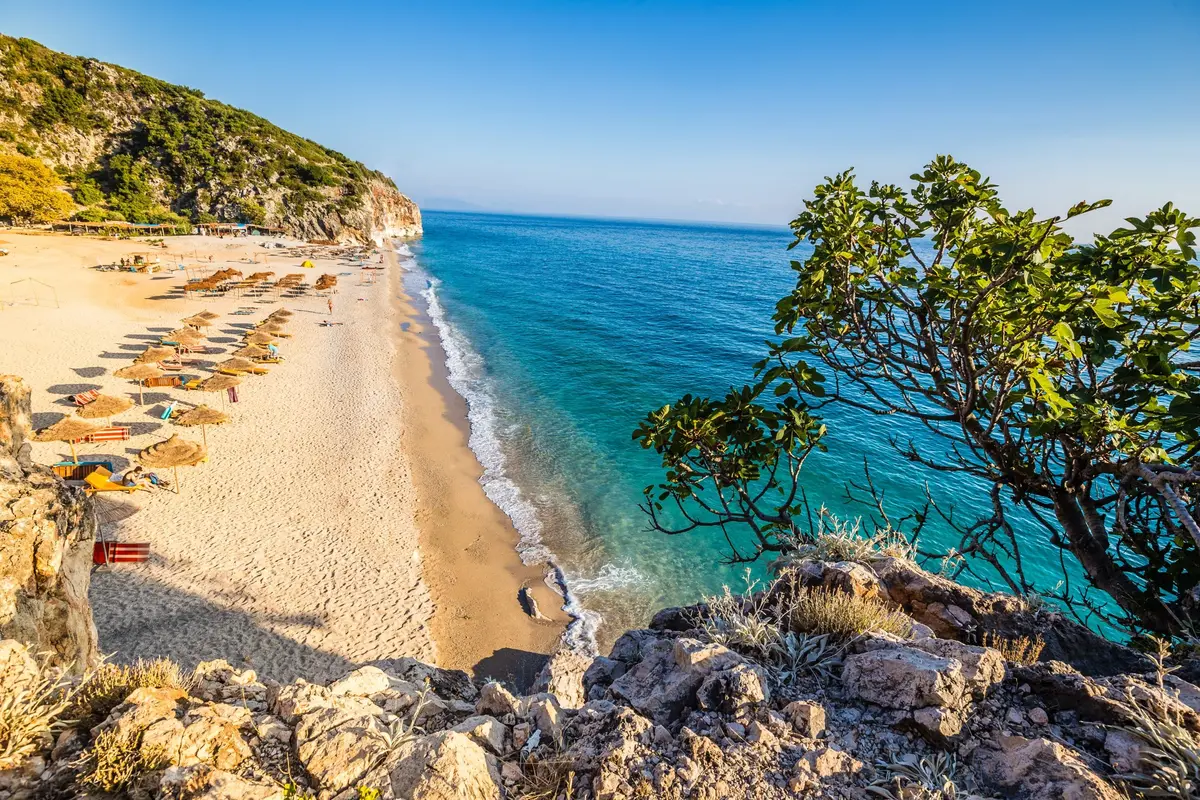
The Albanian Riviera is the trip’s payoff, but Ksamil — the Instagram star — is the weakest stop. Spend a morning on the Ksamil Islands, then drive 45 minutes north to base in Himarë or Dhërmi for two nights. Gjipe Beach (a 25-minute hike from the road) is the single best stretch of sand in the country.
Sunbed pricing on the Riviera has climbed hard, and Ksamil leads the climb. A set of two loungers and an umbrella runs 1,000 to 4,000 lek ($12 to $50) depending on how close you are to the main strip, with cabanas at the top clubs pushing past $80. One thing in your favor: Albanian law requires beach operators to leave a free public strip along the water, so you can always put a towel down without paying. Some staff will pretend otherwise. They are wrong.
I paid for a sunbed in Ksamil that came with a 3-foot personal space buffer from a Romanian family on one side and a hen-do on the other. In Dhërmi the same money got me an empty beach with rosemary growing in the dunes.
The honest beach breakdown:
- Ksamil Islands: the nearest is a 100-meter swim or a $4–6 water taxi, packed by 10 a.m.
- Himarë town beach: free public sections, real-town atmosphere, sunbed sets from about $12
- Dhërmi: best swimming on the Riviera, white pebble shore, sunbeds at the top of the range
- Gjipe Beach: 1-mile dirt track plus 25-minute walk, no facilities, the best pick
- Porto Palermo Castle: Ali Pasha’s fortress on a peninsula just south of Himarë, small entry fee, worth a 30-minute stop
Where to sleep on the Riviera, shoulder-season rates:
- Hotel Vila Verde (Ksamil): from about $85/night
- Himarë seafront pensions: $60–100/night
- Dhërmi boutique hotels: $110–160/night
- In July and August, expect a 3-to-4-star double in Himarë or Sarandë to run $95–175, and Dhërmi or Jala to run $140–290
Day 13: The Llogara Pass and the wild Karaburun coast
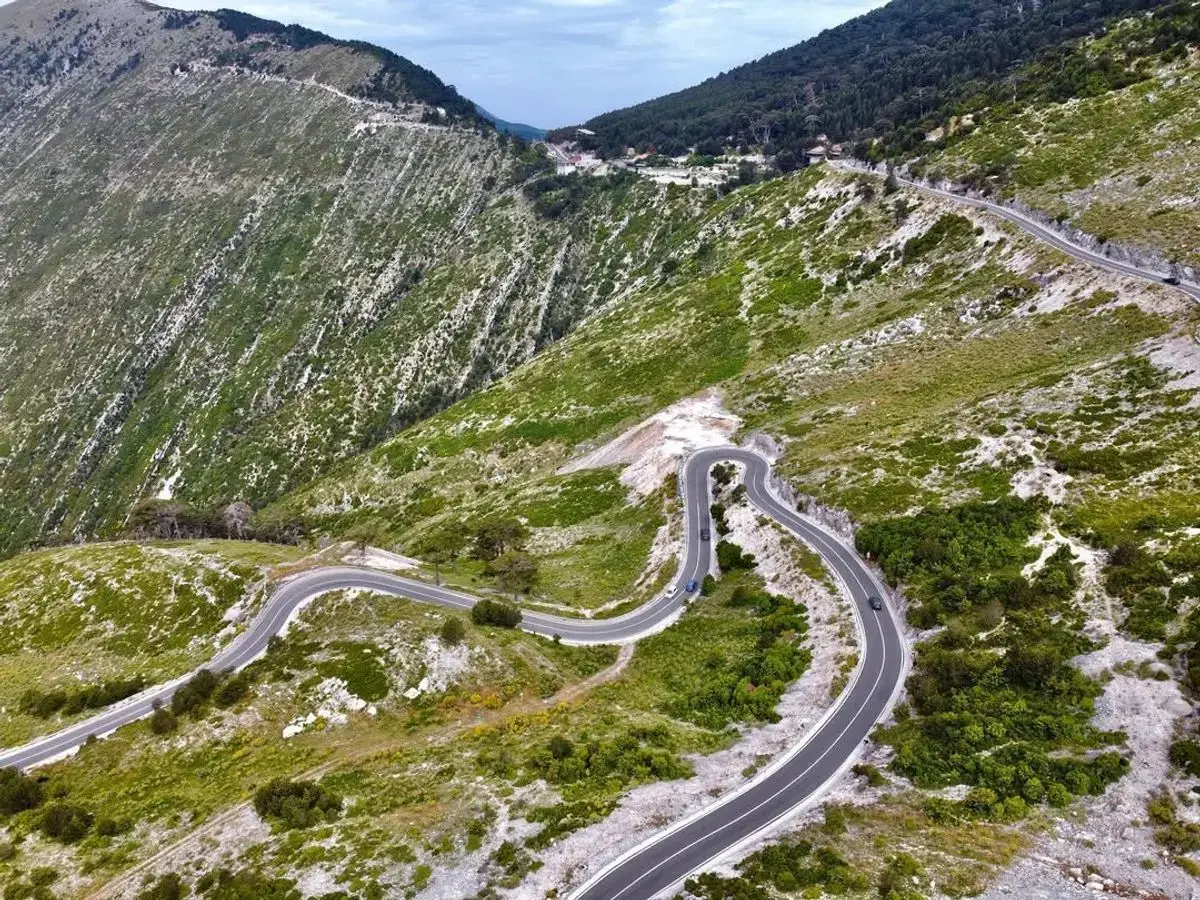
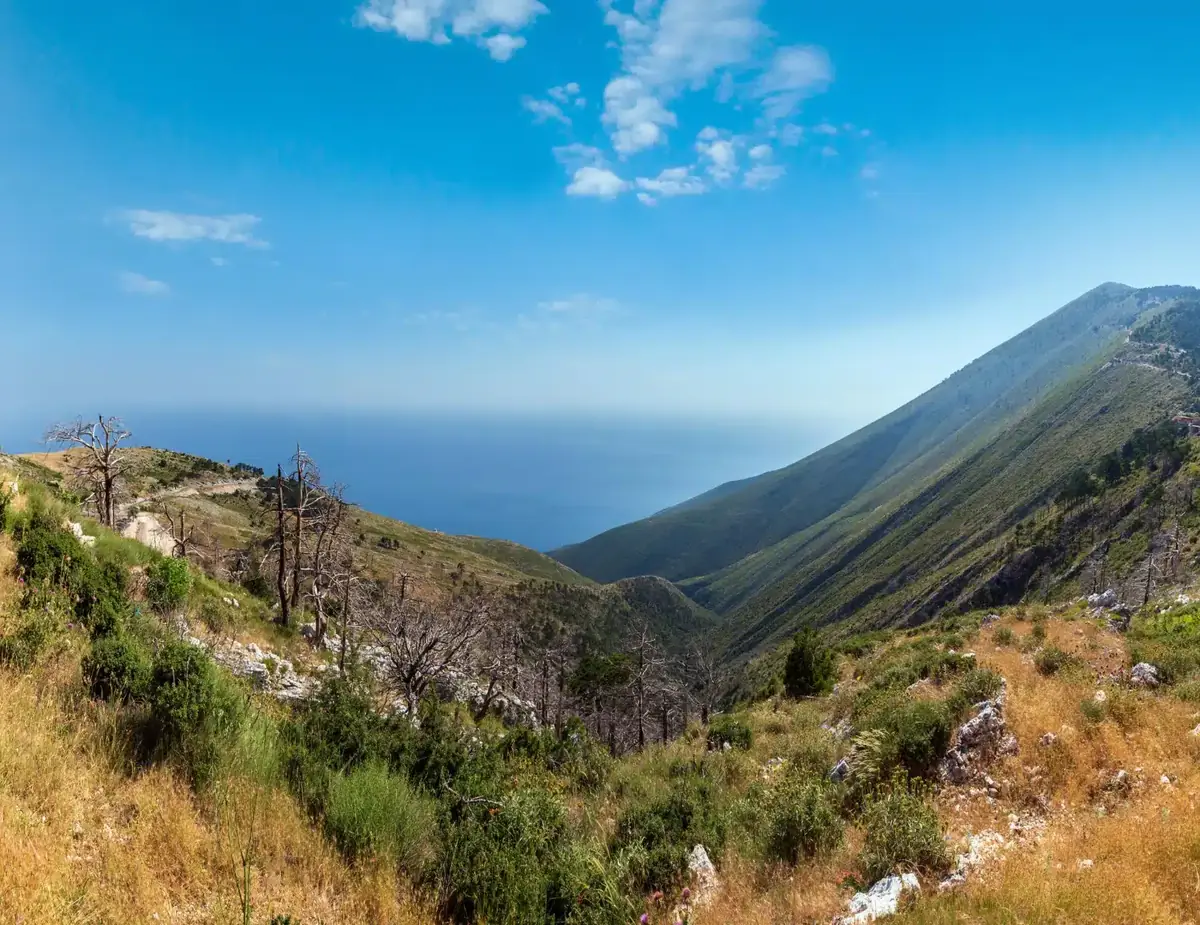
Day 13 is the drive everyone remembers: the Llogara Pass, a switchback climb from sea level to 3,369 feet (1,027 m) through pine forest, with the Karaburun peninsula opening below you at the summit. Stop for a long, slow lunch at one of the Llogara restaurants, then continue down to Vlorë for the night.
You now have a choice the older guides don’t mention. A 3.7-mile (5.9 km) tunnel runs under the mountain and takes seven minutes, at a toll of 250 lek (about $3) each way for a car. Take the pass anyway if the weather is clear. The tunnel has pulled most of the trucks and through-traffic off the old road, which means the switchbacks are now quieter and far more pleasant to drive than they were a few years ago. Save the tunnel for fog, rain, or a late arrival.
The smell at the Llogara summit after a rain is pure Mediterranean pine — the same smell as a Provençal hillside, but with a view of Greek islands instead.
Practical numbers for the day:
- SH8 distance over the pass: about 25 miles (40 km) of switchbacks
- Llogara summit elevation: 3,369 feet (1,027 m)
- Llogara Tunnel toll: 250 lek one-way for cars, 100 lek for motorcycles, cash in lek is safest
- Lunch at a Llogara restaurant: spit-roasted lamb around $18/person
- Vlorë overnight: better than Durrës, real seafront, actual restaurants
- Optional Karaburun-Sazan boat tour from Vlorë: about $45–60/person for a half day
Vlorë is the right last-night base. Durrës — the alternative most lazy itineraries push — has a gritty beach and underwhelming Roman ruins. Vlorë has a proper waterfront promenade and seafood worth the stop. And no, you cannot fly out of Vlorë: the new airport south of the city is built but has repeatedly missed its opening, with certification and ownership disputes still unresolved. Tirana remains the only practical gateway for US travelers.
Day 14: Vlorë back to Tirana — and the easiest goodbye
Day 14 is the easiest day of the trip: Vlorë to Tirana is 95 mi (150 km), about 2 hours on the motorway. Drop the rental car at TIA before 5 p.m. with the tank topped off, and you’ll have time for a final dinner at Oda in central Tirana before whatever red-eye gets you back to JFK or EWR.
The return logistics in order:
- Leave Vlorë by 10 a.m. for a buffer-rich drive
- Refuel at the cheap station 1 mile before TIA, not the airport pump
- Drop the car, take photos of the fuel gauge and bodywork at handover, and confirm in writing when the deposit hold will be released
- Cab to central Tirana for dinner (about $20), or the airport bus for about $5
- Cab back to TIA 3 hours before international departure
Common US return routings: Istanbul on Turkish Airlines, Vienna on Austrian, Munich or Frankfurt on Lufthansa, Rome on ITA. Same options as the inbound flight.
How much does a two-week Albania road trip cost?
Two weeks in Albania costs roughly $1,200 per person budget, $2,300 mid-range, or $4,400 luxury — flights from the US extra. The single biggest variable is the car ($500–700 for 14 days in shoulder season, $850–1,200 in peak) and whether you stay in $28 guesthouses or $150 hotels. Albania is no longer the bargain it was five years ago, particularly on the southern coast, but it still undercuts Greece and Croatia by a wide margin.
Daily breakdown by traveler type, per person, in USD:
- Budget — accommodation $28, food $20, fuel share $9, entries $6, activities $5. Daily total: $68. 14-day total: roughly $950 plus a $250 rental share.
- Mid-range — accommodation $65, food $38, fuel share $9, entries $9, activities $18. Daily total: $139. 14-day total: roughly $1,950 plus a $350 rental share.
- Luxury — accommodation $145, food $65, fuel share $9, entries $12, activities $45. Daily total: $276. 14-day total: roughly $3,860 plus a $550 rental share.
Add roughly $600 to $1,200 for round-trip flights from JFK, EWR, or ORD via Istanbul, Vienna, Munich, or Rome. Then add one line item nobody budgets for: most Albanian municipalities charge an overnight tourism tax, typically 100 to 500 lek ($1.25 to $6) per person per night, added at checkout rather than shown in the booking price. Over 13 nights on the coast, that’s a $40 to $70 surprise.
Fuel is the number most guides get badly wrong. Albanian pump prices sit well above the global average — roughly $2.30 a liter — so the full loop costs around $220 to $250 for a compact, not the $140 you’ll see quoted elsewhere. Every entry fee and toll above was checked against operator rate cards and official site tariffs, converted at roughly 80 lek to the dollar. Albanian ticket prices and tolls do move, so treat these as planning numbers and confirm at the gate.
Pro Tip: The smallest ATM withdrawal that didn’t trigger a fee for me was 30,000 lek — about $370. Plan to pull cash twice in two weeks, not eight times. Cards work in Tirana, Sarandë, and most mid-range hotels, but byrek stands, castle ticket desks, and every guesthouse in Theth and Valbona are cash only.
When is the best time to drive this loop?
The best window for two weeks in Albania is mid-June or early-to-mid September. The Valbona–Theth hike is reliably open, the Riviera is warm enough to swim (sea in the low 70s°F / 22°C), and the traffic that turns the SH8 into a parking lot in July and August hasn’t started or has just ended.
Month by month in Albania, the short version:
- April: Koman ferry starts mid-month, but the pass is still snowed in and the Riviera is too cold to swim
- May: shoulder pricing, Theth road open, sea around 65°F — but the Valbona Pass often still holds snow
- June: best overall, hike reliably open from mid-month, Riviera not yet packed
- July–August: Riviera highs 90–95°F, accommodation prices double, SH8 gridlocked
- September: second-best month, water still warm into late September, crowds gone after the 10th
- October: hike doable early in the month until snow, ferry runs to about the 5th of November, last warm beach days at the start
- November–April: pass closed, north loop impossible
Mid-September I had Gjipe Beach to myself at 4 p.m. on a Saturday. The same beach in July had a waiting line for the dirt-road parking spots.
What to skip on a two-week Albania road trip
Skip Durrës (the beach is gritty and the Roman ruins underwhelm), keep Krujë to 90 minutes rather than a half-day, skip the Sarandë–Corfu day trip if you only have 14 days, and resist any tour selling you “Kosovo in a day” out of Tirana — the border crossing alone burns four hours each way.
The active skip list, with what to do instead:
- Skip Durrës overnight → use Vlorë as your last-night coastal base
- Skip the half-day Krujë stop → 90 minutes is plenty, drive on to Berat
- Skip Ksamil overnight → base in Dhërmi or Himarë, day-trip to Ksamil for one morning
- Skip the Corfu ferry → save it for a separate Greece trip
- Skip the Kosovo day tour → it’s 8 hours of driving for 4 hours on the ground
- Skip taking the car on the Koman ferry → park it in Shkodër and save both the fare and the stranded-car problem
The trap on a 14-day trip is FOMO addition. Every saved half-day buys you a slow afternoon in Berat, a second dinner in Gjirokastër, or a real second swim at Gjipe — which is what you actually came for.
Two weeks in Albania road trip: quick answers
Do Americans need a visa for Albania?
No. US passport holders enter visa-free for up to 365 days under a bilateral agreement — the most generous terms in Europe. There is no e-visa and no advance registration. Your passport needs at least three months of validity beyond your departure date. Border officers occasionally default to a 90-day stamp; for a two-week trip it makes no practical difference.
Can you drive to Theth without a 4×4?
Yes. The SH21 from Shkodër has been fully paved since 2021 and a standard sedan handles it in 2 to 2.5 hours in summer. Ground clearance only matters for the gravel tracks inside the village. Fill up in Shkodër or Koplik — there is no fuel in Theth.
Should you book the Lake Koman ferry in advance?
Yes, and at least two weeks ahead in July and August. Berisha’s car deck holds around five vehicles per sailing and sells out first; foot-passenger space goes later but still goes. Booking online through the operator gets you a discount over paying cash at the dock, and mobile signal at Koman is unreliable, so save the PDF offline.
Is Albania still cheap?
Cheaper than Greece or Croatia by 30 to 50%, but the gap is narrowing fast on the southern coast, where peak-season hotel rates now rival mid-tier Mediterranean destinations. Heritage sites remain absurdly good value — most castles and museums cost $3 to $6. Fuel is the outlier: Albanian pump prices run well above the world average.
Can you do this loop without a car?
Partly. Furgons and minibuses connect Tirana, Shkodër, Berat, Gjirokastër and Sarandë, and the Alps section works entirely on public transport. What you lose is the Riviera — Gjipe, Porto Palermo, and the small coves between Himarë and Sarandë are effectively unreachable without your own wheels.
TL;DR: Two weeks is the perfect length for a two weeks in Albania road trip — enough to drive a clockwise loop from Tirana through the Accursed Mountains, Berat, Gjirokastër, and the Riviera without burning out. Rent a car in shoulder season (mid-June or September), budget around $2,300 per person mid-range, get the IDP from AAA before you fly, leave the car in Shkodër for the Koman ferry, and skip Ksamil overnight in favor of Dhërmi.
The single decision that will make or break the trip is when you go. Aim for the shoulder months and the entire loop opens up — open hike, empty beaches, half-price hotels, and a Riviera road you can actually drive at the speed limit. Pick July and you’ll fight for every inch of it.
What’s the one stop on this loop you’re most curious about — the Valbona–Theth hike, the Lake Koman ferry, or the Riviera beach call between Ksamil and Dhërmi? Drop a comment and I’ll dig in further.