Most people treat Shkoder as a one-night pit stop before the Albanian Alps, but the best things to do in Shkoder deserve two full days. A hilltop castle with a grim founding legend, a lake you can cross by bike, and Albania’s only national photography museum sit inside a compact, walkable core — before the mountains even start.
The Quick Answer: What to Do and How Long to Stay
Give Shkoder two days. Spend the first climbing Rozafa Castle for sunset and wandering the Kole Idromeno pedestrian street. On the second, rent a bike and ride out to Lake Shkodra at Shiroka. Add a third day if you’re pushing on to the Albanian Alps by minibus or the Komani Lake ferry.
Here’s the whole city on one screen, with distances measured from the central square and costs in US dollars alongside the local lek.
| Sight | From the center | Time needed | Cost (approx.) | Best time |
|---|---|---|---|---|
| Rozafa Castle | ~1.5–2 miles (2–3 km) | 1.5–2 hrs | ~$4–4.50 (400 lek) | Late afternoon |
| Kole Idromeno street | In the center | 1–2 hrs | Free | Evening |
| Marubi photography museum | On Kole Idromeno | ~1 hr | ~$7–8 (700 lek) | Midday |
| Site of Witness and Memory | Central | ~1 hr | ~$2 (200 lek) | Any |
| Lake Shkodra at Shiroka | ~2 miles (3 km) | Half day | Bike ~$6–7/day | Morning |
| Zogaj beach | ~6 miles (10 km) | Add 2–3 hrs | Free to swim | Summer |
| Mesi Bridge | ~3–5 miles (5–8 km) | 1–2 hrs | Free | Warmer months |
| Venice Art Mask workshop | ~1.5 miles (2 km) | ~1 hr | Tour ~$3 | Daytime |
Prices in Albania move with the country’s popularity, so treat these as current ballpark figures and carry cash — most of these places take lek only.
Climb Rozafa Castle for the Legend and the View
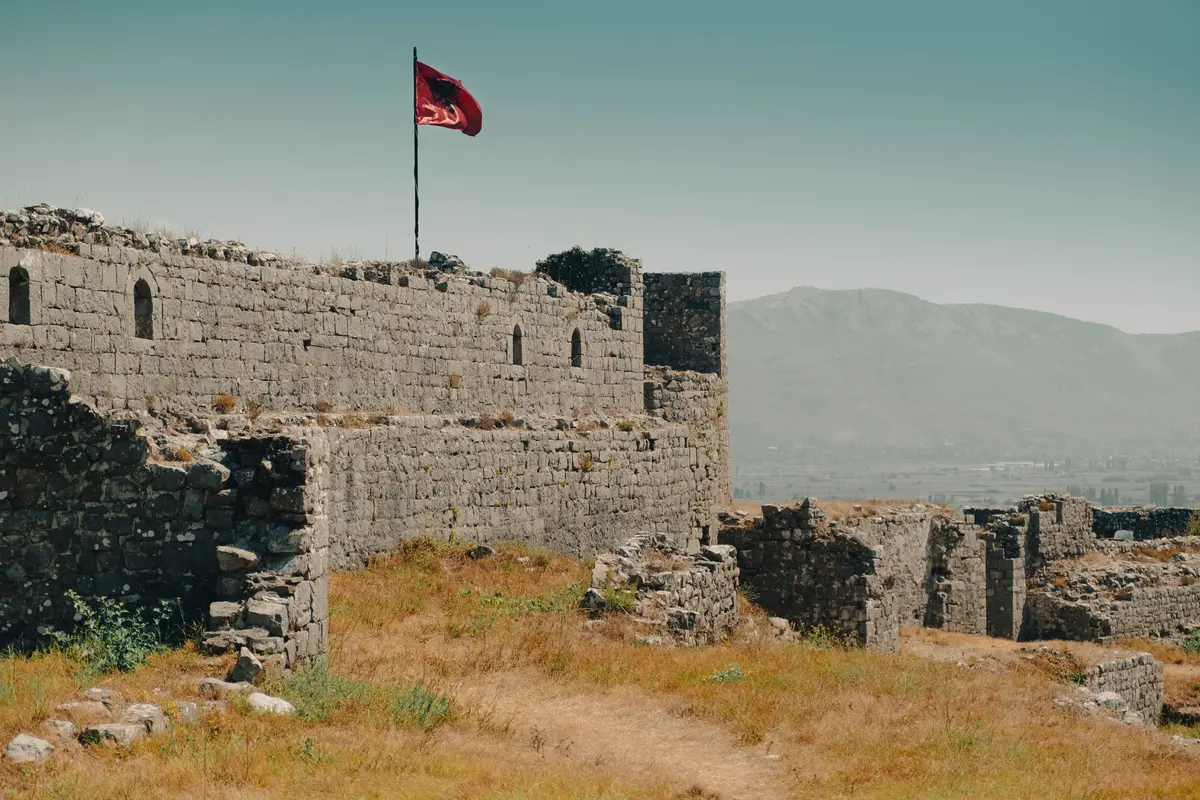
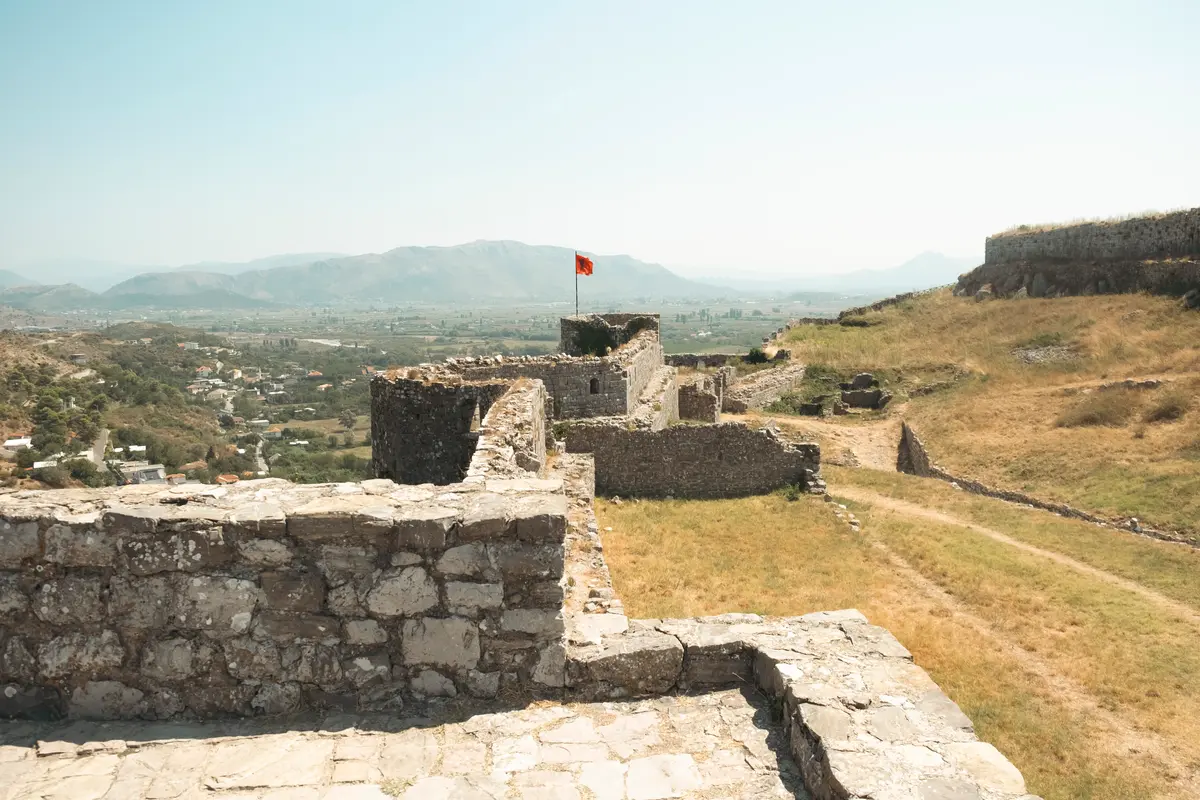
The story attached to Rozafa Castle is darker than the postcard suggests. Local legend says three brothers building the walls found their work collapsing each night until they agreed to wall up one of their wives alive to hold the stones. The youngest brother’s wife was chosen, and she asked only that one breast be left exposed so she could still nurse her infant son.
That legend is the reason to climb; the ruins themselves are sparse. What you actually get at the top is the payoff — a ridge fortress rising roughly 430 feet (130 m) above the plain, looking down on the confluence of the Buna, Drin, and Kir rivers. The stonework runs from Illyrian foundations of the 4th century BCE through the Roman capture in 168 BCE and later Venetian and Ottoman rebuilds, with a small museum and a café inside the walls.
Getting up there is a short trip that ends with real effort. The castle sits about 1.5 to 2 miles (2–3 km) from the center — a walk of roughly 45 minutes or a 20-minute bike ride to the base, then a steep cobbled climb to the gate.
Pro Tip: The cobbles get slick, especially after rain, so wear shoes with grip. Time the climb for late afternoon and you’ll be on the walls as the light drops across the three rivers.
On price, guides contradict each other — you’ll see the entry quoted at 200, 400, and 700 lek across different sources. The adult ticket lands at around 400 lek (about $4–4.50), with reduced rates for teenagers and free entry for young children; the separate Museum of the Castle runs a little more. Reconfirm at the gate, since these edge upward over time.
- Location: Kalaja e Rozafes, on the hill southwest of the center
- Cost: around $4–4.50 (400 lek) adults, cash only
- Best for: first-time visitors, sunset chasers, anyone who likes a view earned on foot
- Time needed: 1.5–2 hours, including the climb
Wander Rruga Kole Idromeno and Join the Xhiro
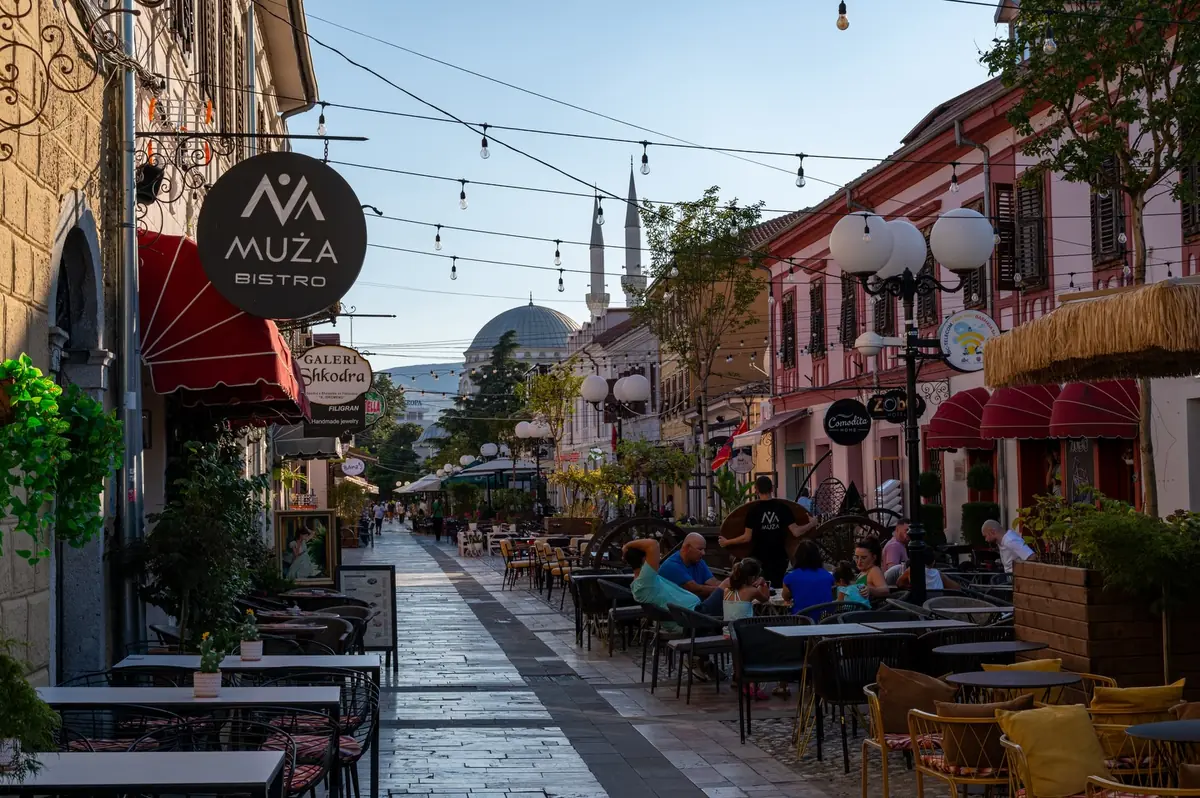
The pedestrian street named Rruga Kole Idromeno is the living heart of Shkoder, and the best time to walk it isn’t midday — it’s dusk. Around 7 to 8 p.m., the street fills for the xhiro, the communal evening stroll where whole families and clusters of friends walk the same half-mile stretch back and forth, greeting people they know. It’s the closest thing the city has to a nightly event, and it’s free.
The street runs about half a mile (750 m) toward city hall, lined with pastel Italianate facades layered over Ottoman and Venetian bones. Coffee here is taken seriously — a macchiato is a sit-down ritual, not a to-go cup. Duck down the side streets and the crowds thin fast.
One quiet detail most visitors miss: Mother Teresa’s family lived briefly on nearby Rruga Ludovik Saraci, marked now by a plaque.
See 150 Years of Albania at the Marubi Photography Museum
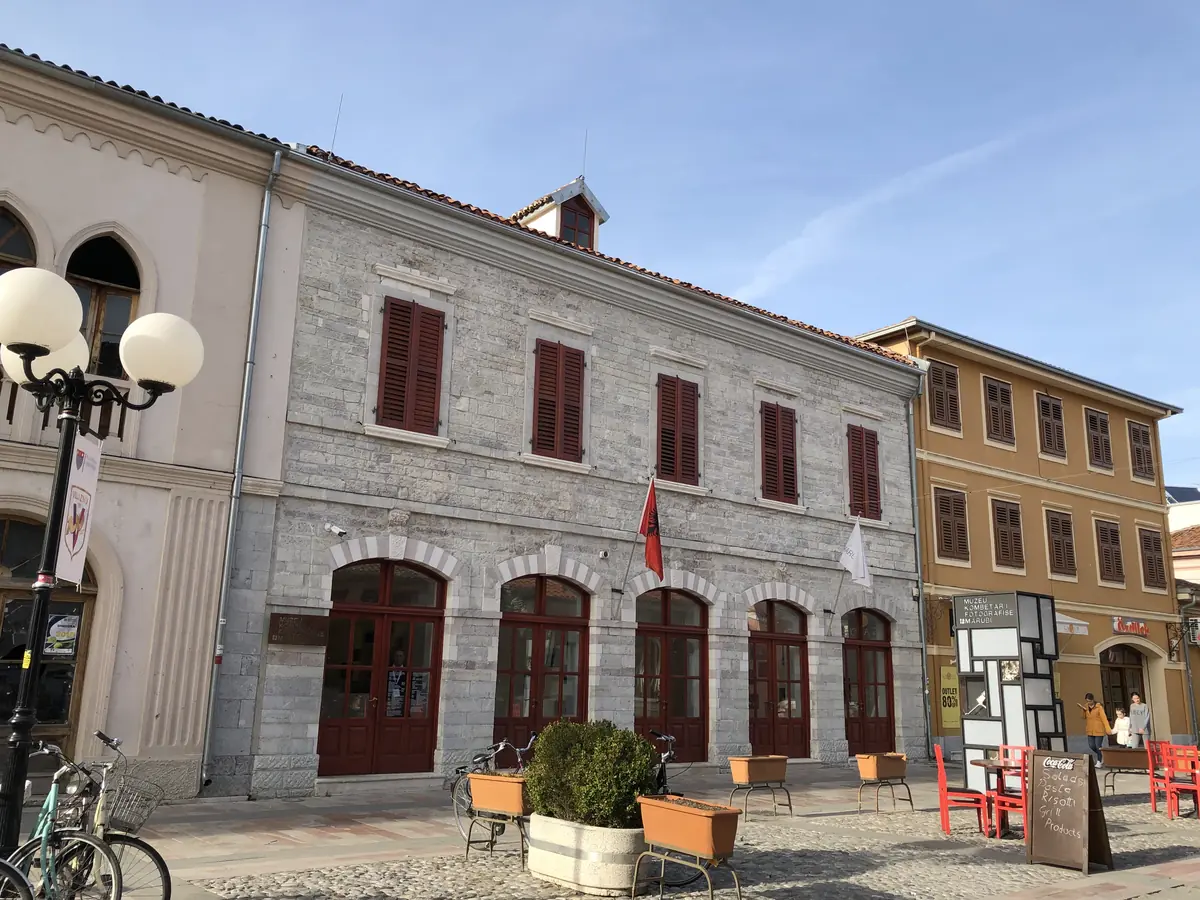
The Marubi National Museum of Photography is not a filler stop — it’s the only national photography museum in Albania, and its archive is one of the most important in the Balkans. It grew out of the Photo-Studio Marubbi, founded in 1856 by an Italian émigré named Pietro Marubbi, whose adopted family carried the trade across three generations.
According to the museum’s own records, the collection holds around 500,000 negatives spanning early glass plates to later formats, including what’s described as the first photograph ever taken in Albania, made by Pjeter Marubi. The museum was a finalist for the European Museum of the Year award. Sitting with those portraits — Ottoman-era officials, mountain families, city weddings — is the closest thing to time travel the city offers.
Practical notes: it’s on Rruga Kole Idromeno, entry runs around 700 lek (about $7–8) for adults with a reduced children’s rate, and it’s cash only. Budget about an hour. Hours shift with the season and it often closes on Mondays out of high season, so check before you make a special trip.
- Location: Rruga Kole Idromeno, in the center
- Cost: around $7–8 (700 lek) adults, cash only
- Best for: history and photography lovers, rainy-afternoon backup plan
- Time needed: about 1 hour
Face Albania’s Communist Past at the Site of Witness and Memory
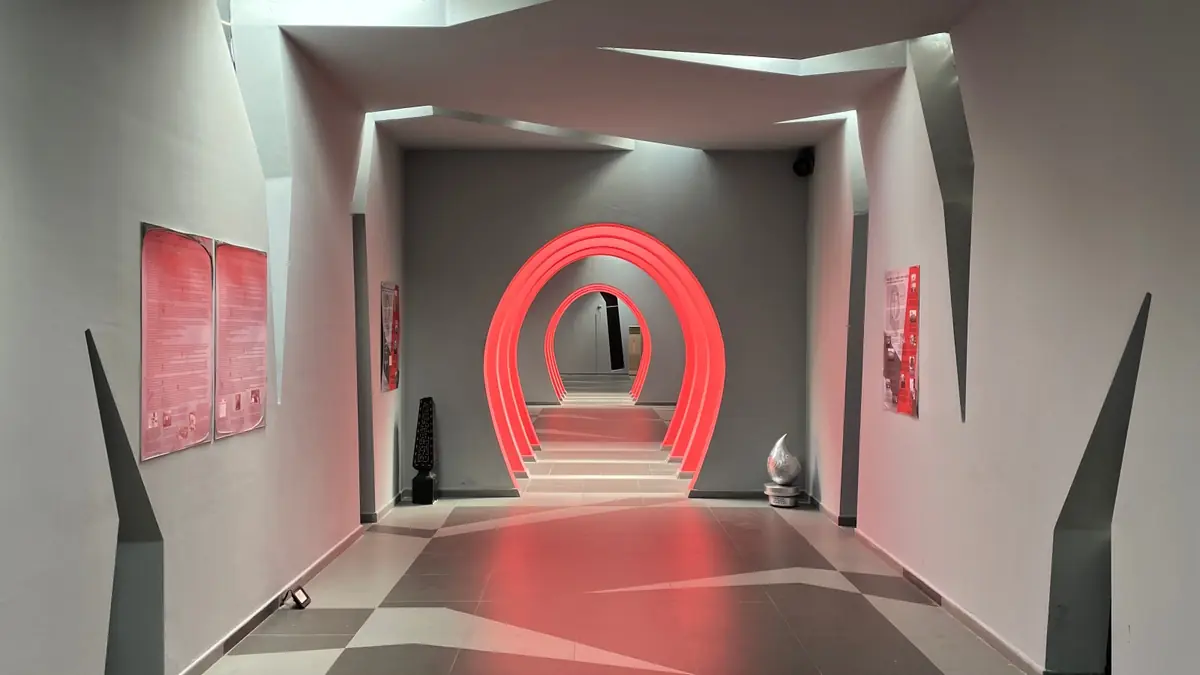
If you visit one museum in Shkoder for its weight rather than its fame, make it this one. The Site of Witness and Memory is Albania’s first place of remembrance for victims of the communist dictatorship, and it lands harder than the better-known Marubi museum for a lot of travelers — yet most guides give it a single line.
The building was once an orphanage and convent, seized by the Ministry of the Interior in 1946 and turned into pre-trial holding cells. You walk two floors of those cells and interrogation rooms, with strong English-language materials explaining who passed through them and what the regime did to religion, dissent, and ordinary families. It’s sobering, and it’s meant to be.
Entry is around 200 lek (about $2) for adults, half that for children, cash only. Hours can be scattered, so it’s worth checking locally.
- Location: Bulevardi Skenderbeu, central Shkoder
- Cost: around $2 (200 lek), cash only
- Best for: anyone who wants to understand modern Albania, not just photograph it
- Time needed: about 1 hour
Ride a Bike to Lake Shkodra, Shiroka and Zogaj
Shkoder is flat, and locals half-jokingly call it the Amsterdam of Albania for how many people get around on two wheels. Renting a bike is the single best half-day here. Hostels and shops around town rent them for roughly $6–7 a day, and the ride out to the lake needs no special fitness.
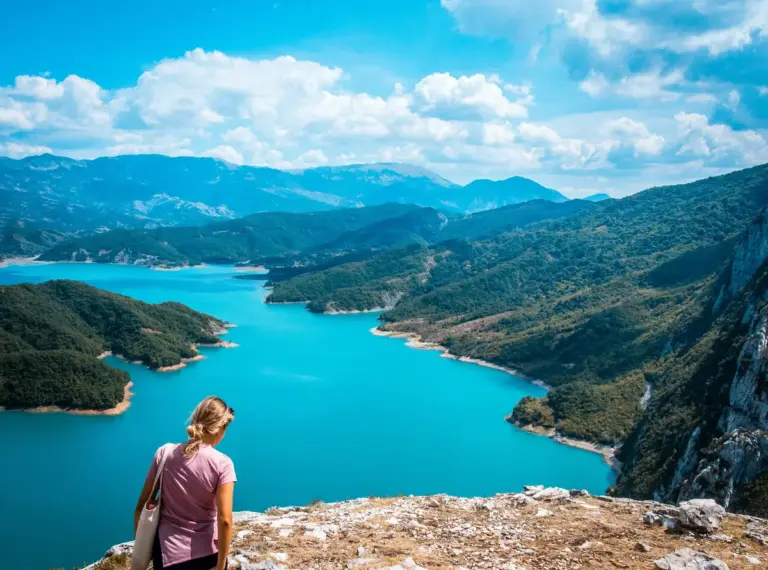
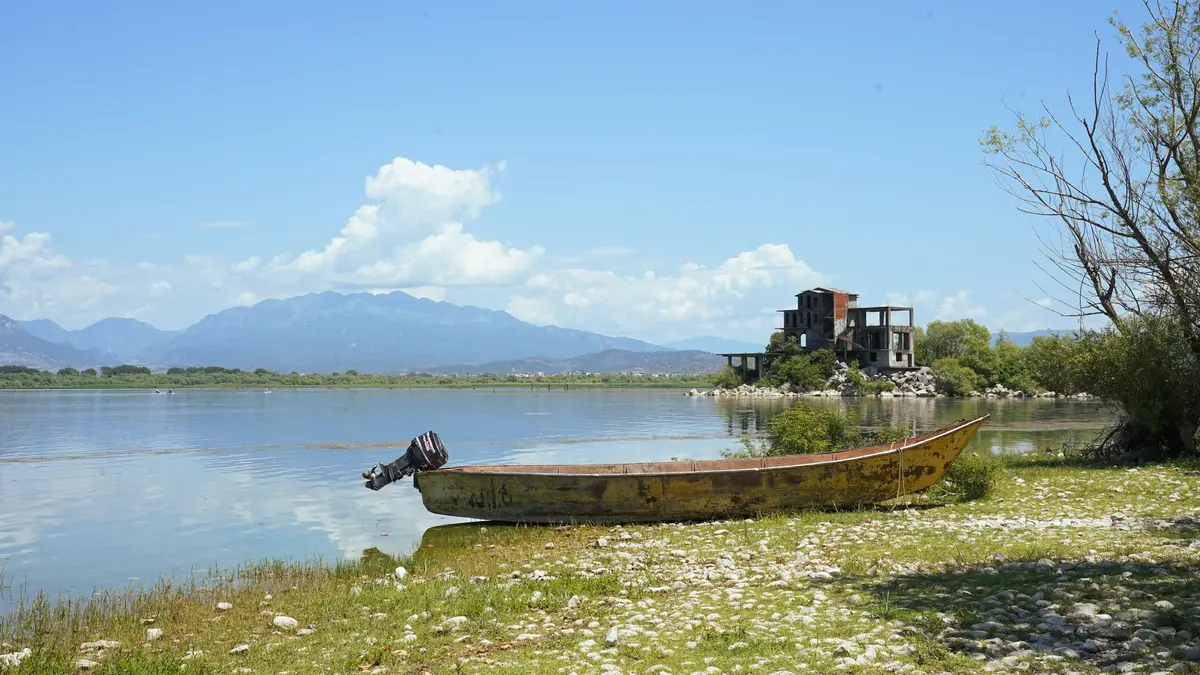
Lake Shkodra is the largest lake in the Balkans, shared with Montenegro, which holds most of the water while Albania keeps about a third. The nearest lakeside village, Shiroka, is about 2 miles (3 km) from the center. Push another 4 miles (7 km) along the shore and you reach Zogaj, roughly an hour and a half of easy pedaling with photo stops.
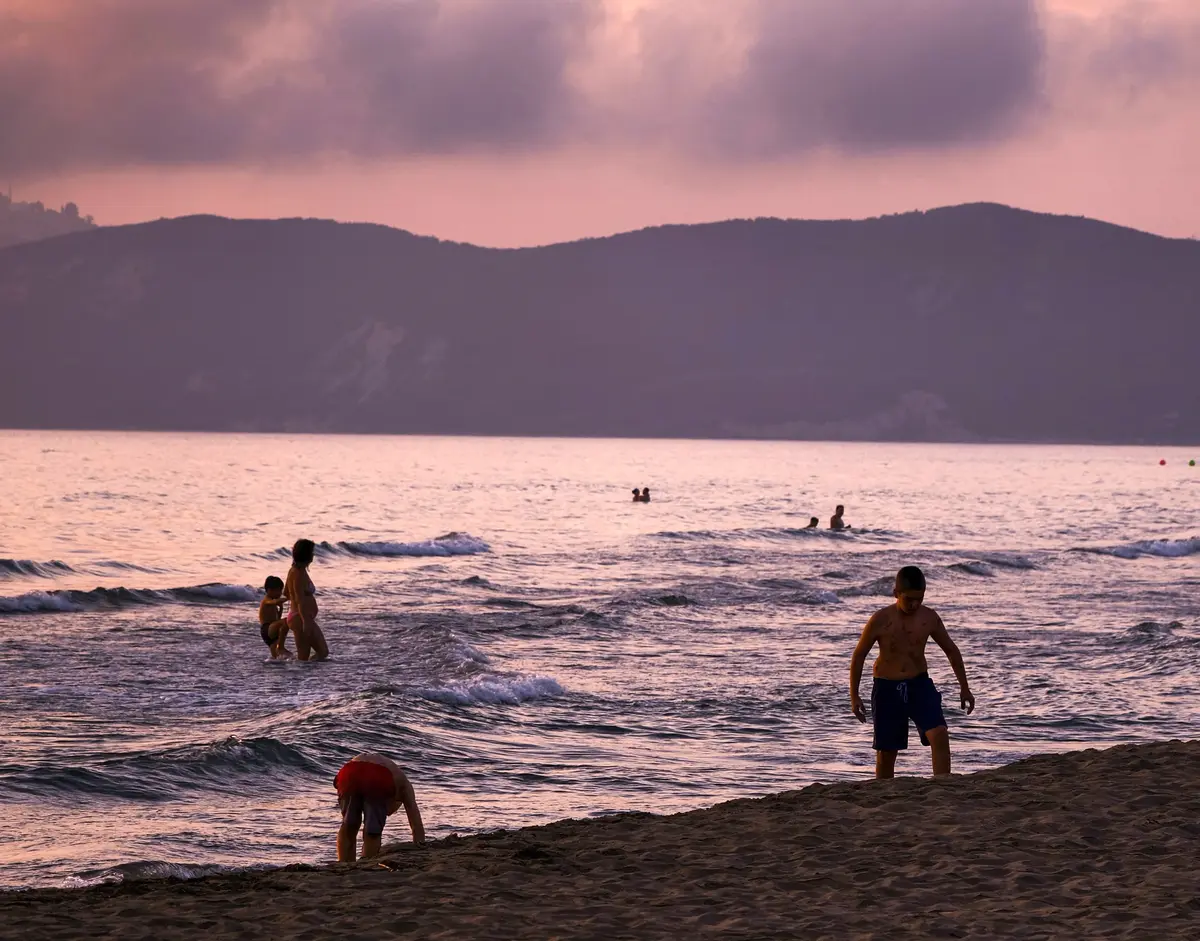
The lake rewards a slow pace. There’s a free public beach at Plazhi Zogaj for a swim, fish restaurants strung along the water, and paddleboard and kayak rentals near the shore. Keep riding past Zogaj and you’ll eventually hit the Montenegro border.
Pro Tip: Go in the morning or the last hours before sunset. Midday heat off the water in high summer is brutal, and the light is flat.
Cross the Ottoman Mesi Bridge
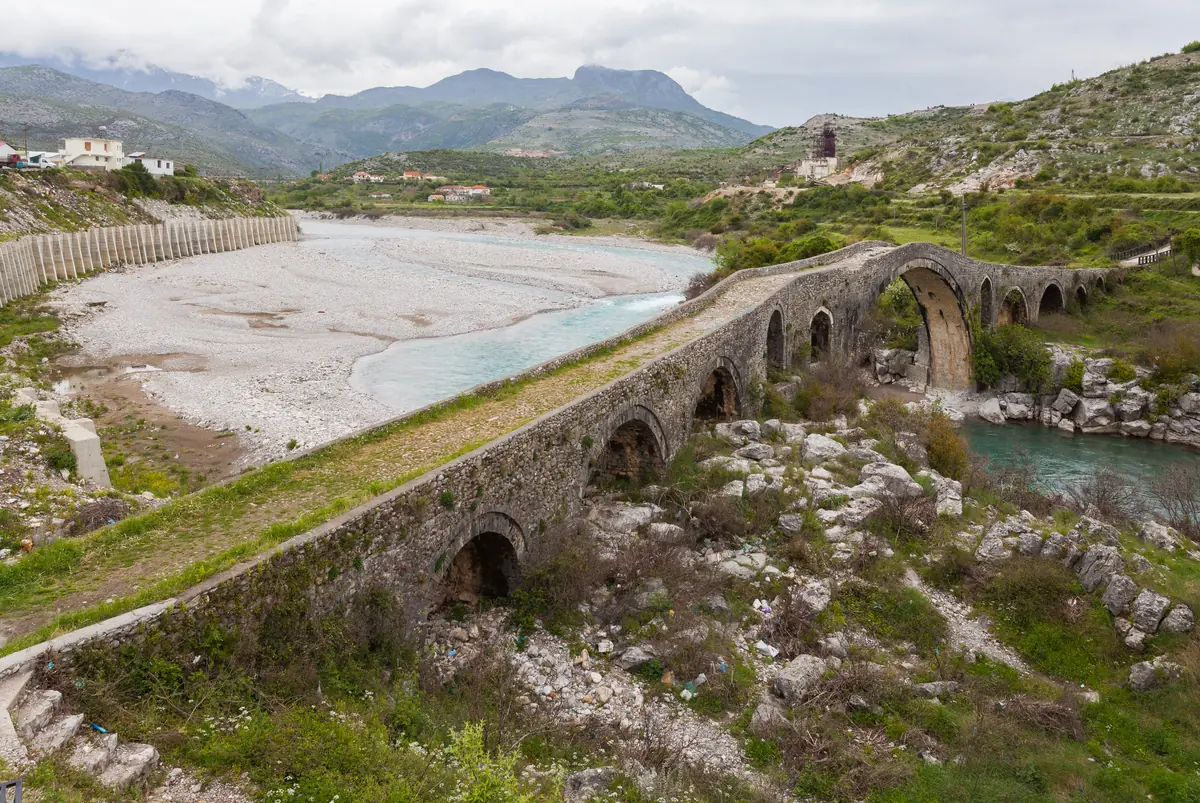
Slightly farther out, the Mesi Bridge (Ura e Mesit) is the countryside ride worth making. It’s the largest Ottoman-era bridge in Albania, an 18th-century stone span usually counted at 13 arches, crossing the Kir river about 3 to 5 miles (5–8 km) from the center. You can reach it by bike or a short local bus.
One honest caveat: in high summer the Kir can run low or dry out entirely, so the classic reflection shot depends on the season. In warmer months when the water is flowing, the pools beneath the arches are cool enough for a swim.
- Location: over the Kir river, ~3–5 miles (5–8 km) northeast of the center
- Cost: free
- Best for: cyclists, photographers, a spring-to-early-summer swim
- Time needed: 1–2 hours round trip
Discover the Venice Art Mask Factory
Here’s the fact that stops people mid-sentence: one of the workshops supplying handmade Venetian masks around the world is not in Venice — it’s in Shkoder. The Venice Art Mask workshop, run by Edmond Angoni, makes its masks by hand in papier-mache and ships them internationally.
You can take a short factory tour for a couple of dollars, watch the layering and painting, and, if you want, sign up for a mask-painting workshop of your own. The showroom carries pieces from around $20 up past $1,500 for the elaborate ones. It’s about 1.5 miles (2 km) from the center, a 25-to-45-minute walk.
- Location: Venice Art Mask workshop, ~1.5 miles (2 km) from the center
- Cost: tour around $3; masks from ~$20
- Best for: families, anyone who likes seeing things made by hand
- Time needed: about 1 hour
See the City’s Faiths: A Mosque and Two Cathedrals
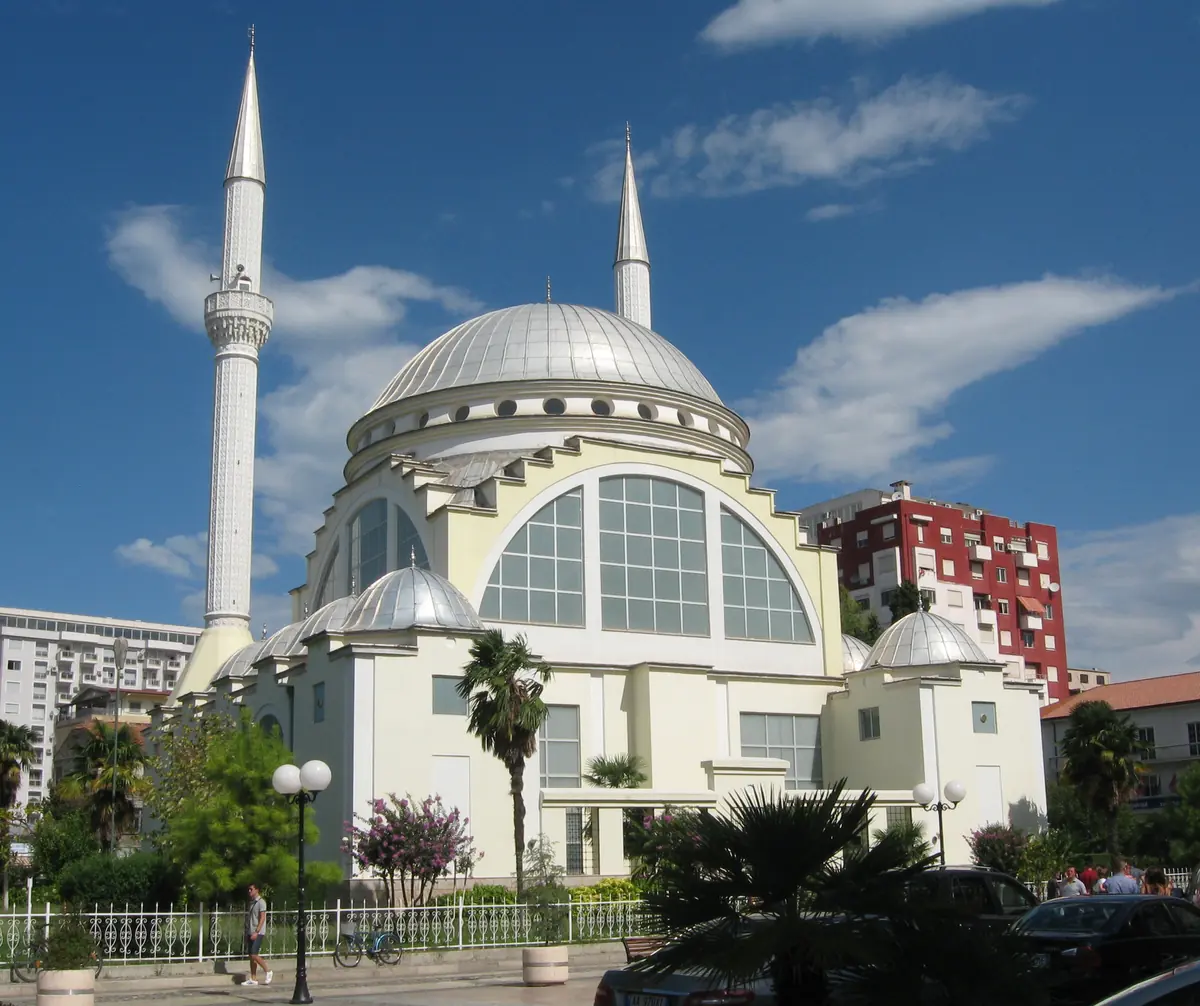
Shkoder wears its religious history openly, and you can read three faiths within a short walk. Start at the Ebu Bekr Mosque, the city’s largest, rebuilt in the mid-1990s on the site of an earlier mosque the regime had destroyed. It seats around 1,300 worshippers under a dome about 79 feet (24 m) high, flanked by twin minarets rising roughly 135 feet (41 m).
A few minutes away, the small Lead Mosque (Xhamia e Plumbit), built in the 1770s, holds a heavier significance: it was the first mosque reopened in Albania after the fall of state atheism, the world’s only officially atheist state at the time.
The Catholic thread runs just as deep. St Stephen’s Cathedral, re-established in the 1850s, was stripped and used as a sports hall under communism before reopening in the early 1990s; both Mother Teresa and Pope John Paul II visited soon after. The Orthodox Cathedral of the Nativity rounds out the trio. All welcome visitors outside prayer times — dress modestly and keep your voice down.
How Do You Get From Shkoder Into the Albanian Alps?
Shkoder is the launchpad for the Accursed Mountains. For the classic Theth–Valbona loop, take a morning minibus to Theth, hike over the pass to Valbona, then return by the Fierze–Koman ferry. Guesthouses and hostels arrange every leg and store the luggage you don’t want to carry over the mountains while you hike.
The Theth–Valbona Loop, Step by Step
The overland trek is the reason many travelers come north at all, and it’s more organized than it looks.
- Shkoder to Theth: morning minibus, roughly $11–13, about 2–3 hours on a mountain road
- Theth to Valbona: the signature hike, about 10 miles (16 km) over the Valbona Pass (Qafa e Valbones) at around 5,770 feet (1,759 m), taking 6–8 hours
- Season: the high trail is reliable only from about mid-June into October; outside that window, snow closes the pass
The Komani Lake Ferry
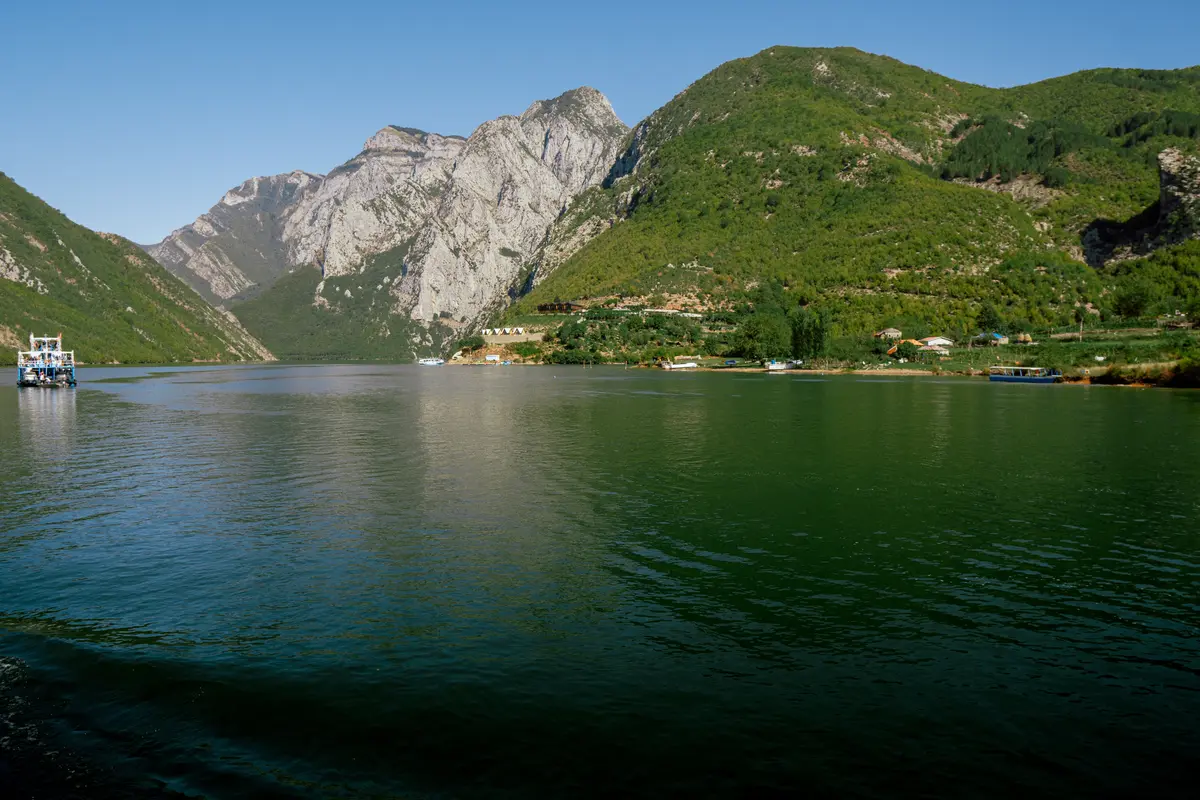
The return leg is a highlight in itself. The ferry between Fierze and Koman runs once daily in each direction — commonly departing Koman in the morning and Fierze in the early afternoon — and takes about 2.5 hours through a canyon so steep it looks fjord-like. Foot passengers pay roughly $6–8.
Pro Tip: Book the minibus and ferry through your Shkoder guesthouse the night before, and leave a bag with them for a few dollars. Carrying only a daypack over the pass changes the whole hike.
Take a Day Trip to Komani Lake and the Shala River
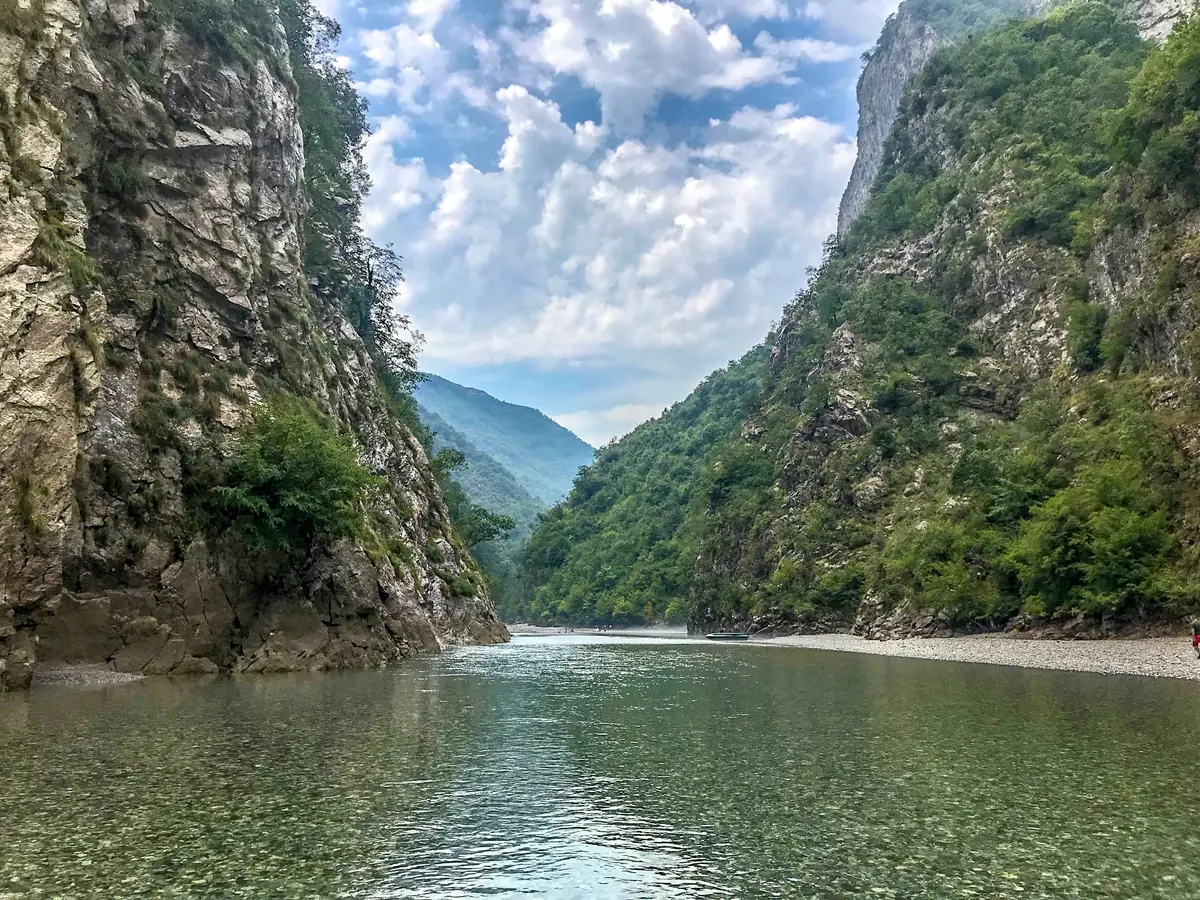
If a multi-day trek isn’t your trip, there’s a way to see the Alps’ most dramatic scenery and sleep in Shkoder both nights. Day tours pair the Komani Lake boat ride with the Shala River (Lumi i Shales), a turquoise mountain river clear enough that it gets called the Thailand of Albania.
These tours leave Shkoder early — often around 6:30 a.m. — and return in the evening, and hostels and operators around town book them. It’s a long day, but it’s the no-hiking route to scenery most people assume takes a full trek to reach.
Where to Eat and Drink in Shkoder
Northern Albanian food is hearty, with a strong Italian streak running through it. One honest heads-up: dining costs more than you’d expect for a small city, and plenty of places are cash only.
What to Order: Northern Albanian Classics
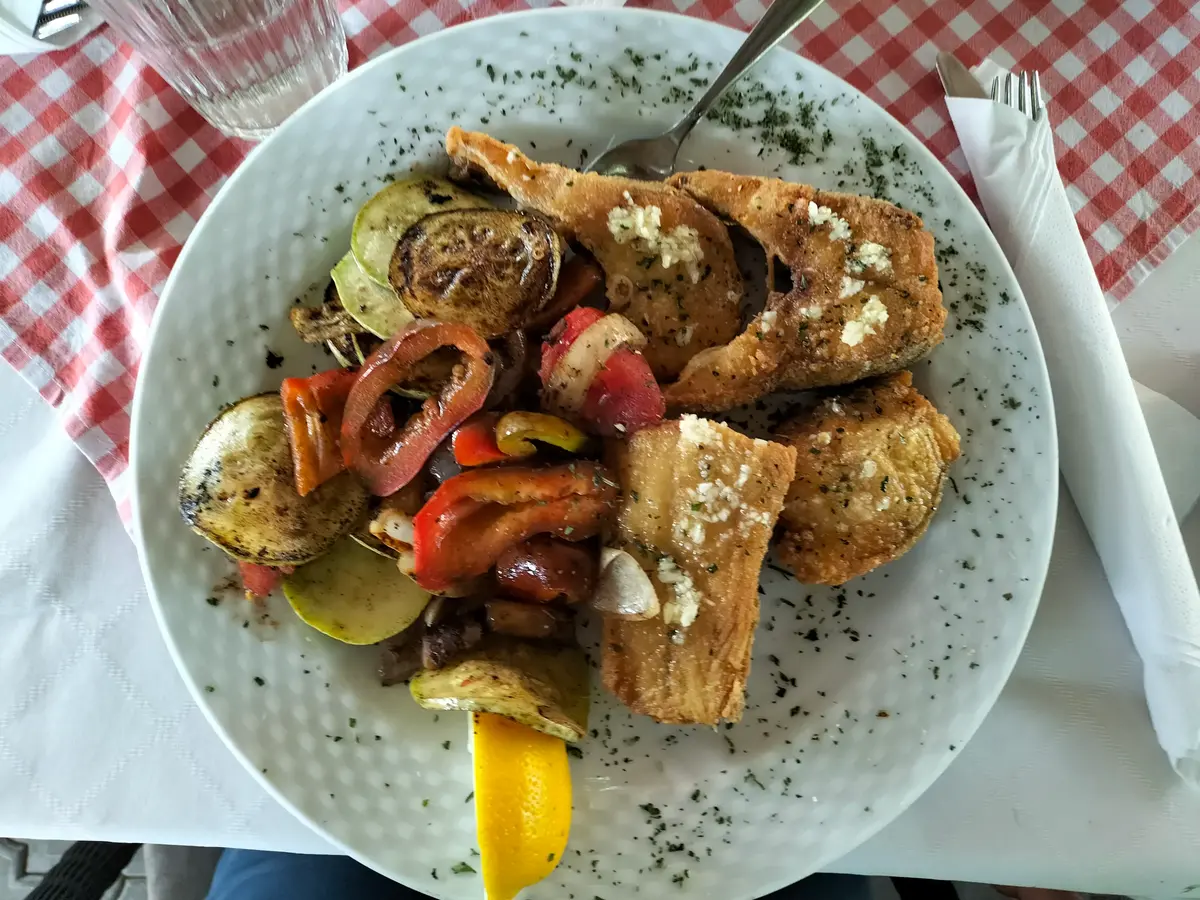
Start with tave kosi, baked lamb under a set yogurt-and-egg custard — the northern dish to try first. From there, work through fergese (a rich pepper, tomato, and cottage-cheese bake), qofte (grilled meatballs), byrek (savory filled pastry), and japrak (stuffed leaves). If it’s on the menu, carp pulled from Lake Shkodra is the local catch.

Where to Eat, From Budget to Lakeside
- Traditional: Fisi and Vila Bekteshi for classic northern cooking
- With a cause: Arti Zanave, a social enterprise supporting local women
- Budget: Puri for a cheap, filling plate
- Italian: Pasta te Zenga, leaning into the city’s Italian streak
- With a view: Agroturizem Faqedol, out toward the lake and castle
- Lighter: Shega e Eger for juices and vegetables
How to Get to Shkoder From Tirana, the Airport and Montenegro
Most travelers arrive one of three ways, and all of them are cheap. From Tirana, buses and shared vans (furgons) run roughly hourly, take about 2 hours, and cost around $3–6, dropping you near the central square. Straight from Tirana’s airport, a direct bus run by Hermes reaches Shkoder in about 1.5 to 2 hours for around $11 (a little more on the earliest departure).
Coming from Montenegro is just as easy. Buses from Ulcinj cross the Muriqan–Sukobin border in about 1.5 hours for roughly $6–8, though departures have thinned out. From Podgorica it’s under two hours, and if you’re heading to or from northern Montenegro, the Hani i Hotit crossing is the more direct route.
One currency warning that trips people up: the Albanian lek is a closed currency you can’t easily exchange once you leave. Spend it or change it back before you cross out.
When Is the Best Time to Visit Shkoder?
Visit Shkoder in late spring (April to June) or autumn (September to October) for mild weather and thinner crowds. Midsummer is hot — highs around 88–95°F (31–35°C) — but it’s the best window for swimming in the lake and the only reliable stretch for the high Alps trails, which open around June.
If your trip is city-focused, the shoulder seasons win outright: comfortable temperatures, lower prices, and space to enjoy the pedestrian street. November is the wettest month, so pack accordingly if you come late in the year. Anyone eyeing Theth or Valbona should plan for the roughly mid-June-to-October hiking season and not gamble on the edges of it.
Is Shkoder Worth Visiting, and How Many Days Do You Need?
Yes — Shkoder is worth at least two days, not just an overnight. It pairs a walkable, cafe-lined old town and Rozafa Castle with easy cycling to Lake Shkodra and direct access to the Albanian Alps. Two to three days lets you see the city, ride to the lake, and set up a mountain trip without rushing any of it.
The pattern shows up again and again in travelers’ accounts: people book one night, then quietly extend to three or four once they realize the city has its own rhythm. It’s safe, friendly, and easy on a budget, which makes stretching the stay a low-risk call.
The Bottom Line on Shkoder
TL;DR: Give Shkoder two days minimum. Climb Rozafa Castle for the legend and the river view, rent a bike for the flat ride to Lake Shkodra, and make time for the Site of Witness and Memory before you chase the mountains. The best things to do in Shkoder aren’t a detour on the way to the Alps — they’re a reason to slow down before you get there.
The single move that changes the trip: rent a bike on day one. It turns a compact city into a lake, a countryside bridge, and a swim, all under your own power and all for the price of a coffee back home.
What’s pulling you to Shkoder — the castle and cafes, or using it as your base for Theth and the Komani ferry? Tell us how you’d split the two days.