Planning a trip to the Balkans but unsure where to start? This Albania travel guide cuts through the noise so you can plan smarter and travel with confidence. We are covering the exact details regarding visa rules, confusing bus terminals, safety advisories, and the best beaches to ensure your day-by-day Albania itinerary actually works on the ground. Every figure below is checked against the current source, because the details that ruin trips here are the ones that quietly changed since the last guide you read.
Can US citizens visit Albania without a visa?
Yes. US passport holders can enter Albania without a visa and stay for up to one year without applying for a residency permit. You only need three months of passport validity from your date of arrival, rather than the six months required by most European destinations, plus one blank page for the entry stamp. Always double-check your departure date against entry stamps if you are doing a multi-country Balkan trip.
Two customs details that catch people out: Albania caps how much cash you may carry across the border in either direction at 1,000,000 lek (roughly $12,000, though the rate moves), and a yellow fever certificate is required only if you are arriving from a country with transmission risk. Neither applies to a standard round trip from the US, but both matter on a longer overland route.
Pro Tip: Albania is not in the EU or Schengen zone, so your days spent here do not count against your 90-day Schengen allowance. This makes the country a highly strategic reset stop between EU destinations.
How do you get to Albania, and which airport should you use?
For almost every US traveler, the answer is still Tirana International Airport (TIA), then a road transfer. There are no direct commercial flights between Albania and the United States, so expect a connection through a European hub. There are also no scheduled domestic flights inside Albania and no useful passenger rail network, which means every onward leg is a bus, a furgon, a taxi, or your own rental car.
You will see a lot of older content promising a second gateway at Vlora International Airport (VLO). The runway and terminal are essentially finished and the airport holds its IATA code, but certification has slipped repeatedly and scheduled commercial service has been postponed more than once. Treat any Vlora flight as unconfirmed until you can actually see it for sale, and build your Riviera plan around Tirana or Corfu instead.
The Corfu route is genuinely underrated for a southern-focused trip. Ferries cross between Corfu and Saranda year-round, with hydrofoils taking about 30 minutes and conventional boats up to 90, at roughly €20 to €30 one way. Two traps: Greece runs one hour ahead of Albania, so a 30-minute crossing can look like a 90-minute one on the timetable, and Greek rental cars are not permitted to cross into Albania under their insurance.
Navigating Albanian public transport: furgons, buses, and terminals
This is where most travelers go wrong, and where older iterations of an Albania travel guide will fail you completely. What is a furgon? It is a shared minibus that departs when full, not on a fixed schedule. Drivers post their destination in the windshield, and fares are paid in cash directly to the driver. The bus terminal situation in Tirana is not straightforward, as there is no single central station. Here is the breakdown of where you need to be:
- North and South Terminal: The main hub for domestic routes including Shkoder, Berat, Vlora, Durres, and Saranda. It sits on the northwestern edge of the city near the Casa-Italia Mega Outlet. From central Tirana, take the L5B city bus from Rruga e Barrikadave behind the Opera, or look for any bus signed “Kamez” or “Institut” (40 lek, paid to the conductor on board).
- Southeastern Terminal: The one almost every guide forgets. Buses to Elbasan, Pogradec, Korce, Librazhd, Gramsh, and Perrenjas leave from here, not from the North and South Terminal. It is only about 2 km from the center, so you can walk it.
- International Terminal: Coaches to Kosovo, North Macedonia, Greece, Montenegro, and onward into Europe depart from Rruga Ali Kolonja near Pallati i Sportit, which is also the name of the nearest bus stop.
- Tirana East Terminal (TEG): A newer terminal at the Tirana East Gate shopping mall, served by the TEG and Sauk city buses, handling a growing share of both regional and international departures.
- City and Airport Bus Terminal: Located right behind the Palace of Culture, this is strictly for Tirana airport transfers. The airport bus runs roughly hourly, costs about 400 lek, and takes 20 to 25 minutes.
Because routes move between terminals, check your specific departure on an Albanian bus booking platform before you commit to a taxi across town. A growing number of domestic coach operators now offer online pre-booking with fixed departure times and guaranteed seats, which is far more reliable than waiting for a furgon to fill up. One hard rule regardless of operator: there are effectively no night buses in Albania. Last intercity departures are typically around 18:00, so a late-afternoon arrival usually means an extra night where you are.
What about Uber, Bolt, and taxi apps?
Neither Uber nor Bolt operates anywhere in Albania, and this catches out travelers who plan their entire arrival around opening an app they already have. Local ride-hailing has matured, though, and several Albanian apps now work well in Tirana, Durres, and other larger cities, typically undercutting street taxis by 15 to 20 percent. Install one before you fly, because you will want it at baggage claim.
From Tirana airport, an app ride into the center generally runs 1,200 to 1,800 lek, versus roughly €20 to €25 at the official taxi stand. Coverage thins out sharply once you leave the cities, and on the Riviera you should assume there is none: call a taxi directly or have your guesthouse arrange one.
Estimated costs and travel times from Tirana to the Riviera
Conversions below assume roughly 82 lek to the dollar. The lek has strengthened significantly against the dollar over the past decade, which is exactly why older guides quote costs that look too cheap. Check a live rate before you budget.
| Transit Option | Estimated Cost | Travel Time | Best For |
| Local furgon | 1,200 to 1,500 ALL ($15 to $18) | 5 to 6 hours | Budget travelers, authentic experience |
| Pre-booked coach | 1,800 to 2,500 ALL ($22 to $30) | About 5 hours | Reliability, guaranteed seating |
| Private taxi | $120 to $150 | 4 to 4.5 hours | Comfort, direct door-to-door transit |
| Rental car | $25 to $45 per day | Self-paced | Freedom to explore isolated coves |
Should you rent a car in Albania?
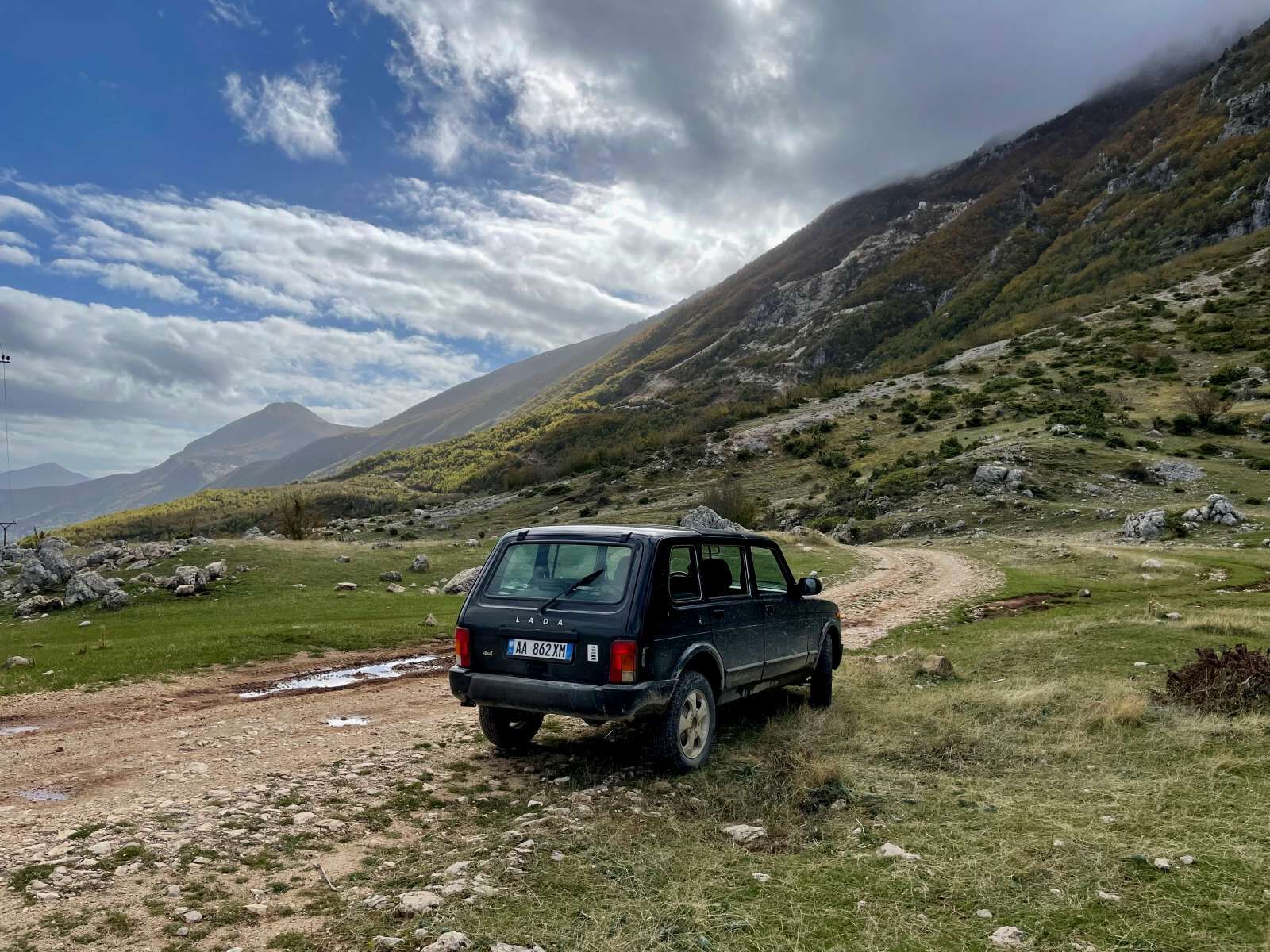
Renting a car unlocks parts of the country that public transport simply cannot reach, such as remote Riviera coves, high mountain passes, and deserted canyon trails. But the old advice that you need a 4×4 for everything is now out of date, and following it will cost you money you did not need to spend.
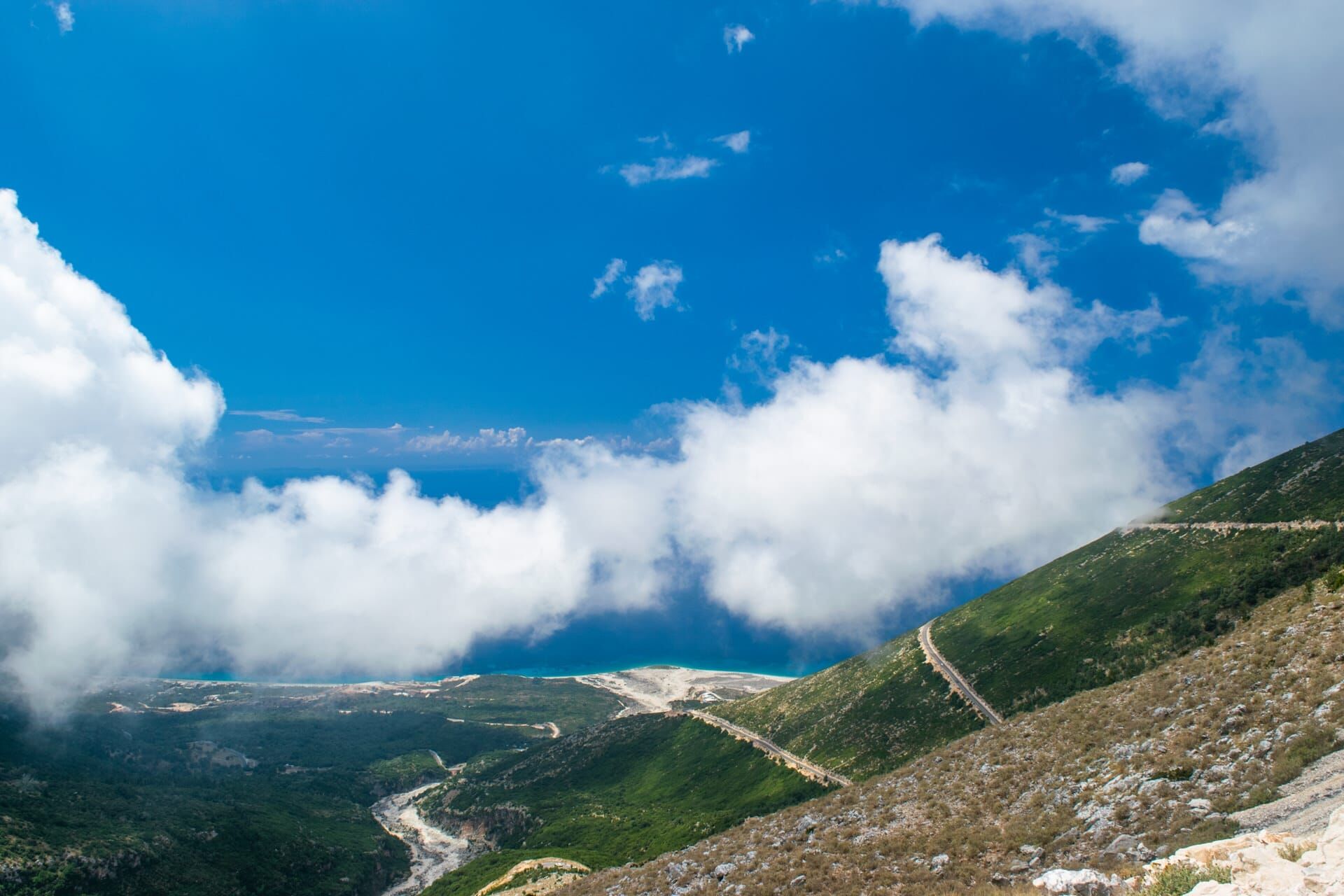
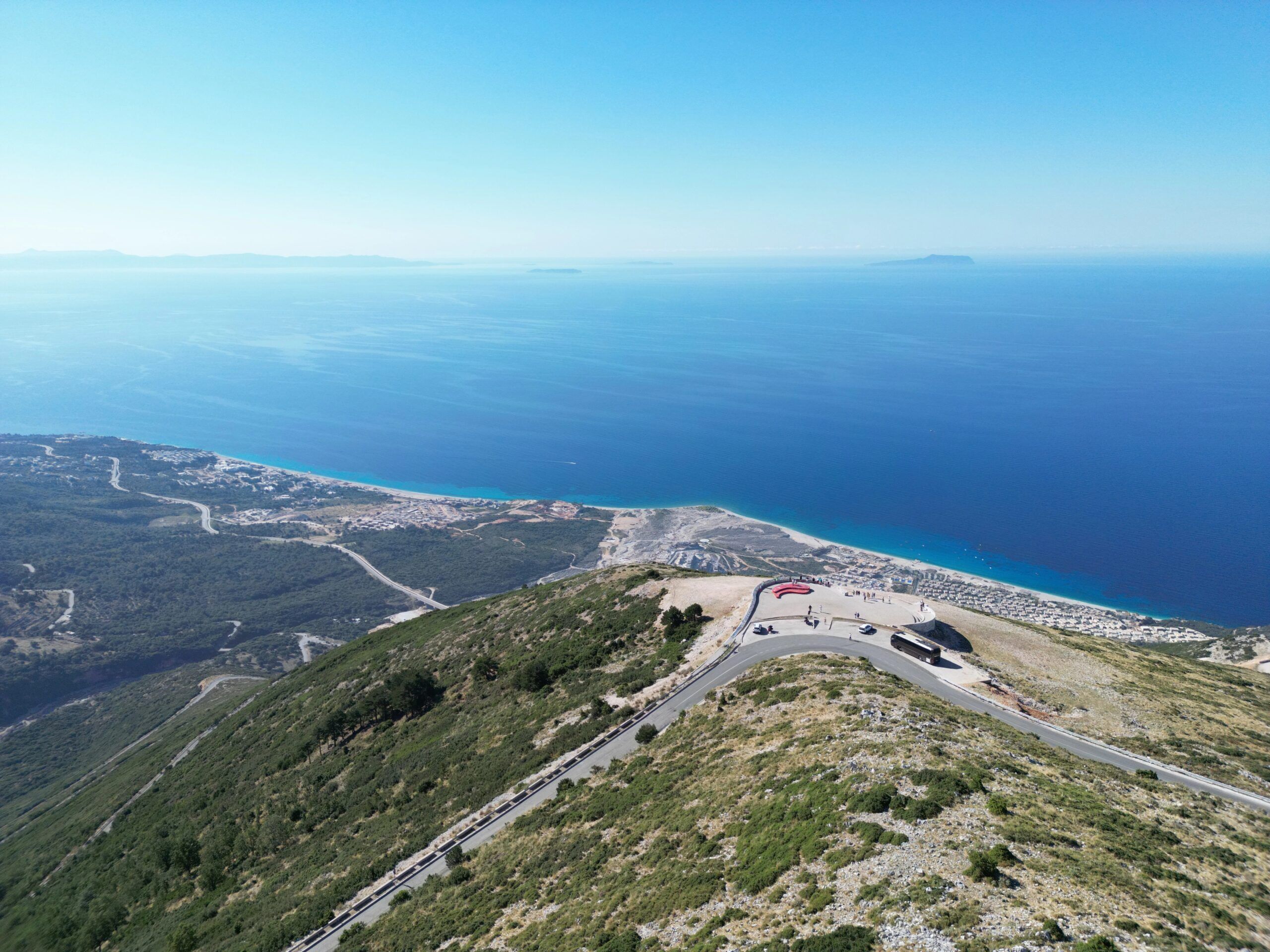
Two pieces of infrastructure changed the calculation. The Llogara Tunnel, roughly 6 km long, now bores straight through the mountain and cuts the Dukat-to-Palase section from a 30 to 40 minute hairpin descent down to about seven minutes at a steady 80 km/h. The old pass road over Llogara is still open and is still the single most spectacular drive in the country, so the smart play is to take the pass southbound for the views and the tunnel northbound to save an hour. In fog, rain, or snow, take the tunnel both ways.
Second, the SH21 road from Shkoder to Theth is now fully asphalted. A standard sedan handles it comfortably in summer, and the drive takes about 2.5 hours instead of the four-hour ordeal it used to be. You still want a crossover or SUV if you plan to explore the gravel tracks inside Theth village or reach the Blue Eye of Theth trailhead, and in the shoulder season the extra ground clearance earns its keep. Fill up in Koplik, which is the last fuel stop before the climb.
Three strict rules about driving in Albania to know before you get behind the wheel:
- Blood alcohol limit: Zero tolerance, at any detectable level. This is not a formality. Police can seize both your license and the vehicle, and penalties run to fines and up to six months’ imprisonment. If you are dining with rakija, take a taxi back to your hotel.
- Do not drive at night outside urban areas. Older roads are poorly lit, roadside assistance is not a formal service, and emergency response outside the cities is limited. This is the single most repeated piece of official US guidance on Albanian roads, and it is worth taking seriously.
- Road closures happen with little warning. Landslides and rockslides on the Librazhd–Perrenjas corridor toward the North Macedonia border have shut that route completely for weeks at a stretch, pushing all traffic onto long, damaged inland detours through Gramsh and Elbasan. If your route crosses that axis, check the Albanian Road Authority and traffic police for current conditions the day before you drive, not the day you drive.
One more that trips up rental customers: the unpaved mountain track between Theth and Valbona is prohibited for rental vehicles and voids your insurance. The legal way to move between the two valleys with a car is to return to Shkoder and take the Lake Komani ferry. On foot, of course, the pass is the whole point.
Pro Tip: Download offline maps for the entire country before leaving Tirana. Rural mountain areas have zero cell coverage even with a local SIM or eSIM, and GPS rerouting will not help you on a dark switchback at high altitude.
Currency and cash: what you need to know
A critical component of this Albania travel guide revolves around money. Albania runs entirely on the Albanian Lek (ALL), which has recently traded around 80 to 85 to the US dollar. While Tirana restaurants and larger hotels increasingly accept cards, cash remains mandatory across most of the country. Furgon drivers, village guesthouses, rural beach operators, small family tavernas, and several major attraction ticket booths do not take cards. ATMs are widely available in Tirana, Saranda, and Shkoder, but they are genuinely sparse in the mountain villages.
Euros are widely accepted informally, particularly in the coastal areas, but you will almost always receive change in lek at a rate set in the vendor’s favor. You will get a significantly better rate at a dedicated currency bureau (kembim valutor) than at a hotel front desk. Avoid airport exchanges entirely.
Two ATM habits worth building. Decline the machine’s offer to charge you in dollars, because that dynamic currency conversion is consistently worse than letting your own bank do it in lek. And withdraw larger amounts less often, since most Albanian ATMs apply a flat fee per withdrawal rather than a percentage. Always carry at least $50 to $100 worth of lek in small denominations whenever you are leaving a major town, both for everyday purchases and for tipping in Albania.
Is Albania safe for US travelers?
Yes, Albania is generally safe for tourists. The US State Department currently rates it Level 2, “exercise increased caution,” which is the second of four rungs and is emphatically not a warning to stay away. What has changed is the stated reason: the current advisory cites crime, specifically targeted violence connected to organized crime and drug networks, and the limited reach of law enforcement in remote regions. It is not aimed at tourists, and it is not about the beaches.
The most practical version of that warning is mundane. Street crime clusters in urban areas at night. Small improvised explosive devices tied to organized-crime disputes do occur, which is why official guidance advises against parking overnight in unattended, non-secure lots and suggests a quick look over your vehicle before you get in. Report crimes on 112 or 129; 112 also reaches an ambulance.
Demonstrations are the one thing a visitor is genuinely likely to encounter in Tirana. Nightly protests have been running outside the Prime Minister’s building on Bulevardi Deshmoret e Kombit, on the stretch between Mother Teresa Square and Skanderbeg Square, with additional gatherings outside the Parliament building on George W. Bush Street. The US Embassy issues rolling demonstration alerts for these, and they bring heavy police presence, road closures, and traffic detours through the exact part of the city where most visitors stay. They are usually peaceful. Walk around them anyway.
The embassy has also flagged a broader security concern about groups linked to Iran potentially targeting US-associated interests and crowded venues such as tourist sites, malls, hotels, clubs, and restaurants. This is a vigilance advisory, not an evacuation notice, and Albanian authorities have publicly stated there is no specific credible threat to visitors.
Separately, the embassy maintains a short list of Tirana businesses that are off-limits to US Embassy personnel due to the potential for retaliatory violence and reported unfair business practices, including overcharging. US citizens are advised to avoid them:
- Juvenilja
- Juvenilja Castle
- Pasticeri Venezia
- Magic Club
Two of these sit in Blloku, the former communist-elite quarter that is now Tirana’s densest concentration of bars and restaurants, so it is worth knowing the names before you wander in. This is exactly the kind of on-the-ground intel a proper Albania travel guide must provide.
What violent crime exists is almost never directed at tourists. The deeply rooted cultural code of Besa, a sworn oath of hospitality and protection, means that foreign guests are treated with exceptional warmth and respect in most parts of the country. That reputation generally holds up for solo female travelers as well, though standard big-city precautions still apply in Tirana and Durres after dark.
One health note that has nothing to do with crime and affects far more visitors: tap water is not potable anywhere in Albania. Drink bottled water, and be aware that ice in smaller establishments may be made from tap water.
Pro Tip: Register your trip with the Smart Traveler Enrollment Program (STEP) at step.state.gov before departure. It is free, it pushes the embassy’s demonstration and security alerts straight to your inbox while you are in-country, and it gives the embassy a direct way to reach you in a severe emergency.
Tirana: more than just a layover city
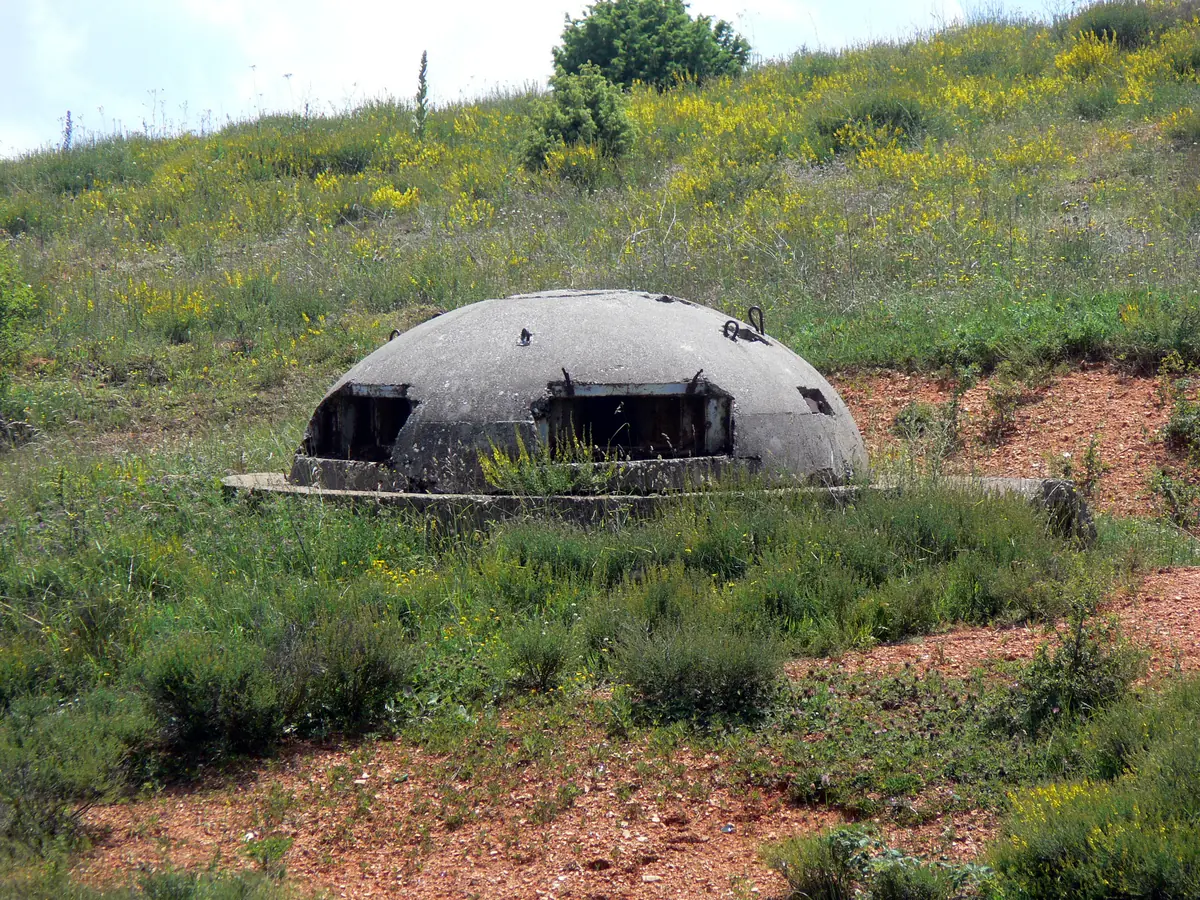
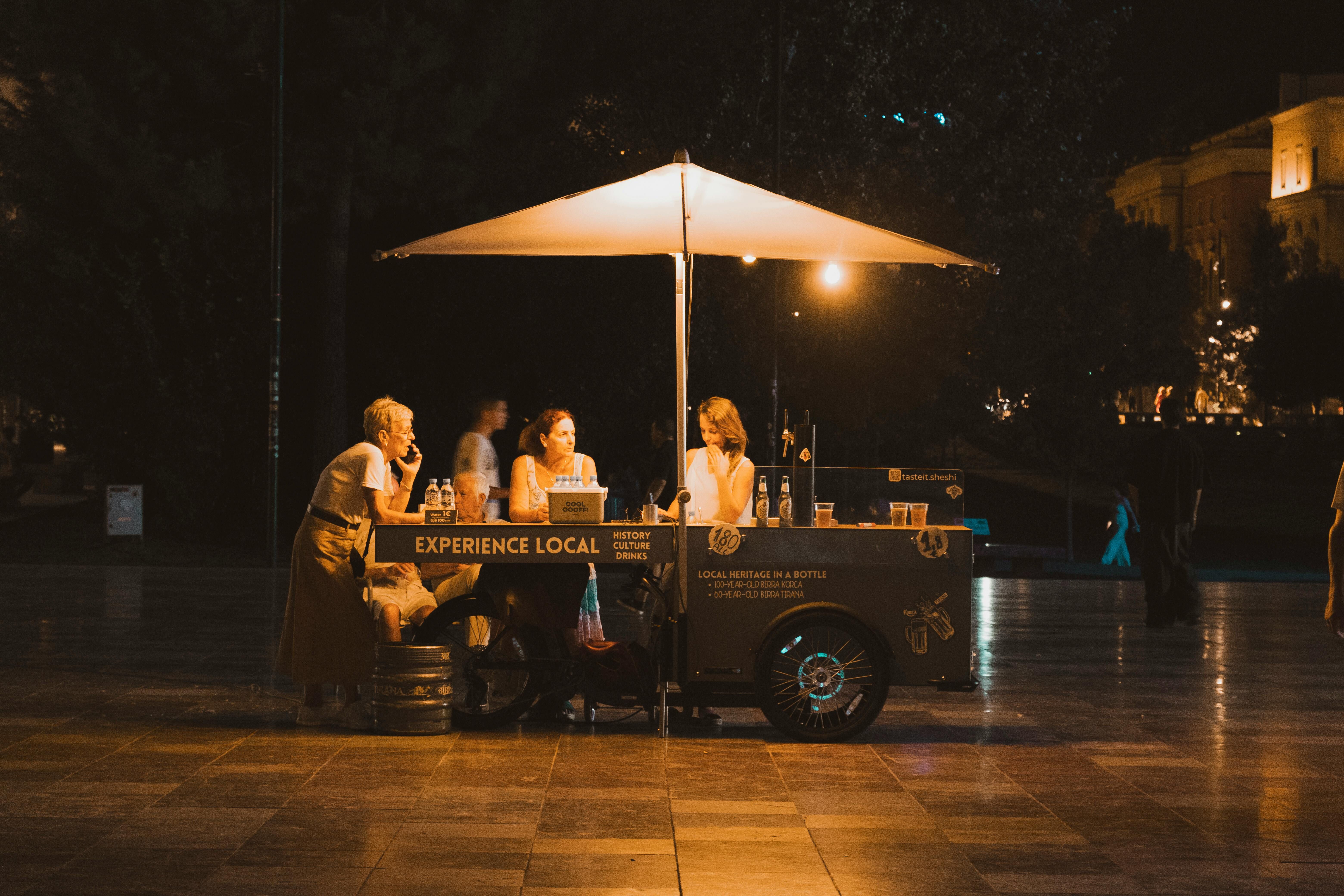
Most travelers treat the capital as a quick transit stop on the way to the coast or the mountains, which is a massive mistake. Give it two nights and pick a base in the right Tirana neighborhood. The city center is a striking architectural collision of colorful, deliberately whimsical facades painted directly over Soviet-era concrete blocks, all surrounded by a heavily rebuilt boulevard and a pedestrianized main square. Skanderbeg Square anchors the list of things to do in Tirana, but the real depth is found underground and overhead.
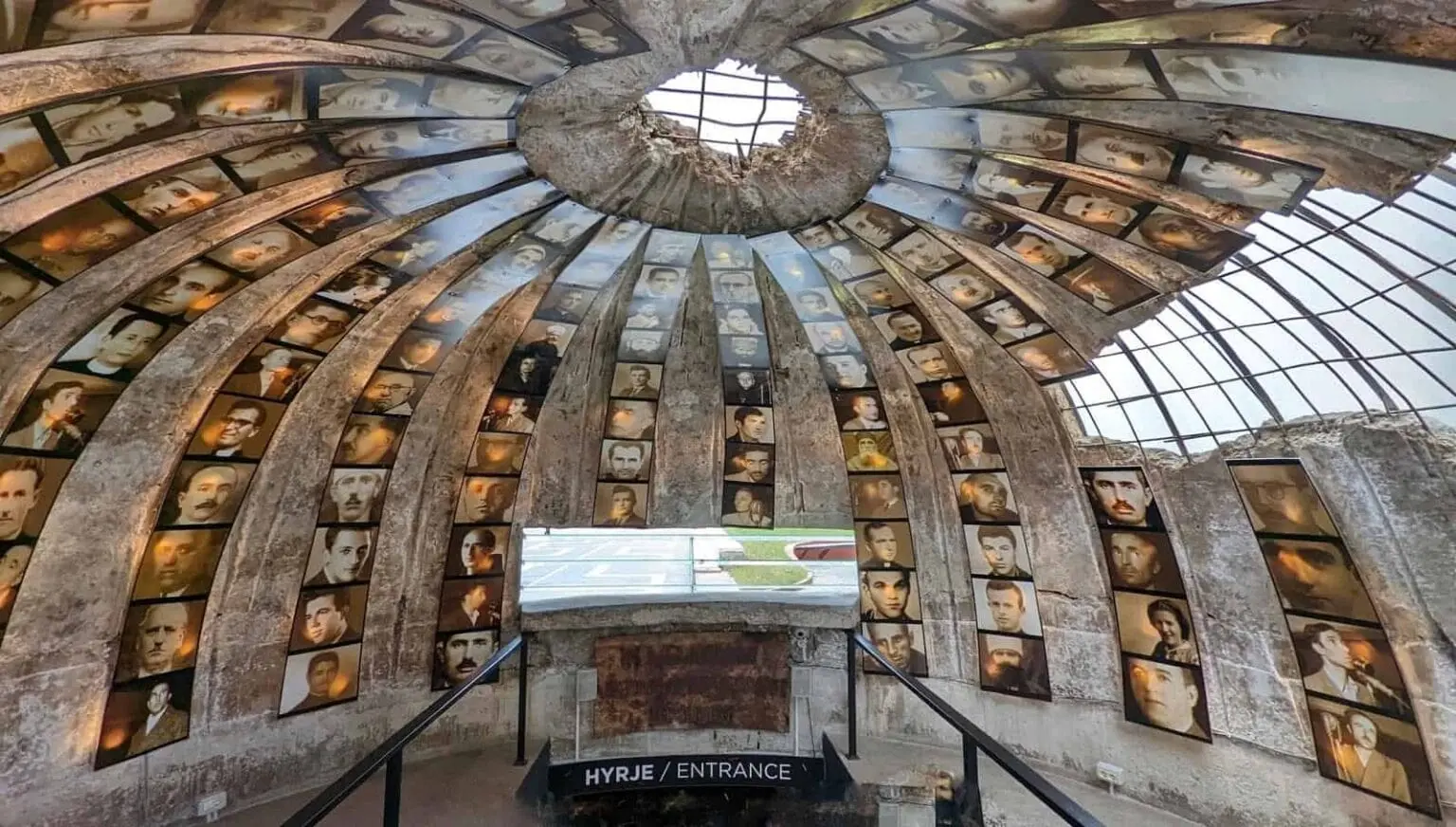
Bunk’Art 1 is a massive, government-built nuclear bunker converted into a multi-room museum of communist-era paranoia. Entry now costs 900 lek (about $11, or €9), and a combined ticket covering both Bunk’Art 1 and the smaller city-center Bunk’Art 2 runs 1,300 lek. The audio guide is a separate charge and has climbed steeply, so decide at the counter whether you want it. Budget 1.5 to 2.5 hours. It is disorienting, fascinating, and unlike anything else in Europe.
For altitude, the Dajti Ekspres cable car is the longest in the Balkans at roughly 4.7 km, climbing in about 15 minutes to the Dajti Mountain balcony beneath the 1,613-meter (5,292-foot) summit, with sweeping views of the capital and the Adriatic on clear days. A return ticket runs 1,400 to 1,500 lek (about $17 to $18). The critical detail: it is closed on Tuesdays. Go in the morning or near sunset, because midday smog flattens the view.
Both sit at the same end of the city and are a 10-minute walk apart, so do them as one half-day. The L11 bus from near the clock tower behind the Palace of Culture serves both for 40 lek, cash to the conductor.
- Location: Skanderbeg Square, central Tirana; Bunk’Art 1 and the cable car sit together on the eastern edge
- Cost: Bunk’Art 1 about $11, combined Bunk’Art 1 and 2 about $16, Dajti Ekspres return about $17
- Best for: History lovers, first-time visitors, and those with a 24 to 48-hour layover
The Albanian Riviera: coastal reality check
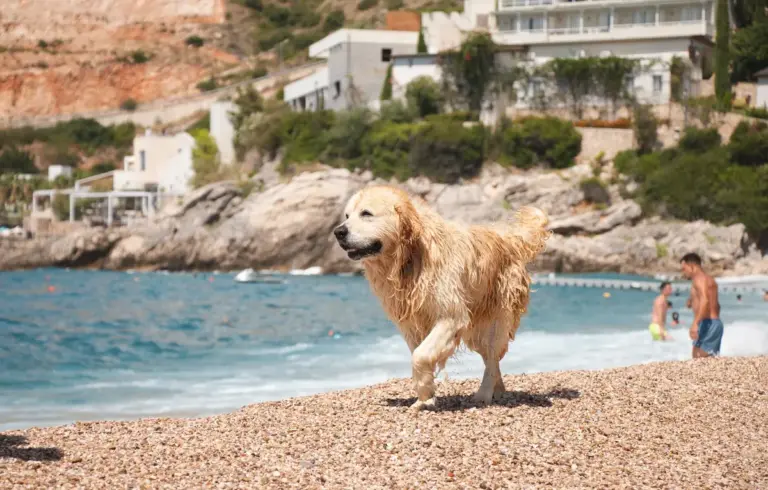
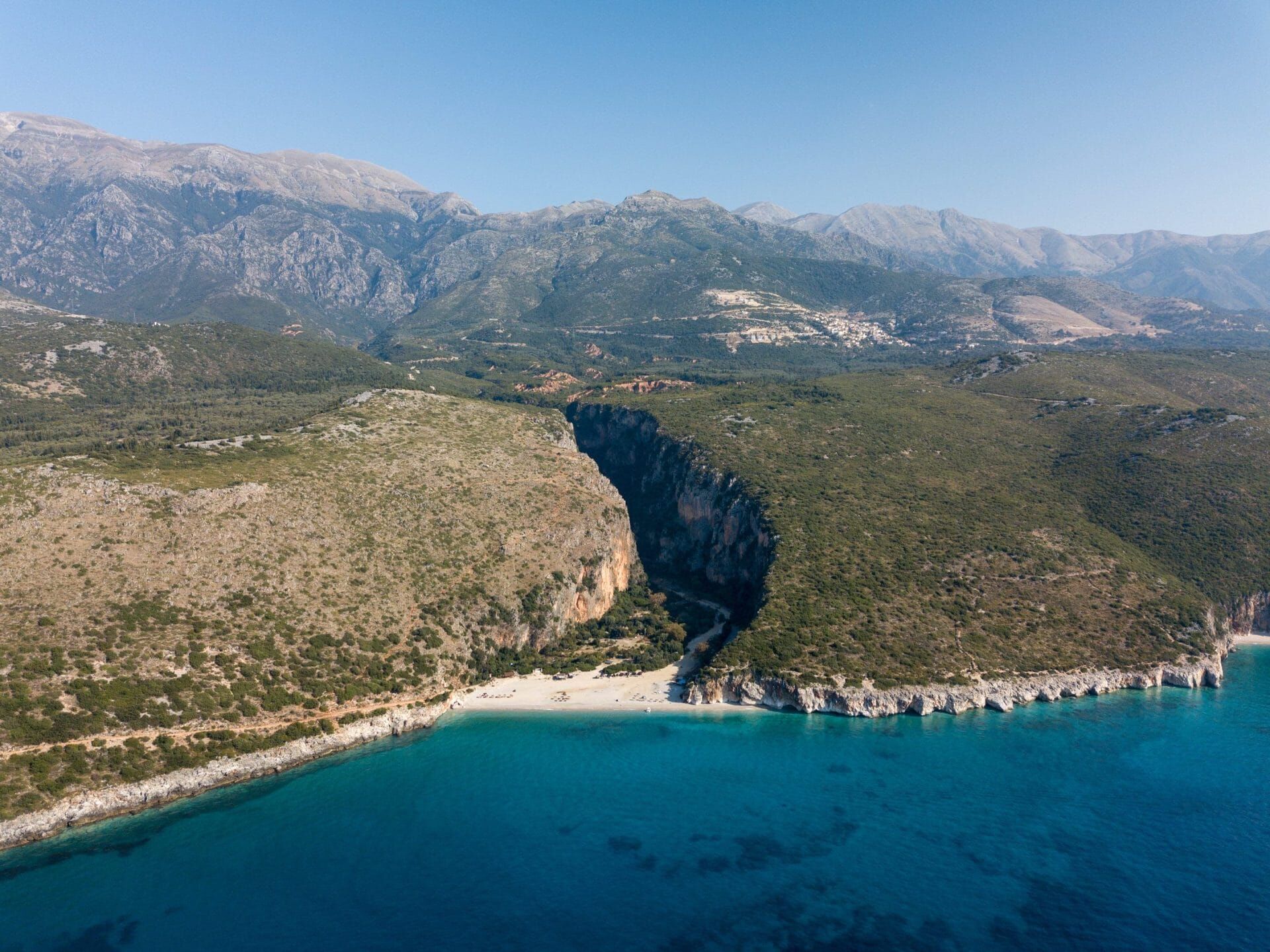
The Albanian Riviera stretches roughly 145 km (90 miles) along the Ionian Sea, from Vlora in the north all the way to Saranda in the south. The water is legitimately Caribbean-level turquoise, and the hype is fully earned. But Ksamil, the postcard village near the Greek border, has become a peak-season victim of its own fame. In July and August, a sunbed-and-umbrella set on the best beaches runs €20 to €80 per day depending on how close you sit to the water, and the Bali-style VIP daybeds on stilts can reach €120. In the shoulder season the same setup often drops to 1,000 to 2,000 lek. Access roads become congested and accommodation prices triple, which makes the Saranda versus Ksamil basing decision more consequential than it first looks.
Here is the thing almost no one tells American visitors: Albanian law reserves free public zones on the beach, and concessions are only allowed to occupy part of it. In practice, this means you can walk past the last row of umbrellas and put your towel down without paying. Enforcement is uneven and it works poorly in Ksamil and Dhermi, where the paid zone swallows most of the usable sand, but it works beautifully at long beaches like Borsh and Livadhi. Both Ksamil and Dhermi have been brought under tighter municipal management specifically to claw back public space, so the situation is improving unevenly rather than uniformly.
The quieter, more rewarding stretch runs through Dhermi, Himara, Borsh, and Qeparo. These are pebbled crescents backed by olive groves featuring a fraction of the crowds and far more reasonable costs. The Canyon of Gjipe, accessible only by 4×4 or a steep 45-minute hike, rewards the effort with an isolated beach where a river canyon meets the sea. This is what people mean when they talk about pre-tourism Albania.
Basing yourself in the far south also puts you within about 30 minutes of Butrint National Park, the Greco-Roman ruins set on a lagoon, and the startlingly clear Blue Eye spring inland. The Blue Eye is one of the cheapest major sights in the country at 50 lek per person plus 100 to 200 lek for parking, all cash only, open roughly 7:00 to 19:00. Two things to plan around: it is a flat 2 km walk from the car park to the spring itself, with electric scooters and a small shuttle train available for those who would rather not, and swimming is now officially banned, both to protect the spring and because the water holds at about 10°C year-round. Note also that many Saranda–Gjirokaster buses now take the newer Kardhiq bypass and skip the spring entirely, so confirm the route with the driver before boarding.
- Location: Southern Albanian coast, with Saranda as the main hub for day trips
- Cost: Free public beach zones by law, while private beach clubs charge €20 to €80 per day depending on location and season
- Best for: Beach lovers and couples chasing solitude outside the peak summer season
Shkoder and the Accursed Mountains
Shkoder is flat, relaxed, and best explored by bicycle. Rental bikes are everywhere and the cycling culture here is genuine. Rozafa Castle, the standout among the things to do in Shkoder, sits on a high hill at the edge of the city, overlooking the confluence of three rivers and Lake Shkodra. Entry is minimal and the panoramic views are excellent at golden hour.
The real draw north of Shkoder is the alpine interior. The remote villages of Theth and Valbona sit deep inside the Accursed Mountains (Bjeshket e Namuna), and the classic multi-day hike connecting them is among the best in the entire Balkans. But the two valleys are reached in completely different ways, and conflating them is the most common planning error in northern Albania.
Theth is reached by road. Two minibuses run daily from Shkoder, typically departing around 07:00 and 14:00 from outside Hotel Rozafa on Rruga Teuta, costing about 1,200 lek and taking roughly 2.5 hours. Book ahead in summer. You can also simply drive it.
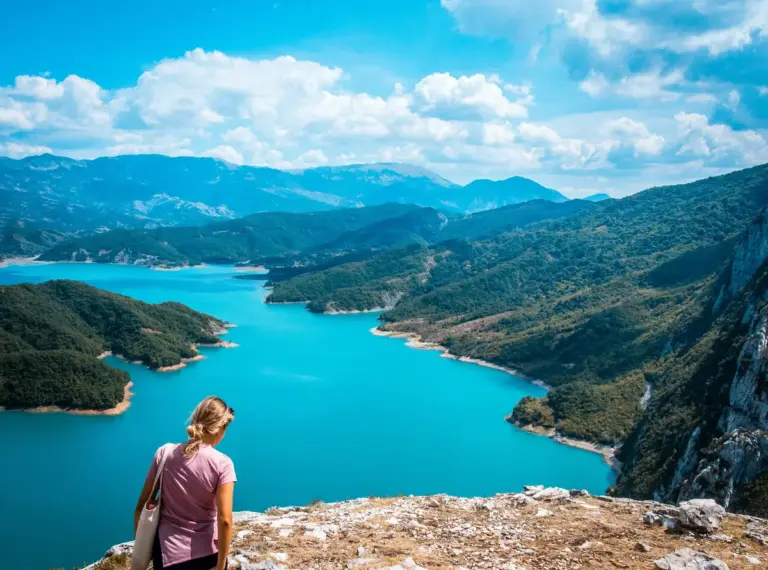
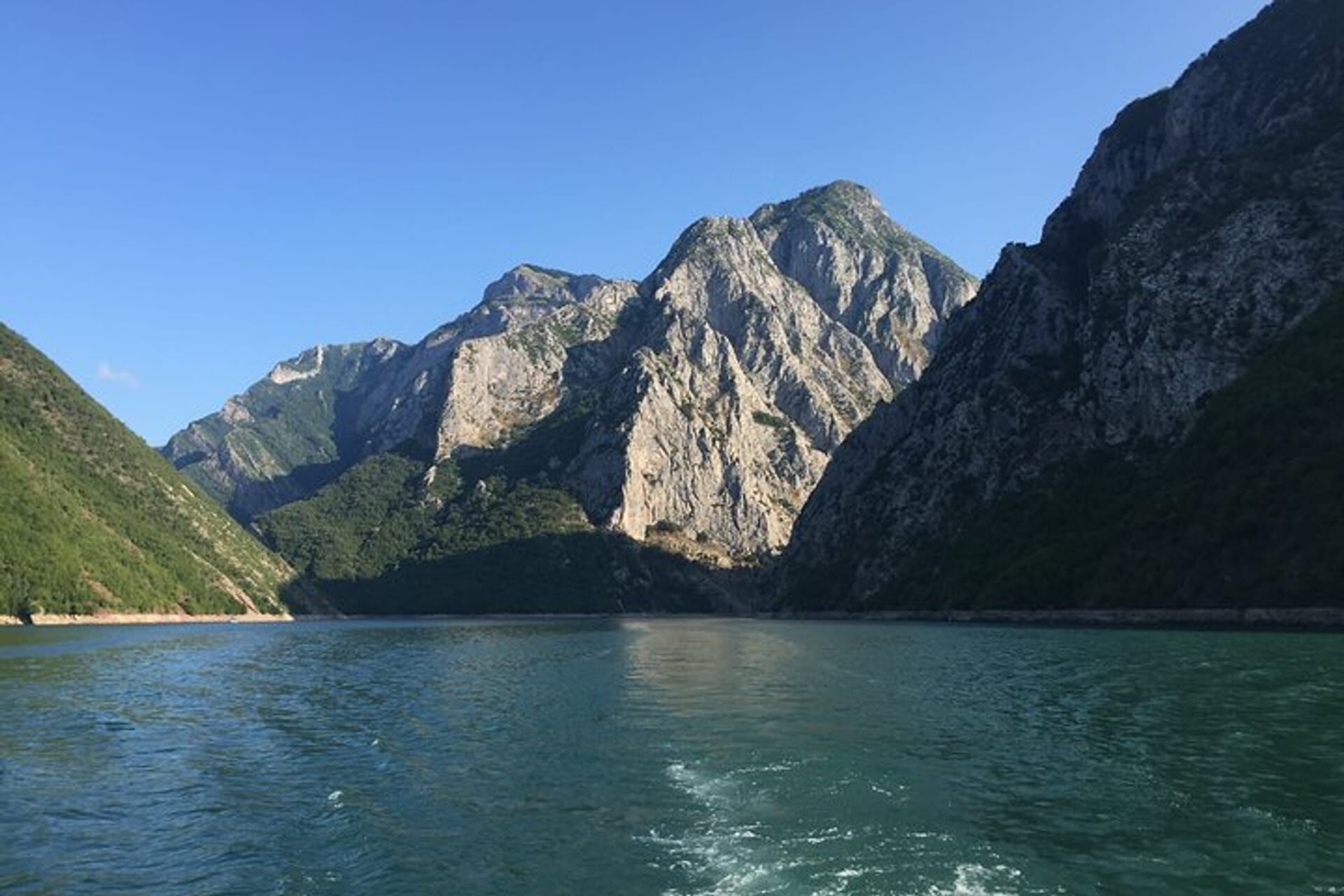
Valbona is reached by boat. The Lake Komani Ferry winds through a flooded canyon for about two and a half hours between Koman and Fierza, from where a connecting minibus or taxi runs on to Valbona. The main car-and-passenger ferry departs Koman at 09:00 and returns from Fierza at 13:00, and tickets are around €10 to €12 per person, with vehicles charged by the square meter and booked cheaper online. Feeder minibuses leave Shkoder around 06:30 to make the sailing.
The scheduling detail that ruins itineraries: the main ferry is seasonal, running roughly from mid-April to early November. A smaller passenger boat operates year-round, but with a different schedule and far less capacity. In peak summer the main ferry sells out, so book online days in advance. And if you miss the morning boat, you have lost the entire day.
- Location: Northern Albania, with Shkoder acting as the main gateway city for both valleys
- Cost: Komani ferry about $12 per person, Shkoder to Theth minibus about $15, guesthouse accommodation typically $25 to $50 per night, usually with dinner and breakfast included
- Best for: Hikers, adventure travelers, and those with three or more days in the north
Once you reach Valbona, standard transport simply does not exist. Pre-arranged 4×4 transfers or hiking are your only two realistic options, and the mountain track over to Theth is closed to rental vehicles.
Berat and Gjirokaster: the UNESCO cities
Berat
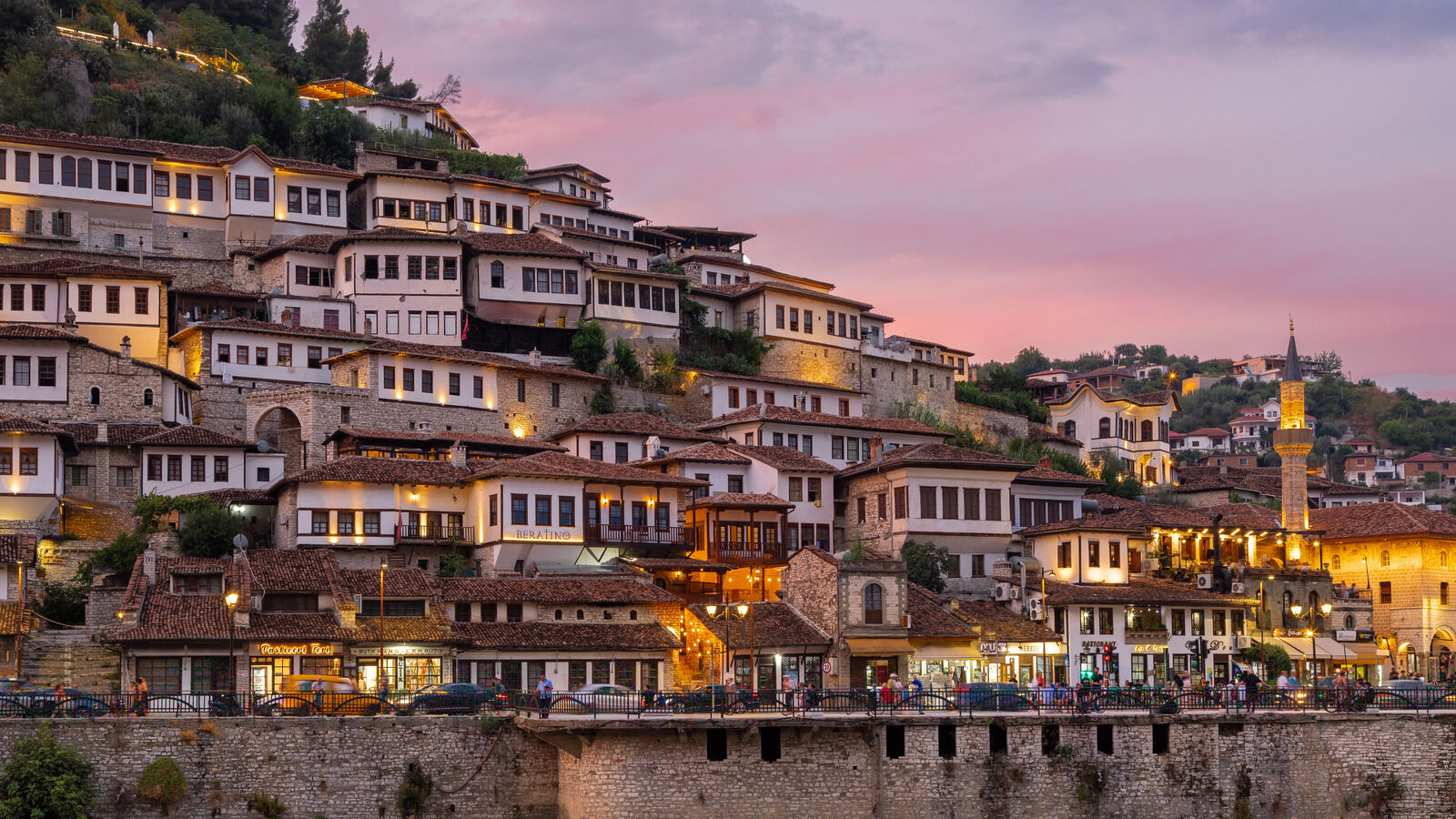
Known widely as the City of a Thousand Windows, Berat features whitewashed Ottoman homes stacked so densely up the hillside that their rows of arched windows seem to multiply infinitely. The two main quarters, Mangalem (Muslim) and Gorica (Christian), face each other directly across the Osum River.
The castle above town is unusual in that it is still an inhabited neighborhood rather than a ruin, complete with guesthouses, cafes, and around twenty churches within the walls. Entry at the main gate is 300 lek (roughly $3.65), cash only, with the gate staffed approximately 09:00 to 18:00. Because there is no continuous perimeter wall, enforcement varies and several footpaths lead in unchallenged. The Onufri Iconographic Museum inside is a separate ticket and worth it.
A heavy word of warning: the cobblestones in Gorica are steep, irregular, and become genuinely treacherous when wet. The paler stones are the slippery ones. Wear proper footwear, and check the rest of your Albania packing list before you fly. This is not hyperbole, as tourists severely misjudge these streets every single season.
- Location: Central Albania, 120 km (75 miles) south of Tirana, about 2.5 hours by bus
- Cost: Castle entry 300 lek (about $3.65), budget guesthouses from $30 per night
- Best for: History enthusiasts, photographers, and couples
Gjirokaster
Gjirokaster features a massive Ottoman castle that heavily dominates the skyline from every angle in town. The streets are slate-roofed and steeply pitched in a way that makes the city feel like it is actively trying to slide down its own hillside. The castle is one of the largest fortresses in the Balkans, and its vaulted galleries hold captured World War II artillery alongside a Cold War-era American aircraft that came down here in the 1950s and has been the subject of competing stories ever since.
Entry is 400 lek (about $5), cash, with the interior museums ticketed separately. Summer hours run roughly 09:00 to 19:00 and shorten considerably in winter. The climb from the bazaar is short but steep, and safety railings are inconsistent near the drops, so keep children close. The bazaar below is remarkably authentic rather than touristy, with tailors, cobblers, and hardware merchants outnumbering the stalls selling the usual Albanian souvenirs.
- Location: Southern Albania near the Greek border, roughly 60 km (37 miles) and about an hour by road from Saranda
- Cost: Castle entry 400 lek (about $5), museums extra
- Best for: Architecture lovers, and anyone weighing Albania against Greece or combining the two on one route
What to eat in Albania: a practical ordering guide
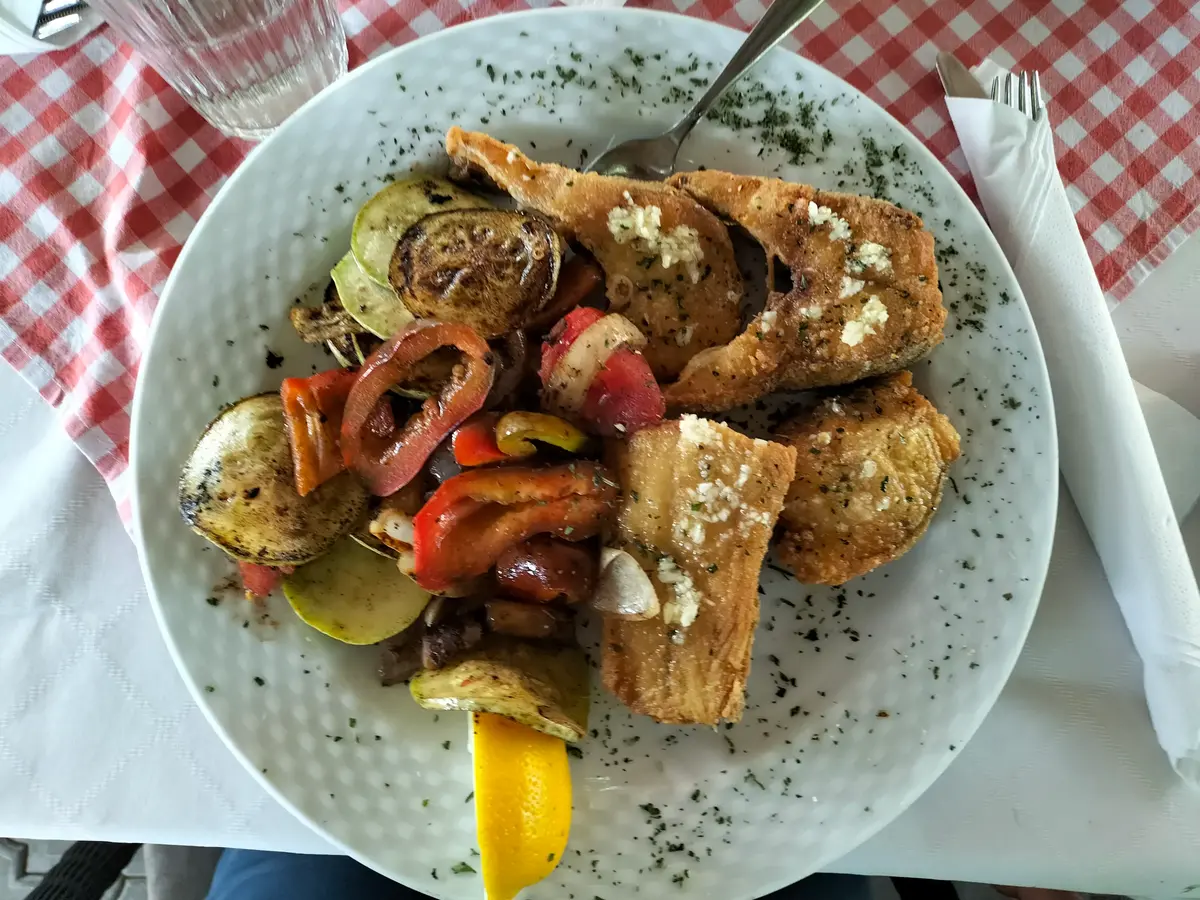
Albanian food sits comfortably at the crossroads of Mediterranean, Balkan, and Ottoman culinary traditions. It is far more complex and rewarding than the general reputation of the region suggests. Make sure you order these specific dishes:
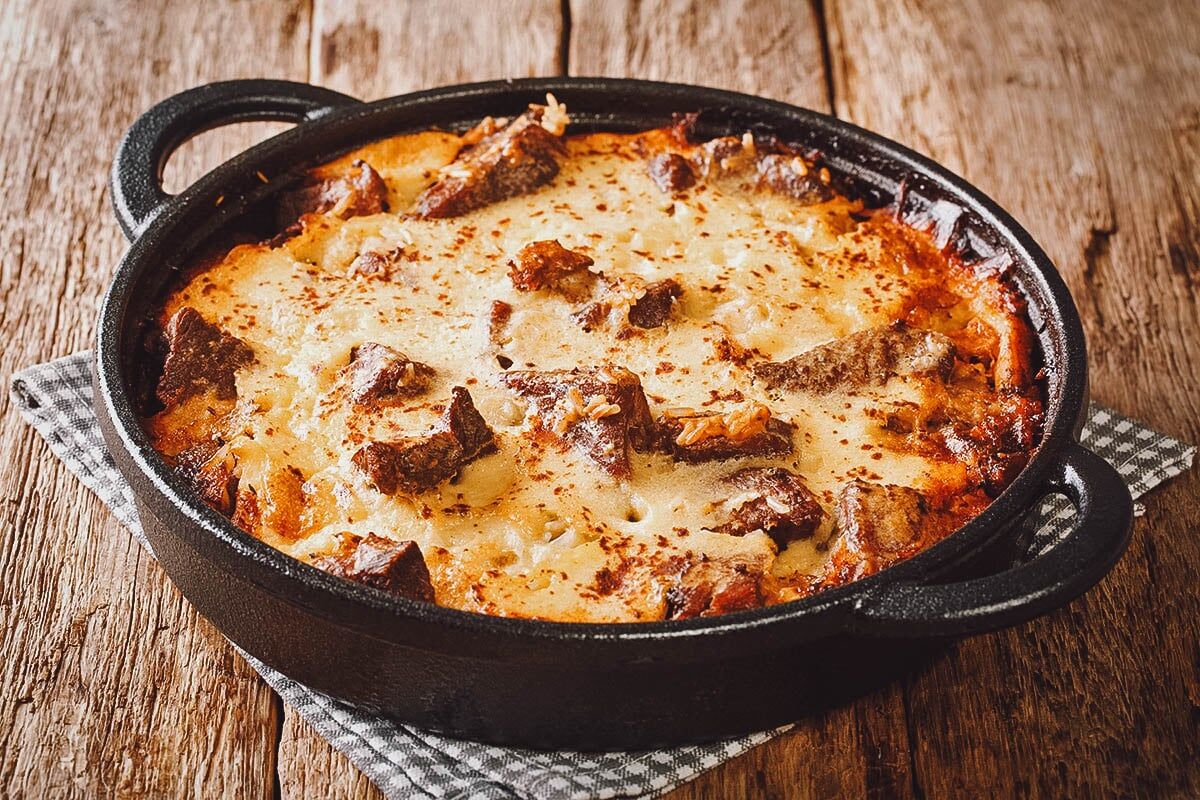
- Tave Kosi: The national dish. Baked lamb in an Elbasan clay pot, finished with a thick custard of tangy sour milk and egg. The crust breaks open to reveal impossibly tender meat beneath. Start your culinary journey here.
- Trahana: A fermented, dried paste of grain and milk, slow-cooked into a nutty, warming porridge. A winter staple in mountain guesthouses and agrotourism farms that smells like a rural kitchen and tastes like nothing else in Europe.
- Fergese: A heavy baked mixture of red peppers, tomato, cottage cheese, and lamb offal. Rich, earthy, and best eaten with thick, torn bread straight from a wood-fired oven.
- Flija: Layered crepes built up one sheet at a time over an open fire. A labor-intensive, communal dish that families make for celebrations. If a guesthouse offers it, order it immediately.
- Tave Mishi: A massive mixed meat platter, typically lamb and beef, served communal-style with fresh lemon and bread. Best shared between two hungry people.
The rakija ritual: what to expect
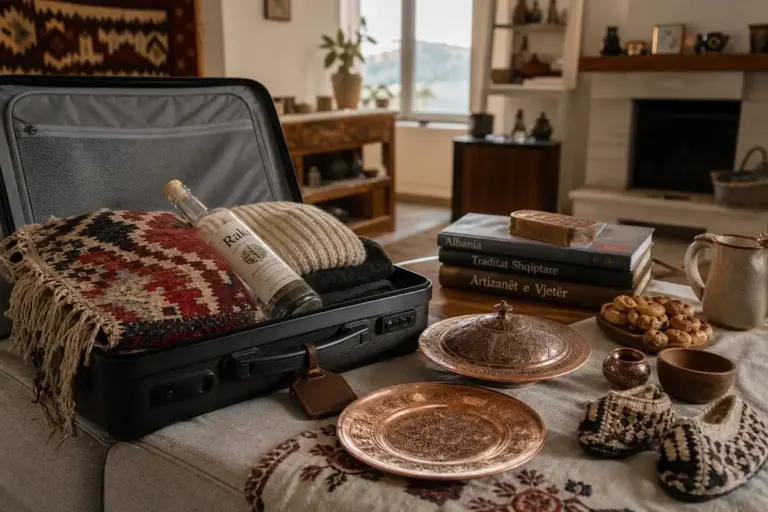
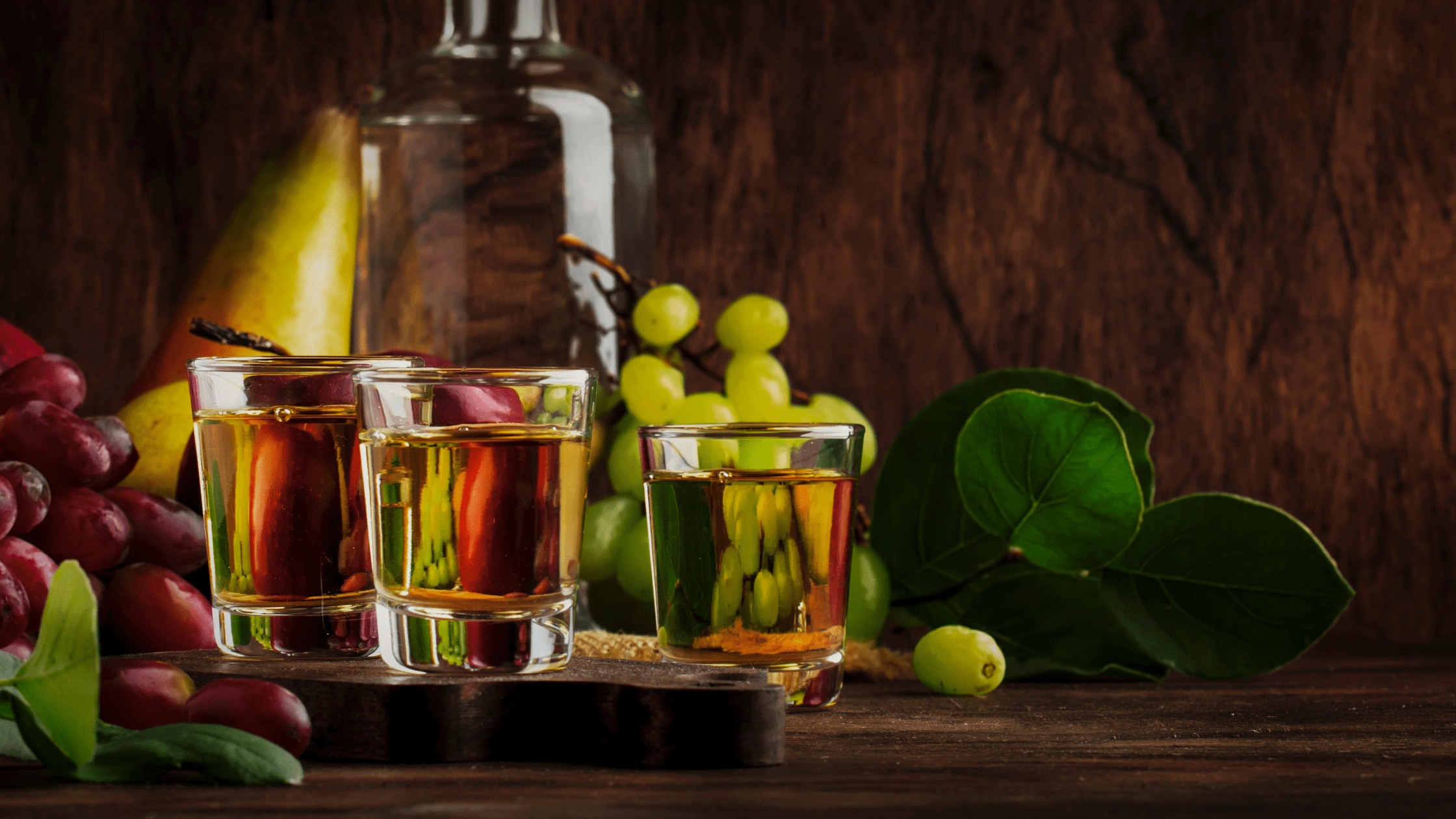
Rakija is a high-proof fruit brandy distilled from plums, grapes, apples, or apricots depending on the region, and it serves as the absolute social currency of Albania. In a rural guesthouse, you will be offered rakija the very moment you walk through the door. Declining is not offensive if done graciously, but accepting thoroughly transforms the interaction. It signals deep respect and openness to the hospitality being extended to you. Local men add it to their morning coffee. It is offered at celebrations, used as a folk remedy, and poured at the beginning of every serious conversation. Understanding this context means you are not just a tourist passing through, you are an honored guest.
Pro Tip: If you are offered homemade rakija, ask what fruit it is specifically distilled from. The answer tells you exactly where you are geographically and naturally opens a genuine conversation.
Where to eat: specific restaurants worth booking
Small family-run places in Albania open, close, and change hands quickly, so confirm hours the day before rather than relying on any list, including this one.
- Antigoni Restaurant, Berat: Situated high in the Gorica quarter, request the river-facing terrace table for sunset views directly across the Osum to the thousand windows of Mangalem. It offers one of the best-value views in the entire Balkans.
- Homemade Food Lili, Berat: Tiny, completely cash-only, and fully scratch-made. There is no menu in English and absolutely no pretension. Point at what is cooking in the back, and you will not be disappointed. Call ahead, as it is effectively a private home and seats very few.
- Mullixhiu, Tirana: Albania has a rapidly growing farm-to-table scene, and this is the most thoughtful iteration available. A reservation is strongly recommended for dinner service.
- Oda, Tirana: Low, cushioned Ottoman-style seating arranged around heavily carved wooden tables. Order fergese, tave kosi, and traditional bread. The historic room itself is the experience.
When to visit Albania: the seasonal reality
September and October are the absolute best months to visit, full stop. The Ionian Sea holds its summer warmth well into October, harvest produce is at its peak in the local markets, and the massive European summer crowds have gone home. Accommodation prices drop noticeably across the board, and the Komani ferry is still running.
May and June are excellent for the high mountains, as wildflowers cover the Accursed Mountain passes and hiking conditions are close to perfect. Be precise about your dates, though: snow can linger on the Valbona Pass into June, so the reliable window for the Theth-to-Valbona crossing really opens around mid-June. The Ionian is also still cold for swimming in May, usually sitting below 20°C (68°F), so a beach holiday that early will disappoint.
July and August deliver brutal peak coast temperatures reaching 35°C (95°F), and Ksamil becomes genuinely overcrowded. Running water, local roads, parking, and ferry capacity are all heavily strained. If you must visit in peak summer, book accommodation months in advance, budget for premium beach club prices, and reserve the Komani ferry online well ahead.
Winter is largely the off-season for the coast, and access to the north effectively closes: the Theth road is typically impassable from around mid-November until late March or April, and the Qafa e Thores pass above it holds snow even longer. Gjirokaster and Berat, on the other hand, look magical in the cold with almost zero tourists blocking your photos, and the Llogara Tunnel means the Riviera now stays reachable even when the pass above it is snowed in.
Cultural events worth timing your trip around
Gjirokaster hosts the Cerciz Topulli Square Christmas Lights Festival running through early January, with a winter market, a food and drink festival, live performances, and illuminated buildings across the old town. The restored historic square lit up in winter creates a striking visual contrast against the dark castle above.
The Gjirokaster National Folklore Festival is the country’s most significant cultural event, staged inside the castle walls with well over a thousand performers from Albania, Kosovo, North Macedonia, Montenegro, the Arberesh communities of southern Italy, and the diaspora. It is nominally held every five years, but the interval has slipped badly and repeatedly, with one recent gap running to eight years. Treat it as a genuine travel anchor if the timing lands in your window, but confirm dates with the Ministry of Culture or Visit Gjirokaster before you book anything around it.
If you are building a wider Balkan itinerary, the Ultra Europe festival takes over Park Mladezi in Split, Croatia in mid-July, with satellite events continuing on the Dalmatian islands afterward. It does not connect to Albania by ferry, despite what some itineraries imply, so plan that leg by air or road. What the Saranda ferry actually gives you is a 30-minute crossing from Saranda directly to Corfu, which is the far more natural pairing: Greek island food and architecture on one side, Albanian prices and empty beaches on the other.
Albania travel guide FAQs
Do I need a visa to visit Albania as a US citizen?
No. US passport holders enter visa-free and may stay up to one year. You need three months of passport validity from your arrival date and one blank page.
Is Albania expensive?
No, though it is no longer the bargain it was five years ago. Guesthouses run $25 to $50 a night, intercity buses cost $8 to $18, major castle entries are $3 to $5, and a good meal with wine lands around $15 to $25 per person. Peak-season Ksamil beach clubs are the one place where costs spike to Western European levels.
Can I use my credit card in Albania?
In Tirana and larger hotels, usually. Everywhere else, assume cash. Furgon drivers, village guesthouses, and several major attraction ticket booths, including Berat and Gjirokaster castles and the Blue Eye, take lek only.
Do I need a 4×4 in Albania?
Not for the main routes. The Shkoder-to-Theth road and the coastal highway are fully paved, and the Llogara Tunnel removes the hardest mountain section entirely. A crossover or SUV is worth it for village tracks, trailheads, and shoulder-season mountain driving.
How many days do you need in Albania?
Seven days covers Tirana, one UNESCO city, and the southern Riviera at a reasonable pace. Ten to fourteen lets you add the northern Alps, which need at least three days on their own because of the ferry schedule.
Is Albania safe for solo female travelers?
Broadly yes, and the culture of hospitality is real. Standard city precautions apply after dark in Tirana and Durres, and the absence of Uber or Bolt means arranging taxis through a local app or your accommodation rather than hailing on the street.
Pack your bags and embrace the chaos
No Albania travel guide is complete without a stark warning about your own expectations. Albania heavily rewards preparation. The travelers who struggle the most are the ones who arrive expecting sleek Greek infrastructure on an Albanian travel budget, then get frustrated when the bus terminal is not exactly where their digital map application says it should be.
The travelers who come back raving are the ones who leaned into the mild chaos. They accepted a strong morning rakija from a smiling guesthouse owner in Theth, and they watched the sun set slowly over Berat from the terrace of Antigoni with a glass of local wine that cost about the price of a coffee back home. The value-to-experience ratio here remains unmatched on the European continent, even as the country absorbs well over ten million foreign visitors a year, several times its own population. The question is not whether this destination is worth your time. The only question ending this Albania travel guide is: are you planning to hit the coast, the high mountains, or both on one two-week road trip?