Land at Tirana after 11 p.m. and the airport bus is done for the night. The Rinas Express runs roughly hourly to Skanderbeg Square, takes 30 to 45 minutes, costs about $4.40 (400 lek), and the last one goes around 23:00. There is no Uber. There is no Bolt either, whatever a three-year-old blog post told you. What’s left is the official yellow taxi rank — Auto Holiday Albania, the sole licensed operator at the airport — at roughly $22 to $27 for the 11 miles into the center. Or one of the Albanian ride-hailing apps, which you cannot download and register on a phone with no data. And your phone probably has no data, because Albania is not in the EU and gets left out of most American “Europe” roaming bundles.
Nothing in that paragraph is dangerous. All of it is expensive. All of it is avoidable if you know it before you board.
That is the shape of a solo trip here. Albania is very unlikely to hurt you. It will absolutely take sixty dollars and two hours off you for planning it like Italy.
Prices below use 100 lek to $1.10 and one euro to $1.10, which is roughly where things sat when this was written. Check the day’s rate before you budget anything.
You Are Afraid of the Wrong Thing
Start with the numbers, because the reputation is doing all the work and the numbers contradict it.
Albania’s homicide rate was about 1.4 per 100,000 in 2023 — a record low, down from about 1.7 the year before (World Bank/UNODC series). The equivalent US figure for 2023 was about 5.8. The rate at home is roughly four times higher than the rate you’re worried about.
The line you’ll see everywhere — that Albania is one of the safest countries in Europe — isn’t supported by the index people cite for it. The 2025 Global Peace Index put Albania 52nd out of 163 countries. That’s mid-table globally, and it has been sliding, not climbing. What the same index also says, and nobody quotes: the United States ranked 128th of 163 in 2025, and 134th in 2026.
The State Department has Albania at Level 2, Exercise Increased Caution, reissued December 31, 2024, citing violence tied to drug networks and organized crime. Level 2 is also where France, Italy, Spain and Germany sit.
There is one live complication. On April 1, 2026, the US Embassy in Tirana issued a security alert about groups associated with Iran potentially targeting entities linked to the US or to Iranian opposition figures, naming ordinary venues — tourist sites, malls, hotels, clubs, restaurants. Albania’s interior minister, Besfort Lamallari, responded that there was “no concrete information, even intelligence, about a real dangerous situation.” Both things are true at once, and the alert did not raise the advisory level. Alerts like this get issued and quietly expire. Read the live advisory page before you book rather than trusting a date on this one.
Now the part you actually came for. Across the traveler accounts I could count — about five forum posters, plus a scatter of first-person blogs — the recurring word is staring. Not aggression, not following, not groping. Staring. Not one of those posters described serious harassment. One Albanian commenter framed it as culturally out of bounds to bother a woman. The brush-off phrase that circulates among travelers is Lëre me — leave me alone.
Two other things come up. Traditional cafés, the kafe, are frequently a room of middle-aged men with football on, and they are unmarked from the street, so you find out by walking in. Women who’ve done it describe uncomfortable stares and, in one account, a restaurant that simply refused to serve. Modern cafés are fully mixed and nobody blinks. That’s two first-person writers and effectively zero forum corroboration, so treat it as texture rather than a finding. And on nights out: three accounts of walking around Tirana and Shkodër after dark without concern, plus a local who rates the city seven out of ten and says stay out of the park after 11 p.m. Use an app taxi late and stick to lit boulevards, which is what you’d do in Chicago.
Here is what’s wrong with that picture, and I’d rather say it than round it up. Reddit was unreachable when this was researched, and Reddit is where solo women write most candidly about a country. My read on harassment rests on roughly five Tripadvisor and Quora posters and some blogs. The accounts are consistent with each other. There are just not many of them, and the sample skews toward people who had a fine time and came back to say so.
The Roads Are the Statistic Nobody Quotes
Albania runs around 60 road deaths per million people — sixth to eighth highest in Europe, and about 30 percent above the EU-27 average of 46 per million. That’s the figure that earns Albanian driving its reputation.
Then you check home. The United States runs about 120 road deaths per million, from roughly 41,000 deaths in 2023. Per head, you are about twice as likely to die on an American road as an Albanian one.
So the per-capita framing doesn’t do what the guides think it does, and that surprised me enough to check it twice. The danger isn’t the rate. It’s the character: overtaking on blind curves, livestock in the road, speed limits that drop with no warning, signage that assumes you already know, and long unlit stretches at night.
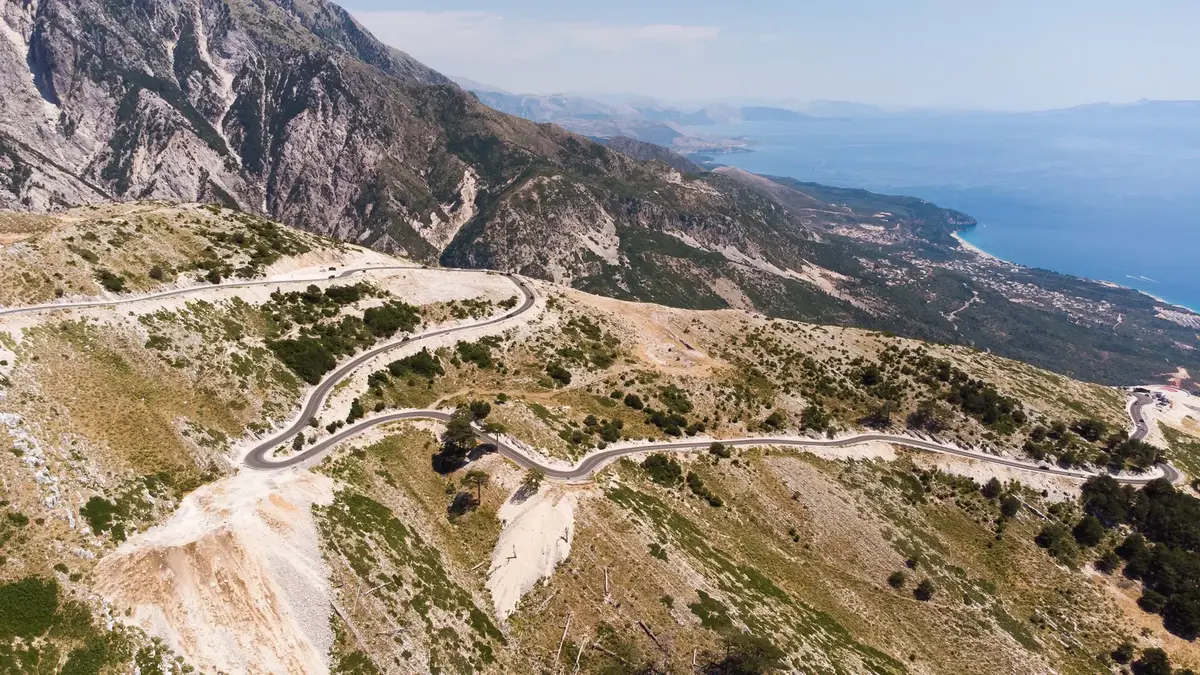
Which turns into a scheduling problem more than a mortality one. Tirana to Saranda routinely takes four and a half to six hours or more, because of the Llogara Pass and the switchbacks on the SH8 coastal road, for a distance that looks unremarkable on a map. The whole country is about 11,000 square miles, slightly smaller than Maryland, and it takes far longer to cross than that implies. Build the day around the mountain sections, and don’t drive them after dark.
Every ATM in Albania Will Charge You
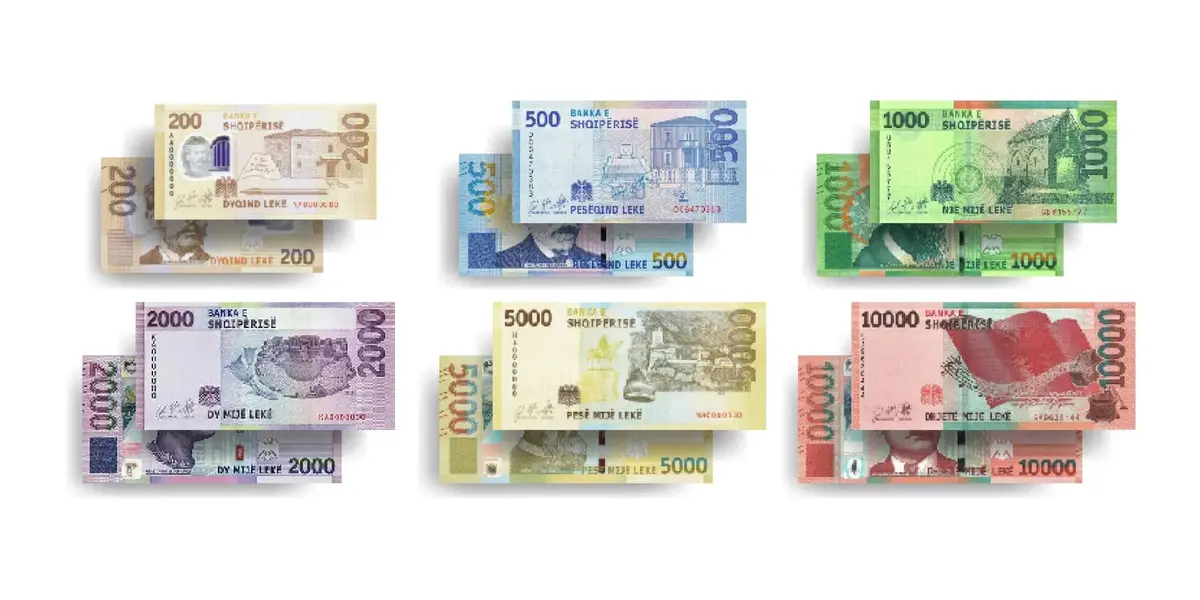
Albania is a cash country. The currency is the lek. Euros get taken informally in tourist places and your change comes back in lek at a rate chosen by the person handing it to you, so pay in lek.
The stale advice you’ll find on half of page one is that Credins Bank has fee-free ATMs. It doesn’t, and as of 2025 there is no fee-free ATM in Albania at all. Field tests put current per-withdrawal fees at roughly:
- Union Bank and ABI: about 500 lek ($5.50) — the cheapest
- Credins: about 600 lek ($6.60)
- Raiffeisen: about 800 lek ($8.80)
- BKT: six to seven euros ($6.60 to $7.70)
- Euronet: the worst of the lot, and it’s the one in the airport and the tourist streets
Also stale: any listing that sends you to Alpha Bank. It merged into OTP and no longer exists as a separate bank.
Two more layers go on top of the machine fee. Decline dynamic currency conversion every single time — when the screen offers to charge you in dollars, say no and choose lek. The markup runs 4 to 13 percent. Then your own bank adds roughly $5 flat plus about 3 percent in foreign transaction fees. Pull $300 from a Raiffeisen machine on a typical US card and you’re paying about $8.80 to the machine, about $5 to your bank, and about $9 in FX — north of $22 to touch your own money.
Which is why the tactic is: withdraw the maximum. Caps run 40,000 to 75,000 lek, roughly $440 to $825, and the flat fee is the same either way. Carry a second card, because random rejections happen and there is no counter to argue with. Money changers in Tirana beat the machines outright if you’re bringing dollars or euros in.
Tipping runs to rounding up, or five to ten percent in a restaurant. Nobody expects twenty.
Stack those facts and you get a conclusion the sources don’t state on their own: Alps guesthouses have no ATM, take cash on arrival, and are often bookable only by phone or WhatsApp. So the amount of physical cash you should be carrying into the mountains is more than feels comfortable, and you should draw it in one expensive lump in Shkodër or Tirana rather than three cheap-feeling ones that don’t exist up there. That’s arithmetic on my part, not a rule anyone published.
There Is No Uber, and There Never Was
The reason is regulatory, not technical: Uber was effectively pushed out, and Bolt was rumored to be launching in 2024 and never did. Any page telling you otherwise was written before 2025 and nobody went back to fix it.
What works instead are local apps, most of them cash-only at the end of the ride: Clust is the most English-friendly, Patoko is usually the cheapest, VrapOn has the widest coverage outside Tirana, Speed Taxi and UPS Taxi are solid, and MerrTaxi is Tirana only. Install and register the ones you want before you leave home, while you still have data you aren’t paying two dollars a megabyte for.
Street taxis are where the friction shows up, and it is entirely financial. Three separate accounts from women traveling alone, none of them about safety, all of them about money: a six-mile run from Golem to Durrës quoted at €25 and talked down to €15 with the driver refusing to use the meter; another traveler handed a euro-to-lek rate invented on the spot. The pattern is a lone foreign woman getting the tourist number, not a lone foreign woman getting into trouble.
Three rules cover it. App first. If you must flag one down, agree the price before you open the door. Pay in lek.
The Furgon Leaves When It Is Full
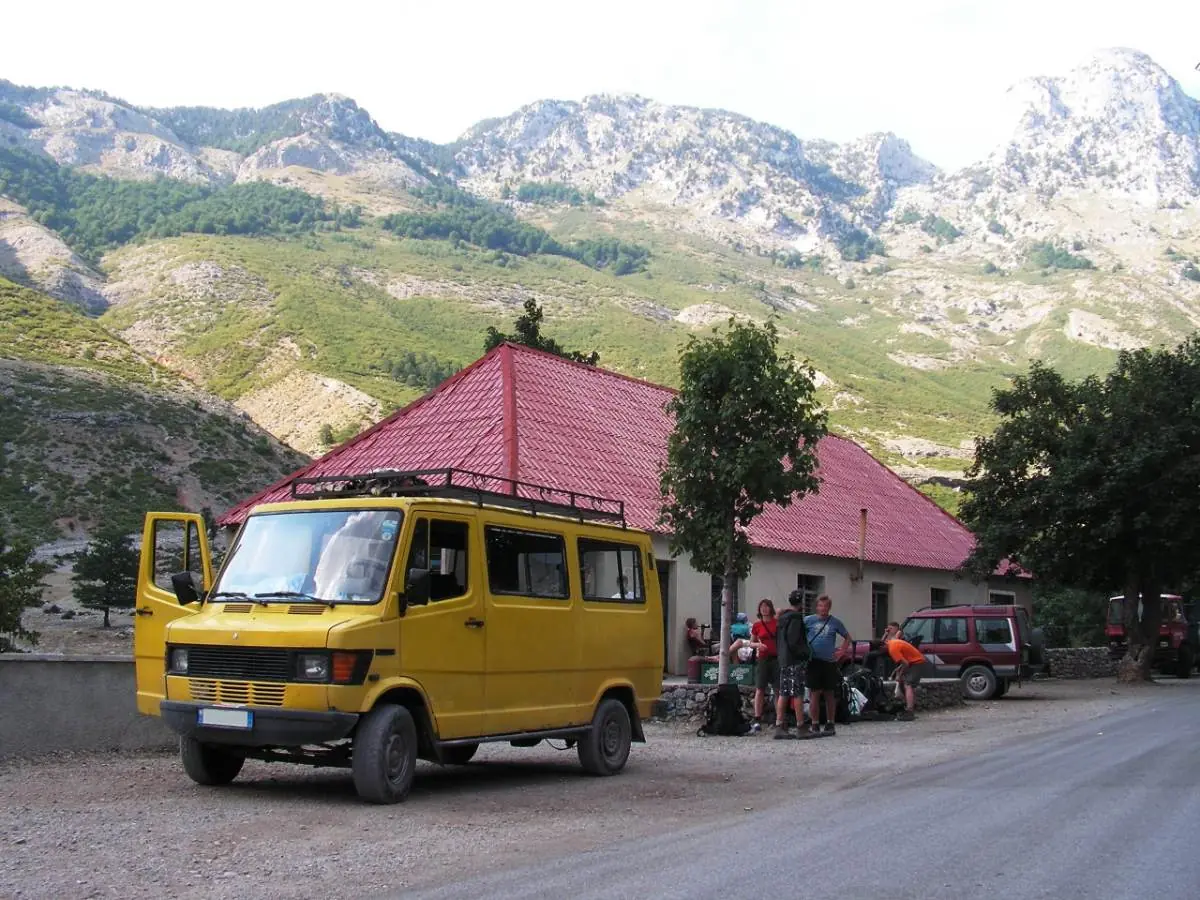
The furgon is a shared minibus and it is how the country actually moves. There is no online booking, no published timetable, and no departure time. It leaves when it fills up. You pay the driver in cash, in lek, usually when you get out.
Four solo women in the accounts I read had covered most of Albania this way and described it as entirely doable. One destination expert steers first-timers away from furgons — for confusion, not danger, and that distinction is the whole story.
The genuinely hard part is finding them, because departure points differ by city and are not signposted:
- Tirana is the most organized, with recognized terminals
- Shkodër furgons line up by destination along a street
- Berat departs from a lot outside the town center
- Gjirokastër goes from near the gas stations at the bottom of the hill
The tip that comes up more than any other is not a website. Ask your guesthouse host the night before. They know where today’s van goes from and roughly when it fills. A map does not.
Your van may be full of men and no women. Some women deliberately sit near other women or near families. Nobody in the accounts reported a problem — this is discomfort, not risk, and it is worth separating the two before you spend money avoiding it.
One routing change to know about: most Gjirokastër–Saranda buses now take the new Kardhiq road, the SH99 bypass, and no longer pass the Blue Eye turnoff. Getting there by public bus has gotten harder, not easier. Confirm with the driver before you board rather than after.
Renting a Car Without Losing the Reservation
Albanian law technically accepts a US driver’s license, since it’s in Latin script. Rental desks routinely demand an International Driving Permit anyway, and the US Embassy advises carrying one. This is the most-broken rule in the country in practice, and the failure mode is losing your booked car at the counter with no recourse.
Get the IDP from AAA before you fly: two passport photos, your license, about $20, done the same day in person. By mail it’s ten to fifteen business days. It’s valid for a year and only valid alongside your actual license.
The blood alcohol limit is 0.01 percent. Treat that as zero. One beer with lunch is a problem.
Practicalities: deposits go on Visa or Mastercard, and Amex is frequently refused. Local rental desks undercut the international brands by 30 to 50 percent. Economy cars run $15 to $65 a day, SUVs $90 to $140 in peak season. Cross-border driving is usually possible into Kosovo with a green-card insurance extension and prior written permission, around $22 to $44, and into Montenegro for around $77. Greece and North Macedonia depend on the company.
And a clause worth reading before you sign: many Albanian rental contracts prohibit unpaved roads, and driving one voids your insurance. The last six miles of the access road to the Koman ferry pier are unpaved. I haven’t found a rental company that addresses that combination directly, which is the kind of thing they tend to address after the fact rather than before. Ask in writing, or park somewhere else.
The Alps Circuit Is the One Thing You Must Book Ahead
Everything else in Albania tolerates improvisation. This doesn’t.
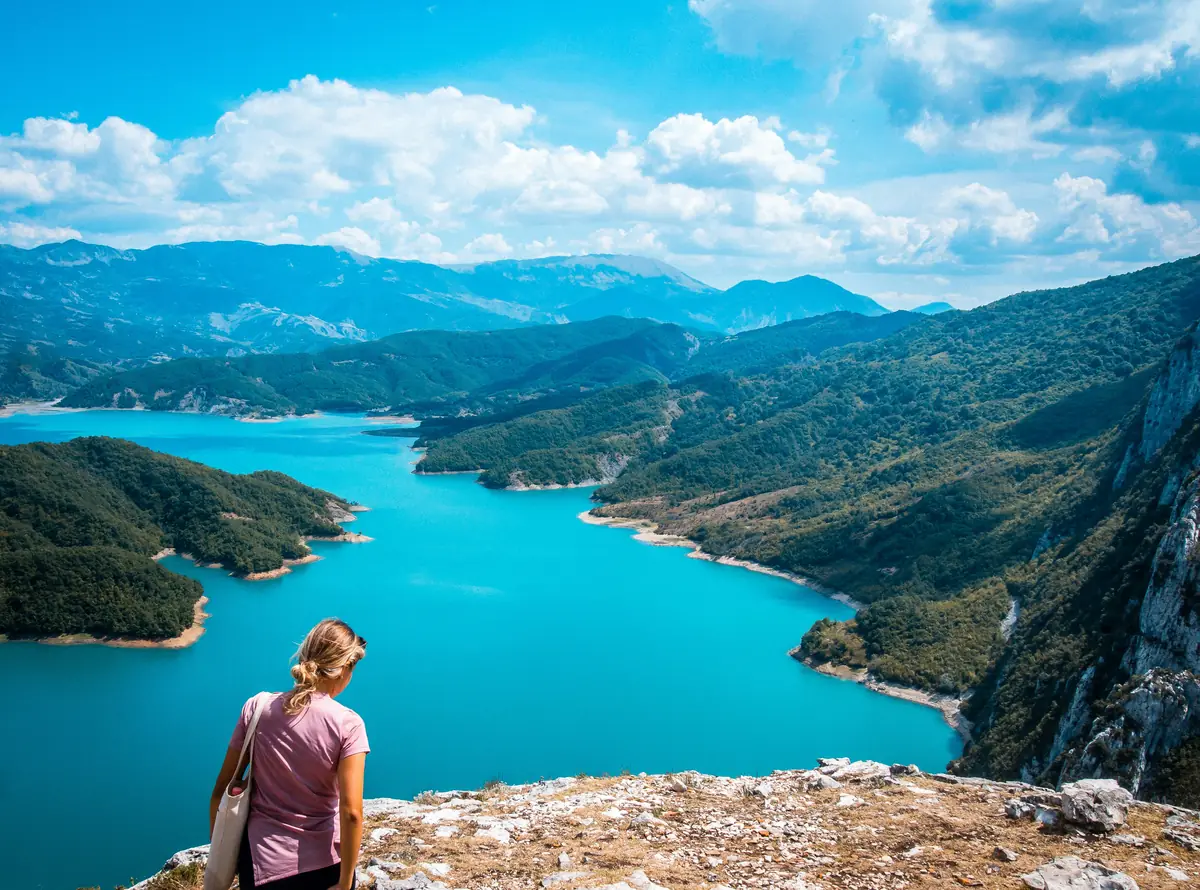
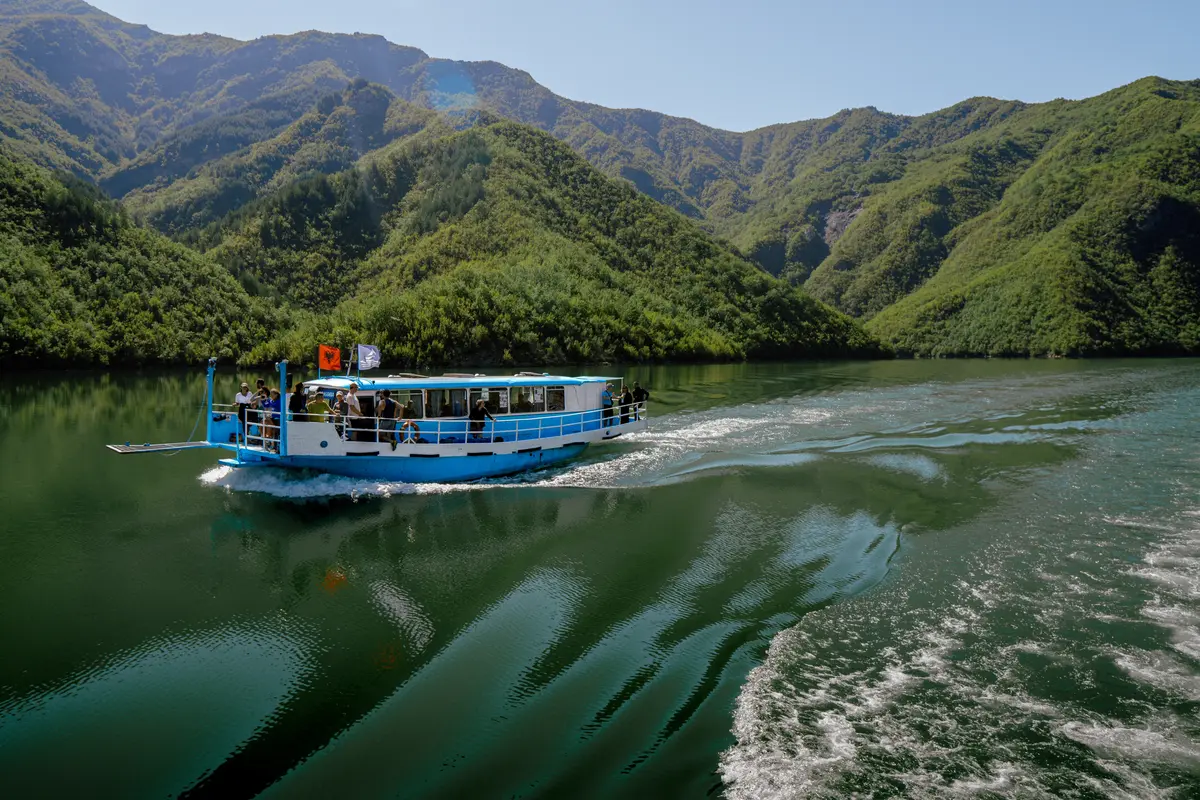
The Koman ferry. The Berisha leaves Koman at 09:00 and returns from Fierza at 13:00, sailing about two and a half hours, running roughly mid-April to early November. Passenger fare is about $9.70 (€8.80) booked online or $11 (€10) in cash, with the online booking saving 15 to 20 percent — book at komanilakeferry.com. Cars are priced by square meter, around €7 per square meter online, so a normal car costs $42 to $51. The car deck caps at about five vehicles and sells out in July and August. The Dragobia is passengers and bikes only and runs year-round. The Alpin costs more, around €15 a passenger, and its departure times differ across every source I checked, so do not build a day around a time you read on a blog.
Getting to the pier means an early start you should book with your guesthouse: Tirana pickups leave around 05:00 to 05:30 for a three-and-a-half-hour drive, Shkodër around 06:30 to 06:45 for two hours.
Valbona to Theth. The local trail authority puts the pass at about 5,770 feet (1,759 m); blogs round it up to 1,800. The altitude is not the number to plan around. The climb is: 2,600 to 3,300 feet of gain, and six to nine hours of walking. Very fit hikers do it in four to five. Slower walkers take ten. Distance runs about six miles from the Rragam trailhead, or nine miles if you walk village to village. A minibus or taxi from the Valbona trail split removes about two and a half hours of exposed riverbed walking for roughly $38 split between two people, and it is worth every lek.
The trail is marked red and white every 50 to 100 meters. Snow holds on the pass into late spring — hikers have reported it at the top as late as April. There is loose scree near the top, and tour listings say outright that this is not a hike for poor cardiovascular health. There are also loose donkeys up there, and hikers report bags raided by them.
Women do this alone. The single most repeated piece of advice from the accounts I found: link up with other travelers at your guesthouse the night before and walk out together in the morning. Guesthouses arrange the transfers on both ends.
Beds. Guesthouses run half-board and sell out in July and August. Many take bookings only by phone or WhatsApp, and payment is cash on arrival. There is no ATM in either valley.
Albania Is Not in Your Europe Roaming Plan
Albania is not in the EU or the EEA, so the Roam Like at Home rules don’t apply and Albania is routinely excluded from American carriers’ “Europe” bundles as a high-cost zone. This catches people who have done this correctly a dozen times elsewhere.
Pay-per-use on AT&T and Verizon runs around $2.05 per megabyte. That’s roughly $2,050 a gigabyte. One documented AT&T bill came to $847 for about 400 MB across three days.
Your options are a carrier day pass at $10 to $14 a day, a higher-tier T-Mobile plan that may include Albania at throttled speed, or an eSIM bought before you fly. On the ground, Vodafone Albania and One (Telekom Albania) sell cheap local SIMs and will need your passport to register one. Check your phone is actually unlocked before you leave — one traveler got as far as a Vodafone kiosk in Tirana before discovering her AT&T handset wasn’t.
Power is 230V at 50Hz on plug types C and F, the European two round pins. Dual-voltage electronics need only an adapter. A single-voltage US appliance needs a converter. Expect occasional outages in the mountains.
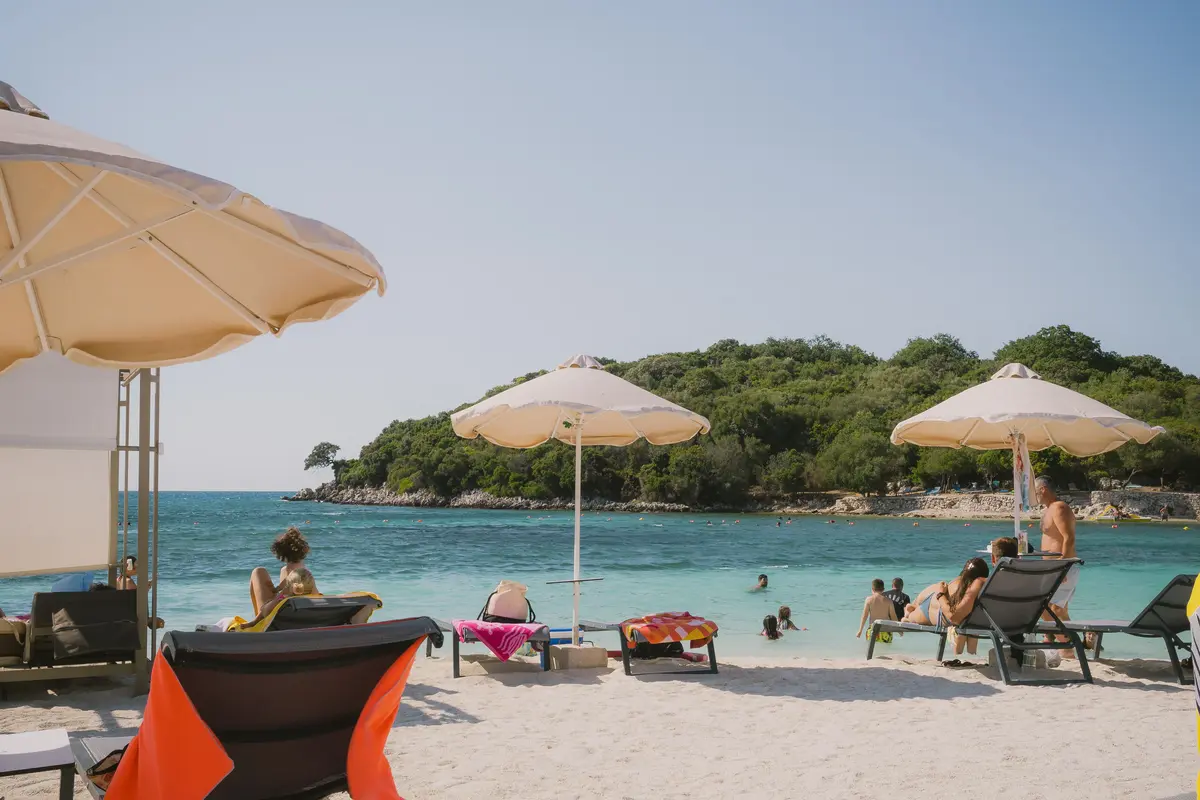
In Ksamil, the Beach Is Free and the Chair Is Not
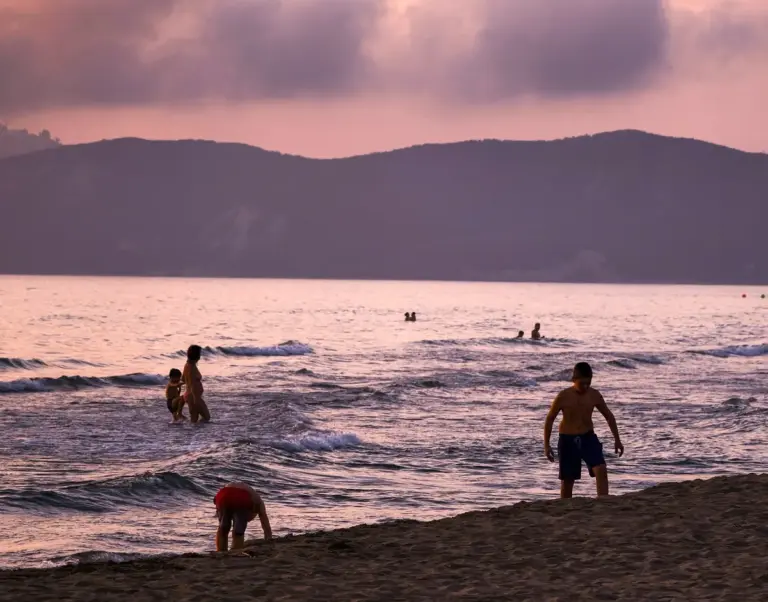
Around seven reviewers describe the same routine, so this one is solid. No beach in Ksamil is legally private. Sit on one without renting a lounger and security will come and stand near you until you do.
What people report paying: about $11 (1,000 lek) for two loungers and an umbrella is the common number. Tiered pricing at €10, €15 and €20 exists depending on where you sit. Beds on the over-water nets run about €30 a day. The pressure price quoted at people who look like they’ll pay it is €25.
The complaint underneath all of them is the absence of posted price lists, which is why everyone pays a different number for the same chair. Several also describe being told everything is full, then watching loungers materialize for Albanian families ten minutes later.
Peak season is genuinely crowded. If your mental image is empty sand, adjust it or go somewhere else.
The Dogs
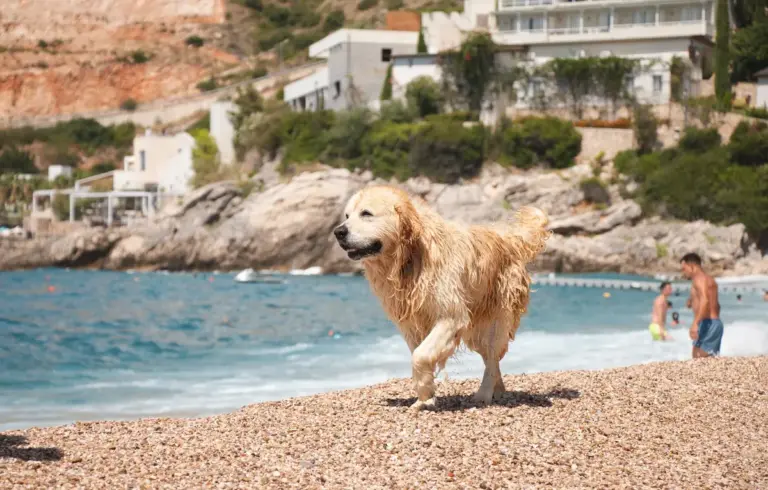
Strays are the most inconsistent thing in the country. Six travelers describe them and their accounts barely overlap. One woman spent three weeks in Albania and saw three dogs total, all with green ear tags marking them as neutered. Another was distressed by roughly thirty hungry strays in Vlorë. One woman was bitten in Berat, and her hotel drove her to the hospital. Another carries a deterrent she has never had to use.
Villages and the Alps have more packs and more barking at night than the cities do. Nobody can tell you in advance which version of this you’ll get, and the honest answer is that it’s luck.
Entry Is Easier Than the Guides Make It Sound
Americans get up to a year — 365 days — in Albania without a residence permit (US Embassy). This is not a Schengen-style 90-in-180 allowance, because Albania is not in Schengen. ETIAS does not apply either; it covers the Schengen area, and Albania is an EU candidate rather than a member.
On passport validity, the near-universal “must be valid six months” line is a recommendation being printed as a rule. The Embassy sets the legal minimum at three months of remaining validity. Six is what they advise. You’ll want one blank page.
To reset the one-year clock you have to be outside Albania for at least 90 days. Short hops to Kosovo and back neither extend nor restart it. And entry stamps are increasingly not issued because entry is recorded electronically, so keep your boarding pass as evidence of when you arrived.
Albania runs on CET and CEST — six hours ahead of US Eastern, nine ahead of Pacific, and it shifts for daylight saving at roughly the same time you do, so the gap holds most of the year. Corfu is one hour ahead of Albania, which matters if you’re timing a ferry.
That ferry is worth knowing about, because there are no nonstop flights from the US to Tirana and one-stop routings run through Rome, Istanbul, Vienna or London. Flying into Corfu instead puts you 25 to 30 minutes from Saranda on a high-speed boat run by Finikas Lines, Ionian Seaways or Albania Luxury Ferries, for about $22 to $33 one-way, with more than twenty sailings a day in peak season. It’s foot passengers, mostly — car slots are limited and seasonal. Reliable April through October, weather-dependent in winter.
Getting Hurt Here, and What It Costs
Your US health insurance almost certainly does not travel with you. Travel medical insurance is not an entry requirement for Albania and you should buy it anyway.
The good facilities are in Tirana — private clinics including Hygeia and the American Hospital. Care in the mountains is limited, which is the concrete thing behind the State Department’s line about emergency services in remote areas. Pharmacies are everywhere and easy to deal with. The emergency number is 112.
Tap water is treated in the cities. Most travelers drink bottled anyway and get more careful with tap ice and raw salads outside tourist restaurants in rural areas. One small group all got sick on day three of a trip and suspected a virus rather than the food; most travelers report no trouble at all.
Who Should Skip Albania
Nobody writes this section, so here it is.
Skip Albania if you need to open an app and see a car three minutes away to feel functional in a new place. Skip it if you need contactless payment everywhere and hate carrying cash — this country will hand you a wad of lek and a lot of small decisions. Skip it if a published timetable is what calms you down; the furgon does not have one and will not be getting one.
Skip it if you need step-free access. Berat and Gjirokastër are steep cobblestone UNESCO towns, and Gjirokastër’s castle sits at the top of a hill on polished stone that turns slick in rain. City sidewalks are uneven, and travelers report open manholes. This is hard in a wheelchair, hard with a stroller, and hard on knees that have opinions.
Skip it if fast, aggressive traffic makes you anxious, because you’ll meet it on day one. Skip it if you want polished infrastructure and litter-free landscapes — plastic in Koman Lake comes up in account after account. Skip it if being looked at is going to ruin your week, or if walking into the wrong café and finding twenty men watching football would end the trip.
Traveling with an aging parent, most of the country works if you plan around drive times, and the Alps crossing doesn’t. Traveling with small kids, same answer.
What I Could Not Pin Down
Opening hours and last-entry times for the major sites — Butrint, the castles at Rozafa, Gjirokastër and Berat, Bunk’Art 1 and 2 — could not be confirmed from the venues’ own pages. Closing time and last entry are different numbers, and I couldn’t resolve either one, so check before you build a day around an afternoon visit.
The Blue Eye’s hours are given as 07:00 to 19:00 by one operator page and 08:00 to 20:00 by others. Nobody official settles it.
Standalone per-night half-board rates for Theth and Valbona guesthouses are commonly quoted at €25 to €40, but I could not find anyone who confirmed paying that, so I’ve left the number out of the planning section above rather than let you budget on it. The Vlora–Saranda ferry schedule and fare, and the current accommodation tax rate, are the same story.
The UK, Canadian and Australian advisories were read secondhand here. If you’re not American, pull your own government’s live page.