Planning an Albanian trip but worried about the language barrier? Do people speak English in Albania? Yes, and more of it every season, but the answer depends almost entirely on where you go and who you talk to. Here is the honest breakdown: coastal cities and the capital are comfortably English-friendly, while the mountain north still runs on gestures, patience, and a downloaded translation app.
Where exactly do locals speak English in Albania?
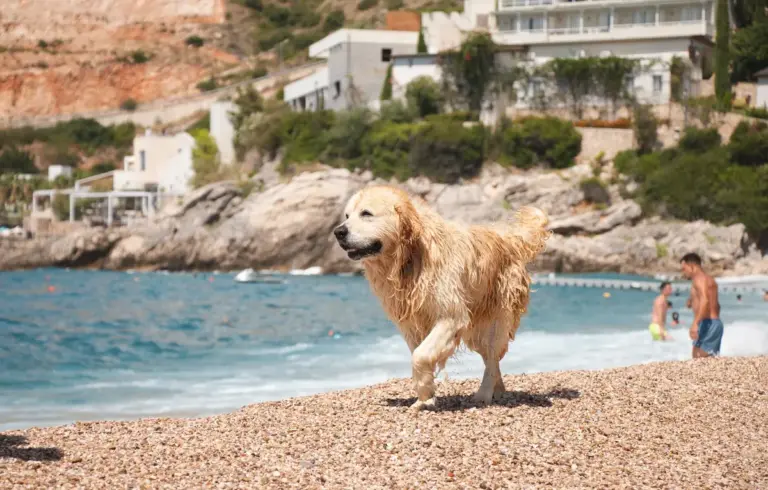
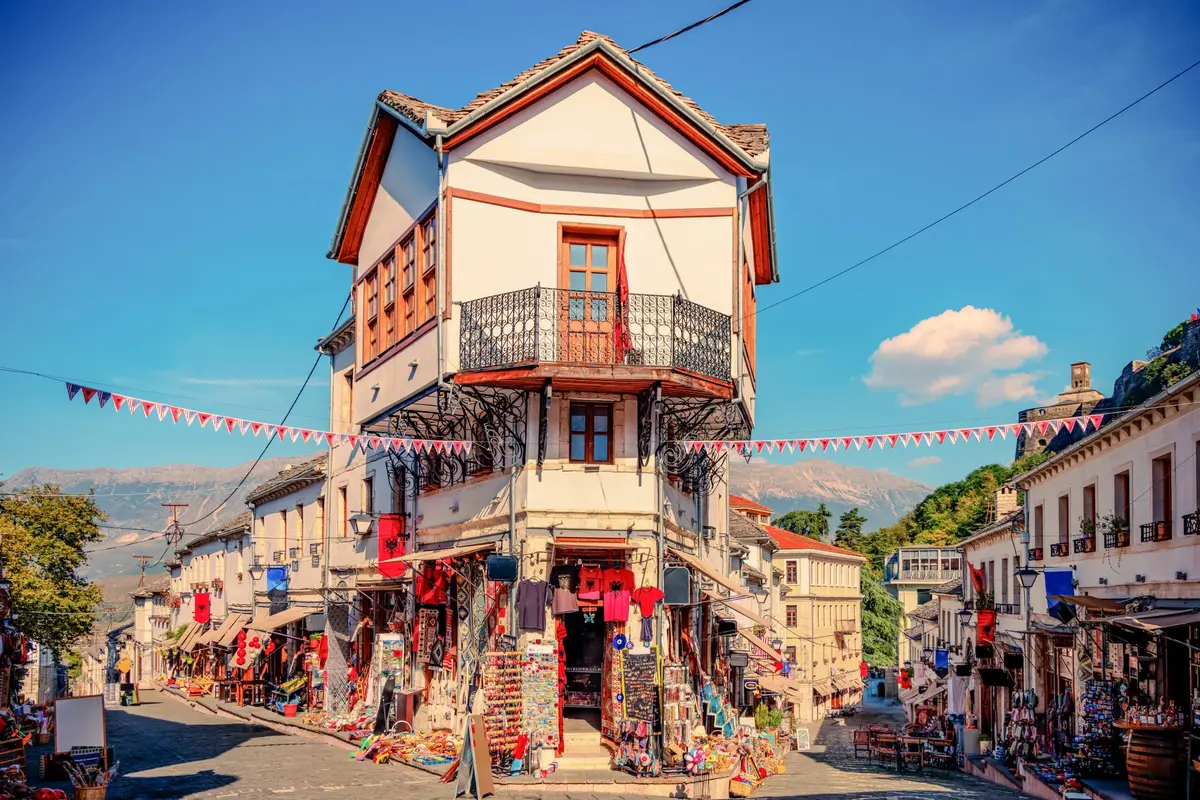
People speak English in Albania primarily in major tourist hubs and coastal cities. The country operates on a sharp generational and geographic divide. In Tirana, Sarandë, Ksamil, Vlorë, and along the Albanian Riviera, you will find young locals, hotel staff, and restaurant workers who speak confident English.
The under-30 population is the key demographic. English is the first foreign language in the Albanian school system, taught from third grade onward, and it sits alongside Albanian and mathematics as a required subject on the State Matura exam. Anyone who finished high school in the last two decades has studied it formally for roughly ten years.
Tourism accelerated the shift. Albania now receives more than 12 million foreign visitors a year against a resident population of about 2.4 million, so hospitality work and functional English have become close to the same skill along the coast.
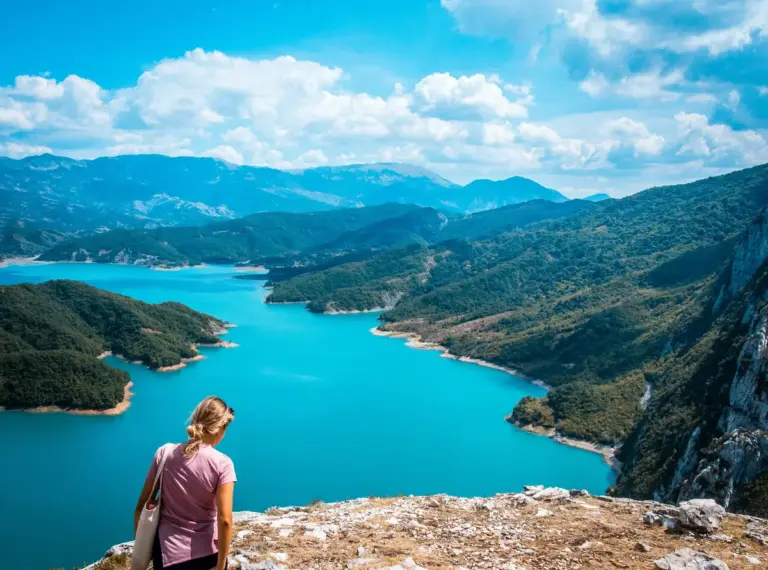
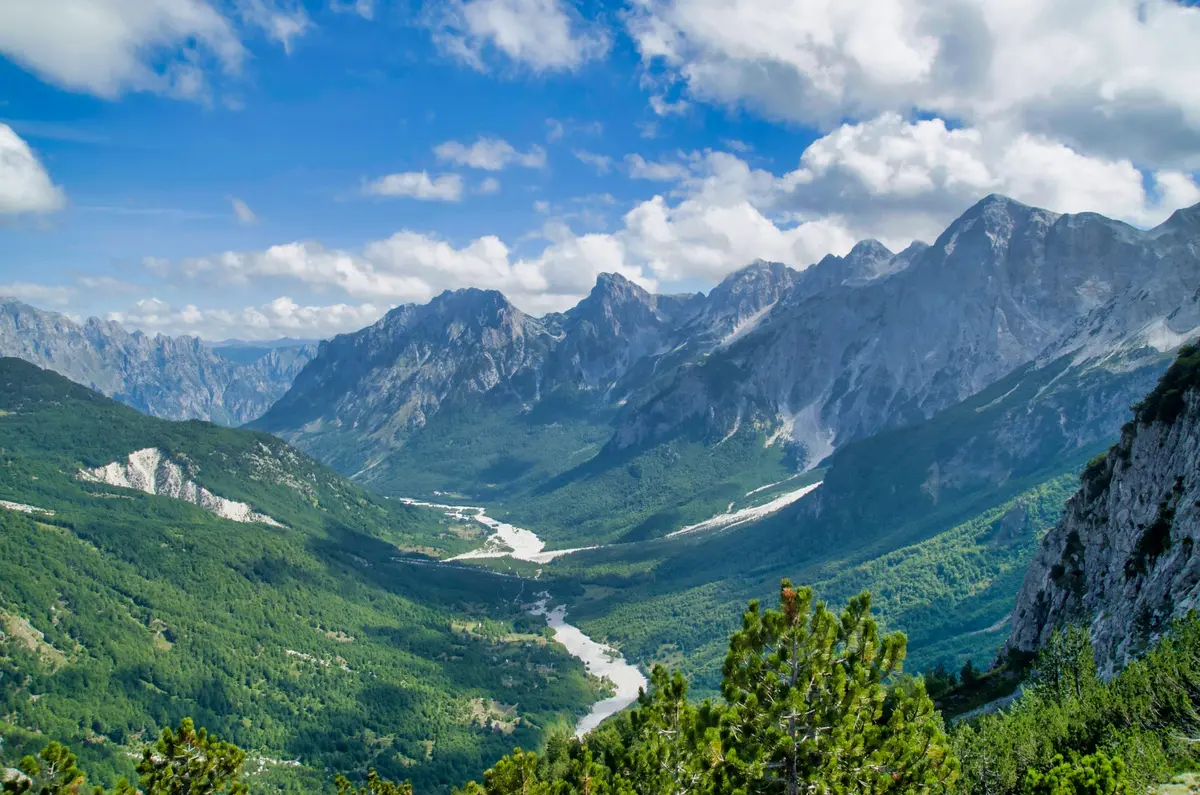
Travel into the northern Albanian Alps, specifically the valleys around Theth and Valbona, and the picture changes. It changes less than it used to, though. Guesthouses there handle international bookings by email, so most families now have a son, daughter, or nephew who fields English messages and greets arrivals. The gap you will actually hit is with older drivers, shepherds, village shopkeepers, and anyone working outside the tourism chain.
Older Albanians, particularly those over 40 in rural areas, grew up in a completely different world. During the communist period under dictator Enver Hoxha, the country was isolated from the West from the early 1960s until the early 1990s. English was simply not a priority back then.
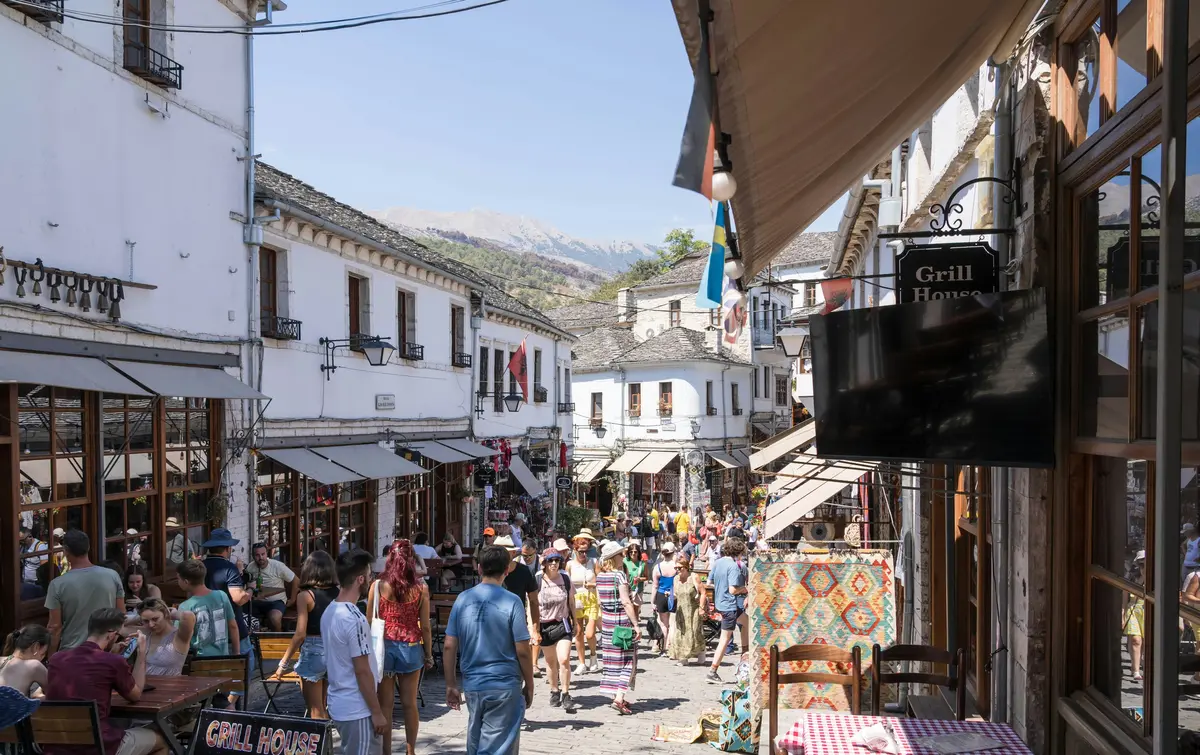
Pro Tip: If you are sticking to the Riviera, Tirana, and UNESCO sites like Gjirokastër and Berat, you can genuinely travel without speaking a word of Albanian. If you are hiking the Accursed Mountains, pack patience and a downloaded language app.
How good is English in Albania compared to other countries?
English in Albania sits in the “moderate proficiency” band globally, stronger than Italy but behind most of its Balkan neighbors. The EF English Proficiency Index, which ranks 123 countries and regions, places Albania at number 42 with a score of 532 against a global average of 488.
That number is more useful with context. Albania scores above Italy, roughly level with Moldova and Belarus, and noticeably below Greece, North Macedonia, and Bosnia and Herzegovina, all of which sit in the high-proficiency band. Tirana scores highest inside the country at 557, which matches what travelers report on the ground: the capital is the easiest place in Albania to be an English speaker.
One caveat worth knowing. That index is built from a self-selected online test, so it skews toward younger, urban, internet-connected people. It is a fair proxy for who you will meet in a Tirana café or a Sarandë hotel, and an optimistic one for who you will meet at a mountain crossroads.
The practical translation for an American traveler: reading and listening scores in Albania outpace speaking scores. Many people understand you better than they can respond. Slow down, drop idioms, and you will be understood far more often than the ranking suggests.
How do you handle cash, cards, and daily transactions?
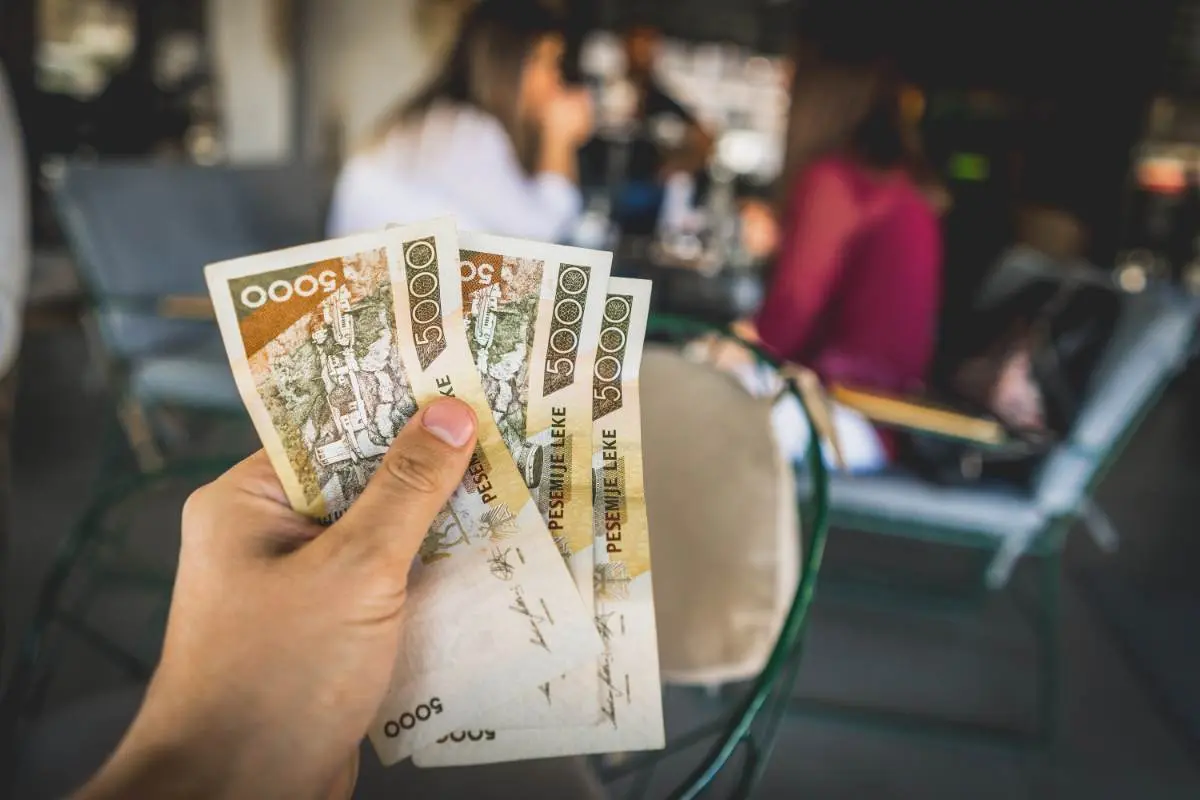
You handle daily transactions with a mix of card and cash, because card acceptance is now normal in cities and still patchy everywhere else. This has changed meaningfully in recent years. Contactless terminals are standard in hotels, supermarkets, malls, chain gas stations, car rental desks, and mid-range or upscale restaurants. Apple Pay and Google Pay both work in Albania now, so a phone tap goes through wherever a terminal exists.
Where cash still wins: beach kiosks, furgons and city buses, parking attendants, mountain guesthouses, village tavernas, markets, and bakeries. Running the country fully cashless works for a Tirana city break and fails fast on the Riviera, where a single day moves between a beach bar, a village stop, and a seasonal vendor.
The local currency is the Albanian Lek (ALL). Withdraw lek from an ATM soon after you arrive, ideally from a machine attached to a bank branch rather than a standalone kiosk. Two money traps to avoid:
- Dynamic currency conversion: When the ATM or card terminal asks whether to charge you in dollars or lek, always choose lek. Choosing dollars hands the exchange rate to the operator, and it is never in your favor.
- Flat ATM fees: Most Albanian ATMs charge a fixed fee per withdrawal regardless of amount. Take out larger sums less often rather than small amounts daily.
Here is the practical breakdown of what to expect:
| Venue or travel situation | Payment method | English spoken? |
|---|---|---|
| Tirana International Airport | Card or cash | Yes, high fluency |
| Hotels in Tirana, Sarandë, Vlorë | Card and contactless | Yes, standard |
| Supermarkets, malls, chain gas stations | Card and contactless | Usually |
| Furgons and city buses | Cash only (lek) | Rarely |
| Beach bars, village tavernas, mountain guesthouses | Cash only (lek) | Depends on the server’s age |
| Street vendors, markets, bakeries | Cash only (lek) | No, pointing required |
One quirk that confuses newcomers has nothing to do with English. Many Albanians still quote prices in “old lek,” adding a zero to the real figure. If a coffee is quoted at 2,000 when the menu says 200, you are hearing old lek, not being overcharged. Ask “Sa kushton?” and check the written price if a number seems wildly off.
Another cultural note removes a layer of verbal friction entirely: Albanian restaurants do not seat you. Walk in, find an empty table, and sit down. There is no need to interact with anyone until you are ready to order.
How do you navigate furgons without speaking Albanian?
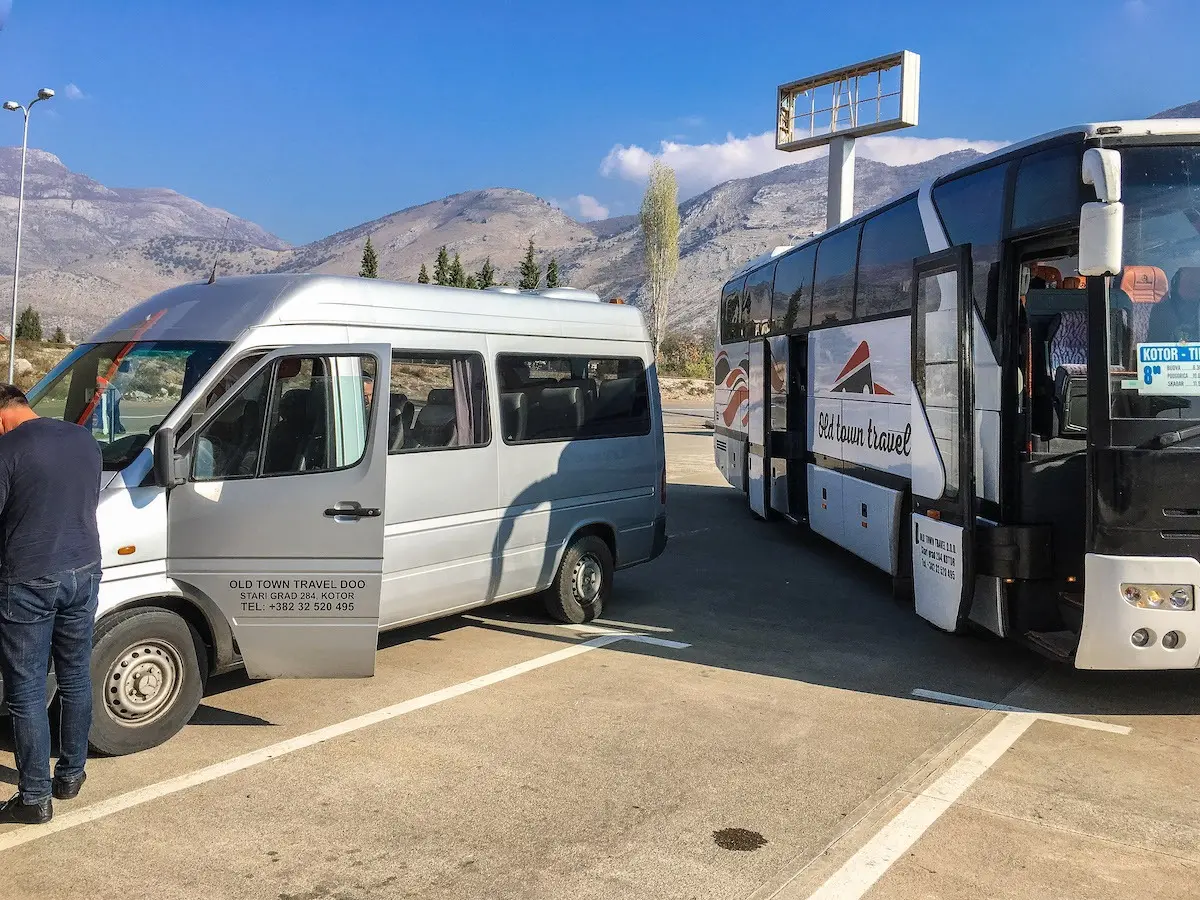
You navigate furgons by finding the destination sign in the window and paying the driver in cash on board. The furgon is the lifeblood of Albanian domestic transport, and it runs on completely different logic than anything you have used before.
These privately operated minibuses connect cities and towns without a national timetable. They leave when full, not at posted times. Albania retired most of its rail network and never replaced it, so almost everything moves on rubber tires.
What has changed is your ability to plan ahead. Gjirafa Travel now lists schedules and sells tickets online for the larger coach operators across Albania and the wider Balkans. Treat it as the official timetable and cash-on-the-bus as the reality on the ground, because independent furgon drivers on routes like Sarandë to Vlorë are still not listed anywhere.
Here is how to use them effectively:
- Find the right van: At major hubs like Tirana or Shkodër, you will see men standing outside white Mercedes vans shouting destination names. You might hear “Durrës! Durrës! Durrës!” over rattling diesel engines. Look for the hand-written cardboard sign propped in the windshield.
- Flag them down: On rural roads, stand at the roadside and raise your hand.
- Pay in cash: Hand lek to the driver or their assistant, usually mid-route or as you get off. Fares are standard and non-negotiable, so there is nothing to discuss. Carry small notes, because change is limited.
- Request your stop: Say “Ndal” (NDAHL, meaning “stop”) when you want to get off. That one word is entirely enough.
Pro Tip: The furgon system overlaps conceptually with the “marshrutka” shared minibuses used across Eastern Europe and the dolmuş in Turkey. If you have survived one, you will easily manage the other.
Why does a head nod mean “no” in Albania?
A head nod can mean “no” in Albania because older generations, especially in the south, use gestures inverted from Western norms. This is the single most disorienting communication gap for American travelers, and almost no travel article warns you about it.
The reversal follows a broader Balkan pattern shared with Bulgaria and parts of Greece. Two things to watch for:
- A small side-to-side sway of the head: This usually means “yes.” It is a subtle rocking motion paired with eye contact, not the emphatic shake an American would read as refusal.
- A short upward flick of the head: This means “no.” It often comes with raised eyebrows and a soft tongue click, and to a foreigner it can look like mild surprise or hesitation rather than a clear refusal.
Imagine asking a driver whether his furgon goes to Tirana. He sways his head, you read it as “no,” and you walk away from the right van.
The situation is complicated further by younger Albanians who have largely adopted international norms. The result is a mix of both gesture systems, often within the same family, and the reversal is far more common in the south than in the north.
Pro Tip: When in doubt after a head gesture, confirm with a verbal “Po?” (yes) or “Jo?” (no). Five seconds of clarification can save hours of backtracking.
What other languages are useful in Albania?
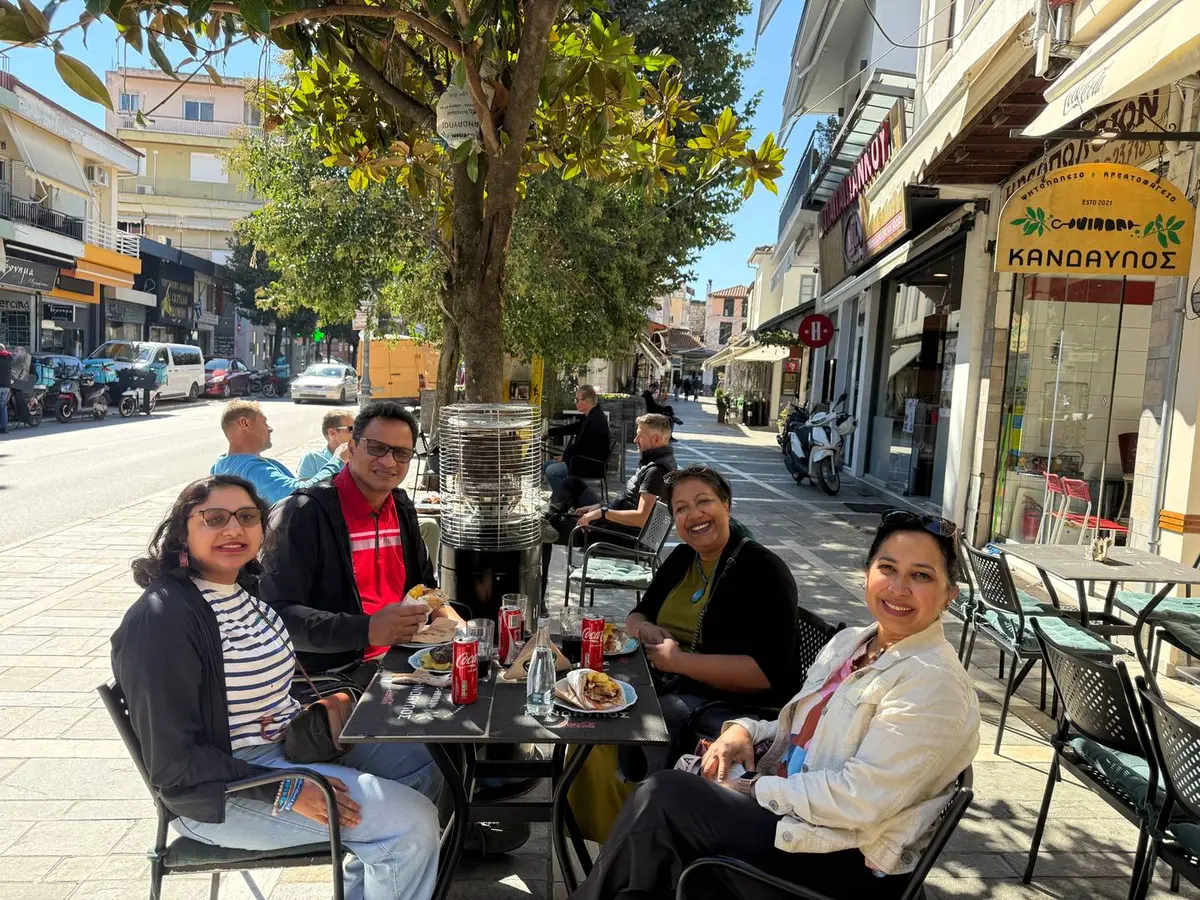
Italian and Greek will often get you further than English with anyone over 40, and Spanish shows up in surprising places. Albania is genuinely multilingual, and knowing which language to try where is a real advantage.
Italian is the dominant second language for older Albanians. During the communist period, households across the country angled their antennas across the Adriatic to pick up Italian broadcasts, and decades of that created near-fluent speakers through sheer exposure. The habit was reinforced afterward, when hundreds of thousands of Albanians emigrated to Italy for work and later returned. Try Italian first with anyone over 40, particularly in the center and south.
Greek is the language most travel guides forget. Southern Albania has a recognized Greek minority concentrated around Sarandë, Gjirokastër, and the Dropull villages, and enormous numbers of Albanians spent years working in Greece. If you speak any Greek at all, the far south is where it pays off.
Spanish has a different origin story. Latin American telenovelas broadcast widely from the early 2000s onward, and an entire younger cohort absorbed conversational Spanish from dubbed soap operas. This explains why a 25-year-old vendor in Sarandë might answer you in reasonable Spanish.
German is rising fast among people in their twenties, driven by work and study migration to Germany and Austria rather than by television.
Why do Albanian map spellings differ from road signs?
Map spellings differ from road signs because Albanian nouns have two forms, definite and indefinite, and place names follow the same rule. This is a grammar feature, not a GPS error and not a dialect problem, which is where most travel guides get it wrong.
Every Albanian place name exists in both forms. Road signs and Albanian-produced maps use the indefinite form, because an unspoken preposition meaning “to” or “in” governs the name. When Albanians write place names in English, they usually reach for the definite form instead.
That is why you will see these pairs constantly:
- Sarandë on the road sign, Saranda on your map app.
- Shkodër on the sign, Shkodra on the map.
- Tiranë on the sign, Tirana almost everywhere in English.
Separately, Albanian does split into two dialects along a rough line following the Shkumbin River. Tosk dominates the south and forms the basis of standard written Albanian. Gheg dominates the north and extends into Kosovo. That divide affects how words sound far more than how signs are spelled, so as a traveler you will notice the accent, not the orthography.
Albanian itself, known natively as Shqip, is a linguistic isolate within the Indo-European family. It has no close relatives among Romance, Slavic, or Germanic languages and sits alone on its own branch. Most linguists connect it to the ancient Illyrian languages of the Balkans, though that link is a leading hypothesis rather than settled fact.
Pro Tip: When navigating, search both spellings of any place name. “Shkodra” and “Shkodër” are the same city, and your offline map may use one while the road sign uses the other.
Which Albanian phrases should I learn?
Learn basic greetings, numbers, and dining phrases to instantly upgrade the hospitality you receive. Survival requires no Albanian. Thriving requires a little effort. Albanians are fiercely proud of Shqip, a language that endured centuries of Ottoman rule and repeated conquest largely intact, and attempting even a few words generates warmth that no amount of polished English can replicate.
The pronunciation rule worth knowing: stress usually falls on the second-to-last syllable, not the last. The letter ë is a soft “uh” sound that often nearly disappears at the end of a word, so mirë lands closer to “MEE-ruh” or even “meer.”
| Albanian | Phonetic guide | Meaning |
|---|---|---|
| Përshëndetje | pur-shun-DET-yeh | Hello (formal) |
| Mirëdita | meer-DEE-tah | Good day (everyday greeting) |
| Faleminderit | fah-leh-min-DEH-rit | Thank you |
| Ju lutem | yoo LOO-tem | Please |
| Po | Poh | Yes |
| Jo | Yoh | No |
| Sa kushton kjo? | sah koosh-TOHN kyoh | How much is this? |
| Gëzuar | guh-ZOO-ar | Cheers |
| Ndal | NDAHL | Stop (for the furgon) |
| Fatura, ju lutem | fah-TOO-rah yoo LOO-tem | The bill, please |
| Ndihmë! | NDEE-muh | Help! |
| Jam vegjetarian | yahm veh-gyeh-tah-ree-AHN | I am vegetarian |
| Ishte e shijshme | EESH-teh eh SHEEY-shmeh | It was delicious |
| Unë kam nevojë për një doktor | OO-nuh kahm neh-VOY-uh pur nyuh dok-TOR | I need a doctor |
Pro Tip: Use “Ishte e shijshme” when paying at a local restaurant. That phrase lands differently than any tip, and you will often walk out with a complimentary shot of homemade raki.
How do you order at restaurants without translation?
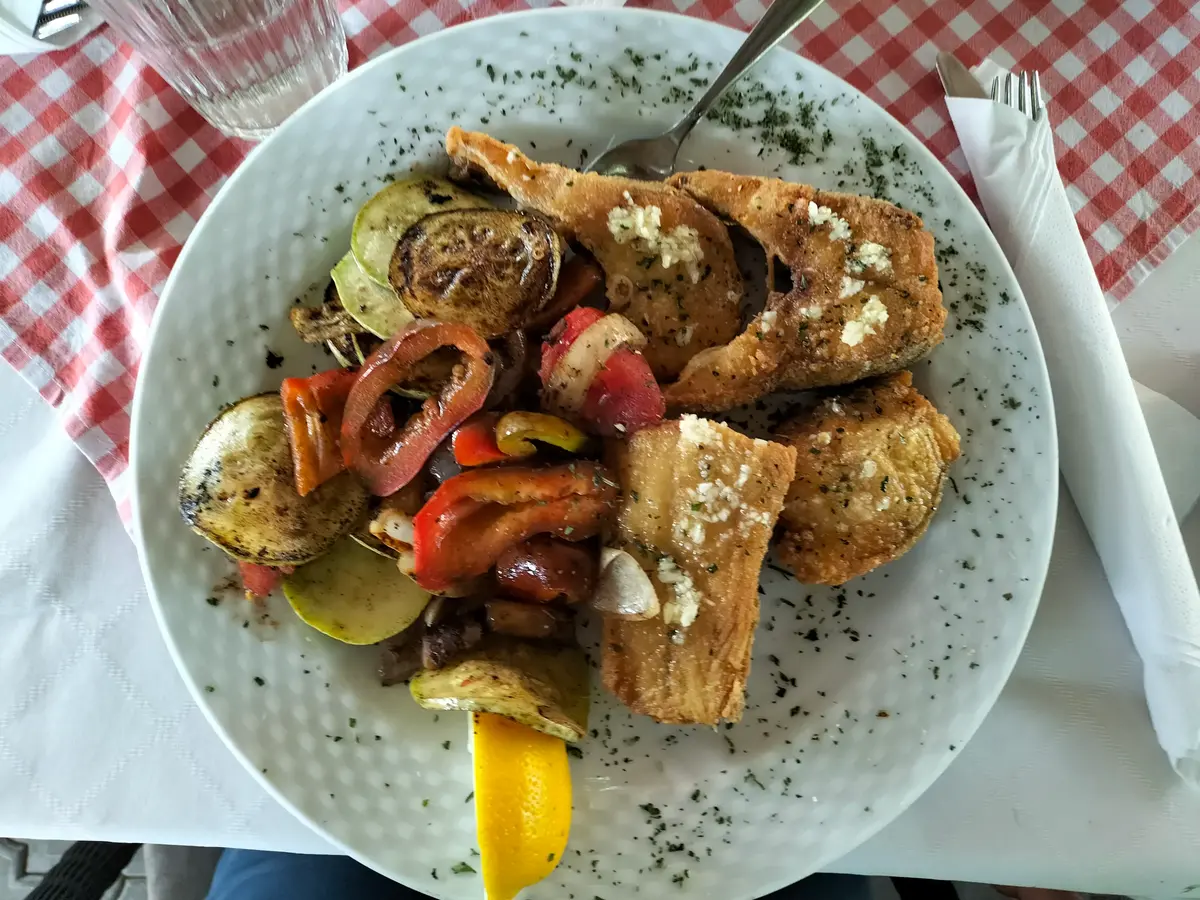
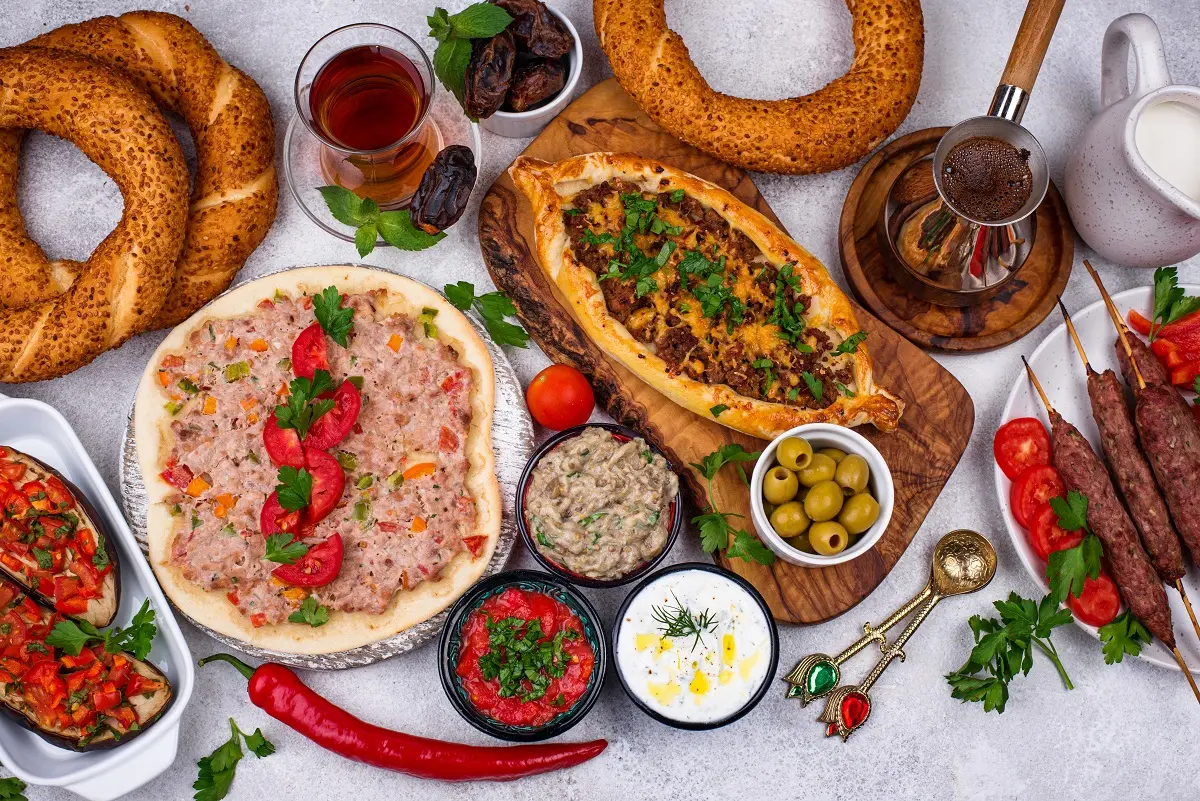
You order by pointing at dishes, learning a handful of food names, and speaking directly with the owner. Albanian food leans heavily on meat, dairy, and olive oil, with strong Greek, Turkish, and Italian influences. In rural areas, menus are handwritten in Albanian only, or they simply do not exist.
Often the server just describes what is available. The most important phrase for travelers with dietary restrictions is “Jam vegjetarian” (I am vegetarian). Say it early and clearly, because the traditional diet includes meat in almost every dish, and an apparently innocent vegetable side may have been cooked in lamb fat.
Key dishes worth knowing by name:
- Byrek: A flaky pastry filled with cheese, spinach, or meat. Available everywhere and cheap enough to be a rounding error.
- Tavë kosi: Baked lamb with yogurt, served proudly as the national dish.
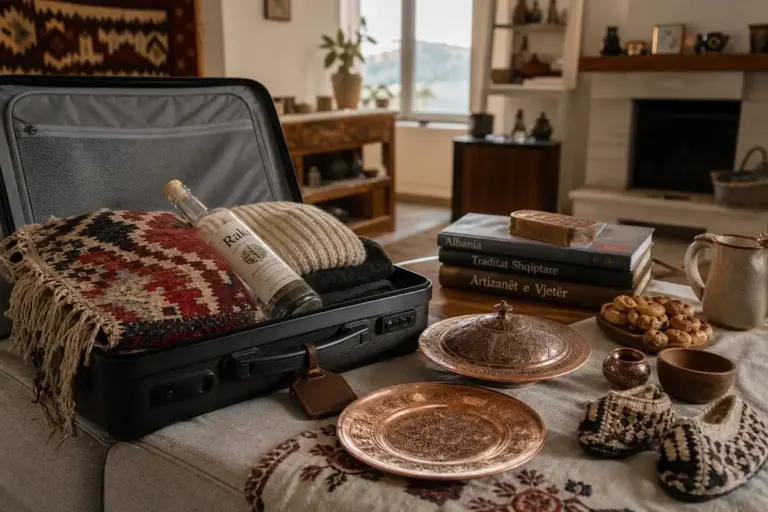
- Raki: A homemade grape or mulberry spirit. Refusing a host’s raki outright is a genuine cultural misstep, so accept a small pour even if you only sip it.
On paying: in local restaurants, you often settle up with the owner rather than a server. Catch their eye, mime signing a check, or say “Fatura, ju lutem.” Tipping is not obligatory, but rounding up or leaving five to ten percent is normal in tourist areas, and cash tips are preferred even when you pay the bill by card.
Pro Tip: At street bakeries, point at what you want and hold up fingers for quantity. The vendor will tap the price into a calculator and show you the screen, requiring absolutely no Albanian.
What are the best digital tools for safety and communication?
The best tools are an offline translation pack, an offline map built on OpenStreetMap, and a local eSIM. Albania is one of the safer countries in Europe for tourists, and the U.S. State Department places it at Level 2, Exercise Increased Caution, the same tier as France, Germany, and the United Kingdom. Violent crime against foreigners is rare and petty theft is uncommon compared with major Western European cities.
Emergencies still happen, though, whether that is a breakdown on a mountain pass, an injury on an alpine trail, or getting lost with no signal.
Essential emergency numbers:
- General emergency: 112. This is the unified number, it works nationwide, and operators route you to the right service. Use it first if you are unsure.
- Ambulance: 127
- Fire: 128
- Police: 129
- Traffic police: 126
American travelers should also save the U.S. Embassy in Tirana, at Rr. Elbasanit No. 103: +355 4 2247 285, or [email protected]. Enrolling in the State Department’s Smart Traveler Enrollment Program before you leave makes it far easier for the embassy to reach or locate you.
On the tech side, three things to set up before you leave a signal:
- Download the Albanian pack in Google Translate. Important limitation: offline mode handles typed text only. Camera translation of menus and signs, and live conversation mode, both need a connection. Screenshot or photograph anything you will need to translate later.
- Use Organic Maps or OsmAnd for offline navigation. Older guides still recommend Maps.me, but that app was sold, taken closed-source, and moved behind a subscription that caps free downloads. Organic Maps is the free, open-source fork built by the original developers, and it uses the same OpenStreetMap data with no download limit. Both handle Albanian spellings and rural trails better than Google Maps offline mode, which only supports driving directions.
- Get a local eSIM or SIM. Data is cheap on Vodafone Albania and One Albania, and far cheaper than most U.S. roaming plans. Coverage is solid nationally and genuinely patchy in the valleys around Theth and the Valbona Valley.
Two phrases worth writing on paper as a physical backup, for the moment your battery dies:
- “Ndihmë!” — Help!
- “Unë kam nevojë për një doktor” — I need a doctor
Pro Tip: Download the full Albania map in Organic Maps over hotel Wi-Fi before heading north, and drop pins on your guesthouse and trailhead. In the Alps you will lose signal long before you lose the trail.
Frequently asked questions about English in Albania
Can you travel Albania without speaking any Albanian?
Yes. Tirana, the Riviera, Berat, and Gjirokastër are all navigable in English alone. The mountain north and small inland towns require gestures, a translation app, and patience, but no traveler needs Albanian to have a good trip.
Is English or Italian more useful in Albania?
It depends on who you are talking to. English is far more useful with anyone under 35 and with hospitality staff anywhere. Italian is more useful with people over 40, especially outside the capital, and Greek is more useful again in the far south.
Do taxi and furgon drivers in Albania speak English?
Often not. Show the driver your destination written down or dropped as a pin on your phone. Agree a taxi fare before setting off, or use a ride-hailing app in Tirana where the price is fixed in advance.
Do I need cash in Albania if I have a credit card?
Yes, you need both. Cards and contactless payments work in hotels, supermarkets, and mid-range restaurants in cities and along the coast. Furgons, beach bars, markets, parking, and mountain guesthouses are cash-only in lek.
Do Americans need a visa for Albania?
No. U.S. passport holders can enter Albania visa-free and stay up to one year under a bilateral agreement, which is unusually generous by European standards. Albania is not in the Schengen Area, so time spent there does not count against the Schengen 90-day limit. Confirm current requirements on the State Department country page before you book.
The bottom line on English in Albania
Albania’s language landscape is manageable for any American traveler willing to do a little preparation. The Riviera and Tirana are practically English-friendly. The mountains and rural north ask for patience, a pocket full of lek, and a willingness to communicate through gestures and a phone screen.
You will get by on laughs and the universal language of accepting a small coffee pressed into your hand by a stranger. The country rewards curiosity far more than fluency. So does the reality of speaking English in Albania change where you are planning to go?