Albania rewards preparation and punishes improvisation. There is no state-funded mountain rescue service, hospitals expect cash at the point of care, and the mountain roads will find every weakness in a rental agreement. Travel insurance for Albania is where all three realities collide, and it is where most US policies quietly fall short. Here is exactly what to verify before you land.
The short version:
- US tourists are not asked for proof of insurance at the Albanian border. That is the only easy part.
- Hospitals and clinics expect payment at the time of service. Your policy reimburses you afterwards.
- There is no dedicated civilian mountain rescue service, and search and rescue is excluded from most travel policies.
- Basic rental CDW leaves an excess of roughly €800 to €1,200 and excludes tires, glass and undercarriage.
- Target at least $100,000 in emergency medical cover and $250,000 in evacuation cover.
Do you really need travel insurance for Albania?
US citizens visiting for tourism are not legally required to show proof of travel insurance for Albania at the border. Americans actually get unusually generous entry terms: under a bilateral agreement, US passport holders can stay visa-free for up to one year, far longer than the 90-days-in-180 window most nationalities receive.
That is where the good news ends. No entry requirement does not mean no exposure, and the exposure is not personal security: Albania is a safe country for tourists by most measures. The risk here is financial and logistical.
Pro Tip: If you are applying for an Albanian residence permit, or entering on an e-visa, you will be asked for a policy with a minimum of €30,000 (roughly $35,000) in medical cover for the full length of stay, explicitly including hospitalization and repatriation. Many issuers also require a zero-deductible policy, so read the certificate wording before you pay.
The Schengen trap on multi-country Balkan itineraries
Most Americans do not visit Albania alone. They tack on Greece, Montenegro, Kosovo or North Macedonia, and this is where a common piece of internet advice gets it wrong.
Albania is not in the Schengen Area and not in the European Union, though it is a candidate country with accession negotiations underway. Among its neighbors, only Greece is in Schengen. Montenegro, Kosovo and North Macedonia are not.
So if your route dips into Greece, including a day trip or an arrival on the Corfu to Saranda ferry, that leg must satisfy the mandatory €30,000 Schengen medical threshold, including repatriation of remains. The Albanian leg does not, but the policy has to cover both regardless, and it has to name every country you will physically enter.
Two border-system changes matter here as well. The EU’s Entry/Exit System is now live at Schengen external borders, replacing passport stamps with fingerprint and facial capture on entry and exit. ETIAS, a paid online travel authorization for visa-exempt travelers, is being phased in on top of it. Neither applies to Albania itself, but both apply the moment you cross into Greece. Check the current status of both before you book, because the rollout has a transition period.
The reality of Albanian healthcare infrastructure
Albania’s public system still carries the structural legacy of the Soviet-era Semashko model: state ownership, centralized funding, and heavy reliance on payments made at the point of care. Out-of-pocket spending accounts for roughly 60% of current health expenditure, one of the highest shares in Europe, and only around six in ten residents are enrolled in the statutory health insurance scheme.
The consequences show up in outcomes. Infant mortality sits at roughly seven to eight deaths per 1,000 live births, close to double the EU average. Rural districts in the northeast have the thinnest coverage in the country.
Outside Tirana, most facilities are not equipped for major trauma. For anything complex, Albanian patients and expats alike are referred abroad, usually to Italy (Bari, Brindisi) or Greece (Corfu, Thessaloniki, Athens), which are far closer than Western Europe and considerably cheaper to reach by air ambulance.
Public hospitals vs. private clinics in Tirana
The moment you leave the capital, access to Western-standard care drops sharply. For serious emergencies, a short list of facilities does the heavy lifting.
- American Hospital: Albania’s first private hospital, with branches in Tirana plus Durrës and Fier. English-speaking staff, and the strongest cardiac and oncology programs in the country.
- Hygeia Hospital Tirana: Part of a Greek hospital group. Well regarded for diagnostics, surgery and specialist consultations.
- Salus Hospital: Private general hospital in Tirana, known for its emergency department and intensive care.
- QSUT “Mother Teresa” University Hospital Center: The main public tertiary referral complex. It is where serious public-system cases end up.
The private facilities sit entirely outside the state insurance fund. Access requires cash upfront or a recognized international policy with a direct-billing arrangement.
Pro Tip: If an accident happens, state your destination facility out loud to responders rather than leaving it to chance: American Hospital Tirana or Hygeia. Save both addresses offline before you travel, in Albanian, so you can show a screen instead of explaining.
One frequent misconception is worth correcting. Albania has become a genuine dental tourism destination, and standards at the better Tirana clinics are high. What has not changed is that travel insurance almost never pays for elective dental work. Most policies cover only emergency treatment for the immediate relief of acute pain, typically capped somewhere around $500 to $1,000. Anything planned is out of pocket.
Upfront payments and cash realities in emergency rooms
Here is what the sales page will not tell you. The US Embassy in Tirana states plainly that doctors and hospitals in Albania expect payment in cash at the time of service, and that regular US health insurance frequently does not travel. Medicare does not apply overseas at all.
In practice, your travel insurance for Albania functions as a reimbursement product unless the insurer can arrange a guarantee of payment with the facility. That is why the first call matters as much as the coverage limit.
Carry a dedicated emergency reserve of roughly $300 to $500 in cash and treat it as untouchable. A few points on Albanian currency and ATM withdrawals that will save you money:
- The lek (ALL) is the legal currency, and the working rule of thumb is about 100 lek to one euro. Euros are accepted in some tourist businesses at rates set by the business.
- Always pay and withdraw in lek. If a card terminal or ATM offers to charge you in dollars, decline it. Dynamic currency conversion is consistently the worst rate on offer.
- Use ATMs attached to bank branches. Standalone machines commonly add a flat fee of 500 to 800 lek, and daily limits sit around 50,000 lek.
- Cash out before heading into the Alps or remote Riviera villages. Rural ATMs are sparse and run dry in peak season.
Managing prescription medications and pharmacy shortages
Specific brand-name medications common in US pharmacies are often unavailable outside major cities, and supply of basic items can be inconsistent. Medication belongs near the top of any sensible Albania packing list, and you should pack more than you think you need. A two-week trip warrants roughly a 30-day supply as a minimum buffer.
Carry everything in original labeled containers with a copy of the prescription, and write down the generic (international nonproprietary) name of each drug, because brand names differ across markets. If you take a controlled substance, confirm the import rules with the Albanian embassy before you fly.
Then check one specific policy benefit: emergency prescription replacement, including courier delivery. It becomes the difference between an inconvenience and an evacuation when a chronic medication runs out five hours from Tirana.
Securing adventure coverage for the Albanian Alps
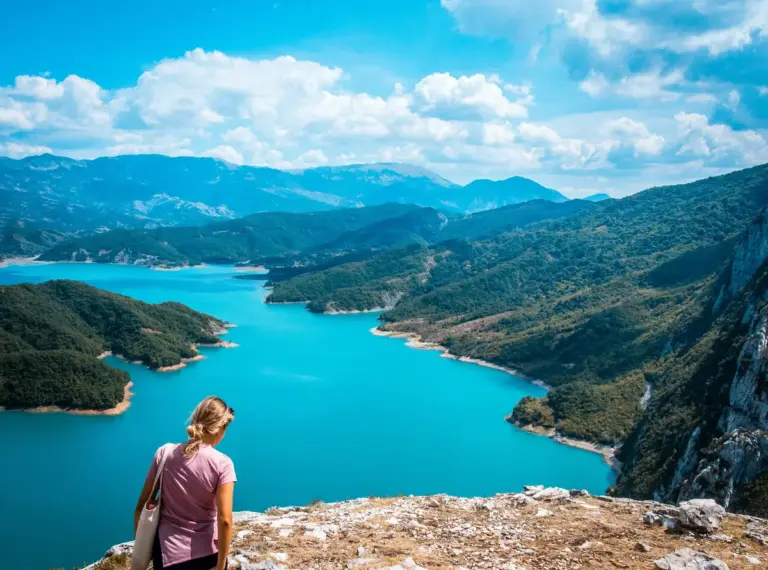
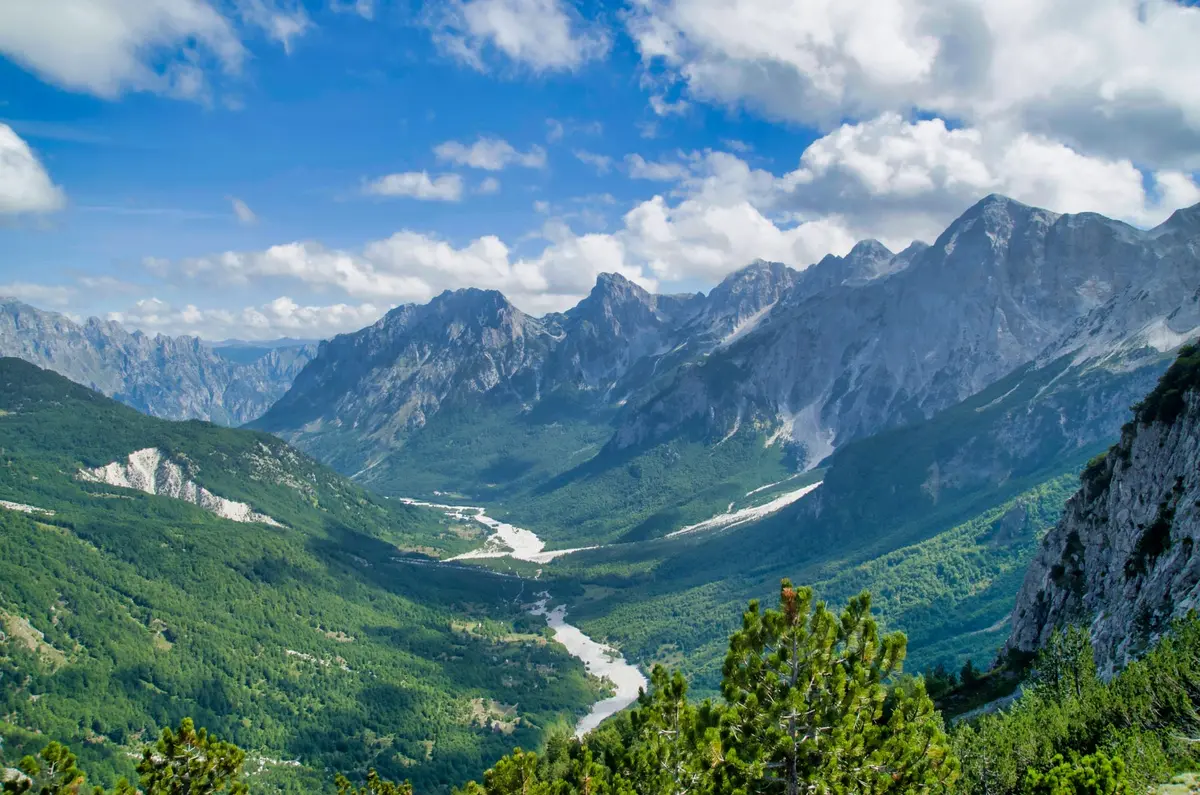
The Accursed Mountains, known locally as Bjeshkët e Namuna, are the crown jewel of Balkan adventure tourism and the single biggest blind spot in travel insurance for Albania.
The range is now protected inside the Alps of Albania National Park, created by merging the former Theth and Valbona Valley national parks with the Gashi River reserve. At roughly 82,844 hectares (about 205,000 acres), it is the largest national park in the country. That scale is the point: it is a lot of terrain with very little infrastructure inside it.
Altitude limits on the Theth to Valbona trek
The classic Theth to Valbona crossing runs 9 to 11 miles (14 to 17 km) guesthouse to guesthouse, depending on which trailhead you start from, and takes most hikers 6 to 9 hours. It climbs about 3,300 feet (1,000 m) and tops out at Valbona Pass, 5,889 feet (1,795 m). More ambitious walkers add Maja Jezercë, at 8,839 feet (2,694 m) the highest peak lying entirely within the Dinaric Alps.
The altitude question is more subtle than most guides suggest. Very few policies void at the pass itself. What they do is gate trekking behind an activity tier that typically kicks in around 2,000 m (6,562 ft), and that tier has to be selected when you buy. You cannot add it mid-trip.
Valbona Pass sneaks under that line. Maja Jezercë does not. Neither does much of the wider Peaks of the Balkans network, which runs between roughly 700 m and 2,500 m.
So the instruction is not “find a policy with a high ceiling.” It is: open the activity schedule in the policy wording, find hiking and trekking, and confirm which plan level and altitude band covers your actual route. Marketing pages summarize. Only the certificate pays.
The hidden cost of mountain rescue and helicopter evacuation
Albania has no dedicated, funded civilian mountain rescue service. The Armed Forces have flown rescues in the Jezercë area, and NATO’s KFOR has assisted with medevac from the mountains, but that assistance is discretionary rather than guaranteed. In one recent recovery on the Albanian side of the range, volunteer rescuers from Kosovo reached the casualty first and the operation took 26 hours because no state helicopter was made available.
This is the single most important structural fact about adventure travel insurance for Albania, and it leads to a conclusion most travelers get wrong: you need two products, not one.
- Travel insurance pays the hospital bill once you reach a hospital.
- A field-rescue membership pays for the physical act of getting you off the mountain.
The gap between them is where claims die. World Nomads, the brand most commonly recommended for trekkers, explicitly excludes search and rescue in its policy wording, and its evacuation benefit generally starts only once you have been located and a physician has authorized transport. Its US plans cap hiking at 6,000 m on the Standard plan and 6,500 m on Explorer, so altitude is rarely the problem in Albania. The SAR exclusion is.
The numbers on the other side are not small. A short cross-border air transfer to Italy or Greece typically runs into five figures. A transatlantic air ambulance home costs roughly $90,000 to $220,000, and the US State Department puts international medical evacuation back to the United States somewhere between $20,000 and $200,000 depending on distance and clinical needs.
Pro Tip: Global Rescue memberships start around $139 and include field rescue from the point of illness or injury, with no activity restrictions and no mileage tier once you are more than 100 miles from home. It is a membership, not insurance, so it complements a medical policy rather than replacing one. Pair it with a satellite messenger: coverage in the valleys is patchy even on a local SIM or eSIM, and a rescue service cannot deploy to a location nobody can transmit.
Border permits on the Peaks of the Balkans
If you are hiking the full circuit rather than the single Theth to Valbona stage, you will cross into Kosovo and Montenegro on unstaffed mountain passes. That requires cross-border permits, applied for roughly two weeks in advance.
Albania and Kosovo issue theirs free. Montenegro charges a small administrative fee plus a per-person charge for each crossing. Local agencies will handle all three for somewhere around €25 to €35 and it is worth the money.
The insurance implication is easy to miss: a rescue on the Montenegrin or Kosovar side is a different jurisdiction and a different insurer conversation. Confirm in writing that your policy names Albania, Kosovo and Montenegro. Some insurers list Kosovo separately or exclude it outright.
Navigating Albanian roads and car rental insurance loopholes
The road network is sharply polarized, and the realities of driving in Albania change completely with the route. Coastal highways and the main corridors have improved dramatically, while secondary mountain roads remain demanding. National statistics consistently attribute more than nine in ten recorded crashes to driver behavior, and road deaths per capita run at roughly double the EU average.
Two routes deserve specific mention, and the received wisdom about both is out of date.
Llogara Pass carries the SH8 over the mountains between Vlora and the Albanian Riviera at Palasë and Dhërmi, topping out around 1,027 m (3,369 ft) with tight switchbacks, missing barriers and the occasional goat standing mid-corner. It is no longer the only way through: a 5.9 km tunnel now bypasses the pass entirely for a modest car toll, cutting close to 45 minutes off the drive. Take the pass for the view, take the tunnel in bad weather or after dark.
Shkodër to Theth is no longer the vehicle-destroying gravel track it was for decades. The SH21 has been fully paved for several years now: 76 km, about 2.5 hours. What makes it demanding is the descent from Qafa e Thores, roughly 27 hairpins at gradients of 15 to 18 percent. Use engine braking, go early to avoid oncoming traffic on blind bends, and fill up in Koplik because there is no fuel in Theth.
The road that will actually void your insurance is a different one: the unpaved jeep track between Theth and Valbona. Most rental agreements prohibit it explicitly, and driving it hands the agency a clean reason to deny any claim.
The collision damage waiver excess trap
Third-party liability is mandatory and built into every rental. A basic Collision Damage Waiver is usually bundled on top of it when you rent a car in Albania, including at the counters inside Tirana International Airport. Neither one does what travelers assume.
Basic CDW leaves you carrying an excess of roughly €800 to €1,200, with a deposit of €250 to €1,500 blocked on your credit card. More importantly, the fine print excludes damage to tires, wheels, glass, mirrors, the roof and the undercarriage. On potholed mountain roads and narrow alpine passes, a shredded tire or a clipped mirror is not a worst-case scenario. It is a Tuesday.
| Insurance Tier | Typical Cost | What It Covers | Critical Gaps |
| Basic CDW | Usually bundled | Bodywork damage above the excess | €800–€1,200 excess; no tires, glass, mirrors, roof or undercarriage |
| Credit card cover | No extra charge | Damage up to the card’s stated limit | Deposit still blocked; you pay first and claim later; several issuers exclude Albania |
| Third-party excess policy | Annual, low cost | Reimburses the excess on any rental | Reimbursement only; agency still charges your card at the desk |
| Super CDW | ~€10–€40 per day | Reduces or eliminates the excess | Often still excludes undercarriage and blowouts — get it in writing |
For a two-week mountain and Riviera road trip, Super CDW purchased at the counter is usually the rational choice despite the cost. Whichever tier you pick, one procedural step decides whether any of it pays out.
Pro Tip: After any incident, call 112 or 129 and obtain a written police report before the car moves. Without that report, most Albanian agencies will deny the claim outright and charge the full repair cost to your card, regardless of which waiver you bought.
Crossing borders with a rental car
Driving your Albanian rental across the Montenegrin border, or into Kosovo, North Macedonia or Greece, requires a Green Card, the international motor insurance certificate, arranged through the rental agency for around €40, plus a cross-border fee that commonly runs €20 to €50. Notify the agency when you book, because some prohibit border crossings entirely and one-way international drop-offs are rarely permitted.
On documents: an International Driving Permit is formally required only if your license is not in the Latin alphabet, so a US license is technically sufficient. AAA issues an IDP for about $20, and given that agencies and roadside officers sometimes ask for one anyway, it is cheap insurance in the literal sense.
Evaluating the best travel insurance for Albania itineraries
The right policy depends entirely on where you are actually going. If the route is still open, a standard one-week Albania itinerary shows how most first-timers combine the coast, the Ottoman towns and the Alps, and each of those combinations insures differently. Three profiles cover most US travelers.
- Cities and coast (Tirana, Berat, Gjirokastër, the Riviera): Trawick International’s Safe Travels Protect sits at the budget end with roughly $25,000 in primary emergency medical cover and around $200,000 for evacuation. That evacuation limit is the number that matters here; $25,000 in medical is thin if anything goes seriously wrong, so treat this as a floor rather than a target.
- Alps and Peaks of the Balkans: A comprehensive policy with the trekking activity tier selected at purchase, paired with a Global Rescue membership for field extraction. This is the combination that closes the search-and-rescue gap. Do not expect one product to do both jobs.
- Long stays, digital nomads and slow travel: SafetyWing’s Nomad Insurance runs on a rolling four-week Essential plan or a 12-month Complete plan, and its Adventure Sports add-on extends cover to 6,000 m with a $100,000 lifetime cap. Cigna Global suits anyone who wants a full international health plan rather than trip insurance. Check US-resident eligibility on each add-on, since some are restricted, and read up on the practical side of basing yourself in Albania long term before you commit to a plan length.
Whichever you choose, run this checklist against the actual policy wording before you pay:
- Every country on your route is named, including Kosovo and Montenegro if relevant.
- Hiking, trekking and any adventure activity appear in the covered-activity schedule at the correct altitude band and plan level.
- The search-and-rescue clause is read in full, not skimmed.
- Emergency medical is at least $100,000 and evacuation at least $250,000.
- The insurer can attempt direct billing or issue a guarantee of payment.
- The pre-existing condition waiver window has not already closed.
- Rental vehicle excess is either covered or separately insured.
- The 24/7 assistance number, policy number and certificate PDF are saved offline on your phone.
Insurers revise altitude bands, activity lists and SAR terms without announcement, and coverage differs by country of residence even under the same brand name. The certificate or policy wording you receive at purchase is the only document that pays a claim. Read it once, in full, before departure.
Step-by-step protocol for managing an emergency in Albania
Save this section offline now. In a real crisis you will not have the signal or the composure to search for it.
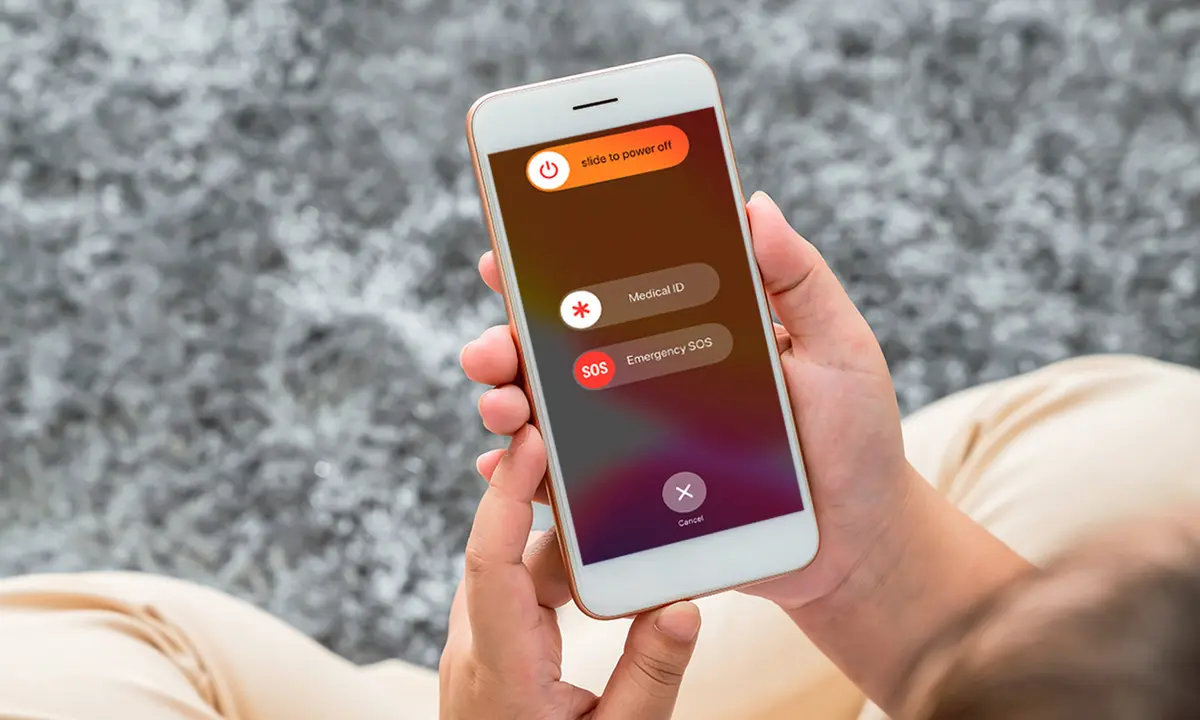
- 112: Unified emergency dispatch, and the number to use if you are unsure
- 127: Medical and ambulance
- 128: Fire and rescue
- 129: State police
- 126: Traffic police, for road collisions
- 125: Maritime emergencies
Ambulance dispatch is unreliable outside major cities, and operators may have limited English beyond Tirana and the main tourist zones, so it is worth knowing in advance how widely English is spoken in Albania. Do not wait for confirmation from one channel before opening the next.
The parallel protocol:
- Call 112 immediately to get onto the official record, and if you are with a guide or guesthouse host, have them speak Albanian on your behalf.
- Call your insurer’s 24/7 line at the same time. Ask two specific questions: can they issue a guarantee of payment to the facility, and can they coordinate transport.
- Name your destination facility. State clearly that you need American Hospital Tirana or Hygeia, and repeat it until it is acknowledged.
- Pay upfront for triage from your cash reserve while the insurer works the logistics behind the scenes. Do not let a payment dispute delay treatment.
- Document everything. Photograph every receipt, invoice and discharge note, write down names and times, and keep the police report if a vehicle was involved.
The calls to local dispatch and to your insurer must happen simultaneously. Waiting for one system to work perfectly before starting the other is the mistake that turns a bad afternoon into a catastrophic one.
Frequently asked questions
Is travel insurance mandatory for Albania?
Not for US tourists arriving visa-free. Proof of a policy with at least €30,000 in medical cover is required for Albanian e-visa applicants and for residence permit applications, and the same €30,000 minimum applies to any Schengen country on your itinerary, such as Greece.
How much medical coverage do I need for Albania?
Aim for a minimum of $100,000 in emergency medical cover and $250,000 in emergency evacuation. The evacuation limit is the one that gets tested, because serious cases are routinely transferred to Italy or Greece, and repatriation to the United States by air ambulance can run into six figures.
Does travel insurance cover the Theth to Valbona hike?
Usually yes, provided you selected the hiking or trekking activity tier when you bought the policy. Valbona Pass at 5,889 feet (1,795 m) sits below the altitude threshold on most plans. What is generally not covered is search and rescue, which is a separate product.
Will my US health insurance work in Albania?
Rarely, and Medicare does not apply overseas at all. Albanian providers expect payment at the time of service and will not bill a US insurer. Assume you are paying first and claiming later unless your travel insurer arranges a guarantee of payment.
Does travel insurance cover rental car damage in Albania?
Standard travel policies do not cover the rental excess. You need either Super CDW at the counter, a dedicated rental excess policy, or a credit card benefit that explicitly includes Albania. In all cases, a written police report is required for any collision claim.
Do I need extra cover for Greece, Montenegro or Kosovo?
You need a policy that names each country you enter. Only Greece is in the Schengen Area among Albania’s neighbors, so only that leg triggers the Schengen insurance minimum, but a claim in Montenegro or Kosovo will be declined outright if those countries are not listed on your certificate.
Pack your bags, but pack your policy first
Albania rewards the adventurous and punishes the underinsured in roughly equal measure. The healthcare gaps are real, the mountains are genuinely remote, and the driving demands respect even on the newly paved roads.
The right travel insurance for Albania costs a fraction of one privately chartered helicopter out of the Accursed Mountains. Make sure your plan lists the right activities, funds evacuation properly, closes the search-and-rescue gap with a separate membership if you are heading north, and pairs with zero-excess cover on the rental car.
Once the policy is sorted, the rest of the planning sits in our complete Albania travel guide. What does your itinerary look like? Whether you are heading for the Riviera beaches, the Ottoman quarters of Berat and Gjirokastër, or deep into the Alps, drop your plans in the comments and we will help you dial in the right coverage.