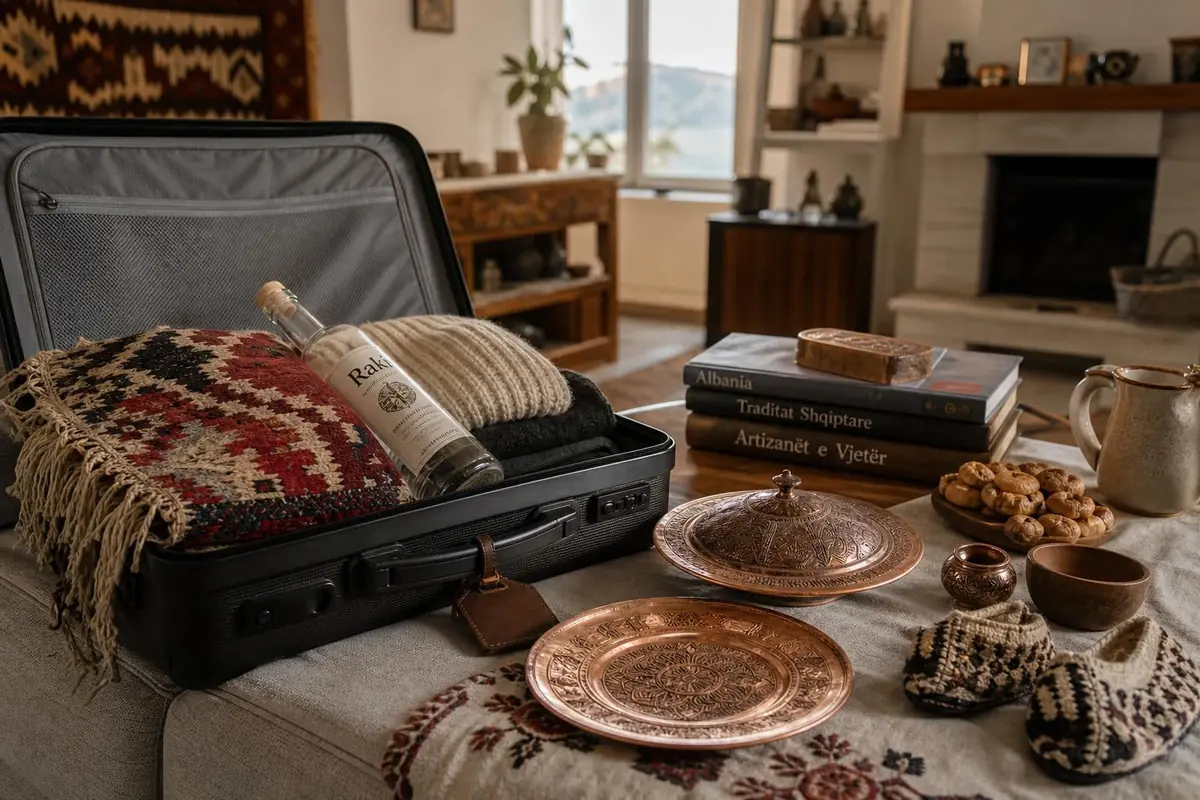
The best Albania souvenirs are silver filigree from Shkodra, handwoven qilim rugs, hammered copper coffee pots, felted wool qeleshe caps, bottled raki, wild mountain tea, and mountain honey. Most of them cost between $5 and $60, and in a lot of shops you can still buy them directly from the person who made them.
I’ve run that circuit more times than my suitcase appreciates: the cobblestone strip of the Kruja bazaar, the filigree benches in Shkodra, the winery cellars outside Berat, and the food stalls at Tirana’s Pazari i Ri on a Saturday morning. What follows is what I actually buy, what I skip, what things cost in lek and dollars, and the customs rules that decide whether your haul makes it through the airport at home.
Albania draws more than 12 million foreign visitors a year now, according to INSTAT, the national statistics agency, and American arrivals are climbing fast. Prices have crept up in the tourist corridors, and what a trip to Albania costs is no longer what it was five years ago, but the country still has something most of Europe has lost: working craft towns where the workshop is behind the counter, not in another country.
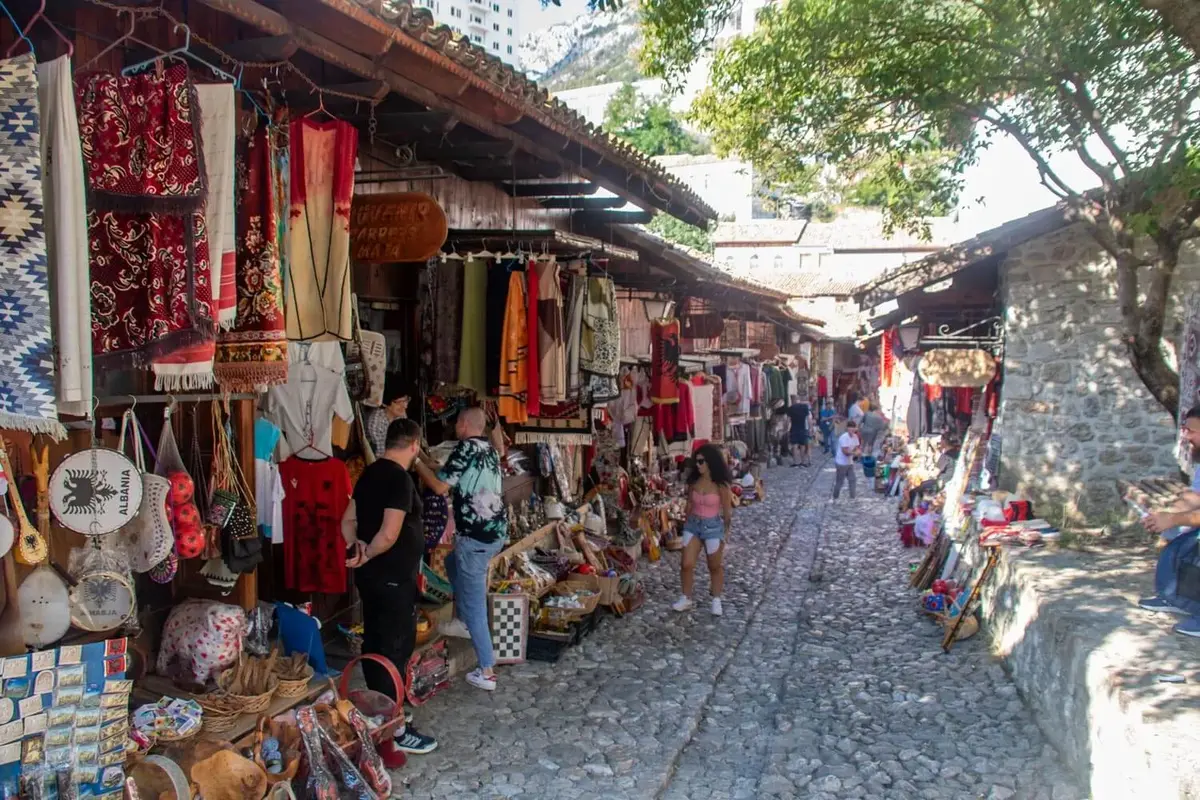
Albania Souvenirs at a Glance
Prices below are approximate and shift with the shop and the season, since the bazaars are busiest and priciest during the best months to visit Albania. Figures assume roughly 83 lek to the dollar, which is about where the exchange rate has sat recently; check a converter before you travel.
| Souvenir | Typical price | Best place to buy | Easy through US customs? |
|---|---|---|---|
| Silver filigree jewelry | 2,500–17,000 lek ($30–200) | Shkodra workshops | Yes |
| Qilim rug or runner | $50–1,000+ | Kruja, Korça, Kukës | Yes |
| Copper coffee pot (xhezve) | 800–1,500 lek ($10–18) | Kruja, Tirana | Yes |
| Qeleshe wool cap | 500–6,000 lek ($6–72) | Kruja, Gjirokastra | Yes |
| Bottled raki | 800–2,500 lek ($10–30) | Supermarkets, distilleries | 1 liter duty-free |
| Albanian wine | 1,800–3,500 lek ($22–42) | Berat-area wineries | Counts toward alcohol limit |
| Mountain tea (çaj mali) | 200–500 lek ($2.50–6) | Any bazaar, supermarket | Yes, declare it |
| Mountain honey | 700–1,500 lek ($8–18) | Bazaars, supermarkets | Yes, sealed jars only |
| Olive oil (750 ml) | 800–2,000 lek ($10–24) | Supermarkets, Vlora area | Yes, checked bag only |
| Icon reproduction | $30–100 | Berat | Yes, if clearly modern |
Traditional Albanian Crafts Worth Packing
Shkodra Silver Filigree
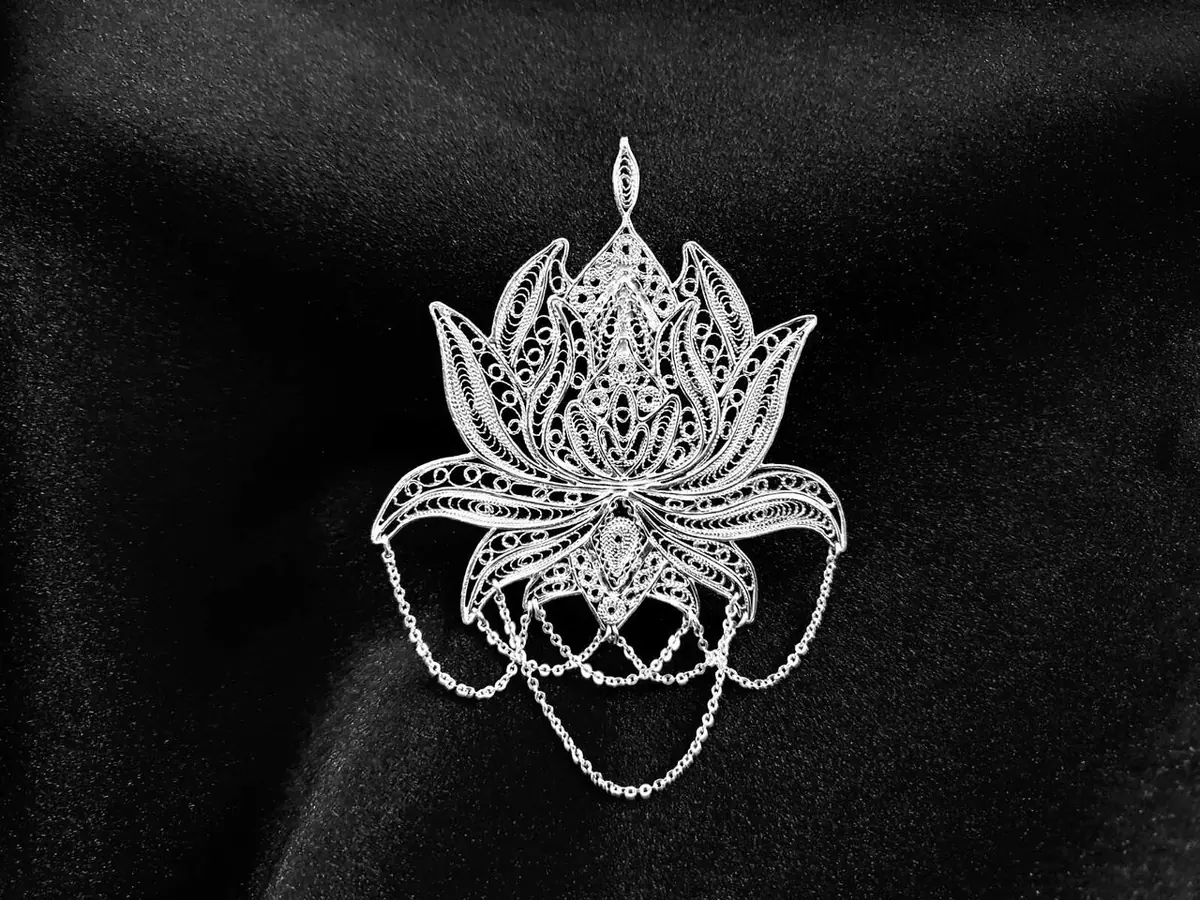
Filigree is the signature Albanian craft, and Shkodra is its capital. Silversmiths twist hair-thin wire into spirals and lace it into pendants, earrings, brooches, and the double-headed eagle you’ll see on every flag in the country. A small pendant runs about $30 to $60; larger statement pieces climb toward $200.
Buy it at a bench, not a stall. Workshops such as Margjelo Filigran in Shkodra will show you the wire and the tools, and the price difference against tourist-strip jewelry is smaller than you’d expect. Ask whether the piece is sterling; reputable shops will tell you straight and often stamp it.
Qilim Rugs and Wool Textiles
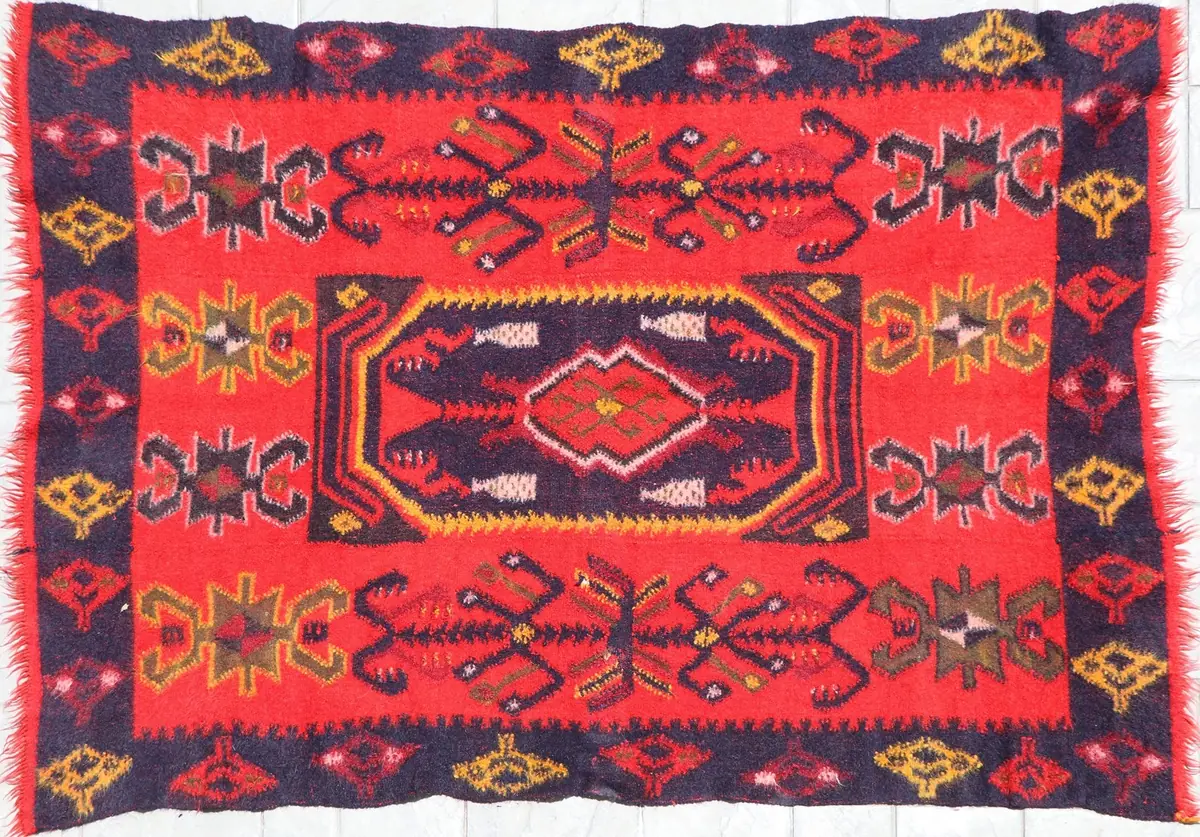
The qilim (kilim) is a flatweave rug in geometric reds, blacks, and creams, traditionally woven in the north around Kukës and sold heavily in Kruja. Small runners and pillow covers start around $50. Hand-knotted pieces with fine wool and natural dyes go from a few hundred dollars into four figures, and they’re worth the negotiation.
Two quick tests: flip the rug over, because a handwoven piece has a back that mirrors the front with slight irregularities, and rub the pile with a damp cloth to check that the dye doesn’t lift. Machine-made imports have a printed-looking reverse and perfectly uniform knots.
Hand-Hammered Copper
Albanian coppersmiths still work by hand, and the xhezve, the long-handled pot used for Albanian coffee, is the single most useful thing you can bring home. It costs $10 to $18, packs flat, and gets used. Larger engraved serving trays run 3,000 to 10,000 lek ($36 to $120).
Look for hammer marks. A genuine piece has visible dimpling and slightly uneven walls; the machine-spun versions are glassy smooth. Confirm the interior is tinned if you plan to cook in it.
The Qeleshe (Plis)
The white brimless felt cap worn across the Albanian highlands is the country’s most recognizable piece of clothing. A thin tourist version costs 500 to 1,500 lek ($6 to $18). A properly felted wool one, dense enough to hold its shape for years, runs 2,000 to 6,000 lek ($25 to $72). Squeeze the crown: the good ones spring back.
Çifteli, Lahuta, and Carved Wood
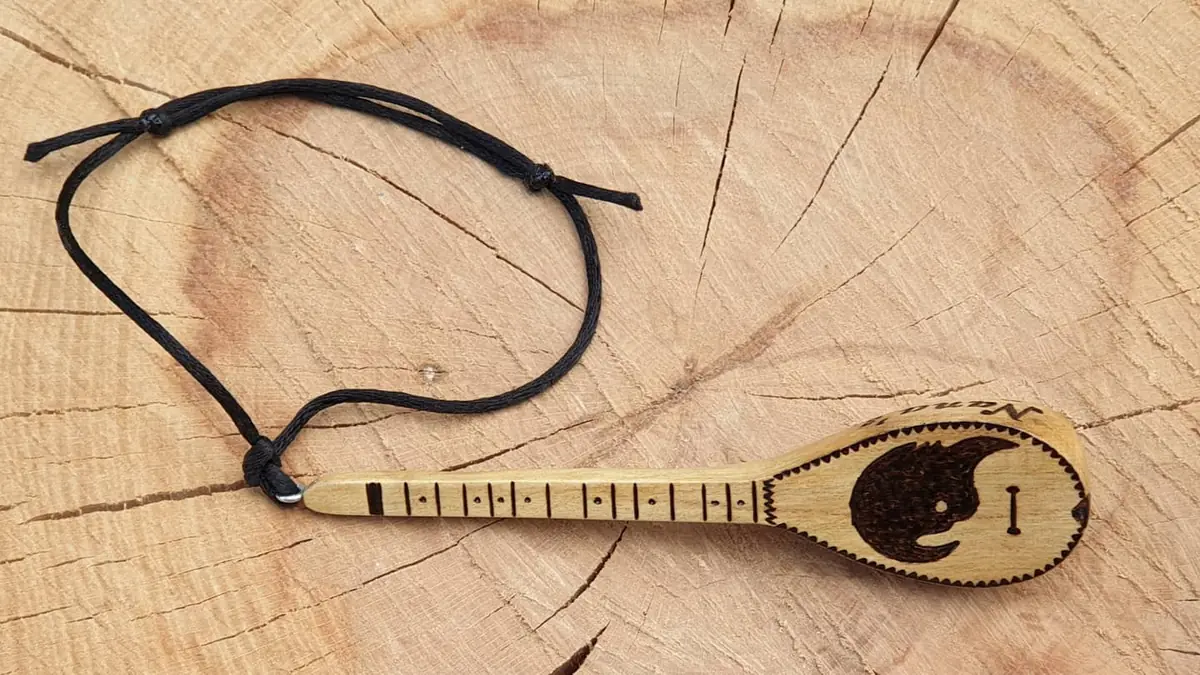
The çifteli is a two-string long-necked lute from northern Albania, and handmade instruments sell for roughly $80 to $250. Its cousin, the single-string lahuta, is the instrument of Albania’s epic songs and makes a striking wall piece. Both need a hard case or a very sympathetic gate agent.
Cheaper and easier to carry: carved wooden spoons, boxes, and chess sets from Gjirokastra, plus hand-tatted lace and embroidered linens sold by the women who made them.
Icon Reproductions from Berat
Berat was home to Onufri, the 16th-century painter whose icons hang in the museum inside the castle. Local artists sell hand-painted reproductions on wood panels for about $30 to $100, and a small one wrapped in a sweater travels fine.
Buy new work only. Genuine old icons are protected cultural property, and selling one to a tourist is a crime for the seller and a serious problem for you at the border. More on that below.
Skanderbeg, Eagles, and Bunker Kitsch
Gjergj Kastrioti Skanderbeg, the 15th-century commander who held off the Ottomans for decades, is on everything: magnets, busts, helmets with the goat-head crest. The double-headed eagle covers flags, shot glasses, and shirts. It’s souvenir-shop material, and that’s fine, though the cast-metal busts are heavier than they look.
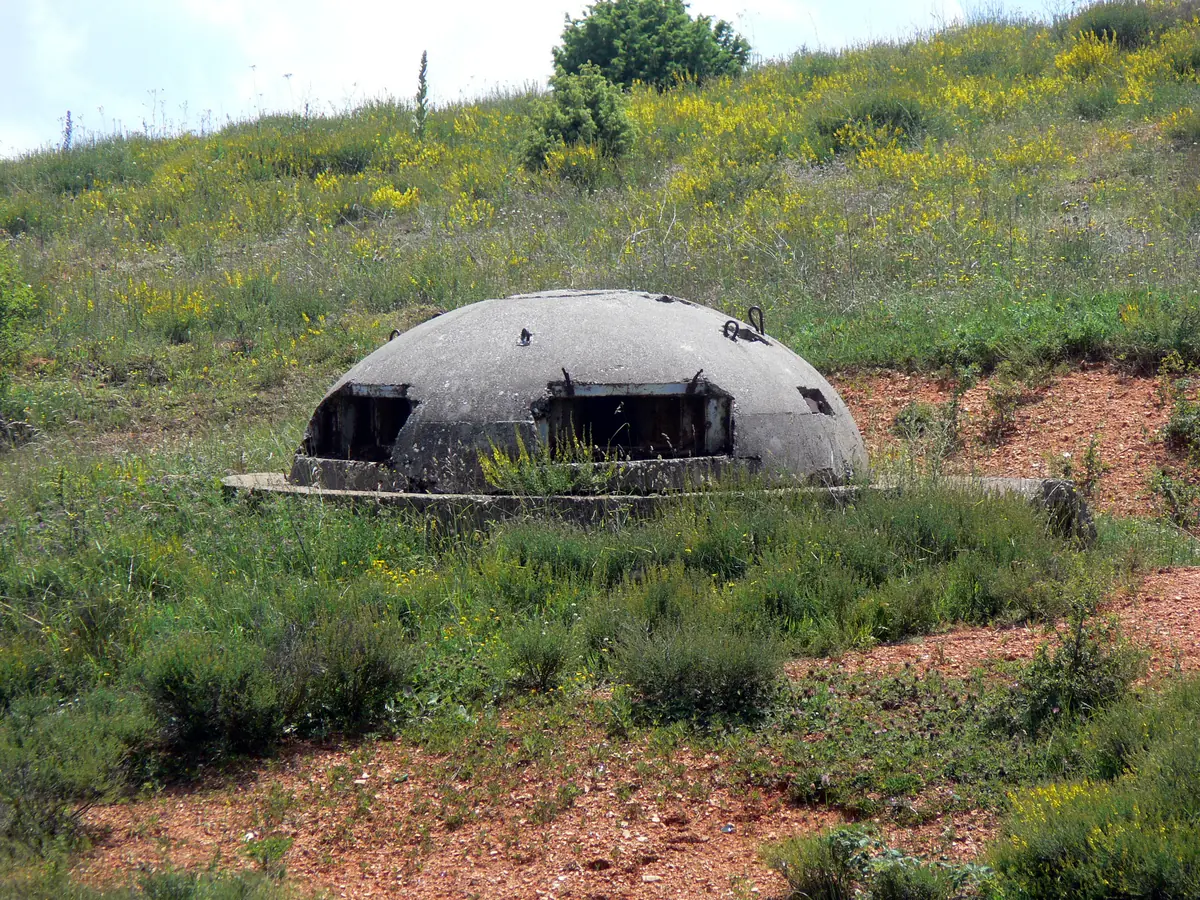
More interesting are the miniature concrete bunkers sold as ashtrays and paperweights, a wink at the hundreds of thousands of bunkers built under Enver Hoxha. Communist-era pins, banknotes, and propaganda posters turn up in Tirana too. Reproductions are common; treat anything sold as a genuine antique with suspicion.
Edible and Drinkable Albania Souvenirs
These are the souvenirs that actually get used, and they’re the easiest way to keep a little Albanian food and drink in your kitchen once the trip is over.
Raki
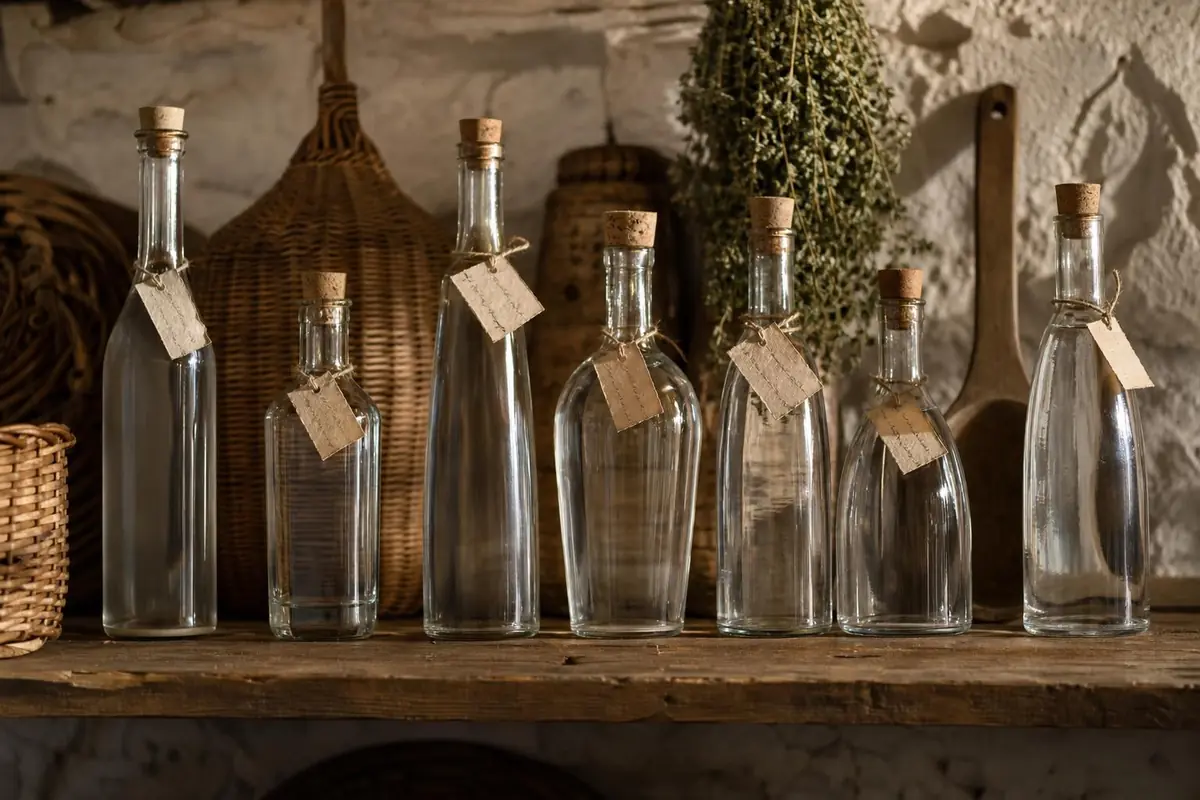
Raki is the national spirit, distilled from grapes (rrush), plums, or mulberries (manë), and every family has an opinion about whose is best. A good labeled bottle costs 800 to 2,500 lek ($10 to $30).
One piece of hard-won advice: buy sealed, labeled, commercially bottled raki. The homemade stuff in a repurposed water bottle is often better, but it will not survive a conversation with a customs officer, and it will not survive your checked bag either.
Skënderbeu Brandy and Albanian Wine
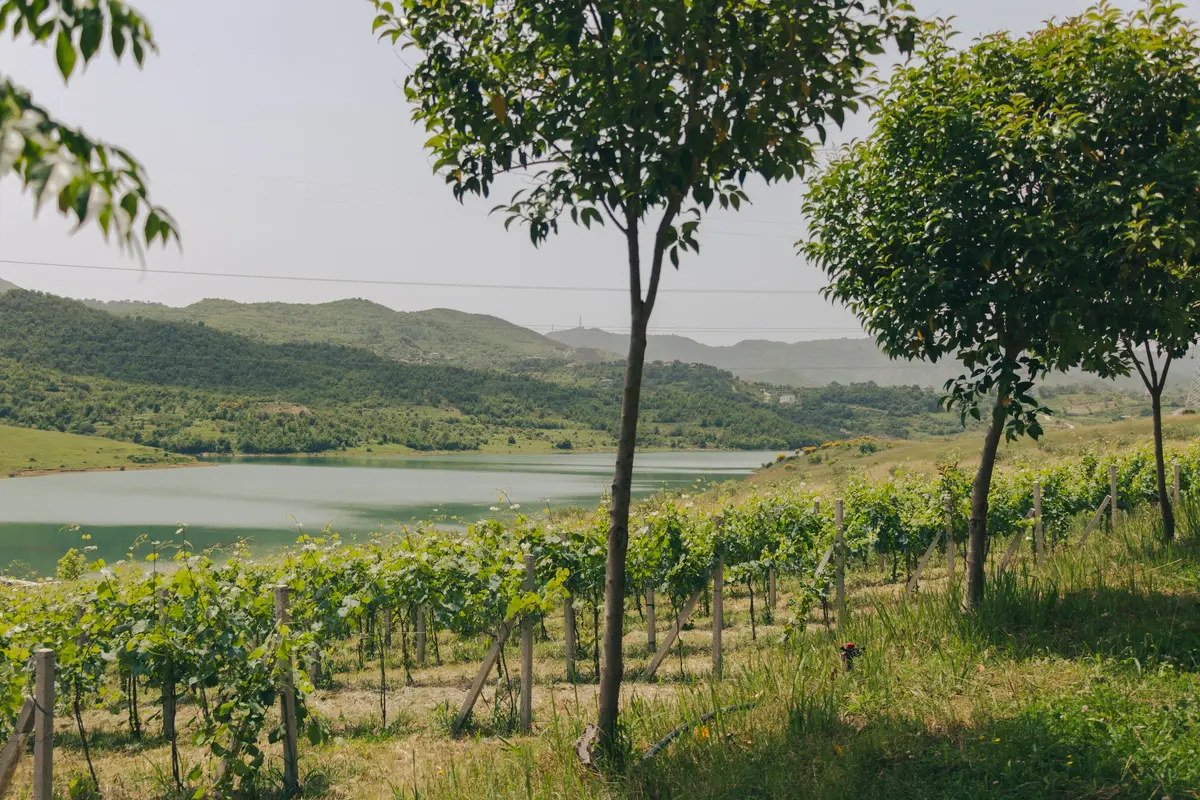
Skënderbeu is the classic Albanian brandy, widely available and inexpensive. The bigger discovery is the wine. Albania grows native grapes you can’t easily find in the States: Kallmet, a structured northern red; Shesh i Zi and Shesh i Bardhë from the center; and Vlosh from the south. Wineries around Berat, including Çobo and Nurellari, sell directly from the cellar, and several double as agrotourism farms where you can eat lunch and taste before you commit. A serious bottle runs 1,800 to 3,500 lek ($22 to $42).
Remember that wine counts against the same alcohol allowance as raki. Plan your bottles before you get excited in the tasting room.
Olive Oil, Honey, and Gliko
Southern Albania presses excellent olive oil, and a 750-milliliter bottle costs 800 to 2,000 lek ($10 to $24) in a supermarket, less at a roadside press. Mountain honey, including the prized Bedunica from the south, runs 700 to 1,500 lek ($8 to $18) a jar. Gliko, the spoon sweets made by simmering whole fruit or walnuts in syrup, comes in jars and travels well.
For all three, buy sealed commercial packaging. Loose honey in a reused jar invites questions you don’t want to answer at 6 a.m. in an arrivals hall.
Mountain Tea and Wild Sage
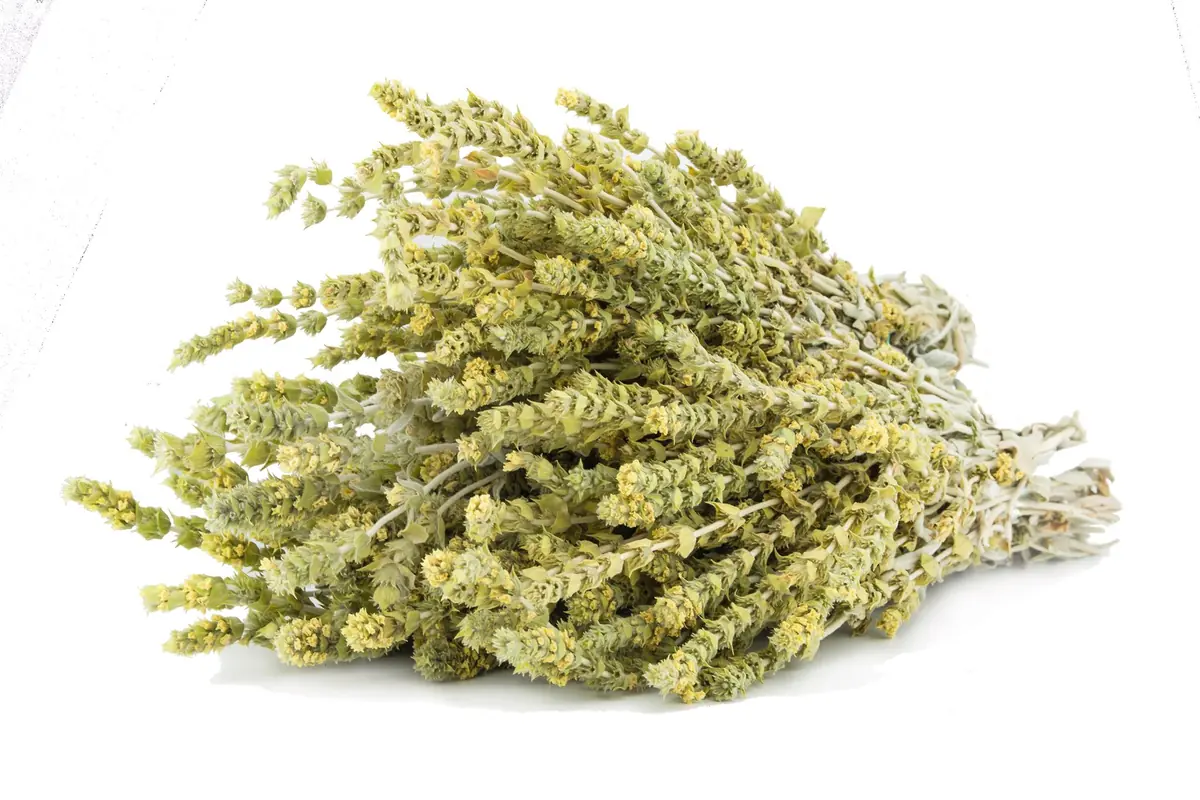
Çaj mali is wild ironwort (Sideritis), sold as bundles of dried silvery stalks that you boil whole. It’s the most Albanian thing in any bazaar, it costs a few dollars, it weighs nothing, and it makes a genuinely good gift.
Sage is the sleeper. Albania is one of the world’s major sage exporters, and industry and USAID sources have long put its share of the US sage market at roughly 70 percent. There’s a decent chance the sage in your kitchen already came from these hills. The difference is that the loose wild-harvested leaf sold in Albanian markets is fresher and far more aromatic than anything in a supermarket jar. Oregano, thyme, savory, and mountain-grown lavender are all worth a bag.
Albanian Coffee
Albanian coffee is prepared Turkish-style, ground to powder and brewed in the xhezve. Buy a bag of ground coffee to go with the copper pot, and you’ve assembled a souvenir that gets used every weekend instead of sitting in a drawer.
Natural Soaps, Oils, and Cosmetics
Small Albanian producers turn the same raw materials into olive oil soap, sage and lavender bars, and essential oils. Expect 200 to 400 lek ($2.50 to $5) for a bar and a few dollars more for a bottle of oil. They’re light, they’re cheap, they don’t break, and they solve the office-gift problem in one purchase.
Where to Shop, City by City
Kruja
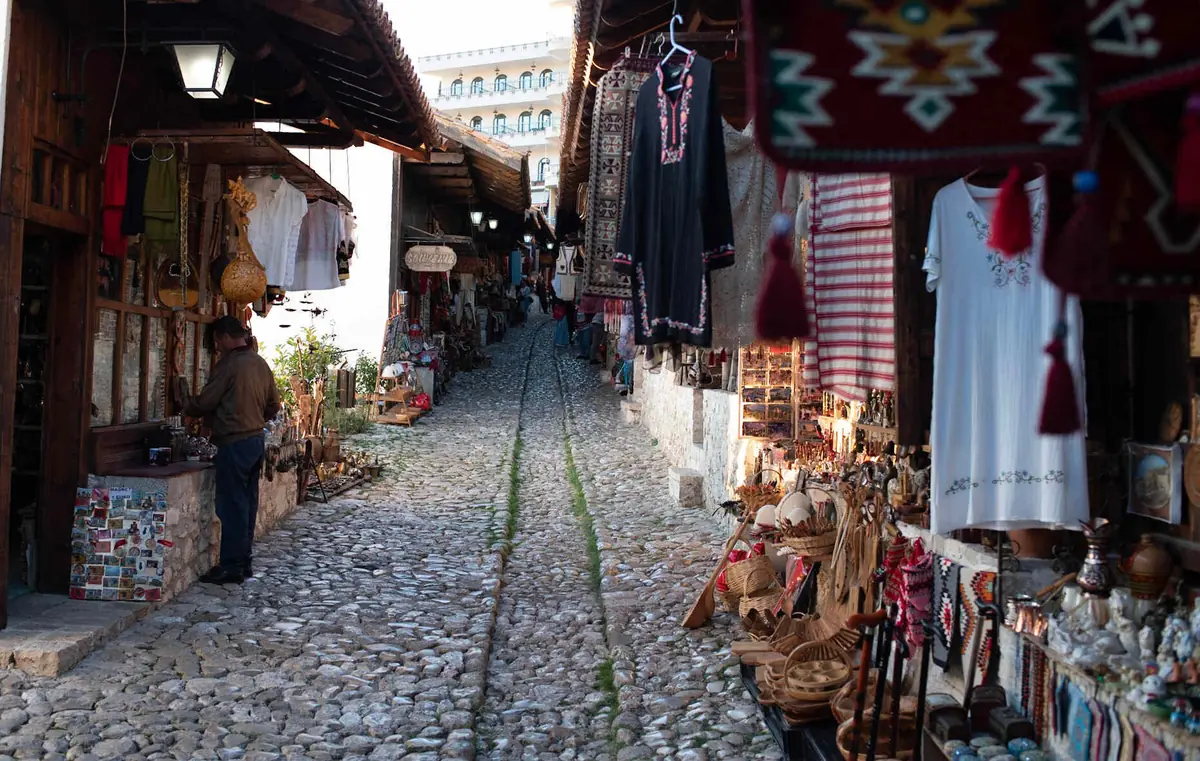
The Old Bazaar in Kruja, an Ottoman-era stone lane running below Skanderbeg’s castle, is the definitive craft strip and sits about 20 miles north of Tirana, which makes it both an easy day trip from Tirana and the classic last stop before a flight out. Most shops open around 9 a.m. and close around 6 p.m., and some stay shut on Sundays.
Walk the whole lane before you buy anything. The best shops have a loom, a bench, or a stack of raw wool visible in the back. The weakest ones, usually clustered in the middle, are reselling imported goods at bazaar prices.
Tirana
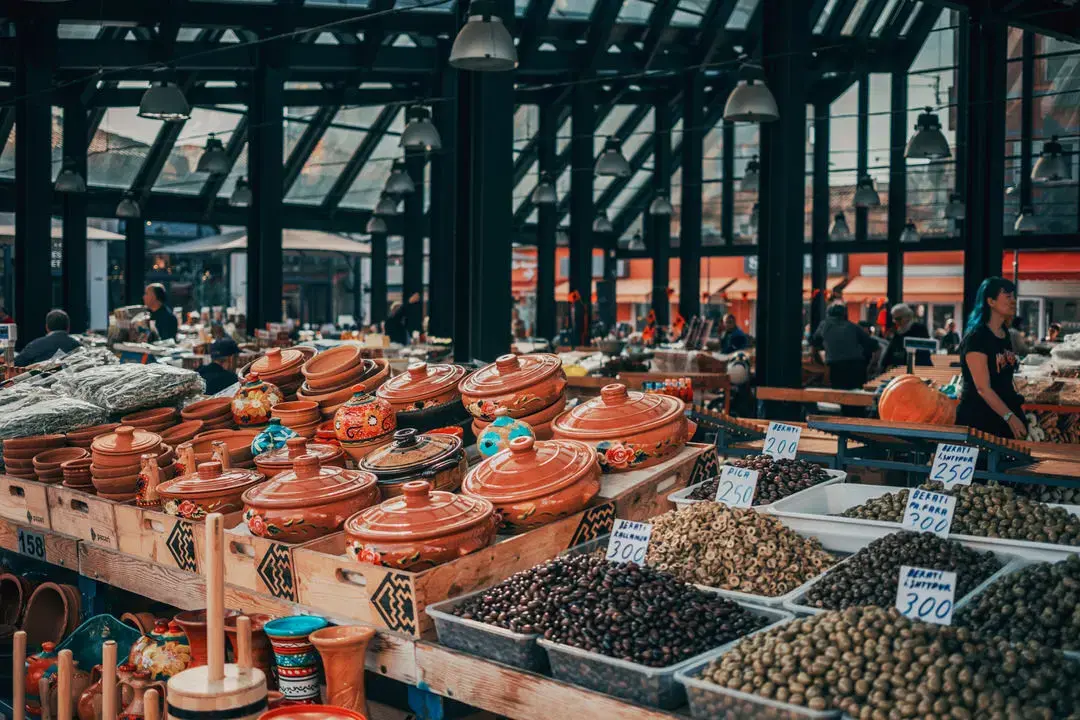
Pazari i Ri, the rebuilt New Bazaar, is the best place in the country to buy food gifts: honey, herbs, dried figs, spices, raki. Go in the morning, when the produce stalls are full and the surrounding streets are quiet. For design-forward pieces and contemporary Albanian brands, the boutiques around Blloku are the counterweight to the folk-craft aisles.
Berat, Gjirokastra, Shkodra, and Korça
Berat pairs icon reproductions with the surrounding wineries. Gjirokastra’s stone bazaar is strongest on wood carving, embroidery, and lace. Shkodra is where you go for filigree. Korça’s restored Old Bazaar has textiles and carpets, plus the country’s best-known brewery. In the beach towns of Saranda and Ksamil, down on the Albanian Riviera, expect resort-grade merchandise at resort-grade prices, with a few good ceramics shops mixed in.
Supermarkets and the Airport
Don’t be a snob about supermarkets. Conad and Spar sell honey, olive oil, herbs, coffee, and mid-range wine at fixed, fair prices, which makes them ideal for volume gifting. The airport, predictably, charges a premium and stocks a narrower range. Buy your consumables in town.
How to Tell Handmade from Imported
The Albanian souvenir trade has the same problem as everywhere else: a share of what’s on the shelves was made in a factory overseas and shipped in.
The test isn’t the object, it’s the conversation. Ask who made it and where. A shop selling genuine work will name the artisan, the village, or the cooperative without hesitating, and will often point to the workshop out back. A reseller will say “local” and change the subject.
Beyond that: look for irregularity, because handwork is never perfectly symmetrical; check the weight, since hand-hammered copper and hand-felted wool are noticeably heavier than their imitations; and be skeptical of identical stock repeating down a row of stalls. Paying $40 instead of $15 for a rug that a person actually wove is the entire point of shopping here.
Prices, Bargaining, and Paying
Cash, Cards, and ATMs
Albania is still a cash-first country outside Tirana and the resort towns. Carry lek. Cards work in city restaurants and larger shops, rarely at a craft stall.
Two things save real money. First, use a debit card that refunds ATM fees, since Albanian ATMs commonly charge 500 to 800 lek ($6 to $10) per withdrawal, and pair it with a credit card that has no foreign transaction fee. Second, when a card terminal offers to bill you in dollars, decline and choose lek. That prompt is dynamic currency conversion, and accepting it hands the machine a markup of several percent.
Bargaining
Haggling is expected in traditional bazaars and at craft stalls in Kruja, Gjirokastra, and Shkodra. It is not expected in fixed-price boutiques, supermarkets, or restaurants, where pushing on price reads as rude.
Opening prices on tourist goods typically run 30 to 60 percent above the expected sale price. A polite “pak më pak?”, meaning “a little less?”, usually gets you 10 to 20 percent off. Paying cash and buying more than one item earn a bit more. Keep it friendly and smiling; aggressive haggling lands badly in Albania and often ends the negotiation instead of advancing it.
The VAT Refund
Albania charges 20 percent VAT, and non-resident travelers can reclaim it on goods they export. The catches are that the retailer has to participate in the Tax Free scheme, there’s a per-purchase minimum commonly cited around 7,000 lek (roughly €65 to €70), and you need the paperwork stamped before you leave. There’s a refund desk in departures at Tirana International Airport, and land borders can stamp forms.
For a handful of small souvenirs, the refund isn’t worth the line. For a carpet, a silver piece, or a case of wine, ask about Tax Free eligibility at the register and confirm the current threshold with the shop.
Getting It Home: US Customs Rules and Packing
This is the part most souvenir guides skip, and it’s the part that decides whether your bag clears.
Your Duty-Free Allowance
Returning US residents get an $800 personal exemption, provided you’ve been out of the country at least 48 hours and haven’t used the exemption in the previous 30 days. Beyond that, the next $1,000 in goods is charged a flat 3 percent duty rate. Family members traveling together can pool their exemptions on a joint declaration, so a family of four has $3,200 of headroom. Original art is duty-free. Declare everything, and keep receipts.
Alcohol
One liter of alcohol, about 33.8 fluid ounces, comes in duty-free for travelers 21 and over, and it has to be with you rather than shipped. You can bring more for genuine personal use, but the excess is subject to duty and federal excise tax, and quantities large enough to look commercial invite scrutiny. Your arrival state’s own alcohol import rules apply on top of the federal ones.
Practically: two bottles is a non-event, and you’ll usually be waved through. A case is a decision you should make deliberately.
Food
Most of the edible souvenirs on this list are fine. CBP treats condiments, oils, packaged spices, honey, coffee, and tea as generally admissible, along with bakery items and hard cured cheeses. Meat and anything containing meat is not admissible, and neither are most fresh fruits, vegetables, and seeds. Soft cheeses and cheeses packed in liquid or brine, which includes the white brined cheese sold all over Albania, are frequently refused, so leave that one behind.
The rule that matters most: declare every agricultural item on your customs form. A declared item that turns out to be inadmissible is simply surrendered at the port of entry with no penalty. An undeclared one can be confiscated and can trigger a civil fine. Declaring costs you thirty seconds; not declaring can cost you hundreds of dollars.
Packing
Liquids over 3.4 fluid ounces have to go in checked bags, which means every bottle of raki, wine, and olive oil rides below, so leave room for them when you build your Albania packing list. Use wine sleeves or wrap each bottle in clothing and seal it in a zip-top bag, then pack it in the middle of the case away from the edges. Copper and ceramics get the same treatment. Rugs roll tight and compress well in a vacuum bag.
If you buy something large or genuinely fragile, DHL and FedEx ship from Tirana, though the cost usually only makes sense for a carpet or a big copper piece. Postal shipping is inconsistent enough that I don’t recommend it for anything you’d be upset to lose.
What You Must Not Buy
Genuine antiquities, old icons, archaeological finds, historic manuscripts, and antique religious objects are off-limits, and this is not a gray area.
Albanian law requires a permit from the Ministry of Culture to export cultural objects, and unauthorized export is a criminal matter. On the American side, the United States imposed import restrictions on Albanian cultural property in March 2022 under a bilateral agreement signed in Washington in August 2021. Those restrictions cover archaeological material dating from 300,000 years ago to A.D. 1750 and ethnological material from roughly A.D. 400 to 1913, a category that expressly includes sacred icons, architectural elements, funerary and ceremonial objects, paintings, written records, textiles, and weapons and armor. Without an Albanian export certificate, CBP can seize and forfeit the object.
So buy the modern reproduction. Buy the icon a living painter in Berat made last month, the new embroidery, the copper tray hammered this year. Anyone offering you something “very old, from a village church” is either lying to you or implicating you, and neither ends well.
Also skip anything made from protected wildlife, and give counterfeit designer goods a wide berth.
Shop in a Way the Country Benefits From
Albania’s craft economy is small and thinning. Every filigree bench, loom, and copper shop that stays open does so because enough travelers chose the workshop over the tourist stall. The margin between the two is often ten or twenty dollars.
Spend it there. Ask the maker’s name. Take the extra ten minutes to walk to the back of the shop. Buy the honey from the stall rather than the airport. The souvenir you carry home from Albania is better when it has a person attached to it, and the odds it survives customs go up considerably when it was made this year rather than five centuries ago. If you’re still shaping the route that connects those bazaars, our Albania travel guide covers the planning side of the trip.