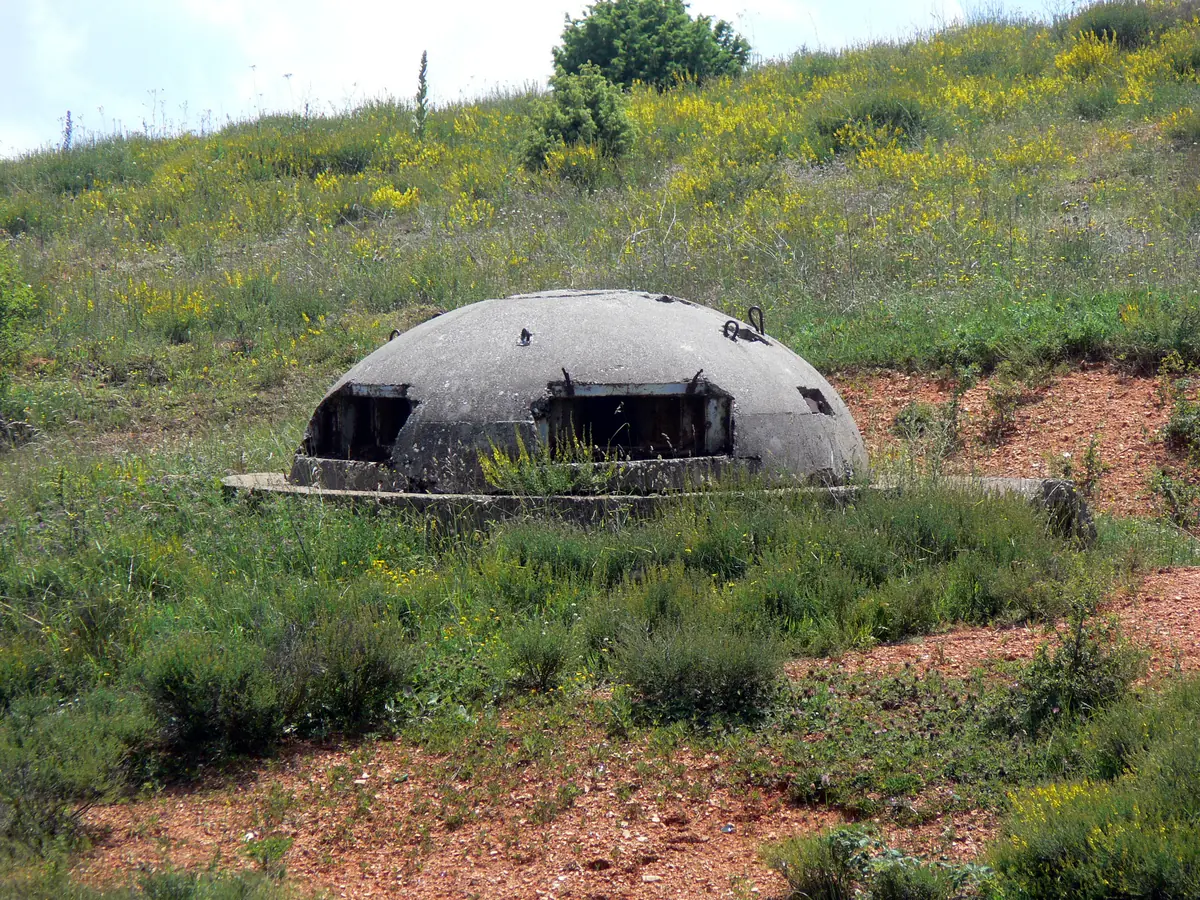
Albania’s bunkers are the country’s strangest inheritance: concrete domes on beaches, in fields, at mountain passes. Most travelers need one question answered before the history lesson — which ones can you walk inside, and how do you get to them. This guide leads with that, then explains why roughly 173,000 of them exist.
Which Albania Bunker Should You Visit First?
If you go inside only one, make it Bunk’Art 1: five underground floors, 106 rooms, and the fullest telling of Albania’s communist century, with the Dajti cable car next door. Staying central with two hours to spare? Bunk’Art 2, a few steps off Skanderbeg Square. Cold War obsessives should add the House of Leaves.
Sort yourself by how much time you have:
- Two hours, central Tirana: Bunk’Art 2 only.
- One full day in Tirana: Bunk’Art 1 plus the Dajti cable car in the morning, Bunk’Art 2 and the House of Leaves in the afternoon.
- Cold War history is the whole point of the trip: Add the Gjirokastër Cold War Tunnel on your way south.
- Driving the Riviera: Porto Palermo’s submarine tunnel — but you look at it from the road, you don’t go in.
- Just want a photo of a dome: Any highway shoulder will do. The small bunkers are photo stops, not attractions.
On the Tirana traveler forums, the answer to “which Bunk’Art” comes back the same way over and over: number one, no debate. The reasons people give are consistent — it’s bigger, it’s cooler underground, it’s less jammed with tour groups, and it puts you at the base of the cable car.
Bunk’Art 1 vs. Bunk’Art 2: The Full Comparison
Two former nuclear shelters, one city, two very different visits.
| Bunk’Art 1 | Bunk’Art 2 | House of Leaves | |
|---|---|---|---|
| Size | 5 floors, 106 rooms | 24 rooms, about 10,800 sq ft (1,000 m²) | Former Sigurimi villa |
| Focus | Italian invasion through the fall of communism; Hoxha’s own shelter | The Sigurimi secret police and political persecution | Surveillance, bugging, informants |
| Time needed | About 2 hours inside | 60–90 minutes | 60–90 minutes |
| Ticket | Around 900 lek (about $11) | Around 900 lek (about $11) | Around 700 lek (about $9) |
| Where | Eastern edge of Tirana, at the Dajti Ekspres station | Off Skanderbeg Square | Opposite the Resurrection Cathedral |
| Best for | First-timers who want the whole story | Short stays and rainy afternoons | Readers who want depth over scale |
Prices and hours drift. Confirm both at bunkart.al and the House of Leaves museum site before you build your day around them.
Inside Bunk’Art 1: 106 Rooms and an Underground Theater
You enter through a tunnel bored into the hillside, and the temperature drops maybe fifteen degrees before your eyes adjust. What follows is corridor after corridor of raw concrete: decontamination chambers, the assembly hall, Hoxha’s private suite with its wood paneling and mustard-colored furniture, and a two-story underground auditorium with roughly 200 seats that still gets used for performances. That theater is the moment most visitors describe as the payoff.
The honest read: this is a history primer, not an immersion. A good chunk of the exhibit covers 1918 through 1945 before it gets to the regime itself, and the artifacts are thin in places — panels, photographs, and video where you might have hoped for objects. One visitor’s summary is worth carrying with you: useful primer, not a re-creation of what life under the regime felt like.
There is also a dissenting view worth knowing about. A minority of visitors come out irritated, arguing that Bunk’Art 1 goes soft on the regime — the forced labor that dug these tunnels gets described in language closer to volunteering — and that Bunk’Art 2 tells the harder truth. It’s not the consensus, but it’s a real critique from people who paid attention.
Quick stats:
- Location: Rruga Fadil Deliu, eastern Tirana, beside the Dajti Ekspres lower station
- Cost: Around 900 lek (about $11); combo with Bunk’Art 2 around 1,300 lek (about $16); audio guide about 100 lek (roughly $1.20) through an app
- Best for: First-time visitors who want the full arc in one stop
- Time needed: About 2 hours inside; 4–5 hours door to door from the city center with the cable car added
- Hours: Commonly reported as roughly 09:30–16:30, though closed days are reported inconsistently — verify on the official site
Pro Tip: The ticket booth runs on cash, and the audio guide streams to your phone rather than a rented handset. Bring lek and your own headphones, or you’ll be reading everything.
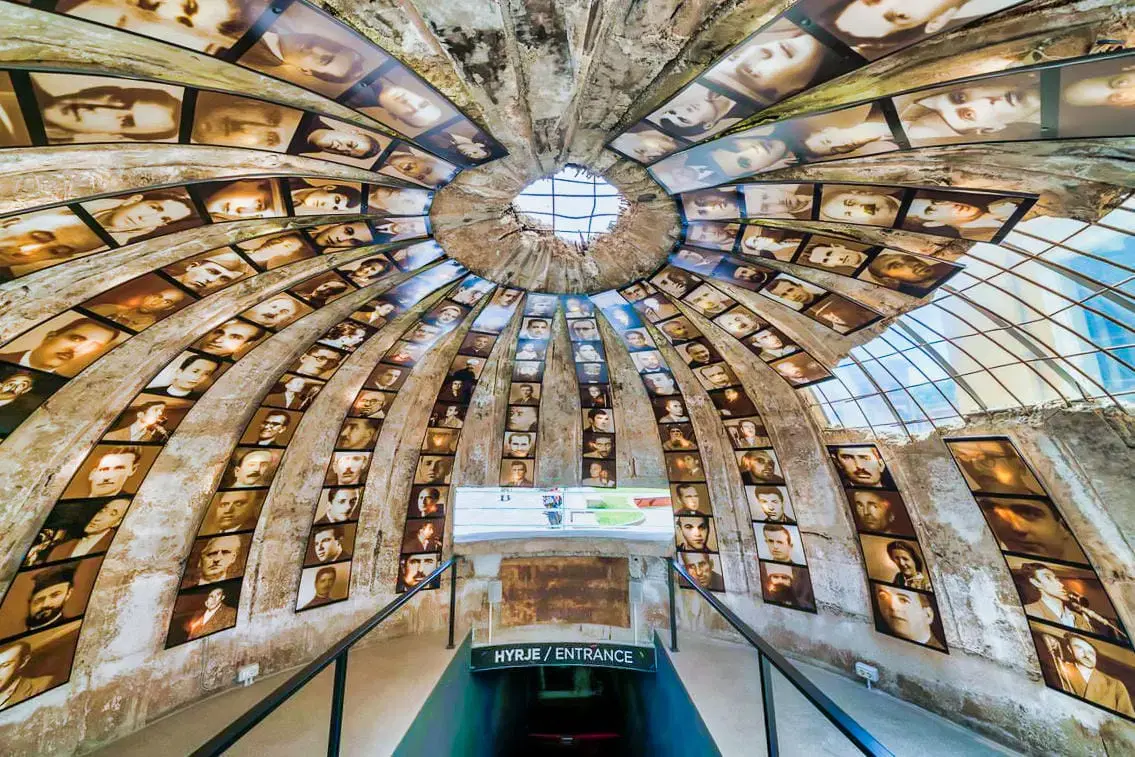
Inside Bunk’Art 2: The Sigurimi in 24 Rooms
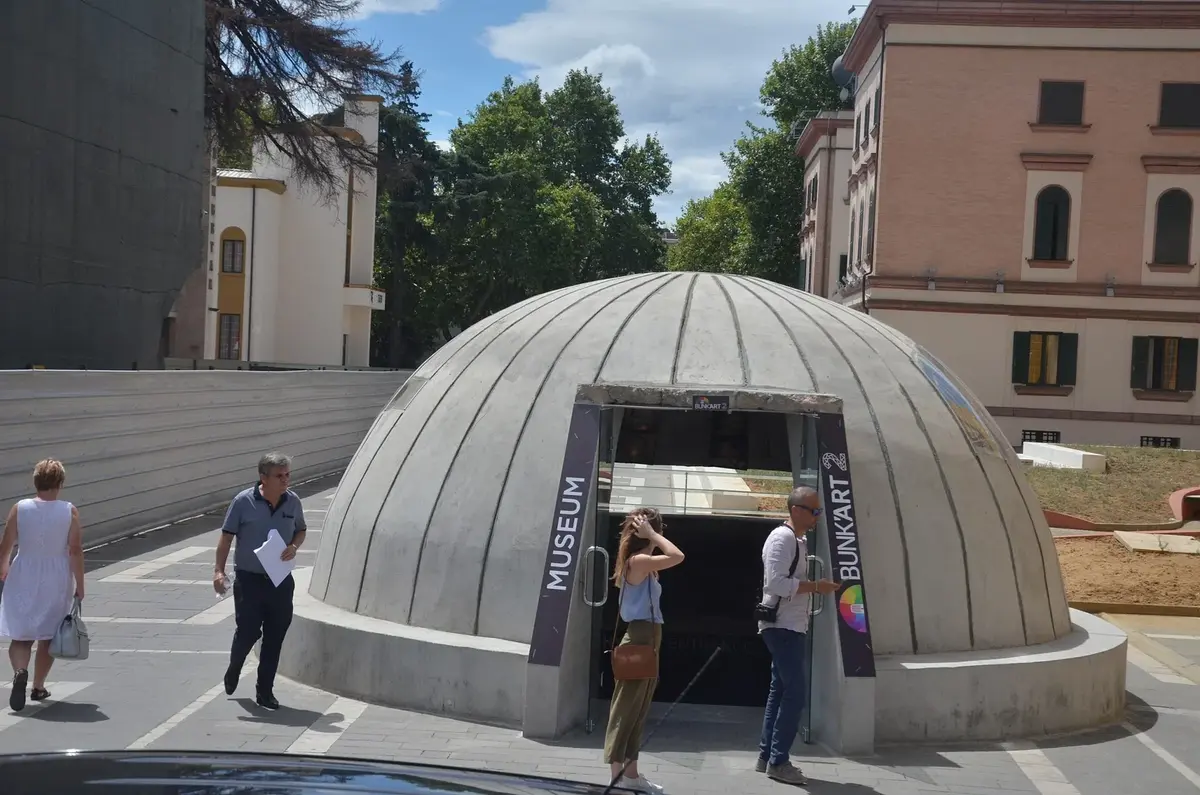
Bunk’Art 2 is the story of the secret police: the files, the wiretaps, the neighbors who informed on neighbors, the executions. Its 24 rooms ring a central corridor under a dome-shaped entrance that sits right on the sidewalk near the Interior Ministry, easy to walk past without noticing.
It is also the more frustrating of the two. The corridors are narrow, the exhibition leans heavily on wall panels — one visitor put the reading material at around 80 percent of the experience — and the air gets warm and close when a tour group arrives. Reviewers describe rainy midday as the worst case: people who came in to get out of the weather, packed into passages built for one-way traffic. At least one visitor gave up and left after ten minutes.
None of that makes it skippable. It makes it a morning visit.
Quick stats:
- Location: Rruga Abdi Toptani, just off Skanderbeg Square
- Cost: Around 900 lek (about $11); combo with Bunk’Art 1 around 1,300 lek (about $16), valid roughly 72 hours
- Best for: Short stays, central bases, and anyone who reads exhibits properly
- Time needed: 60–90 minutes
- Avoid: Midday, and especially a rainy midday
How to Get to Bunk’Art 1 by Bus, Taxi, or Foot
Take the blue city bus L11 toward Porcelan/Linzë from behind Skanderbeg Square, pay the conductor about 40 lek (roughly $0.50) in cash, and ride 20–40 minutes to the Bunk’Art stop. A taxi runs about 700–1,000 lek ($9–12) each way; there is no Uber in Albania. From the road you walk an entry tunnel and an uphill path to the ticket booth.
The trap nobody warns you about: the L11 does a loop at the end of the line, and passengers who see the cable car towers assume they’ve arrived and get off early, then wander residential side streets looking for an entrance that isn’t there. Stay on until you see the tunnel mouth.
- Bus: L11 toward Porcelan/Linzë, about 40 lek (roughly $0.50), cash to the conductor on board
- Ride time: 20–45 minutes depending on traffic; travelers consistently describe it as packed and hot, with no air conditioning
- Taxi: About 700–1,000 lek ($9–12); use Merr Taxi, Speed, or Taxi LUX rather than hailing
- On foot from the booth: Roughly a third of a mile (500 m) of tunnel and path, on a slight incline, before you reach the exhibit
- Add-on: The Dajti Ekspres cable car, 2.7 miles (4,354 m) and about 15 minutes each way, roughly 1,400–1,500 lek (about $17–18) round trip, typically closed Tuesdays — check dajtiekspres.com
Pro Tip: Wear real shoes. The walk in is longer than it looks on a map, and the passage that feels like the entrance is only the beginning of it.
Why Is Albania Covered in Concrete Bunkers?
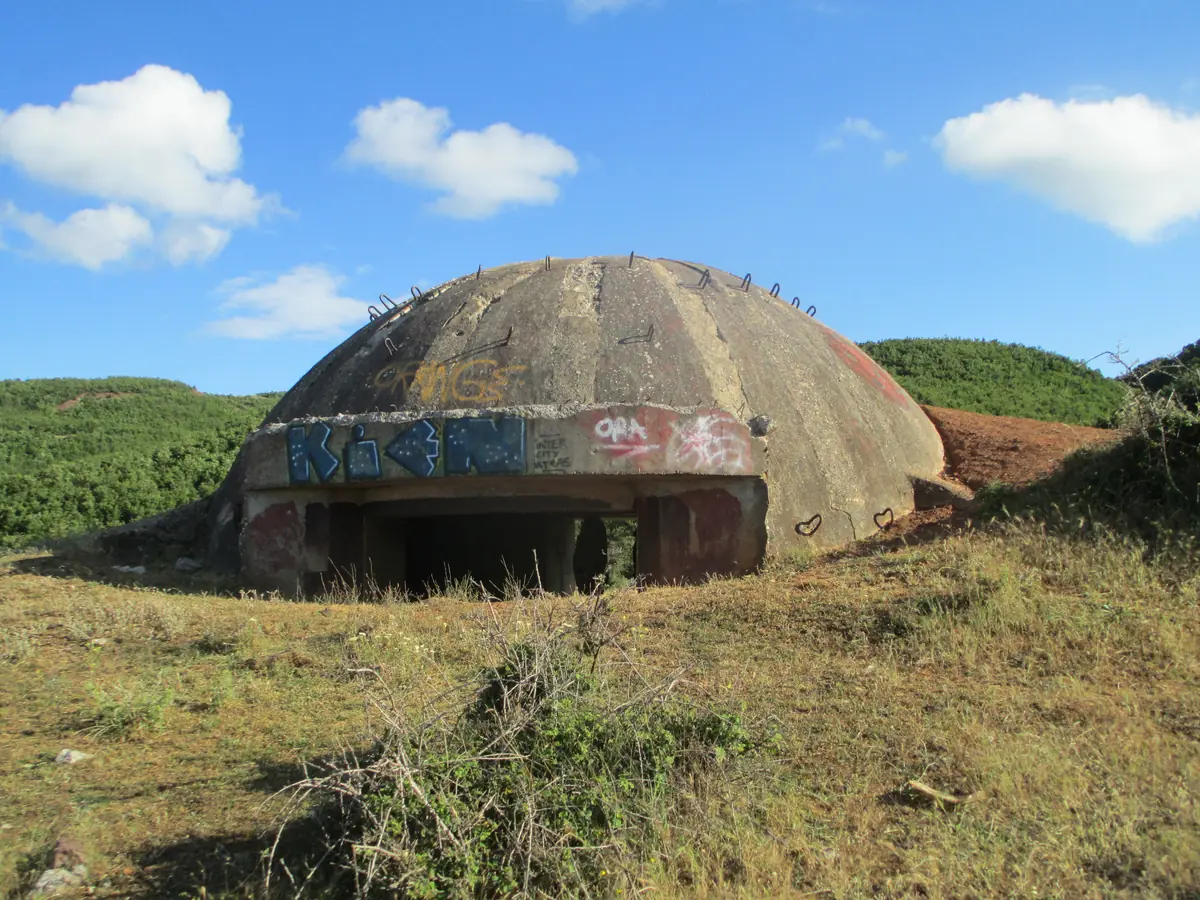
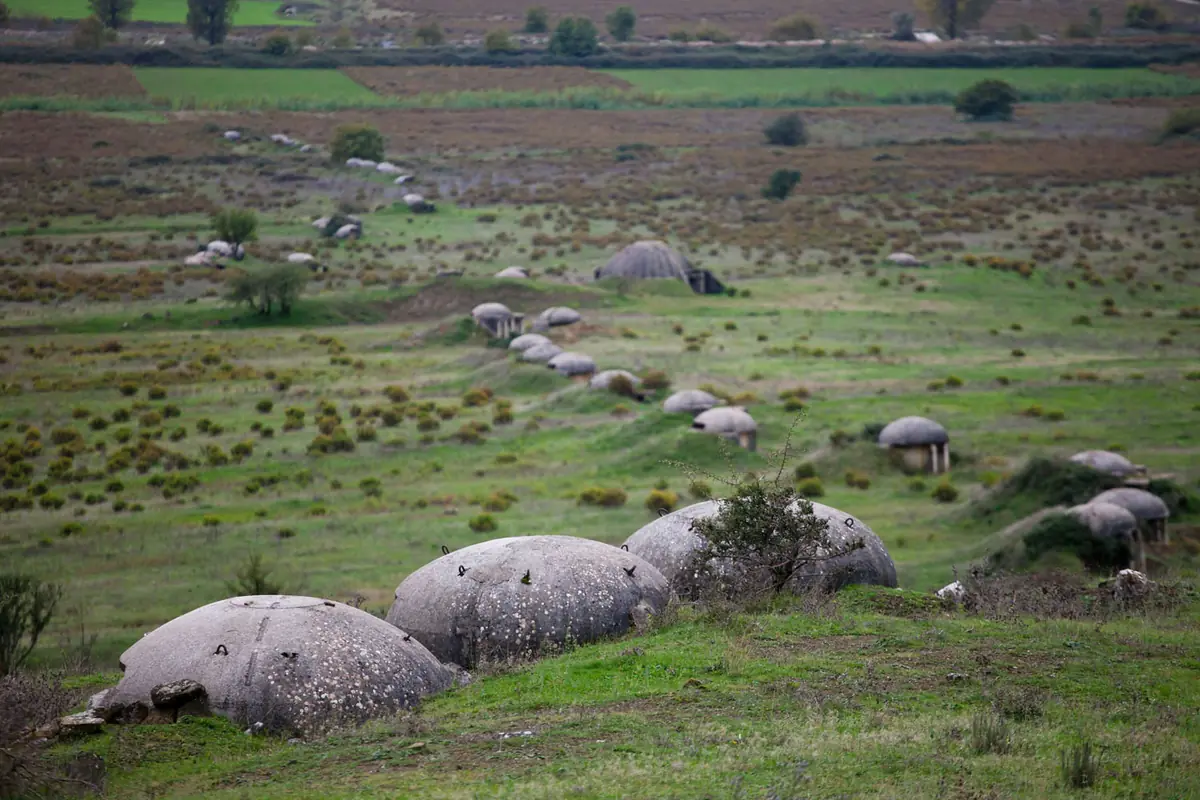
Starting in 1967, dictator Enver Hoxha ordered a nationwide bunkerization program. Having broken with Yugoslavia, then the Soviet Union, then China, he had no allies left and prepared the entire country for an invasion that never came. Plans ran as high as 750,000 bunkers. Roughly 173,000 were actually built.
The counts you’ll see quoted are all over the place, and no guide bothers to reconcile them. Here’s the untangling:
- Built: About 173,371 bunkers and fortified structures, according to documentation used by Bunk’Art itself — completed by 1983.
- Planned: 221,143 in that same documentation. CNN Travel has used 221,143 as the number of bunkers and military objects the post-communist state inherited.
- The wild figure: Wikipedia cites plans reaching as many as 750,000. That’s a target, not a headcount.
- Density: About 14.7 bunkers per square mile (5.7 per km²) — roughly one for every four citizens at the time.
The cost was not abstract. Each dome consumed about what a two-room apartment cost to build, in a country where apartments were scarce. The program is estimated to have used around three times the concrete of France’s Maginot Line, and by some expert estimates cost about twice as much. Between 70 and 100 workers died every year building them.
Hoxha ruled from 1944 until his death in 1985. The doctrine behind the domes was “people’s war”: every citizen a soldier, every hillside a firing position, the coastline studded, the passes plugged. The invasion never arrived. The concrete did.
Josif Zagali, the Man Who Designed the Dome
The mushroom-shaped bunker you see everywhere has an author. Josif Zagali, a military engineer, designed the QZ (Qender Zjarri) firing position with curved concrete so shells would glance off rather than punch through. It fit two soldiers. The larger PZ command domes ran about 26 feet (8 m) across.
Legend holds that Zagali was made to stand inside a prototype while it was shelled, to prove the design. What is documented is uglier: he was promoted to colonel, then purged in 1974 on fabricated sabotage charges and imprisoned for eight years. The man who fortified Albania against foreign enemies was destroyed by the one at home. The film Kolonel Bunker, directed by Kujtim Çashku, works that story into fiction; Ismail Kadare’s The Pyramid is the literary companion to the same paranoia.
Bunk’Art 1 devotes a room to the bunkerization program. It’s the one to slow down in.
What Else Belongs on Tirana’s Communist Trail?
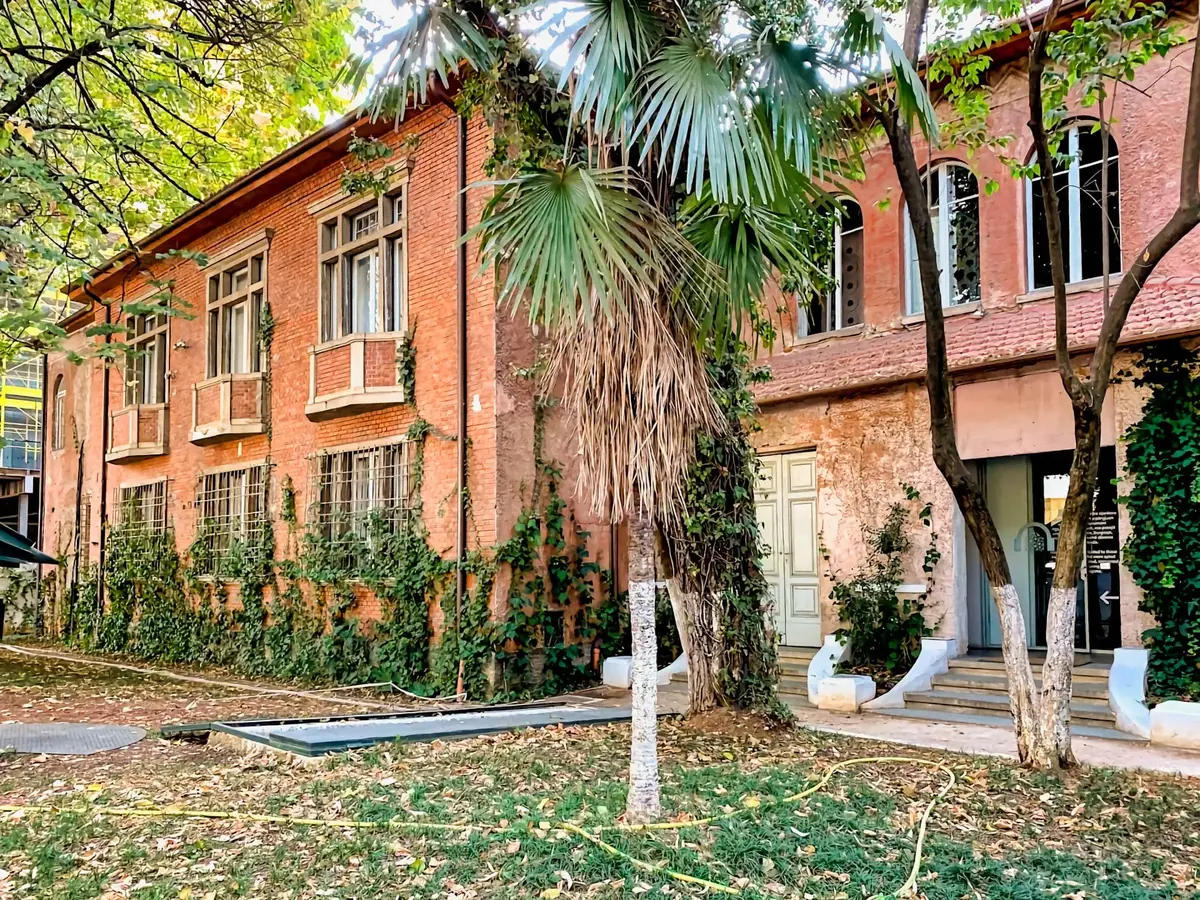
The House of Leaves — the former headquarters of the Sigurimi, now the National Museum of Secret Surveillance — is a few minutes’ walk from Bunk’Art 2 and covers what the bunkers could not: how the regime listened. Wiretap equipment, hidden microphones, informant files. It has a bunker in its own garden, and it won a Council of Europe Museum Prize.
Order matters here. The House of Leaves overlaps thematically with Bunk’Art 2, so if you’re doing all three, run Bunk’Art 1 first for scale and scope, then the House of Leaves for depth, and treat Bunk’Art 2 as the middle. Photography is banned inside the House of Leaves, which turns out to be a mercy — you look instead of framing.
Quick stats:
- Location: Rruga Dëshmorët e 4 Shkurtit, opposite the Orthodox Resurrection Cathedral
- Cost: Around 700 lek (about $9); student rate around 210 lek (roughly $2.50)
- Best for: Anyone who wants the human machinery of the regime, not the concrete
- Time needed: 60–90 minutes
Fill the rest of the day within a 20-minute walk: Skanderbeg Square, the Pyramid of Tirana (Hoxha’s memorial museum, rebuilt as a public space you can climb), the Postbllok memorial with its bunker, its slab of the Berlin Wall and its pillars from the Spaç labor camp, and a coffee in Blloku — the district that was sealed off for party elites and is now where everyone drinks.
Which Bunkers Are Worth Leaving Tirana For?
Three sites justify the drive, and each demands something different from you: a guide, a viewpoint, or a boat.
Gjirokastër Cold War Tunnel
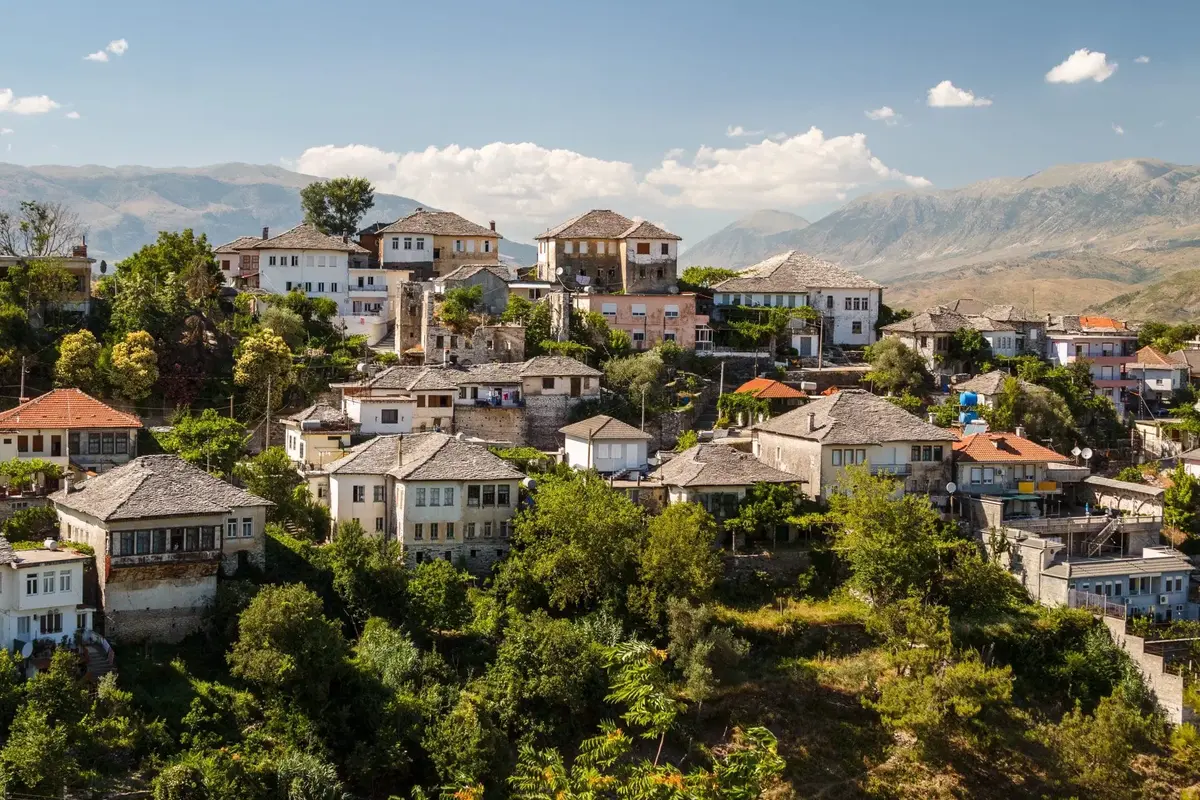
Beneath the stone city, a shelter of about a half-mile (800 m) and 59 rooms, built in the early 1970s for the local party leadership and kept secret until the 1990s. Entry is around 200 lek (roughly $2.50) and includes a guide.
Set your expectations correctly and it’s excellent. The rooms are empty concrete. There are no artifacts, no lighting design, no soundtrack — just cold passages, doorways, and the outline of a bureaucracy that expected to keep working through a nuclear strike. Visitors split hard on it for exactly this reason: some call it the best thing in Gjirokastër, others walk out in ten minutes calling it empty rooms with names on them. The guides vary too, from thorough to visibly bored. Two things are worth knowing before you go in: bring a light, because phone flashlights get used constantly, and the tunnel is a genuine escape when the old town is baking.
- Location: Entrance near Sheshi Çerçiz Topulli, under the municipality building
- Cost: Around 200 lek (roughly $2.50), guide included
- Time needed: 20–30 minutes
- Bring: A phone light and a layer
Porto Palermo Submarine Tunnel (View-Only)
Cut into a headland on the Riviera, roughly 6 miles (10 km) south of Himarë on the SH8 coastal road, is a through-tunnel about 2,100 feet (650 m) long and 40 feet (12 m) high, built between 1969 and 1988 to hide four Soviet Whiskey-class submarines Albania had acquired.
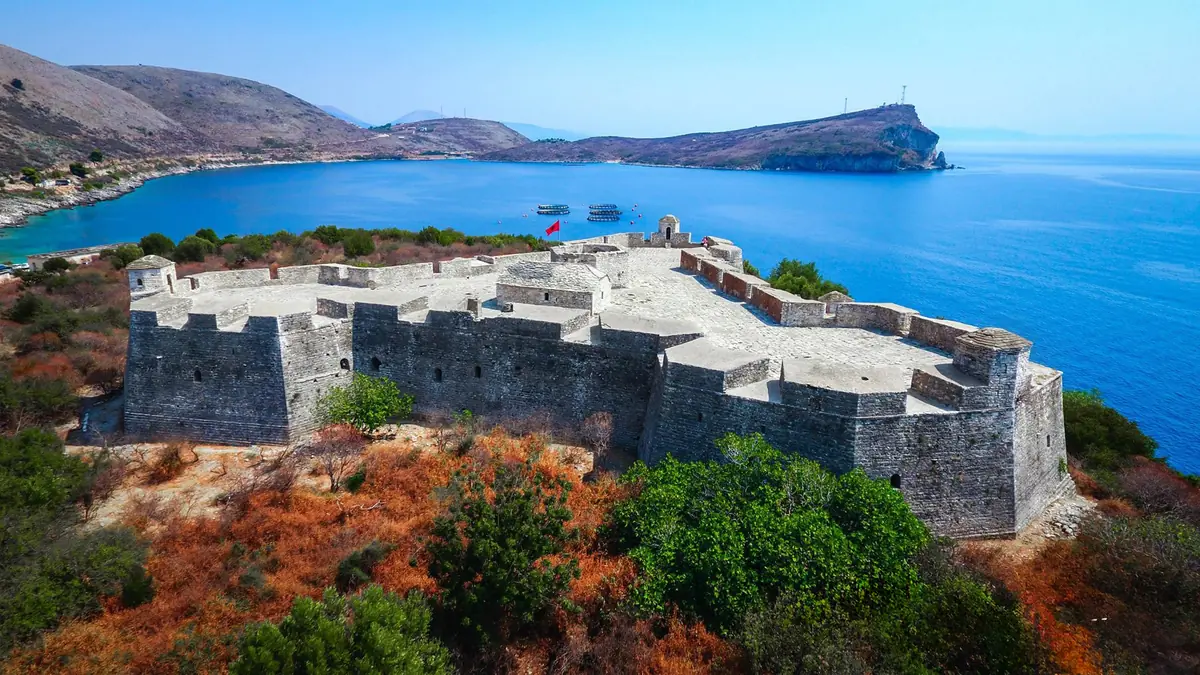
You cannot go in. It sits inside a restricted military zone attached to the Pashaliman naval base, and travelers who make the trip confirm the same thing every time: the gate is shut, and the tunnel is something you look at from the road. It was opened briefly for a ceremony and resealed. Plan it as a pull-off, not a stop — and give the time you saved to Porto Palermo Castle across the bay, which you can enter for around 300 lek (roughly $4).
Sazan Island and the Pashaliman Naval Base
Albania’s largest island, at the mouth of the Bay of Vlorë, was a joint Soviet-Albanian military base and is now a ghost town you reach only by boat. Roughly 3,600 bunkers, tunnels, chemical-defense shelters, an abandoned school, an abandoned cinema, apartment blocks with the doors hanging open.
- Getting there: Boat tours from Vlorë, about 40 minutes by speedboat; usually sold as a day trip with the Karaburun peninsula
- Cost: Roughly €24–60 per person (about $26–65) depending on boat and season
- When: Landings generally run June through November; the crossing depends on the wind
- Best for: Travelers who like their history abandoned rather than curated by a museum
Roadside Domes: Llogara, Qafë Thanë, and Lin
The rest of the country’s bunkers are scenery, and treating them as destinations is how people waste a driving day. Enjoy them where they cluster: the Llogara Pass, where domes sit above the switchbacks with the sea a few thousand feet below; the Qafë Thanë border crossing, where they were packed in against Yugoslavia; and the village of Lin on Lake Ohrid, where one dome was turned into a tiny chapel. Along the coast you’ll find domes painted, converted into snack bars, or half-swallowed by sand.
Stop, photograph, keep driving. Albanians did not build these to be interesting.
What Should Americans Know Before Visiting?
US citizens can enter Albania visa-free and stay up to one year. The State Department’s advisory has held Albania at Level 2, “Exercise Increased Caution,” largely over crime, and the US Embassy in Tirana periodically publishes security alerts about possible threats to public venues. Check both before you fly; do not rely on what a guide, including this one, told you months earlier.
- Advisory and entry rules: travel.state.gov Albania page
- Local alerts: US Embassy in Tirana
- Before departure: Enroll in STEP so the embassy can reach you
The practical layer matters more day to day than the geopolitical one:
- Cash rules. The lek runs somewhere around 80 to the dollar. Museum ticket booths, the L11 conductor, and small cafes want cash; ATMs are easy to find in Tirana, Vlorë and Sarandë, thinner in villages.
- There is no Uber. Use Merr Taxi, Speed or Taxi LUX, or agree on the fare before you get in.
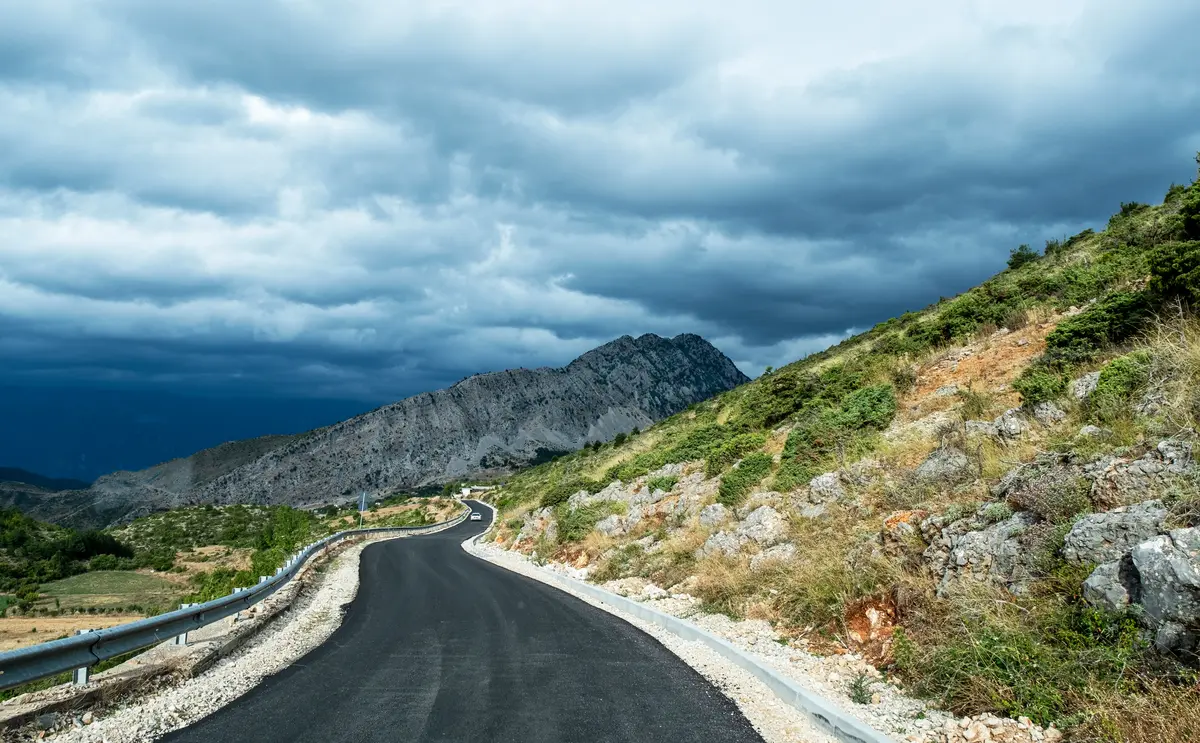
- Driving is the real risk. Albania’s road fatality rate is high, overtaking on blind curves is normal, and the DUI limit is effectively zero tolerance. Drive defensively, and don’t plan a Riviera route that has you on mountain roads after dark.
- Bunkers are cold. Tirana in summer regularly runs 86°F (30°C) and up; the shelters stay cool year-round. Bring a light layer even in August, especially for Bunk’Art 1 and the Gjirokastër tunnel.
- Accessibility is limited. Stairs, narrow corridors, no elevators. Bunk’Art 1 is not stroller- or wheelchair-friendly, and neither museum suits anyone who struggles with enclosed spaces.
Albania takes more than 12 million visitors a year now, and the overwhelming majority have an entirely uneventful trip. Behave like you would in any European capital and the bunkers will be the most alarming thing you encounter.
How to Build Your Bunker Day
Three plans, depending on how much of Albania you’re seeing.
Half day in Tirana (5–6 hours):
- 09:00 — L11 from behind Skanderbeg Square
- 09:30 — Bunk’Art 1 at opening, before the tour buses
- 11:30 — Dajti Ekspres up the mountain; the view back over the city is the point
- 13:30 — Bus back to the center
Full-day communist trail:
- Morning — Bunk’Art 1 plus the cable car
- Early afternoon — Bunk’Art 2 (fast; you’ll have the context now)
- Late afternoon — House of Leaves
- Evening — Postbllok memorial, then dinner in Blloku, which is a joke you’ll only get after the museums
South road-trip add-on:
- En route to Sarandë: Gjirokastër Cold War Tunnel, 30 minutes plus parking
- On the Riviera: Porto Palermo pull-off for the submarine tunnel, then the castle
- From Vlorë: A full boat day to Sazan and Karaburun — this eats the whole day, so don’t stack it with a drive
Bunker or Bust: The Honest Bottom Line
If you do one thing, do Bunk’Art 1: it is the biggest, the coolest in every sense, and the only site that gives you the whole century in one walk. Add the House of Leaves if the surveillance state interests you more than the concrete, and the Gjirokastër tunnel if you’re driving south anyway and can accept raw, empty rooms as the entire experience. Porto Palermo is a photograph from a road, not a visit, and the roadside domes are photo stops that will disappoint anyone who drives out of their way for them. Prices and hours in Albania move faster than the guides that quote them, so confirm both on the official sites, and take out more lek than you think you need — the ticket booth at the mouth of a nuclear shelter is not the place to discover your card doesn’t work.