Albanian food is one of the Mediterranean’s least-copied cuisines — built on yogurt, olive oil, lamb, and paper-thin phyllo rather than heat or fuss. Learn three dishes and you’ve basically got it: byrek, tavë kosi, and fërgesë. Below is what to order, what it tastes like, how it differs from Greek food, and where to eat it in the US — plus how it all fits into a wider trip through Albania.
What Is Albanian Food, Exactly?
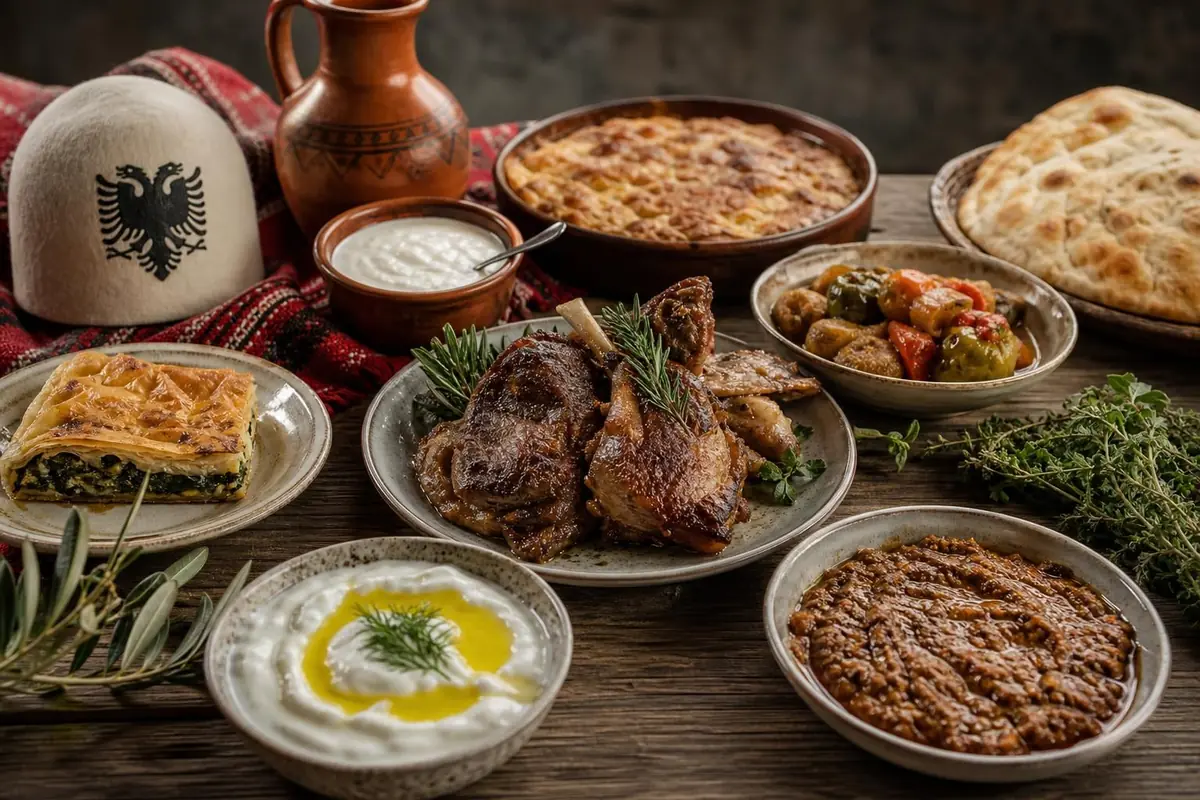
Albanian food is a Mediterranean-Balkan cuisine shaped by Ottoman, Greek, and Italian cooking. It runs on olive oil, tangy yogurt (kos), lamb, fresh vegetables, and flaky phyllo. The dishes to know first are byrek (phyllo pie), tavë kosi (baked lamb in yogurt, the national dish), fërgesë (peppers, tomato, and cheese), and grilled qofte.
The roots go deep. The region was Illyrian, then Byzantine, then under Ottoman rule for close to 500 years, with a layer of Italian influence along the Adriatic coast. Each ruler left something on the table: phyllo and grilled meats from the Ottomans, olive oil and produce from the Mediterranean, a taste for pasta and coffee from Italy. The result sits squarely in the Mediterranean diet — vegetables, legumes, olive oil, and dairy, with red meat mostly reserved for celebrations.
What surprises most first-timers is the yogurt. It isn’t a side sauce here. It bakes into casseroles, gets thinned into a drink, tops savory pastries, and shows up at nearly every meal.
The Dishes You Have to Try
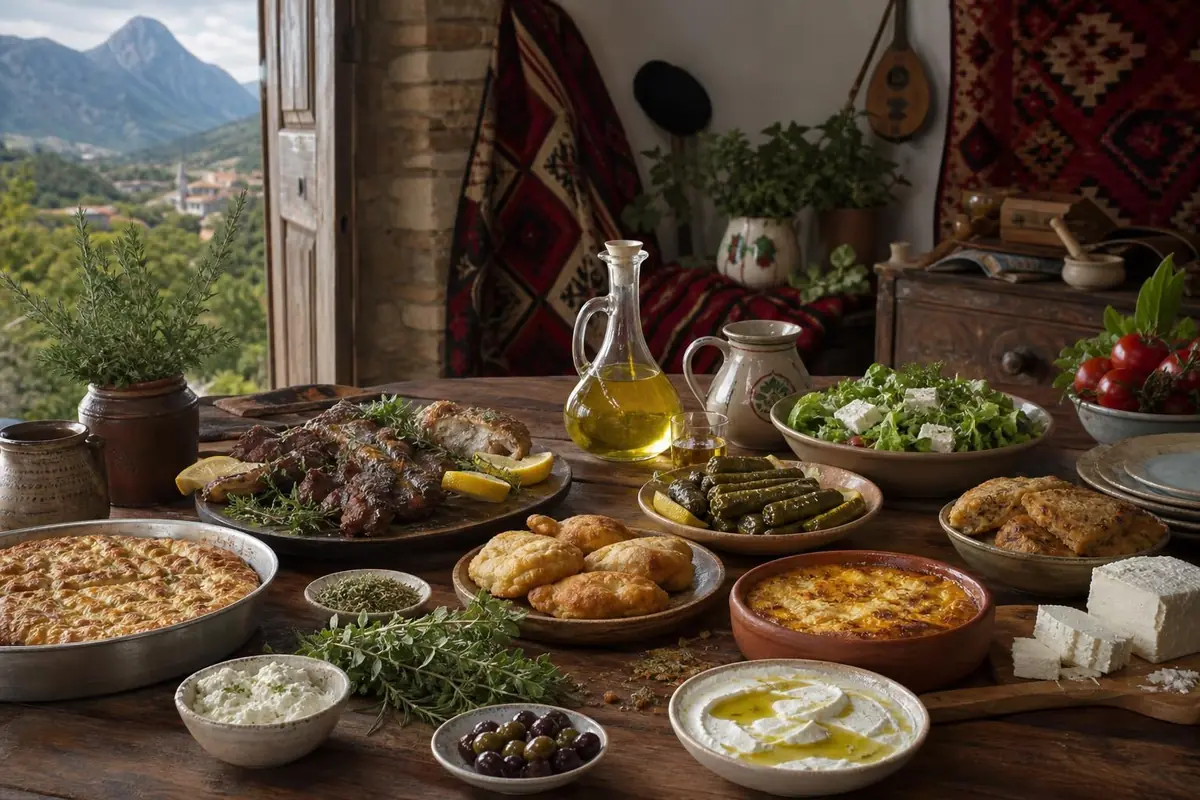
Here’s the short list worth memorizing before your first meal. Correct spellings included, because the diacritics change how these are said.
- Byrek: flaky phyllo pie filled with spinach and cheese, meat, or pumpkin. The everyday staple.
- Tavë kosi: lamb and rice baked under a yogurt-and-egg topping. The national dish.
- Fërgesë: peppers, tomato, and soft gjizë cheese cooked into a dip. A Tirana classic.
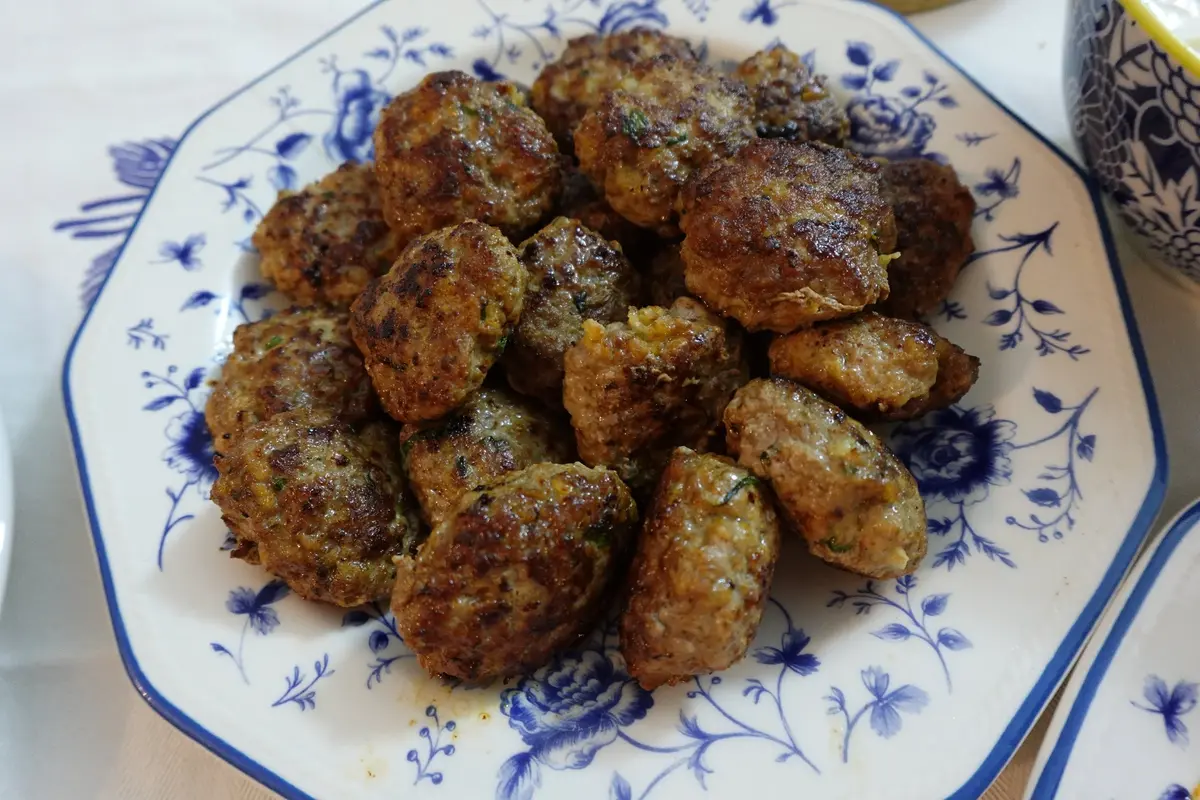
- Qofte: grilled minced-meat meatballs, usually beef or lamb, heavy on garlic and herbs.
- Flija (fli): a batter dish layered pancake by pancake under a domed lid. A northern showpiece.
- Fasule: slow-cooked white bean stew, the comfort food of cold months.
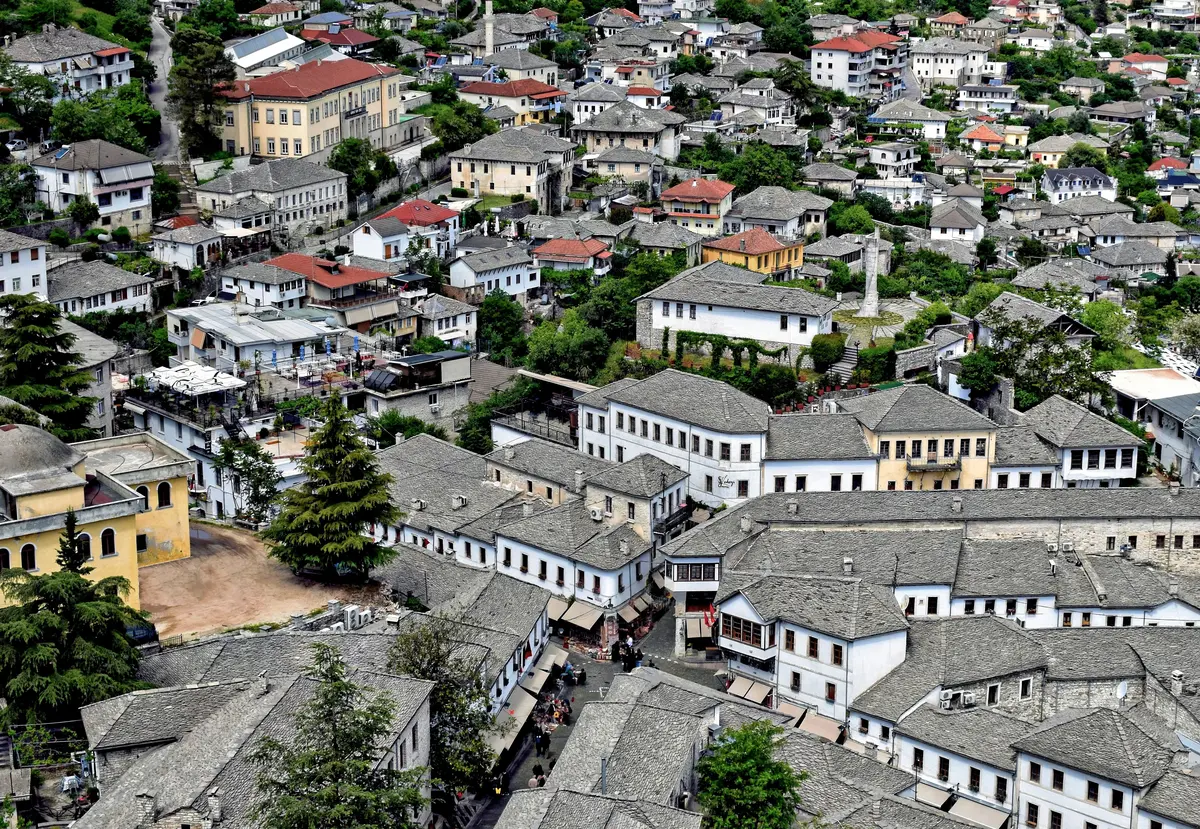
- Qifqi: fried rice balls seasoned with mint and egg, specific to Gjirokastër.
- Speca me gjizë: roasted peppers stuffed with creamy fresh cheese.
- Tavë dheu: meat baked in a clay pot until it falls apart.
- Japrak (sarma): vine or cabbage leaves rolled around rice and meat.
- Lakror: thin savory pie from Korçë, filled with greens, leek, or squash.
- Sufllaqe: the street-food wrap — grilled meat, fries, and sauce folded into flatbread.
Tavë Kosi — The National Dish
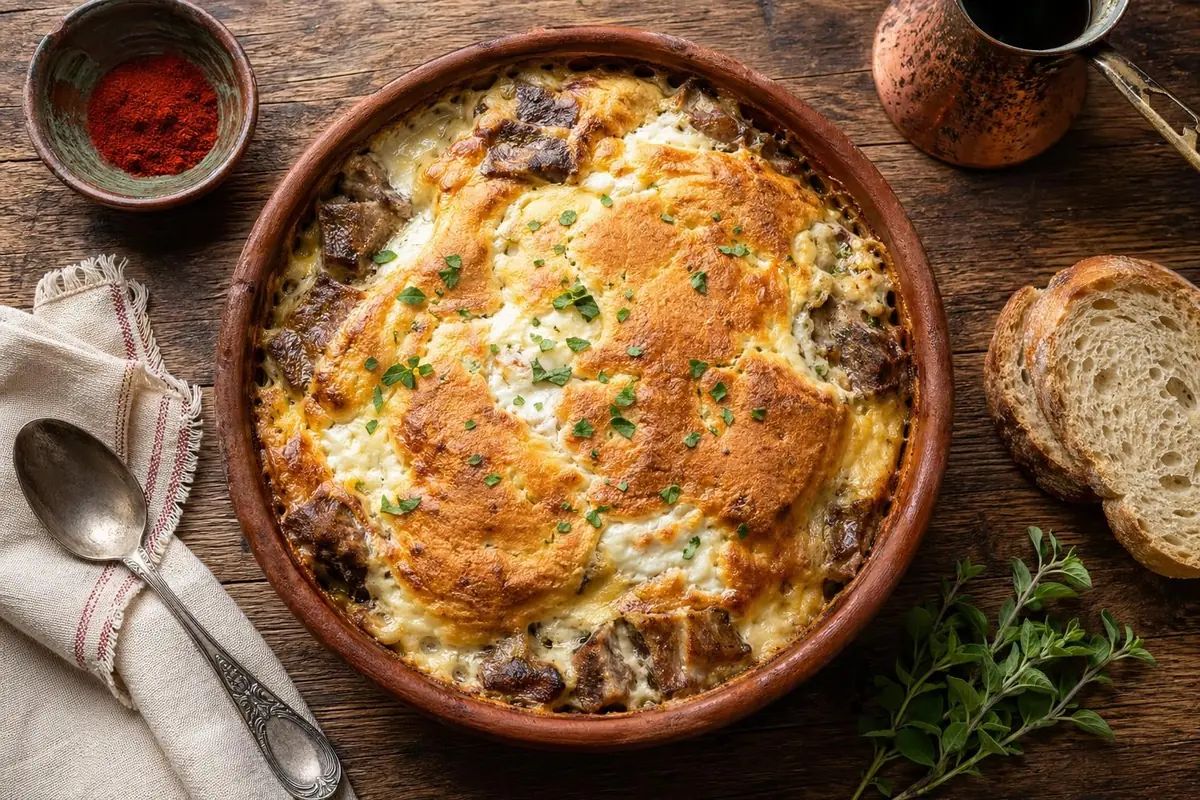
Tavë kosi is Albania’s national dish: chunks of lamb and rice baked under a tangy yogurt-and-egg topping that sets like a savory custard. It comes from Elbasan in central Albania and traces back to the 15th century. TasteAtlas has named it the world’s highest-rated traditional dish, which tells you how seriously the country takes it.
The flavor is the whole point. The yogurt bakes into something between a béchamel and a quiche, sharp against the richness of the lamb and cut with garlic, oregano, and black pepper. In its home city it’s often called tavë Elbasani. A chicken version, tavë kosi me mish pule, is common on weeknights. Order Elbasan tava in Turkey and you’ll get a cousin topped with béchamel instead of yogurt — a small map of how far the recipe traveled under the Ottomans.
- Where it’s from: Elbasan, central Albania
- What’s in it: lamb, rice, yogurt, egg, garlic, oregano
- When you’ll see it: Easter, Eid, Christmas, and long Sunday lunches
Pro Tip: If a menu lists both the lamb and chicken versions, order the lamb. The gaminess is what balances the sour yogurt — chicken plays it too safe.
Byrek — The Everyday Phyllo Pie
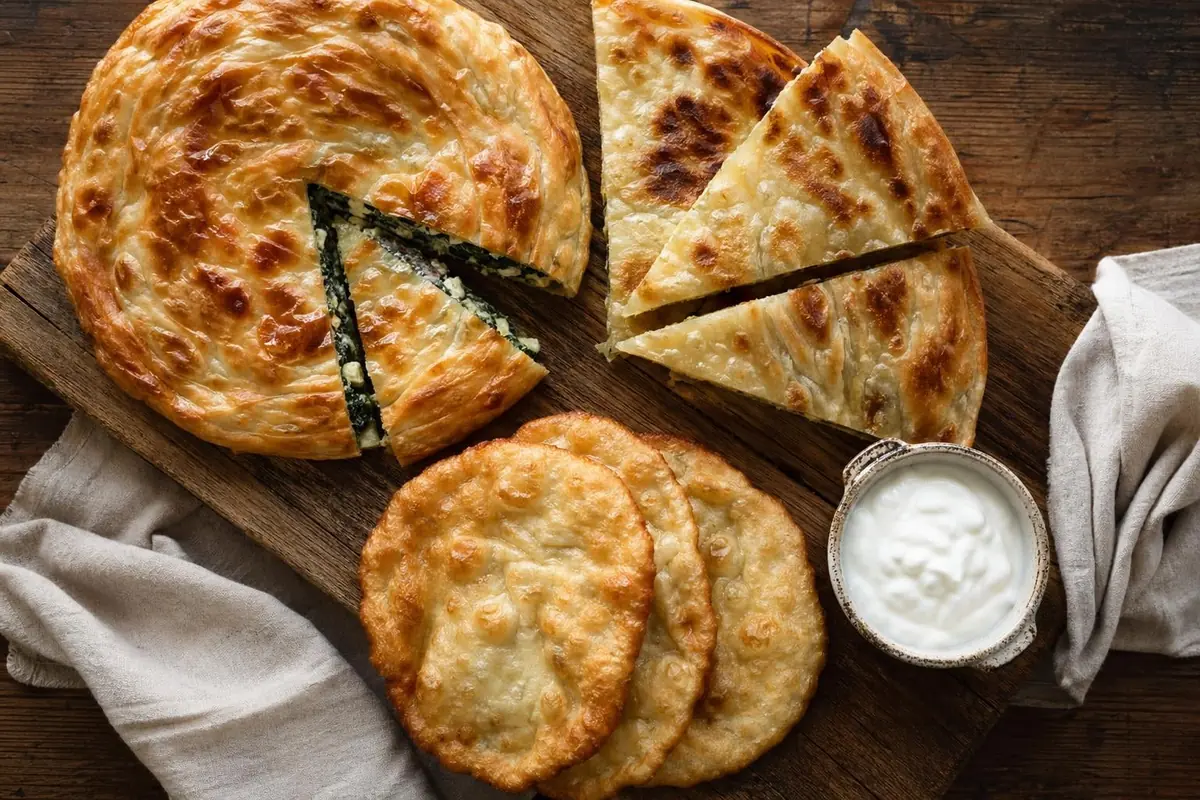
If tavë kosi is the special-occasion dish, byrek is the one Albanians actually eat every day. It’s layered phyllo, traditionally rolled paper-thin with a long dowel called an okllai, wrapped around spinach and feta, minced meat, cheese, leek, or pumpkin, then baked into a coil or a tray and cut into wedges.
You buy it by the slice at a byrektore, a shop that sells almost nothing else, often with a cup of dhallë (salted yogurt drink) to wash it down. In Albania a slice runs a dollar or two. The same pastry shows up across the region spelled burek in the wider Balkans and börek in Turkey — one idea, endless local arguments about whose is best. All that phyllo is also the first thing to plan around if you’re eating gluten-free in Albania.
Pro Tip: Buy byrek in the morning. The good bakeries sell out of the spinach-and-cheese by early afternoon, and reheated byrek loses the shatter that makes it worth eating.
Flija and Qifqi — Worth the Detour
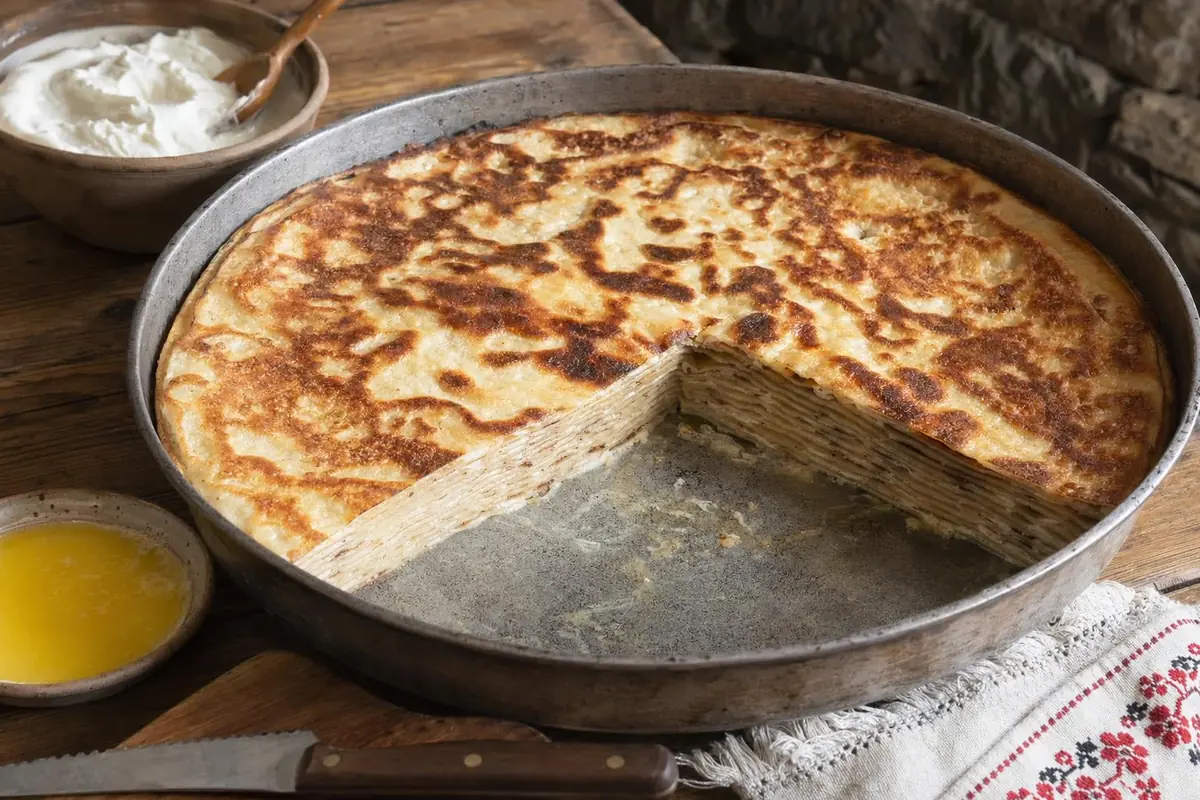
Two dishes reward the traveler who goes looking. Flija is a northern and Kosovar celebration dish built from dozens of thin batter layers cooked one at a time under a hot domed lid, until it comes out as a pale, ridged sunburst you tear apart by hand. Qifqi are the fried mint-and-rice balls from Gjirokastër in the south — small, herby, and, locals will tell you, impossible to get right anywhere else.
What Does Albanian Food Taste Like — and Is It Spicy?
No — Albanian food is generally not spicy. It’s built on freshness rather than heat: olive oil, garlic, lemon, tangy yogurt, and herbs like oregano and mint do most of the work. A handful of dishes use mild red pepper or paprika, but nothing that will test your tolerance. Expect savory, herby, and comforting over fiery.
The backbone of the flavor is dairy. Fresh white cheese (djathë i bardhë) sits close to feta but milder. Kaçkavall is the melting yellow cheese. Gjizë is the soft, ricotta-like curd in fërgesë and stuffed peppers, and kajmak is the rich clotted cream spread on bread. Sourness comes from yogurt, lemon, and vinegar instead of chilies. If you like Greek or Levantine cooking but sometimes find it too heavy or too sharp, Albanian food tends to land in a gentler middle.
Albanian Food vs Greek and Turkish Food
Calling Albanian food “Greek food with different names” is the fastest way to annoy a cook in Tirana. The pantry overlaps — olive oil, feta, yogurt, grilled meat, phyllo, all shared across the old Ottoman world — but the balance is different. Albanian cooking leans harder on yogurt, uses less spice than Turkish food, and keeps a few dishes the neighbors simply don’t have, like fërgesë and flija. By some cuisine-similarity measures it actually sits closer to Turkish cooking than to Greek.
Here’s the quick comparison:
| Element | Albanian | Greek | Turkish |
|---|---|---|---|
| Signature pie | Byrek | Spanakopita, tiropita | Börek |
| Yogurt sauce | Tarator (thinner) | Tzatziki | Cacık |
| Grilled meat wrap | Sufllaqe | Souvlaki, gyro | Döner |
| Baked yogurt dish | Tavë kosi | Rare | Elbasan tava (with béchamel) |
| Common sweet | Baklava, trileçe | Baklava, galaktoboureko | Baklava, künefe |
| Heat level | Low, yogurt-forward | Low to medium | Medium |
The honest summary: know Greek food and you’ll recognize maybe 70% of an Albanian table, then get genuinely surprised by the rest. Much the same holds for the countries themselves if you’re deciding between Albania and Greece for the trip.
Regional Albanian Cuisine, Mapped
Albania is small, but the food changes noticeably as you move from the mountains to the sea. The north eats like a place with hard winters — more meat, more dairy, hearty layered pies. The south carries a clear Greek influence. The coast is all about seafood. Get these straight and you’ll order like you’ve been before.
| Region | What defines it | Dishes to seek |
|---|---|---|
| North (Shkodër, the Alps) | Meat, dairy, mountain cheeses | Flija, sarma, mishavinë cheese |
| Central (Elbasan, Tirana) | The heartland classics | Tavë kosi, fërgesë |
| South (Gjirokastër, Korçë) | Greek-leaning, herb-forward | Qifqi, lakror, shapkat |
| Coast (Sarandë, the Riviera) | Grilled seafood | Sea bass, calamari, mussels |
| Kosovo | Pies and stuffed leaves | Flija, sarma, byrek |
One regional standout deserves a special note: mishavinë, a cheese from the Kelmend highlands in the far north, made only in summer from a mix of sheep, goat, and cow milk. It carries a protected Geographical Indication — the same legal badge Europe uses to guard Champagne and Parmigiano. The season is short, so the month you visit decides whether you get to taste it.
How Albanians Eat — Meze, Lunch, and Hospitality
Lunch, not dinner, is the main event. It usually opens with meze: a spread of small plates meant for grazing and talking — olives, cubes of white cheese, pickled peppers, soft gjizë, slices of sujuk sausage, and a bowl of tarator, the thin garlic-yogurt-cucumber dip. Set the dairy and meat aside and it’s also the easiest course for vegan travelers in Albania to build a meal from. Bread anchors all of it. The Albanian phrase for “let’s go eat” translates literally as “let’s go eat bread.”
Then there’s the hospitality, which visitors consistently underestimate. Turning down a second helping reads as a light insult, and refusing the welcome raki is nearly impossible. Guests get fed until they surrender. If you’re invited to someone’s home, arrive hungry and pace yourself, because the food keeps coming well after you think the meal is finished. In restaurants the etiquette is simpler, and tipping in Albania usually means rounding up rather than working out a percentage.
Breakfast, Street Food, and Desserts
Breakfast leans savory. A warm slice of byrek with yogurt or coffee is the classic quick start; on slower mornings it’s petulla, pillowy fried dough eaten with honey, jam, or cheese. A full spread means fresh bread, white cheese, tomatoes, cucumbers, and olives in olive oil. In cold mountain months, people eat trahana, a tart soup made from fermented grain and yogurt.
Street food is short and satisfying: byrek by the slice, sufllaqe wraps, and skewers of qofte off the grill.
For dessert, three names matter most:
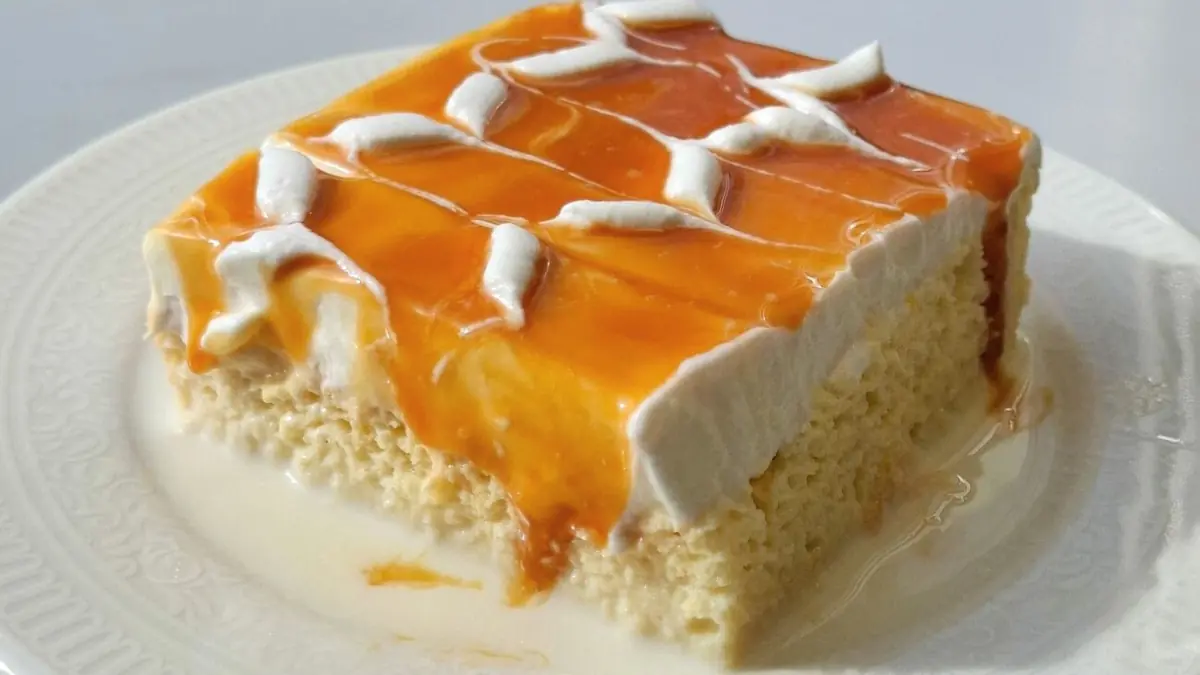
- Trileçe: the Albanian take on tres leches — sponge soaked in three milks under a caramel top. It’s everywhere, and it’s the one to order.
- Baklava: the Ottoman classic of layered phyllo, nuts, and syrup, saved mostly for holidays.
- Ballokume: a chunky cornflour cookie from Elbasan tied to Dita e Verës (Summer Day) on March 14, a national holiday marking the end of winter.
Keep looking and you’ll also meet sheqerpare, revani, kadaif, and shëndetlie.
What to Drink With Albanian Food
The drink you’ll be handed most often is raki, a clear fruit brandy usually distilled from grapes, running roughly 40 to 50% alcohol. The versions from Skrapar and Përmet in the south are the ones people brag about. It works as a welcome drink, a toast, and a digestif all at once.
Beyond raki:
- Coffee: Turkish-style coffee in the morning, and a serious macchiato and espresso culture the rest of the day.
- Dhallë: a salted, watered-down yogurt drink close to Turkish ayran, made for cutting the richness of byrek.
- Çaj mali: mountain tea brewed from the Sideritis plant, hand-harvested at roughly 3,300 to 6,600 feet (1,000 to 2,000 m). Earthy, faintly sweet, and drunk for its health reputation.
- Boza: a thick, mildly fermented grain drink — an acquired taste.
- Beer and wine: Korça and Tirana are the everyday beers; for wine, look for indigenous grapes like Kallmet and Shesh i Zi.
Pro Tip: When someone pours you raki, wait for the toast — “Gëzuar!” — before you drink. Sipping early reads as rude, and homemade batches can run far stronger than the commercial stuff.
Where to Eat Albanian Food in the US
You don’t have to fly to the Balkans — though if you do, Tirana’s restaurant scene is where to start. More than 200,000 people of Albanian descent live in the US, according to Census figures, and the food travels with the community. The largest populations are in New York (around 55,000), Michigan (around 28,000), and Massachusetts (around 21,000). Two metro areas are the real eating hubs: New York and Detroit.
In New York, the center of gravity is the Bronx — specifically the Belmont neighborhood around Arthur Avenue, long known as the city’s “real Little Italy” and a stronghold of its Albanian community.
Çka Ka Qëllu — The Bronx Flagship
The name translates loosely to “whatever we have,” which sets the tone: rustic mountain cooking, timber, and generous plates. It’s the best-known Albanian restaurant in the country, with a place on the New York Times’ list of the city’s best restaurants and recognition in the Michelin Guide, plus sister locations in Manhattan and Stamford, Connecticut.
- Location: 2321 Hughes Ave, the Bronx (plus Manhattan and Stamford, CT)
- Order: the meze spread, qebapa, byrek, sarma, and mantia dumplings
- Good for: a first, high-quality introduction to Albanian cooking
More Spots Worth Knowing
- Bronx: Gurra Cafe and Teuta Qebaptore for grilled meats and everyday byrek.
- Metro Detroit: Troja, Jakova Grill, and House of Burek around Sterling Heights, where much of Michigan’s Albanian community is concentrated.
- Groceries: Atko Market & Bakery in metro Detroit for byrek, cheeses, and the hard-to-find ingredients to cook at home.
How to Cook It in a US Kitchen
Most of the pantry is easy to find stateside. Stock full-fat tangy yogurt, olive oil, phyllo from the freezer aisle, dried oregano, and a good feta as a stand-in for djathë i bardhë. The one ingredient that gives US cooks trouble is gjizë, the fresh curd in fërgesë — whole-milk ricotta or farmer’s cheese is the closest easy substitute. To learn it at the source instead, Albania’s agrotourism farms cook these dishes with what they grow on site.
Where to start:
- Tavë kosi: the most forgiving entry point, hard to ruin and deeply satisfying.
- Byrek: store-bought phyllo turns this into a weekend project rather than a chore.
- Fërgesë: a fast weeknight dish once you’ve sorted out the cheese.
Common Questions About Albanian Food
What Is Albania’s National Dish?
Tavë kosi — lamb and rice baked under a tangy yogurt-and-egg topping that sets like a savory custard. It comes from Elbasan and dates to the 15th century, and it appears at Easter, Eid, and Christmas across the diaspora. TasteAtlas has ranked it the world’s highest-rated traditional dish. That said, plenty of Albanians will argue byrek is the truer national food, since it’s what people actually eat every day.
Is Albanian Food Spicy?
Generally, no. The cooking favors herbs, garlic, lemon, and yogurt over chilies. A few dishes use mild red pepper or paprika, but nothing that challenges the palate. The flavor comes from freshness — olive oil, oregano, mint, and fresh cheese — which makes it easy going for most first-timers.
Is Albanian Food Similar to Greek Food?
Yes, but with clear differences. Both use olive oil, feta, yogurt, grilled meat, and phyllo. Albanian cooking uses less spice and more yogurt, and has dishes Greece doesn’t, like fërgesë and flija. Byrek parallels spanakopita, and tarator resembles a thinner tzatziki. Shared Ottoman roots also link both to Turkish food.
What Do Albanians Eat for Breakfast?
Often something savory: a warm slice of byrek with yogurt or coffee, or petulla — fried dough with honey, jam, or cheese. A fuller spread is fresh bread, white cheese, tomatoes, cucumbers, and olives. In cold months, trahana, a tart fermented-grain soup, is common.
Where Can I Eat Albanian Food in the US?
The two biggest hubs are metro New York and metro Detroit. In the Bronx near Arthur Avenue, Çka Ka Qëllu is the flagship, with recognition from the New York Times and the Michelin Guide and sister locations in Manhattan and Stamford, Connecticut. Around Sterling Heights in metro Detroit, look for Troja, Jakova Grill, and House of Burek.
The Short Version, Before You Order
TL;DR: If you try three things, make them byrek, tavë kosi, and fërgesë. Albanian food is a yogurt-and-olive-oil cuisine, gentle rather than spicy, and closer to Turkish cooking than most people expect. Stateside, the Bronx and metro Detroit are where to eat it without a passport. To eat it at the source, a week in Albania covers the north, the south, and the coast.
What would you order first — the flaky byrek, or straight for the national dish? Drop it in the comments, especially if there’s an Albanian spot in your city worth adding to the list.