The best things to do in Gjirokaster crowd onto one walkable hill: slate-roofed Ottoman mansions, one of the Balkans’ biggest castles, a secret Cold War bunker, and rice balls you’ll find almost nowhere else. Albania’s Stone City rewards slow wandering. Here’s what to do, what to skip, and what it costs.
The best things to do in Gjirokaster are climbing the castle for Drino Valley views, walking the Old Bazaar, touring Skenduli or Zekate tower house, descending into the Cold War Tunnel, hiking to Ali Pasha Bridge, and eating qifqi. Allow one full day, or two if you add the Blue Eye or Antigonea.
Is Gjirokaster worth visiting?
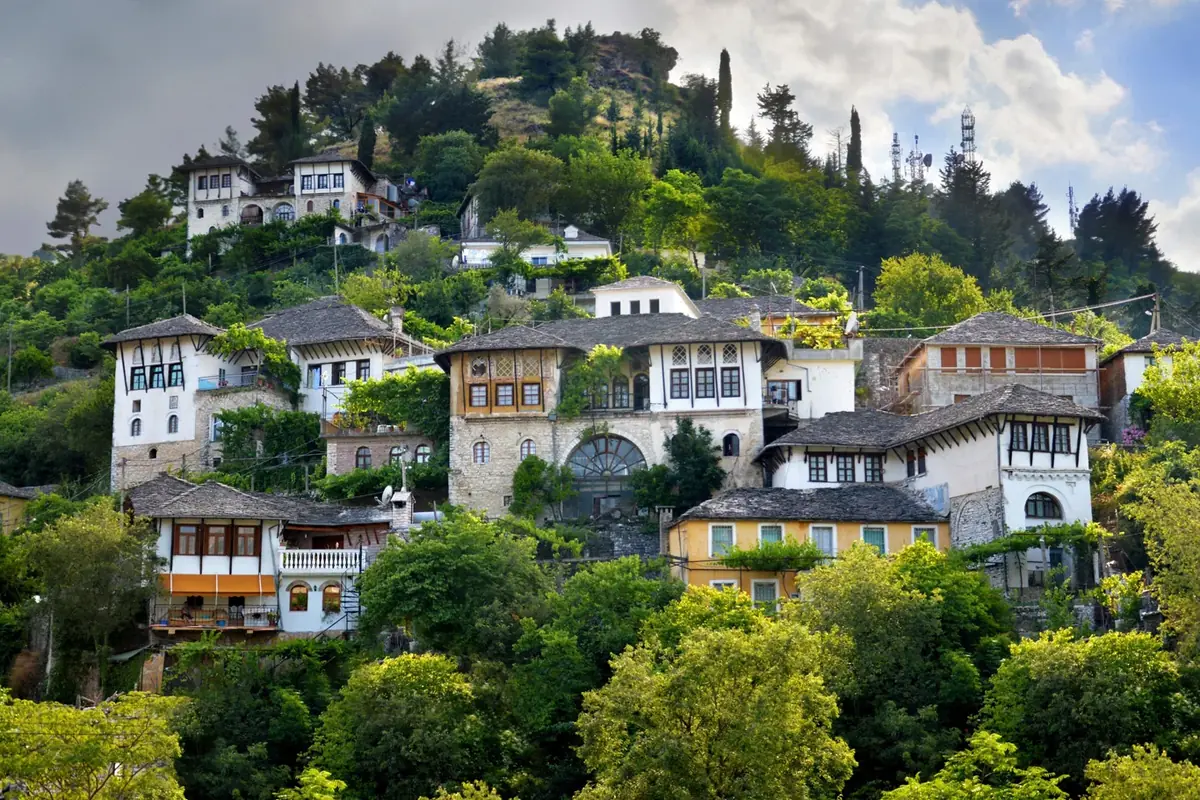
Yes. Gjirokaster is worth visiting for anyone who likes UNESCO old towns, Ottoman architecture, or 20th-century history. The Stone City packs a Balkan-best castle, a working bazaar, two restored tower houses, and an eerie Cold War bunker onto one walkable hill. Skip it only if you want beaches and zero history.
The town sits at around 985 feet (300 m) on the flank of Mount Gjerë, looking over the Drino Valley. It carries UNESCO World Heritage status as a rare surviving example of an Ottoman merchant town, and it’s the birthplace of both communist dictator Enver Hoxha and the novelist Ismail Kadare.
A minority of travelers call it overrated and say a half-day is enough. They’re rushing it. The town is quiet and a little sleepy under the midday sun, which is exactly why so many people underrate it on a quick stop.
Pro Tip: The first time you crest Çerçiz Topulli Square and the slate roofs cascade toward the valley, the Stone City nickname stops being marketing and starts making sense.
How many days do you need in Gjirokaster?
One full day covers the headline sights: the castle, the Old Bazaar, one tower house, and the Cold War Tunnel. Two days adds Ali Pasha Bridge, a second museum, a long lunch, and a sunset rooftop. Three days lets you fit in Antigonea, the Blue Eye, or a Permet day trip.
Match your stay to your travel style and the shape of your wider Albania trip:
- Day-trippers from Saranda or the Riviera: Half a day hits the castle, bazaar, and a qifqi lunch. Tight but doable.
- Road-trippers: One night breaks the drive between Saranda and Berat or Tirana, and lets you see the town after dark.
- Slow travelers and culture buffs: Two to four nights for the museums, day trips, and unhurried meals.
The single best reason to sleep here is timing. The old town empties when the tour buses pull out in the early evening, and the lantern-lit bazaar belongs to locals on their evening xhiro walk.
Pro Tip: Arrive on an afternoon furgon and you can still bag the castle, the bazaar, and a qifqi dinner before dark — you don’t need a full morning to start.
Climbing Gjirokaster Castle and its museums
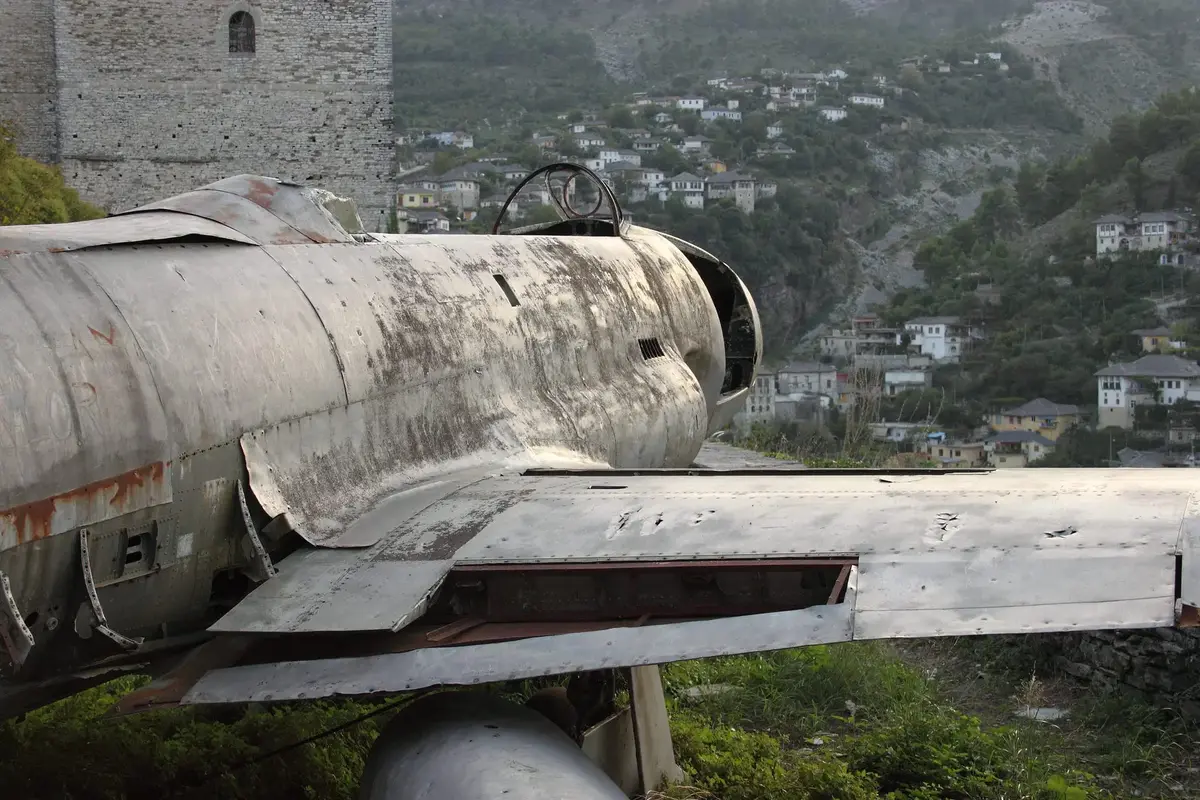
Gjirokaster Castle, Albania’s second-largest fortress, towers over the Drino Valley with long ramparts, an open-air artillery gallery, a clock tower, and a captured US Air Force jet. Adult entry runs about $4.35 (400 lek), and the inner Gjirokaster Museum costs roughly $2.17 (200 lek) more. Budget 1.5 to 3 hours.
The castle’s draws, in rough order of payoff:
- The artillery gallery: A vaulted hall lined with captured field guns and tanks, open to the valley breeze.
- The captured US jet: A Cold War-era American trainer that landed in Albania and never left, now parked on the terrace.
- The clock tower and ramparts: The best free-standing views over the Drino Valley and the slate roofs below.
- The old prison cells: Dark, unlit side tunnels you can poke into with your phone torch.
Here’s the contrarian part. There are two paid museums inside the walls, and they are not equal. The Gjirokaster Museum is one of the better-presented museums in the Balkans and earns its supplement. The National Museum of Armaments, by contrast, is a poorly labeled jumble of hardware — skip it and put the money toward a coffee in the bazaar.
Pro Tip: I kept drifting down the unlit side tunnels with my phone torch and stumbling into the old prison cells. Bring a small flashlight and you’ll find corners most visitors walk straight past.
How much does Gjirokaster Castle cost and what are the hours?
Gjirokaster Castle costs about $4.35 (400 lek) for adults, with children under 12 free and students around $1.30 (120 lek). The inner Gjirokaster Museum adds roughly $2.17 (200 lek). It opens 09:00–19:00 in the warmer months and 09:00–17:00 in winter. Bring cash — cards aren’t accepted.
- Cost: Adults about $4.35 (400 lek); students $1.30 (120 lek); under-12s free
- Museum supplement: Around $2.17 (200 lek) for the Gjirokaster Museum
- Hours: Roughly 09:00–19:00 spring through early autumn; 09:00–17:00 in the colder months
- Free entry: Albanian citizens enter free on the last Sunday of each month
- Payment: Cash only — the ticket window doesn’t take cards
Ignore older guides that still quote the castle at 200 lek or in euros only. The price has doubled, it’s cash, and there’s no ATM at the gate.
Pro Tip: The ticket window only took lek the morning I went, so I had to backtrack to a new-town ATM before climbing. Pull cash before you start uphill.
How do you get up to the castle without melting?
From the Old Bazaar it’s a steep 30–40 minute climb on smooth limestone slabs that turn slippery in rain. A taxi cuts it to under 10 minutes for about $3.26–$5.43 (300–500 lek). In summer heat, take the taxi up and stroll down, saving the ramparts for the cooler golden hour.
The surface here is polished limestone, not the rough cobblestone people expect, so rubber soles matter more than you’d think. After a thunderstorm I watched locals shuffle heel-first down the slabs like they were on ice.
- On foot: 30–40 minutes uphill from the bazaar
- By taxi: Under 10 minutes, about $3.26–$5.43 (300–500 lek)
- Best plan: Taxi up in the heat, walk down in the cool of late afternoon
Wandering the Old Bazaar and Ottoman tower houses
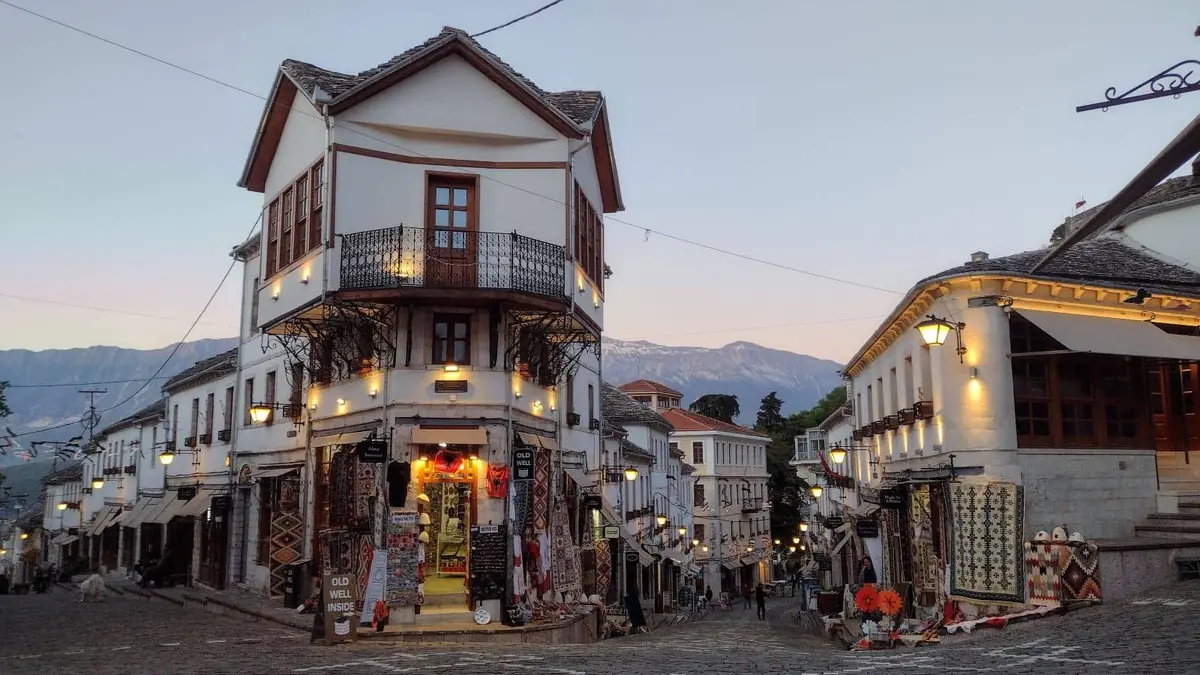
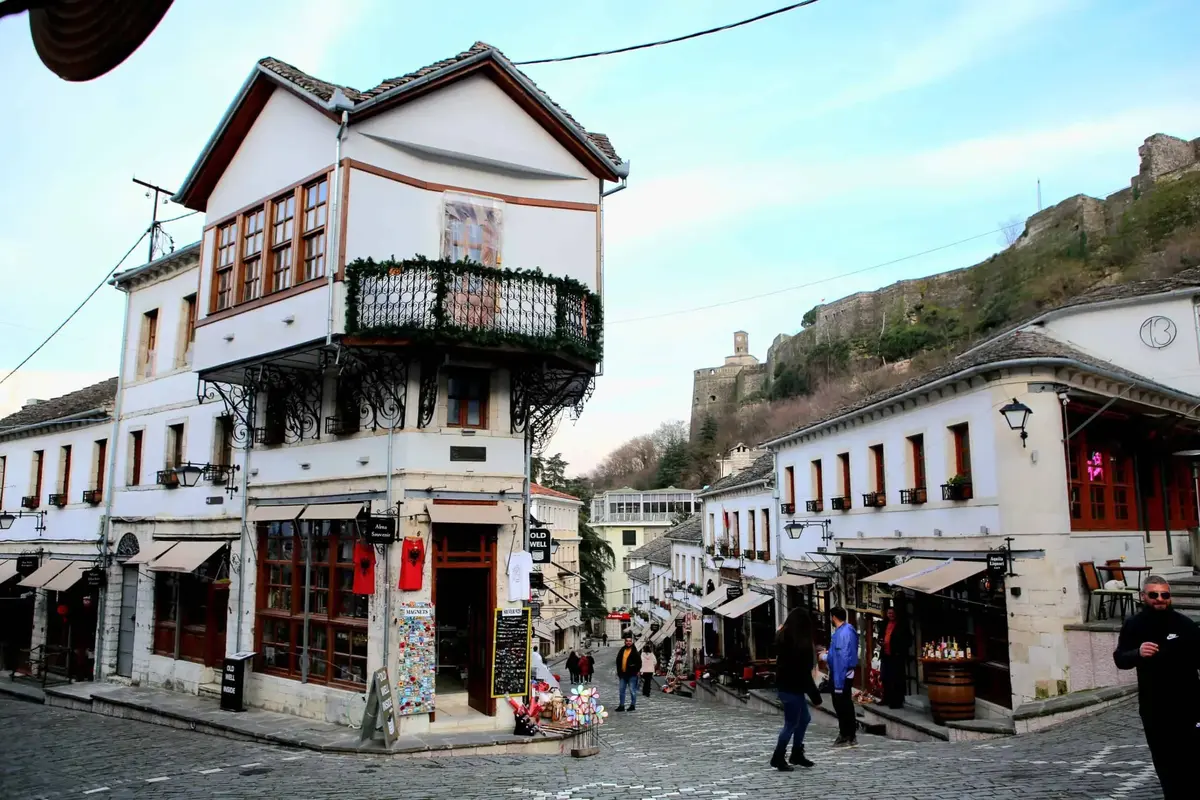
The Old Bazaar (Pazari i Vjetër) fans out from a five-way cobbled junction lined with cafés, carpet shops, and stone houses. Above it, two restored Ottoman tower houses are open to visitors: Skenduli House, with a family-led guided tour, and Zekate House, the grander architectural showpiece. Doing both takes about two hours.
The bazaar was rebuilt after a fire in the early 20th century, which is why the stonework feels of a piece. Pause at Te Kubé, a café and bookshop tucked under the Bazaar Mosque, for the best people-watching seat in town. The tower houses, locally called kullë, sit a short walk uphill in the quieter quarters.
Skenduli House vs Zekate House — which should you visit?
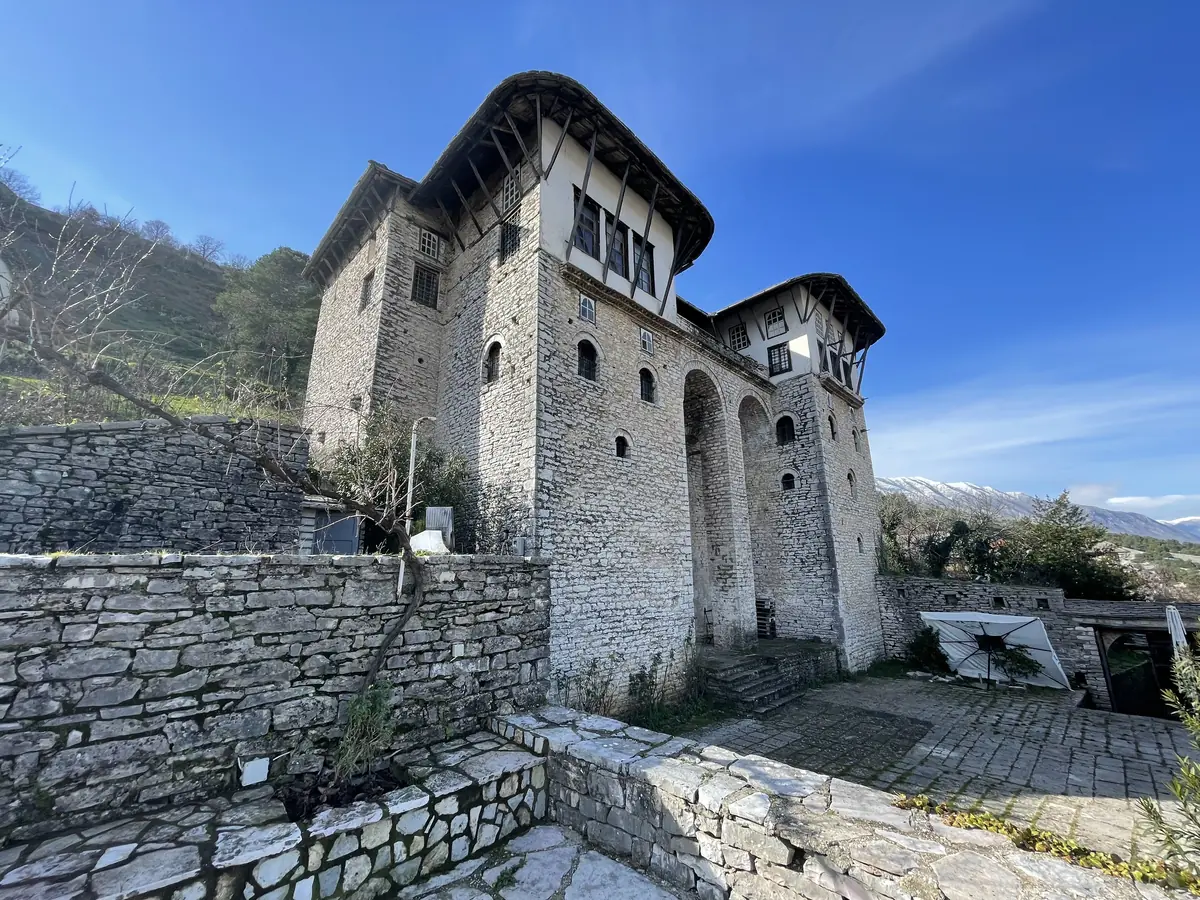
Visit Skenduli House for a personal, family-guided tour that explains how an Ottoman household actually lived. Visit Zekate House for the most dramatic architecture and the best terrace view over the valley. Both cost roughly $2.17 (200 lek) and sit a short walk apart, so history lovers should simply do both.
| Skenduli House | Zekate House | |
|---|---|---|
| Cost | ~$2.17 (200 lek) | ~$2.17–$3.26 (200–300 lek) |
| Tour style | Guided by a family descendant | Self-guided |
| Built | Early 1700s | Early 19th century |
| Highlight | The lived-in detail and hidden corners | Twin towers, frescoed reception room |
| View | Modest | Best valley terrace in town |
| Time needed | 45–60 minutes | 30–45 minutes |
Skenduli is the more theatrical visit — it has 64 windows, 44 doors, and 9 fireplaces, and the guide brings the rooms to life. Zekate is the architecture you photograph, with a terrace café and a frescoed top floor.
Pro Tip: In Skenduli’s wedding room, ask to see the hidden stairwell behind the cupboard — a wartime bolt-hole most tours walk right past. I timed Zekate’s top-floor verandah for sunset and had the frescoed room to myself as the castle lights came on.
Descending into the Cold War Tunnel
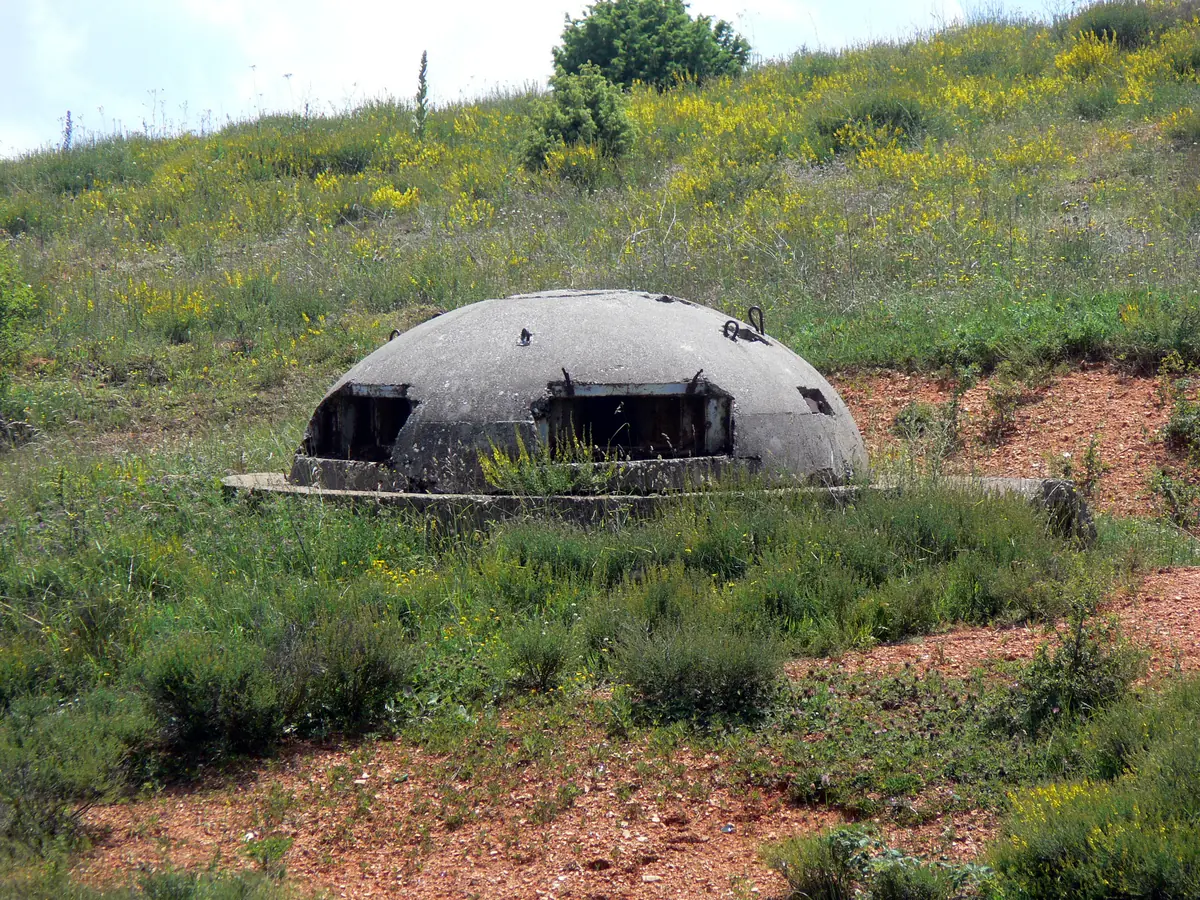
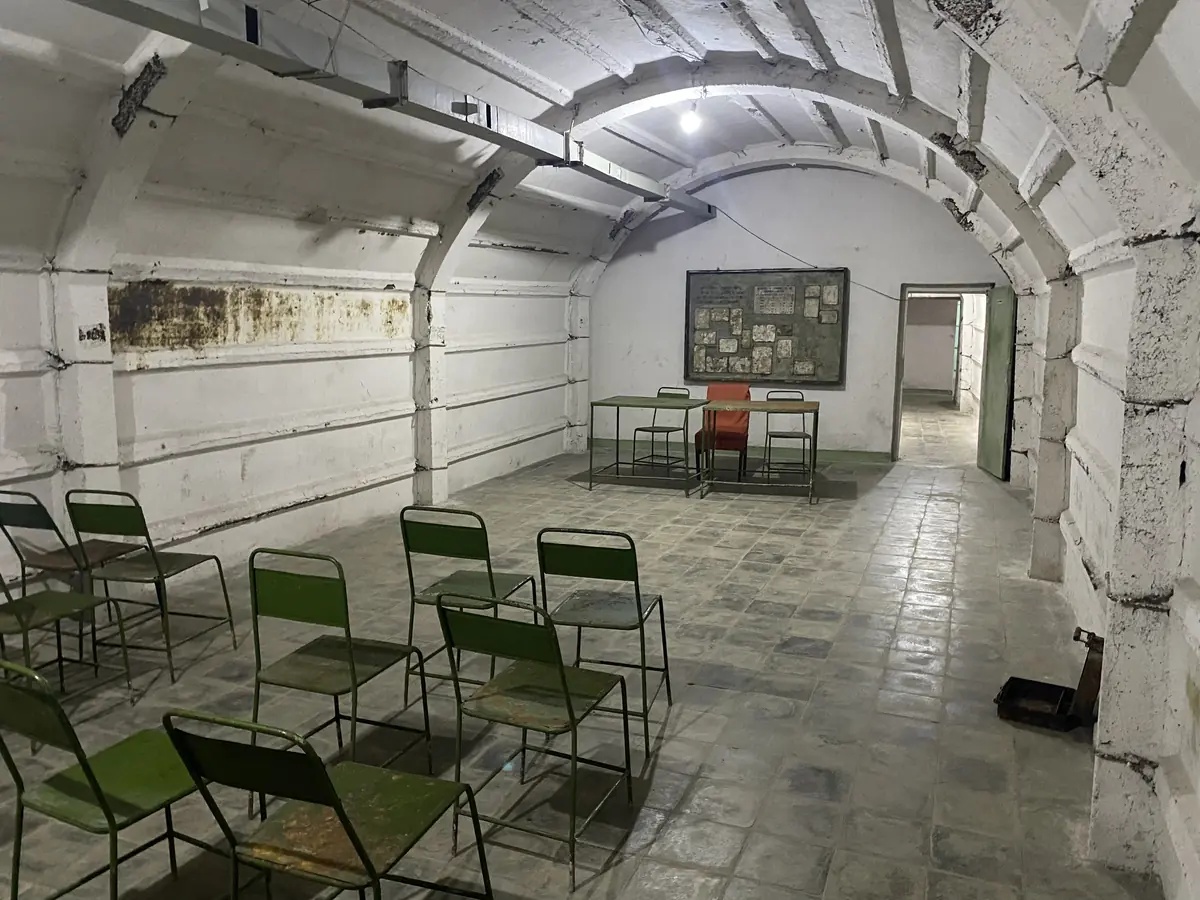
Beneath the old town hides a 59-room nuclear bunker built in secret for Gjirokaster’s communist elite. The roughly 20-minute guided tour through its cold, bare corridors costs about $2.17 (200 lek), cash only. Tickets are sold at the tourist office on Çerçiz Topulli Square, next to the Town Hall.
The bunker runs about half a mile (800 m) underground and was designed to shelter up to 300 hand-picked people. Because it was left largely untouched, it feels rawer and more unsettling than Tirana’s restored Bunk’Art sites. The guide’s footsteps echoed down corridors so silent I could hear the ventilation shafts ticking.
- Cost: About $2.17 (200 lek), cash only
- Duration: Roughly 20 minutes, guided
- Tickets: Tourist office on Çerçiz Topulli Square, by the Town Hall
- Temperature inside: A constant 59°F (15°C) — bring a light layer even in July
Pro Tip: Don’t confuse the paid bunker museum with the free pedestrian “Nostalgia” tunnel that simply passes under the town. The Cold War bunker is the one with the ticket and the guide.
Hiking to Ali Pasha Bridge and the Obelisk
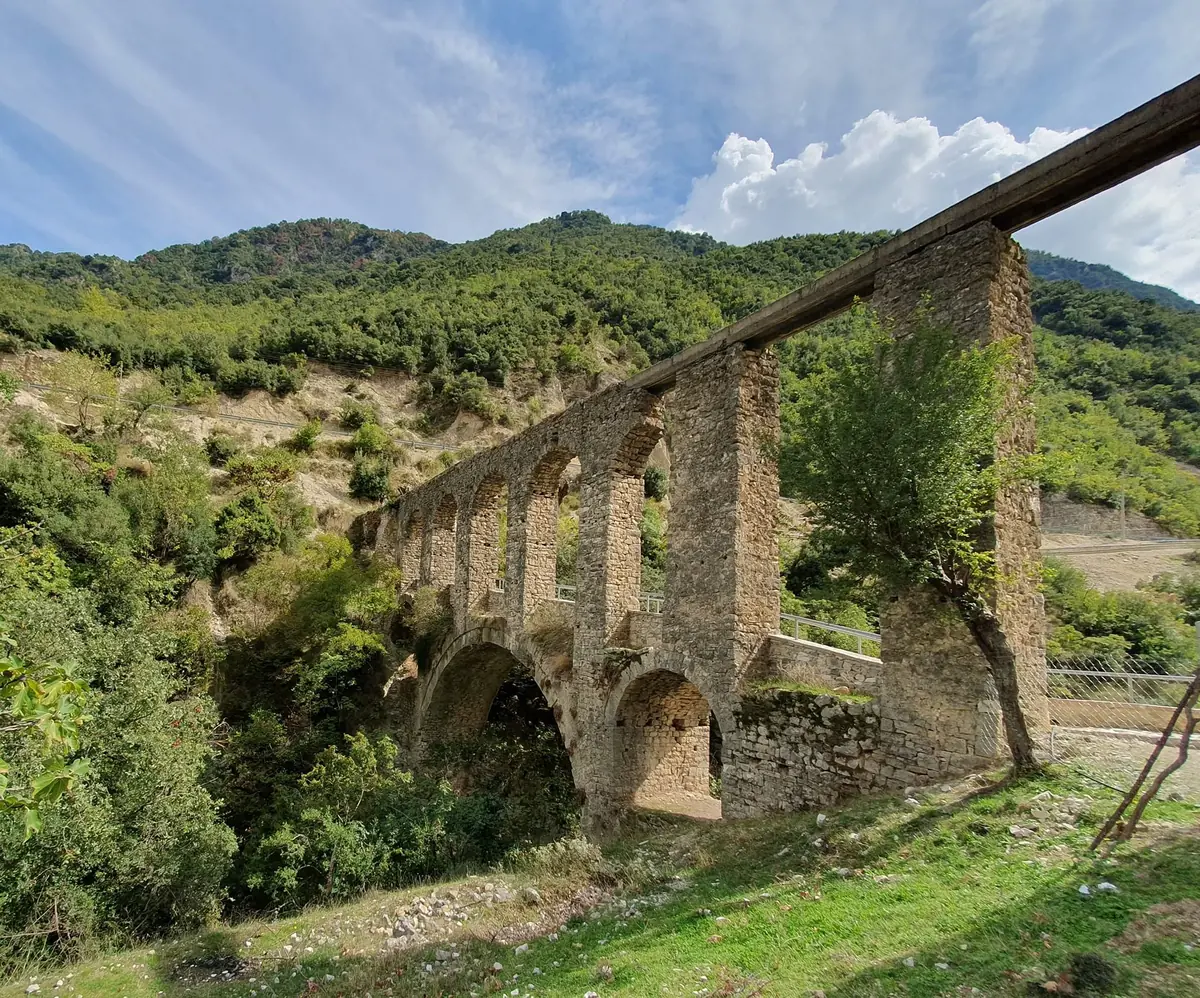
A 30-minute walk through the Manalat and Dunavat quarters leads to Ali Pasha Bridge, the surviving arch of a 19th-century aqueduct that once carried water to the castle. It’s free, quiet, and framed by hills. At dusk you might catch shepherds and goats crossing it. Pair it with dinner at a Manalat tavern.
The aqueduct it once belonged to stretched about 7.5 miles (12 km) before most of it was pulled down in the early 20th century. This is the move I’d make over a second castle museum: skip the Armaments hall and walk out here instead. On the way back, the Obelisk marks the site of the city’s first Albanian-language school.
A herd of goats clattered past me toward the bridge at golden hour, exactly the silhouette a café owner had promised I’d see.
What food is Gjirokaster known for, and where to eat?
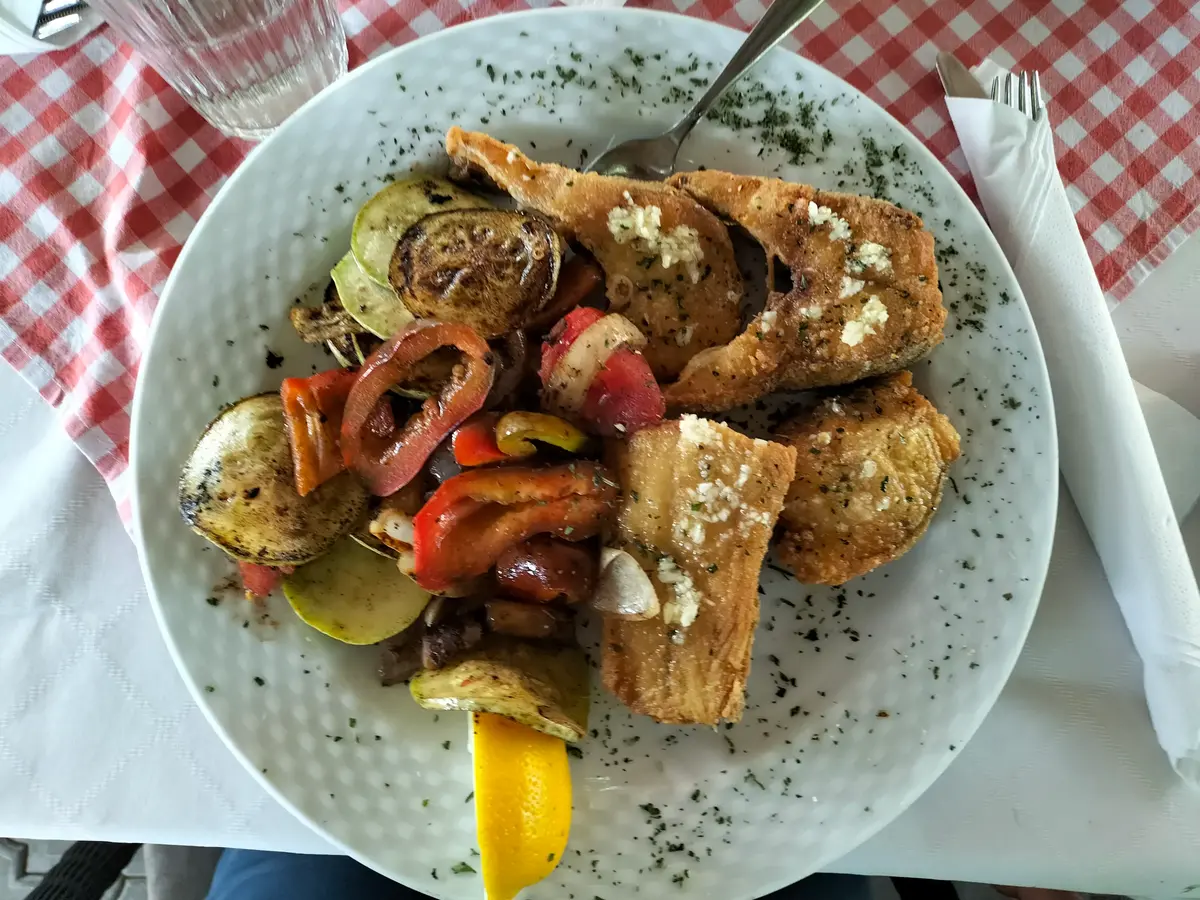
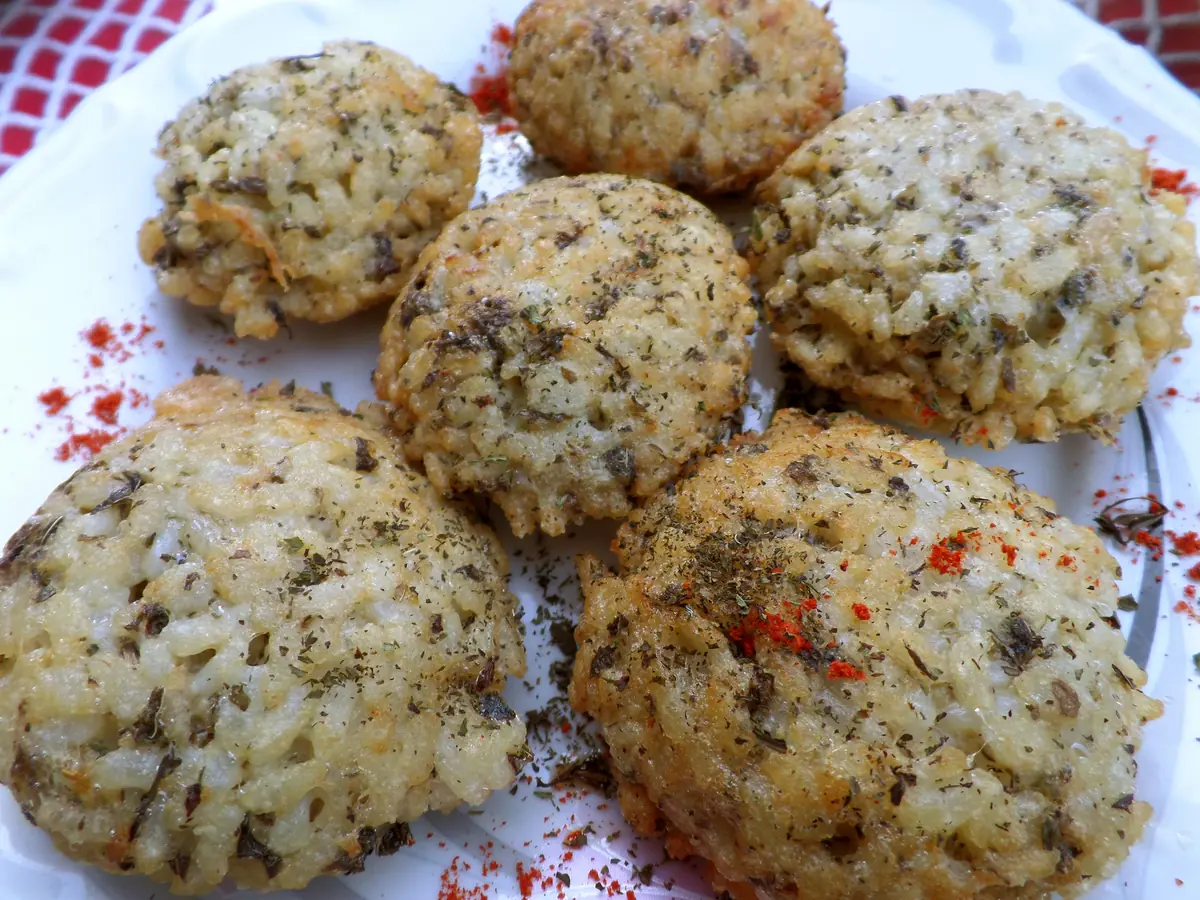
Gjirokaster’s signature dish is qifqi — fried rice balls with egg, mint, and black pepper, found almost nowhere else in Albania. Also try pasha qofte (meatball-rice soup), shapkat, and oshaf, a sheep’s-milk-and-fig pudding. Eat at family-run taverns like Kujtimi, Taverna Kuka, Odaja, or Gjoça in and around the Old Bazaar.
Where to eat, with what to order:
- Kujtimi: The reliable bazaar standby for qifqi and grilled meats. Mixed traditional platters run around $11 (1,000 lek) per person.
- Taverna Kuka: Homestyle cooking and generous raki pours, a short walk from the center.
- Odaja and Gjoça Tradicional: Atmospheric stone-walled rooms for a longer dinner.
- Te Kubé: Coffee and books under the Bazaar Mosque, best for an afternoon break rather than a full meal.
Oshaf often arrives free at the end of the meal. At Gjoça the owners brought an unbidden bowl “to try” — figs and cinnamon, still warm.
Best day trips from Gjirokaster
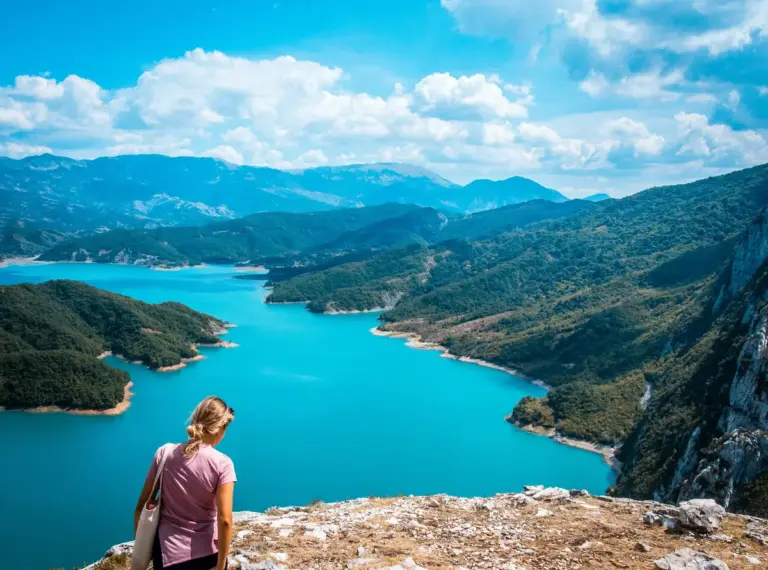
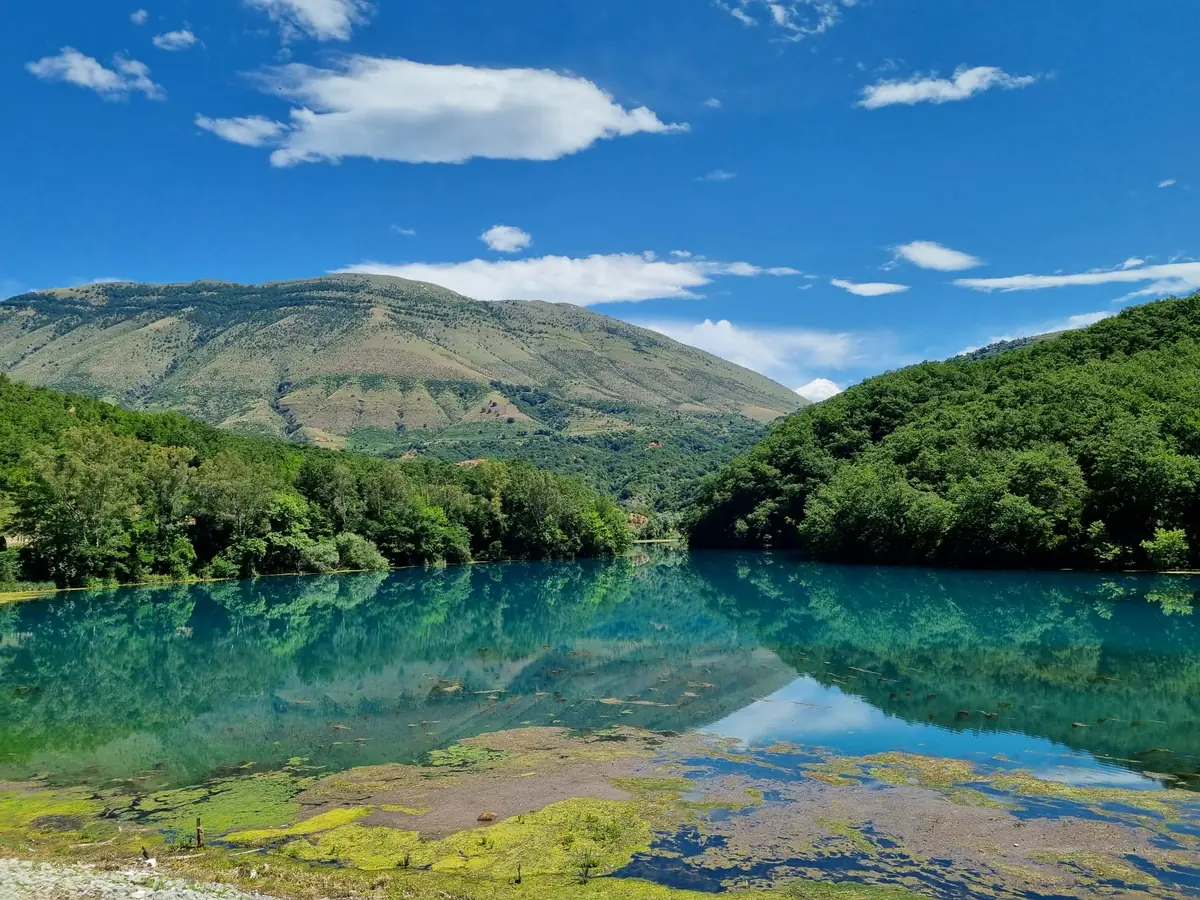
The top day trips are the Blue Eye spring (Syri i Kaltër), about halfway to Saranda; the ancient Greek ruins of Antigonea above the Drino Valley; peaceful Viroi Lake just outside town; and Permet for Vjosa river rafting. The Blue Eye pairs perfectly with travel between Gjirokaster and the coast.
- Blue Eye (Syri i Kaltër): Entry about $1.10 (100 lek), plus a 1.2-mile (2 km) walk from the drop-off. Swimming isn’t officially allowed, though plenty brave the icy water behind the restaurant.
- Antigonea Archaeological Park: Greek ruins about 9 miles (14 km) out, founded in the 3rd century BC by Pyrrhus of Epirus, with valley views and almost no crowds.
- Viroi Lake: A quiet lake about 2 miles (3 km) from town with an island café — good for a slow afternoon.
- Permet and the Vjosa: Further out, for river rafting and hot springs if you’ve got a full day.
Braving the Blue Eye’s pool was the jolt that made that detour worth it. The water is genuinely cold enough to steal your breath.
How to get to Gjirokaster from Tirana, Saranda, and Berat
Gjirokaster has no airport or train, so you arrive by bus, furgon, car, or tour. From Saranda it’s about an hour; from Tirana roughly 4 to 4.5 hours; from Berat around 3 hours. Buses drop you in the lower new town, a steep 20–30 minute walk below the old town.
| Route | Time | Distance | Cost | Notes |
|---|---|---|---|---|
| Saranda → Gjirokaster | ~1 hr | 32 mi (51 km) | ~$6 (450 lek) | ~5 buses daily, first around 10:00, near Friendship Park |
| Tirana → Gjirokaster | 4–4.5 hrs | 141 mi (227 km) | ~$14 (1,200 lek) | Several daily from the North-South Terminal, roughly 05:00–20:30 |
| Berat → Gjirokaster | ~3 hrs | 112 mi (180 km) | Varies | Often involves a connection; check locally |
Many travelers reach the region by flying to Corfu and taking the ferry to Saranda, then catching a furgon inland. My furgon dropped me at a gas station on the highway below town, so I shared a taxi up rather than haul a backpack over the slabs.
Pro Tip: Whatever route you take, you’ll be deposited in the lower new town, not the old town. Split a taxi for the final climb — it’s cheap and saves a sweaty 20–30 minutes uphill.
When is the best time to visit Gjirokaster?
Spring (April–June) and autumn (September–October) bring mild days around 70–78°F (21–26°C), thinner crowds, and good light. July and August are hot and dry, regularly near 90°F (32°C) and occasionally pushing record highs near 109°F (42.8°C). Winter is quiet and misty, with many restaurants shut.
- Spring and autumn: Around 70–78°F (21–26°C), the sweet spot for walking the steep streets
- Summer: Near 90°F (32°C), with record highs near 109°F (42.8°C) — save indoor sights for midday
- Winter: Cool and atmospheric, with January highs around 50°F (10°C), but reduced opening hours
In mid-autumn the streets were near-empty and the mountains had a touch of color — far better than the summer crush. If you come in July, do the castle and tower houses in the heat of the day and the outdoor walks at dawn or dusk.
Is Gjirokaster better than Berat?
Both are UNESCO Ottoman towns, but Gjirokaster edges ahead for its bigger castle, more dramatic mountain setting, the Cold War Tunnel, and stronger access to nature. Berat, the “city of a thousand windows,” is easier to reach from Tirana. If you can, visit both; if you’re forced to choose with southern plans, pick Gjirokaster.
The practical difference is geography. Berat sits closer to Tirana and the central route, while Gjirokaster is the natural anchor for a southern trip linking Saranda, the Blue Eye, and the Riviera. Having slept in both, Gjirokaster’s mountain backdrop made the evening xhiro feel more dramatic to me.
Bottom line — your Gjirokaster game plan
TL;DR: Give Gjirokaster at least one full day and ideally a night. Climb the castle early, tour one tower house and the Cold War Tunnel, eat qifqi in the bazaar, and walk to Ali Pasha Bridge at dusk. Add a second day for the Blue Eye or Antigonea. Carry cash everywhere.
A quick budget gut-check for the headline sights:
- Castle: ~$4.35 (400 lek), plus ~$2.17 (200 lek) for the good museum
- Cold War Tunnel: ~$2.17 (200 lek)
- Tower house: ~$2.17 (200 lek)
- Everything cash-only — there are no card readers at the gates
The town only became magic after the buses left and the lantern-lit bazaar belonged to locals again. So which kind of traveler are you — the half-day day-tripper from Saranda, or the one staying the night to catch the after-8 quiet? Tell me your route and I’ll tell you what to cut.