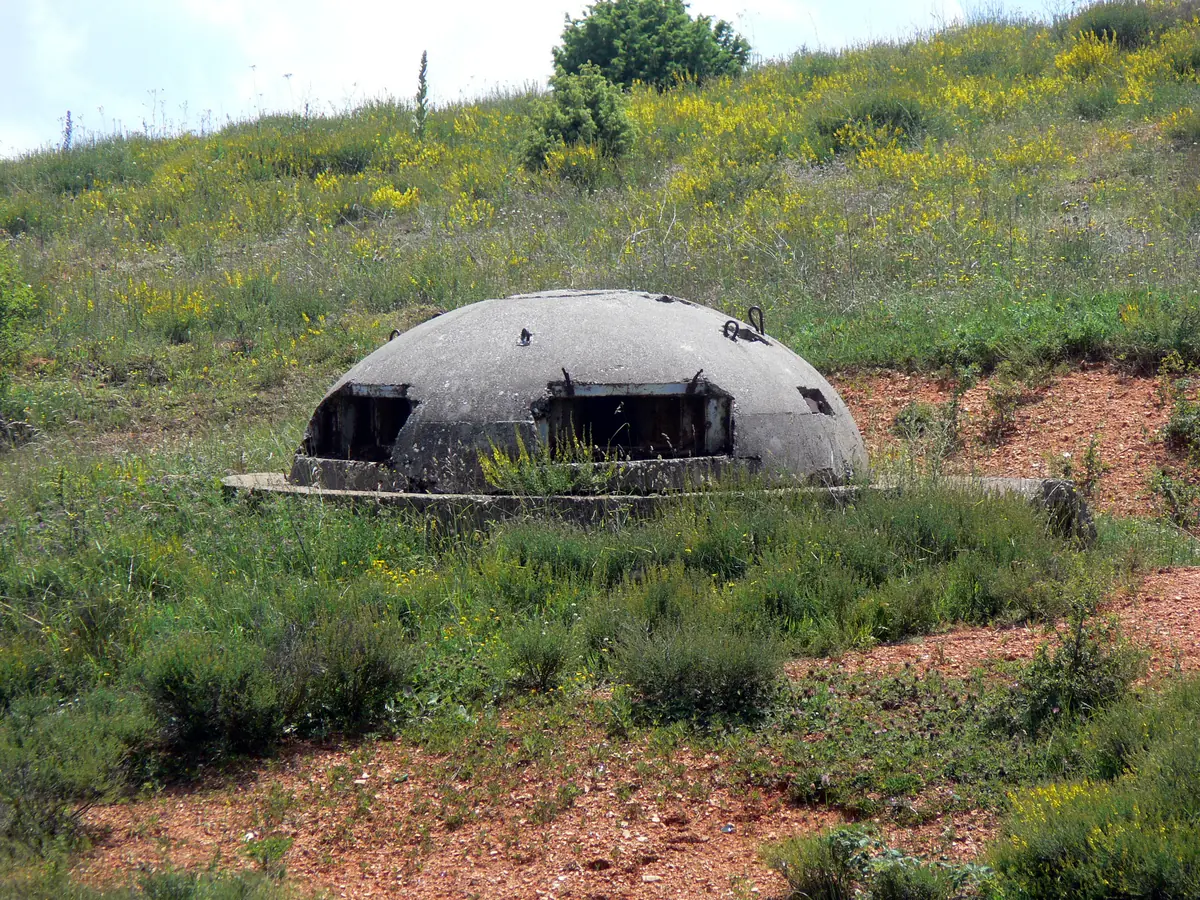
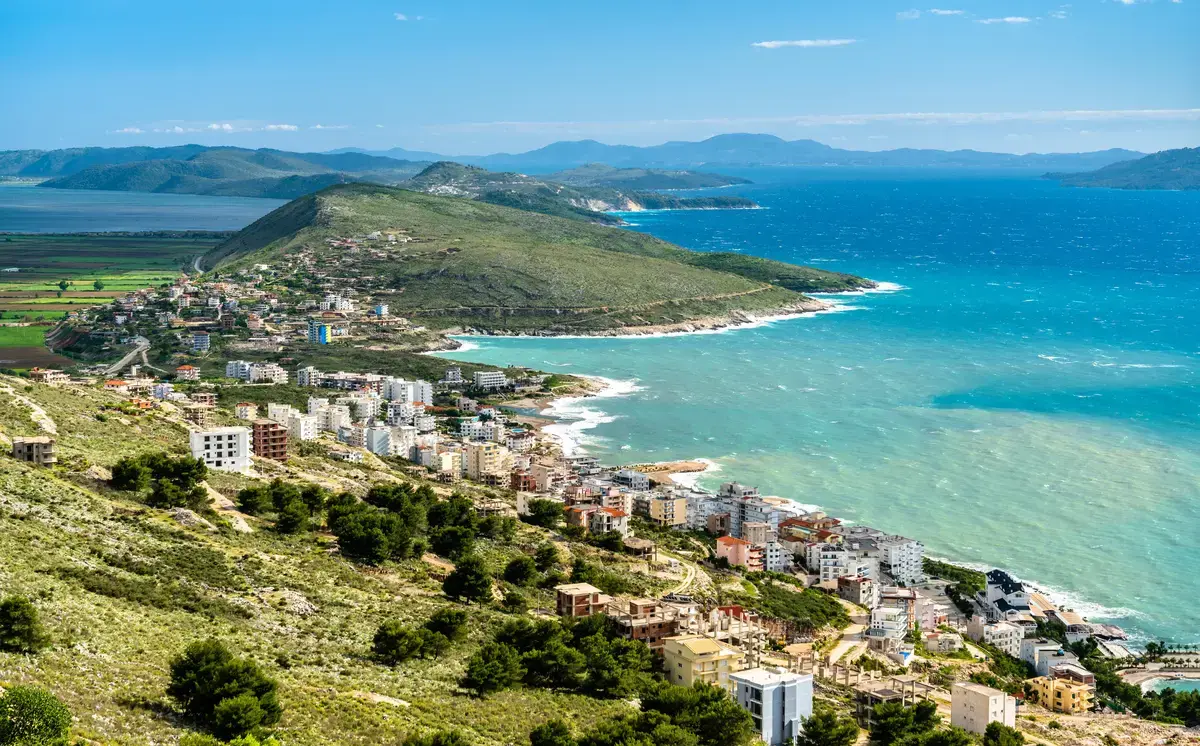
The best things to do in Saranda aren’t really in Saranda. The town itself is a stack of concrete apartment blocks. But within a 30-minute drive sit a UNESCO-listed ancient city, a spring so blue it looks fake, and beaches that rival Corfu for a third of the price. Here’s what’s worth your time — and what to skip.
What are the best things to do in Saranda?
The five things to do in Saranda that justify the trip are Butrint National Park (UNESCO Roman-Greek ruins, about $12), the Blue Eye spring near Muzinë (about $0.60), Lëkurësi Castle at sunset (free), Ksamil’s four offshore islets, and the evening promenade. All five sit within a 30-minute drive of the town center.
Here’s how the headline sights stack up before you start planning:
| Thing to do | Distance from Saranda | Cost | Hours | Time needed | Pay with |
|---|---|---|---|---|---|
| Butrint National Park | 11 miles (17 km) | ~$12 (1,000 ALL) | 8:30 a.m.–8 p.m. summer; 9 a.m.–5:30 p.m. winter | 1.5–3 hours | Lek cash or e-ticket |
| Blue Eye spring | 14 miles (22 km) | ~$0.60 (50 ALL) + parking | ~7 a.m. to 7 p.m. | 2–3 hours | Lek cash; no ATM |
| Lëkurësi Castle | 2.5 miles (4 km) | Free | Open grounds, daylight to late | 45–60 min | Cards at restaurant |
| Ksamil + four islets | ~20-min drive south | Free beach zones; sunbeds $18–30 | Daylight | Half to full day | Lek cash |
| Monastery of 40 Saints | Above town | ~$2.50 (200 ALL) | ~9 a.m. to 6 p.m. | 30–45 min | Lek cash |
| Saranda promenade | In town | Free | Anytime | ~1 hour | — |
The full rundown below covers all twelve, plus the day trips and the logistics — money, ferries, border rules, the best months — that most guides gloss over.
1. Butrint National Park
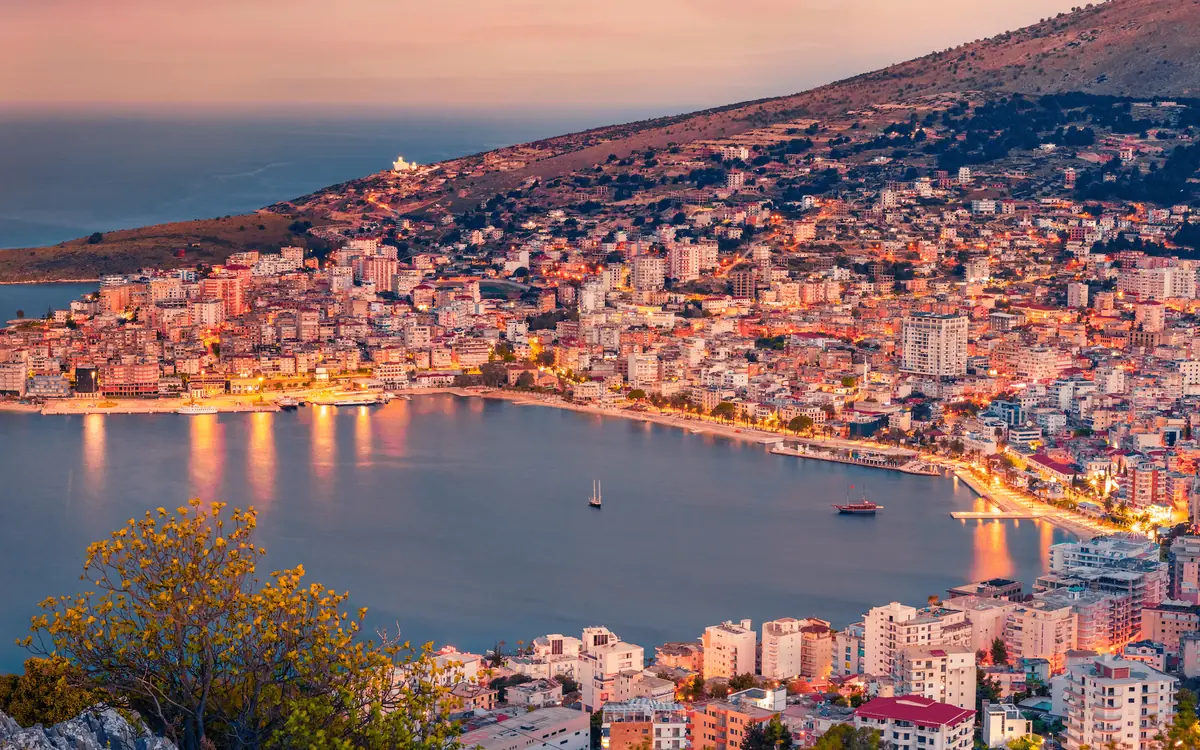
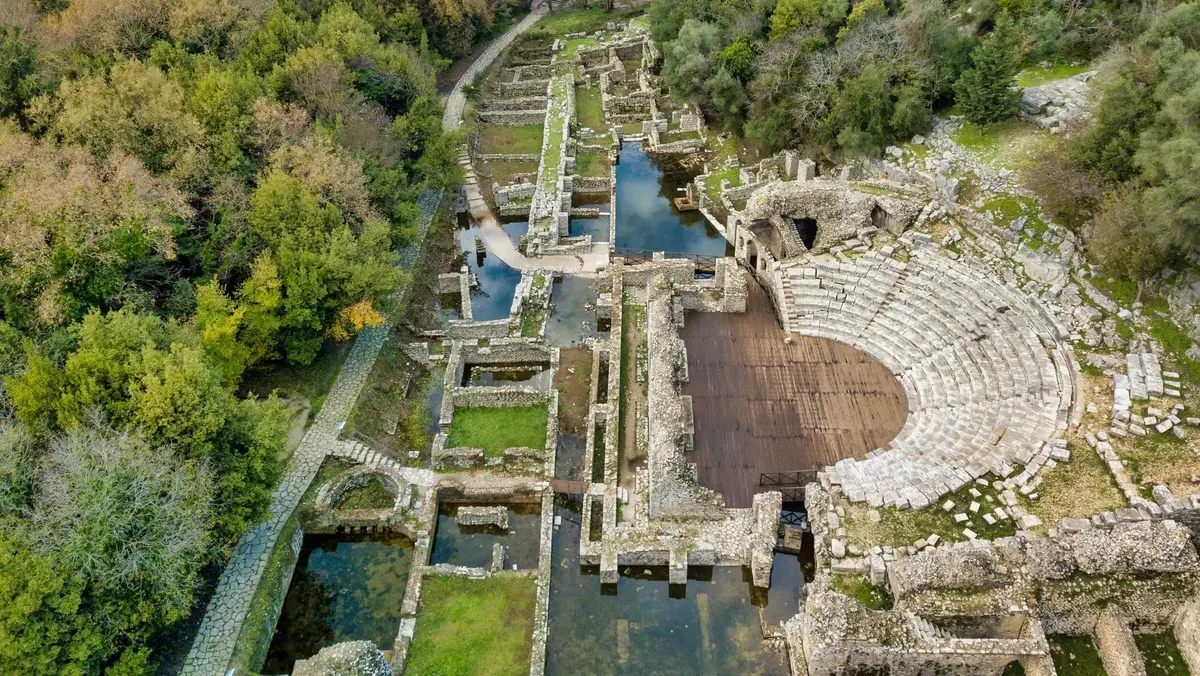
Butrint is the rare ancient site where the ruins and the wild have grown into each other. You walk from a Greek theater into a Roman bathhouse, then a sixth-century baptistery whose mosaic floor sits under a protective layer of sand. Frogs go quiet as you approach the lagoon, and turtles slide off the warm stones into the water.
It earns the label — Albania’s first UNESCO World Heritage Site, inscribed in 1992, with the surrounding wetlands added as a Ramsar site in 2003. The catch is timing. The parking lot fills by late morning when the Corfu day-trip buses arrive on the same midday ferries, and the baptistery mosaic is uncovered only every few years for conservation, not on any schedule you can plan around. I’ve watched the lot fill by 11 a.m. on a June weekday, so come at opening.
Pro Tip: Buy online through Albania’s official cultural-sites ticketing portal, or bring lek in cash. The counter doesn’t reliably take cards, the nearest ATM is back in Saranda, and the free car park holds only about 20 to 25 vehicles — when it’s full, staff send you across the Vivari Channel on the hand-hauled cable ferry (about $8, or 700 lek, one way) to park on the far bank.
- Location: ~11 miles (17 km) south of Saranda, near the Vivari Channel; a 25–30 minute drive
- Cost: ~$12 adult (1,000 ALL); ~$6 (500 ALL) ages 12–17; under-12s free; groups of 10+ pay 800 ALL each
- Hours: April to October, 8:30 a.m. to 8 p.m. with last entry at 6 p.m.; November to March, 9 a.m. to 5:30 p.m. with last entry at 3 p.m. The hilltop museum keeps shorter hours, roughly 9 a.m. to 4 p.m.
- Best for: History travelers who want ruins without the crush (arrive early)
- Time needed: 1.5 to 3 hours
- Worth knowing: A new visitor center designed by Kengo Kuma & Associates is under construction at the entrance and will eventually replace the current ticket area — check whether it’s open before you go
2. The Blue Eye at Muzinë
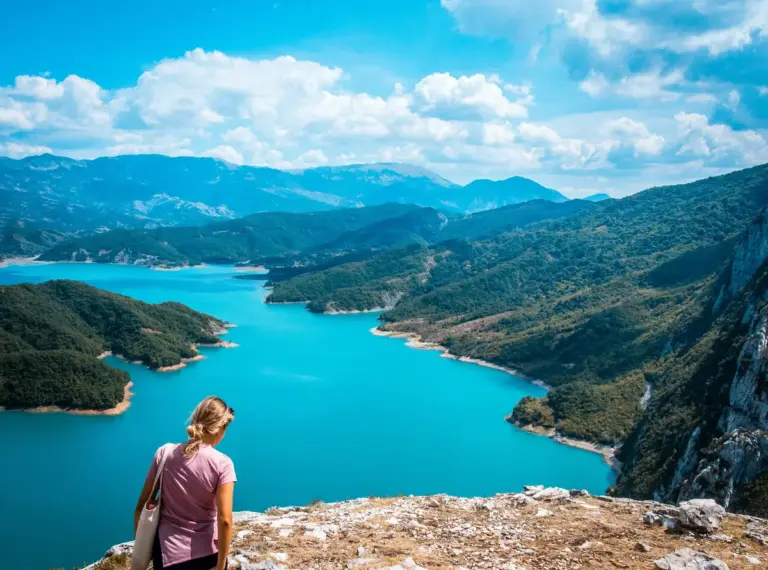
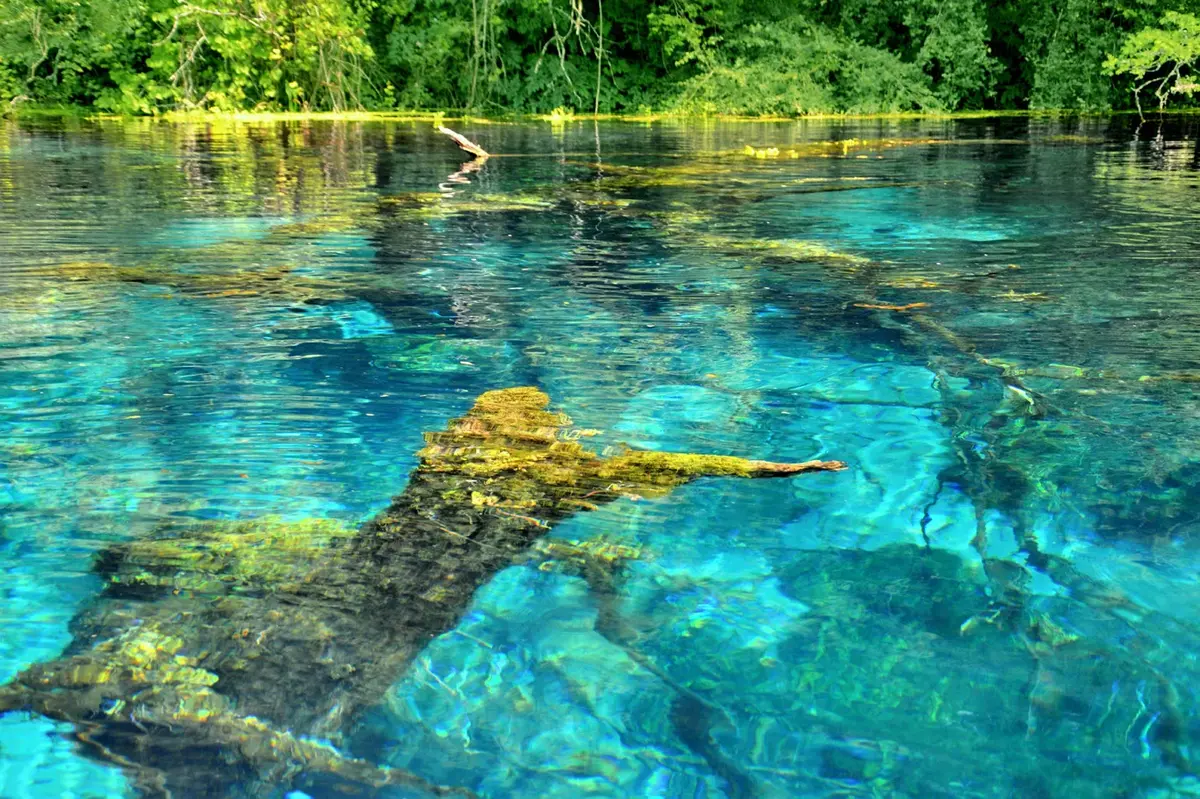
The Blue Eye bubbles up from a spring no one has measured to the bottom of. The center is deep ink-blue, the rim a pale turquoise, and the water holds around 50°F (10°C) even in August — cold enough to make your ankles ache. It pushes out roughly 18,400 liters (about 4,900 gallons) a second, making it Albania’s most powerful karst spring, and feeds the 16-mile (25 km) Bistricë River. Divers have dropped past 165 feet (50 m) without finding the floor.
Here’s the honest version: it’s a two- to three-hour roadside stop, not a day out, and you can’t swim in it — diving and bathing are banned to protect a spring that also supplies drinking water. It’s still worth the detour, but only if you beat the crowds. On a mid-morning visit in high summer the viewing platform is three-deep in phones.
Pro Tip: Go before 9 a.m. The car park is about 1.2 miles (2 km) from the spring — there’s e-scooter rental and a small shuttle train if you’d rather not walk — and both the lot and the trail jam up by mid-morning. Without a car, Saranda’s bus station runs a couple of daily services for around $5 (400 lek) each way; check the return times before you board, because there are only two.
- Location: Syri i Kaltër Natural Park near Muzinë, ~14 miles (22 km) and 30–40 min from Saranda
- Cost: ~$0.60 (50 ALL) per person; parking $1.20–$2.50 (100–200 ALL) per car, more for campervans — cash only
- Hours: Daily, roughly 7 a.m. to 7 p.m.
- Best for: A quick scenic stop en route to or from Gjirokastër
- Time needed: 2 to 3 hours, including the walk from parking
3. Lëkurësi Castle at sunset
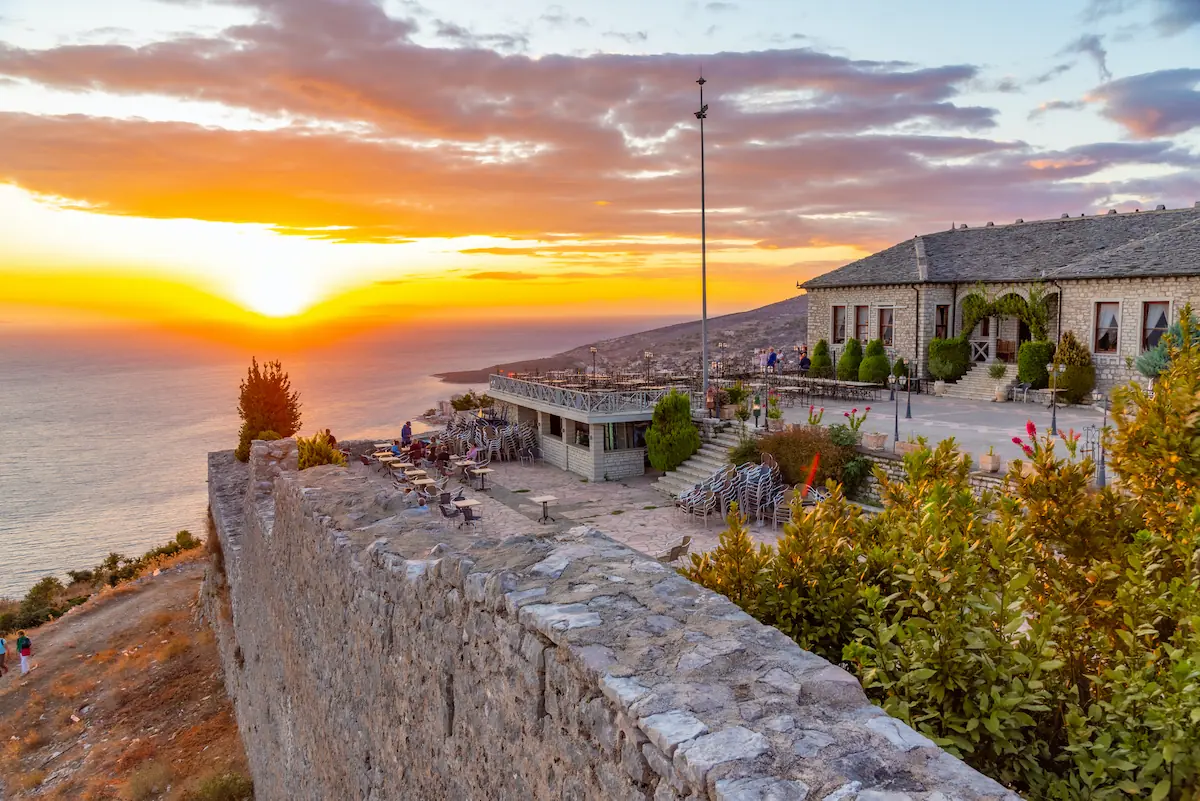
Lëkurësi is a small Ottoman fort on the ridge directly above Saranda, and the reason to climb up is the view, not the walls. From about 660 feet (200 m) up you get the whole bay, the Ionian, the islet-dotted coast toward Ksamil, and Corfu floating on the horizon. At sunset the light turns the water copper and the call to prayer drifts up from town.
Suleiman the Magnificent built it in 1537 to guard the road between Saranda and Butrint. The grounds are open and free, with no ticket booth and no closing gate. There’s a restaurant inside the walls — fine for a drink with the view, but its traveler reviews sit near the bottom of Saranda’s rankings, so treat the food as scenery-priced rather than a destination meal. The sunset is the point.
Pro Tip: A taxi up and back runs roughly $12 to $18 (1,000–1,500 lek), but agree the fare and the waiting time before you get in — drivers price the wait separately. Walking up is a steep 45-to-60-minute slog with no shade, so ride up, then walk down if you want the exercise.
- Location: ~2.5 miles (4 km) above Saranda on the ridge road
- Cost: Free to enter; restaurant extra; free parking near the entrance, but it fills before sunset
- Best for: Sunset, photos, a first-evening orientation of the area
- Time needed: 45–60 minutes
4. Ksamil and its four islets
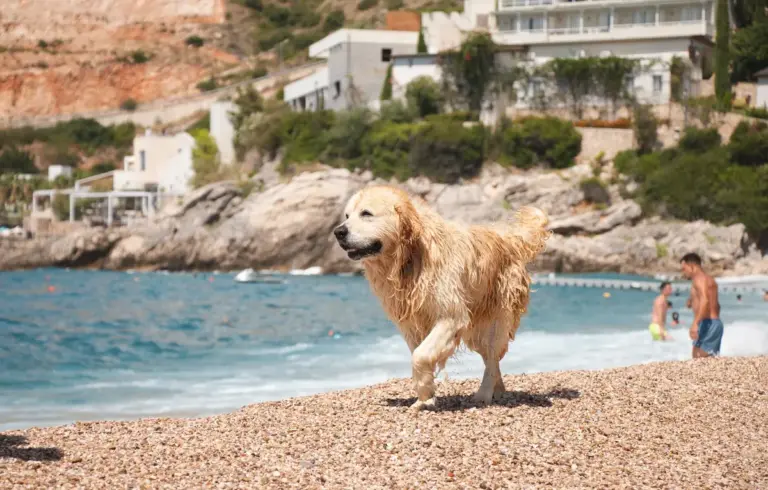
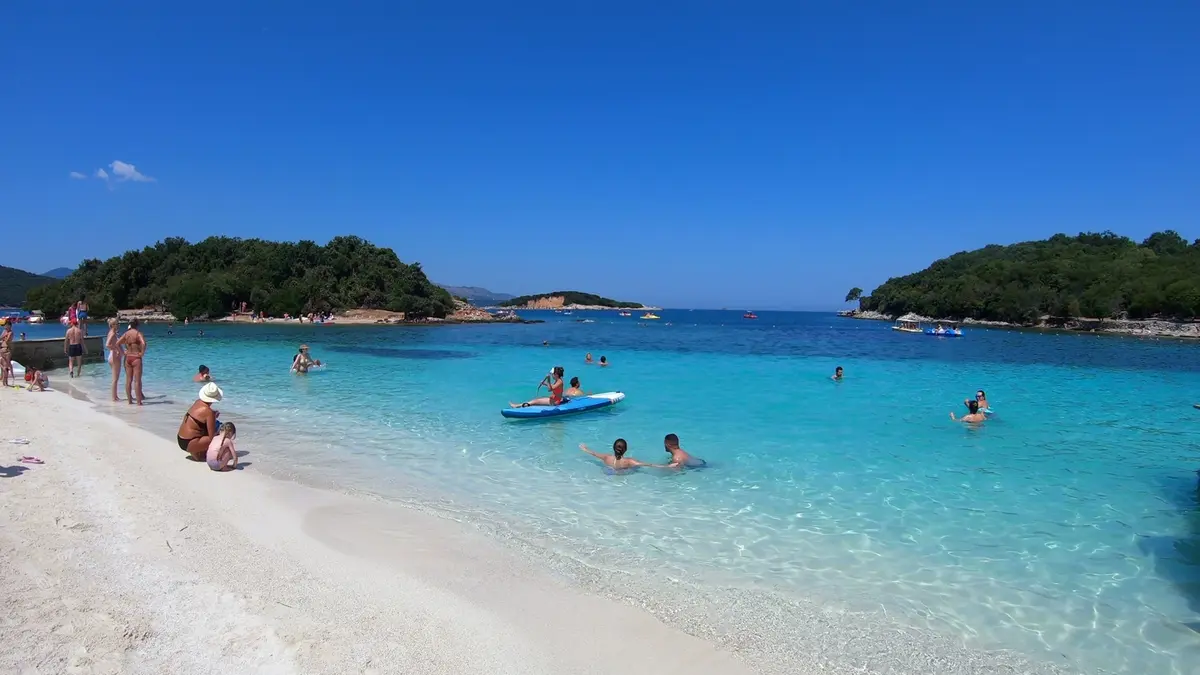
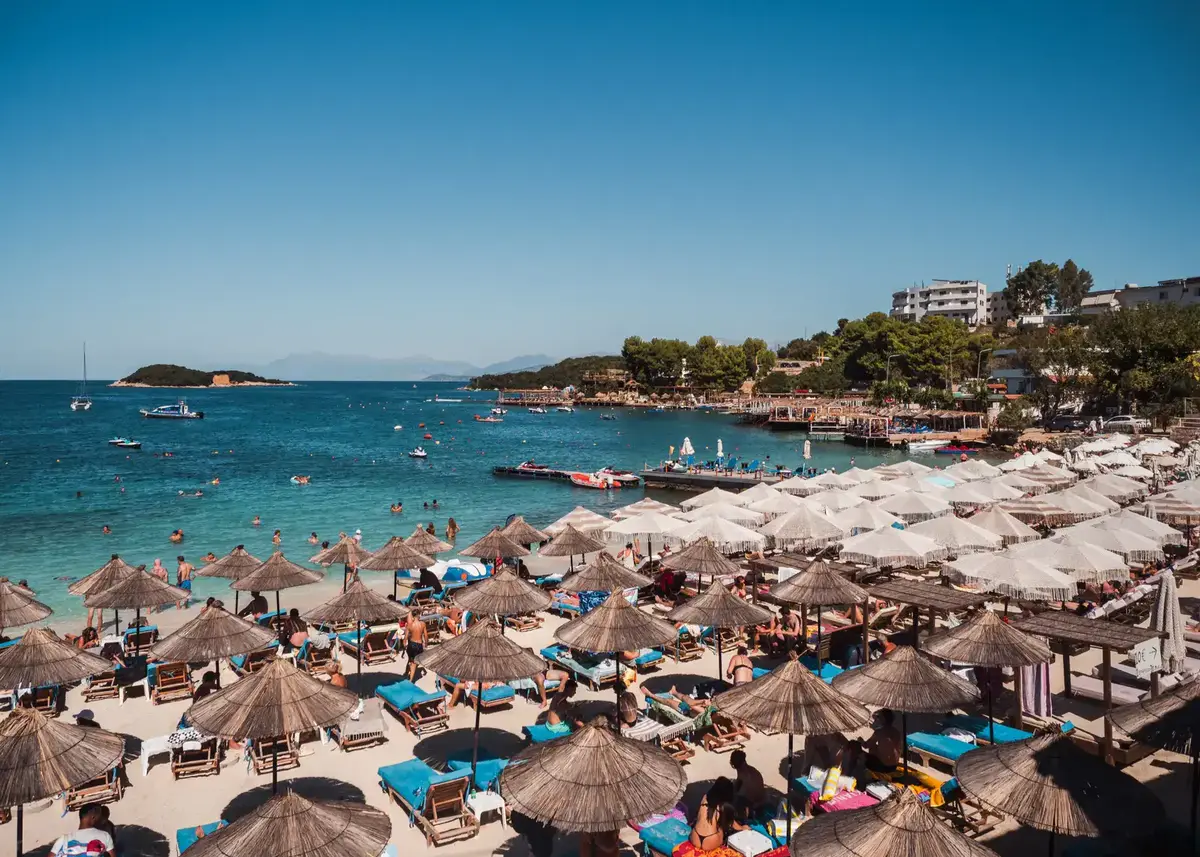
Ksamil is the postcard everyone comes for: white-pebble coves, shallow water that glows aqua over sand, and four little islands close enough to swim or kayak to. The islets sit inside Butrint National Park; the two nearest are a 5-to-10-minute paddle out, and people wade between sandbars when the water is low.
It’s beautiful and oversold in July and August, when the coves vanish under wall-to-wall sunbeds, the music competes bar to bar, and loungers hit $60 to $85 a pair at the premium clubs. Go in June or September and the same beaches are calmer and 20 to 40 percent cheaper. Skip the famous central beach and walk south to quieter coves like The Last Bay or Augusto for the same water with a fraction of the crowd. And remember you never have to rent a sunbed at all — more on that below.
Pro Tip: Prices are often quoted verbally rather than posted, so ask before you sit down. Authorities periodically clear unlicensed piers and floating platforms and mark swim perimeters to keep boats out of the coves, which means the setup at any given beach can look different from one season to the next.
- Location: ~20-minute drive south of Saranda toward Butrint (local bus about $2, or 150 ALL)
- Cost: Beaches free to access; two sunbeds + umbrella ~$18–30 (1,500–2,500 ALL); premium clubs $60–85
- Best for: Families, thanks to the calm, shallow water; best in June or September
- Time needed: Half to full day
5. The seafront promenade and the evening xhiro
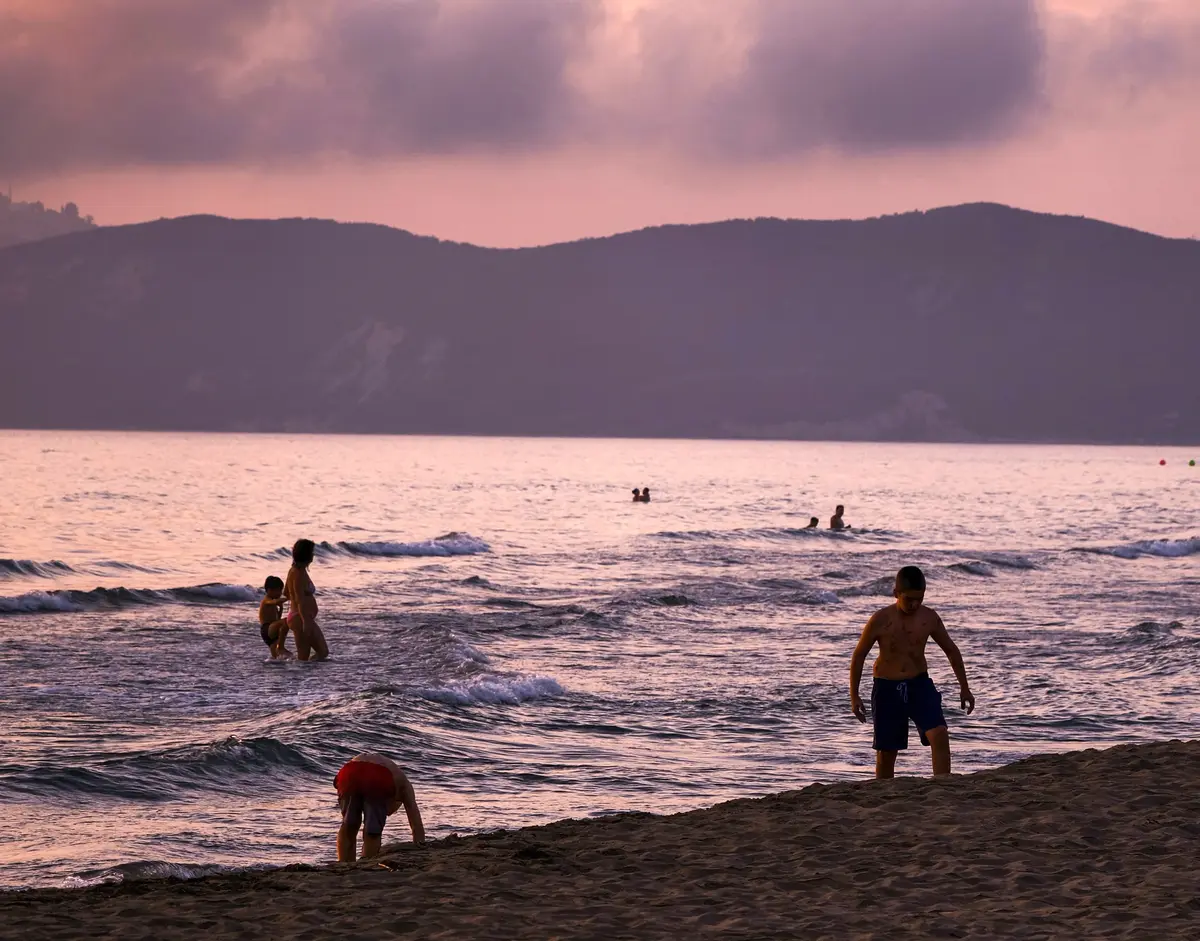
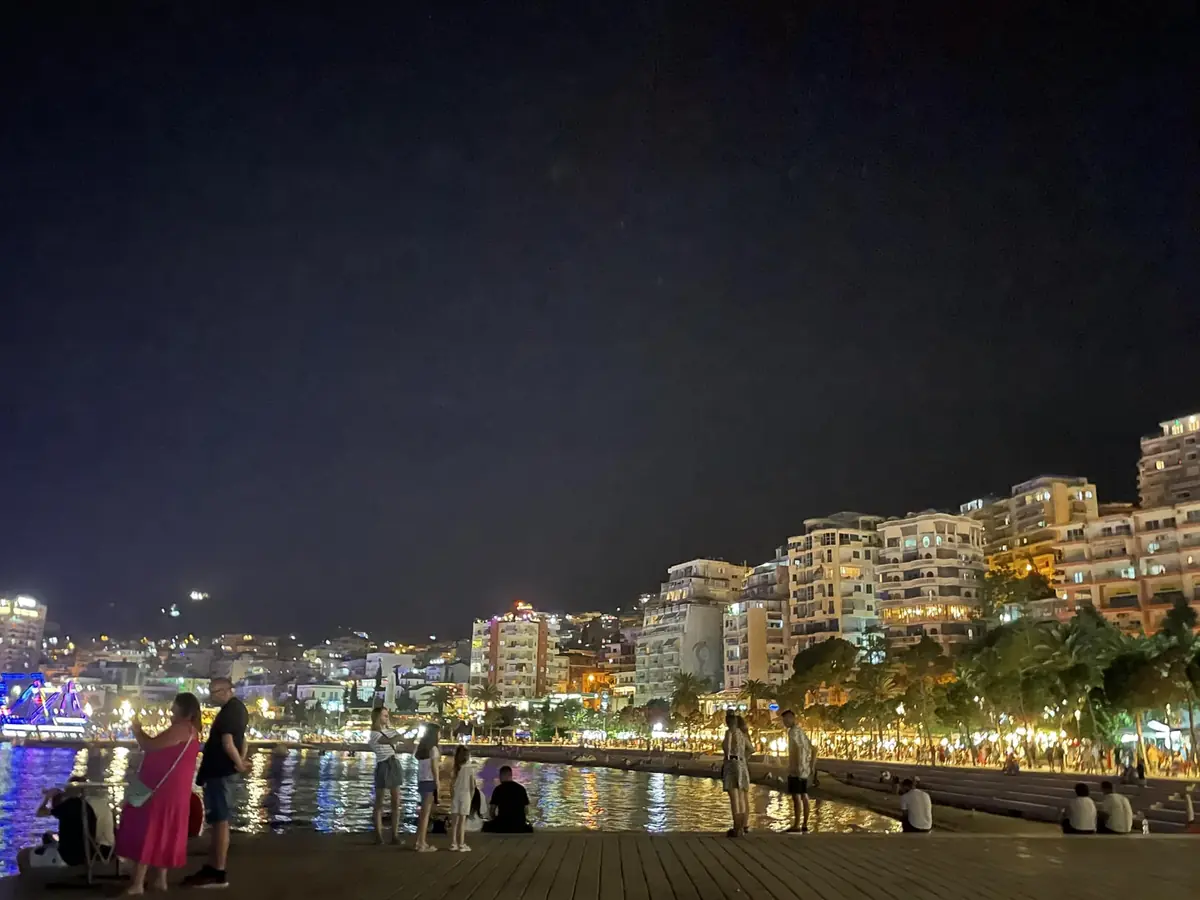
Every evening, the whole town walks. The xhiro — the nightly stroll along the Hasan Tahsini seafront boulevard — fills the palm-lined waterfront with families, teenagers, and grandparents looping end to end until well after dark. Cafes push chairs to the edge of the path, and an espresso or a beer runs about $1.50 to $2.50.
This is the most authentically local thing to do in Saranda, and it’s free. The promenade is also the prettiest part of an otherwise plain town, and it starts at the ferry terminal, so it’s the first thing you see arriving from Corfu. By day the concrete behind it shows, but at dusk, with the water going pink and the lights coming on across the bay, it works.
- Location: The Saranda waterfront, running from the port along Hasan Tahsini
- Cost: Free; coffee or a beer $1.50–$2.50
- Best for: Sunset, people-watching, a cheap evening out
- Time needed: ~1 hour, after 6 p.m.
6. The Monastery of 40 Saints
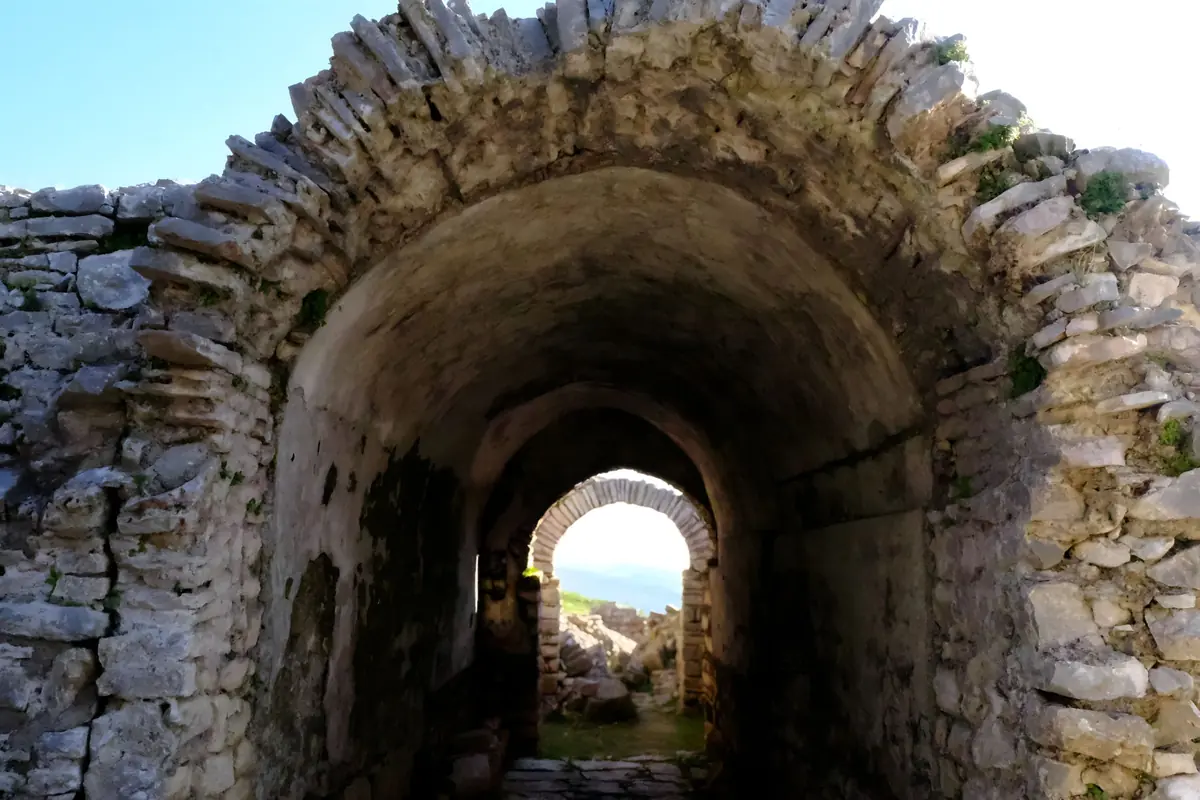
The Monastery of 40 Saints — Manastiri i Dyzet Shenjtorëve, the ruin that gave Saranda its name — sits on the hill east of town, facing Lëkurësi across the bay. Not much survives of the sixth-century Byzantine complex above ground beyond stone foundations and a few arches, since Allied bombing flattened it during the Second World War, but the vaulted crypt underneath is intact and the view back over the bay is open and uncrowded.
It’s no longer free: there’s a gate, a keeper, and a 200-lek ticket (about $2.50), and reviews split sharply on whether a pile of stones justifies it. Worth it if you like ruins with a view and a short walk; skippable if you’ve already done Butrint and Lëkurësi and you’re short on time. Bring a phone light for the crypt — there’s no lighting down there and almost no signage anywhere on site.
- Location: On the hill above Saranda; a 30–45 minute uphill walk from the center, or drive to within a couple of hundred yards
- Cost: ~$2.50 (200 ALL), cash
- Hours: Roughly 9 a.m. to 6 p.m.
- Best for: Quiet ruins, panoramic views, a short hike
- Time needed: 30–45 minutes
7. A day trip to Gjirokastër
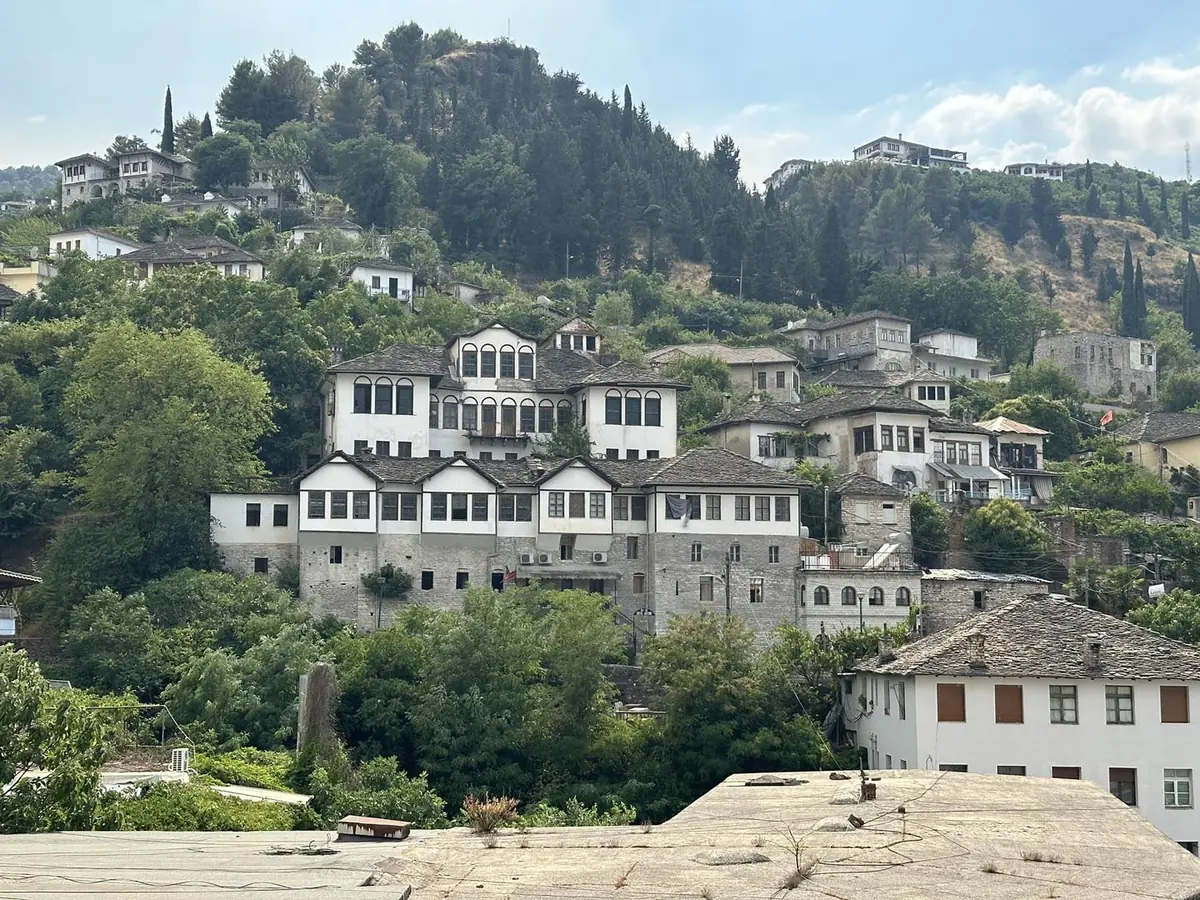
Gjirokastër is the “stone city” — a UNESCO-listed Ottoman town of slate-roofed houses stacked up a hillside beneath a hulking castle. The Old Bazaar’s cobbles are slick and steep, the castle holds a Cold War-era American spy plane, and the whole place feels a world away from the coast.
It’s the best inland day trip from Saranda and pairs naturally with the Blue Eye — but only if you take the older road. Most buses now run the faster new route, which bypasses the spring entirely, so ask at the station before you board. Budget a full day. The bazaar shops lean touristy, but the architecture is the real draw.
- Location: Roughly an hour and a half by car inland from Saranda
- Cost: Castle entry about $5 (400–500 ALL), with a small extra charge for some interior museums; transport varies
- Best for: History travelers; pairs with the Blue Eye on the old road
- Time needed: Full day
8. A day trip to Corfu
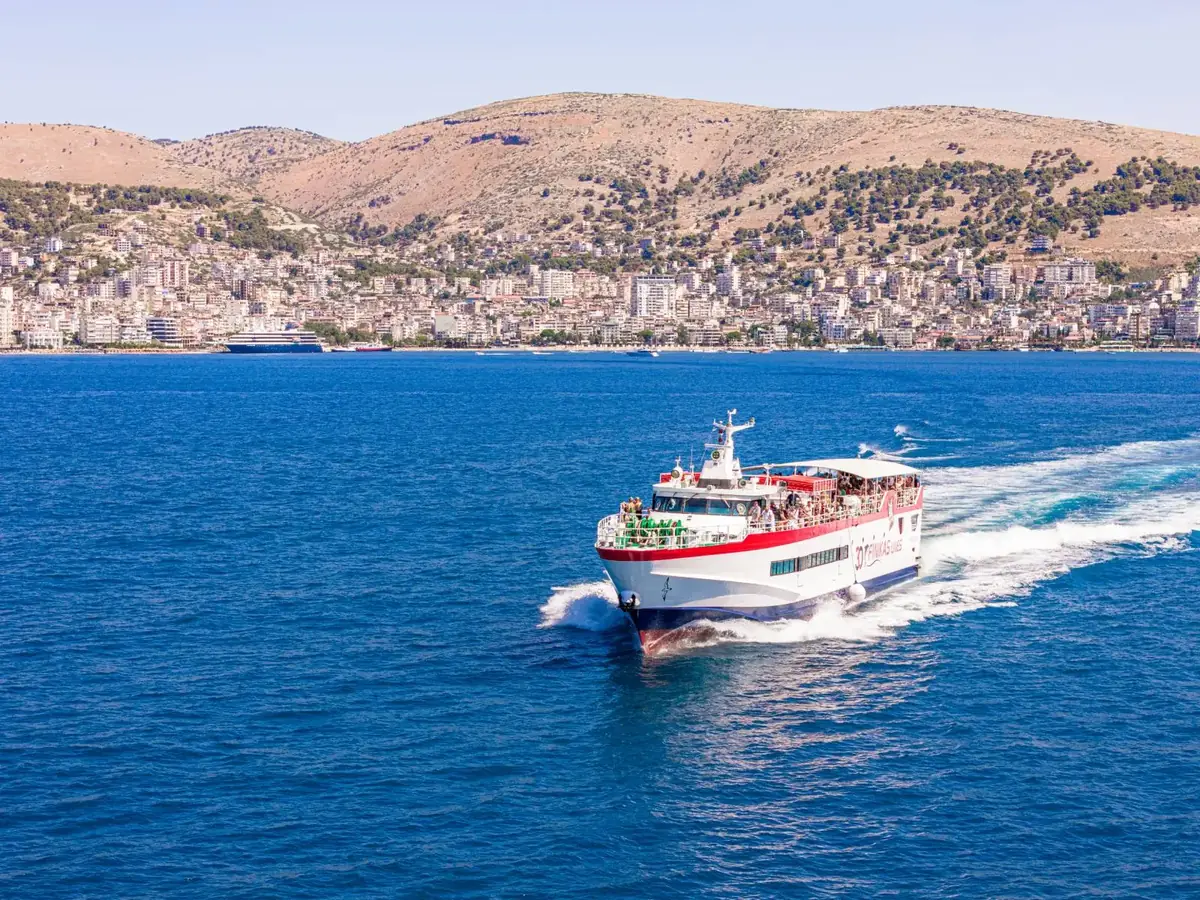
Corfu, Greece, is right there — about 15 nautical miles across the strait, close enough to pick out from Lëkurësi Castle. Fast hydrofoils make the crossing in under half an hour, which turns a day in Corfu Town’s Venetian old quarter into an easy add-on, or a way to start or end a trip. Three operators work the route — Finikas Lines, Ionian Seaways, and Albania Luxury Ferries — with well over a dozen sailings a day at peak.
Worth doing, with three catches US travelers miss. First, you need your passport, not a driver’s license or ID card — this is an international border. Second, Albania runs one hour behind Greece, so a ferry that leaves Saranda at 9 a.m. lands in Corfu at 10:30 a.m. local. Third, and newest: Corfu is inside the Schengen Area, and the EU’s Entry/Exit System is now fully operational, so your first crossing is logged biometrically with a facial image and fingerprints instead of a passport stamp, and the day counts against your 90-days-in-180 Schengen allowance. Day trips only work spring through fall; winter service drops to about one boat a day.
Pro Tip: Take the hydrofoil, not the slow car ferry, if you’re going for the day. It’s 30 to 35 minutes versus 50 to 70, and the time difference plus border formalities already eat into your hours on the Greek side. Show up 45 minutes early for passport control, and don’t plan on driving a Greek rental across — nearly every rental contract on Corfu forbids it.
- Location: Saranda port, at the western end of the promenade; crossing to Corfu Town
- Cost: One-way ~$22–35 (€19–30); round-trip ~$42–60
- Best for: A Greek-island day, or pairing two countries in one trip
- Time needed: Full day (30–35 min each way by hydrofoil)
9. Ali Pasha Castle and Porto Palermo
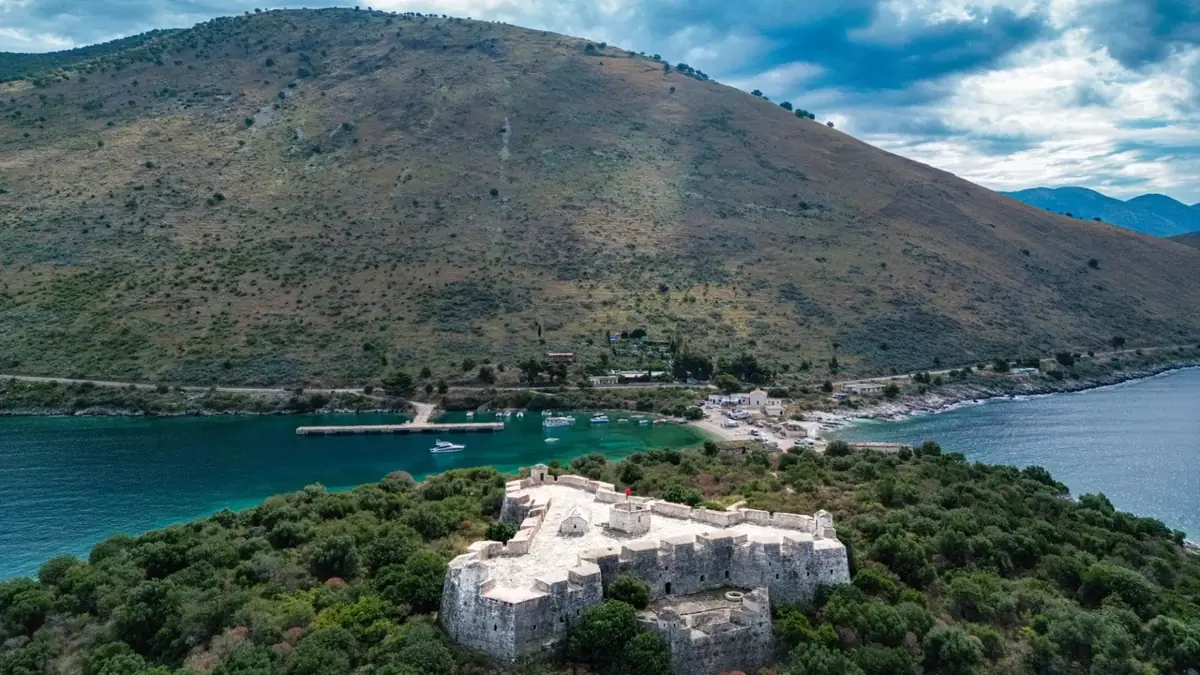
Two small fortresses carry the name of Ali Pasha, the nineteenth-century Ottoman warlord. One sits on a tiny islet in the Butrint lagoon, reached only by a short boat ride; the other, the dramatic triangular fort at Porto Palermo, juts into a turquoise bay up the coast toward Himarë.
These are for travelers who want something off the standard loop. The Butrint-lagoon islet is a quick, cheap boat hop near Butrint, though the local boatmen mostly work summer hours; Porto Palermo is a longer drive but rewards you with one of the most photogenic forts on the Albanian Riviera and a quiet swimming bay below it.
- Location: Butrint lagoon islet (near Butrint) and Porto Palermo (toward Himarë)
- Cost: Small boat fee at Butrint; low entry at Porto Palermo
- Best for: Castle and history fans wanting fewer crowds
- Time needed: 1–2 hours (Butrint islet); half-day with the Porto Palermo drive
10. Saranda’s beaches beyond Ksamil
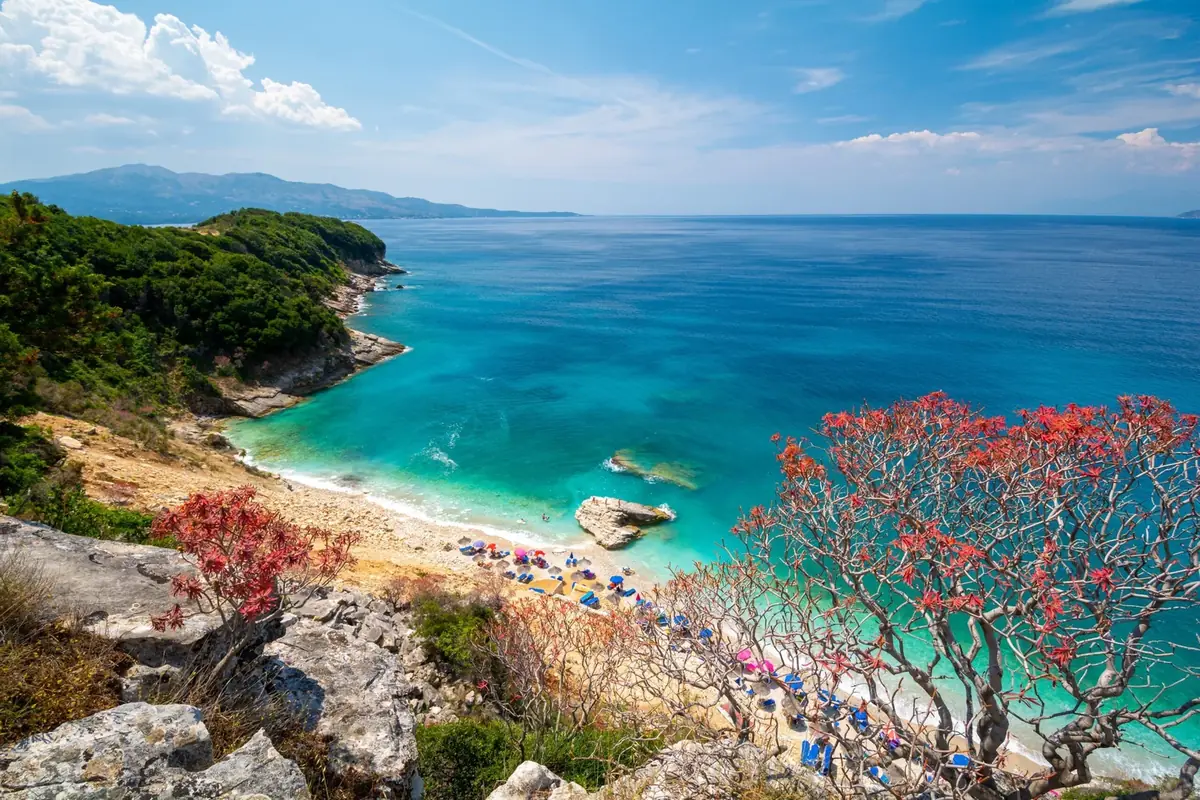
Ksamil hogs the attention, but the coast right around Saranda has its own beaches that take half the effort to reach. Mango Beach and the town beach are walkable from the center; head a bit south and you hit Pulëbardha and the pebbly Mirror Beach (Plazhi i Pasqyrave), where clear water sits below low cliffs.
These won’t match Ksamil’s islets for looks, but they’re far less crowded, they’re cheaper for sunbeds, and you can reach several without a car. The town beach itself is mediocre — narrow and busy — so it’s worth the short trip out to Pulëbardha or Mirror Beach. Bring water shoes: almost everything here is pebble, not sand.
- Location: Mango and the town beach in Saranda; Pulëbardha and Mirror Beach just south
- Cost: Free access; sunbeds where available ~$12–25
- Best for: Beach time without the drive to Ksamil
- Time needed: A few hours to a half day
11. A seafood dinner on the waterfront
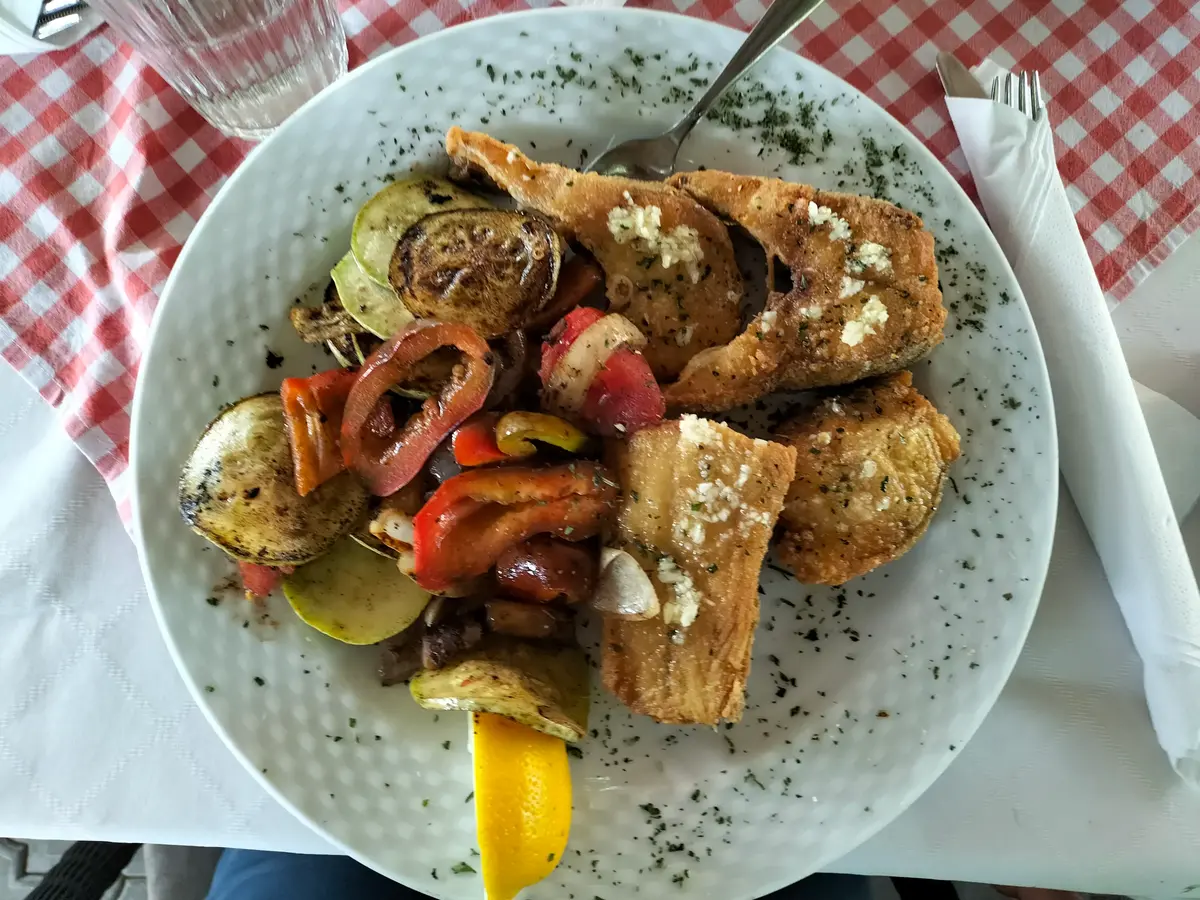
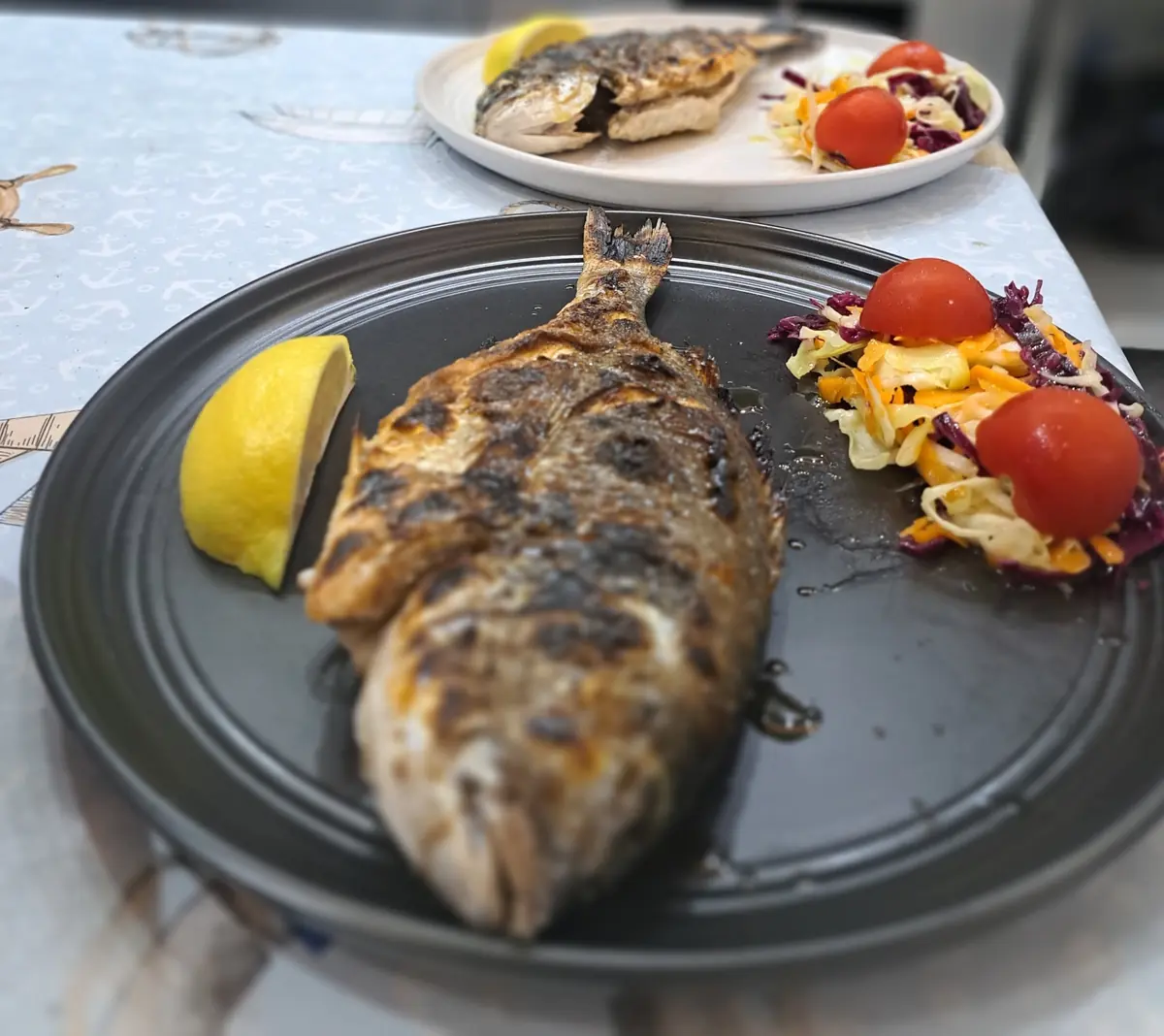
Saranda eats well and cheap. The waterfront and the streets behind it are lined with tavernas grilling whole sea bass and sea bream pulled from the Ionian that morning, plus the local specialty: mussels farmed in the Butrint lagoon, served stuffed or in a garlic broth.
A full sea-bass dinner with a glass of wine runs about $20 to $30 — a fraction of what the same meal costs across the water in Corfu. Names worth a look, and worth a quick check before you go since places change hands, include Fish Filipi up in the Kodra neighborhood (a fishmonger-taverna where you pick your fish from the counter), Limani and Mare Nostrum on the water, and Balbi 34, which Italy’s Gambero Rosso has noted. For the mussels at source, the lagoon-side spots out toward Butrint serve them straight off the farm. Wash it down with raki or a Korça beer, and save room earlier in the day for byrek, a flaky savory pastry.
- Location: Saranda waterfront and the streets behind it
- Cost: ~$20–30 for a sea-bass dinner with wine; $17–29 per person is the typical spread
- Best for: Cheap, fresh seafood and lagoon mussels
- Time needed: 1–2 hours
12. A boat trip along the Ionian coast
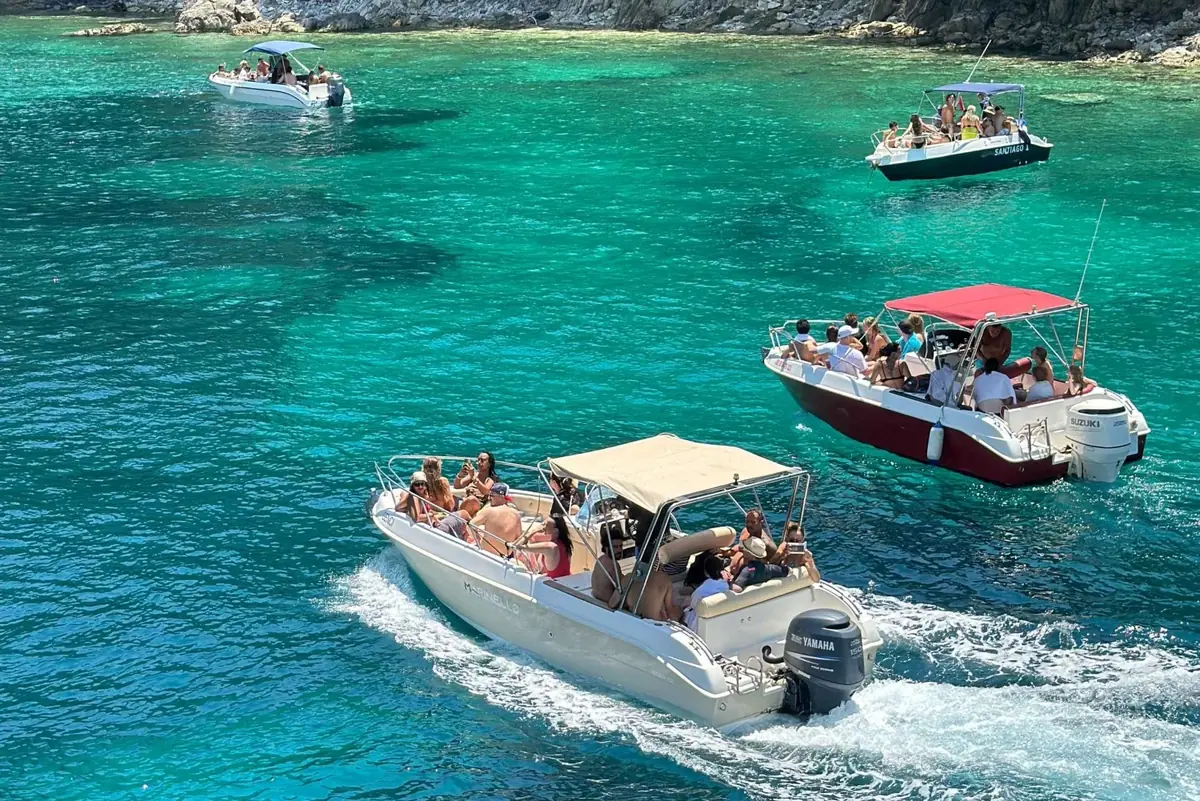
Half-day boat trips run from Saranda’s marina out along the coast, stopping at sea caves, the islet forts, and swim spots you can’t reach by road — places like Shpella e Pëllumbave (the Cave of Doves), the Kakome and Krorëz bays, and the quiet coves between Ksamil and the Greek border.
A good way to see the coastline from the water and swim somewhere without a sunbed in sight. Quality varies by operator, so look at the boat and the itinerary before booking on the promenade, and confirm whether lunch and snorkeling gear are included.
- Location: Departs Saranda marina
- Cost: Varies by operator (half-day and five-hour trips are common)
- Best for: Swimming away from crowds, sea caves, photos
- Time needed: Half day
Saranda or Ksamil — where should you stay?
Base yourself in Saranda and day-trip to Ksamil. Saranda is bigger and cheaper, with far more restaurants, nightlife, and transport links, and it’s the natural hub for Butrint, the Blue Eye, and the Corfu ferries. Ksamil has the better beaches but fewer services and higher summer prices — perfect for a day, tight for a week.
| Saranda | Ksamil | |
|---|---|---|
| Best as | Your base | A day trip |
| Restaurants & bars | Many | Limited, beach-focused |
| Prices | Lower | 40–60% higher in summer |
| Transport links | Ferries, buses, taxis | Local bus to Saranda |
| Beaches | Mediocre in town | Excellent |
| Nightlife | Yes | Minimal |
The 20-minute local bus between the two (about $2) makes day-tripping painless, so there’s little reason to give up Saranda’s dining and ferry access to sleep beside a beach you can reach in half an hour. If you’re still weighing it up, the full Saranda vs. Ksamil breakdown compares both bases in detail.
Pro Tip: If you want beach-on-your-doorstep and don’t care about nightlife or dining variety, flip it — stay in Ksamil in June or September, when prices and crowds drop, and treat Saranda as your supply run.
How many days do you need in Saranda?
Two days covers Saranda itself plus one big sight. Three to four days lets you add Butrint, the Blue Eye, and Ksamil at a relaxed pace. Five to six days suits a beach-first trip with a Gjirokastër or Corfu day thrown in. Most first-timers leave happy after three full days, and Saranda works well as the southern leg of a week-long Albania itinerary if you have longer.
Two nights: the first-timer’s plan
- Day 1: Settle in, walk the promenade, catch sunset at Lëkurësi Castle, then a seafood dinner on the waterfront.
- Day 2: Early start at Butrint, an afternoon swim at Ksamil, back in time for the evening xhiro.
A cruise stop or Corfu day: the 6-hour port plan
With a half-day in port, don’t try to do everything — the driving will eat your window.
- Best single combo: taxi straight up to Lëkurësi for the view, then down to either the Blue Eye or Ksamil. Pick one, not both.
- Stay-in-town option: the promenade, the 40 Saints monastery, and a seafood lunch, all within walking range of the port.
A beach-first week with kids
Ksamil’s shallow, calm coves are the big draw for families traveling in Albania with kids. Base in Saranda for the services, day-trip to Ksamil’s quieter southern beaches (The Last Bay, Augusto), and mix in one easy boat trip and one short ruin visit — Butrint, which kids tend to like for the lagoon and the turtles, and where under-12s get in free.
History first: ruins, castles, and the stone city
Butrint deserves a half day, the Blue Eye and Gjirokastër pair neatly as one inland day, and Lëkurësi plus the 40 Saints monastery cover castles and views. If you want to go deeper than the standard loop, add Ali Pasha’s forts or the Phoenice (Finiq) archaeological park.
How do you get to Saranda?
Two routes reach Saranda reliably. The fast one is the ferry from Corfu, Greece (about 30 minutes). The common one is flying into Tirana and driving or busing four to five hours south. Vlora’s new airport, roughly halfway up the coast, would cut hours off the Tirana route, but certification and ownership disputes have repeatedly delayed its commercial launch, so don’t build a trip around it without confirming that flights are actually running.
By ferry from Corfu:
- Crossing: ~15 nautical miles; 30–35 min by hydrofoil, 50–70 min by car ferry
- Cost: one-way ~$22–35 (€19–30)
- Frequency: up to 20-plus daily crossings in peak summer across three operators, about 1 a day in winter
- Bring: your passport — an EU or US ID card won’t do for this international crossing
- Note: Albania is 1 hour behind Greece, and schedules are published in each port’s local time
- Cars: Greek rental agreements almost never permit crossing into Albania; rent separately on each side
From Tirana:
- Distance: ~163 miles (262 km); there is no train
- Bus: about 10 departures daily, 4h15m–5h on the inland route; ticket ~$18 (1,500 ALL); the coastal route runs 6h+
- Departs: the South & North terminal near Casa Italia, about 25 minutes northwest of the center — not from downtown, which is the single most common mistake
- Booking: seats can be reserved online through Albanian bus platforms, which is worth doing in July and August
- Car rental: ~$23–58/day (€20–50); a private taxi runs about $230 (€200)
Via Vlora’s airport:
- Location: ~6 miles (10 km) north of Vlora, and about 2 hours from Saranda by road via the Llogara Tunnel
- Why it matters: when it’s fully running, it cuts around 3 hours off the Tirana drive to the Riviera
- Catch: the launch has slipped repeatedly and announced routes have been canceled at short notice — treat any schedule as provisional and keep Tirana or Corfu as your fallback
Getting to Ksamil:
- Local bus: about $2 (150 ALL), ~20–30 min (toward Butrint); taxis run $18–30
Pro Tip: There’s no Uber in Albania. Use the local furgon minibuses for cheap intercity hops, agree on a taxi price before you get in, and carry lek for both.
When is the best time to visit Saranda?
June and September are the sweet spot — warm water, sunshine, and 20 to 40 percent lower prices than peak. July and August bring the best beach weather but the biggest crowds and costs, with highs around 88°F (31°C) and the sea near 77–80°F (25–27°C). April and May are great for sightseeing but cool for swimming.
- Peak (July–August): hottest (highs ~88°F/31°C, peaking near 96°F/36°C), busiest, priciest; July is the driest month
- Shoulder (June, September): warm sea, fewer people, 20–40% cheaper — the window to aim for, and the one where sunbed operators will still negotiate
- Spring (April–May): highs ~66–72°F (19–22°C), good for ruins and hiking, cool seas
- Winter (November–March): the wettest stretch; Corfu ferries drop to about 1 a day and Butrint closes at 5:30 p.m., so day trips get tight
- Overall: Saranda gets around 300 sunny days a year
On a September trip the water was still warm enough to swim well into the evening, and the Ksamil coves that look mobbed in photos were half-empty. Albania now takes in more than 12 million foreign visitors a year — several times its own population — and the vast majority of them come between June and September, which is exactly why the shoulder weeks pay off. If you’re pairing the coast with the north, the best months to visit Albania as a whole follow the same curve.
Is Saranda safe for tourists and solo travelers?
Yes. Saranda and the Albanian Riviera are generally safe for tourists, including solo female travelers, and violent crime is rare. The US State Department places Albania at Level 2, “exercise increased caution” — the same tier as France, Germany, Italy, and Spain. Petty theft is the main day-to-day concern, as on any busy coast, and standard precautions are enough: watch your belongings on packed beaches and around the ferry port.
The bigger practical risk is driving in Albania, not crime. Mountain routes are narrow and winding, drivers are assertive, and rentals can be older than you’d like, so build in extra time and don’t plan tight back-to-back drives. Note also that Albania enforces a zero blood-alcohol limit for drivers, so a glass of wine at dinner and a drive back down from Lëkurësi don’t mix. Solo women travelers consistently report feeling comfortable walking the promenade and the main streets after dark. US citizens can enroll in the State Department’s STEP program for local alerts before they go.
What should US travelers know before visiting Saranda?
Six things trip up US visitors. Americans need no visa for Albania and can stay up to a year. You still need your passport for the Corfu ferry, and that crossing now puts you through EU biometric border checks. Albania runs one hour behind Greece. The currency is the Albanian lek, and cash rules outside hotels. There’s no Uber. And while most top sights are within a 30-minute drive, the mountain roads connecting everything are slow.
- Visa: none required. The US Embassy in Tirana confirms Americans may stay up to one year without a residence permit — an unusually generous allowance, and one reason the Riviera has become a long-stay base
- Passport: required for the Greece/Corfu ferry, and valid at least three months beyond your departure (six is the safer margin)
- Schengen math: days in Albania don’t count toward the Schengen 90-in-180 limit, but a Corfu day trip does — it’s a full Schengen entry, now logged biometrically under the EU’s Entry/Exit System rather than stamped
- Time zone: Albania is 1 hour behind Greece — adjust your ferry math
- Money: the Albanian lek (ALL); carry cash for Butrint, the Blue Eye, beaches, and taxis. Roughly 100 lek to the euro is the mental shortcut locals use, which quietly favors the seller — paying in euros at beach operators typically costs you 5 to 10 percent
- Cards & ATMs: ATMs are in Saranda, not at Butrint or the Blue Eye, so withdraw before you head out. Many Albanian machines charge $5–10 (400–800 lek) per withdrawal, so take out larger amounts less often, skip the standalone kiosk machines, and always decline the “convert to dollars” offer at the screen
- Getting around: no Uber; use furgon minibuses and agree taxi fares before you ride
- Budget: a mid-range day runs ~$60–110; a sea-bass dinner with wine ~$20–30
- Language: Albanian, with Italian, Greek, and some English widely understood in tourist areas
Which things to do in Saranda are overrated?
Three things in Saranda are overrated: the fenced central synagogue and basilica ruins (little to see), assuming you must pay for a beach sunbed (Albanian law guarantees free public zones), and Ksamil at the July–August peak (beautiful but mobbed). None of these means skip Albania — they just mean adjust your plan.
- The synagogue and basilica ruins: the fenced central archaeological site looks promising on a map, but there’s little to see beyond fragments and it’s often locked. Save your attention for Butrint.
- Assuming every sunbed is compulsory: there are no private beaches under Albanian law. A national regulation requires roughly 30 percent of every 1,000-meter stretch of coast to stay free and publicly accessible, and local authorities now set maximum sunbed prices for each zone before the season, with operators who exceed them in breach of contract. Enforcement is uneven — free zones in central Ksamil are small and fill by mid-morning — but the rule is real. Walk past the last row of umbrellas, or arrive before 10 a.m., and bring your own towel.
- Ksamil in July and August: the beaches are beautiful and buried under crowds, music, and premium loungers at peak. The fix isn’t to skip Ksamil — it’s to skip the dates. June and September are calmer and 20–40% cheaper, and off-peak you can usually negotiate another 20 to 30 percent off a sunbed set.
Before you book
TL;DR: Base in Saranda, not Ksamil. Visit in June or September. Carry lek cash. The unmissable things to do in Saranda — Butrint, the Blue Eye, and sunset at Lëkurësi — all sit within a 30-minute drive of a plain town that hides one of the cheapest corners of the Mediterranean.
Saranda rewards travelers who treat it as a base, not a backdrop. Skip the tourist-trap sunbeds, eat the lagoon mussels, ride the ferry over to Corfu for a day if you want two countries in one trip, and you’ll spend a fraction of what the same vacation costs across the water in Greece. Prices, ferry timetables, and opening hours here shift with the season and with the exchange rate, so confirm the two or three that matter most to your plan before you leave, and if Saranda is only one stop on your route, the wider Albania travel guide covers what comes next.
Which of these things to do in Saranda is topping your list — the ruins, the beaches, or that first plate of grilled sea bass?