Kruja sits 20 miles (32 km) north of Tirana, but most travelers get the pacing wrong — they either rush through in 90 minutes or book a 7-to-8-hour tour that kills the mood. This guide lays out the honest plan for a Kruja day trip: real transport costs, current museum hours, the restaurants locals avoid, and the cable car that does not actually exist.
Is Kruja worth a day trip from Tirana?
Yes, Kruja is worth a half-day trip from Tirana for the castle, the 400-year-old Old Bazaar, and the Skanderbeg story that shaped modern Albania. You can realistically see everything that matters in 4 to 5 hours, and the castle grounds themselves cost nothing — there is no ticket gate. Skip it only if you are already headed to Berat or Gjirokastër, which offer a deeper version of the same Ottoman atmosphere.
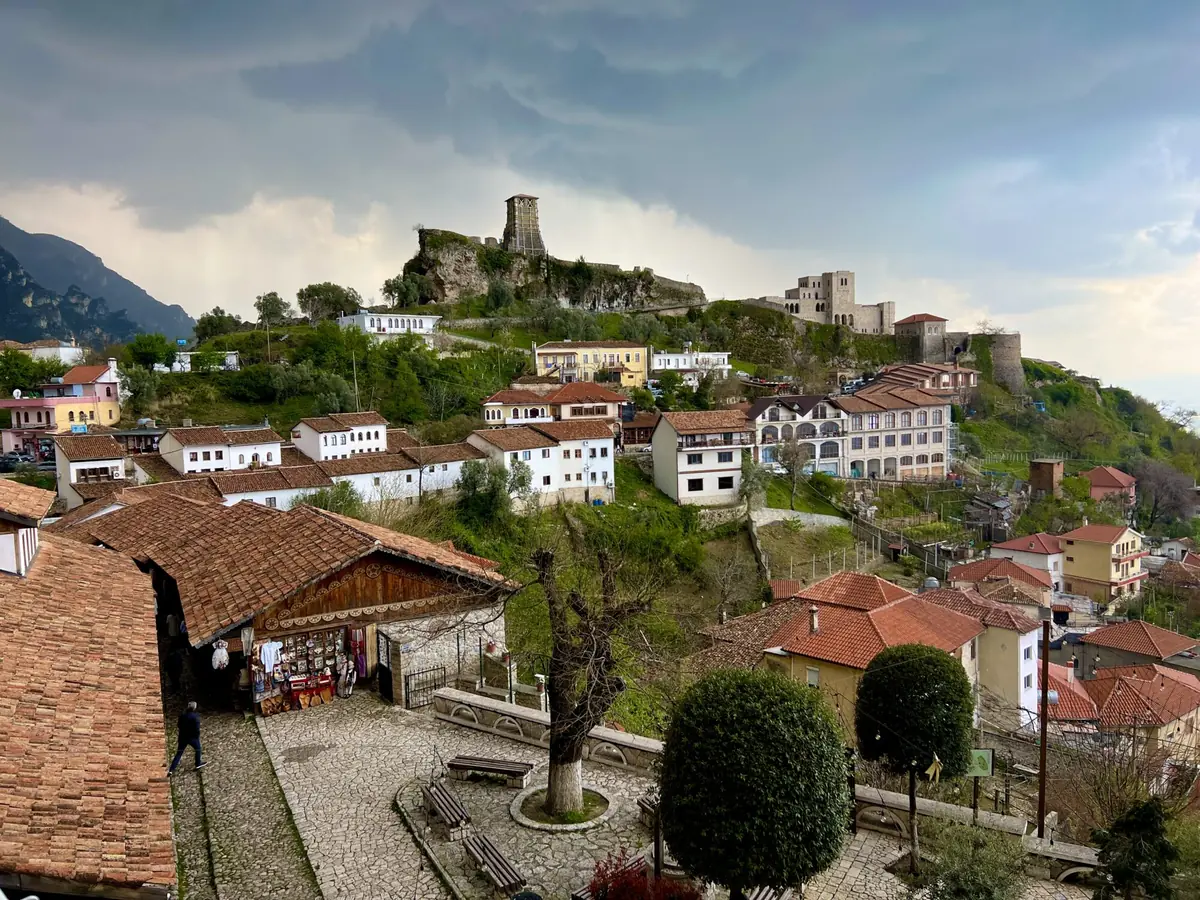
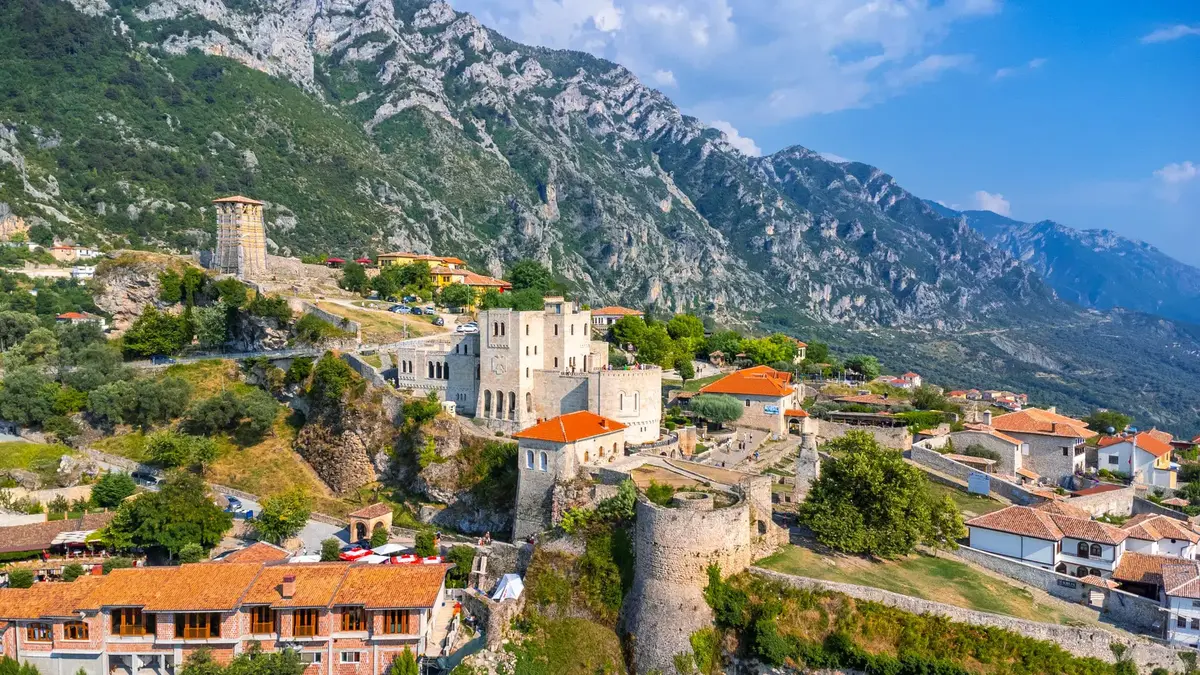
The town sits on a rocky spur at around 1,840 feet (560 m) above sea level, with a castle that held off three Ottoman sieges between 1450 and 1467. On a clear day you can see the Adriatic from the ramparts, roughly 28 miles (45 km) away — though summer haze closes that view down by early afternoon.
What Kruja does better than any other town within an hour of Tirana is density. The castle, two museums, the bazaar, and a Bektashi shrine sit inside a 15-minute walking radius. You do not need a second day unless you want to reach Sari Salltik Teqe.
Pro Tip: Both museums inside the castle post roughly 9 a.m. to 5 p.m. daily, stretching toward 7 p.m. in high summer, and the ticket desks stop selling before the doors close — arriving in the last half hour is a gamble. Some tour operators still flag possible Monday closures in the off-season, so do not build a Monday around the museum interiors without checking first.
How do you get from Tirana to Kruja?
You have four realistic options for the Kruja day trip, ranked by what most travelers actually pick: a shared furgon (minibus) at about $2.50 each way, a taxi or private transfer at a fixed €25 to €30 (roughly $30 to $36) each way, an organized tour starting around $27 per person, or a rental car with parking near the castle for $2.50 to $6.
By furgon — the cheapest way
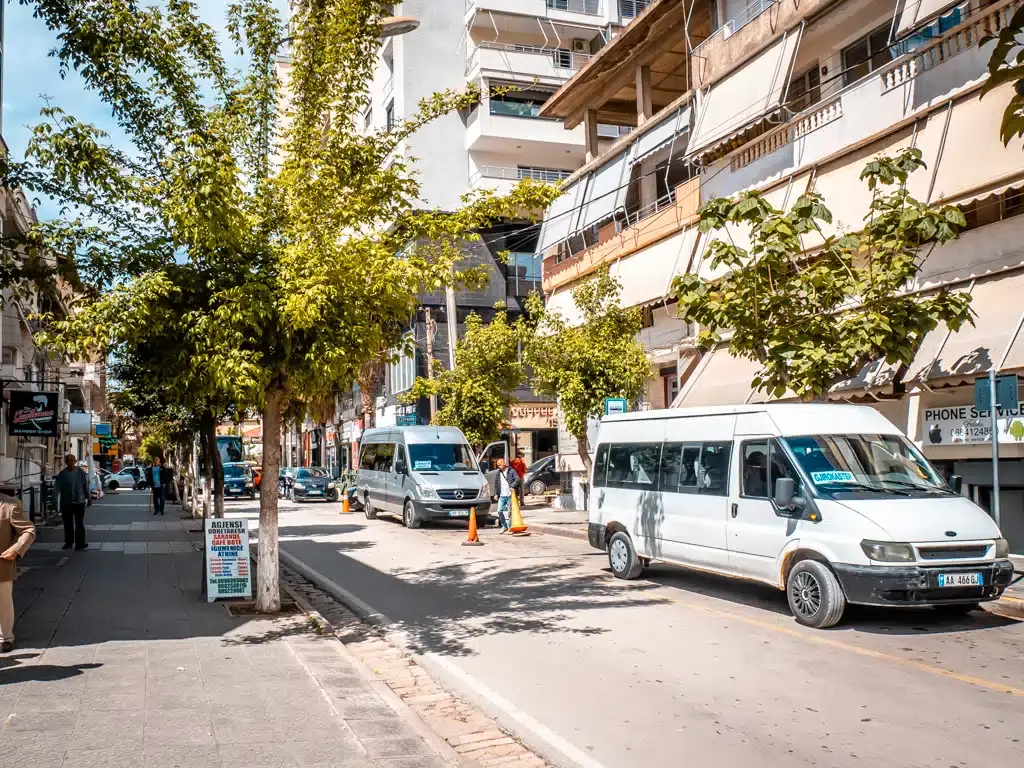
Furgons are shared minibuses that run from the Terminali i Autobusëve të Veriut dhe Jugut (North and South Bus Terminal), about 3 miles (5 km) from Skanderbeg Square. Locals usually just call it Terminali i Veriut.
- Fare: 200 ALL (about $2.50) each way, paid in cash to the driver
- Duration: 50 to 65 minutes
- Frequency: roughly hourly from about 7 a.m. to 6 p.m., often leaving when full rather than on the clock
- Getting to the terminal: city bus #4 or any Kamza/Instituti line for 40 ALL (~$0.50), or a taxi for around 1,000 to 1,200 ALL
- No furgon in Albania accepts cards, and none of them serve Tirana Airport
One critical detail: some buses are labeled for Fushë-Krujë, the flat town on the highway below old Kruja. That is not the same place. Ask the driver for “Krujë” and confirm you are heading up the hill, not to the town where the George W. Bush statue sits. If you end up in Fushë-Krujë by mistake, a taxi up to Kruja runs 500 to 800 ALL ($6 to $10).
Pro Tip: The terminal looks more like a gravel parking lot than a station, and signage in English is essentially nonexistent. Arrive before 10 a.m. for the best chance of catching a direct Kruja furgon, and do not plan a return much later than mid-afternoon unless you have confirmed the last departure with your driver that morning.
By taxi or private transfer
A one-way taxi from central Tirana to Kruja is commonly quoted as a fixed €25 to €30 (roughly 2,500 to 3,000 ALL, or $30 to $36) and takes about 50 minutes door to door. Round-trip deals with wait time hover around $55 to $70. The fare is per car, not per person, so a couple or a family of four splits one price.
- Clust and Patoko: the two apps with the widest traveler-friendly coverage, upfront pricing, card payment
- VrapOn: large national fleet, in-app translation when messaging drivers
- Speed Taxi: connects to a licensed Tirana fleet, closer to calling a cab than true ride-hailing
- Taxi.al, Bee Taxi, Lux Taxi: local alternatives worth having installed as backups
Uber and Bolt do not operate anywhere in Albania. Any article telling you to “just open Bolt” is out of date — open it in Tirana and you will see no rides available. Install a local app before you fly, because the airport Wi-Fi does not reach the curb.
From Tirana International Airport (TIA/Rinas), a fixed-price private transfer to Kruja runs about €25 (~$29) for the 20 km, roughly 30 minutes; a metered airport taxi typically lands between 3,500 and 5,000 ALL ($43 to $62). This is worth knowing because the airport sits between Kruja and the capital and is administratively inside the municipality of Krujë — it is genuinely on the way, not a detour. There is no direct public transport of any kind between Kruja and the airport.
By organized tour
Group tours from Tirana run about $27 to $55 per person for a full day that typically includes Kruja Castle, the bazaar, and Sari Salltik. Smart Tour Albania is the volume leader on Viator, holding a 4.9-star rating across nearly a thousand verified reviews at around $27 per person, with a 7-to-8-hour itinerary and a coach that can carry up to 32 travelers. GetYourGuide runs near-identical products at similar prices.
- Budget group tour: $27 to $35 per person, 7 to 8 hours
- Mid-range small group (Bovilla Lake or Durrës combo): $31 to $95 per person
- Private full-day: $125 to $215 per person, often with wine tasting
- Local half-day guided walk of the castle and bazaar only: from about €20 (~$24) per person
Read the inclusions carefully. When a listing advertises “Kruja Castle entrance fee included,” that is close to meaningless — the grounds are free to everyone. What costs money is the museum interiors, and most budget tours leave those as an optional extra you pay in cash at the door. Tours make sense if you want transport and a guide bundled; they do not make sense if you want to eat slowly or linger in the bazaar, since most allot roughly an hour for the castle and 45 minutes for shopping.
By rental car
A rental car gives you the most flexibility, especially if you plan to combine Kruja with Sari Salltik Teqe or continue to Durrës the same day.
- Drive time: 45 to 55 minutes each way on SH1 and SH52
- Parking near the bazaar and castle: about 200 ALL (~$2.50) for 2 hours or 500 ALL (~$6) for the full day
- Gas cost round trip: roughly $12 to $18 in a small sedan
- Kruja has no left-luggage office, so a car doubles as your bag storage
Pro Tip: Do not follow Google Maps’ default route up into old Kruja — it sends drivers through a narrow residential stretch that dead-ends for SUVs. Navigate to “Market Saga” first, then follow signs for Kalaja e Krujës.
How much time do you need in Kruja?
Plan on 4 to 5 hours on the ground for the standard Kruja day trip, or 6 to 7 hours if you add Sari Salltik Teqe. Half a day is enough for the castle, the Skanderbeg Museum, the Ethnographic Museum, and a meaningful walk through the bazaar with lunch. Adding the Bektashi shrine pushes you into full-day territory and usually requires a car or tour.
Realistic timing breakdown:
- Castle grounds: 45 to 60 minutes
- Skanderbeg Museum: 45 to 75 minutes
- Ethnographic Museum: 30 to 45 minutes
- Old Bazaar browsing and photos: 45 to 90 minutes
- Lunch: 45 to 75 minutes
- Sari Salltik Teqe (optional): add 2 hours round trip by car, 4 hours hiking
If you have only 3 hours (common for cruise passengers from Durrës port), prioritize the castle grounds and the bazaar. Skip the Ethnographic Museum if you are choosing between the two — Skanderbeg delivers more context per minute.
What to see on a Kruja day trip
Kruja Castle
Kruja Castle sits on an elliptical hilltop with 9 towers along its 2,640-foot (804 m) wall circumference. Byzantine builders laid the first stones in the 5th or 6th century AD. Skanderbeg raised the first Albanian flag here on November 28, 1443. There is no ticket booth and no closing time — the gate stands open through the day and into the evening, which is rare among Albanian cultural sites.
- Location: Rruga Kala, Krujë 1501
- Cost: free — the hill, walls, and ramparts are all open access
- Hours: daylight and beyond, year-round
- Best for: history readers, photographers at golden hour
- Time needed: 45 to 60 minutes
What you actually see up top: the restored watchtower, the main gate, remnants of a 15th-century Ottoman hammam, the pre-1481 Sultan Mehmed Fatih Mosque ruins, and the Dollma Tekke. The walk from the bazaar entrance to the keep involves steep cobblestones and no shade — tough in July heat, genuinely slippery after rain, since decades of foot traffic have polished the stones smooth.
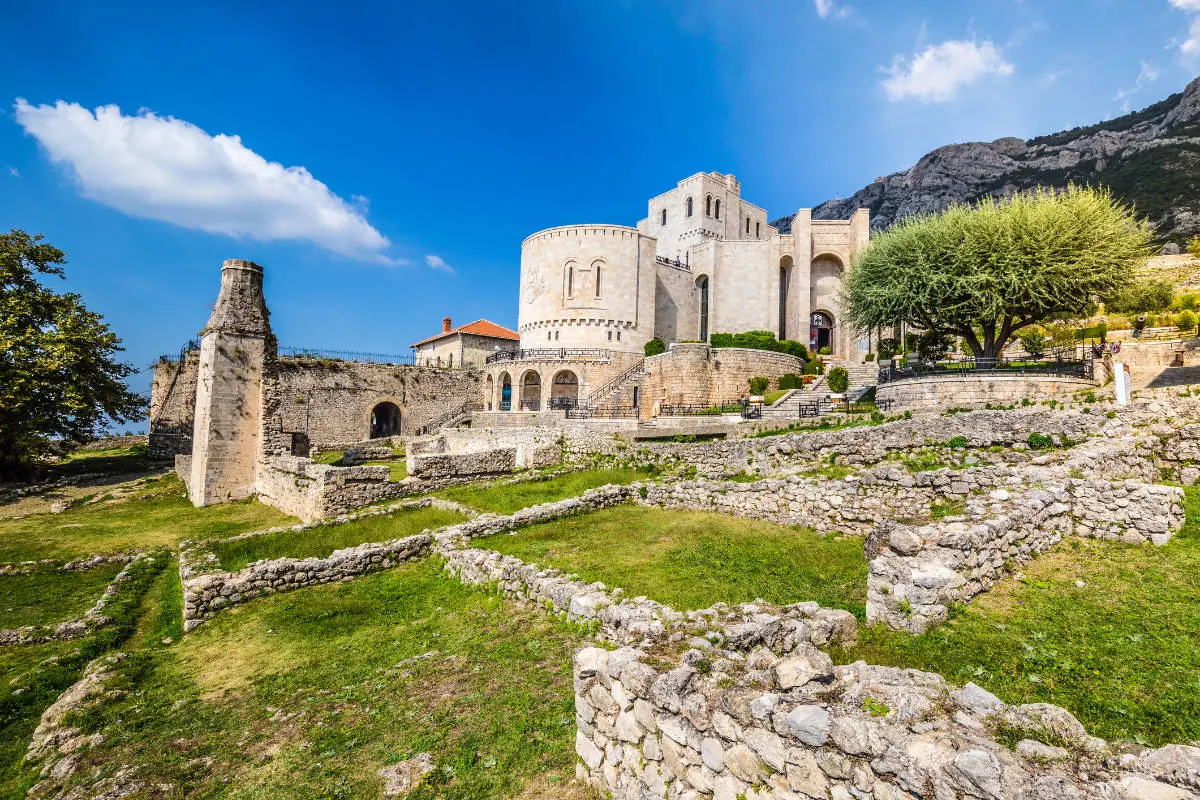
National Skanderbeg Museum
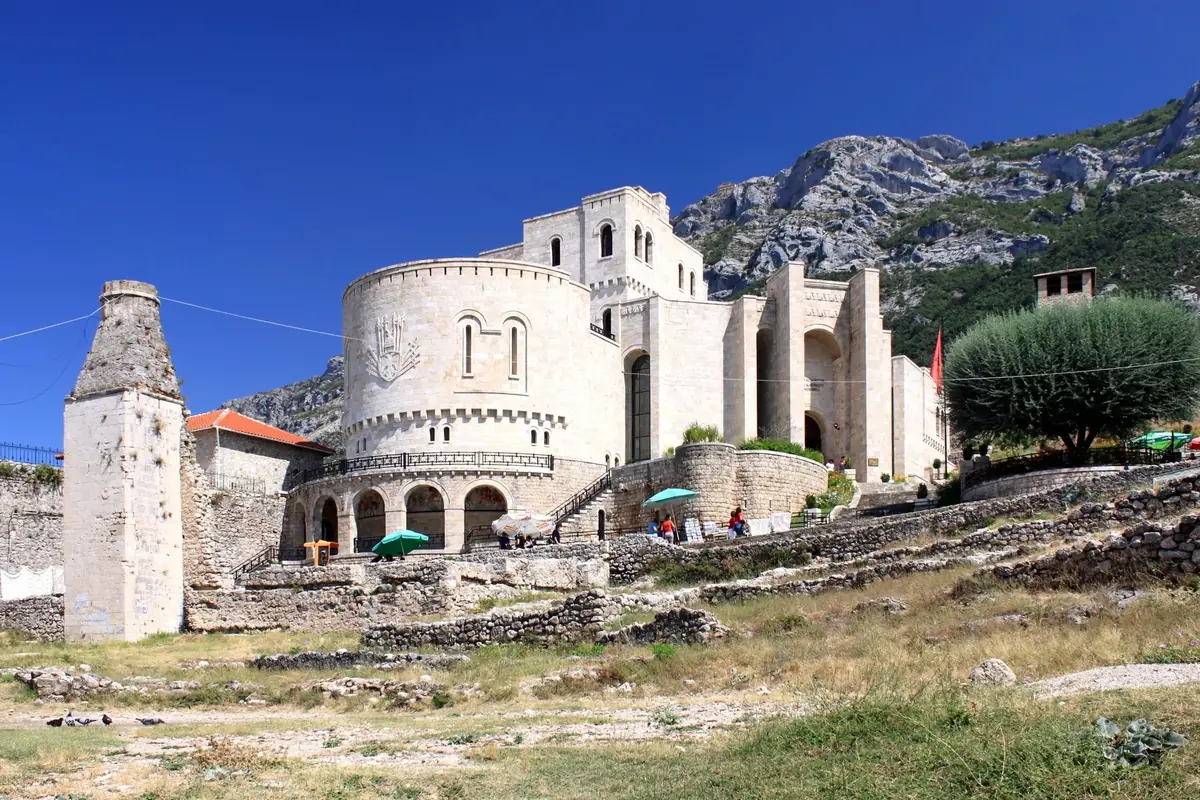
The National Skanderbeg Museum opened in November 1982 inside the castle walls, designed by architects Pirro Vaso and Pranvera Hoxha (daughter of dictator Enver Hoxha). The building imitates Albanian stone tower-houses fused with medieval Romanesque lines. Enver Hoxha reportedly skipped the inauguration — he did not like how it turned out.
- Location: inside Kruja Castle grounds, ticketed at its own door
- Cost: 500 ALL (~$6.20) per adult, cash in lek only
- Hours: about 9 a.m. to 5 p.m. daily, extended toward 7 p.m. in peak summer
- Booking: none available — no advance or online tickets exist
- Best for: first-time Albania visitors needing historical context
- Time needed: 45 to 75 minutes
Several floors of swords, banners, replicas of Skanderbeg’s helmet (the original lives in Vienna), period frescoes, and a top-floor terrace with the best castle-wall view in town. English signage is limited — you will move faster with a guide or an offline translation app.
Pro Tip: There is no ATM inside the castle walls and no card reader at either ticket desk. The nearest reliable machines are BKT and Raiffeisen branches in lower Kruja, roughly a 10-minute walk downhill from the castle gate. Bring around 1,000 ALL per person if you plan to see both museums.
Ethnographic Museum
Housed in a 1764 Ottoman-era mansion that belonged to the Toptani family, the Ethnographic Museum is one of the most atmospheric small museums in Albania. It shows how a wealthy Kruja household lived across three centuries — olive press in the basement, hand-loomed carpets on every wall, a carved wooden ceiling in the guest hall that reportedly took local craftsmen 4 years to finish. Several rooms now use projections and staged scenes to show what the spaces were actually for, which is more effective than the label-and-glass-case approach next door.
- Location: inside Kruja Castle grounds, near the Skanderbeg Museum
- Cost: 400 ALL (~$4.95) per adult, separate ticket from the Skanderbeg Museum
- Hours: about 9 a.m. to 5 p.m., though the sign on the door sometimes still reads 4 p.m.
- Best for: design-minded visitors, slow travelers
- Time needed: 30 to 45 minutes
Two things worth knowing. First, older travel blogs still list this museum as “closed for renovation” — that information is long out of date. Second, a handful of booking platforms now sell entry-plus-audio-guide tickets for this museum specifically, and several guided castle tours bundle it in; if English context matters to you, that is the easier route than the door ticket alone.
Old Bazaar (Pazari i Vjetër)
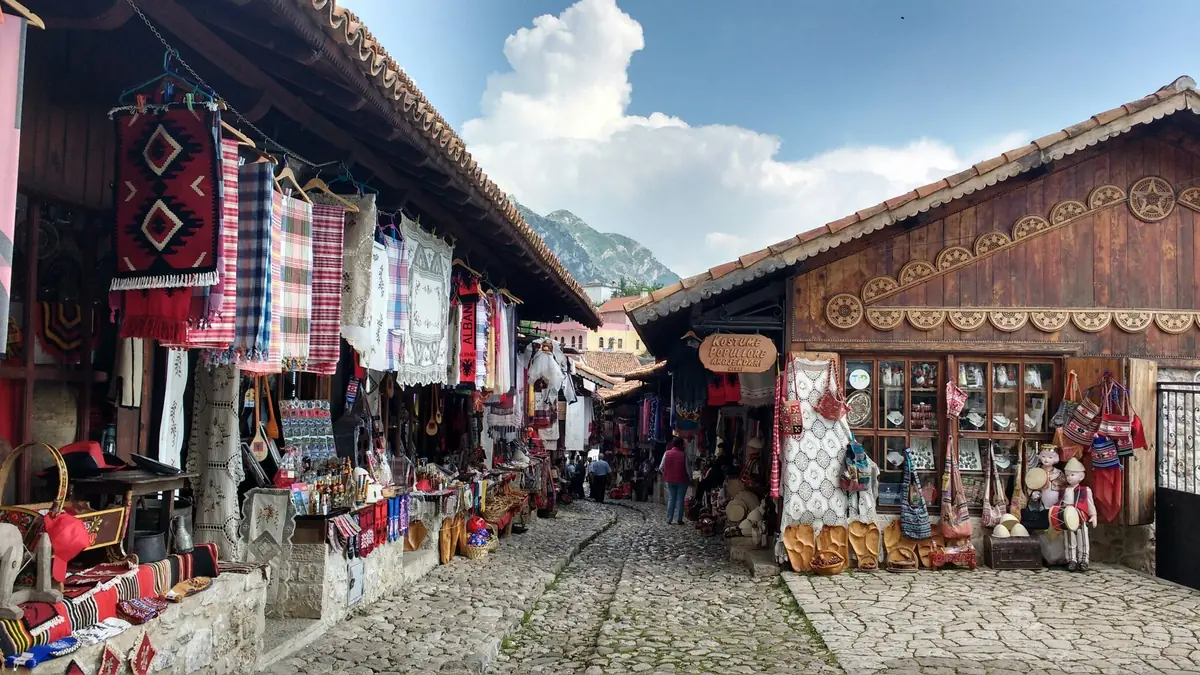
The Pazari i Vjetër stretches roughly 820 feet (250 m) down a single cobbled lane between the town entrance and the castle gate. Shops have operated on this strip for more than 400 years — at its height it held around 200 of them — with a major restoration in 1968 to mark the 500th anniversary of Skanderbeg’s death. Shutters go up around 9 a.m. and the lane is fullest late morning.
- Location: Rruga Skënderbej, Krujë (the main street below the castle)
- Cost: free to enter; budget $30 to $80 if you plan to shop
- Best for: souvenir hunters, photographers, coffee breaks
- Time needed: 45 to 90 minutes
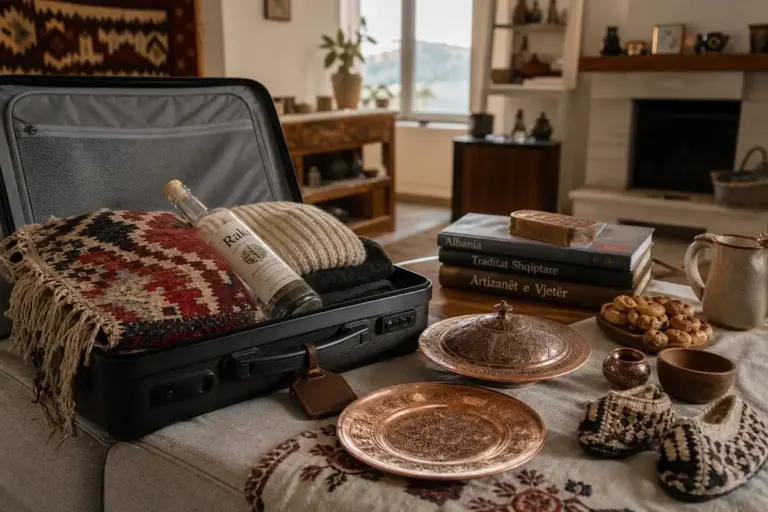
What is actually handmade versus mass-produced matters here. Genuine Kruja craft: hand-loomed wool kilims, hammered copper coffee pots (xhezve), silver filigree jewelry, white felt qeleshe hats, embroidered waistcoats. What is usually imported despite claims to the contrary: many of the “antique” coins, brass lamps, and mass-produced evil-eye souvenirs. Prices are negotiable — polite haggling is expected, and opening asks typically sit 20 to 40 percent above the price a seller will actually accept. Many shops take euros, but at a rounded rate that favors the shop; changing money in the town below gets you a better price on anything beyond a trinket.
Pro Tip: Some vendors will ask for a tip or small payment if you photograph their storefront closely. Either ask first and tip 100 ALL (~$1.25), or shoot wider angles from the middle of the lane.
Sari Salltik Teqe
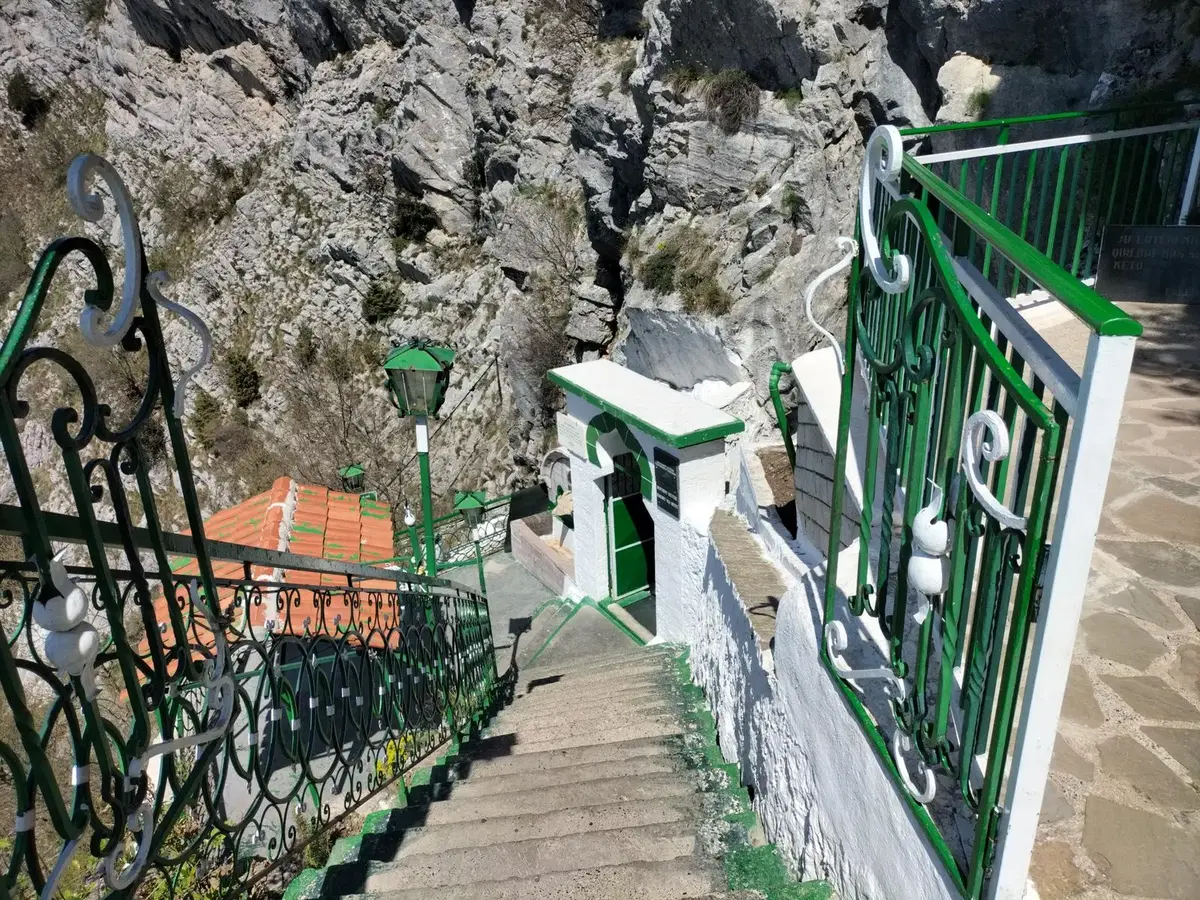
Sari Salltik Teqe is a Bektashi shrine on Mount Sari Salltik at 3,858 feet (1,176 m), about 4 miles (6 km) from Kruja Castle. It is one of the three holiest Bektashi sites in Albania and the country’s second most-visited pilgrimage destination. The teqe honors the 13th-century dervish Sari Salltik and houses a cave roughly 50 feet (15 m) deep with a sacred spring, a small mosque claimed to be Albania’s oldest, and the saint’s tomb, which carries an inscription dated to the 1690s. Ottoman tax registers mention the site as early as the 1560s. The complex was destroyed by the communist regime in 1967 and rebuilt in the early 1990s.
- Location: Mount Sari Salltik, ~4 miles (6 km) from Kruja Castle
- Cost: free
- Hours: no set hours; daylight visits recommended
- Access: paved switchback road by car (~30 min), or a 2-hour hike with 2,300 feet (700 m) of elevation gain
- Best for: pilgrims, hikers, travelers curious about Albanian Bektashism
- Time needed: 2 hours round trip by car, 4 hours on foot
Dress code is modest: long pants, covered shoulders, and a headscarf for women inside the cave shrine. You remove your shoes before entering. The main pilgrimage day falls on August 22, with the busiest stretch running from mid-August into mid-September; outside that window you may share the teqe with only a handful of other visitors. Be aware that live animal sacrifice is still occasionally performed here — uncommon, but real, and worth flagging to a guide in advance if you would rather not encounter it. The road up is a genuine hairpin switchback climb, which matters if anyone in your group gets carsick.
Dollma Tekke
The Dollma Tekke is a small Bektashi lodge inside the castle grounds, easy to miss if you walk straight from the entrance to the museum. It has operated on this spot for more than 500 years, closed during the communist atheism campaign, then reopened in 1991.
- Location: inside Kruja Castle grounds
- Cost: free
- Time needed: 10 to 15 minutes
This is the clearest place to grasp why Albanians often say religion in Albania has mixed rather than clashed — the Bektashi Order’s syncretic tradition draws from Shia Islam, Christian symbolism, and Sufi mysticism. The order has had its world headquarters in Tirana since 1929, after Atatürk banned it in Turkey, and the Albanian government has floated turning that compound into a Vatican-style sovereign microstate; the proposal remains a proposal, with no state yet established. The caretaker at Dollma sometimes offers visitors a small glass of raki if the mood strikes.
Where to eat in Kruja (and where to avoid)
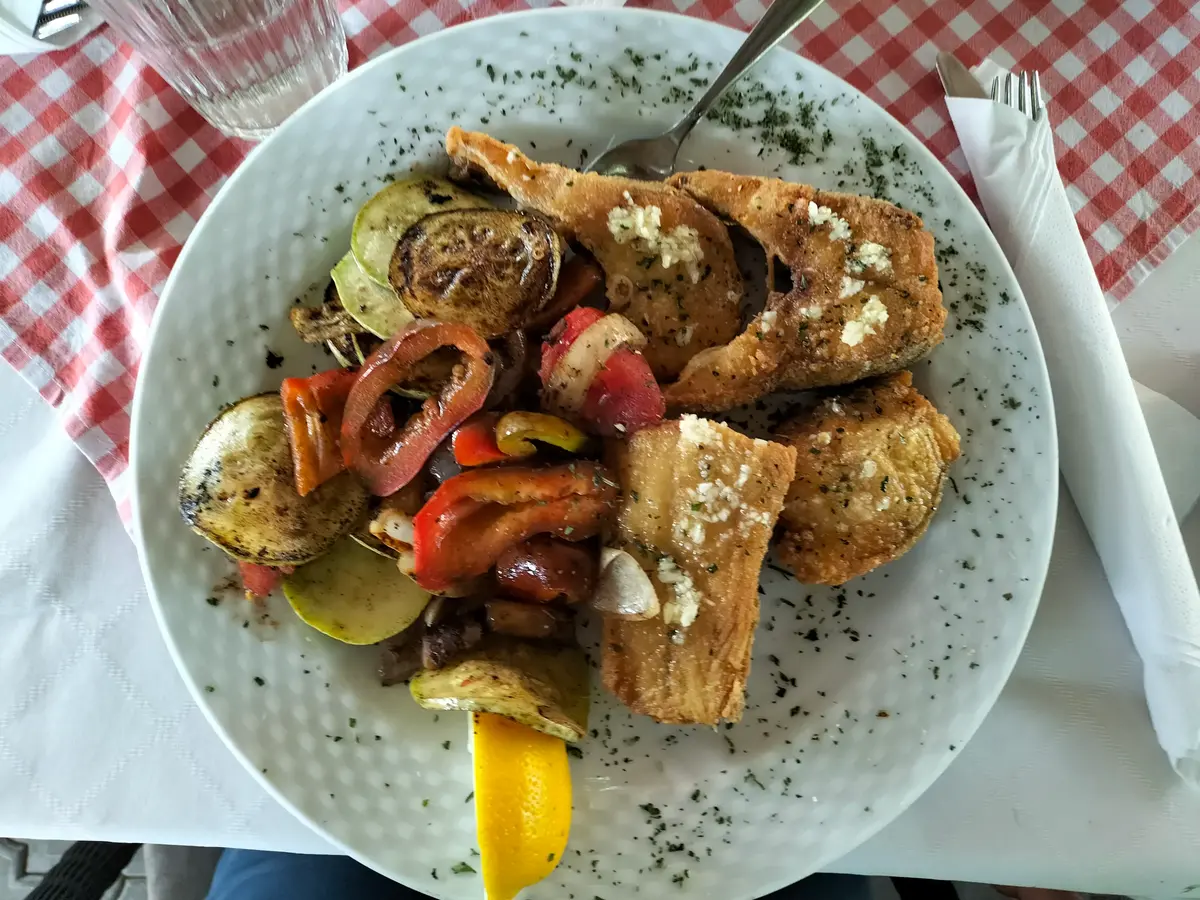
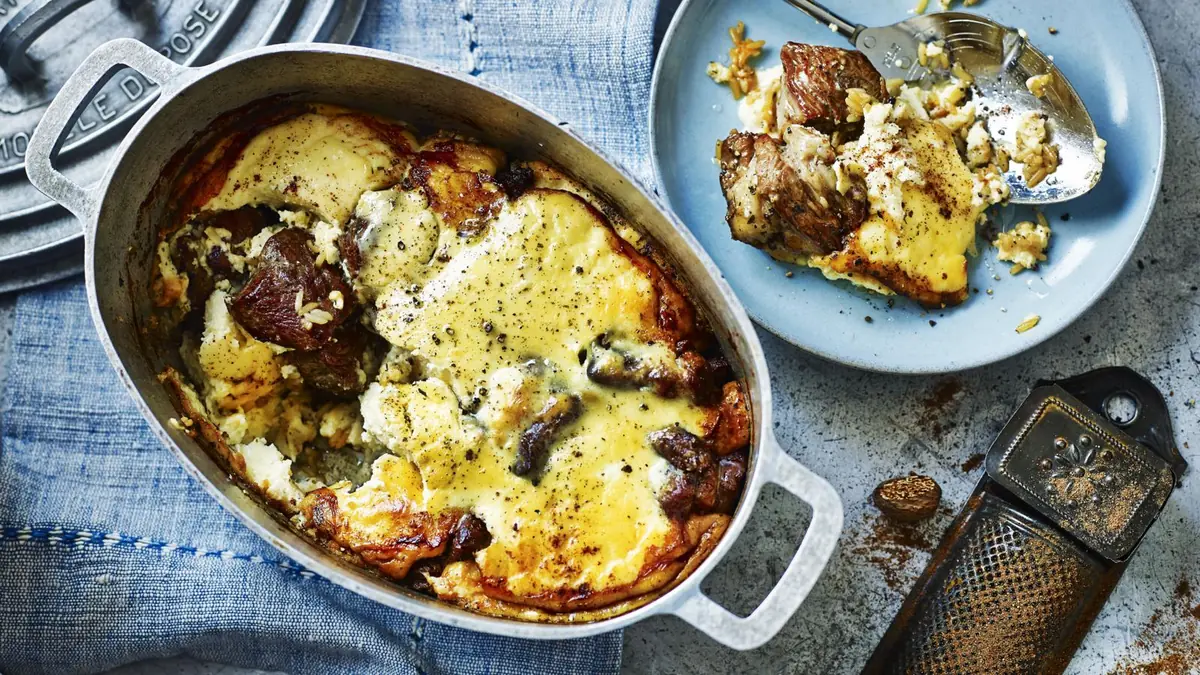
Lunch in Kruja runs $6 to $15 per person for a sit-down meal with drinks — figure 600 to 1,200 ALL for a standard plate of grilled meat, salad, and bread. The local dishes worth ordering are tavë kosi (baked lamb with yogurt and rice — Albania’s national dish, though it originated in nearby Elbasan), byrek (savory filo pastry with spinach, cheese, or meat), fërgesë (peppers, tomato, and cottage cheese baked in a clay pan), and grilled qofte (seasoned meatballs).
Where to go:
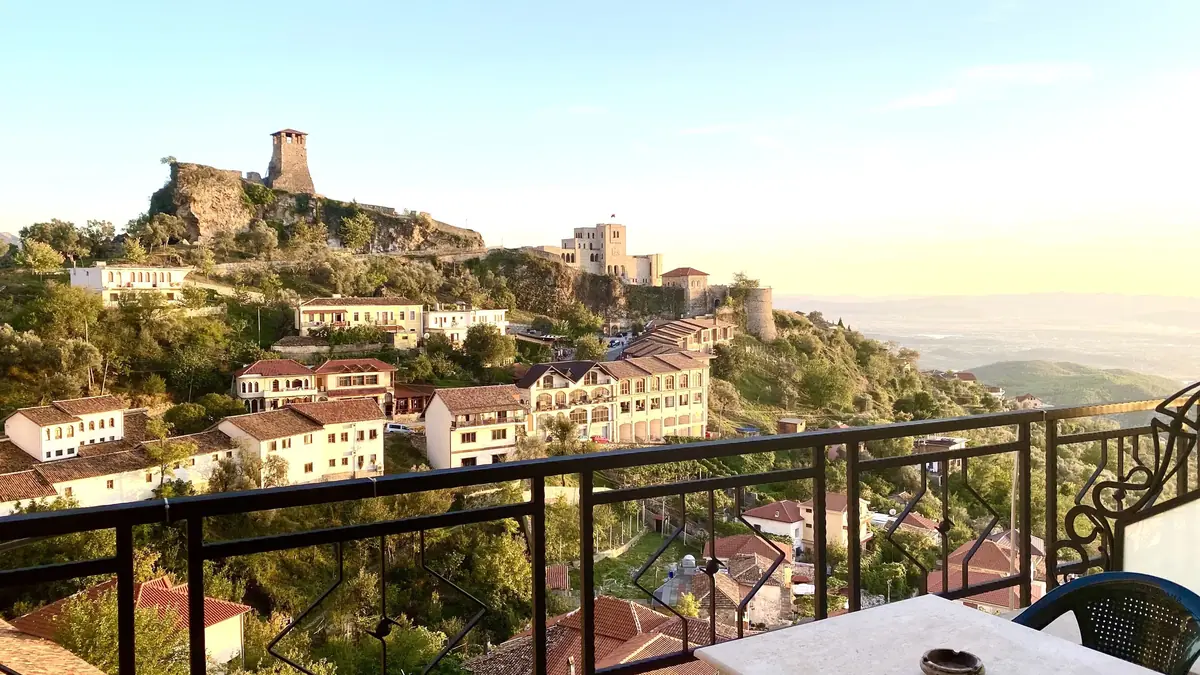
- Restorant Panorama Kruje — at Hotel Panorama, best terrace views of the castle at sunset
- Kroi Restaurant — up the hill toward the castle gates, reliable grilled meats and a strong tavë kosi
- Bar Restorant Bardhi Agroturizëm — farm-to-table option outside the old town, needs a taxi
- Rooms & Restaurant Emiliano — inside the castle walls, rustic atmosphere
- Snack Bar Derexhiku — no-frills, but locals say their tavë kosi is the best in Kruja
A note on one dish: qifqi (fried rice balls with egg, mint, and parsley) is often listed in AI-generated Albanian food guides as a Kruja specialty. It is not — qifqi is from Gjirokastër, 170 miles (273 km) south. If a restaurant menu in Kruja features it prominently, that is a tourist-tracking menu, not a local one.
Pro Tip: Pull up the Google rating before you sit down anywhere on Rruga Kala, the tourist stretch between the bazaar and the castle. One spot on that lane, Bar Restorant Eli, has been sitting near a 1.7-star average for years, with repeated reports of charges that only surface when the bill arrives. Ratings do change, so check the current one — but on this street it takes ten seconds and is worth doing.
Is there a cable car in Kruja?
No — there is no operational cable car or funicular in Kruja. The famous Albanian cable car is Dajti Ekspres in Tirana, which climbs Mount Dajti for a round-trip fare of 1,400 ALL (~$17), or 700 ALL one-way, and closes every Tuesday for maintenance. A “Teleferiku Krujë–Mali i Krujës” project has circulated in Albanian news cycles for roughly two decades — the developer has costed it at around €3.5 million and planned a lower station about 110 m northeast of the castle, inside a protected archaeological zone — but nothing has been built.
AI-generated travel answers and a handful of older blog posts conflate the two — probably because Mount Sari Salltik is visible from the castle and Dajti Ekspres is the most-photographed attraction in the Tirana area. If you want to ride a cable car during your Albania trip, do it in Tirana before heading to Kruja, and not on a Tuesday.
To reach Sari Salltik from Kruja, your only options are:
- Drive or taxi up the paved switchback road (~30 minutes)
- Hike the marked trail (~2 hours one way)
- Book a tour that includes the teqe (most of the sub-$30 Kruja day trip tours do)
When is the best time to visit Kruja?
The best time for a Kruja day trip is April through June or September through October, when temperatures hover between 59°F and 77°F (15°C to 25°C) and the castle terraces stay comfortable for walking. August is the hottest month, averaging highs around 86°F (30°C) and pushing higher on bad days, with a UV index reaching 9 to 10 and no shade on the castle climb. Winter visits are quiet and cheap but bring shorter museum hours and a real chance of fog hiding the Adriatic view.
Seasonal breakdown:
- April to June: wildflowers on the castle slopes, mild temperatures, moderate crowds — though April has the most rainy days of any month, so pack a shell
- July to August: hottest, driest, and busiest; the fullest lineup of bazaar stalls is open, and the Sari Salltik pilgrimage peaks around August 22
- September to October: fall light, fewer tour buses, the clearest sea views of the year
- November to March: wettest stretch (November and December average close to 7 inches of rain each), shorter museum hours, some shops on reduced schedules, lowest prices on tours and hotels
Pro Tip: Tour buses from Tirana and cruise groups from Durrës mostly land between 11 a.m. and 3 p.m. Arrive before 10 a.m. or after 4 p.m. and you get the same castle and the same bazaar with a fraction of the people in your photos. The 8 a.m. furgon puts you there in the quiet window.
Practical tips for your Kruja day trip
A handful of logistics details rarely show up in competing guides, but they change how the day goes.
Cash, cards, and ATMs:
- Albanian lek (ALL) is the only reliable currency — check the USD rate before your trip, as the lek has been strengthening; roughly 80 to 83 ALL per dollar is a fair working reference
- Most bazaar shops, both museums, and small restaurants take cash only
- ATMs sit in lower Kruja on the main road (BKT, Raiffeisen, Tirana Bank) — there are none inside the castle walls
- Withdrawal limits typically 50,000 to 100,000 ALL per transaction
- Always pay card transactions in ALL, not EUR, to avoid dynamic currency conversion fees
Getting online:
- Vodafone AL, One, and Albtelecom sell tourist SIMs with data starting around 1,000 ALL (~$12) for 7 days
- eSIM providers such as Airalo cover Albania if your phone supports them, starting around $5 for 1 GB
- Castle and bazaar Wi-Fi is spotty — download offline maps before you leave Tirana
Logistics worth planning around:
- Kruja has no left-luggage office, so decide where your bags go before you arrive if you are passing through between a checkout and a flight
- Water costs about 40 ALL in a Tirana supermarket and closer to 200 ALL at the top of the castle — buy before you climb
- US passport holders enter Albania visa-free, and the allowance is unusually generous compared with the Schengen zone; confirm current terms on the State Department country page before you fly
- Time in Albania does not count against your Schengen 90/180 allowance
Accessibility realities:
- Polished cobblestones line the bazaar and the castle approach, and they are slick in rain
- No wheelchair-accessible path to the castle keep
- The Ethnographic Museum has stairs inside the 1764 house
- Strollers are impractical — use a baby carrier if traveling with young kids
- Mobility-impaired travelers can still enjoy the lower bazaar and Hotel Panorama’s terrace view; a fixed-price transfer will drop you at the top of the town rather than the bottom of the hill, which makes a real difference
Language basics worth learning:
- Faleminderit (thank you)
- Mirëdita (good day)
- Sa kushton? (how much?)
- Jo, faleminderit (no, thank you)
Younger Albanians in tourism speak strong English. Older vendors often respond better to Italian or to a smile with a price calculator held out.
Where to stay if you want to spend the night
Most travelers do Kruja as a day trip, but an overnight unlocks sunrise at the castle with zero other visitors — the best light hits the watchtower between 6:30 and 8 a.m., and morning is also when the Adriatic is visible from the walls.
Hotel Panorama Kruje
- Location: Rruga Kala, about 1,300 feet (400 m) from the castle gate
- Cost: roughly $80 to $110 per night, lower midweek
- Best for: couples and photographers who want the terrace view
- Time needed: 1 to 2 nights maximum
Three-star property with 75 rooms, a rooftop pool, private balconies on most rooms, free garage parking, and a 9.1 rating on Booking. It runs its own airport taxi for direct-booking guests at around €25 to €30. Has an elevator but plenty of internal stairs — not the best pick for mobility-impaired guests. Roughly 12 miles (20 km) from Tirana Airport. One recurring note in reviews: rooms facing the mosque catch the dawn call to prayer.
Kruja Albergo Diffuso
- Location: inside the castle walls
- Cost: $60 to $90 per night
- Best for: travelers who want to sleep where Skanderbeg did
- Time needed: 1 night
A scattered-hotel concept where rooms occupy restored historic buildings inside the castle complex. Quirky, atmospheric, and the closest you can get to overnighting in a 15th-century fortress in Albania. Bring a small bag — you will be carrying it over cobbles.
Villa Castriota
- Location: Rruga Albanopolis, 5 minutes on foot from the bazaar
- Cost: $55 to $85 per night
- Best for: families needing more room and a quieter street
- Time needed: 1 to 2 nights
Solid mid-range B&B with a garden and a home-cooked breakfast. Less dramatic views than the Panorama, but a better price per square foot if you are traveling with kids.
Before you book
A Kruja day trip is a strong pairing with a Tirana base — far enough to feel like a different era, close enough that you are home by dinner. It also slots cleanly into a short Albania itinerary if the capital is your first stop. The mistakes most travelers make are easy to avoid: arriving at midday with every tour bus in central Albania, confusing Krujë with Fushë-Krujë, showing up at the museums without cash in lek, or stretching a 4-hour itinerary into an 8-hour tour that burns out everyone in the van.
TL;DR: Catch the 8 a.m. furgon from the North and South Bus Terminal for 200 ALL. Hit the castle grounds and both museums before 11 a.m., with about 1,000 ALL in cash for tickets. Eat lunch at Panorama Kruje or Kroi. Browse the bazaar after. Skip the cable car myth — there is none. Head back mid-afternoon rather than gambling on the last departure. Full cost comfortably under $40 including meals.
What is your top question about a Kruja day trip — transport, timing, or what to actually buy in the bazaar? Drop it in the comments.