Planning a Mediterranean trip but torn between turquoise water and your budget? The Albania vs Greece debate is no longer a simple choice — it is a financial and logistical decision that can still save you well over a thousand dollars per person, but only if you understand how much the math has shifted. Albania is not the bargain it was five years ago. The lek has appreciated sharply, coastal prices have climbed by double digits, and both countries have rewritten their beach and border rules. This guide gives you the operational manual most travel blogs refuse to write: current prices, the new border biometrics, the rental-car trap, and the transport realities you actually need.
The Honest Trade-Off (Read This First)
Here is the short answer. The Albanian Riviera delivers roughly 80% of the Greek coastal experience for about 55% to 65% of the price. That gap used to be wider. Independent price tracking now puts Albania at 30% to 50% cheaper than comparable Greek island destinations across accommodation, food and transport, down from the 60%-plus spread of a few seasons ago. Tourist-area prices in Ksamil, Dhërmi and Saranda rose 12% to 20% in a single recent year, and in peak August, central Ksamil now prices close to a mid-tier Greek island.
What has not changed is the friction. Albania still demands a higher tolerance for logistical improvisation: cash-only businesses, informal transit, mountain roads with wandering livestock, and service standards that swing wildly between properties. None of that is a safety issue — Albania is, by most measures, a safe country for tourists — but it is a convenience gap you should price in before you book. If you want frictionless comfort and mature infrastructure, Greece wins. If you want raw coastline and financial breathing room, Albania still wins — just by a narrower margin than the internet claims. Most travelers want both, and this guide shows you exactly how to bridge that gap.
What is the real cost difference between Albania and Greece?
The real cost difference between Albania vs Greece now works out to roughly 35% to 50% savings on the Albanian side for equivalent mid-range coastal travel, not the 60% to 70% figure still repeated across older guides. Two things drove the change: a structurally stronger Albanian lek, which has traded in the mid-to-high 90s against the euro after years closer to 120, and tourism-driven inflation along the southern coast. Foreign arrivals to Albania have passed 12 million a year — roughly five times the country’s population — and coastal supply has not kept pace.
Stop reading articles that call Albania cheap without showing receipts. Here is the current market picture, in peak season, per person unless noted:
| Expense Category | Albanian Riviera (Saranda / Himara) | Greek Ionian Islands (Corfu / Lefkada / Zakynthos) | Price Gap |
| Budget hostel (dorm bed) | $14–$23 (€12–€20) | $32–$46 (€28–€40) | ~2.2x more in Greece |
| 3–4 star sea-view double, peak | $91–$171 (€80–€150) | $114–$228 (€100–€200) | ~1.4x more in Greece |
| Beachfront seafood dinner | $11–$23 (€10–€20) | $29–$51 (€25–€45) | ~2.5x more in Greece |
| Morning espresso | $0.60–$1.15 (€0.50–€1) | $3.40–$5.70 (€3–€5) | ~4.5x more in Greece |
| Two sunbeds + umbrella | $12–$35 (1,000–3,000 lek); up to $80 at premium Ksamil clubs | $23–$57 (€20–€50); €100+ at premium clubs | Gap has narrowed sharply |
| Nightly accommodation tax | Small municipal fee, usually bundled into the rate | Climate Crisis Resilience Fee: €2–€15 per room per night, April–October | Greece only |
A week on the Greek Ionian islands at a mid-range standard realistically runs $1,700–$2,800 per person excluding international airfare. The equivalent itinerary along the Albanian Riviera, anchored in Saranda or Himara, lands closer to $900–$1,500. The saving is real. It is just no longer a three-to-one ratio. For a line-by-line view of what a day on the ground actually costs, our breakdown of Albania travel costs goes deeper than any single table can.
One line item catches Americans off guard: Greece’s Climate Crisis Resilience Fee, which replaced the older stayover tax and is charged per room per night, not per person, and collected at the property rather than at booking. From April through October it runs €2 for 1–2 star hotels and licensed rooms, €5 for 3-star, €10 for 4-star and €15 for 5-star, dropping to €0.50–€4 from November through March. Cruise passengers calling at Santorini or Mykonos pay a separate per-person charge. Budget for it as a line item, because it is rarely in the headline price.
Pro Tip: The biggest savings are still not the hotel room — they are the daily consumables. Three coffees, a beach set and dinner out clear $100 per person in Greece. The same day on the Albanian Riviera lands closer to $45–$55. Over ten days that difference alone funds a domestic flight.
The border rules changed: what US travelers need to know now
This section did not exist in most Albania vs Greece comparisons a year ago, and it is now the single most consequential planning detail. Greece is inside the Schengen Area. Albania is not. Every time you cross between them, you are crossing a Schengen external border — and that border is now biometric.
The EU’s Entry/Exit System (EES) is fully operational across all 29 Schengen countries. It replaces passport stamping with an electronic record of every entry and exit for non-EU short-stay travelers. On your first crossing you register a facial image and fingerprints, which adds roughly three to seven minutes per person. Subsequent crossings within the validity window are much faster, typically a quick facial check. There is nothing to apply for in advance; enrolment happens at the border.
The practical consequence is queueing. Greek land crossings have seen serious congestion since biometric checks went live, and Kakavia — the main road crossing from Ioannina toward Gjirokastër and Saranda — can exceed three hours in peak summer. Some member states have been permitted to pause biometric checks temporarily during surge periods, so your experience will vary by crossing point and time of day.
ETIAS, the EU’s pre-travel authorization for visa-exempt nationals including Americans, is the next step. It is not yet in force. The Commission’s stated target is a launch followed by a transitional period and then a grace period before it becomes mandatory, and the timeline has slipped repeatedly. When it does launch, expect a roughly €20 online authorization valid for multiple entries over three years. Check the official EU travel portal before you book, because this is the fastest-moving rule in European travel.
Now the good news, and it is genuinely good if you hold a US passport. Albania grants American citizens up to 365 days of visa-free stay under a bilateral arrangement — no application, no fee, just a passport valid at least three months beyond entry. More importantly, time spent in Albania does not count against your Schengen 90-in-180 allowance. For a long Mediterranean summer, Albania is one of the most strategically useful non-Schengen bases in Europe.
Pro Tip: Border officers at Albanian entry points are shifting toward electronic logging rather than physical stamps. If you do not receive a stamp on entry, keep your boarding pass or ferry ticket. It may be your only proof of arrival date if a later officer questions your stay.
How do you travel between Albania and Greece?
The fastest and most reliable way to travel between Albania and Greece is the passenger ferry from Corfu to Saranda. You have two geographic options, and one is clearly better for the standard traveler.
Option 1: The Ferry Route (The Smart Move)
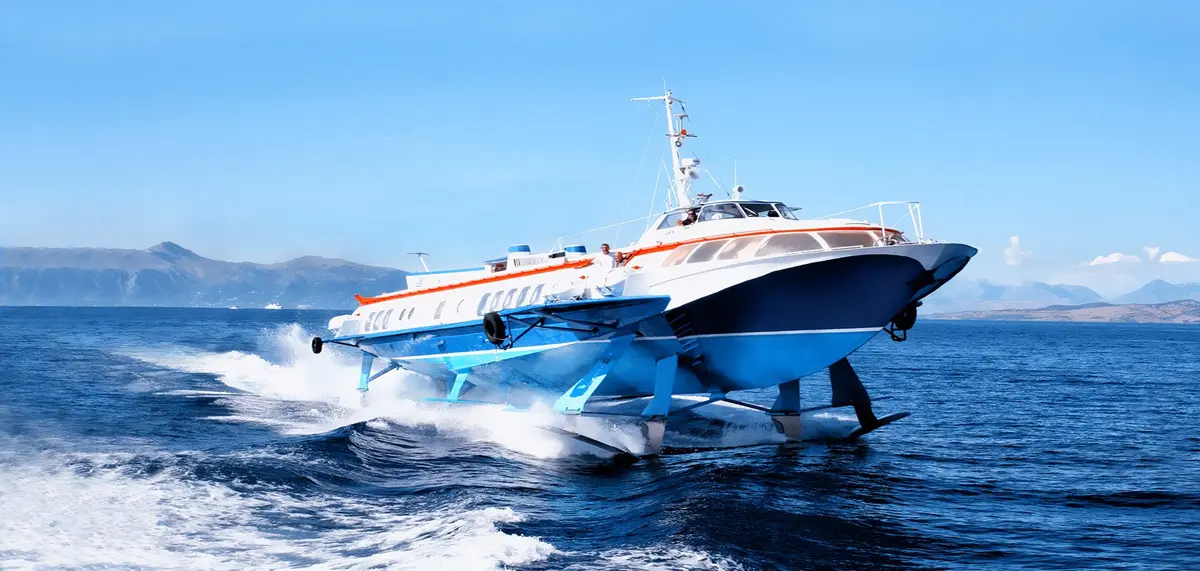
The cleanest crossing between the two countries is Corfu (Kerkyra) to Saranda, a 23-nautical-mile hop across the Corfu Channel. High-speed hydrofoils cover it in 25 to 30 minutes; conventional passenger and car ferries take 60 to 90 minutes. Three operators now service the corridor — Finikas Lines, Ionian Seaways and Albania Luxury Ferries — with sailings roughly hourly at peak-season midday and thinning to one or two crossings a day in winter.
Foot-passenger fares typically run $22 to $34 (€19–€30) one way, with return tickets around €35–€45. Vehicle fares are dramatically higher and, as the next section explains, usually the wrong move anyway. Book ahead for July and August; the fast craft sell out.
Budget generous time at Corfu port. Between summer volume and biometric border processing, allow at least 90 minutes before departure, and note that Corfu runs one hour ahead of Albania — every timetable is in local time, and that single hour has stranded more travelers on this route than any other factor.
Pro Tip: Cross as a foot passenger, then rent a separate, locally insured vehicle on the Albanian side. This one decision eliminates the biggest financial trap of any Balkan road trip.
Option 2: Overland Border Crossings
Several road crossings connect Greece and Albania, with Kakavia, Krystallopigi (Kapshticë) and Qafë Botë the ones most travelers use. They are perfectly manageable on public transit or a scheduled coach. They introduce serious legal and financial complications if you are driving a rental car — which brings us to the most important section in this guide.
The rental car trap nobody warns you about
Read this before you book anything. Greece and Albania are the hardest cross-border pair in the entire western Balkans for rental vehicles. Most Greek agencies, including major international brands operating on Corfu and the mainland, explicitly prohibit clients from taking a vehicle into Albania. Cross anyway and your insurance is void. Not reduced. Void.
The reverse is equally restricted. Most Albanian rental companies prohibit Greece entirely in their cross-border terms, and the minority that permit it charge €150 or more once fees and documentation are stacked up. Compare that to Kosovo (€20–€40) or Montenegro (€70–€110 all-in with insurance), and the picture is clear: Greece is the outlier.
If you are still determined to drive cross-border, you need a Green Card — formally the International Motor Insurance Certificate — which proves the vehicle carries the minimum third-party liability cover for each listed country. Expect €30 to €50 ($34–$57) from a rental desk, or roughly €35 per country from some international brands, with a 15-day minimum coverage period. Short-term border insurance sold at the crossing itself runs about €15 to €30 but does not cover every destination. Add the agency’s own cross-border authorization fee, typically €30 to €50 ($34–$57), and written permission from the branch, which is mandatory and never automatic.
The alternative math is simple. Take the ferry as a foot passenger for roughly $22 to $34 one way, pick up a local Albanian rental in Saranda, and keep any Greek rental on Greek territory only. You pay less, you skip the paperwork, and your insurance is never in question.
Pro Tip: Paying a cross-border fee does not automatically include Green Card insurance. They are two separate charges and travelers conflate them constantly. Ask your supplier to confirm, in writing, both the authorization and the insurance geography before you leave the lot.
Navigating Albania without a car: buses, furgons and what actually changed
Albania has effectively no usable passenger rail network for travelers; a rebuilt line linking Tirana, the airport and Durrës has been under construction and is not yet a practical tourist option. What the country does have is a two-tier road network that is far more organized than older guides suggest, and our guide to bus travel in Albania maps the full route network. Here is what matters for this particular trip.
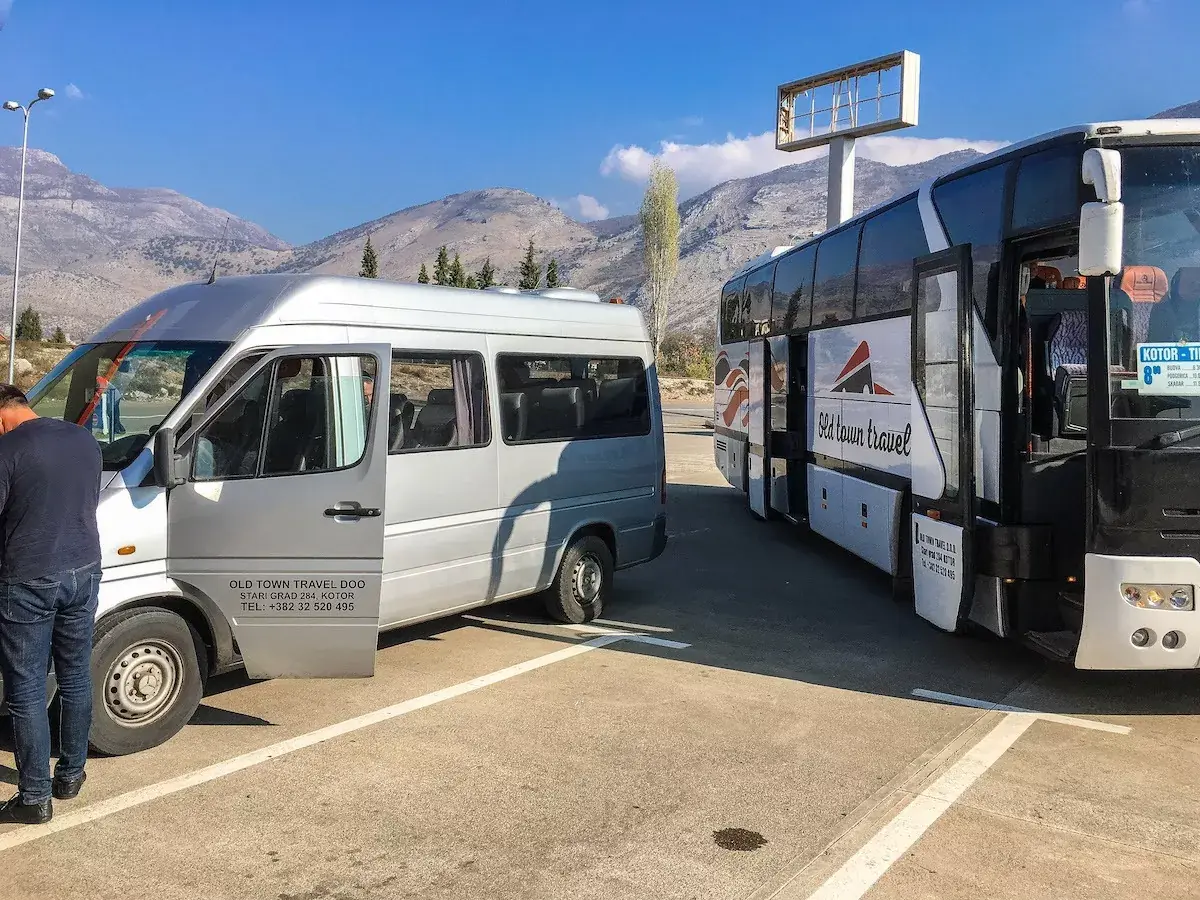
On the main trunk routes, the informal furgon has largely given way to scheduled coaches. Tirana to Saranda is now run by established operators on a fixed timetable with roughly eight to eleven daily departures, taking 4 hours 20 minutes to 5 hours by the inland highway or six hours plus via the scenic coastal road. The fare is about 1,500 lek — roughly $17, not the $3 to $5 you will see quoted on outdated blogs. You can pre-book online through Gjirafa Travel, which is worth the small booking fee on busy July and August weekends.
The catch is the terminal. Long-distance buses leave from the South and North Bus Terminal near the Casa Italia outlet, about 25 minutes northwest of central Tirana — not from the city center. Reach it on a 40-lek municipal bus toward Kamëz or a taxi. Arrive 30 to 45 minutes early in summer.
Furgons — privately operated minibuses that leave when the driver decides the vehicle is full — still dominate shorter regional hops: Saranda to Ksamil, Saranda to Himara, village connections inland. Fares are cash, paid directly to the driver, and remain genuinely cheap: a couple of hundred lek for a short coastal run. Look for the handwritten destination card in the windshield; if there is no sign, the first two letters of the license plate correspond to the vehicle’s city of origin and indicate its general direction of travel.
Pro Tip: For the Saranda-to-Himara coastal stretch, letting someone else drive is the better call. You get the scenery instead of the switchbacks, and you avoid parking in villages that were never designed for cars.
Llogara Pass or Llogara Tunnel? The drive has fundamentally changed
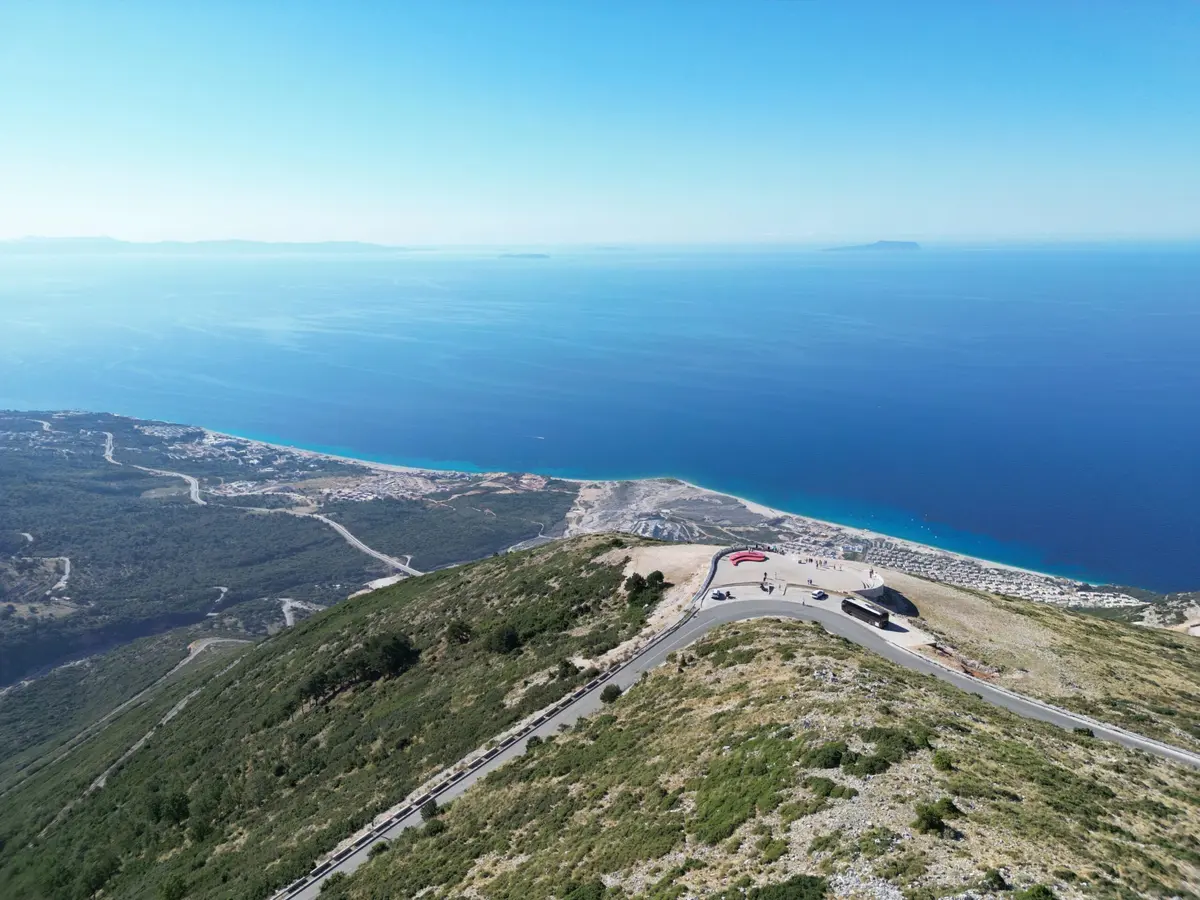
This is the single largest infrastructure change on the Albanian Riviera, and most comparison articles have not caught up. A 5.9-kilometer tunnel now runs beneath the Ceraunian Mountains between Dukat and Palasë, collapsing a 30-to-40-minute mountain crossing into about seven minutes and shaving roughly 45 minutes off the run from Vlora to the Riviera. A modest toll applies for passenger cars — around 250 lek, roughly $3 — and booths are effectively cash-only in practice, so keep Albanian lek on hand. Tolling arrangements have been revised more than once, so confirm the current rate locally.
The old SH8 mountain road over the Llogara Pass remains open, free, and far better than it used to be, precisely because most through-traffic now takes the tunnel. If you want the drive, take the pass. If you have luggage, a flight to catch, or a nervous passenger, take the tunnel.
If you do drive the pass, treat it seriously, and go in understanding what driving conditions in Albania actually demand. It crests at 1,043 meters (3,422 feet) above the Ionian Sea, with a maximum gradient around 11% and a sequence of tight, blind hairpins. As the road climbs, alpine pine closes in and the temperature drops noticeably. At the summit the trees break without warning onto a vertigo-inducing panorama of open water, usually with paragliders working the thermals overhead.
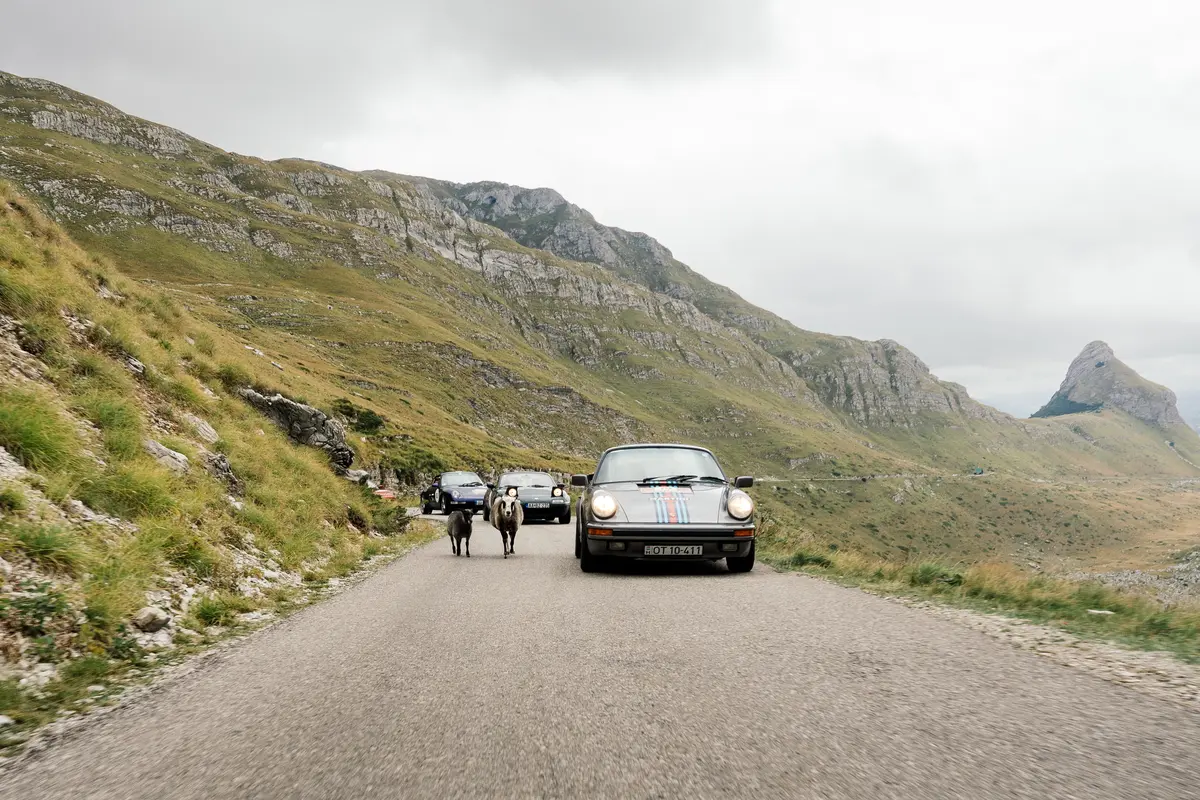
Descending is where accidents happen. Use lower gears rather than riding the brakes on a sustained grade. Expect sudden summit fog that can form in minutes, and expect goats, cattle and dogs standing on the pavement. Drive it in daylight only: several sections have no guardrail and the road is unlit. Snow and ice can close the pass temporarily between December and March, at which point the tunnel is the alternative.
Pro Tip: Rent a vehicle with manual transmission or confirmed engine-braking capability. An automatic that cannot hold a low gear on a sustained alpine descent is a genuine safety liability here — and standard rental CDW leaves you carrying an €800 to €1,200 excess if it goes wrong, so confirm whether your travel insurance policy covers rental excess before you assume it does.
Both countries rewrote their beach laws. Here is what it means for you
The sunbed wars have produced actual legislation on both sides of the border, and it changes how you plan a beach day.
In Greece, 70% of any beach must remain free of sunbeds, rising to 85% in protected areas, with commercial concessions banned outright on ecologically sensitive stretches. Loungers and umbrellas must sit at least four meters back from the waterline, which effectively bars rentals from beaches narrower than four meters. More than 250 beaches — including sites on Corfu — are now designated “untrodden” and carry sunbed bans or hard caps. Enforcement runs on drone patrols plus a citizen-reporting app, MyCoast, which lists licensed operators and lets people flag violations. Fines have been substantial. Enforcement is real but uneven, and audit reports have criticized follow-through.
In Albania, the waterline strip is free to everyone at all times by law, and regulation requires that a share of every 1,000-meter coastal stretch stay public and free — commonly cited as 300 meters. Free zones in Ksamil are signposted on-site as “zonë e lirë.” Facilities in those sections are minimal: usually no showers, no dedicated restrooms, bring your own everything. The government has also moved to shift management of the Ksamil and Dhërmi beachfronts from private operators to the municipalities, with Himara and Lezha held up as models.
The practical takeaway for both countries is identical. You are never legally required to pay to reach the water. You are frequently required to walk past the last row of umbrellas to find space.
The truth about Ksamil (and where to go instead)
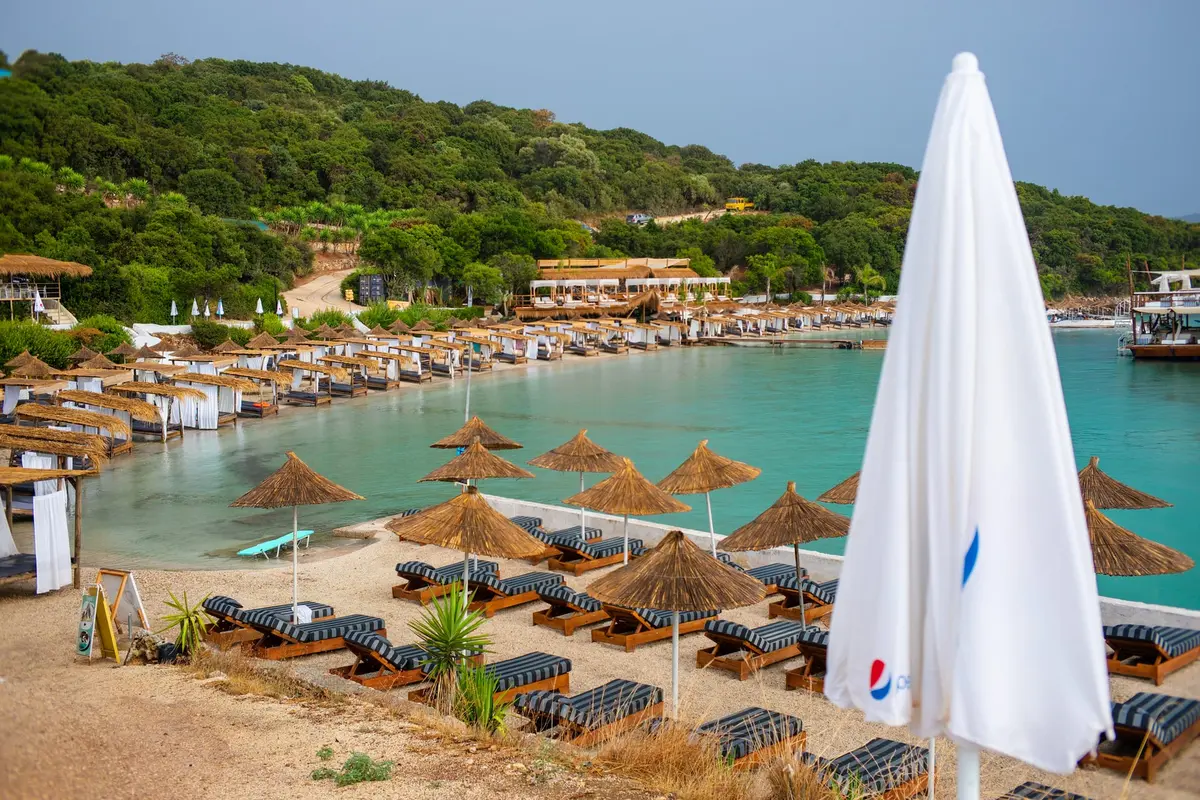
Let us be direct: Ksamil is no longer a secret. Viral social coverage positioned it as an affordable Maldives alternative, and the result is a two-kilometer stretch of roughly 15 named beaches where nearly every cove is operated by a restaurant, hotel or beach club. In August, the white sand is largely buried under commercial sunbed grids, and a pair of loungers with an umbrella runs 1,000 to 3,000 lek ($12–$35), with premium waterfront setups at some clubs reaching €70 a day. Free zones exist on paper and are signposted in places, but in central Ksamil at midday in August, usable free space is scarce.
This is the paradox of modern travel: the virality that made Ksamil famous manufactured the exact overtourism problem visitors came to escape. The water is still genuinely world-class — better than anything in Himara or Saranda. What is overrated is the idea that you can arrive at noon in August and have a serene moment. Go in June or September, or arrive before 10:00, and Ksamil delivers. Ignore the timing and you have paid premium prices for a crowded, car-park-adjacent cove.
The structural alternative is the Himara coastline, where physical geography enforces the solitude Ksamil lost.
1. Gjiri i Filikurit
This cove requires either a precarious cliff scramble down anchored ropes or a private boat drop. There is no other way in. At the bottom, the relief is not just psychological: hidden underground freshwater springs seep continuously through the coastal rock into the bay, dropping the water temperature by several degrees against neighboring beaches. You feel the chill immediately. The cove holds perhaps twenty people at capacity and most days holds far fewer. The main risk is the return climb in midday heat, so carry more water than you think you need.
- Location: Himara coastline, reachable by boat or cliff scramble
- Cost: Boat transfer from Himara, typically $20–$40 per person round trip
- Best for: Adventure travelers, couples seeking isolation
2. Akuarium Beach
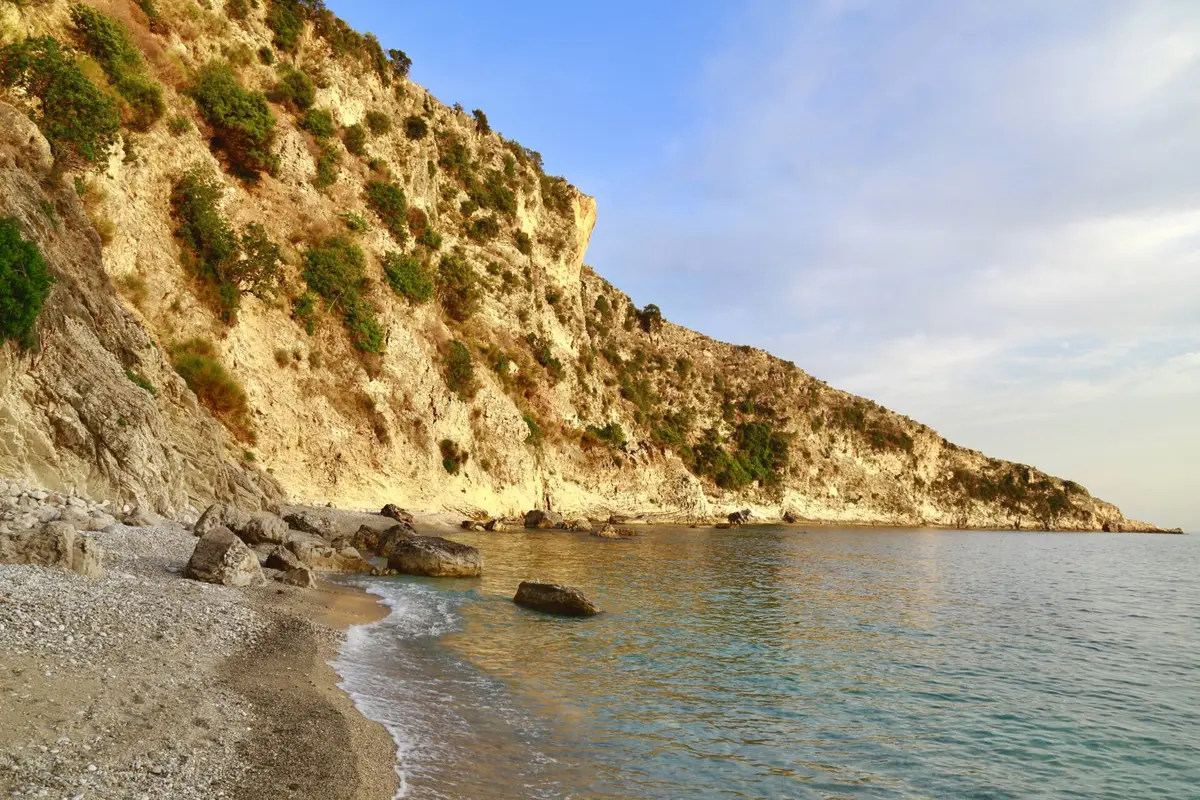
The name is not creative marketing — it is an accurate description of the water clarity. The rocky seafloor is visible at depths that would be murky anywhere else. It is small, rocky and uncrowded by Albanian standards. The absence of sand keeps the casual day-tripper crowd away, leaving the water still and transparent. Far better for snorkeling and swimming than sunbathing. Pack your own shade; there are no umbrellas for rent, and water shoes make the entry considerably more pleasant.
- Location: Himara area, reachable by local boat
- Cost: Free entry; boat transfer roughly $12–$20
- Best for: Snorkelers, photographers, couples
3. Grama Bay
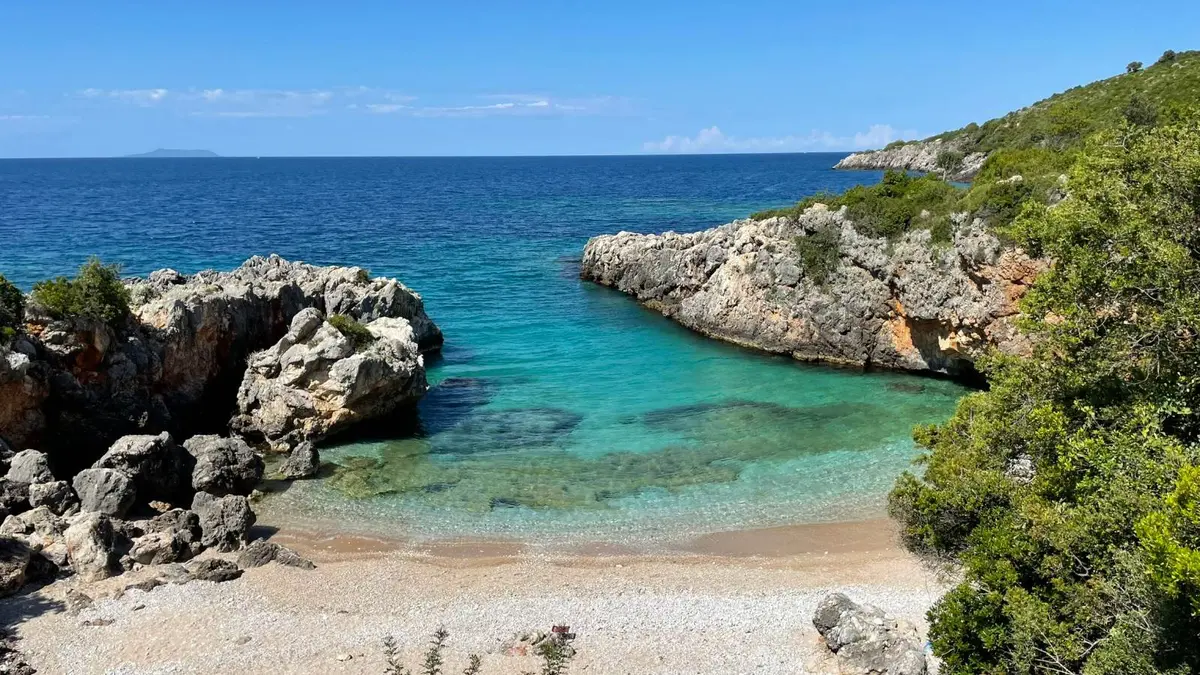
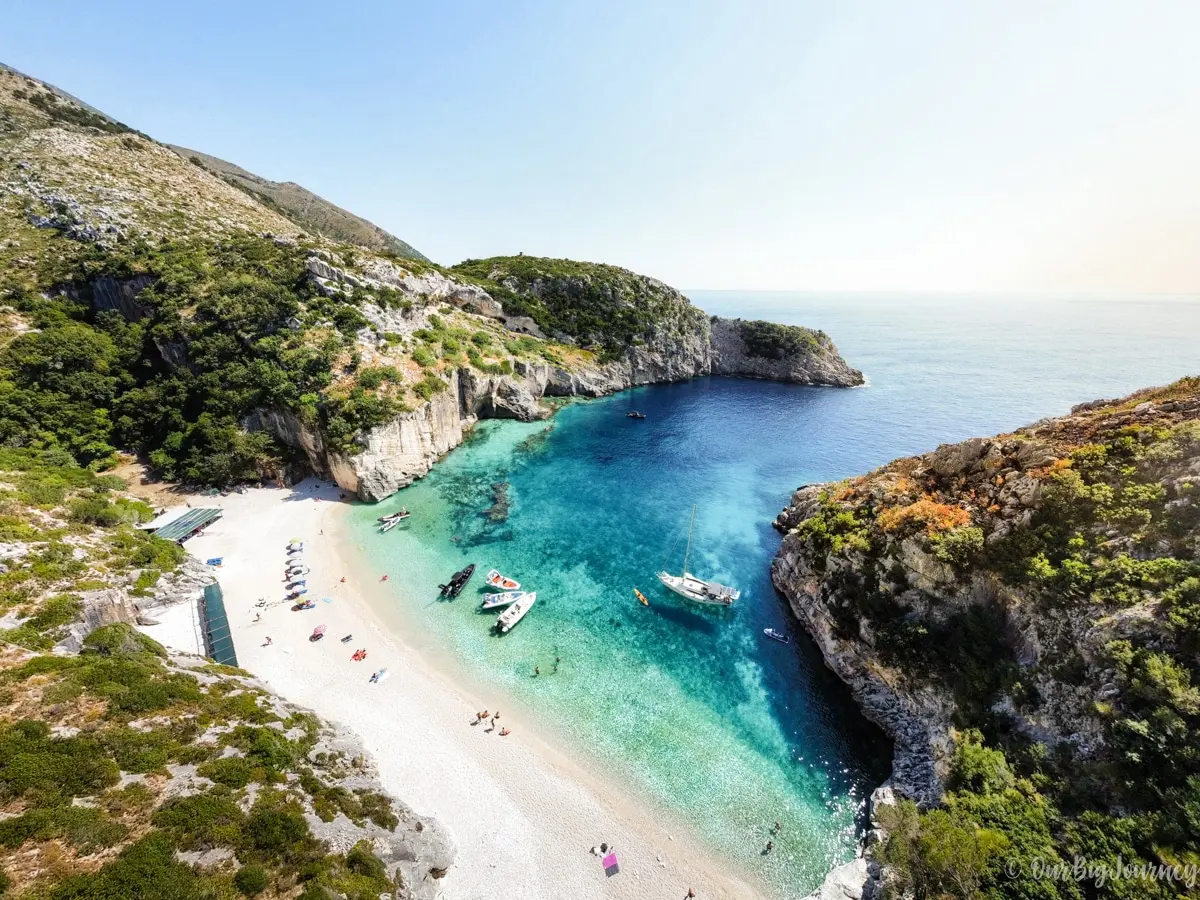
This is the most remote beach on the Albanian Riviera. Grama Bay sits deep within the Karaburun Peninsula, inside Karaburun-Sazan National Marine Park — Albania’s first and only marine national park, covering roughly 126 square kilometers of the peninsula plus Sazan island. The coast here is road-less; in practice the bay is reachable only by boat, with a long and demanding hike as the theoretical land alternative.
Ancient Greek and Roman inscriptions are carved directly into the cliff walls above the bay, evidence that this cove has served as a sheltered anchorage for over 2,000 years. The isolation is absolute. Plan it as a full-day boat excursion from Himara or Vlora — a serious commitment rather than a casual detour, and one that pairs naturally with Haxhi Ali Cave and English Bay on the same run.
- Location: Karaburun Peninsula, boat access only
- Cost: Full-day boat tour from Himara or Vlora, roughly $40–$80 per person
- Best for: History enthusiasts, serious adventurers, multi-day sailors
The Greek mainland alternative: Epirus and Zagori
Every comparison article pits Albania against the Greek islands, and that framing misses one of the best travel options in the region. The Epirus region of Greece’s northwestern mainland shares the same tectonic mountain ranges, Mediterranean climate and Ionian proximity as southern Albania, while offering full Greek infrastructure at mainland rather than island prices.
The Zagori cultural landscape comprises 46 traditional stone villages, collectively the Zagorochoria, set in harsh alpine terrain and linked by 18th-century arched stone bridges and cobbled mule paths. It was inscribed on the UNESCO World Heritage List as Greece’s first cultural landscape, and the surrounding Vikos-Aoos area is a UNESCO Global Geopark.
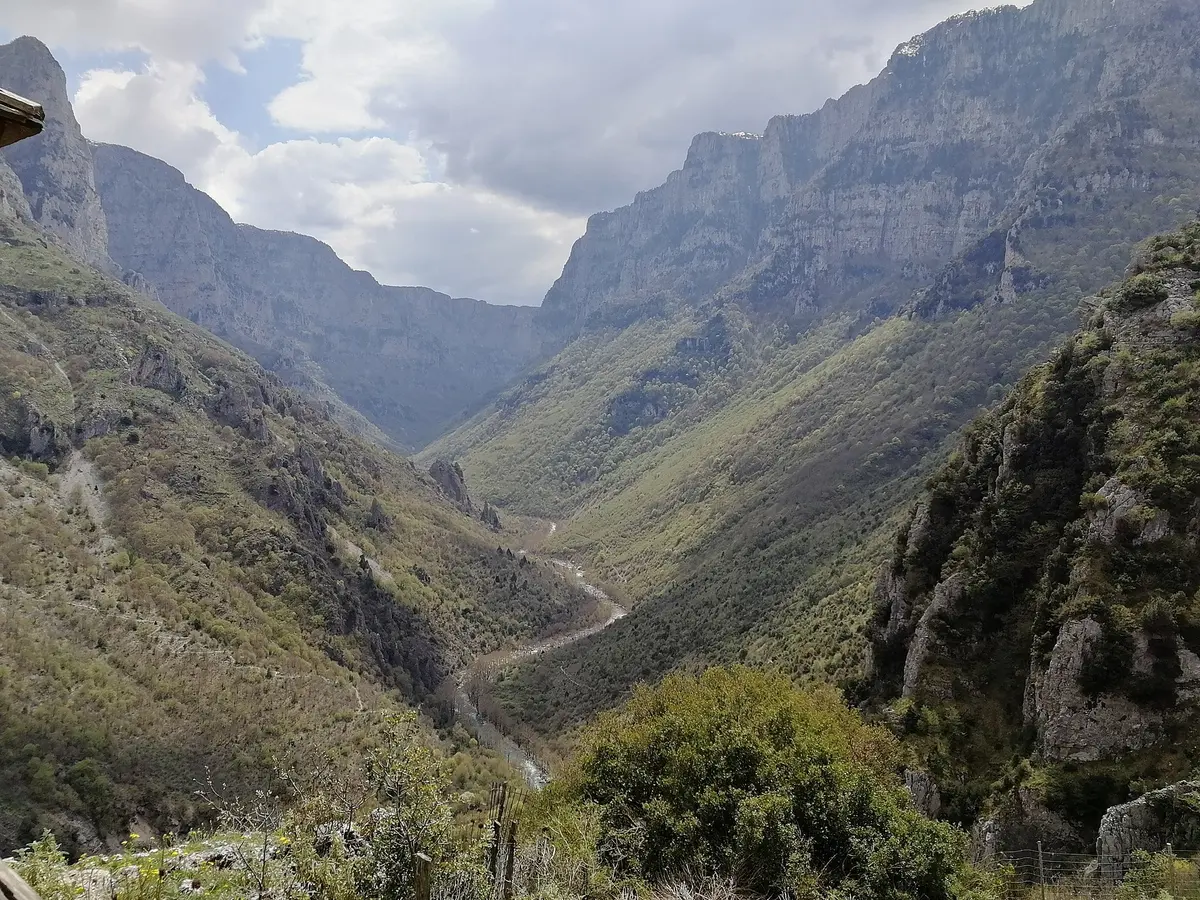
At its heart is the Vikos Gorge, listed by Guinness World Records as the world’s deepest gorge relative to its width. It runs roughly 32 kilometers, with walls reaching up to 1,350 meters (about 4,430 feet) and a width that narrows from 2,500 meters at the outlet to a few meters at its tightest point. Serious trekking routes from Papingo lead up to Drakolimni, an alpine lake sitting just above 2,000 meters (roughly 6,600 feet) beneath the Towers of Astraka.
The strategic insight is significant. If you want Albania’s rugged isolation but would rather not navigate biometric border queues or cross-border rental insurance, fly into Greece and drive north into Epirus. You get the mountain scenery, the authentic villages and the uncrowded trails without ever leaving Schengen.
Where to eat in Saranda: skip the promenade
The main Saranda waterfront promenade is built for visitors who do not know better. The food is average, prices are inflated, and the views are half-blocked by other restaurants doing exactly the same thing. Three places worth the short walk or drive — and if you are filling out the rest of the day, our roundup of things to do in Saranda covers what happens between meals:
1. Observatory Restaurant
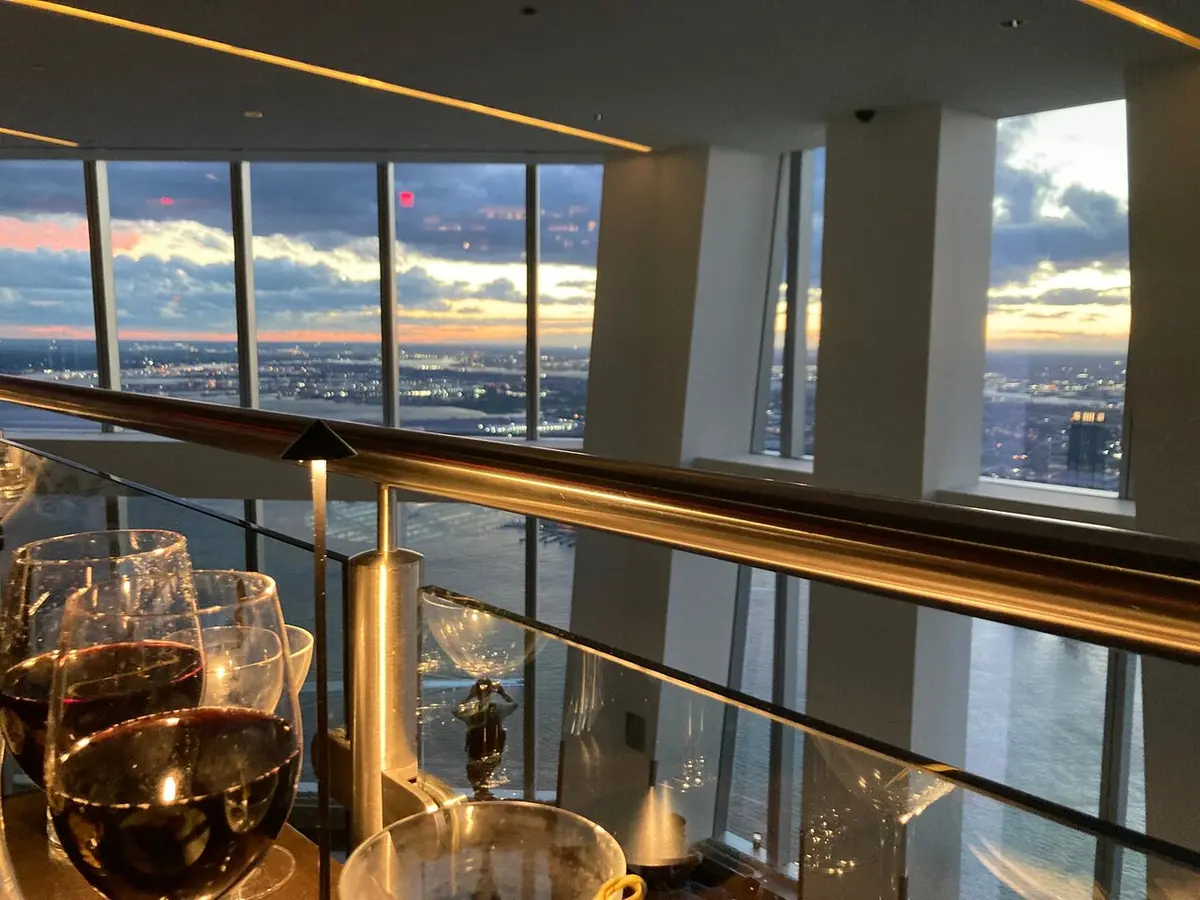
Locally treated as the balcony of Saranda, this elevated venue sits high above the city with a sweeping panorama of the bay and Corfu on the horizon. Arrive around 45 minutes before sunset and order the grilled octopus or the steak. Elevation changes how the light lands, and the cooking is noticeably more careful than what you will find down by the water. Service can slow when it fills up, so build in time rather than booking a tight evening.
- Location: Above Saranda city center, Lagjja 1
- Cost: Dinner for two, roughly $35–$60
- Best for: Couples, sunset dining, special occasions
2. Lekursi Castle Restaurant (Kalaja e Lëkurësit)
Dining inside a hilltop Ottoman-era castle is a reasonable thing to want, and this venue makes it possible. You get live traditional music, massive stone walls, and a 360-degree view taking in Saranda bay and Corfu simultaneously. It is theatrical in the best way.
An honest warning, because this has shifted: the setting is the entire product here, and recent visitor feedback has turned sharply negative on service. Complaints about long waits, seating disputes and minimum-spend pressure at peak times are now common enough that the venue’s aggregate rating has fallen well below its neighbors. Go for the castle and the view, go early or off-peak, order simply, and set expectations accordingly. If service matters more than spectacle, the smaller restaurants on the road down the hillside are the better bet.
- Location: Lekursi Castle hill, above Saranda
- Cost: Dinner for two, roughly $30–$50
- Best for: Groups, atmosphere, panoramic photography
3. Restorant Pizzeri Roel
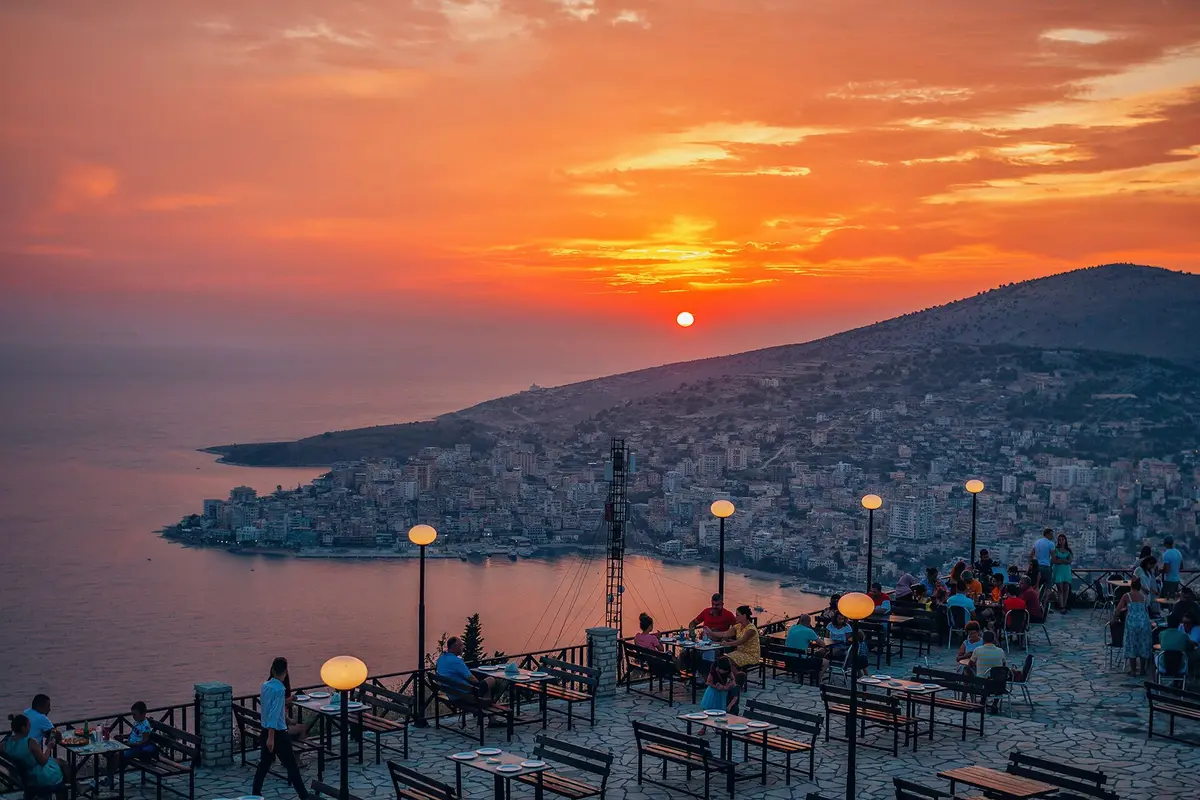
This is the local choice for watching the sun drop directly into the Ionian Sea — not behind the coastal hills, but into open water. The deck alignment is specific, and no other spot in central Saranda replicates it. Casual, loud in the best way, and genuinely good value: wood-fired pizza, seafood linguine and a local beer. Drinks run a little above neighboring places, which is the price of the view.
- Location: Saranda seafront, west-facing deck section
- Cost: Pizza and drinks for two, roughly $18–$30
- Best for: Budget travelers, solo diners, casual evenings
Coffee culture: what not to do in Albania or Greece
This matters more than you would expect. Getting coffee wrong in either country signals that you are treating the place as a theme park rather than someone’s home.
In Greece, coffee is a multi-hour social ritual. Iced frappés and freddo espressos are consumed slowly over long conversations at shaded outdoor tables. Rushing is rude. Asking for the check immediately after finishing is rude. Sitting for two hours on one drink is entirely normal and expected.
In Albania, the preference runs to concentrated Italian-style espresso or traditional unfiltered Balkan coffee. Hosts read a rushed coffee as a personal slight, and coffee is rarely taken after dinner. When a local fights to pay for your table, let them have the first round at least; refusing an offered coffee outright is a serious breach of hospitality. In both countries the café table is a social institution, not a fueling stop. Plan your mornings accordingly, and note that tipping norms in Albania are gentler than what US visitors are conditioned to expect.
Pro Tip: In Albania, “të falem nderit” — roughly, I accept with gratitude — goes a long way when someone insists on paying. It acknowledges the gesture correctly instead of refusing it.
The mainland mirror strategy: a smarter itinerary
Here is the operational framework the best itineraries in this region are built around.
Route A — the combination. Fly into Corfu, spend two or three days on the island, then take the foot-passenger ferry to Saranda. Rent a local vehicle in Albania, drive the coastal SH8 south through Himara and Dhërmi, take boat trips to the inaccessible coves, and return to Greece on the same ferry. Two border crossings, one biometric enrolment, no cross-border insurance. If you would rather see the Albanian leg mapped out day by day, our 7-day Albania itinerary follows much the same spine.
Note that Tirana International remains the practical air gateway for the Albanian side, and the landing point for effectively every flight from the US to Albania. The long-promised Vlora International Airport has slipped repeatedly — certification has not been completed and announced carrier schedules have been cancelled more than once. Do not build an itinerary around it until you can see live, bookable flights.
Route B — the mainland mirror. Fly into Greece, skip the islands entirely, and drive north into Epirus. Hike the Vikos Gorge, sleep in a stone village in the Zagorochoria, and spend a week in mountain terrain that virtually no island-bound tourist will ever see — at mainland prices, with no border at all.
Both strategies deliberately bypass the two biggest financial pain points of Ionian travel: Greek island accommodation pricing and the Albanian cross-border rental insurance trap.
What to eat on the Albanian Riviera
Three staples define the regional table and your daily budget, and they are the fastest way into traditional Albanian food more broadly:
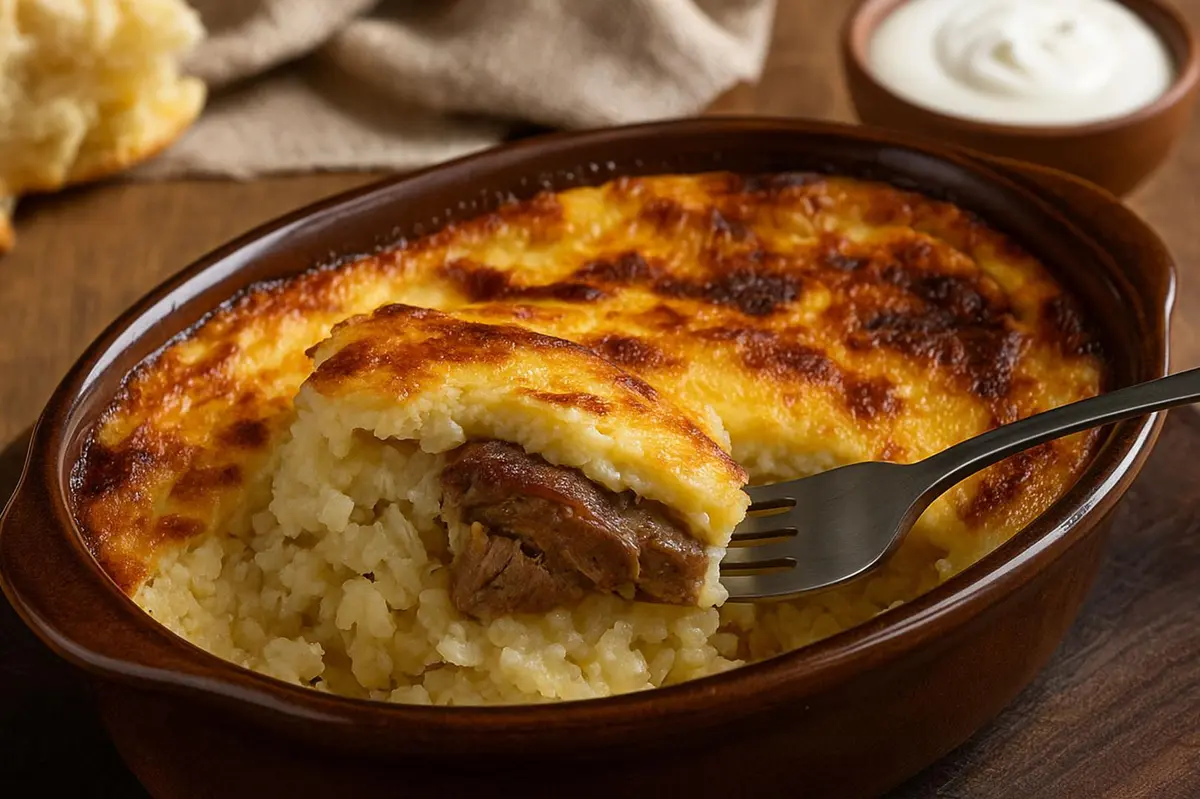
- Tavë Kosi: The national dish — baked lamb layered with a thick, tangy yogurt and egg custard. Significantly heavier than it looks. Order it for lunch, not dinner.
- Byrek: The everyday street food, a flaky savory pastry filled with spinach, cheese or ground meat. A single piece runs roughly 100 to 150 lek ($1.20–$1.80) and makes a fast, legitimate breakfast.
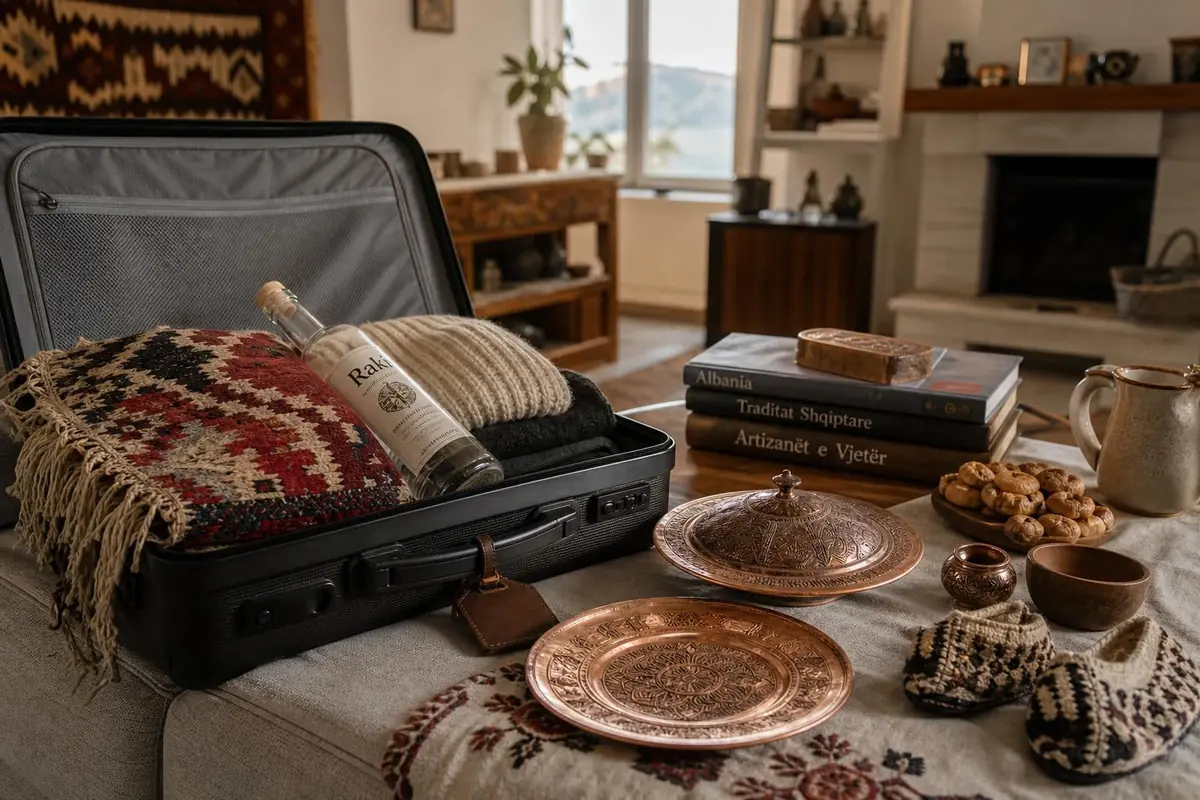
- Raki: The local spirit, distilled from grapes or mulberries and typically offered by hosts before a meal begins. Refusing the first glass is genuinely difficult to do gracefully. Sip it slowly; it is considerably stronger than it looks.
Conclusion: making the call on Albania vs Greece
The debate between Albania vs Greece is not a competition with one clear winner. It is a spectrum, and the strongest trips to this stretch of the Ionian use both countries deliberately. Greece gives you reliable infrastructure, island polish and a culinary tradition refined over generations. Albania gives you a coastline that has not been fully priced or packaged, along with the logistical honesty that comes with a tourism economy still building itself in real time.
What has changed is the margin. Albania is no longer three times cheaper, biometric borders now sit between the two countries, a tunnel has replaced the mountain crossing that used to define the drive south, and both governments have legislated the beaches back toward public access. Plan around the current reality rather than the version of Albania that circulated on social media three years ago, and this remains one of the best-value coastlines in Europe. Our complete Albania travel guide covers everything north of the Riviera once the coastal leg is locked in.
The travelers who get the most out of this region are the ones who stop trying to pick a side and start planning a route that uses both. And if the wider Adriatic is still on the table, Albania versus Croatia is the other comparison worth running before you commit. So — are you packing for one country, or two?