Planning a trip to the Balkans but asking yourself, is Albania safe for tourists? You are not alone. This guide cuts through outdated stereotypes and gives you the real picture, from traffic laws that will catch you off guard to the financial traps most travel blogs will not mention. It is the safety chapter of our wider Albania travel guide.
Is Albania safe for tourists? The short answer
- Violent crime against visitors is rare. Albania’s intentional homicide rate sits around 1.1 per 100,000 people, lower than France, Belgium, and the United States.
- The roads are the real risk. The UK’s Foreign Office notes that road traffic deaths in Albania are among the highest in Europe.
- The legal blood alcohol limit is 0.01%, effectively zero tolerance. One beer will put you over it.
- Cash still rules. Every ATM charges foreign cards a flat fee, and dynamic currency conversion can silently add up to 13%.
- Uber and Bolt do not operate in Albania. Use a local ride-hailing app instead of an unmetered airport taxi.
Is Albania safe for tourists? The bottom line on physical safety
Yes, Albania is broadly safe for tourists. Violent crime targeting foreigners is statistically rare. Albania scores 55.7 on the Numbeo Safety Index (a Crime Index of 44.3, in the “moderate” band), and its intentional homicide rate of roughly 1.1 per 100,000 people is lower than France, Belgium, and the United States, and roughly level with the United Kingdom. The country now receives more than 12 million foreign arrivals a year against a resident population of about 2.4 million, and the overwhelming majority of those trips pass without incident.
That said, the U.S. State Department maintains a Level 2 “Exercise Increased Caution” advisory, citing crime and targeted violence linked to drug networks and organized crime. That is the same tier applied to France, Italy, Spain, and Germany. The U.S. Embassy in Tirana has also issued a standing security alert warning that groups associated with Iran may target U.S.-linked entities and common venues such as hotels, malls, clubs, and restaurants. The UK’s FCDO, Canada, and Australia all advise standard precautions rather than avoidance. None of this should stop you from visiting, but all of it deserves a read before you land, and Americans should enrol in the State Department’s STEP programme for updates.
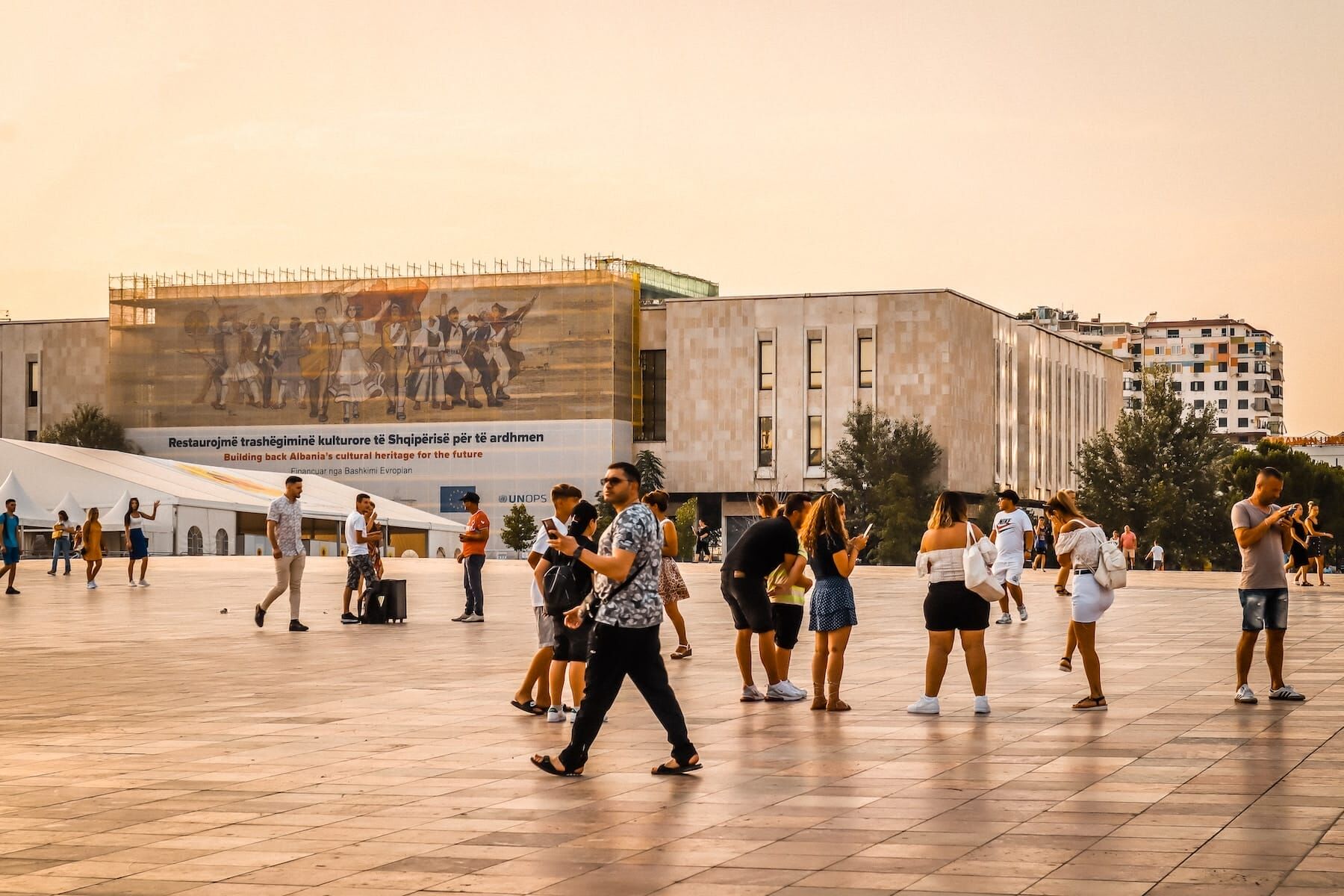
The real threats are not what you would expect. Pickpocketing around Skanderbeg Square, unmarked road hazards after dark, and ATM fee traps will drain your trip far faster than any violent encounter.
The financial traps tourists keep falling into
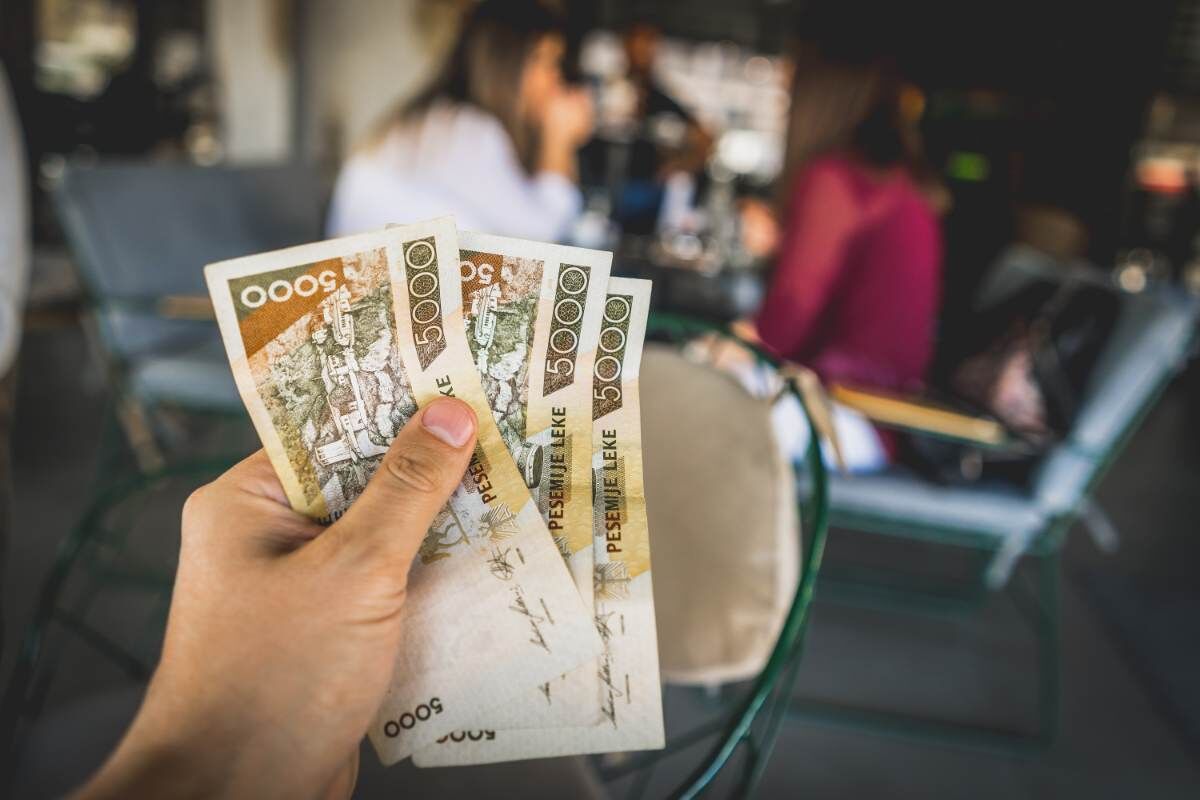
Cash is king here. The Albanian Lek (ALL) is the only currency you should be spending, even in tourist-heavy zones like Sarandë and Ksamil where Euros are accepted but at punishing, arbitrary exchange rates. Notes come in 200 (polymer), 500, 1,000, 2,000, 5,000, and 10,000 Lek. Card acceptance has improved sharply in Tirana and the main coastal resorts, and hotels, malls, larger restaurants, and rental desks now take Visa and Mastercard routinely. Outside that bubble, though, furgon minibuses, rural guesthouses in Valbona, family-run tavernas, beach parking attendants, and tow-truck drivers still run on cash only.
The ATM situation is where most travelers quietly lose money, and most guides get it wrong. There are effectively no fee-free ATMs left in Albania. Bank machines charge foreign cards a flat access fee of roughly 500 to 800 Lek (about $6 to $10) per withdrawal, and the cheapest and most expensive options are not the ones older blogs recommend. Union Bank and ABI Bank sit at the low end. Raiffeisen and BKT sit at the top. Credins is no longer free. Alpha Bank no longer exists as a separate brand after merging into OTP, so any guide still listing it is stale. Avoid the blue-and-yellow Euronet machines clustered in tourist corridors entirely, as they combine the worst rates with the highest charges.
Whichever machine you use, always decline the conversion the screen offers you. Choosing to be charged in dollars instead of Lek triggers dynamic currency conversion, which can add anywhere from 4% to 13% on top of everything else. Withdraw larger amounts less often to amortise the flat fee, and keep small bills on you. Stocking up on 200 and 500 Lek notes matters, because taxi drivers and vendors routinely claim they cannot make change for larger denominations, which is a reliable pressure tactic.
Pro Tip: The flat-rate taxi hustle at Tirana airport is one of the most consistent scams in the country. Neither Uber nor Bolt operates anywhere in Albania, so ignore anyone claiming otherwise and download a local app before you fly. Clust, Patoko, Speed Taxi, and VrapOn all give upfront pricing, GPS tracking, and card payment. An app ride to the city center runs roughly 1,200 to 1,800 Lek ($15 to $22) against 2,000 to 2,500 Lek at the official rank, and considerably more from the touts working the arrivals hall. On a budget, the Rinas Express shuttle runs hourly around the clock to Skanderbeg Square for 400 Lek (about $5).
Driving in Albania: the rules that will blindside you
The roads are the single greatest physical danger here, not crime. The UK Foreign Office states plainly that deaths from road traffic accidents in Albania are among the highest in Europe, driven by an aggressive driving culture that treats lane markings as rough suggestions. Night driving outside urban areas is genuinely dangerous. Expect unmarked roadworks, headlight-free vehicles, potholes deep enough to destroy a rim, and agricultural equipment drifting across major roads in complete darkness. If you are exploring the rural interior or the northern mountains, rent a 4WD SUV, not a compact hatchback.
The law that catches every foreign driver off guard is the alcohol limit. Albania enforces a blood alcohol concentration ceiling of 0.01%, one of the strictest in Europe and effectively zero tolerance. One beer or a single raki is enough to put a 70 kg adult over it, and the consequences run from a heavy fine to licence suspension, vehicle confiscation, and, at the top of the scale, criminal charges. There is no gray area and no talking your way out of it. If you are driving that day, do not drink.
Three more rules blindside visitors regularly. Low-beam headlights are mandatory outside built-up areas day and night, and forgetting them is an easy ticket. Every vehicle must legally carry a reflective vest, warning triangle, first aid kit, and fire extinguisher, and the fine falls on the driver, not the rental agency, so check the car before you leave the lot. And if you are involved in an accident, local law requires all parties to remain exactly at the scene until police arrive. Moving your vehicle before officers document the situation can result in charges under the national Penal Code and will typically void your rental insurance.
Speed limits default to 40 km/h in built-up areas, 80 km/h on rural and secondary roads, 90 km/h on primary inter-city roads, and 110 km/h on highways. Fixed cameras and mobile radar are both in use. One last thing: never offer cash to a traffic officer. Anti-corruption enforcement is active, officers wear body cameras, and attempting a roadside payment is itself a criminal offence.
Traffic fine schedule
| Violation | Fine (ALL) | Approx. USD | Additional penalties |
| Speeding: 1–10 km/h over | 1,000 – 3,000 | $12 – $37 | Standard range |
| Speeding: 10–30 km/h over | 2,000 – 6,000 | $24 – $73 | Common in speed-trap zones |
| Speeding: 30–50 km/h over | 5,000 – 15,000 | $61 – $183 | Licence suspension 1–3 months |
| Speeding: over 50 km/h over | 10,000 – 40,000 | $122 – $488 | Licence suspension 3–6 months |
| Drink driving: 0.01–0.5 mg/ml | 5,000 – 15,000 | $61 – $183 | Licence suspended |
| Drink driving: 0.5–1.2 mg/ml | 10,000 – 40,000 | $122 – $488 | Vehicle impounded, 6–12 month suspension |
| Drink driving: over 1.2 mg/ml | 20,000 – 60,000 | $244 – $732 | Criminal offence, arrest possible |
| Handheld mobile use | 5,000 – 15,000 | $61 – $183 | Heavily targeted by traffic police |
| No seatbelt (per person) | 1,000 – 3,000 | $12 – $37 | Applies front and rear |
| Running a red light | 5,000 – 20,000 | $61 – $244 | Suspension possible |
| No headlights outside towns | 500 – 2,000 | $6 – $24 | Required day and night |
| Missing safety equipment | 1,000 – 3,000 | $12 – $37 | Vest, triangle, kit, extinguisher |
Fines are set in Lek as minimum-to-maximum ranges under the Albanian Road Code, and officers have discretion within them. Dollar figures are approximate and move with the exchange rate. One detail worth knowing: any fine paid within 15 days of being formally registered is halved, payable through e-Albania, a post office, or a bank.
The Llogara Pass vs. the Llogara Tunnel
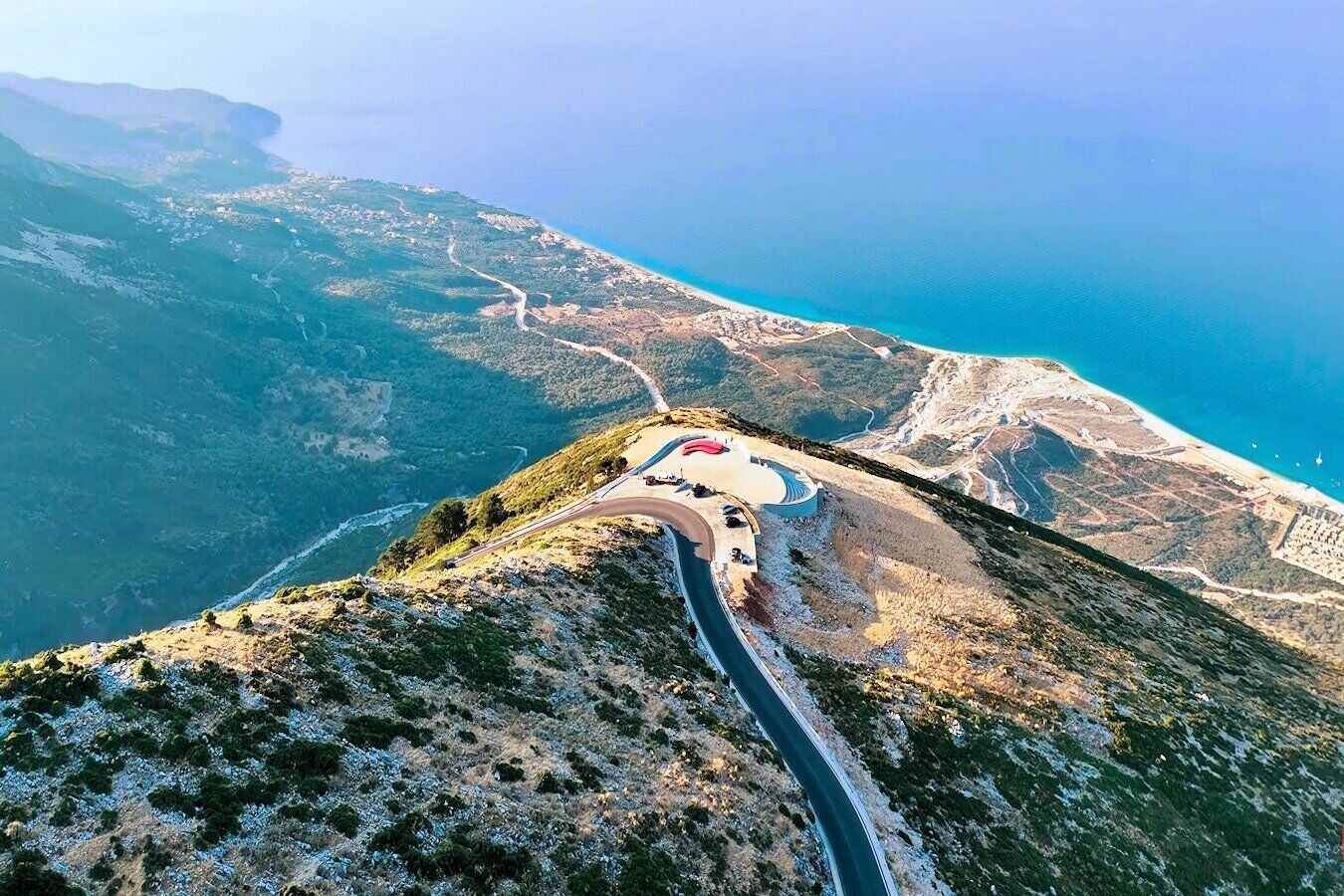
The coastal drive from the Adriatic down to the Albanian Riviera requires crossing the Ceraunian Mountains, and this stretch has historically been the most nerve-wracking drive in the country. The old Llogara Pass climbs to 3,370 feet (1,027 m) through tight hairpin turns, sections with no guardrails, and sudden fog banks that can drop visibility to near zero in minutes. The descent demands low gear to avoid brake fade. The views of the Ionian Sea and the island of Corfu dropping away beneath you are extraordinary, but the route demands full attention.
The Llogara Tunnel changes the equation entirely. At 5.9 km it is the longest in the country, and it cuts the Dukat to Palasë run from roughly 45 minutes of mountain climbing to a direct, well-lit transit of about seven minutes. Most heavy commercial trucks now use it, which has taken a great deal of pressure off the old pass road. The tunnel is no longer free: a toll booth at the northern (Dukat) end charges passenger cars 250 Lek (about $3) each way, motorcycles 100 Lek, vans and small buses around 1,000 Lek, and heavy vehicles up to 5,000 Lek. Carry Lek in cash, as card acceptance at the booth has been inconsistent.
Pro Tip: If skies are clear, take the pass. It is free, significantly quieter without the truck traffic, and the better drive by a wide margin. Watch for seasonal rockfalls and loose livestock on the road. If fog is rolling in off the coast, or the tunnel queue is short on a busy summer weekend, take the tunnel without hesitation.
How to navigate the furgon system without getting lost
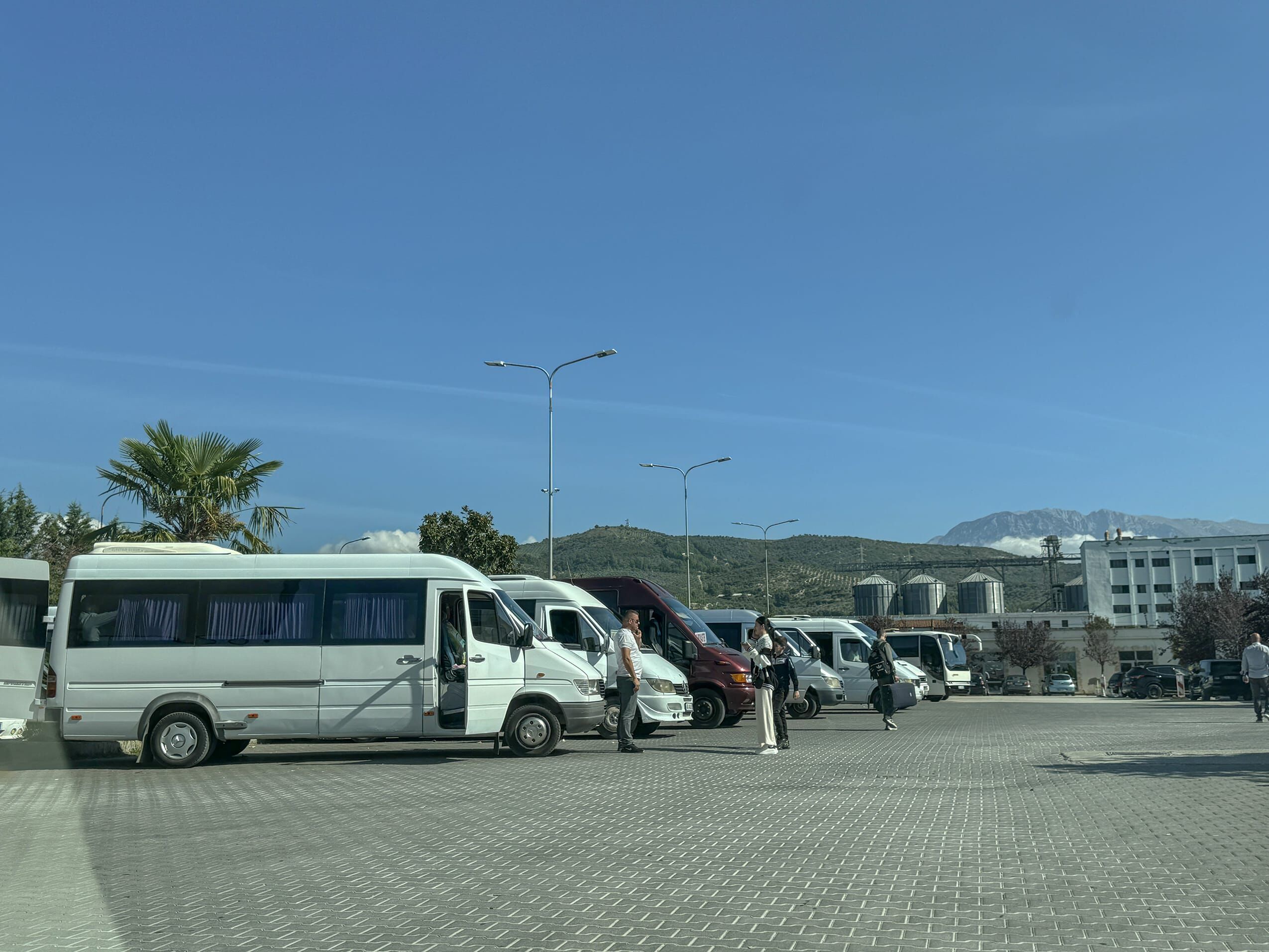
Albania’s passenger rail network is effectively defunct. What survives is a skeletal weekend service near Durrës, and the demolished Tirana station has left the capital with no train connection at all. A rebuilt Tirana–Durrës line with a spur to the airport is under construction, but repeated delays mean you should not build an itinerary around it. Until it opens, the country runs on furgons: privately operated, cash-only minibuses that depart only when every seat is filled, alongside larger intercity coaches. Schedules are flexible to the point of being fictional, though some longer routes can now be pre-booked online through platforms like Gjirafa Travel for a small fee, which is worth it only on peak summer weekends.
The biggest obstacle is not the furgons themselves, it is finding the right terminal in Tirana. The capital uses several geographically separate hubs: the South and North Albania Bus Terminal, a Southeastern terminal for Elbasan, Pogradec, and Korçë, and an international terminal at the TEG shopping centre. Most tourists heading to Berat, Shkodër, Gjirokastër, or Sarandë need the South and North Albania Bus Terminal (Terminali i Autobusave të Jugut dhe Veriut), out near the Casa Italia outlet in the Mëzez and Kamëz area, roughly 25 to 30 minutes from the city center and not walkable.
To reach it without paying taxi prices, walk to the urban bus area near Skanderbeg Square, behind the National History Museum, and look for a city bus marked KAMEZ or INSTITUTI in the front window. Have exactly 40 Lek (about $0.50) ready in loose change, because there are no ticket machines. A conductor will walk the aisle of the moving bus to collect your fare in cash and hand you a paper ticket. Because the bus continues past the terminal, keep your GPS running or watch for the mass exodus of passengers carrying luggage, as the stop is largely unmarked. Budget around 1,500 Lek (roughly $18) one way for the long haul from Tirana to Sarandë, paid in cash to the driver, and arrive 30 to 45 minutes early in summer because buses fill and sell out.
Why Albania can feel less friendly than the blogs suggest
Every travel blog written before the recent tourism surge describes Albanians as among the warmest, most generous people in the world. That reputation is rooted in something real, but it has been complicated by the sheer speed of the boom. Foreign arrivals have more than tripled in a decade and now exceed 12 million a year, more than five times the country’s population, and the coast absorbed most of that growth without the infrastructure or the training to match it.
The result is a market under strain in two directions at once. Prices in tourist zones climbed by roughly 12% to 20% in a single year, pushing Ksamil in peak summer close to Greek levels. At the same time the classic sun-and-sand segment softened as visitors started spreading inland and demanding better value, which pushed hotels in Sarandë, Ksamil, and Himarë to cut rates by 10% to 25% to fill rooms. Albania is still 30% to 50% cheaper than Greece or Croatia for comparable beaches and food, but the era of it being the outright cheapest country in Europe is over.
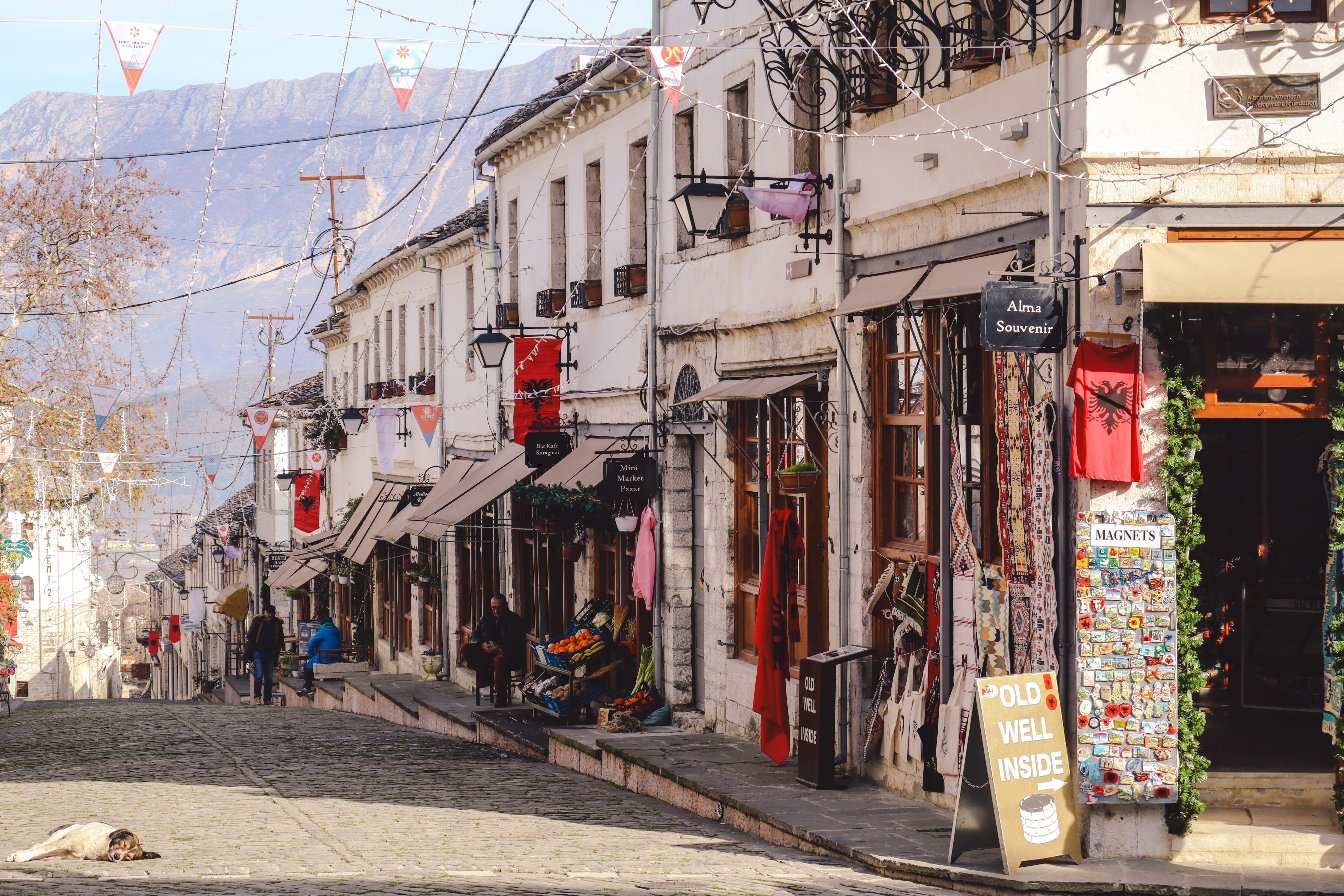
That squeeze is visible at street level. In tourist corridors like Berat and Tirana’s Old Bazaar, interactions have become noticeably more transactional. Service workers under pressure display shorter patience and a lower frustration threshold, and foreigners are increasingly viewed as revenue opportunities rather than honored guests. Understanding this does not mean you will have a bad time. It simply means your expectations will be calibrated to reality rather than a decade-old blog post.
The Good News: Step away from the tourist corridors. In rural villages and mountain communities, the traditional code of Besa, an ancient pledge of honor rooted in the customary Kanun law, remains very much alive. This is the same cultural force that led Albanian families to hide and protect Jewish refugees during the Nazi occupation, often at personal risk of execution. Away from the crowds, the genuine, overwhelming hospitality described in every old travel guide is still there.
Is Albania safe for solo female travelers?
Yes. Statistically, Albania is safer for solo female travelers than most Western European capitals, with violent crime and aggressive street harassment occurring at lower rates than in Paris, Rome, or Barcelona. Comfort and safety, however, are different measurements entirely. Outside central Tirana, the social fabric remains deeply traditional and patriarchal. Public spaces like cafes, bars, and street corners are heavily male-dominated. Women are traditionally expected to occupy domestic roles, and a solo female traveler navigating these spaces will attract sustained, unambiguous attention.
Expect prolonged staring. It is a cultural standard, not a precursor to harassment, but it takes adjustment. Public displays of affection are rare even between local couples, and platonic closeness between men and women in public is uncommon. Dressing conservatively outside of beach towns, particularly in the conservative north, will make daily life noticeably more comfortable. So, is Albania safe for tourists traveling alone as women? Yes, but you must be prepared for the cultural shift.
LGBTQ+ travel safety: the legal vs. social reality
Same-sex activity has been legal since 1995, and the legal framework is stronger than the region’s reputation suggests. Albania is one of only nine countries in Europe with full coverage of sexual orientation, gender identity, gender expression, and sex characteristics in its anti-discrimination law, it has passed a new Law on Gender Equality that explicitly names those grounds, and it is the only country in the Western Balkans with a partial ban on conversion practices. On ILGA-Europe’s Rainbow Map it scores 41%, ranking 25th of 49 countries assessed, ahead of several EU member states.
The social climate is a different story, particularly outside Tirana. The country does not recognise same-sex partnerships or marriages, and there is no legal gender recognition procedure for trans travelers, which can complicate documents that do not match your presentation. Conservative organisations run periodic campaigns and rallies in the capital, and hate speech from public figures has drawn formal condemnation from domestic monitoring bodies. Tirana Pride takes place annually and the capital has a small, discreet scene. Elsewhere, avoid public displays of affection and maintain situational awareness consistently. The protection on paper does not translate to protection in practice across most of the country.
Healthcare: a tale of two Albanias
Where you get sick matters enormously here. The gap between urban and rural medical care is severe. In remote mountain villages or along isolated coastal stretches, facilities lack advanced diagnostics, specialist trauma care, and reliable pharmaceutical supplies. Ambulance response that runs 10 to 15 minutes in Tirana can stretch to 40 minutes or more in rural districts, and a serious injury in the Albanian Alps involves complex extraction logistics. Travel insurance with medical evacuation coverage is non-negotiable if you are hiking in Valbona or Theth.
In Tirana, the private healthcare sector is a different world from the public one. American Hospital, Hygeia Hospital Tirana, German Hospital, and Salus all operate to international standards with modern imaging, intensive care, and English-speaking staff, and Hygeia in particular runs a full general, maternity, and paediatric service. For genuinely complex trauma, oncology, or cardiac cases, patients are still routinely referred onward to Italy, Greece, or Kosovo, which is precisely why evacuation cover matters. If you need care in Tirana, go directly to a private facility, bypass the public system, and confirm before you leave home that your policy covers private overseas treatment and emergency repatriation.
Emergency numbers
| Service | Number |
| General emergency (EU standard) | 112 |
| State Police | 129 |
| Traffic Police | 126 |
| Ambulance | 127 |
| Fire and rescue | 128 |
| Maritime Police | 125 |
Pro Tip: Dial 112 first. It is the only line where operators are expected to handle calls in English, and it routes to the other services automatically. On the direct numbers, dispatchers typically speak only Albanian. Keep a translation app downloaded and offline, or ask your hotel front desk to make the call on your behalf.
Environmental hazards worth knowing
Tap water in Tirana is generally safe for brushing teeth. For drinking, use bottled water, and treat this as a hard rule rather than a suggestion in rural or coastal areas.
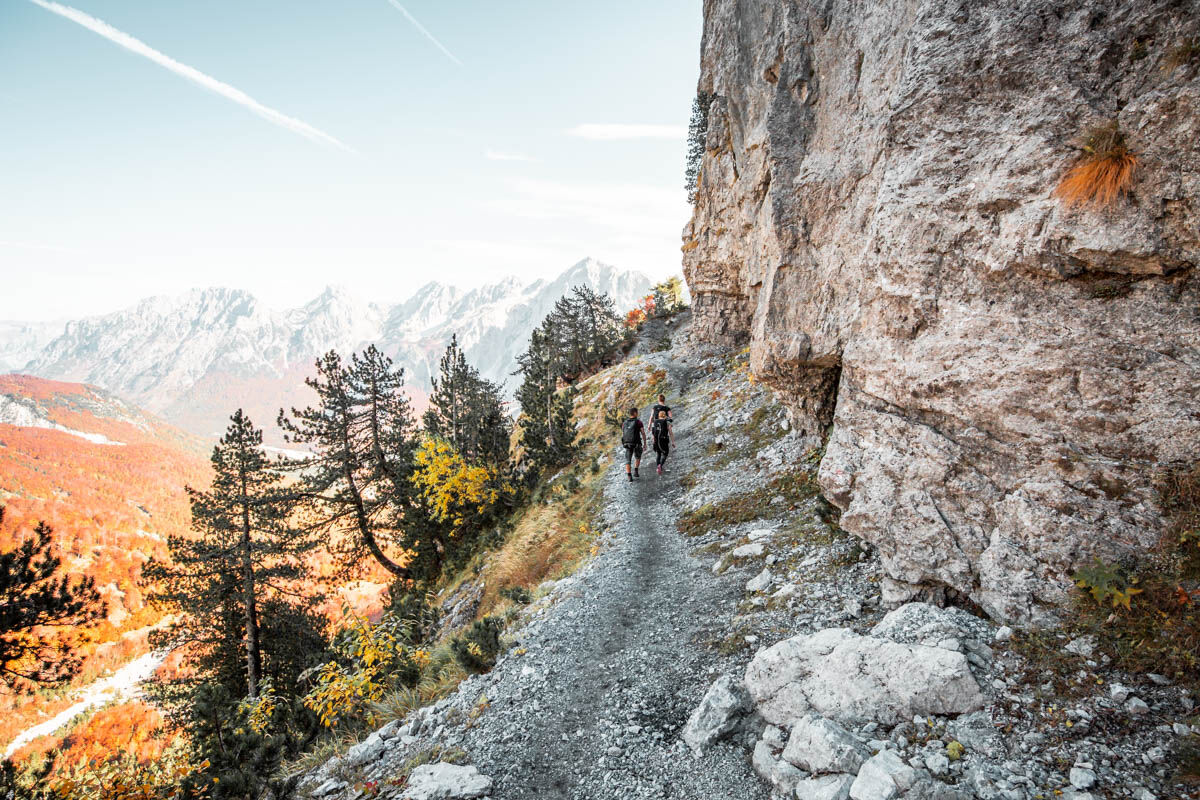
Hiking in Valbona and Theth is spectacular and increasingly popular. Trails are frequently steep, poorly marked, and subject to sudden, severe weather even in summer. Hypothermia is a genuine risk if you are caught in a high-altitude rainstorm without waterproof gear. Flash flooding is most common from late autumn through winter, when heavy rain and landslides can make even major routes impassable and knock out street lighting and traffic signals. Wildfires are a summer hazard, peaking in the hottest months. Causing a fire, even accidentally through a camp stove, carries serious criminal penalties.
Frequently asked questions
Is Albania safe for American tourists?
Yes. The U.S. State Department rates Albania Level 2, “Exercise Increased Caution,” the same tier as France, Italy, and Germany. Americans should enrol in the STEP programme and stay alert in heavily touristed venues in Tirana, given the embassy’s standing alert about possible Iran-linked threats to public venues.
What is the biggest safety risk in Albania?
Driving. Road fatality rates are among the highest in Europe, and night driving outside cities is genuinely hazardous because of unlit vehicles, unmarked roadworks, potholes, and livestock. Crime is a distant second.
Is it safe to drink the tap water in Albania?
Tap water in Tirana is fine for brushing teeth, but drink bottled water everywhere, and treat that as non-negotiable in rural and coastal areas.
Do I need cash in Albania, or can I use cards?
Both. Cards work in Tirana hotels, malls, larger restaurants, and rental desks. Furgons, rural guesthouses, small tavernas, and the Llogara toll booth are cash only. Withdraw Lek in larger amounts to spread the flat ATM fee, and always decline the machine’s currency conversion offer.
Is Albania safe to visit at night?
City centers and coastal towns like Sarandë and Vlorë are generally comfortable to walk in the evening, and Numbeo scores daytime safety as high and night-time safety as moderate. Driving between towns after dark is the part to avoid.
Is Albania safe for solo female travelers?
Yes, with adjustment. Violent crime and street harassment rates are lower than in most Western European capitals, but public spaces outside Tirana are heavily male-dominated and prolonged staring is normal. Dressing conservatively away from beach towns makes daily life easier.
The verdict
Albania rewards travelers who arrive prepared. The violent crime statistics are genuinely reassuring, the landscapes along the Riviera and in the northern Alps are among the most dramatic in Europe, and the pricing remains competitive despite recent inflation in the tourist zones. The risks are real but manageable if you know your ATM protocol, respect the near-zero BAC limit, carry small bills, book a local ride-hailing app before you land, and adjust your hospitality expectations.
Ultimately, is Albania safe for tourists? Absolutely, as long as you do your homework. What is your biggest concern about traveling to Albania, the roads, the language barrier, or something else?