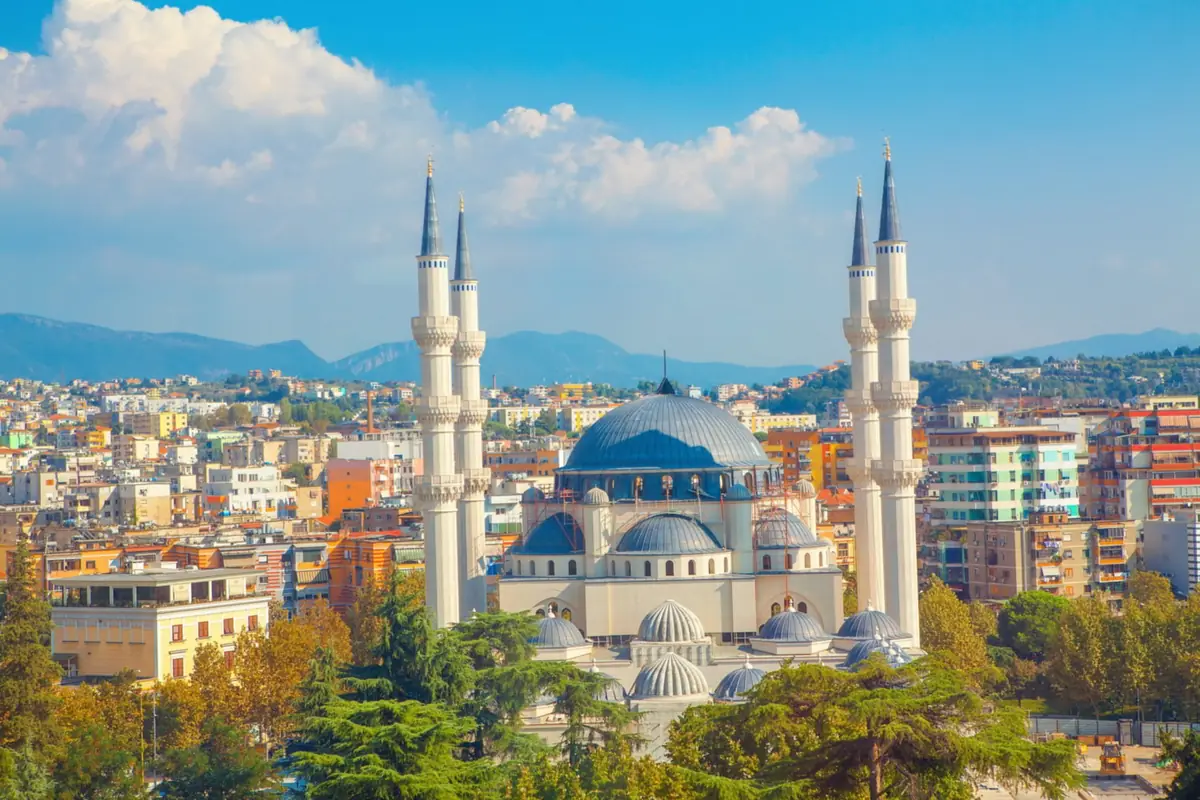
Albania rewards the traveler who plans honestly. This 3 days in Albania itinerary cuts the fantasy road trips and builds a tight, high-impact loop. You will conquer Tirana, the UNESCO city of Berat, and a coastal finale within a realistic 72-hour window.
Before you land: the logistics that make or break this trip
A compressed trip to Albania lives or dies by four decisions made before you step off the plane. You must know what your passport gets you, how you handle cash, how you move between cities, and which unspoken social rules you need to understand before you need them.
What a US passport actually gets you at the border
Americans do not need a visa for Albania. According to the US Embassy in Tirana, US citizens are generally permitted to stay up to one year without a residence permit, which is one of the most generous entry allowances in Europe and far more forgiving than the Schengen 90-day cap next door.
Your passport needs at least three months of validity beyond your departure date, though six months is the safer standard. There is no arrival tax, no online pre-registration form, and no visa-on-arrival fee. Border officers increasingly log entries electronically instead of stamping passports, so keep your boarding pass as proof of your entry date.
One line item does appear on your hotel bill: a municipal tourist tax, collected per person per night. In Tirana it typically runs 100–300 lek ($1.25–$3.70) a night depending on the property class. It is small, but it is usually paid in cash at check-out and it surprises people.
Navigating money, cards, and ATM fees
Albania is no longer strictly cash-only, but it is still cash-first. Card acceptance has expanded sharply since electronic payment terminals became mandatory for hotels, guesthouses, taxis, and intercity transport operators, with the requirement extending to the rest of the economy. Mid-range and upscale restaurants, supermarkets, car rental desks, and hotels will take Visa and Mastercard without drama. American Express is rarely accepted anywhere.
What still runs on paper money: bakeries, neighborhood cafes, city buses, castle ticket gates, the BunkArt museums, market stalls, and anything rural. Carry small notes.
Two pieces of outdated advice circulate widely and will cost you money. Alpha Bank no longer operates in Albania after merging into OTP Bank, so any guide still listing it is stale. And Credins Bank is no longer fee-free; it now charges roughly 600 lek per withdrawal. There is currently no genuinely free ATM for foreign cards in Albania. Expect a flat 500–800 lek ($6–$10) per transaction on top of whatever your US bank adds. Avoid the standalone Euronet machines in tourist zones, which combine the highest fees with the worst rates.
The single most valuable habit is refusing dynamic currency conversion. When the screen asks whether to charge you in dollars or in Albanian lek, always choose lek. Accepting the machine’s conversion quietly costs 6–10%. Then withdraw the maximum your card allows in one pull, since the fee is flat rather than percentage-based.
Euros are accepted at upscale Tirana hotels and by some tour operators, but almost everyone applies a flat 100 lek to €1 conversion when the real rate sits closer to 96. That convenience costs you 5% on every transaction. Withdraw lek and pay like a local.
Pro Tip: The local tipping convention is rounding up the bill or leaving 5–10% in cash. Card terminals still handle gratuity inconsistently, so keep coins and small notes for the tray. In deeply rural areas, a tip may be politely refused out of traditional pride, so do not push it.
How should you get around during your 3 days in Albania itinerary?
The best way to get around is hiring a private driver, which runs roughly $75–$90 for a one-way Tirana–Berat transfer or $140–$210 for a full day with the driver waiting between stops. It eliminates navigation anxiety on poorly marked interior roads and buys you a local fixer for the day. Here is the honest breakdown of your transit options.
| Transit Option | Est. Cost | Stress Level | Verdict |
| Private driver (Tirana to Berat) | $75–$90 one way; $140–$210 full day | Very low | Best choice for 72 hours. Eliminates navigation anxiety, allows scenic stops, and includes built-in local knowledge. |
| Rental car | $25–$50/day + insurance and deposit | High | Viable, but requires confidence on aggressive, unlit rural roads. Some agencies ask for an International Driving Permit even though a US license is often accepted, so confirm in writing before you book. |
| Intercity bus | About $6 one way | Moderate | Genuinely workable on the Tirana–Berat corridor, with frequent daytime departures and a 2–2.5 hour run. The cost is time: the terminal sits outside central Tirana and Berat’s station is 3 km from the old town. |
| Furgon (shared minibus) | $5–$10 | Moderate–High | Not recommended here. Furgons depart only when full, schedules are fluid, and luggage space is minimal, which is incompatible with a strict 72-hour window. |
Neither Uber nor Bolt operates anywhere in Albania, and this catches almost every American off guard on arrival. Opening your usual app at the airport returns nothing. Install a local ride-hailing app such as Patoko, Clust, or Speed Taxi before you fly; app fares typically run 15–20% below street-taxi rates and show the price upfront.
If you do drive in Albania yourself, the surprise is not the traffic law but the behavior. Albanian roundabouts follow the same priority rule you know from home, where traffic already in the circle has right of way, but enforcement is loose and plenty of local drivers simply merge. Treat every circle as an unprotected entry. The horn is also not a weapon of anger here, but a constant conversational tool used on narrow rural roads to signal passing intentions. Headlights are required outside built-up areas at all times, including in daylight.
Pro Tip: The blood alcohol limit is 0.01%, which is effectively zero, and enforcement has tightened. Before leaving the rental lot, check the trunk for a warning triangle, reflective vest, and first-aid kit, and photograph any existing damage. Never drive rural roads after dark.
Getting from the airport into the city
Tirana International Airport Nënë Tereza sits at Rinas, roughly 17 km (11 miles) northwest of the center. The Rinas Express shuttle bus is the cheapest airport transfer at around 400 lek ($5). A ride-hailing app usually quotes 1,200–1,800 lek ($15–$22), while the official taxi rank runs 2,000–2,500 lek ($25–$31). Ignore anyone who approaches you inside the terminal offering a ride.
Albania now has three international airports, including a new one serving the southern Riviera at Vlora. For this Tirana-anchored loop, Rinas remains the only sensible arrival point.
Safety and cultural etiquette
Albania is overwhelmingly safe for tourists. That holds for solo female travelers as well. The US State Department currently places Albania at Level 2, Exercise Increased Caution, citing crime — the same tier assigned to France, Italy, Spain, and the United Kingdom, and not a signal of unusual danger. Petty theft in crowded areas and road safety are the realistic concerns, not violent crime. The general emergency number is 112, with 129 for police, 127 for ambulance, and 128 for fire.
What catches Americans off guard isn’t crime, it is the social conventions. The country runs on Besa, an ancient code of hospitality that obligates locals to protect and honor guests.
Staring in public is common curiosity, not hostility. In Albania, nodding your head means no and a side-to-side shake means yes, which is the direct opposite of American convention. Getting this backwards in a restaurant will cause real confusion.
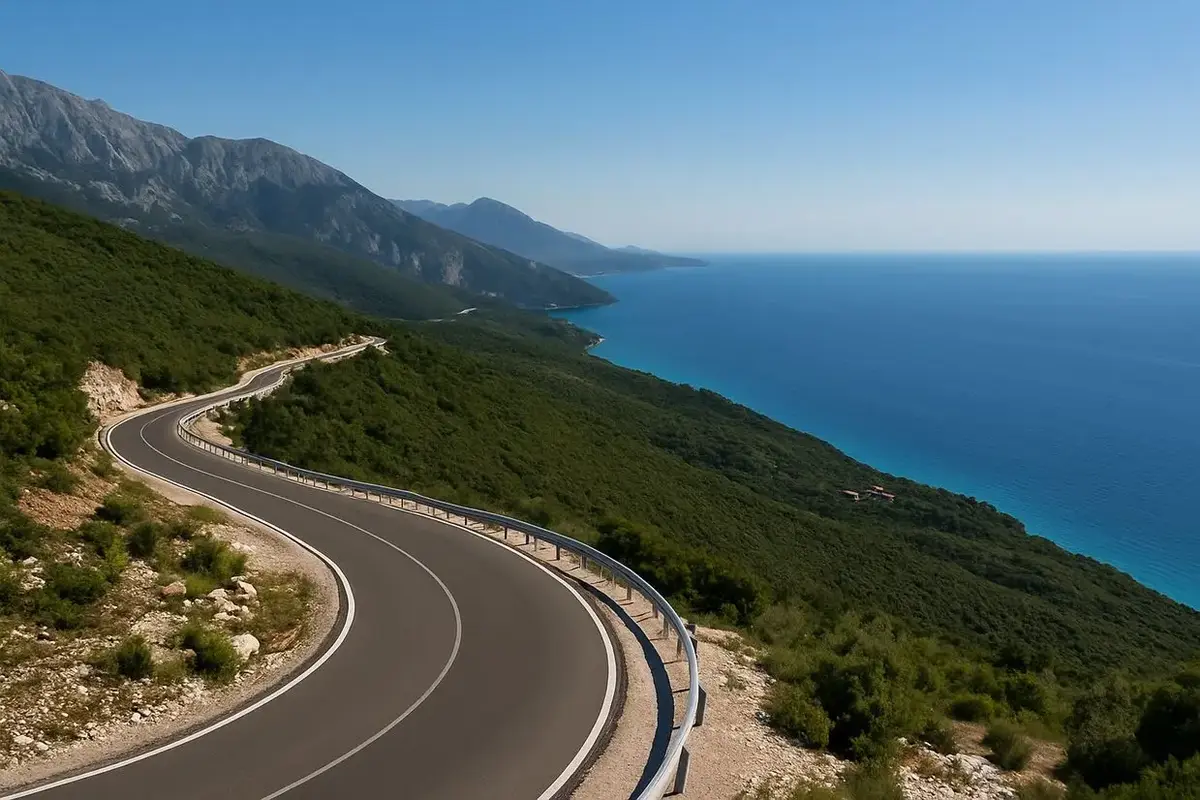
Day 1: Tirana — Cold War shadows and cafe culture
Fly into Nënë Tereza International Airport and aim to reach your hotel by 9:00 AM. You have a full, sequenced day ahead, and traffic in Tirana builds quickly.
One scheduling rule governs this entire day: the Dajti Ekspres cable car is closed every Tuesday for maintenance, along with the summit restaurant and adventure park. If Day 1 lands on a Tuesday, swap the cable car for the House of Leaves museum and shift the bunkers to the afternoon.
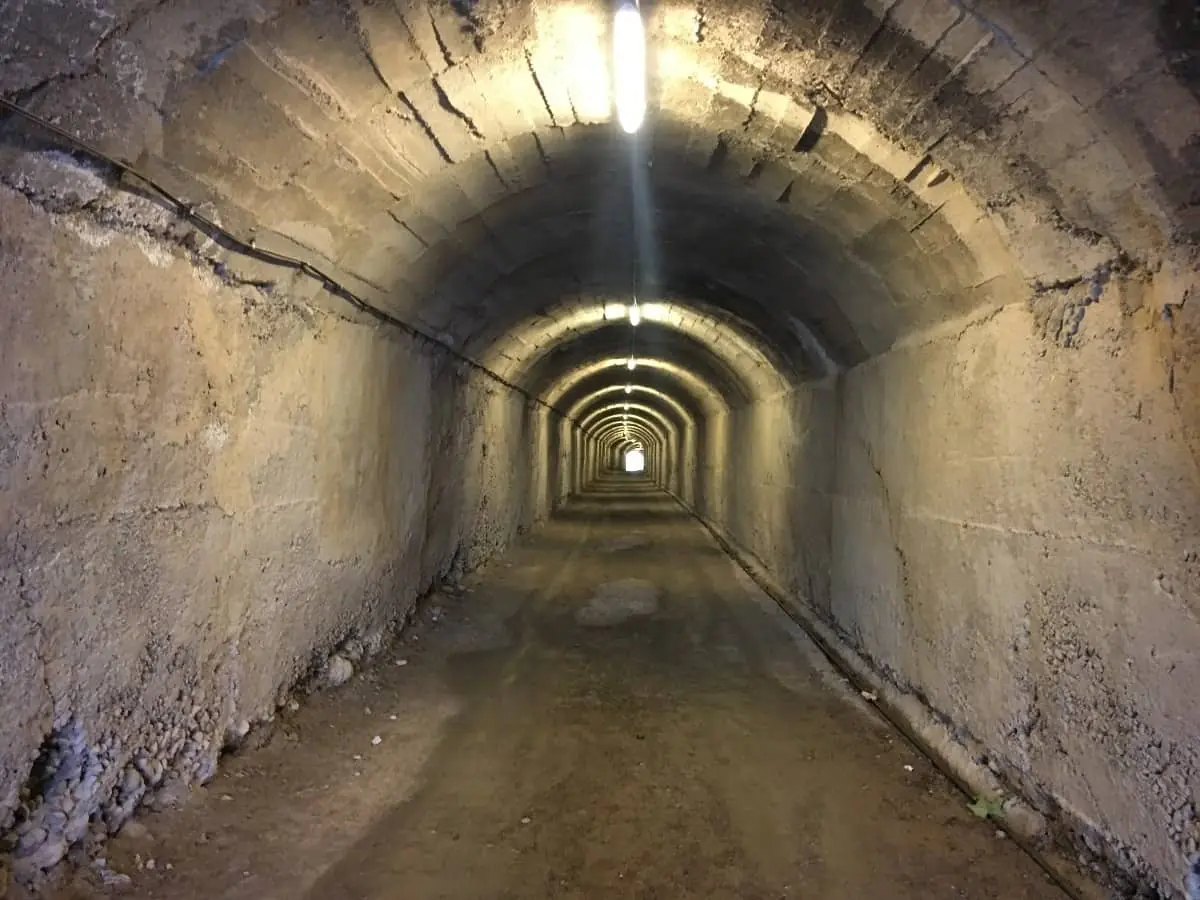
Descending into Cold War paranoia: the BunkArt museums
Start the morning confronting the physical scale of Enver Hoxha’s isolationist regime. BunkArt 2 sits in the city center inside the former Interior Ministry’s subterranean complex, a compact 24-room museum focused on the Sigurimi secret police. It is accessible and deeply unsettling in the most valuable way.
BunkArt 1, on the city’s outskirts near Mount Dajti, is an entirely different animal: five underground floors and 106 rooms built to shelter the communist elite from an apocalypse that never arrived. Visit BunkArt 1 first, then chain it directly into the cable car ascent, since the lower station is a ten-minute walk away.
Both museums are cash only. Bring exact notes, because the ticket windows rarely have change for a 5,000-lek bill, and bring a layer regardless of the season. Underground temperatures stay cool even when the city hits 95°F.
- Location: BunkArt 2 is at Rruga Abdi Toptani in the city center, while BunkArt 1 is on the outskirts near the Dajti cable car base. City bus line 11 from near Skanderbeg Square costs 40 lek (about $0.50).
- Cost: Around 900 lek (about $11) per museum, or roughly 1,300 lek (about $16) for a combination ticket covering both. Cash only.
- Best for: History buffs, Cold War enthusiasts, and anyone who wants context for the rest of the trip.
Riding the Dajti Ekspres above the capital
From the BunkArt 1 area, board the Dajti Ekspres cable car for a 15-minute, 4.7-kilometer ascent up Mount Dajti. It is the longest cableway in the Balkans, and it delivers you to the terrace known as the Dajti Balcony; the true summit, Maja e Dajtit, tops out higher at 1,613 meters (5,292 feet) and is closed to visitors. On a clear day the view stretches across Tirana’s rooftops to the artificial lake and the distant Adriatic horizon.
The physical and emotional contrast is deliberate, as the weight of the bunkers gives way to open sky and perspective. There is a restaurant and a rotating cafe at the top for lunch before heading back down.
Go in the morning. Midday haze routinely flattens the view, and the cabin windows are scratched acrylic rather than glass, so save serious photography for the open viewing platform at the summit.
- Location: Lower station in the Porcelan district on the eastern outskirts of Tirana.
- Cost: Roughly 1,400–1,500 lek (about $17–$19) for a round trip. Tickets are sold only at the lower station ticket booth.
- Best for: Families, photographers, and anyone needing a midday reset after the bunkers. Closed Tuesdays.
Afternoon: Skanderbeg Square and Boulevard Dëshmorët e Kombit
Return to the city center and walk Boulevard Dëshmorët e Kombit south from Skanderbeg Square. The boulevard was designed to evoke Stalinist grandeur. It is wide, imposing, lined with government buildings, and features the famously kaleidoscopic painted facades introduced during Edi Rama’s tenure as mayor.
Set your expectations at the square’s north end: the National History Museum is closed to visitors for a multi-year restoration and is not scheduled to reopen for some time. Its enormous socialist-realist mosaic facade is still fully visible from the square and is worth ten minutes and a photograph, but do not budget an hour for an interior you cannot enter.
Spend that time instead at the House of Leaves, the former Sigurimi surveillance headquarters two minutes from the square, where roughly 700 lek (about $9) buys you wiretapping equipment, interrogation rooms, and case files from the surveillance state. Then continue south to the Pyramid of Tirana, Hoxha’s abandoned mausoleum-turned-monument, which has been rebuilt as a public cultural and technology hub with exterior stairs you can climb for free.
Evening in Blloku: espresso and the former forbidden zone
The Blloku district was sealed to ordinary Albanians throughout the communist era as an exclusive enclave reserved for the party elite. Today it is one of the most energetic neighborhoods in the region. It is packed with boutique cafes, cocktail bars, and a young population making full use of freedoms their parents were denied.
The Albanian coffee ritual is not a quick stop. A macchiato runs 80–100 lek (about $1) in an ordinary neighborhood cafe and 150–200 lek ($1.85–$2.50) in Blloku’s specialty roasters, and it is meant to be nursed for an hour in good company. Find a table at Antigua Specialty Coffee on Rruga Perlat Rexhepi or at one of the Mulliri locations and do not rush.
- Location: Blloku district, south-central Tirana.
- Cost: Macchiato $1–$2.50, cocktails roughly $7–$13.
- Best for: Couples, solo travelers, and night owls.
Pro Tip: The Postbllok memorial, at the corner of Bulevardi Dëshmorët e Kombit and Rruga Ismail Qemali, marks the checkpoint that divided the elite zone from ordinary Tirana. It pairs a Hoxha-era bunker with concrete pillars from the Spaç political prison and a genuine segment of the Berlin Wall. It is a short walk from most Blloku cafes and earns ten minutes of quiet reflection.
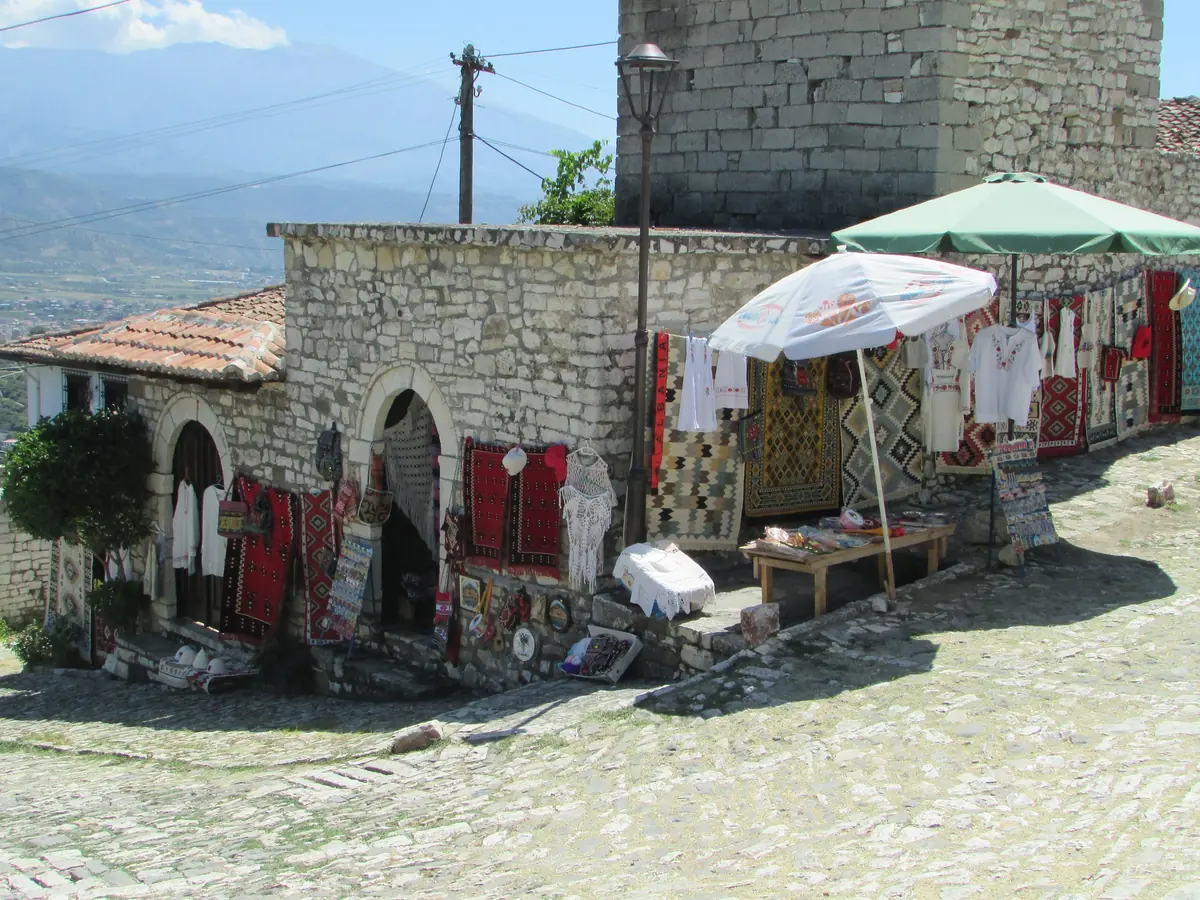
Day 2: Berat — the city of a thousand windows
Wake up early. The drive to Berat takes approximately 1.5–2 hours south of Tirana, and you want to arrive before the midday heat locks in over the gorge.
Book your private driver the night before. It removes navigation anxiety on the mountainous interior roads and lets you watch the landscape shift from urban sprawl to agricultural lowland. If you are traveling as a pair and want to cut costs, the intercity bus covers the same route for around $6, though you will add a taxi at each end.
Wandering the inhabited hilltop fortress
Berat’s defining feature is its castle district, Kalaja. It is one of the only medieval fortresses in Europe where multi-generational families still live inside the ancient walls, roughly a hundred households at last count. The approach from Mangalem Quarter is steep, and the centuries-old limestone cobblestones are genuinely slick even when dry.
Wear rubber-soled shoes. This is not a suggestion, as the stones are polished smooth by generations of foot traffic and become treacherous after rain. Climb the castle in the morning before the heat peaks to be rewarded with Byzantine churches, crumbling towers, and sweeping views over the Osum River gorge far below.
Because people live inside, there is no gate that closes. The ticket booth is staffed roughly 9:00 AM to 6:00 PM, and arriving outside those hours often means walking in unchallenged, which is exactly why sunrise and sunset are the best light and the thinnest crowds.
- Location: Upper Berat (Kalaja), accessible on foot from Mangalem Quarter via Rruga Mihal Komnena, about a 20-minute climb.
- Cost: Around 300 lek (about $3.70) when the booth is staffed. The Onufri Iconographic Museum inside the walls charges a separate 400 lek (about $5), with an audio guide for 100 lek more.
- Best for: History lovers, photographers, and architecture enthusiasts.
The lower quarters: Mangalem and Gorica
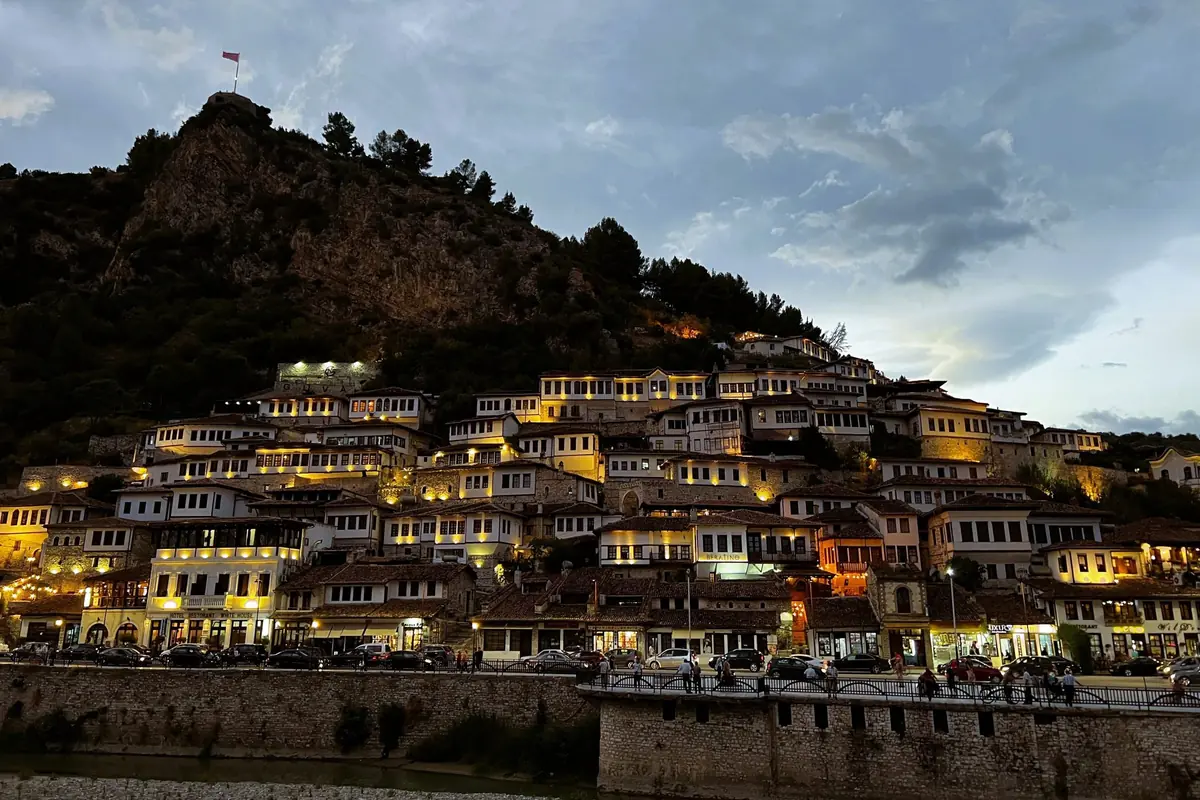
Descend from the castle and spend the afternoon in the two lower districts divided by the Osum River. Mangalem, the historically Muslim quarter, climbs the hillside directly beneath the castle on the north bank, with white Ottoman houses stacked so tightly their windows seem to look into the rooms behind them. This is where the nickname city of a thousand windows comes from.
Gorica, across the river on the south bank, is quieter and far less visited. The old stone footbridge connecting the two produces the classic Berat photograph, featuring Ottoman facades reflected in the water with the castle looming above. Cross late in the afternoon, when the low sun hits the Mangalem windows and lights the whole slope at once.
Dinner: Tave Kosi and local Raki
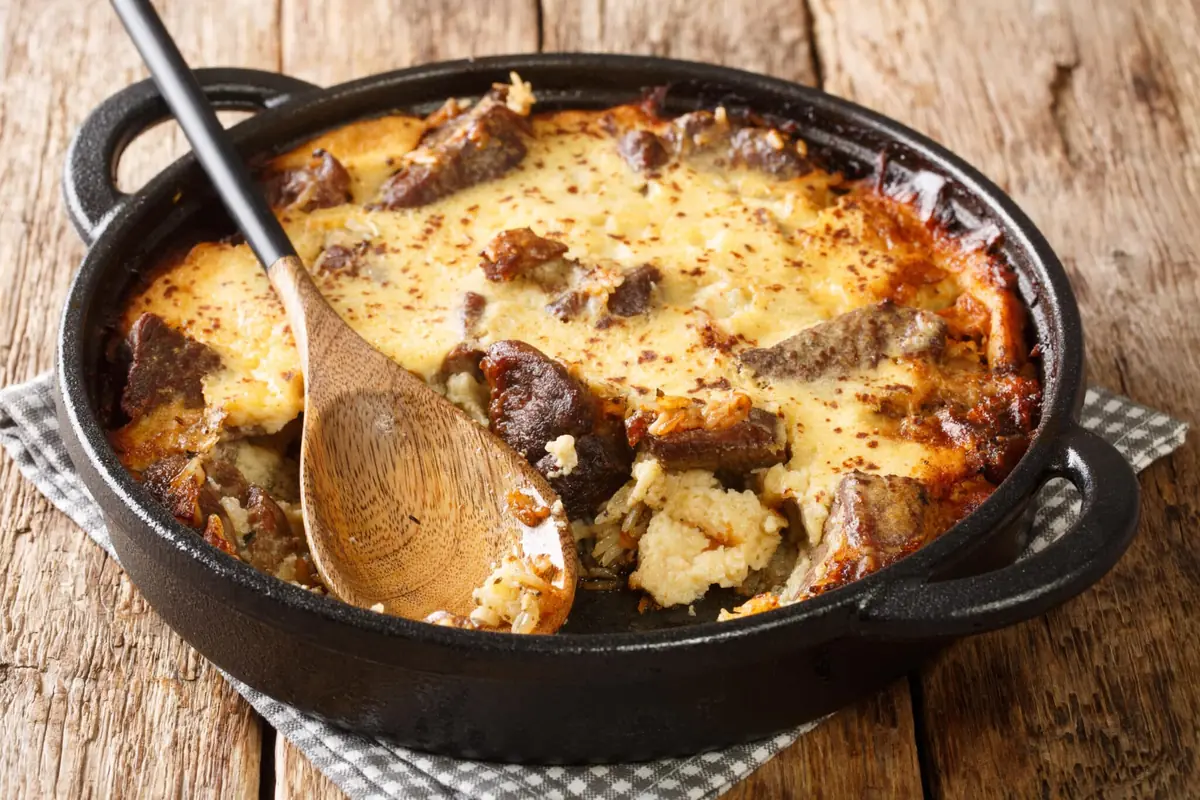
End the day at a traditional taverna in Mangalem with a plate of Tavë Kosi, Albania’s national dish. This is slow-baked lamb and egg folded into a tart, creamy yogurt sauce and finished in a clay pot. The dish originates from nearby Elbasan and represents Albanian home cooking at its most essential.
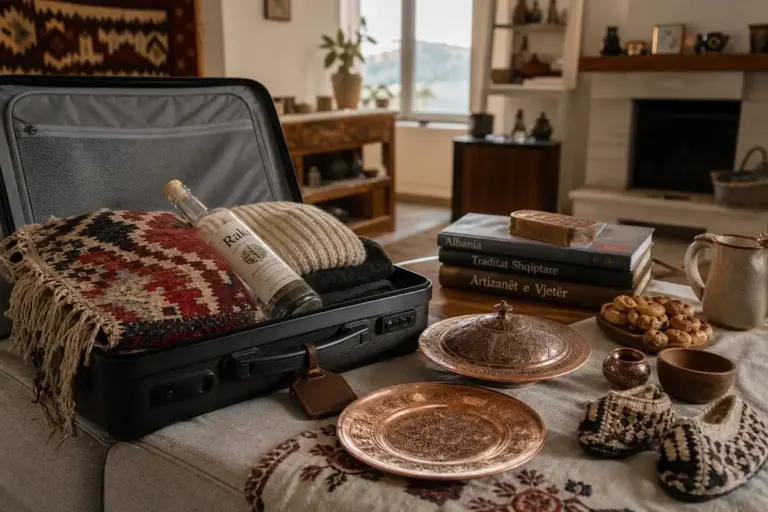
Follow it with a small glass of local Raki, distilled from grapes or mulberries and poured freely as a gesture of hospitality. Dinner for two at a traditional taverna typically runs 2,000–3,000 lek ($25–$37), with Raki and dessert included.
Pro Tip: Consider staying the night in Berat at a guesthouse inside the castle or Mangalem Quarter, typically $35–$60. Waking up inside the UNESCO site before the day-trip vans arrive is a different experience from commuting in from Tirana.
Day 3: The Adriatic coast on your 3 days in Albania itinerary
Skip the long sprint to Ksamil. Nearly every competitor itinerary that proposes reaching the deep southern Riviera in 72 hours is setting you up for a rushed, exhausting experience you won’t remember fondly. The northern coast delivers dramatic scenery and genuine history within an hour of the international airport.
Before anything else: Byrek and the bakery culture
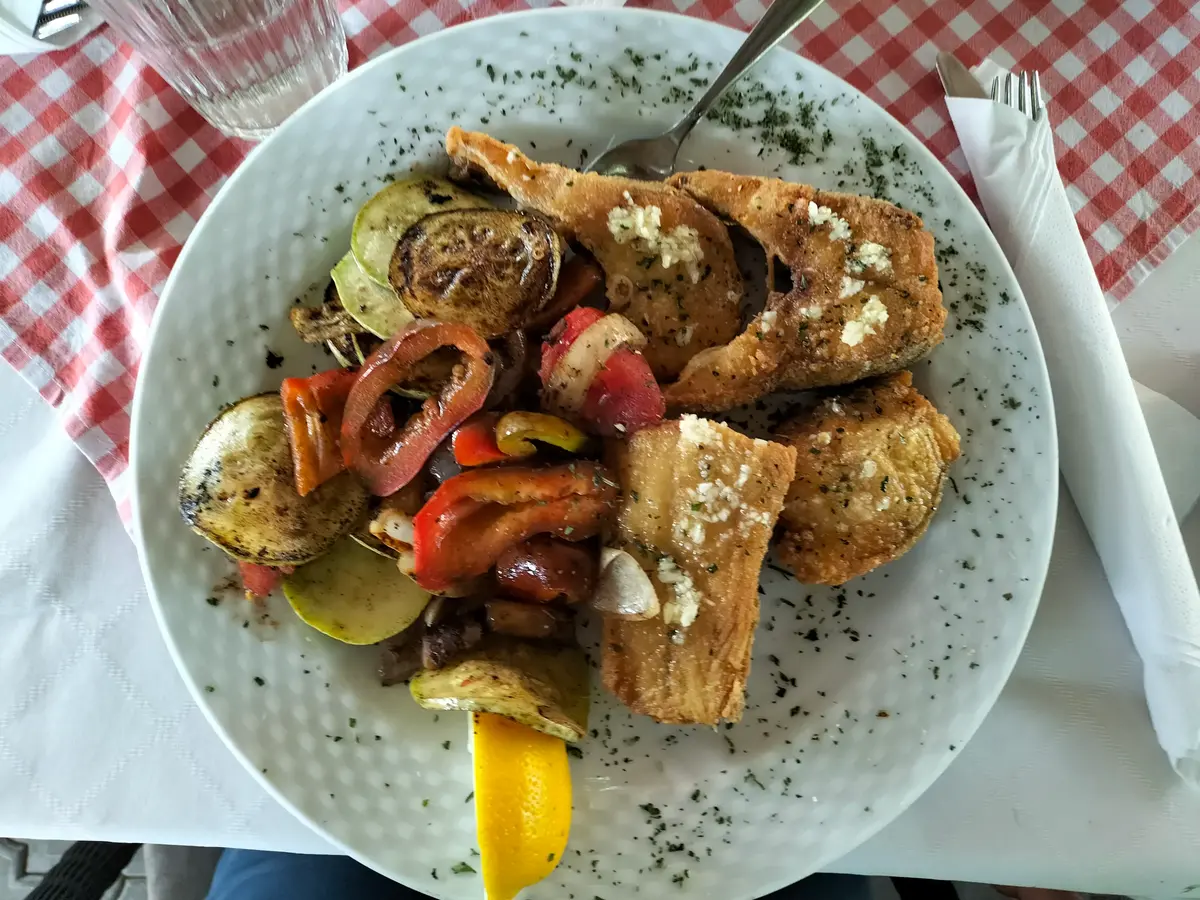
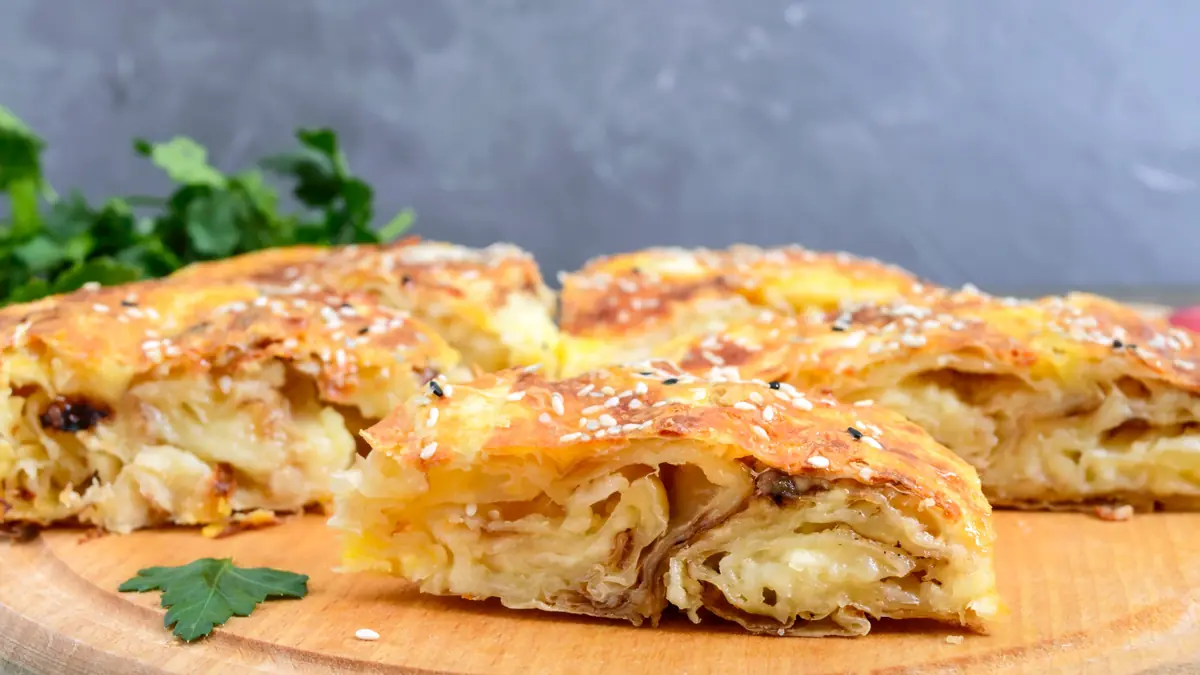
Before you go anywhere on Day 3, stop at a local bakery. Byrek is a flaky, oil-brushed pastry stuffed with spinach, feta, or ground meat that costs 60–150 lek ($0.75–$1.85). Order it with a cup of dhallë, the salted yogurt drink locals pair it with, and you have breakfast for under $2. It is how Albania powers itself through every morning.
Do not eat at your hotel. Walk two blocks in any direction, find the bakery with the longest local queue, and join it. That queue is the only review system that matters.
Cape of Rodon: Skanderbeg’s fortress meets Hoxha’s bunkers
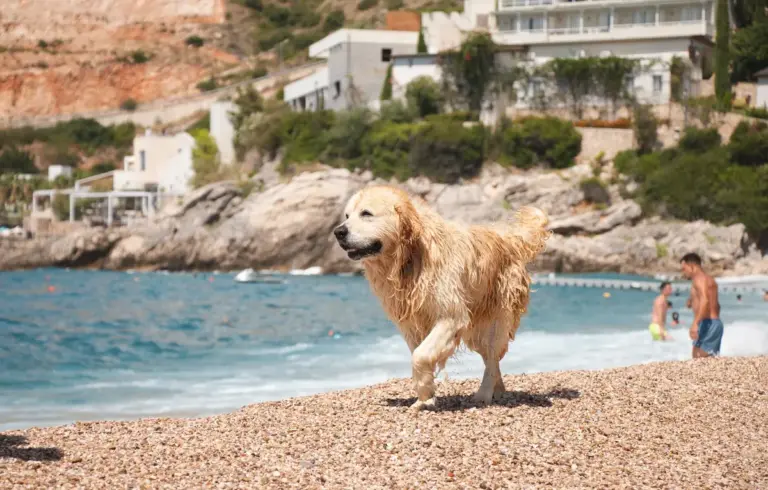
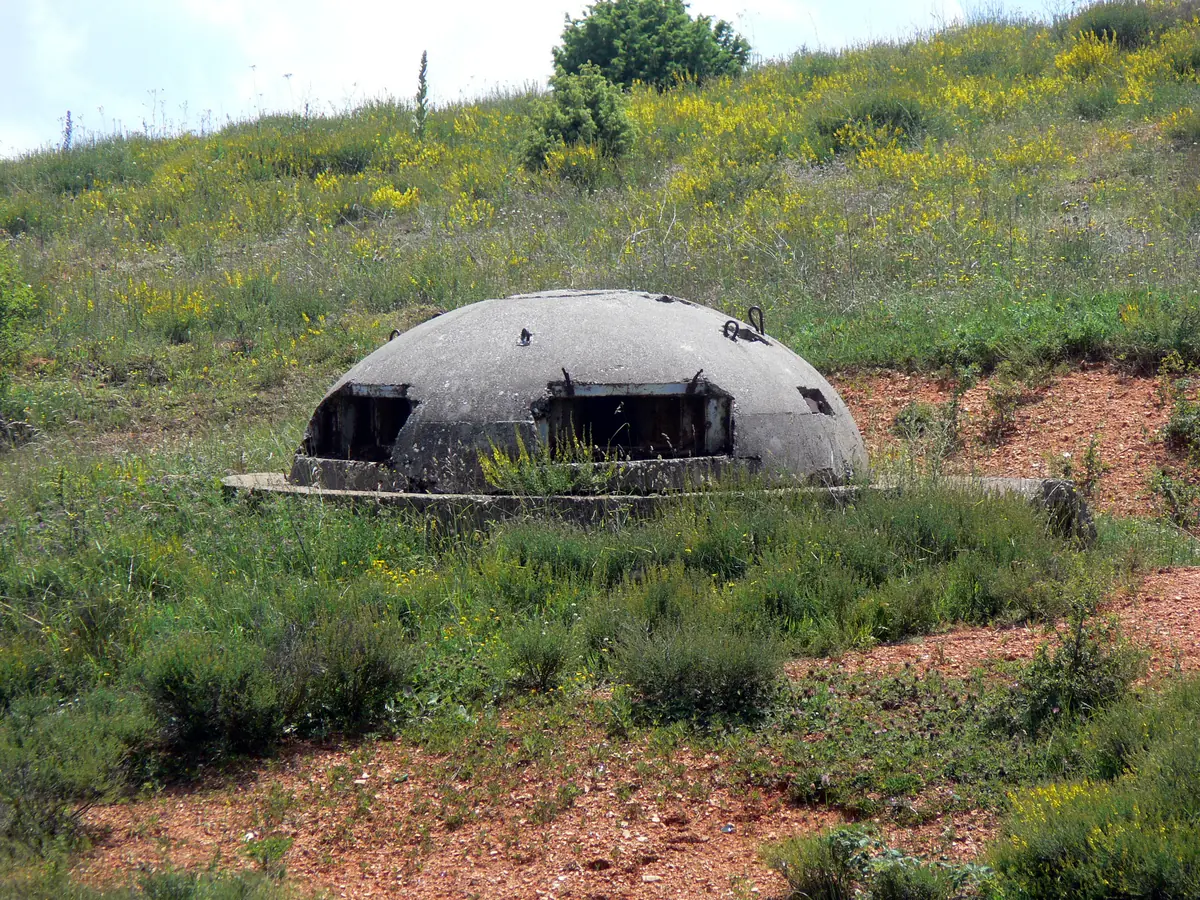
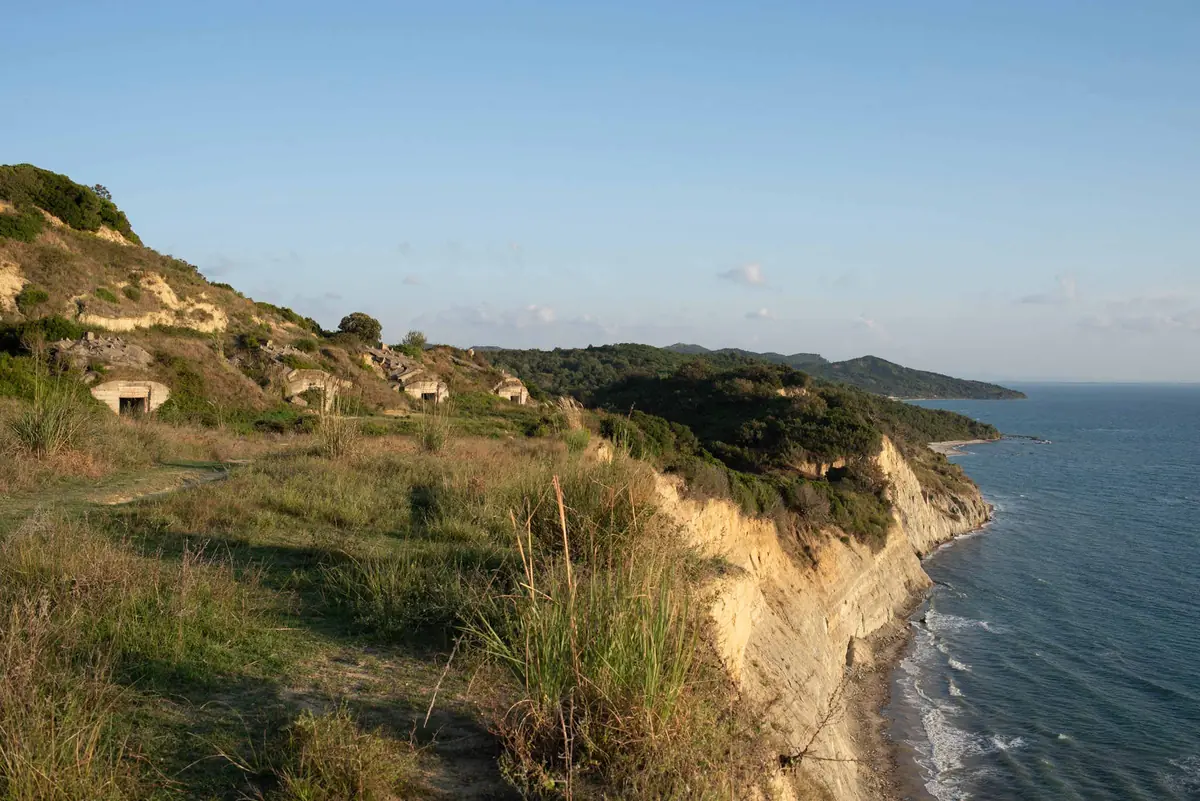
Cape of Rodon is a rugged, windswept peninsula roughly 50 km (31 miles) northwest of Tirana. The ruins of Skanderbeg’s coastal castle sit near the peninsula’s tip, surrounded by crumbling Hoxha-era bunkers embedded directly into the cliffs. These are two layers of Albanian defensive anxiety separated by five centuries, and the fifteenth-century Church of St. Anthony stands on the same headland.
Set expectations before you commit the morning. The final approach road is unpaved and rutted, the walk from the parking area to the ruins takes 15 to 30 minutes over rough coastal ground, and there are no facilities at the site. Bring water, wear real shoes, and arrange your return ride in advance rather than assuming you will find one. The reward is beaches that stay uncrowded and rocky, backed by low pine scrub, offering the kind of quiet you won’t find anywhere near a resort town.
- Location: About 50 km (31 miles) northwest of Tirana, reached via Fushë-Krujë; allow one to one and a half hours each way.
- Cost: Free access. A taxi runs roughly 2,000–5,000 lek ($25–$62) depending on your starting point, and small-group day tours from Tirana start around $50.
- Best for: Couples, history lovers, and travelers deliberately avoiding tourist crowds.
Alternative: Durres amphitheater and the historic waterfront
If you prefer your final morning urban, Durres holds a second-century Roman amphitheater just 26 km (16 miles) west of Tirana. Built under Trajan and once seating around 20,000, it is the largest in the Balkans, sitting incongruously between modern apartment blocks in the city center. Restoration work is ongoing, so parts of the site come and go behind fencing and the adjacent archaeological museum is not always open.
Walk the Vollga Promenade afterward, passing the Venetian Tower and the remnants of Byzantine floor mosaics. It is a low-exertion, historically dense morning that leaves you back at the airport with genuine time to spare.
- Location: Durres city center, 26 km (16 miles) west of Tirana, roughly 40 minutes by car.
- Cost: Amphitheater entry is around 300 lek (about $3.70).
- Best for: History buffs and travelers with early afternoon flights.
Where to stay during your 3 days in Albania itinerary
Use Tirana as your base for nights one and two. You can either return from Berat by evening or overnight in Berat on your second night and drive back on the morning of day three. Rates below are typical shoulder-season figures for a double room; July and August push higher, and January through March runs noticeably lower. Expect the municipal tourist tax to be added at check-out.
1. Xheko Imperial Luxury Hotel & Spa
The Xheko Imperial sits on Rruga Ibrahim Rugova, a few hundred meters from the Grand Park of Tirana and inside easy walking distance of both Blloku and the main boulevard. Rooms are individually furnished, and the property carries a full spa, indoor pool, sauna, and two restaurants.
Free secure parking makes it practical for anyone renting a car. The complimentary buffet breakfast is substantial enough to carry you through a full morning of exploration, which matters on a 72-hour schedule.
- Location: Rruga Ibrahim Rugova, beside the Grand Park, central Tirana.
- Cost: Roughly $130–$210 per night, dipping toward $90 in low season and climbing well past $250 for suites.
- Best for: Couples, business travelers, and anyone prioritizing location and comfort.
2. Dinasty Hotel
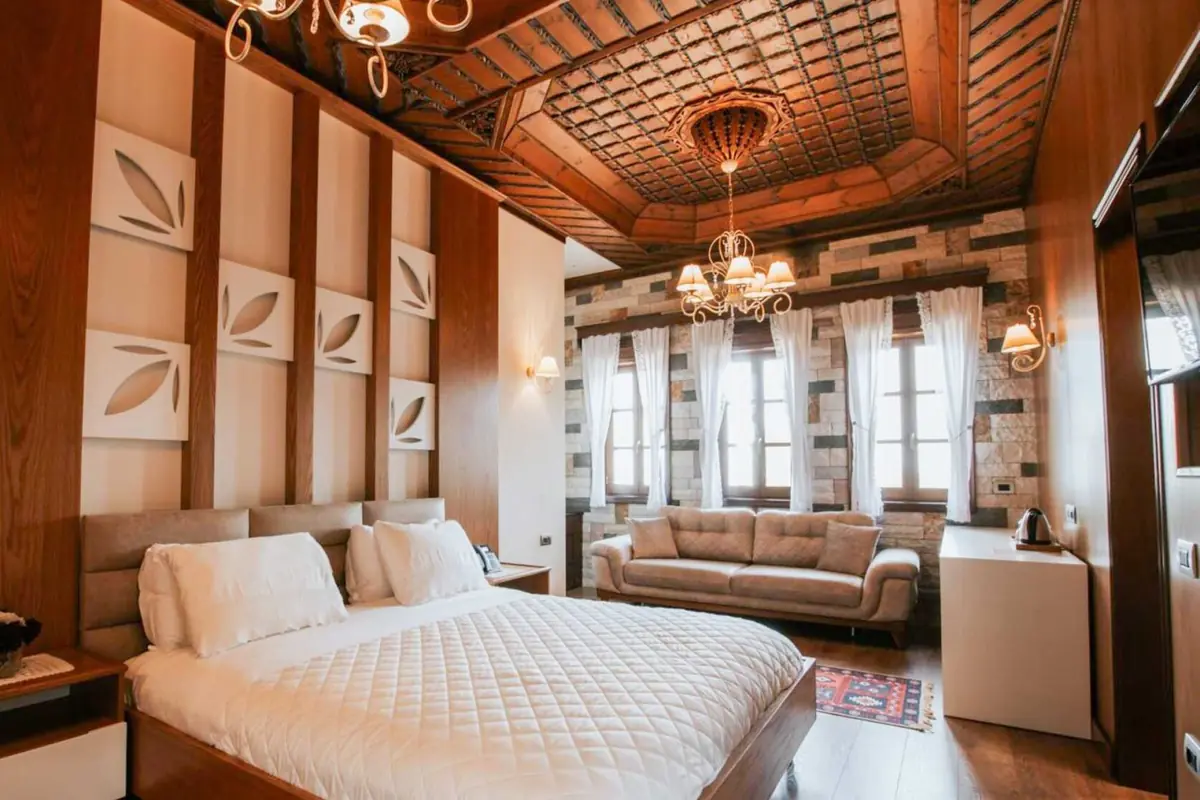
The Dinasty Hotel uses Albanian dynastic history as its design language. You will find carved wood, local motifs, and modern amenities in deliberate tension, arranged around a garden that feels improbable in the middle of the city. It is quieter than the Blloku-adjacent options and positions you well for early morning departures toward Berat or the cable car.
- Location: Rruga e Kosovareve, central Tirana.
- Cost: Roughly $70–$130 per night.
- Best for: Solo travelers, cultural tourists, and value-conscious guests who don’t want to sacrifice comfort.
3. A guesthouse inside Berat’s castle quarter
If you split your nights, book a family-run guesthouse inside Kalaja or in Mangalem. These are converted Ottoman houses with thick stone walls, wooden balconies, and breakfast that usually includes homemade jam and village cheese. Rooms are small and stairs are steep, and that is the trade for waking up inside a living UNESCO site.
- Location: Kalaja (castle quarter) or Mangalem, Berat.
- Cost: Roughly $35–$60 per night.
- Best for: Slow travelers, photographers, and anyone who wants the castle to themselves at dawn.
A 3 days in Albania itinerary works when it stops pretending to be a 10-day trip in disguise. Tirana gives you history and nightlife, Berat gives you the UNESCO slow-burn, and the coast gives you an exit that doesn’t feel like a punishment.
Prices, opening hours, and closure days shift faster in Albania than in most of Europe, so confirm the cable car, the museums, and your driver the week you travel rather than the month before. Albania is genuinely easy to love, as it is warm, affordable, and deeply underestimated by travelers speeding past it en route to Greece or Croatia. It is asking for three good days.