Getting around by road is cheap, direct, and genuinely rewarding if you know the rules. Mastering Albania bus travel means cutting through the confusion of furgons, cash-only drivers, and terminals that moved without telling anyone. This guide gives you the exact blueprint to move through the country like a local, and it pairs with our wider Albania travel guide once you start plotting the rest of the trip.
The two systems you need to understand before you go
Albania bus travel runs on two parallel tracks. The first is the formal long-distance coach network, which connects major cities on a loose but real schedule.
The second is the furgon, a privately operated shared minibus that follows no printed timetable whatsoever. This option is still the backbone of everyday transit outside the main corridors.
Knowing which system serves your route determines everything about your experience. It dictates your comfort level, your luggage strategy, and your actual departure time.
How the furgon actually works
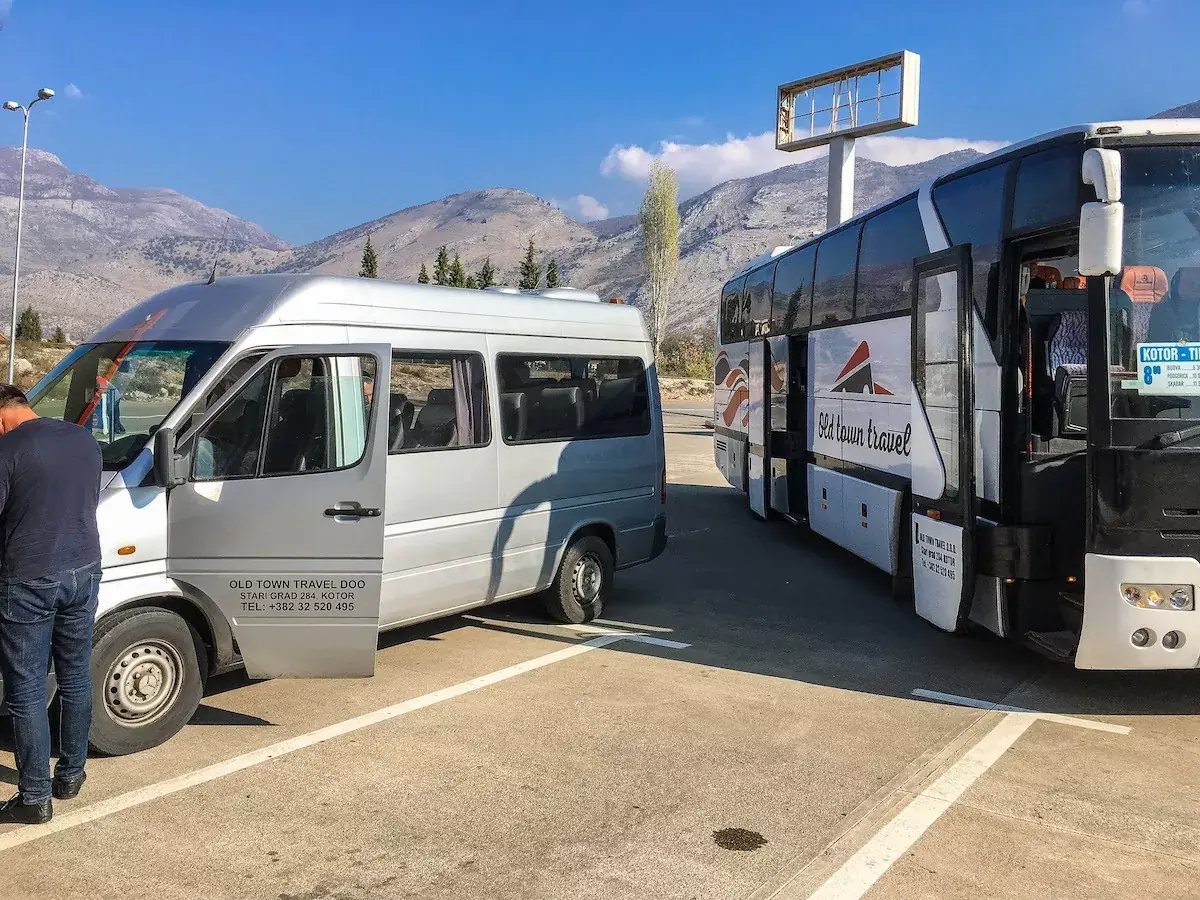
The furgon does not leave at a set time; it leaves when it is completely full. That distinction is the single most important thing to understand about the local transit network.
Operators pack passengers until there is no space left. They sometimes deploy improvised aisle seats and wedge bags between knees.
Once capacity is reached, the driver pulls out. There is no announcement, no countdown, and no waiting for latecomers.
Pro Tip: Arrive at the staging area early and take a seat inside the vehicle, not beside it. A seat claimed is a seat held. Hovering outside signals to the driver that you are not committed.
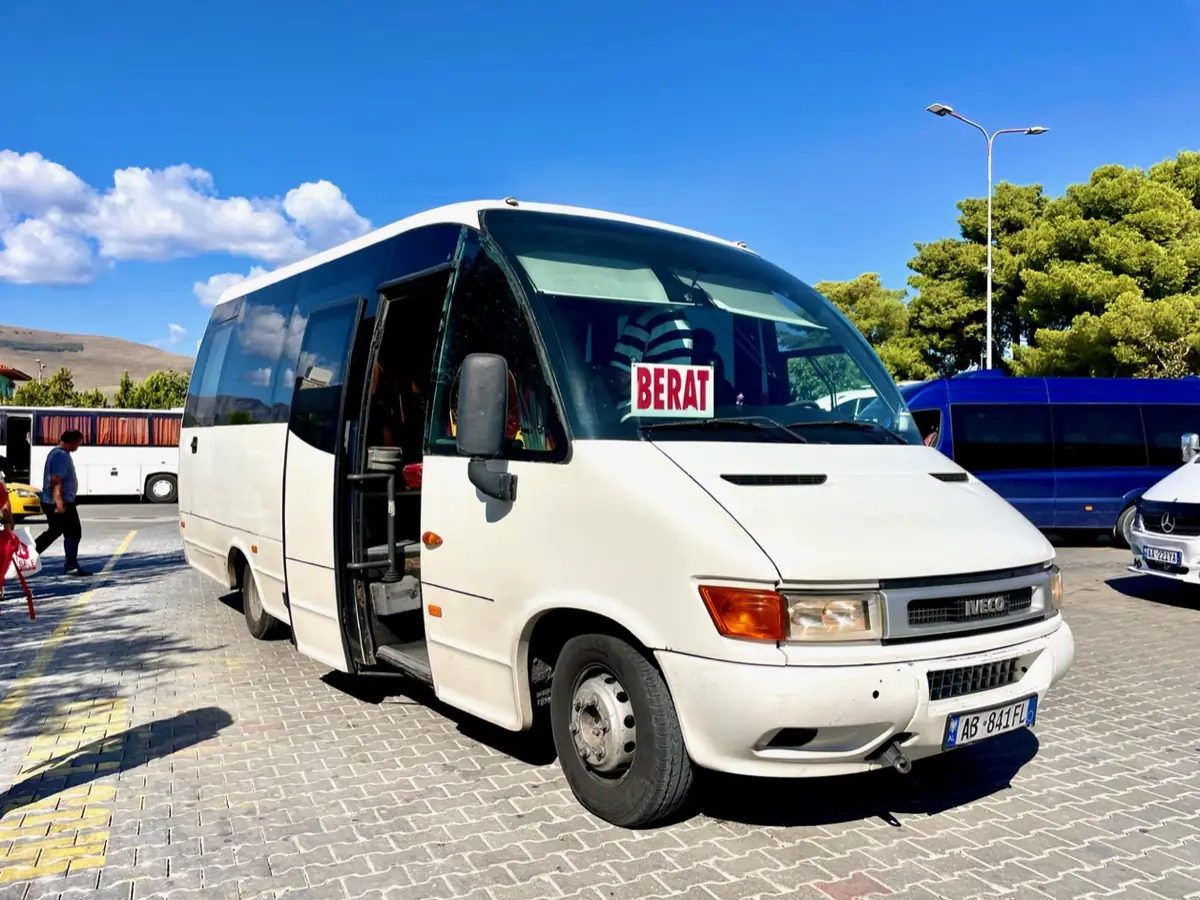
Furgon vs. coach: which one will you be on?
You will be on a coach for main arterial corridors and a furgon for most secondary routes. Coaches run paths like Tirana to Durrës, Shkodër, Berat, Vlorë, Himarë, and Sarandë, plus cross-border services.
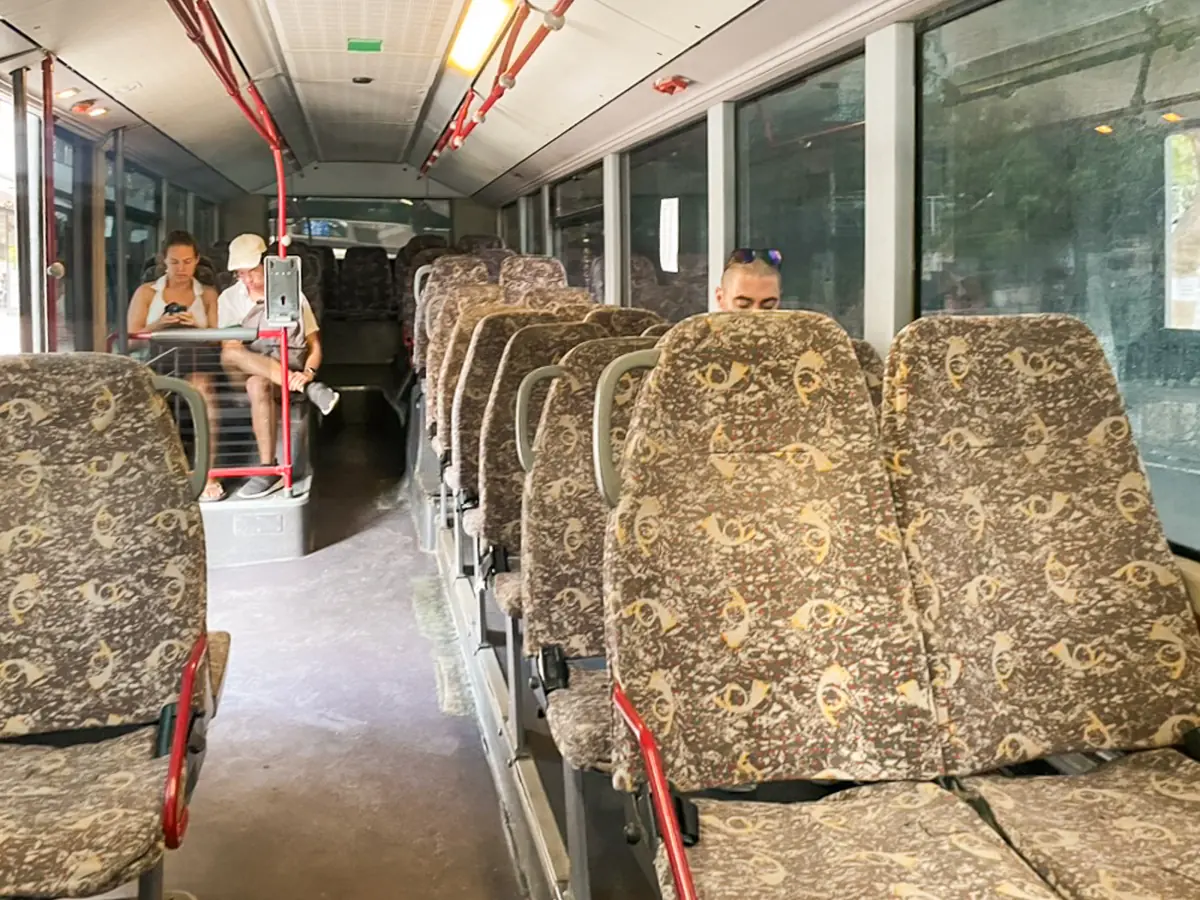
Expect undercarriage luggage bays, fixed seats, and basic air conditioning. Keep in mind that the word basic is doing some heavy lifting there.
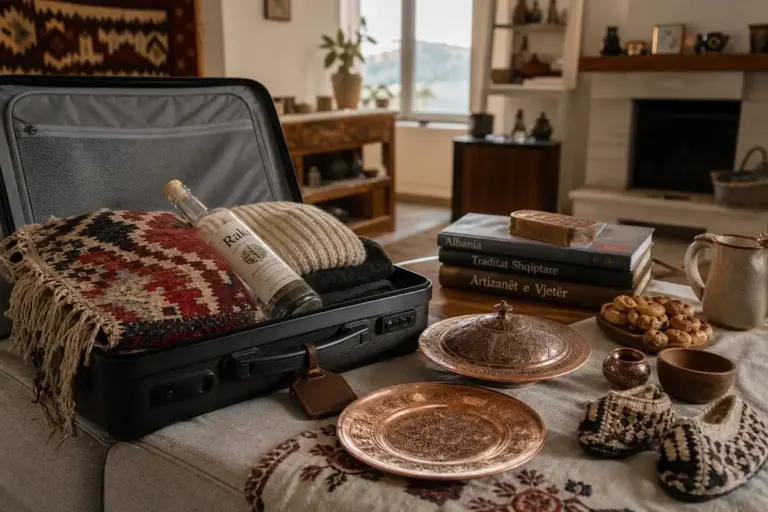
The furgon dominates mountain villages, smaller inland towns, and the scenic but punishing northern roads. Your backpack will likely ride on the roof or wedged at your feet, so a soft, compressible bag belongs near the top of your Albania packing list.
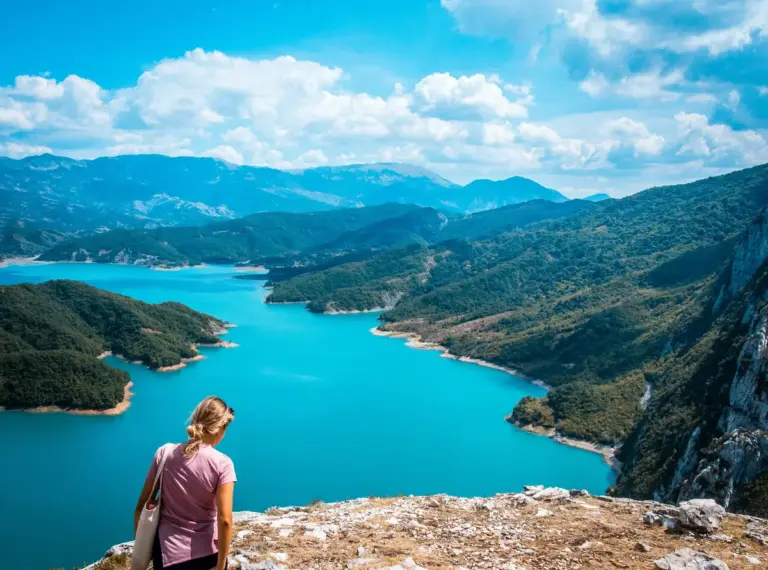
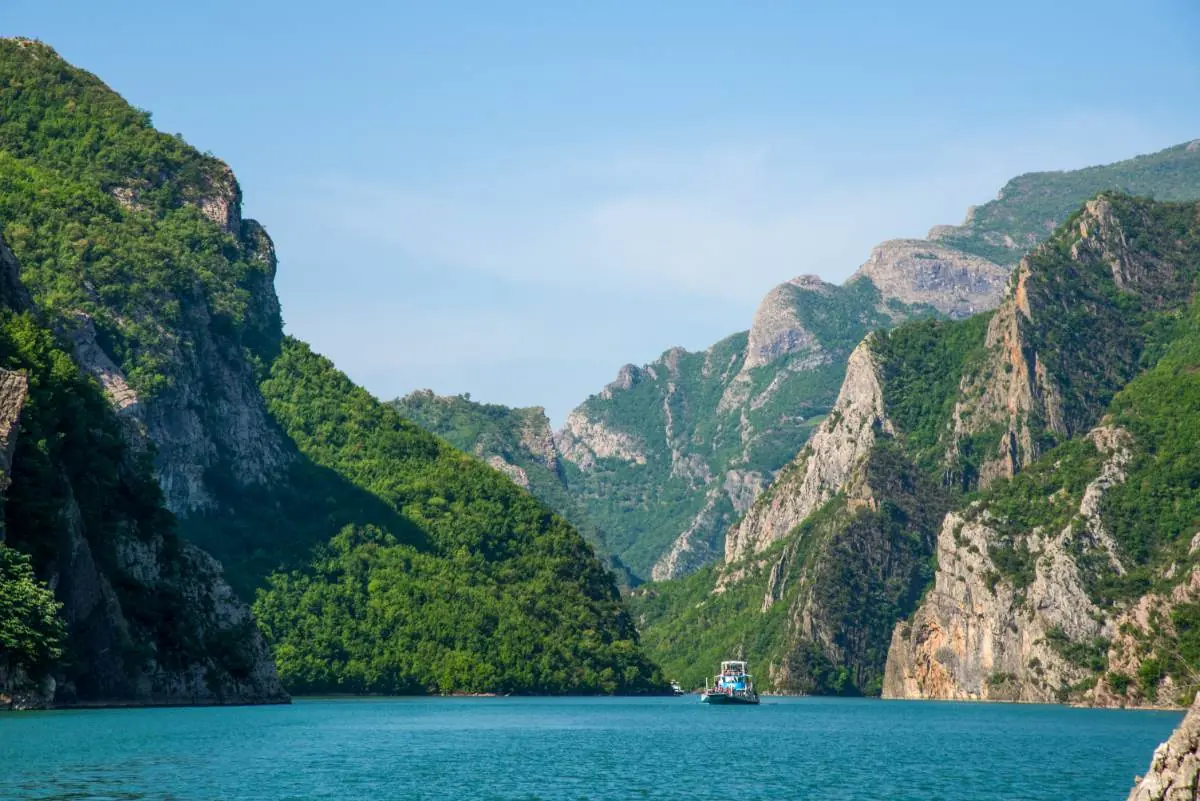
On alpine routes toward Valbona or the ferry terminals at Koman Lake, the road surface degrades sharply in the final stretch. The lateral bouncing is sustained and intense. Taking motion sickness medication is not an overreaction.
Cash still rules, but tickets are slowly moving online
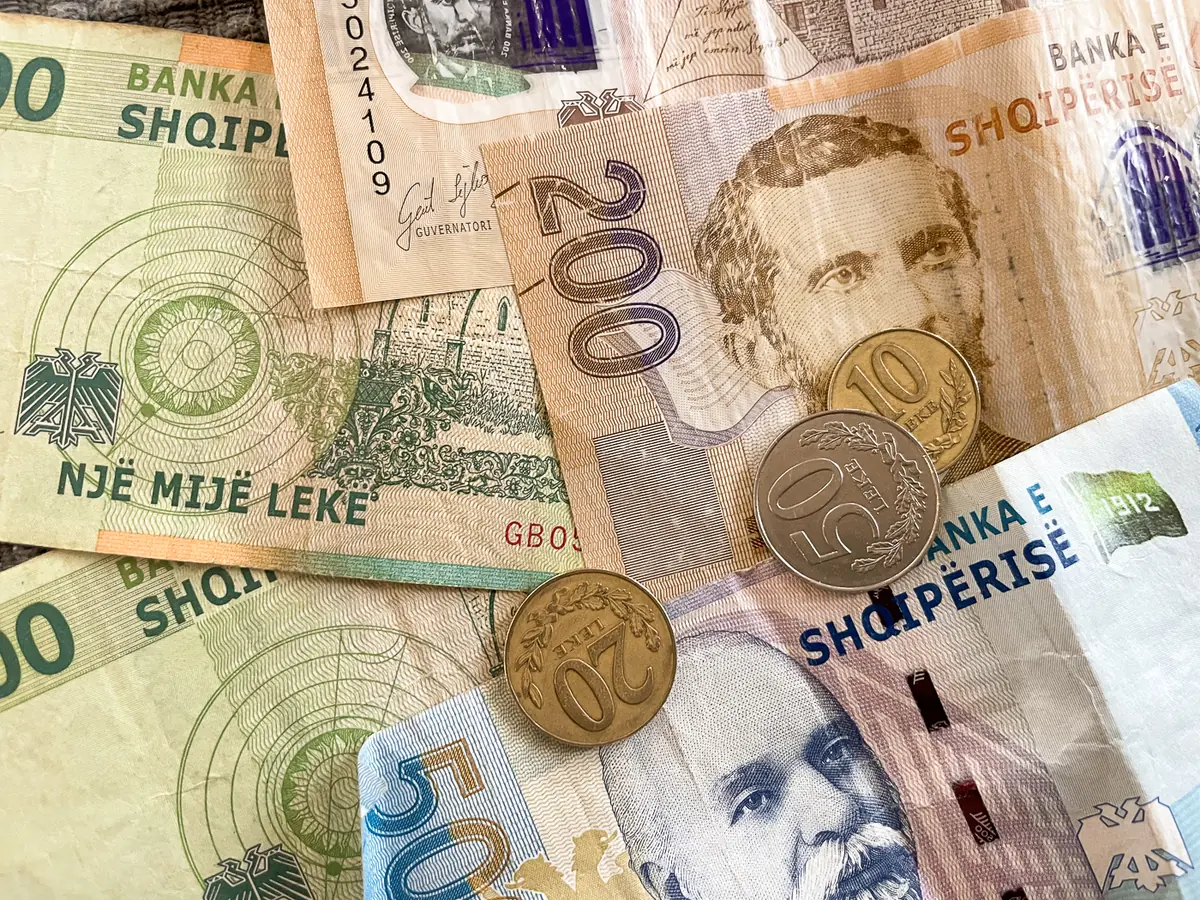
Albania bus travel still operates as a cash economy on board, even though schedules and some tickets have moved to the web. Carry Albanian lek (ALL) in small notes and treat any card reader you encounter as a bonus, never a plan.
Three tools cover the planning side. The government’s eTransport platform (etransport.al) is the official database of licensed lines, stations, and timetables. Gjirafa Travel sells tickets online in English on a growing list of domestic routes. FlixBus and similar operators handle most cross-border coaches.
Card acceptance is creeping in. A national push to install POS terminals in public transport is underway, but it is in a transitional phase with operators still catching up, so drivers on most routes will simply shrug at a phone screen.
Pro Tip: Withdraw lek before heading to any terminal, and take out a larger amount per visit to spread the ATM fee across your trip. Decline the machine’s offer to convert to your home currency, since your bank’s rate is almost always better.
Payment collection varies depending on your specific route. Bigger terminals have ticket booths; on coaches a conductor often walks the aisle mid-journey. On furgons, payment typically happens at the end of the ride as you exit, so have cash ready.
Decoding Tirana’s terminals: there are three, not one
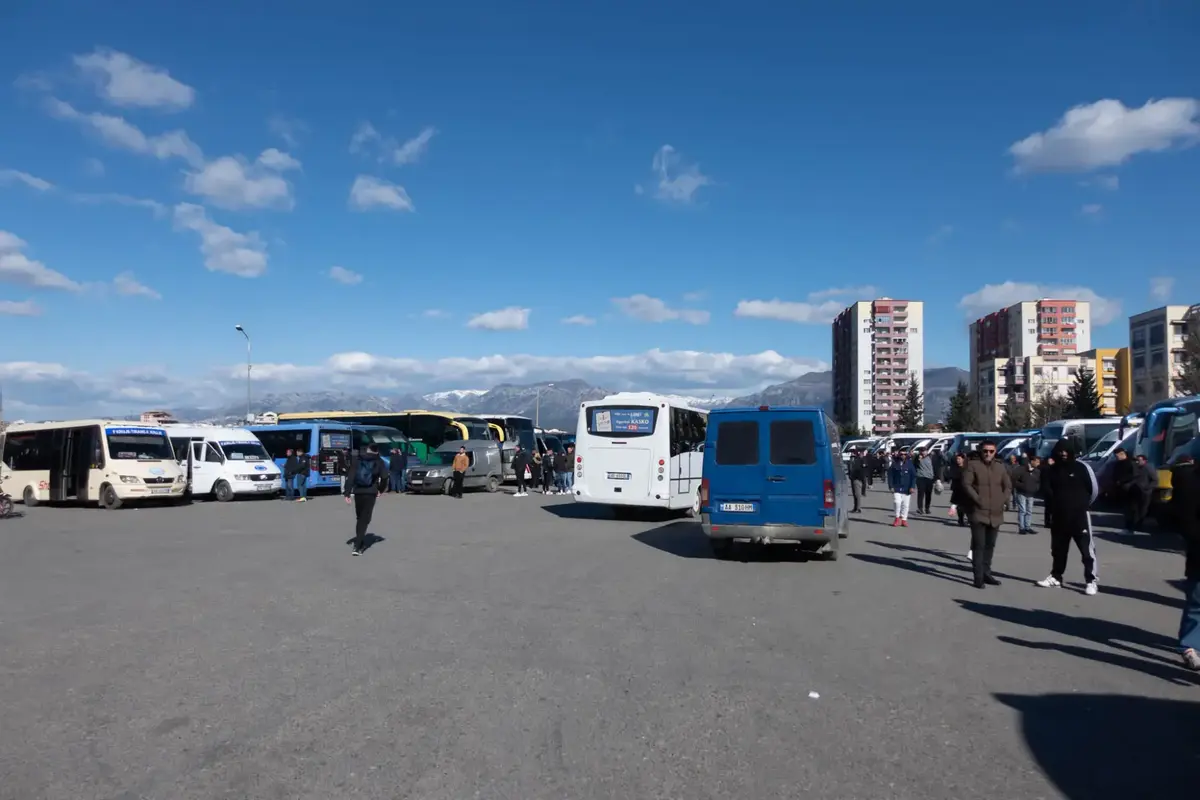
Tirana has no single central bus station with a digital departures board. Intercity services are split across three separate terminals on opposite edges of the city, and going to the wrong one costs you the better part of a morning.
Tirana’s city center was designed in an era that banned private vehicles. The legacy of that planning is that all intercity transit is pushed to the periphery, which means a local journey just to reach your departure point.
Here is how the capital’s transit geography actually breaks down:
- South and North Terminal (most domestic routes): Officially Terminali i Autobusave të Veriut dhe Jugut, out at the Kamëz turn-off in Kashar, roughly 5 miles (8 km) northwest of Skanderbeg Square. Serves Durrës, Krujë, Shkodër, Berat, Vlorë, Himarë, and Sarandë. Take city bus L5B (Instituti–Qendër) or any bus marked Kamëz from Rruga e Barrikadave behind the Opera, 40 lek, about 30 minutes.
- East Terminal (southeast and North Macedonia): Terminali Lindor, at the Tirana East Gate (TEG) mall about 4.7 miles (7.5 km) southeast of the center. This is the hub for Elbasan, Pogradec, Korçë, and coaches to Ohrid. Look for city buses marked TEG.
- International Terminal (cross-border coaches): On Rruga Ali Kolonja near Pallati i Sportit, close enough to walk from the center. Departures to Greece, Italy, Montenegro, Kosovo, Germany, and Turkey, plus the only station with reliable toilets, fast food, and ticket agencies.
One caveat worth building into your plan: a far larger multimodal terminal is under construction at the same Kamëz junction, designed to combine intercity coaches, city buses, and a relocated rail station. Bays and entrances shift as the work advances.
Pro Tip: Ask your hotel or guesthouse the night before. Locals track these staging areas in real time far better than any map app.
Getting from Tirana International Airport into the city
The airport sits at Rinas, about 11 miles (17 km) northwest of central Tirana. The taxi queue outside arrivals is aggressive, and prices are frequently inflated for arriving foreigners.
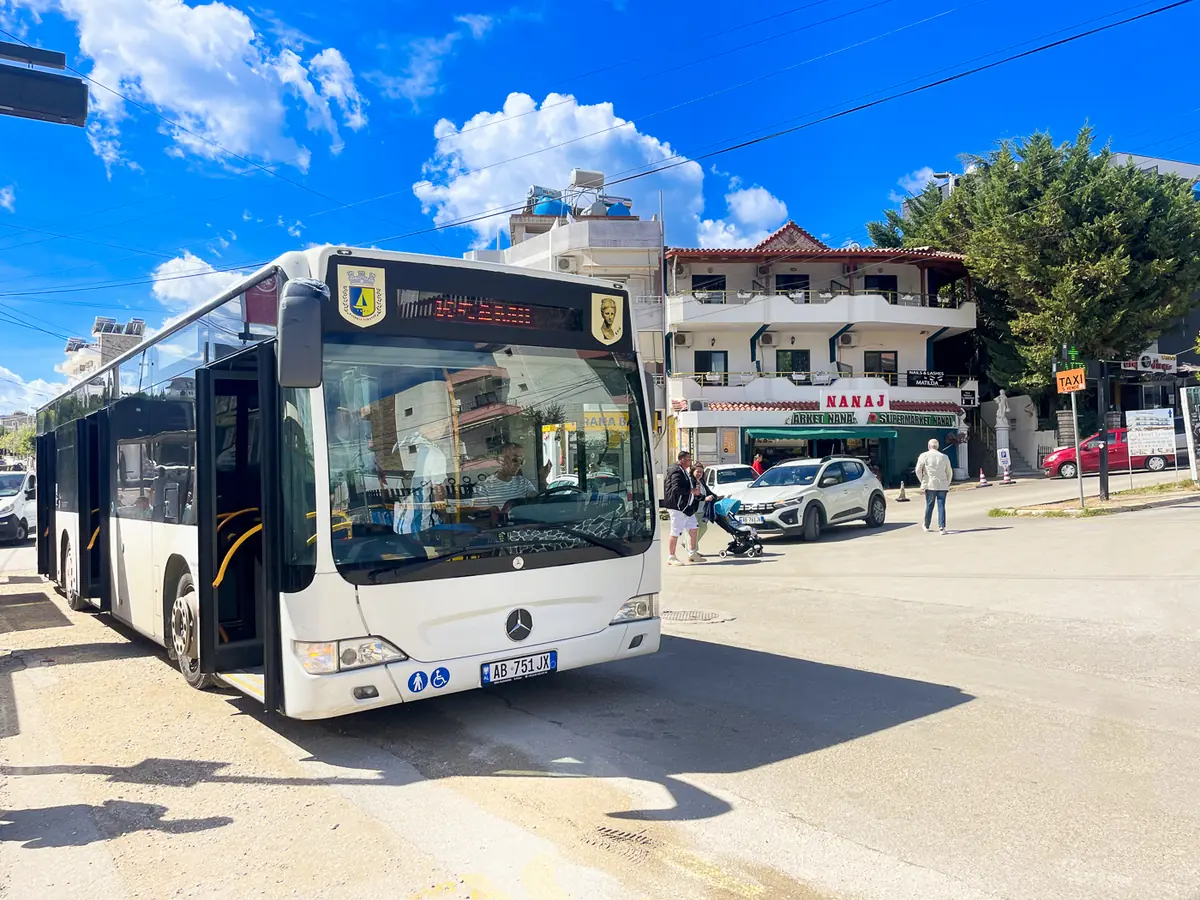
The airport bus, operated by LU-NA, is the correct move. It runs 24 hours a day with hourly departures in both directions, takes 30 to 40 minutes, and terminates in the small park behind the Opera and Ballet Theatre, a short walk from Skanderbeg Square. The fare is 400 lek (about $5), payable in cash.
There is also a second, less publicized line that most guides miss entirely. It connects the airport directly with the South and North Terminal for 300 lek, running hourly from early morning to early evening.
That link is the single biggest time-saver for anyone landing and heading straight for another city, because it skips the city center detour completely. Separate direct coaches also run from the airport to Durrës, Shkodër, Fier, and Vlorë for 600 to 1,200 lek.
Exit the arrivals hall, bypass the first row of waiting cars, and walk to the marked bus bays in the parking area. If you would rather take a taxi, the official stand quotes a flat fare of roughly 2,000 to 2,500 lek into the center. Our full breakdown of Tirana airport transfers compares the shuttle, taxi, and private pickup on cost and timing.
Uber and Bolt do not work in Albania
Neither Uber nor Bolt operates anywhere in the country, so opening either app on arrival returns an empty map. Every guide that tells you to “just grab a Bolt to the terminal” is recycling a launch that never happened.
Local ride-hailing has matured instead. Apps such as Speed Taxi, VrapOn, Patoko, Clust, and Taxi.al work in Tirana and most larger cities, show the fare before you confirm, and typically undercut street taxis by 15 to 20 percent.
Install one before you fly and register a card while you still have reliable data, then line up an Albanian SIM or eSIM so those apps still work once you land. Coverage thins outside the main cities, and on the Riviera you are often better off having your accommodation call a driver.
Is Albania bus travel safe for solo female travelers?
Yes, Albania bus travel is statistically very safe from violent crime for solo female travelers. The country’s culture of hospitality, known as besa, creates a strong social contract around protecting guests. Physical aggression toward travelers on transit is genuinely rare.
What solo female travelers in Albania should prepare for is a different kind of friction. Rural furgon routes are visually male-dominated environments, and sustained eye contact from local passengers is common.
This reflects cultural curiosity rather than predatory intent. However, that distinction does not make it comfortable.
Practical tactics:
- Front seat: Claim the front passenger seat next to the driver on rural routes. It offers more personal space and is generally quieter.
- Dress code: Dress conservatively outside Tirana, particularly in northern towns and villages.
- Visual cues: If the staring becomes overwhelming on a long route, headphones and a book are universally understood signals.
How to protect your budget at the terminal
The absence of posted fares creates a predictable opportunity for price inflation. Knowing roughly what a trip to Albania costs day to day is the cheapest defense you have. Two scenarios are worth flagging specifically to protect your wallet.
- The “last bus” hustle: A tout near the staging area tells you the formal furgon is full, finished, or broken down. They then offer to take you privately for triple the going rate. This is almost always false, so walk past them and ask a driver directly.
- Unmarked taxi pressure: Unregistered drivers work the perimeter of every terminal and are highly persistent. The correct response is to verify standard fares with your accommodation before you leave and quote that price confidently when challenged.
Pro Tip: Use a local taxi app rather than negotiating on the street. The fixed quote on screen removes the entire argument, and screenshots of the price settle any dispute at the end of the ride.
Route guide: times, costs and road conditions
Linear distance means very little in Albanian geography. Mountain passes, single-lane roads, and degraded surfaces add significant time to what maps suggest should be simple drives. The same conditions shape the timings if you are weighing up driving in Albania yourself.
| Route | Distance | Realistic travel time | Typical fare | Road difficulty |
| Tirana → Durrës | 25 miles (40 km) | 30 – 45 min | 150 lek (~$2) | Easy |
| Tirana → Shkodër | 60 miles (95 km) | 2 – 2.5 hrs | 300 – 500 lek (~$4 – $6) | Easy |
| Tirana → Berat | 75 miles (120 km) | 2 – 2.5 hrs | 400 – 600 lek (~$5 – $7) | Moderate |
| Tirana → Vlorë | 90 miles (145 km) | 3 hrs | 500 – 700 lek (~$6 – $9) | Moderate |
| Tirana → Pogradec | 75 miles (120 km) | 2.5 hrs | 600 lek (~$7) | Moderate |
| Tirana → Sarandë | 180 miles (290 km) | 5 – 6 hrs | 1,500 – 2,000 lek (~$18 – $25) | Challenging (coastal switchbacks) |
| Shkodër → Koman ferry | 45 miles (70 km) | 1.5 – 2 hrs | ~€8 shuttle (~$9) | Severe (mountain degradation) |
Fares are quoted in lek because that is what you will actually hand over; dollar figures assume roughly 80 lek to the dollar and drift with the exchange rate. Expect prices to sit at the top of each range during the July and August peak.
The Shkodër-to-Koman segment deserves special mention. The first half is unremarkable paved highway past the Vau i Dejës reservoir, but the last 6 miles (10 km) before the ferry dock are potholed, partly unpaved, and occasionally interrupted by landslide clearance.
The physical bouncing is relentless. Sit toward the front of the vehicle and take motion sickness medication 30 minutes before boarding if you have any sensitivity. Most travelers book the morning shuttle that connects with the Komani Lake ferry rather than piecing the trip together alone.
The Llogara Tunnel has rewritten the run south
The single biggest change to the coastal route into the Albanian Riviera is a 3.7-mile (5.9 km) tunnel bored beneath the Llogara Pass. The drive from Dukat to Palasë, once a white-knuckle 45 minutes of hairpins, now takes about seven minutes.
Not every service uses it. Some coaches and furgons still climb the old pass road, either out of habit or because the views sell seats, so journey times on the same route can differ by close to an hour.
Tolls have been approved at 250 lek per crossing for cars and 1,000 lek for buses and minibuses, though the start of collection has been pushed back repeatedly and passage has remained free through recent seasons. Heavy trucks are barred either way.
Pro Tip: If you are prone to motion sickness, ask at the ticket window whether your bus goes through the tunnel or over the pass. If you want the view instead, ask for the pass and take the window seat on the right heading south.
The state is taking over: what is changing in Albanian transit
This is where most travel guides go completely stale. The government has created MobAl sh.a., a fully state-owned transport company under the Ministry of Infrastructure and Energy, with a mandate to license operators, collect fares, maintain stations, and run a national electronic ticketing system.
The first phase is specific rather than sweeping. It covers a handful of national tourist itineraries, school transport in three underserved regions, a fleet of roughly 100 electric buses, and GPS tracking that feeds real-time passenger information.
The deeper change is administrative. Licensing power for urban lines shifts from individual municipalities to the state company, which pulls operators who ran largely off the books into a single registered framework.
For travelers, the practical takeaway is patience. The rollout is phased, the village furgon layer is untouched so far, and cash remains the only payment method you can count on. Use eTransport for official line and station data, and treat everything else as subject to change.
Albania bus travel rewards the prepared and forgives almost no one who shows up without cash. You need time flexibility and realistic expectations about comfort.
Get the lek before you leave the city, confirm your terminal the night before, and install a local taxi app while you still have good signal. Embrace the idea that your furgon leaves when it is ready, not when you are.
Do those things and you will move through one of Europe’s most rewarding countries faster and cheaper than almost any other method available. If the route itself is still undecided, a 7-day Albania itinerary shows how these bus legs stitch together. Which part of Albania are you trying to reach — the coast, the mountains, or somewhere in between?