Planning a road trip through the Balkans and not sure what driving in Albania is actually like? The internet is packed with horror stories and gorgeous Instagram reels, but almost zero useful logistics. This guide cuts through the noise to give you everything needed to navigate safely, legally, and without blowing your budget, and our complete Albania travel guide covers everything outside the driver’s seat.
Here is the short version. Driving in Albania is entirely manageable for a prepared driver: traffic keeps to the right, main highways are in good shape, and targeted crime against tourists is rare. What catches people out is the paperwork, the zero-tolerance alcohol law, and mountain roads that take twice as long as your GPS claims.
Do you actually need a car in Albania?
Yes, you need a car if you want access to the real country outside the major transit corridors. Albania’s furgon minibus network connects the cities cheaply, but it cannot get you to secluded Riviera coves, northern mountain villages, or any stretch of coastline worth photographing.
Furgon fares scale with distance, and the flat-rate figure you see quoted online is misleading. Short hops like Tirana to Durrës run about $2. Tirana to Berat costs $5 to $6. A long haul like Tirana to Saranda is $15 to $20 on a scheduled coach, and takes five hours or more with stops you did not choose.
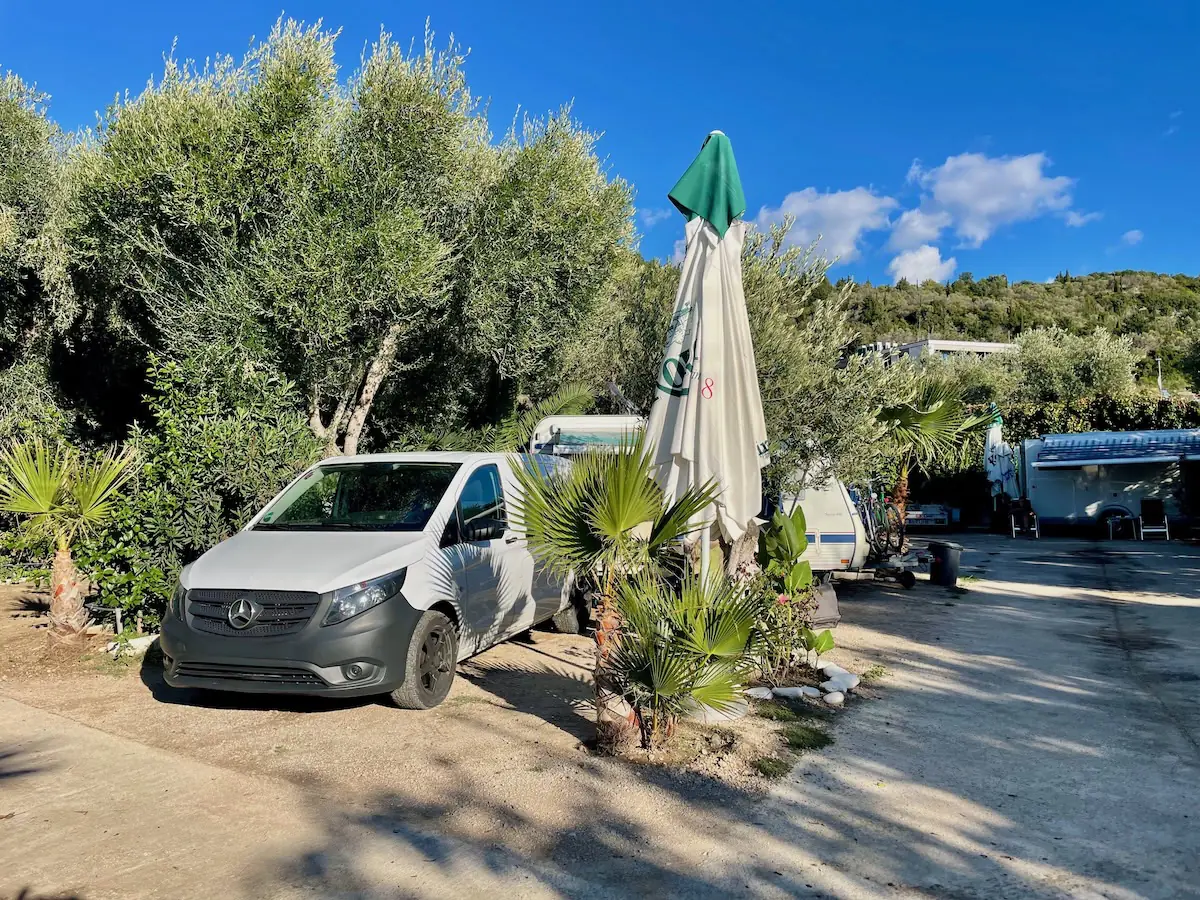
Rental car prices in Albania are strongly seasonal. Expect $25 to $35 per day for an economy car in the shoulder and low seasons, rising to $45 to $60 per day in July and August when inventory disappears. For solo budget travelers sticking to Tirana, Berat, and Saranda, the furgon still makes sense. For everyone else, a rental pays for itself within a single day.
Pro Tip: Furgons run on loose schedules and fill up fast, and they depart when full rather than on the clock. If you are on a tight itinerary hitting multiple cities, a rental car is not a luxury, but a massive time-saver.
Documents you must carry before you leave the rental counter
Albanian traffic police run frequent checkpoints and pay particular attention to rental plates. Three sets of documents live in the car, and one lives on you.
Do Americans need an International Driving Permit for Albania?
Yes, carry one. Article 133 of the Albanian Road Code requires non-resident foreign nationals to hold an International Driving Permit alongside their national license. In practice most officers and rental desks accept a US license on its own, but a strict highway patrol officer has grounds to fine you without the IDP.
The permit costs roughly $20 and is issued in the United States only by AAA and AATA. You cannot obtain a valid one after you land, and websites selling “digital international driver’s licenses” are selling you nothing. Apply before you fly.
What the Green Card actually covers
The Green Card is an international motor insurance certificate, and it is widely misunderstood. You do not need one to drive inside Albania in an Albanian-registered rental, which already carries mandatory domestic third-party cover. You need it the moment you leave the country.
Montenegro and North Macedonia both require a Green Card for Albanian-registered vehicles. Kosovo generally does not, using its own border insurance instead. Montenegro now accepts the certificate in digital PDF form, which is a genuine change from the paper-only era, but Albanian traffic police still expect original documents rather than photocopies for everything else in the folder.
Tell your rental company which borders you plan to cross at the booking stage, not at pickup. Cross-border permission has to be prepared in advance, and crossing without it voids your rental agreement the instant you clear the barrier.
Insurance: what your credit card will and will not do
Do not assume your card covers you here. Coverage varies sharply by issuer, and Albania sits outside the European Union, which is where several benefit guides draw their exclusion lines. Some premium cards cover rentals worldwide; others carry country exclusion lists and only offer secondary cover abroad, which is why a standalone travel insurance policy for Albania is worth pricing alongside whatever your card offers.
Call the number on the back of your card and confirm Albania by name before you travel. Then confirm separately that your rental company will accept card coverage instead of its own collision damage waiver, because many Albanian agencies will not, and will place a substantial hold on your card if you decline theirs.
One exclusion is close to universal and worth memorizing: the moment your tires leave the pavement, both rental insurance and credit card coverage typically stop applying.
The inspection that saves you money
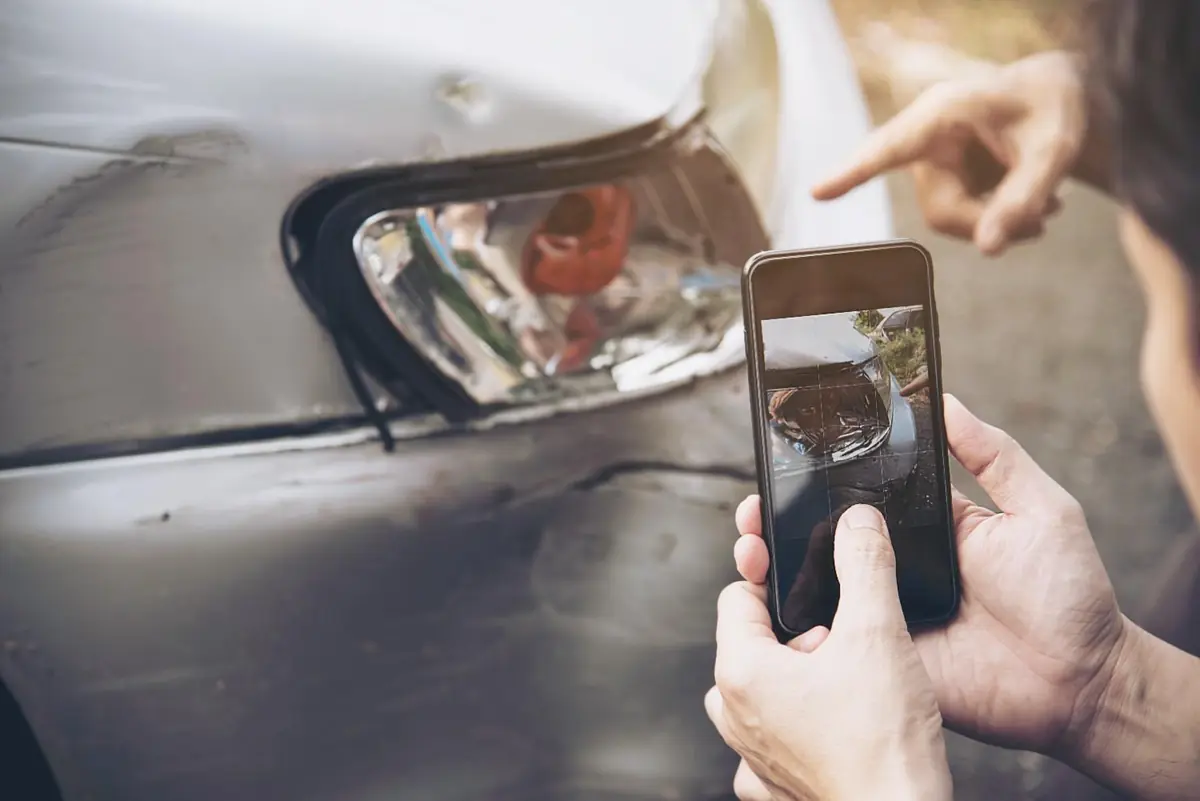
Before driving off the lot, do a full exterior walk-around in daylight and photograph every scratch, dent, and scuff with a timestamp. Fuel gauge readings and manual transmission conditions are frequently misrepresented at pick-up. Document everything before you sign the paperwork.
Pro Tip: Tirana International Airport rental desks are fast and understaffed. Do not let the agent rush you through the inspection, and make sure to walk the entire vehicle including the roof, wheel rims, windshield, and undercarriage. Tires and glass are the two things “full coverage” most often excludes.
Mandatory equipment: what the law requires in the cabin
Albanian traffic law mandates a specific physical inventory inside your vehicle. Missing these items during a roadside check guarantees a fine, and the fine is issued to the driver, not the rental agency.
Year-round requirements:
- Red warning triangle
- First-aid kit, stocked and within its expiry date
- Reflective high-visibility jacket, kept in the cabin rather than the trunk so you can put it on before you step out
- Fire extinguisher, which is routinely listed in roadside checks even where enforcement varies by vehicle class
Seasonal requirement (November 1 to April 30):
- Snow chains, required to be carried in the vehicle even on clear coastal roads, and fitted according to road signs and conditions
Winter tires are not nationally mandatory, but they are strongly advised for any mountain route in Albania’s colder months. Verify every item is physically present before leaving the lot, and add anything the agency cannot supply to your own packing list for Albania, because assuming can cost you money.
Headlights stay on
Albania requires daytime running lights or dipped headlights during daylight hours, and this trips up visitors constantly. Daytime running lights alone are not sufficient inside tunnels, in rain, or in reduced visibility, where you must switch to low beams. With a six-kilometer tunnel now on the main Riviera route, this matters more than it used to.
Understanding Albanian traffic behavior
Albanian roads operate on a parallel set of unwritten rules that run alongside, and frequently override, official traffic law. Understanding this distinction is the single most important thing you can do before driving in Albania.
Is it safe to drive in Albania?
Driving in Albania carries a real statistical risk, primarily from collision hazards rather than criminal activity, which tracks with Albania’s broader safety record for tourists. Albania’s road death rate runs meaningfully above the European Union average: national figures put it near 60 deaths per million residents against an EU average in the mid-40s, while World Health Organization estimates, which adjust for under-reporting, land closer to 10 per 100,000.
Whichever figure you use, the direction is the same and the causes are consistent. Albanian statisticians attribute the overwhelming majority of crashes to driver behavior rather than road conditions.
The primary risk factors are aggressive overtaking on blind corners, degraded road surfaces, and animals on the tarmac at night. All of these threats are manageable with the right knowledge and situational awareness.
How roundabouts actually work in Tirana
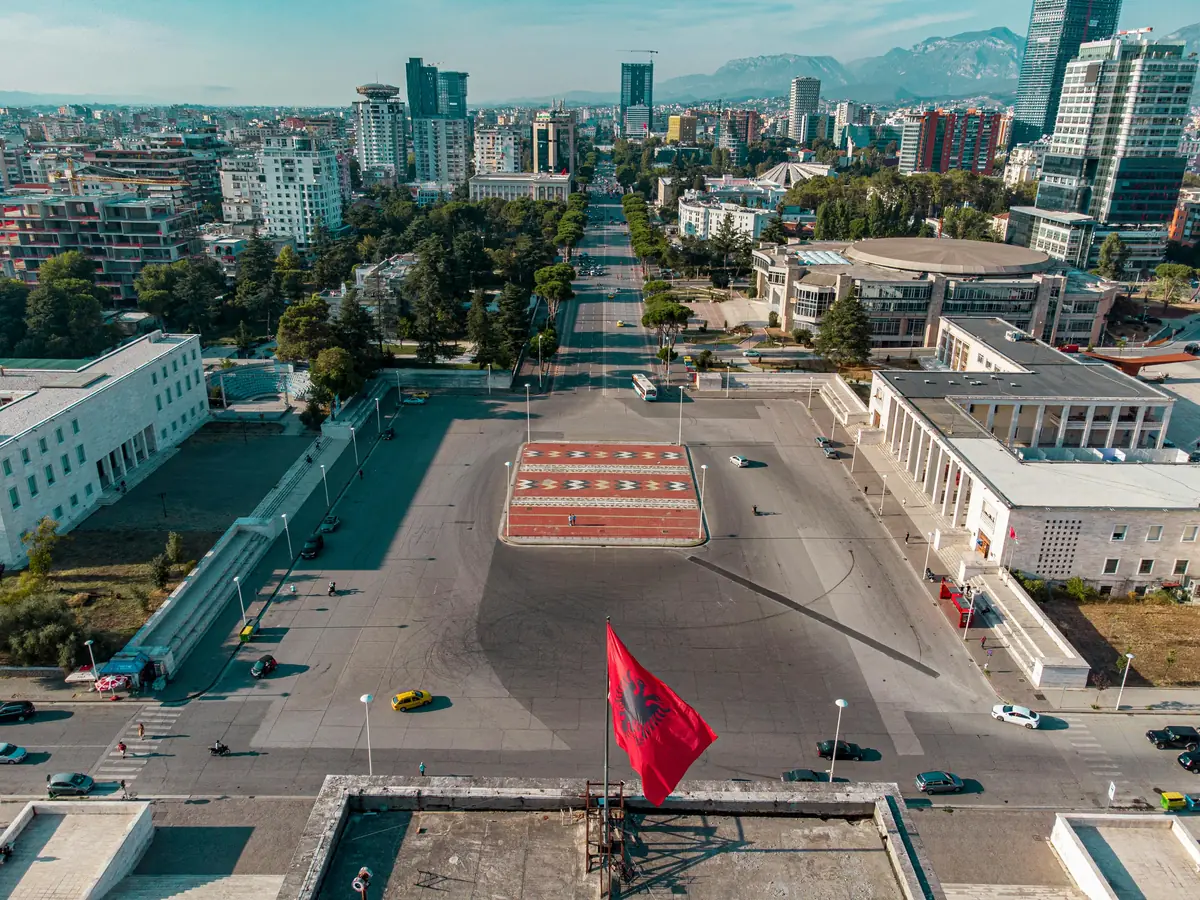
In theory, vehicles inside the roundabout have the right-of-way, and Albanian law is unambiguous on this. In practice, drivers entering roundabouts in Tirana and Shkodër frequently force their way in, expecting circulating traffic to yield. Strict adherence to western right-of-way rules in these circles causes gridlock and minor collisions.
Adopt a merge mentality instead when navigating these intersections. Anticipate that a vehicle will push into your lane, and leave more of a gap than feels natural. In particularly chaotic city centers, police sometimes manually direct roundabout traffic, so always follow their hand directions over the painted road markings.
Overtaking on mountain roads
Overtaking on double-solid lines is common here, even though the Road Code prohibits it on bends, near hill crests, and at intersections. It is not personal aggression, but rather a deeply embedded driving culture where slower vehicles are expected to yield immediately when a faster car approaches.
When you see a vehicle closing fast in your rearview mirror on a single-lane mountain road, hold your line. Reduce your speed slightly and hug the right shoulder to create passing space. Do not brake sharply or swerve.
Black luxury sedans, often large Mercedes-Benz models, expect and receive immediate yielding from other traffic. Just give it to them and let them pass. Short horn bursts are not road rage here; drivers use the horn to announce their presence in a blind spot, signal a merge, or warn a pedestrian.
Speed limits and the zero-tolerance alcohol law
Urban speed limit signage is sparse. Assume the limit is 25 mph (40 km/h) the moment you pass a town name sign, regardless of what is posted after it.
Default speed limits for passenger cars:
- Motorways: 68 mph (110 km/h)
- National rural roads: 50 to 56 mph (80 to 90 km/h)
- Urban built-up areas: 25 mph (40 km/h)
The blood alcohol limit is 0.01%, which is functionally zero tolerance. A single beer can put you over. Police checkpoints on major highways are frequent, and rental vehicles are priority targets for enforcement. Parliament has recently tightened the Road Code further, adding permanent license revocation for repeat drink-driving offenders, a probation period for newly licensed drivers, and harsher penalties for handheld phone use.
Two enforcement details worth knowing. Fines are cut by 50% if paid within 15 days of registration, through e-Albania, a post office, or a bank. And never offer cash to an officer: anti-corruption enforcement is active, officers wear body cameras, and attempting a bribe is a criminal offense.
What to do after a collision
After any collision, even a minor cosmetic scrape, do not move the vehicle. Albanian law requires you to remain stationary until police arrive and give you explicit permission to move. Moving the vehicle, even to clear traffic, can constitute a hit-and-run offense, and without a police report your rental insurance claim will almost certainly be denied.
The narrow exception is minor damage with no injuries and no other party involved, where some rental companies will authorize a European Accident Statement form instead. That authorization has to come from them, by phone, before you move anything.
Pro Tip: Save these before you turn the key: 112 for general emergencies, 129 for police, 127 for ambulance, 128 for fire, and 126 for traffic police. Add your rental company’s 24-hour breakdown line. Mountain signal is unreliable, and you do not want to be searching for these on the side of a highway.
Road conditions by route type
The Llogara Pass or the tunnel: which should you take?
This is now a real decision, and most guides have not caught up. A 3.7-mile (5.9 km) tunnel bores straight through the Ceraunian Mountains beneath the pass, connecting Dukat in the north to Palasë in the south. It cuts a drive that used to take 30 to 45 minutes down to about seven, and it is tolled.
Take the tunnel if you are arriving late, driving in fog or winter conditions, towing anxiety along with your luggage, or simply need to reach your accommodation before dark. The toll is 250 lek, roughly $3, each way for a passenger car. It runs at 50 mph (80 km/h) and is closed to heavy vehicles.
Take the pass if you have daylight, working brakes, and two spare hours. Traffic over the old road has thinned noticeably since the tunnel opened, which has made the drive better, not worse. Watch for the turning: coming from the north, the pass entrance is a left turn immediately before the tunnel mouth, and roadworks near the portal make it easy to miss.
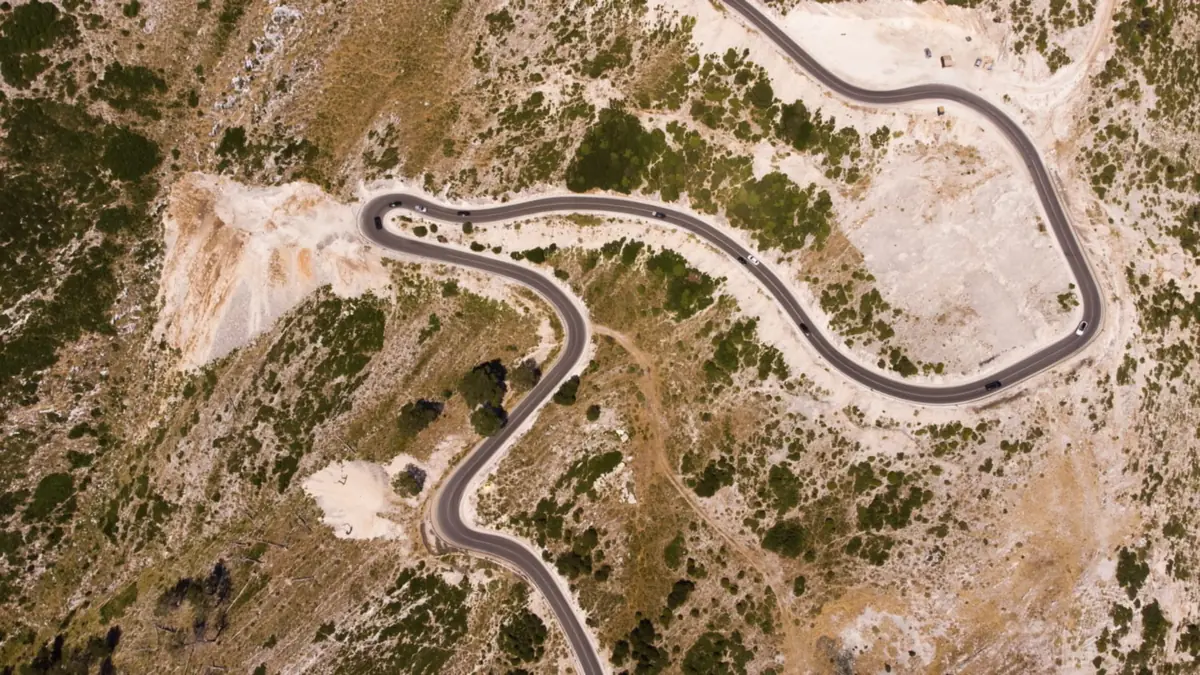
The pass crests at 3,369 feet (1,027 meters). As you climb, the temperature drops sharply and the air carries the cold, clean scent of old-growth pine and cedar. On the descent, that gives way quickly to the acrid, metallic smell of overheated brake pads from vehicles creeping down the guardrail-deficient switchbacks. About halfway down, the warm salt air from the Ionian Sea hits you all at once.
Use engine braking on the descent by shifting into a lower gear to let the engine hold your speed. Overheated brakes on this road are not a hypothetical risk, so avoid riding the pedal. Slow-moving agricultural vehicles and uphill traffic on blind corners require your complete attention. Fog rolls in fast at this elevation, particularly early morning and late afternoon, and can drop visibility to a few car lengths.
Budget 45 to 60 minutes for a 6-mile (10 km) stretch that Google Maps will claim only takes 12.
Do you need a 4×4 in Albania?
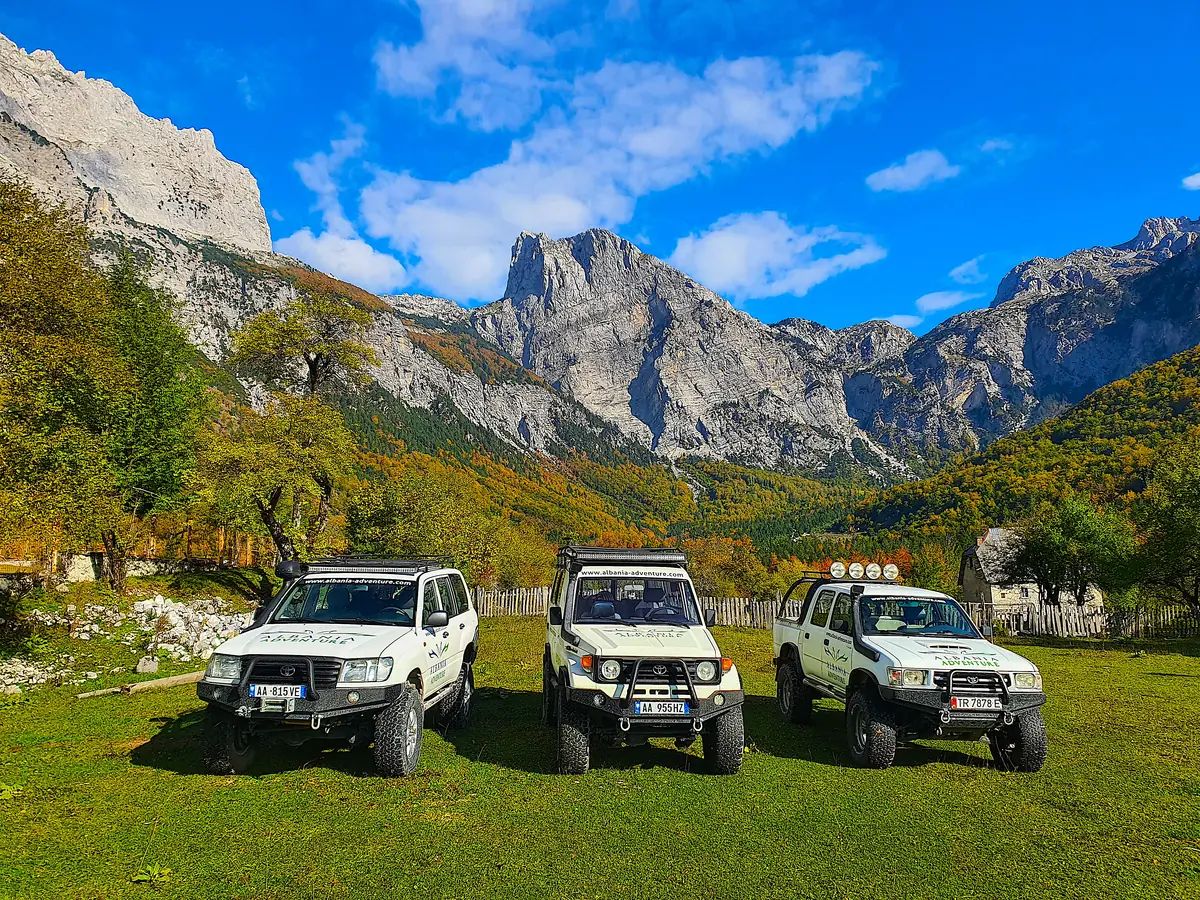
No, not for the routes most visitors drive, and this has changed significantly. Standard economy vehicles handle the Tirana-to-Saranda corridor, the SH8 coastal highway, and the A1 motorway without difficulty.
Theth is the big correction. The SH21 from Shkodër through Koplik to Theth village is now fully asphalted, and a standard sedan manages it comfortably in summer. The crossing tops out at Qafa e Thorës at 5,548 feet (1,691 meters), not the 6,500-foot alpine ordeal older guides describe, and the hard part is the descent: roughly 27 hairpins with gradients around 15 to 18%.
Where you genuinely want ground clearance:
- The unpaved tracks inside Theth village itself, including the road toward the Blue Eye trailhead at Nderlysaj
- Shoulder-season and wet-weather driving on SH21, where a crossover earns its keep
- Remote dirt routes such as the track from Mollas to Petran, where standard sedans suffer real undercarriage and suspension damage
Two hard limits. The mountain road between Theth and Valbona is unpaved and prohibited for rental vehicles, so ignore Google Maps if it offers you that shortcut; the legal alternative is back to Shkodër and onto the Lake Koman ferry with your car. And Qafa e Thorës is typically closed by snow from November into April or early May.
Pro Tip: Fill up in Koplik before you start climbing SH21. There is no fuel station in Theth, and the last reliable pump is well behind you by the time you notice. Download offline maps at your guesthouse too, and do not count on an Albanian SIM or eSIM holding signal across the Accursed Mountains.
Never drive rural roads after dark
This is not generic caution, but rather specific and serious survival advice. After sunset, rural roads introduce hazards that are genuinely invisible until it is entirely too late.
The most dangerous hazard is livestock sleeping on the warm tarmac. Goats, cows, and donkeys routinely rest on the residual heat of the road surface at night, appearing in your headlights with almost no reaction time at highway speeds. Unlit agricultural vehicles running without rear lights are also common in the fast lane on national roads.
Unmarked asphalt craters that will bottom out a rental car’s suspension in one hit are completely invisible in the dark. Plan your transit between cities to arrive before sunset, and treat this rule as non-negotiable on mountain routes.
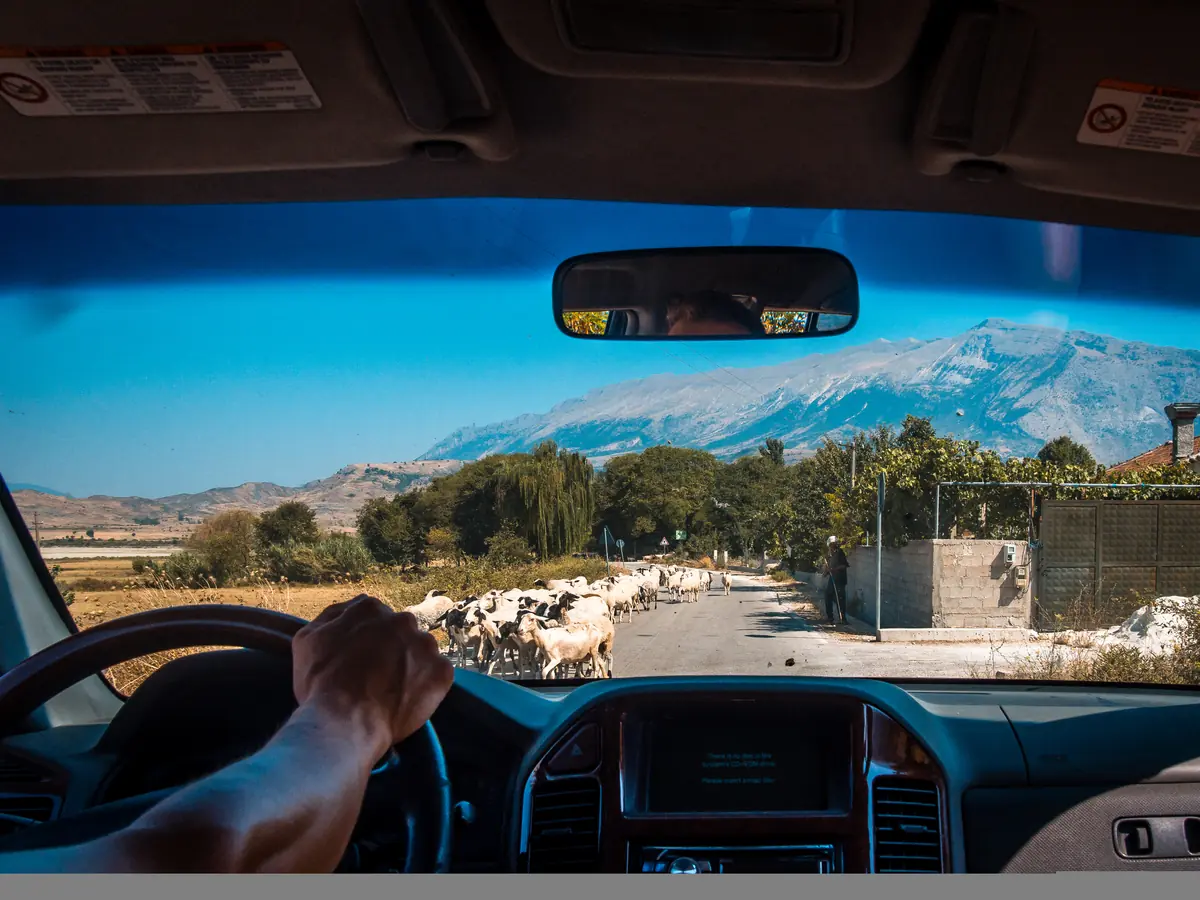
Fuel costs and Albania’s three toll points
Fuel is expensive here by regional standards, running roughly 180 to 190 lek per liter. That works out to about $2.20 to $2.30 per liter, or roughly $8.30 to $8.70 per gallon, well above the global average and a real line item in any Albania trip budget. Fill up before heading into remote areas, because small towns often have no fuel infrastructure and isolated mountain regions can leave you stranded.
Albania has no windscreen vignette and no toll account to register in advance for passenger cars. You pay at the booth, in person. There are three points where that happens:
- Kalimash tunnel toll, A1 (Rruga e Kombit): about €5, roughly $6, for a passenger car heading toward the Kosovo border. Regular users can cut this by up to 40% with a Digitalpass transponder.
- Thumanë–Kashar, A1 near Tirana airport: 250 lek, about $3, each way. Easy to clip on the drive from arrivals to the coast.
- Llogara Tunnel, SH8 Riviera: 250 lek, about $3, each way, with the booth at the northern Dukat end.
Keep small denominations of Albanian lek on hand. Card acceptance is inconsistent, particularly at the newer plazas still bedding in, and you will not find ATMs nearby. If your rental came from a Tirana agency, ask whether a transponder is fitted and whether tolls get billed back to you with an admin fee.
The two routes from Tirana to Saranda
You have two choices for the most popular drive in the country, Tirana down to Saranda, and they offer genuinely different experiences. Both share the same road as far as Fier, where the split happens.
The inland corridor (via Fier, Tepelenë, and Gjirokastër): Faster, easier, and still scenically interesting through the Vjosa River valley. Roughly 165 miles (265 km) and four to five hours. This is your ideal route back north when you are exhausted after a week of coastal switchbacks.
The coastal route (via Vlorë and Himarë): Slow, demanding, and spectacular. Roughly 175 miles (280 km) and five to six hours minimum, realistically a full day if you stop anywhere. Take this route going south when you are fresh.
Google Maps consistently underestimates the coastal route because it does not account for hairpin density, the absence of overtaking lanes, and slow agricultural traffic. Add two to three hours to whatever it tells you if you are driving the pass rather than the tunnel.
Where to stop: roadside food worth leaving the highway for
Tepelenë, on the inland corridor
The town of Tepelenë on the Fier–Gjirokastër inland route punches far above its weight. Bar Restorant Zoi & Teri sits right on the E853 and serves enormous farm-fresh salads, fërgesë, and warm byrek straight from the oven, with hospitality that repeat travelers write home about. Up the hill in town, Zgara Tepelena is the grill house locals send you to, with homemade kulaç bread and a patio worth the short walk.
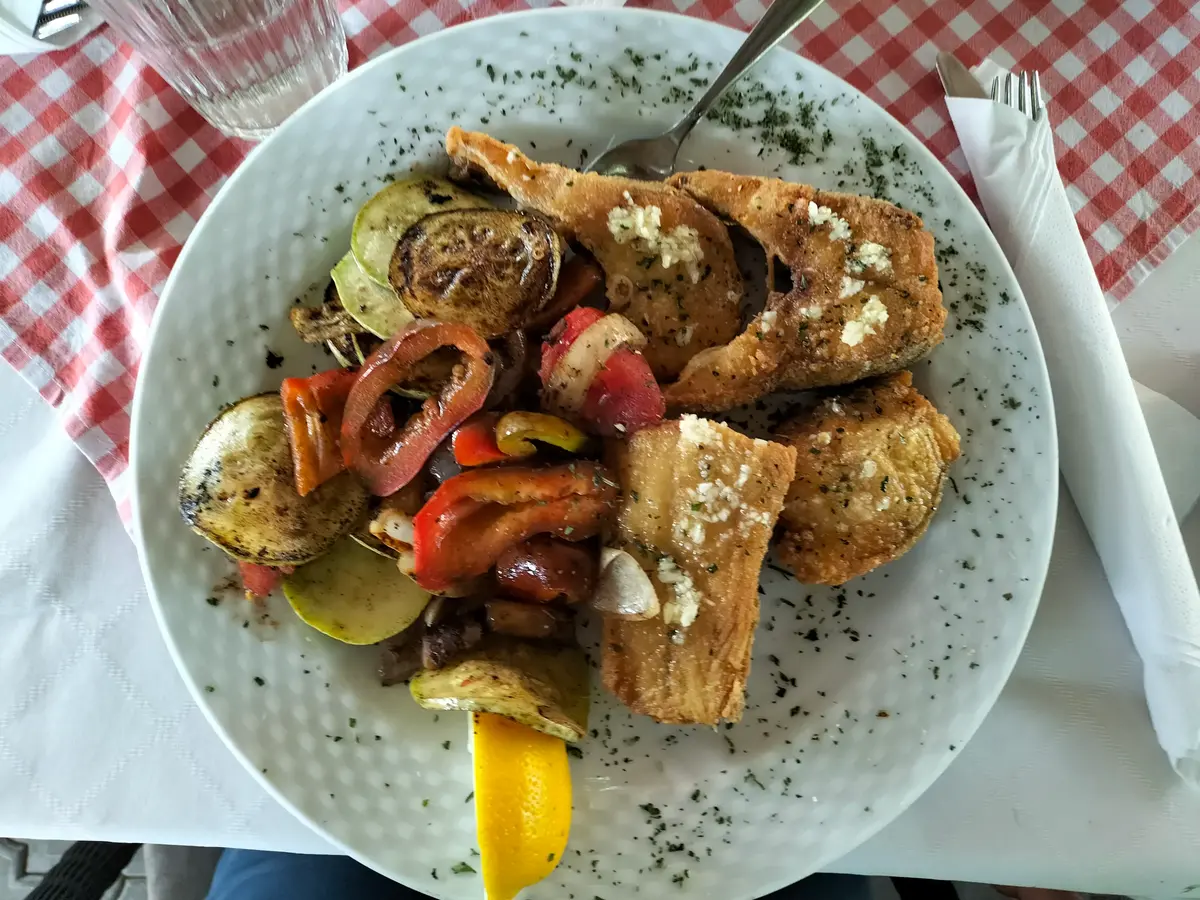
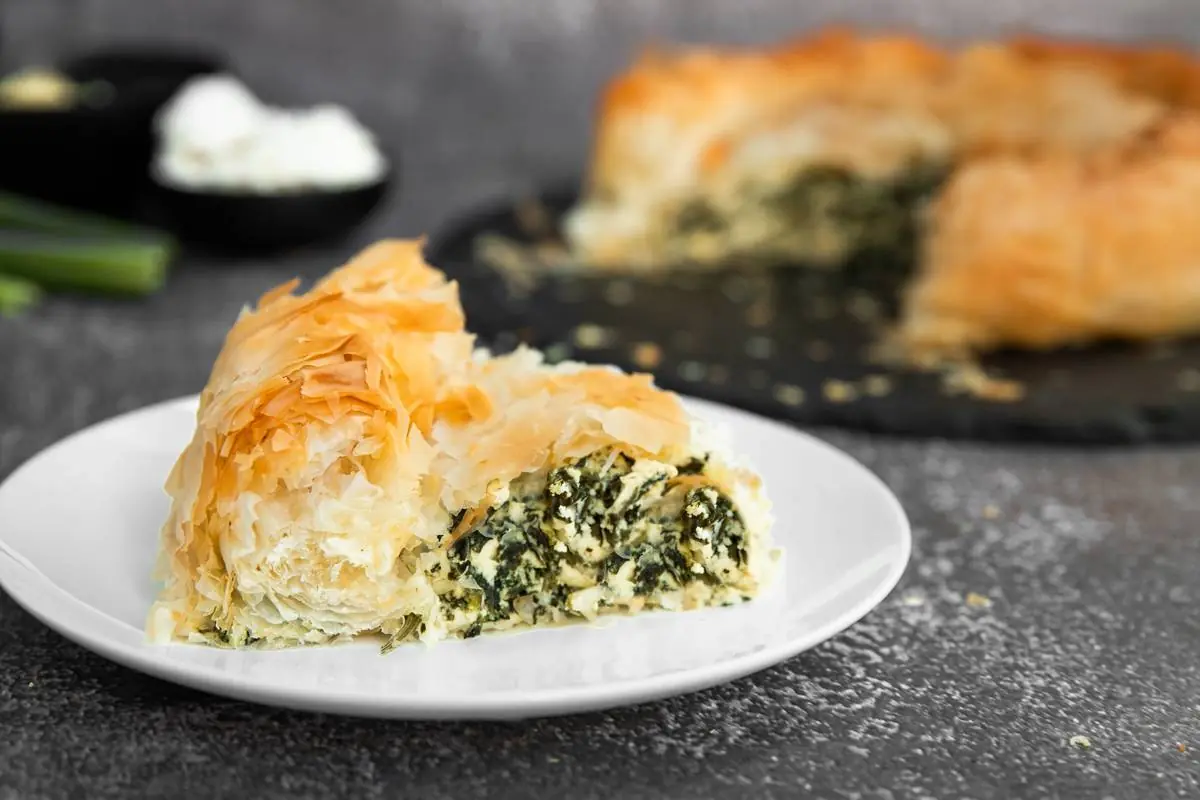
Albanian byrek deserves a dedicated mention because the phyllo dough shatters with a satisfying crunch and the spinach and feta filling is aggressively seasoned. A full piece costs under $2, making it exactly what you need after two hours on mountain switchbacks.
Best for: Budget-conscious travelers, quick highway breaks, and anyone who wants to eat like a local instead of a tourist.
Llogara Pass summit restaurants
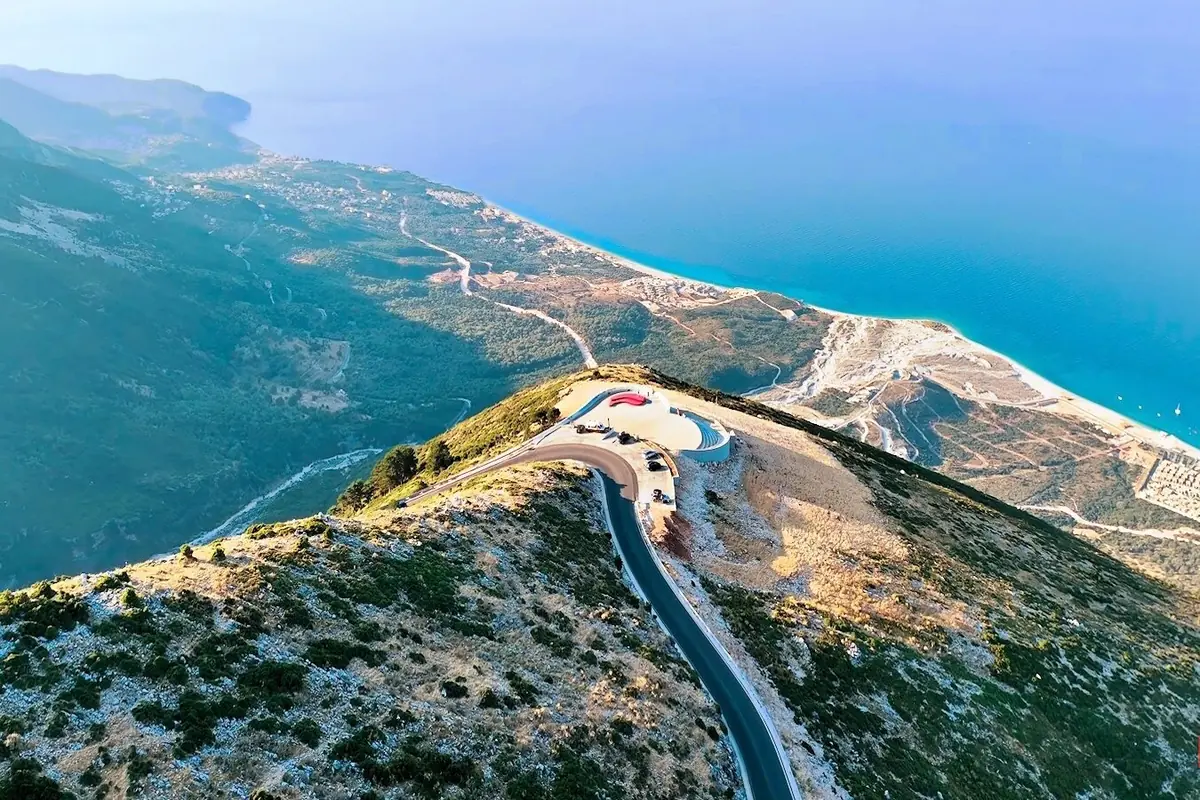
The stop at the crest is as practical as it is scenic, giving your brakes time to cool before the steep descent. The summit cluster has shifted in quality, though, and the two names that dominate old guides are no longer the standouts.
Restaurant Apollonia, just off the pass road, and Restorant Iliria on the northern approach are the current picks, both family-run and both drawing consistently excellent reviews for lamb, grilled goat cheese, and genuinely warm service. Panorama Restaurant still has the postcard view but has drawn increasingly mixed reports on service and portions, and Hotel Kështjella nearby has slipped in the same direction.
Expect 1,500 to 3,000 lek per person, roughly $18 to $37, for a full meal with drinks. Prices sit above the roadside average given the location, but portions are generous and service is unhurried, so budget 45 minutes to an hour. Arrive early in the day for the best light on the water. Bring a layer regardless of season, because it is noticeably colder up here than on the coast below.
Best for: Anyone doing the coastal route, couples, and mandatory photography stops.
Pro Tip: The summit restaurants fill up rapidly during peak season. If the main parking areas are packed, continue 0.6 miles (1 km) down the descent to a smaller pullout with equivalent views and zero lines.
Driving in Albania: frequently asked questions
Can I drive in Albania with a US license?
Yes. A valid US driver’s license is accepted for stays up to one year, which lines up with the entry rules for US visitors. Albanian law also requires non-resident foreigners to carry an International Driving Permit alongside it, so bring both. The IDP costs about $20 from AAA or AATA and must be obtained before you leave the United States.
Which side of the road do they drive on in Albania?
Albania drives on the right, the same as the United States and continental Europe, with the steering wheel on the left. Overtaking is on the left. Where no signs or signals are present, vehicles approaching from the right have priority at intersections.
Is the road to Theth paved?
Yes. The SH21 from Shkodër through Koplik to Theth village is fully asphalted, and a standard car handles it in summer. The roads inside the village and toward the Blue Eye trailhead remain gravel, so a crossover or SUV is worth having if your guesthouse sits off the main road.
How much does it cost to rent a car in Albania?
Economy cars run about $25 to $35 per day in the shoulder and low seasons, rising to $45 to $60 per day in July and August. SUVs and 4x4s start higher. Book well ahead for summer, and factor in fuel at roughly $8.30 to $8.70 per gallon.
Do I need a Green Card to drive in Albania?
Not to drive within Albania in a local rental, which already carries mandatory third-party insurance. You do need one to cross into Montenegro or North Macedonia. Kosovo typically uses its own border insurance instead. Arrange cross-border cover when you book, not at pickup.
Is it safe to drive at night in Albania?
On lit motorways between major cities, yes. On rural and mountain roads, no. Livestock sleep on the warm tarmac, agricultural vehicles run without rear lights, and unmarked potholes are invisible in the dark. Plan intercity transit to arrive before sunset.
The bottom line
Driving in Albania is not for the timid, but it is manageable for any prepared and alert driver. The roads are physically demanding, the bureaucracy is specific, and the local driving culture requires a full mental reset from Western norms.
The payoff is direct access to a gorgeous coastline that public transport simply cannot reach, along with mountain villages frozen in time, which is exactly what makes a two-week Albania road trip worth the effort. You also get the deep satisfaction of navigating a country that rewards your effort with extraordinary scenery.
Carry your IDP, sort cross-border insurance before pickup, document the rental car obsessively, and never drive rural roads after dark. Build extra time into every coastal estimate your GPS provides, and driving in Albania will be the highlight of your trip.