Albania runs on cash. If you land expecting to tap your phone through the Balkans, you will be stranded before you finish your first byrek. This guide breaks down every ATM fee, exchange rate trap, and currency quirk you need to know. It is time to make sure your money works as hard as you do when dealing with Albania currency and ATMs.
Why is cash non-negotiable in Albania?
Cash is non-negotiable in Albania because card terminal density remains among the lowest in Europe, at roughly ten POS devices per 1,000 inhabitants. Outside upscale hotels in Tirana and tourist-focused restaurants in Sarandë, terminals are either absent or unreliable.
That is changing on paper. Under amendments to the tax procedures law, accommodation providers, transport operators, and state institutions are now legally required to accept cashless payment through a POS device, with the same obligation extending to all remaining businesses. A Mastercard-backed rollout of several thousand subsidised terminals is running alongside it, and the national target is 60 percent of payments made digitally by 2028.
Treat that as a direction of travel, not a description of the ground. Enforcement is uneven, terminals go offline, and a legal obligation does not put a working card reader in a mountain guesthouse. The intercity furgon network still operates on cash, drivers expect exact change, and most carry no hardware to process a card of any kind.
Two more limits catch American travelers off guard. Contactless payments in Albania clear without a PIN only up to 2,000 Lek, roughly $24, a ceiling set by the card schemes rather than the central bank, though a handful of local issuers allow up to 4,500 Lek. Anything above that requires inserting the card and entering your PIN.
American Express is close to useless here. OTP Bank Albania is the only institution that accepts Amex at both its ATMs and its POS terminals, and merchant acceptance beyond that is limited to a handful of large hotels and car rental desks. Carry a Visa or Mastercard as your primary card. Expect some venues to add a 2 to 3 percent card surcharge, and expect supermarkets to enforce a card minimum of around 1,500 Lek.
Pro Tip: Withdraw cash in Tirana before heading into the south or the Albanian Alps. ATM density drops sharply once you leave the capital.
Why does spending Euros in Albania cost you more?
Spending Euros costs you more because the Albanian Lek has appreciated sharply, and almost every price shortcut in circulation still assumes the weak Lek of a decade ago. The euro has slid from an average near 140 Lek ten years ago to below 100, and it now trades in the mid-90s. The dollar has followed the same path, buying roughly 80 to 85 Lek.
That single fact invalidates most of the advice you will find elsewhere. The familiar mental shortcut of 1 EUR to 100 Lek now overstates the euro’s real value by about 6 percent, and the direction of the error depends entirely on which way the conversion runs.
Here is where it bites. When a hotel, tour operator, or airport transfer company quotes in euros and lets you settle in Lek at a flat 100 to 1, you hand over roughly 6 percent more Lek than the price is worth. That is now the most common way visitors quietly overpay, and it is the reverse of the trap older guides describe.
Paying with euro cash for a Lek-priced item works differently. Vendors have noticed the shift, so a flat 100 rate is increasingly rare. They quote below the market instead, which is why travelers consistently report a 5 to 15 percent premium on euro payments. Either way, the currency you settle in is the currency you should control.
US travelers face one extra layer. Pre-converting dollars to euros at home means eating a spread on the dollar-to-euro leg, then eating another on whatever rate the vendor invents. Dollars are exchangeable at any licensed bureau in a city, though euros typically get the tighter spread because they dominate local foreign currency flows.
One correction worth making: the Lek is not a closed currency. It floats freely under the Bank of Albania’s exchange rate regime. It is simply not stocked by banks abroad, so treat it as practically unobtainable before you arrive and spend it down before you leave. The rule is simple. Get Lek on the ground, check the day’s rate before you transact, and settle everything in Lek.
What are the ATM fees in Albania?
ATM fees in Albania run from roughly 500 Lek to over 800 Lek per withdrawal, and there are no fee-free machines for foreign cards. Every machine charges something, so the only question is how much you are willing to pay.
| Banking institution | Network | Typical fee | Notes |
| Union Bank | Visa | 500 Lek | Lowest flat fee for Visa cards |
| Union Bank | Mastercard | 250 Lek + 2.5% | Cheapest on small pulls, punishing on large ones |
| ABI Bank (Banka Amerikane e Investimeve) | Visa / Mastercard | 500 Lek | No conversion screen on most machines |
| Credins Bank | Visa / Mastercard | 600 Lek | Previously free; that policy ended |
| Fibank | Visa / Mastercard | 690 Lek | Steep conversion markup shown on screen |
| Tirana Bank | Visa / Mastercard | ~700 Lek | Wide network; flat fee, no percentage |
| Intesa Sanpaolo Bank Albania | Visa / Mastercard | ~700 Lek | Must actively decline the conversion prompt |
| OTP Bank Albania | Visa / Mastercard / Amex | ~700 Lek | Only network accepting Amex; some machines charge a percentage instead |
| Raiffeisen Bank | Visa / Mastercard | 800 Lek | Best rural coverage at a premium price |
| Banka Kombëtare Tregtare (BKT) | Visa / Mastercard | Approx. €6–€7 | Largest network in the country, among the priciest |
| Euronet (independent operator) | Visa / Mastercard | Highest in market | Blue-and-yellow standalone machines; avoid entirely |
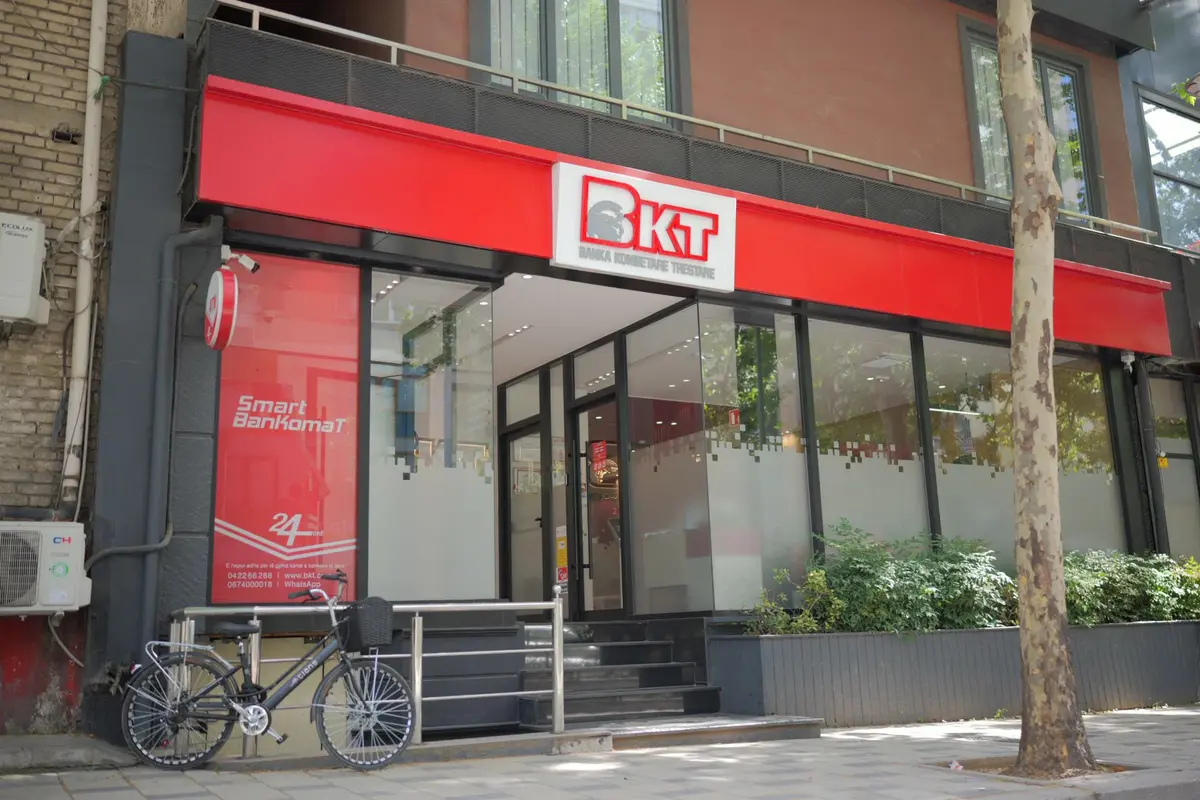
Union Bank and ABI Bank are your go-to machines. BKT is recognizable by its aggressive red hardware and dominant street presence, and it is the primary bank network to avoid. Euronet’s blue-and-yellow standalone units are worse still, and they cluster exactly where tired travelers land.
Watch the caps as well as the fees. Many machines limit a single withdrawal to 75,000 Lek, roughly €1,000, and daily ceilings vary between about 40,000 and 120,000 Lek depending on the bank and your card. Because most fees are flat, fewer and larger withdrawals cost less overall. The exception is Union Bank on Mastercard, where the 2.5 percent component makes large withdrawals expensive.
Pro Tip: A widespread internet myth claims Credins Bank is fee-free. That policy no longer exists, so budget for their 600 Lek charge. Guides still listing Alpha Bank are equally stale; it has been absorbed into OTP Bank Albania.
How do Albania ATMs manipulate you with DCC?
Albania ATMs manipulate you by using Dynamic Currency Conversion to push you into accepting an inflated exchange rate. The terminal detects your card’s home currency and offers to charge you in US dollars instead of Lek.
This sounds convenient and it is a trap. Accepting the prompt hands rate-setting power to the ATM operator, and that rate typically carries a markup of 3 to 10 percent above the real interbank rate. Some Albanian machines apply markups near the top of that range.
That is a hidden charge stacked directly on top of the fixed withdrawal fee you already agreed to pay. The interfaces are engineered to nudge you toward the wrong choice. Green buttons, psychologically associated with safety, are often assigned to “Accept Conversion.” Red buttons are assigned to “Decline.” Some screens warn that declining leaves you exposed to unknown market fluctuations, a deliberately alarming phrase designed to scare you into paying the markup.
There is a further sting for anyone relying on a fee-reimbursing US account. Schwab’s ATM rebate explicitly excludes dynamic currency conversion charges, so accepting the prompt converts a refundable fee into a permanent loss. Always press the red button, always decline the conversion, and always choose to be charged in local Lek.
Pro Tip: Intesa Sanpaolo terminals are notorious for their persistent DCC screens. Read every prompt carefully before confirming, and do not just tap through blindly.
How can you eliminate Albania ATM fees?
You can eliminate Albania ATM fees entirely by using a Schwab Bank Investor Checking account, previously marketed as High Yield Investor Checking. For US travelers, this remains the single most powerful financial tool you can carry abroad.
It reimburses ATM fees worldwide at the end of each statement period with no cap, and it charges no foreign transaction fees on purchases. That combination means you can make smaller, more frequent withdrawals rather than carrying large stacks of cash. Note that the checking account must be opened alongside a linked Schwab One brokerage account, which itself carries no fee, minimum, or trading requirement.
Three operational details matter before you fly. First, set a travel notice in the app. Schwab’s fraud algorithms flag unusual geographic activity aggressively, and a blocked card in Tirana is far more often a fraud hold than a network failure. Sorting one out means getting online fast, which is a good argument for having a local eSIM active on arrival.
Second, select “current account” at the machine. When the ATM asks you to choose an account type, “checking” and “savings” frequently fail on foreign terminals while “current account” clears. Third, decline every conversion prompt, since DCC charges fall outside the rebate.
If you bank outside the US or want a backup, Revolut and Wise both waive foreign transaction fees and offer a monthly fee-free ATM allowance, though the Albanian bank’s own charge still applies once you exceed it. Carry a second card regardless. Albanian ATMs reject foreign cards at random, and a single machine failure should never strand you.
Where should you exchange cash in Albania?
The best place to exchange cash is a licensed bureau in a city center, and the airport should be avoided. Never change money at Tirana International Airport, where the captive audience guarantees inferior rates. The bank ATMs in arrivals are the better first move, and you only need enough for the airport bus, which costs 400 Lek.
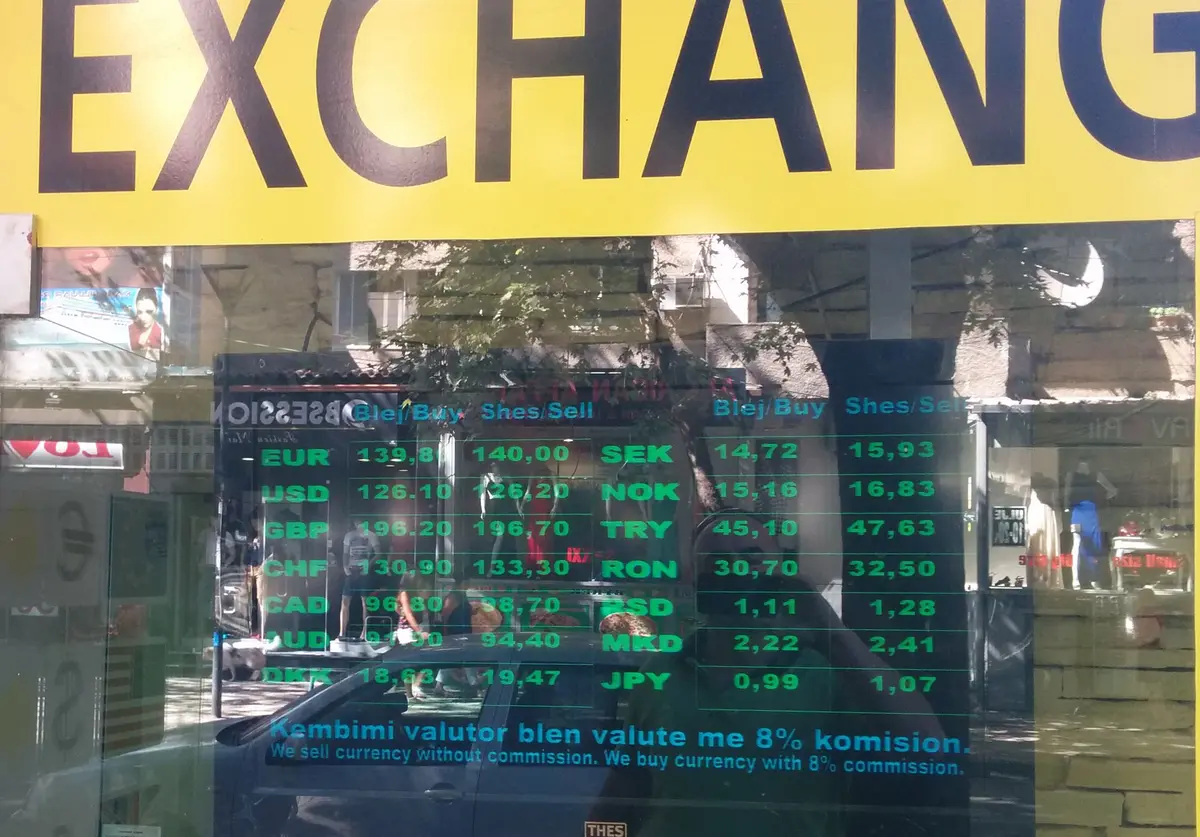
Iliria ’98 remains the market leader for currency exchange in the capital, operating on a zero-commission model and earning its margin from a tight buy-sell spread rather than layered fees. It runs roughly a dozen offices around Tirana, so there is usually one close to wherever you are sightseeing in the capital.
| Location | Note |
| Rruga Myslym Shyri | On the main commercial shopping artery |
| Near Skanderbeg Square | Most convenient for city-center hotels |
| Rruga e Elbasanit, near the Lana | Handy for the southern districts and Blloku |
| Avni Rustemi Square, Pazari i Ri | Beside the new bazaar; useful before market shopping |
Iliria ’98 posts live buy and sell rates on its website and mobile app. Check the day’s rate before you walk in so you know exactly what to expect, and note that most bureaus close on Sundays. Banks will exchange currency too, but their rates are consistently worse than a licensed bureau’s.
Avoid the informal changers who work the intersection of Rruga e Kavajës and Rruga Ibrahim Rugova near the Bank of Albania building. They approach pedestrians and cars offering attractive rates, and the reported outcomes include sleight of hand, counterfeit notes, and banknotes that are no longer legal tender.
How much cash can you bring into Albania?
You can carry up to 1,000,000 Lek, roughly €10,000 or its equivalent in any currency, into or out of Albania without declaring it. Anything above that threshold must be declared to customs through the Red Channel on arrival and again on departure.
This is enforced seriously. Albanian Customs and the State Police run luggage scanners and cash-detection dogs at land border crossings as part of the country’s anti-money-laundering commitments on its EU accession path. Undeclared funds above the limit are seized pending investigation, and heavy fines follow.
The threshold covers the total across all currencies and all travelers acting together, not per person per note type. For a normal trip you will never approach it, but anyone carrying a property deposit or a long-stay budget in cash should declare it and keep the paperwork.
What is the difference between old Lek and new Lek?
The difference is a single zero. Albania redenominated its currency in 1965 at a ratio of ten to one, and a significant share of the population never stopped doing the old math. The new Lek replaced the old one generations ago, yet the habit survives.
Older residents and market vendors are the most likely to do this. You sit down for a coffee, the vendor says “five hundred,” you look at the menu, see 50, and assume you are being robbed.
You are not. They are quoting old Lek, so divide by ten. The reliable rule is that written prices are always in new Lek, on menus, price tags, parking meters, and card terminals alike. Verbal prices from market vendors, taxi drivers, and older locals are frequently in old Lek.
A market vendor saying “5,000” almost always means 500. A bus driver saying “1,000” usually means 100. A printed menu showing 800 means 800. When a spoken number feels ten times too high for the setting, it is.
Younger Albanians in the cities will usually switch to English to clear this up, but market vendors and older locals often cannot, so when in doubt, ask: “Lekë të reja apo të vjetra?” (New or old Lek?). It is pronounced LEH-kuh tuh REH-yah AH-po tuh VYET-rah. That one phrase will save you more headaches than any currency converter app.
How do you identify authentic Albanian banknotes?
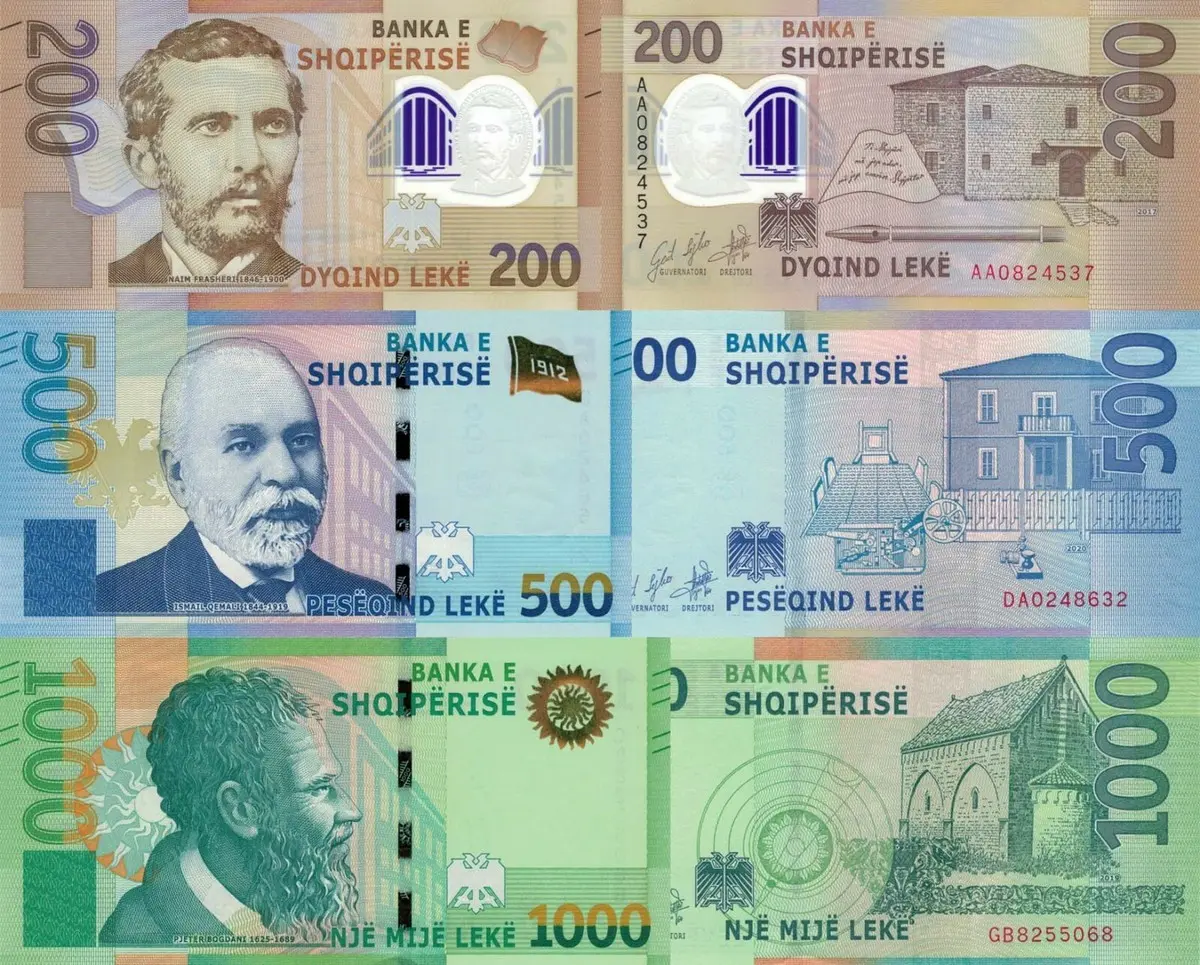
You identify authentic Albanian banknotes by checking for polymer texture on the 200 Lek note, raised tactile elements, and inks that shift color as you tilt the note. The Bank of Albania launched a fully refreshed banknote series covering six denominations, 200, 500, 1,000, 2,000, 5,000, and 10,000 Lek, rolled out in stages over roughly three years.
The 200 Lek note, featuring the poet Naim Frashëri, was the first Albanian banknote printed on polymer rather than cotton paper. You will notice it immediately: crisp, slightly slippery, and clearly different from the softer, worn feel of older paper notes still circulating in volume.
Older series notes remain legal tender and circulate alongside the new ones, so a mixed handful of cash is normal rather than a red flag. One denomination is the exception. The 100 Lek banknote lost legal tender status and only the 100 Lek coin remains valid, which matters because withdrawn notes occasionally reappear as change handed to distracted visitors.
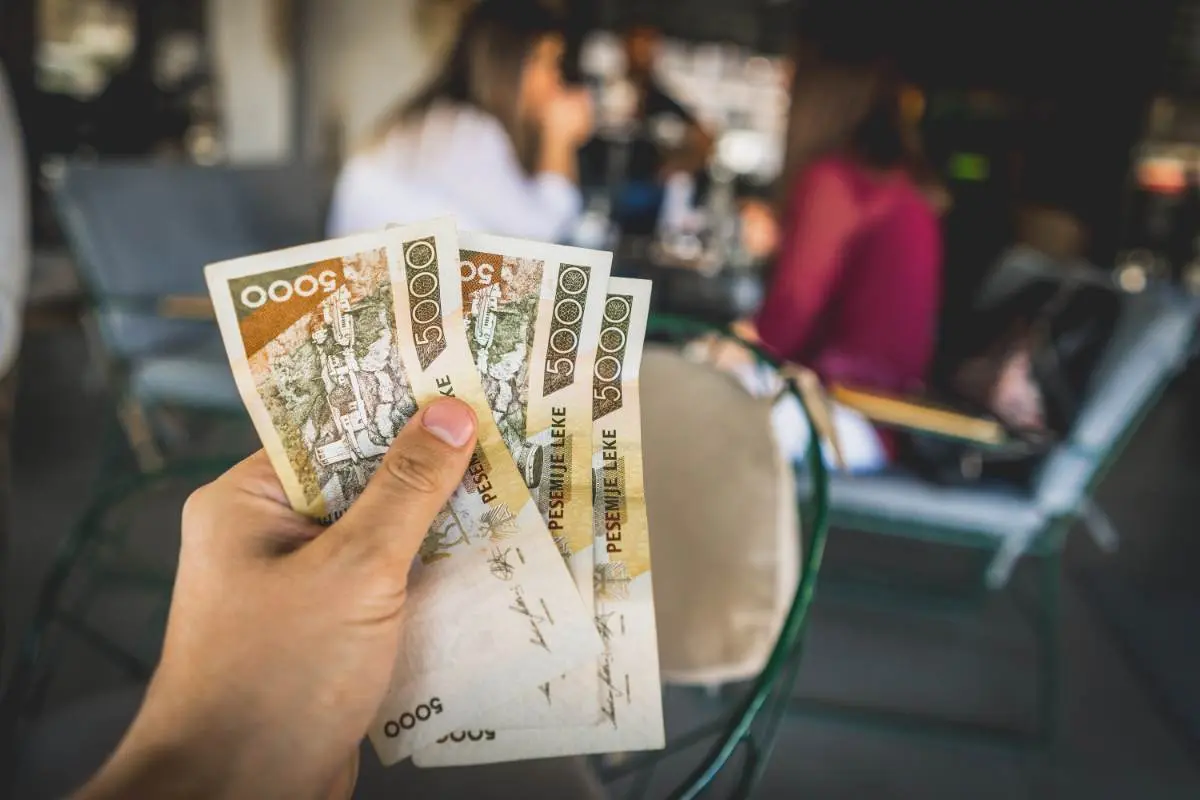
At the top end, the 5,000 Lek note carries the national hero Skanderbeg, and the 10,000 Lek note pairs the poet Aleksandër Stavre Drenova, known as Asdreni, with the flag and national anthem he wrote. Both are awkward to spend. Small shops, cafés, taxis, and furgon drivers often cannot break them, so ask for a mix of 500s and 1,000s at the bureau or split large withdrawals across denominations.
Security features worth checking are metameric inks that change color at different viewing angles, complex watermarks visible against light, and raised tactile geometric elements engineered to assist visually impaired users. If you cannot feel the raised texture on a high-denomination note, look more closely.
What are the most common financial scams in Albania?
The most common financial scams in Albania involve taxi meter refusals, street currency changers, withdrawn banknotes passed as change, and unmarked pricing. Albania is broadly safe and has fewer tourist scams than most comparable European destinations, but a handful of predictable schemes target foreign visitors. Knowing the script is your best defense.
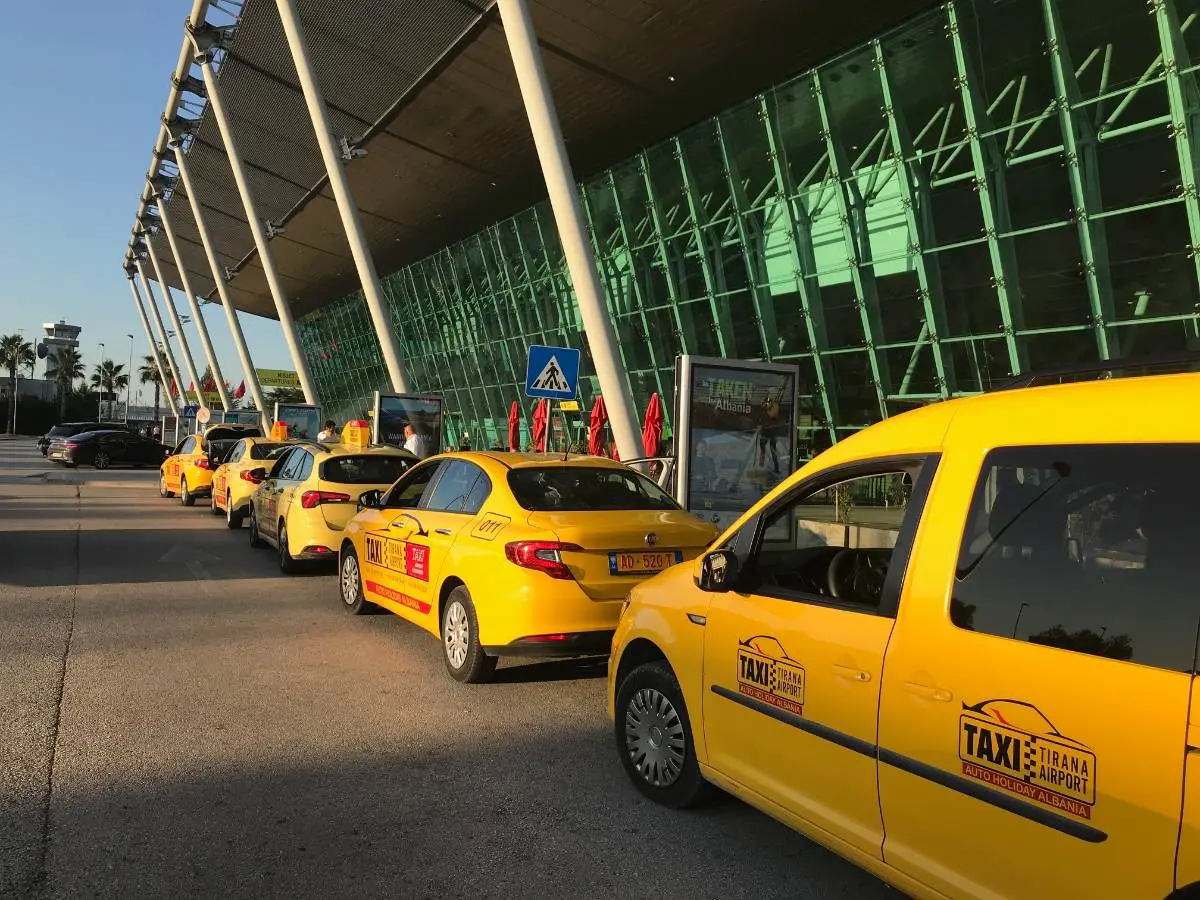
The flat-rate taxi trap: Unlicensed drivers work the arrivals hall at Tirana International Airport and the ferry port in Sarandë, quoting a special price or naming an inflated figure only at the destination. The going rate from the airport to central Tirana is roughly 2,000 to 2,500 Lek. Use the official rank outside, book through Bolt or a local app, or take the 400 Lek airport bus that runs hourly around the clock.
Street currency changers: Individuals offering to exchange money on the pavement, particularly near the Bank of Albania in Tirana and at border crossings, deal in sleight of hand, counterfeit notes, and demonetized paper. Use a licensed bureau or a bank-attached ATM, without exception.
Withdrawn notes as change: Check what you are handed back, especially in busy markets and late at night. The retired 100 Lek banknote occasionally resurfaces in change given to visitors who are not looking closely.
Dual-tier pricing: Unmarked items at markets and on intercity buses are sometimes quoted higher the moment a vendor detects a foreign accent. If no price is posted, ask before you commit.
The euro conversion at the till: A venue accepts your euros, then applies whatever rate suits it and returns change in Lek. Confirm the currency and the rate before you hand anything over.
Beach club charges on the Riviera: Some private beach clubs along the Albanian Riviera levy steep umbrella, sunbed, and parking fees that are never posted at the entrance. Ask the total before you sit down.
ATM skimming: Standalone machines on tourist streets are the highest-risk hardware in the country. Use machines physically attached to a bank branch, cover the keypad, and check your account during the trip rather than after it.
Pro Tip: Vlorë and Sarandë report the highest concentration of predatory pricing, and it peaks during the July and August crush. Stay alert in these tourist-heavy environments, especially around transportation hubs.
Albania currency and ATMs: quick answers
Can you use euros in Albania? In tourist areas, often yes, but you will pay for the privilege. Settle in Lek wherever you can.
Are there any fee-free ATMs in Albania? No. Every machine charges foreign cards. Union Bank and ABI Bank are the cheapest at around 500 Lek, and Euronet is the most expensive.
Should you accept the ATM’s conversion offer? Never. Always choose to be charged in Albanian Lek and let your own bank set the rate.
Can you buy Albanian Lek before you travel? Practically, no. Banks abroad rarely stock it and will not buy it back. Get Lek on arrival and spend it down before you leave.
How much cash should you carry? Plan on roughly €30 to €50 a day for a mixed itinerary, which sits comfortably inside a typical daily budget for Albania. Carry more for the mountains and the coast in high season, less if you are staying in Tirana.
Albania rewards travelers who arrive financially prepared for the reality on the ground rather than the version in outdated guides. Get your Lek from a city-center bureau or a bank-attached ATM, use Union Bank or ABI Bank machines, decline every conversion screen, ignore the 100-to-1 shortcut, and keep the old Lek phrase saved in your phone.
Do that, and the financial side of your trip takes care of itself, leaving you free to get on with the rest of your Albania trip planning. What worries you most about handling Albania currency and ATMs in an unfamiliar country: the fees, the security, or simply carrying the right amount?