Planning your Albania packing list but drowning in generic European travel advice? This guide cuts through the noise to solve the real logistics of Balkan travel—from surviving chaotic furgon transit to building a dual-climate wardrobe—so you land fully prepared for whatever the landscape throws at you.
Albania now pulls in more than 12 million foreign visitors a year, roughly five times its own population, and the ground is shifting fast underneath that boom. A new tunnel bores under the country’s most notorious mountain pass, a national regulation has carved free public zones out of the Riviera’s beach clubs, and ATM surcharges have roughly doubled. Packing advice written a couple of seasons ago is already stale.
Crucial Albanian logistics to understand before you pack
Most packing guides treat Albania like Greece or Italy. It isn’t. Albania runs on a cash-first economy outside the cities, mountain roads that punish unprepared travelers, and climatic swings that demand two entirely different wardrobes in one bag. Add one more wrinkle: Vlora’s long-promised international airport still has no scheduled commercial service, so nearly every trip begins with a long road transfer out of Tirana or a ferry from Corfu into Sarandë. Your luggage is going to spend hours in a vehicle no matter how your itinerary reads. Get the logistics wrong and no amount of packing skill saves your trip. If your route is still taking shape, our complete Albania travel guide covers the decisions that shape everything below.
The furgon reality: Why do backpacks outperform suitcases?
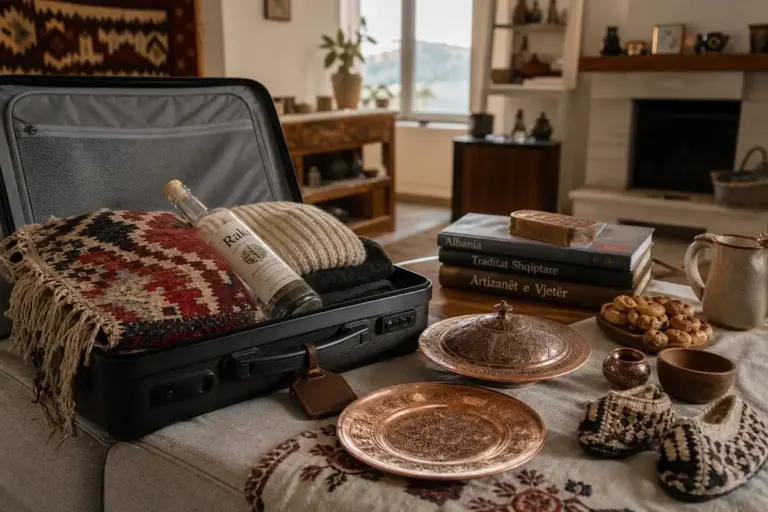
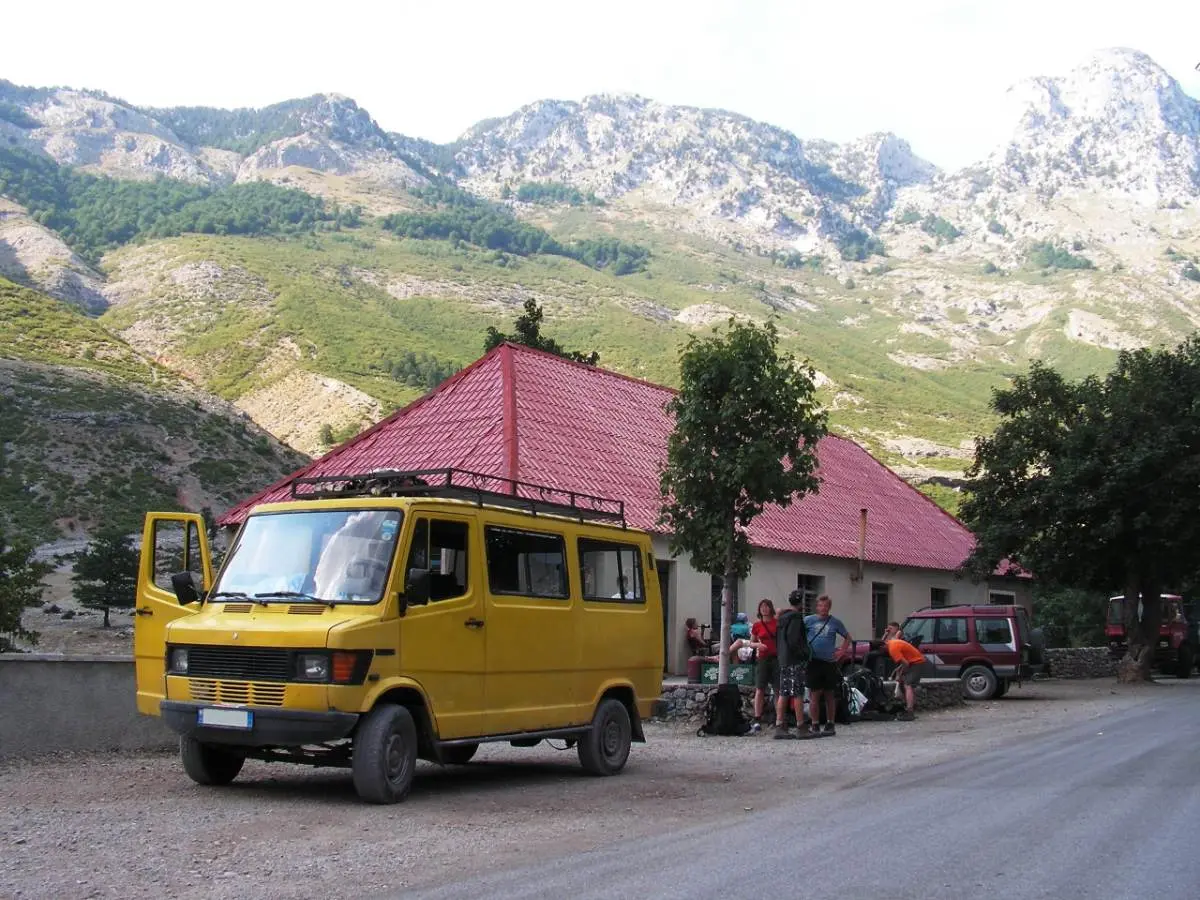
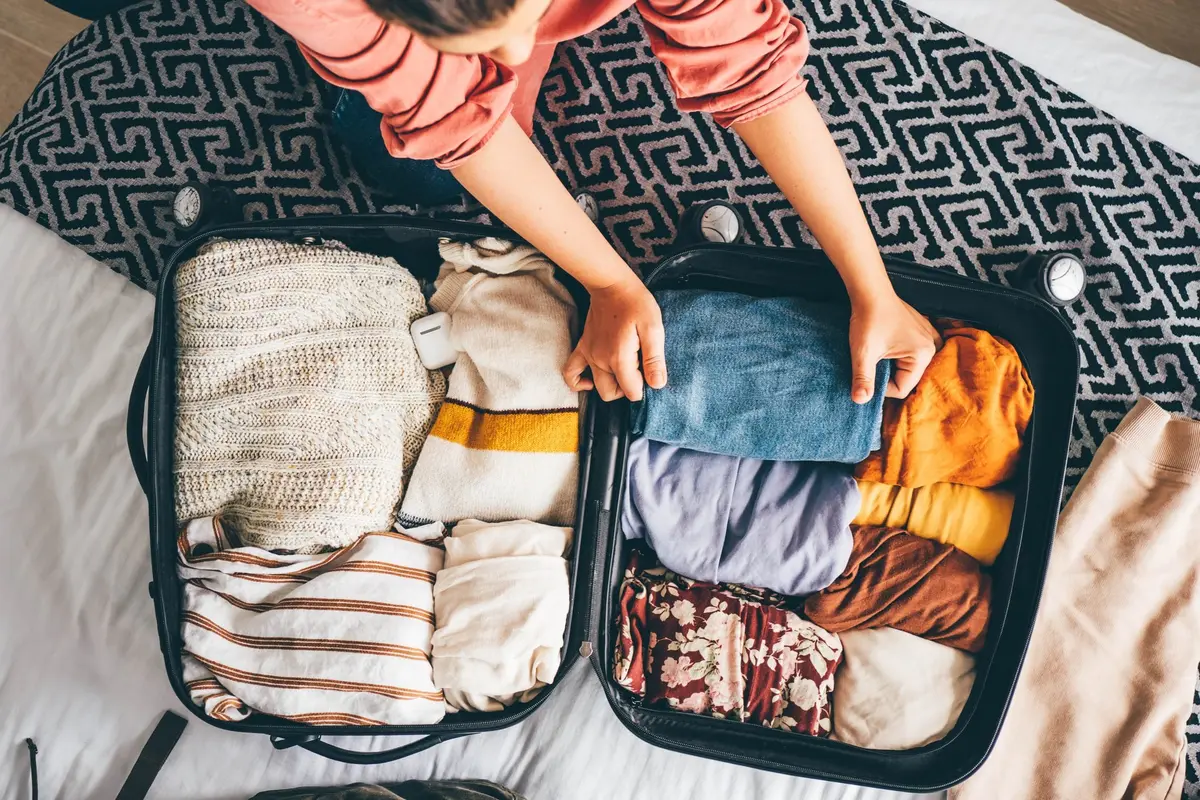
Backpacks outperform suitcases in Albania because the primary public transit, the furgon minibus, lacks dedicated trunk space and requires luggage to be aggressively strapped to external roof racks where hard-shell plastic easily cracks. These vehicles connect cities, mountain villages, and coastal towns without the luxury of spacious cargo holds. Your luggage frequently gets wedged under cramped seats or exposed to the elements. A hard-shell roller suitcase will crack under the intense tie-down pressure of a furgon roof rack, and that happens before you even attempt to drag it down the street. The smartest move for your Albania packing list is a 30-40L internal frame travel backpack with a packable rain cover, such as the Osprey Farpoint or Fairview 40. This is completely non-negotiable for any itinerary involving rural transit.
Paved roads have not solved this. The route from Shkodra to Theth is now surfaced along most of its length, but the final approach into the valley still deteriorates badly, and the vehicle waiting at the other end is still a minibus with a roof rack.
Pro Tip: If you are staying exclusively at a coastal resort and traveling by private taxi, a rolling carry-on is acceptable, but the moment your itinerary includes a single mountain village or furgon ride, you must switch to a backpack.
Surviving Ottoman cobblestones: the luggage killer no one warns you about
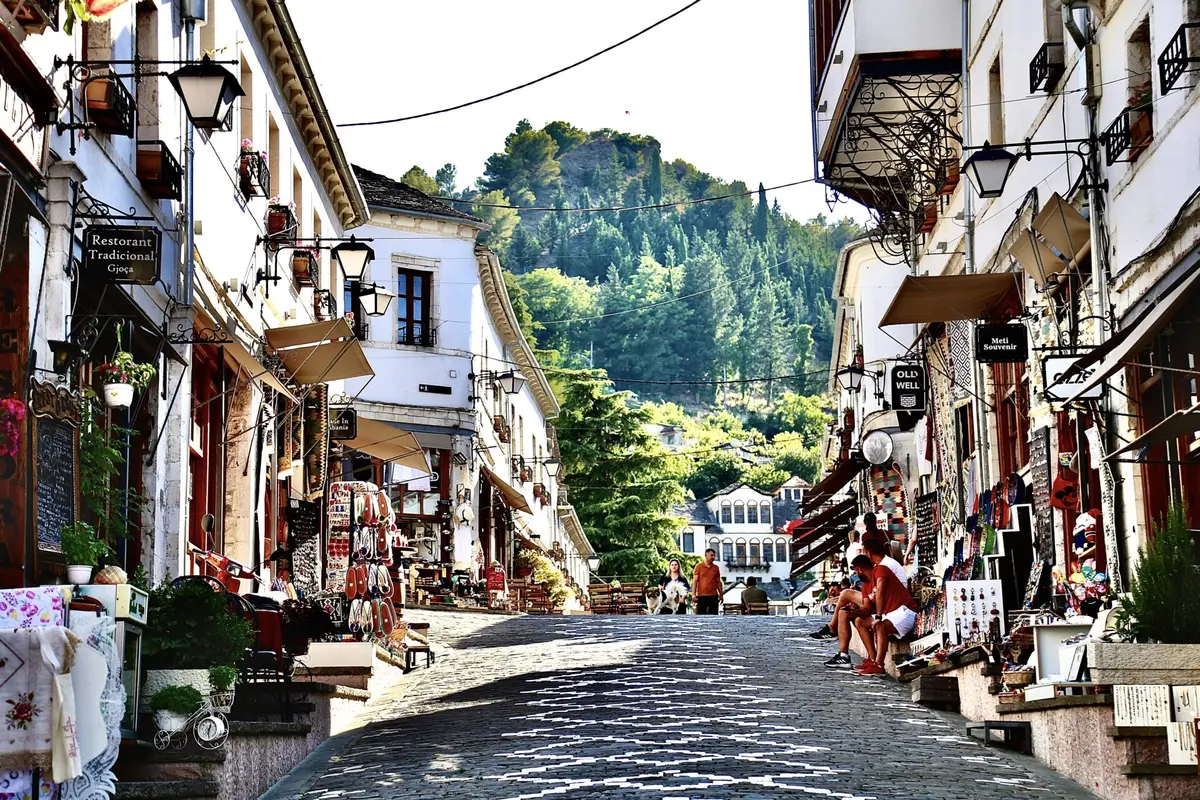
The UNESCO cities of Berat and Gjirokastër are built on steep limestone hillsides. The cobblestones are white, polished to a near-mirror finish, and brutally uneven. You will hear it before you see it: the sharp crack of plastic caster wheels shattering as travelers futilely drag hard-shell suitcases toward Gjirokastër Castle. The inclines are steep enough to demand both hands free for balance. A backpack keeps your center of gravity stable and your caster wheels intact. Ankle-supporting footwear here isn’t optional—it is a strict safety requirement.
The cash economy: How do you navigate ATM fees like a local?
You navigate ATM fees in Albania by choosing the cheapest bank machines, always declining dynamic currency conversion, and making fewer, larger withdrawals. Flat surcharges on foreign cards now run 500 to 800 lek per transaction, roughly $6 to $10, with 700 lek the most common figure. No Albanian bank still offers genuinely fee-free withdrawals to foreign cards, and any guide still recommending Credins on that basis is working from stale information.
The Albanian lek is a closed currency, meaning you cannot acquire it before you leave the US and cannot spend it once you fly home. It has also strengthened sharply against both the dollar and the euro. Budget on roughly 82 to 85 lek to the dollar and a shade under 100 to the euro, which means the old traveler shorthand of “drop two zeros for dollars” now understates your real daily spend in Albania by about a fifth. Everything in Albania is officially priced and settled in lek. Euros change hands in coastal hotels and tourist restaurants, but you take whatever rate the business decides to apply, and they are useless for furgons, village bakeries, and rural guesthouses.
The smart strategy:
- Bank Choice: Union Bank and ABI Bank generally sit at the low end of the surcharge range; Raiffeisen sits at the top. The difference across a two-week trip is real money.
- Card Type: A US checking account that reimburses foreign ATM fees neutralizes the surcharge entirely and is the single highest-value piece of financial prep for this trip. Pair it with a Revolut or Wise card and a no-foreign-transaction-fee credit card.
- Withdrawal Frequency: Withdraw large and infrequently. Most machines cap a single transaction somewhere between 50,000 and 75,000 lek.
- Cash Reserves: Keep 5,000 to 10,000 lek on you at all times. Rural villages, mountain guesthouses, and minibus drivers operate on cash exclusively.
- Alpine Blind Spot: Theth and Valbona have effectively no ATMs. Draw your mountain cash in Shkodra or Tirana before you head north, and expect coastal machines to run empty during peak summer weekends.
Pro Tip: Never accept dynamic currency conversion at ATMs or restaurants. Always choose to be charged in Albanian lek. Choosing your home currency routes the conversion through the merchant’s bank and can quietly add anywhere from four to thirteen percent.
The dual-climate challenge: Albanian Alps vs. the Riviera
Here is what separates a well-planned Albania packing list from a miserable experience: you are effectively packing for two different seasons simultaneously. The southern Ionian coast sits in the mid-30s Celsius (mid-90s Fahrenheit) through July and August and pushes past 40°C (104°F) during heat waves. Meanwhile, the Accursed Mountains in the north drop to near-freezing at night and generate sudden, violent thunderstorms with zero warning. A two-week itinerary spanning both zones requires a highly modular, layering-based wardrobe strategy rather than a rigid quantity list.
Microclimates and the Sirocco wind: don’t get caught without a rain layer
The Sirocco wind pulls warm, dry air north from the Sahara. As it crosses the Mediterranean, it absorbs moisture rapidly, producing sudden and localized downpours, particularly from October through April, but occasionally during shoulder season months. A perfectly clear morning can precede a violent coastal storm by early afternoon. A packable, waterproof outer layer is mandatory year-round, not just in winter.
Essential clothing: building a modular wardrobe
Forget quantity-based lists. Albania demands a fabric-first approach built around layering.
Summer (June through September)
The coastal UV index is aggressive. Lightweight linen or moisture-wicking synthetic fabrics are essential. Breathable cotton or linen trousers serve double duty, providing sun protection on the beach and modesty compliance in town. A dedicated, opaque beach cover-up or sarong is non-negotiable for transitioning from beach to café. A long-sleeved sun shirt earns its space on the free public beach sections, where shade is scarce. Do not forget high-SPF lip balm, as it is consistently overlooked and nearly impossible to find in rural coastal pharmacies.
Shoulder season and winter (October through May)
Temperatures in Tirana drop to approximately 11°C (52°F) by November, with colder nights in the interior. A packable Gore-Tex windproof jacket is mandatory. Do not plan on the Valbona-to-Theth crossing outside the summer window: the 1,800 m pass is typically snowbound from November through May, heavy snow years leave drifts into late May, and the Theth road itself is effectively shut to general traffic from around November until late March. The Koman ferry runs year-round but drops to a reduced winter schedule.
Modesty mandates for mosques and Orthodox churches
Women must cover shoulders, legs, and hair when entering mosques or Orthodox churches. Men must wear full-length trousers and covered shoulders; tank tops are not permitted. Pack a lightweight pashmina or chiffon scarf that compresses to almost nothing. It handles hair covering, shoulder coverage, and doubles as a beach sarong.
At sites like the Et’hem Bey Mosque in Tirana, attendants will sometimes offer a communal wrap-around shawl to underprepared tourists, but relying on this is considered culturally disrespectful. Come prepared. Always bring clean socks. Footwear is removed at the entrance, and walking on shared stone floors in bare feet is both uncomfortable and unhygienic.
Urban vs. beach etiquette: the cover-up rule
The beaches of Ksamil, Dhërmi, and the wider Albanian Riviera are tolerant of standard Western swimwear. Bikinis and swim shorts are completely appropriate at the waterfront. The moment you walk into a market, café, or town square, you must cover up. Walking through a local village in swimwear draws unwanted attention and is genuinely disrespectful. A sarong or kimono cover-up tucked into your beach bag solves this instantly.
One change worth packing around: national regulation now reserves 30 percent of every 1,000 metres of coastline as free public access, signposted on site as zonë e lirë. Those free stretches exist even at Ksamil and Dhërmi, but they come with almost no infrastructure. No sunbeds, usually no showers, and rarely any shade. If you plan to use them rather than pay 20 to 40 euros for a pair of loungers, your own towel, mat, and sun protection stop being optional.
The specialized activity kits
The Accursed Mountains hiking kit
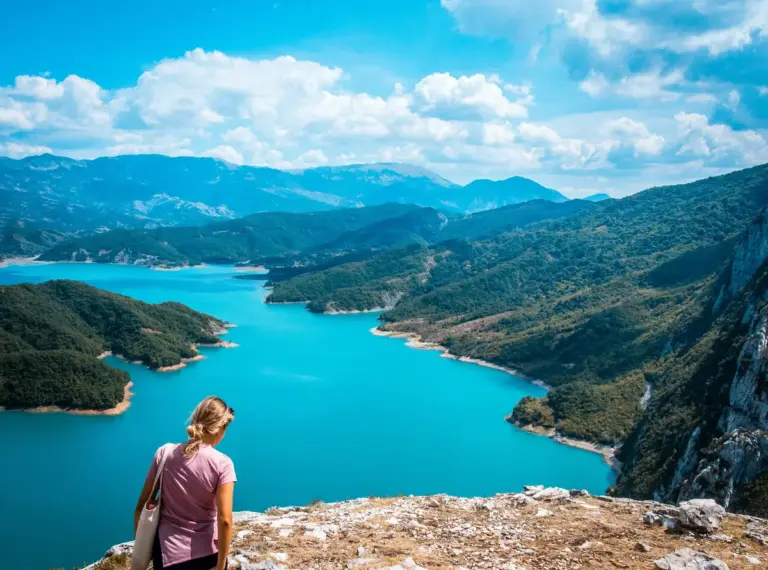
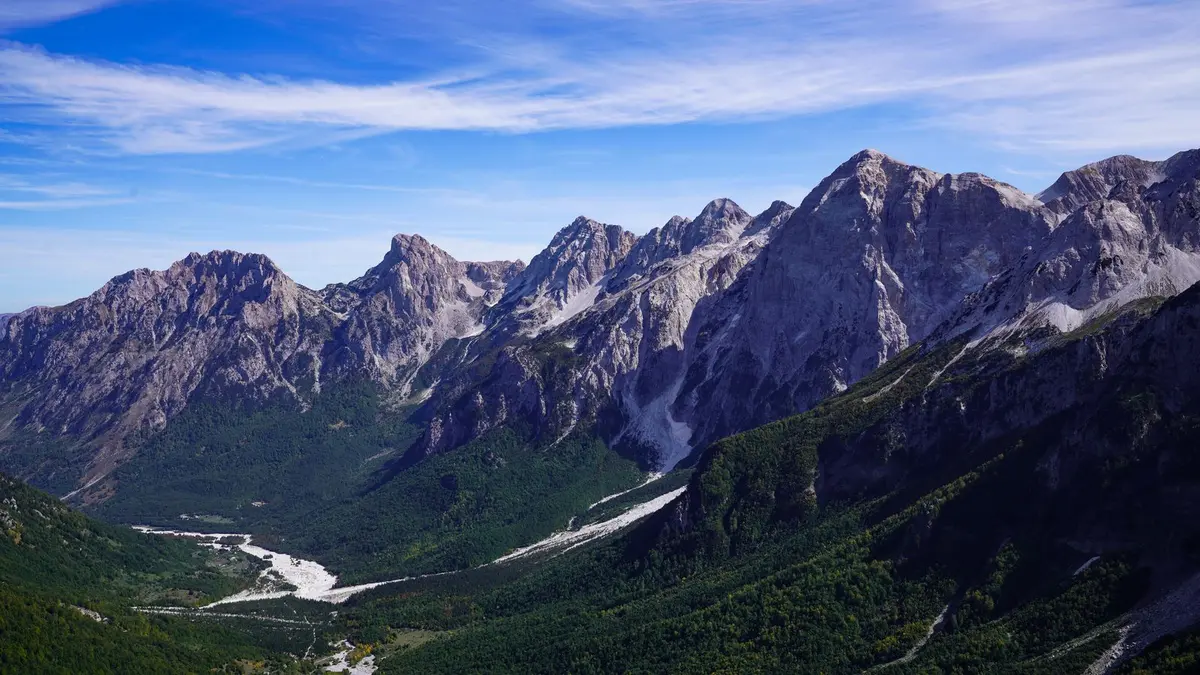
The Theth-to-Valbona trail is one of the most rewarding multi-day treks in the Balkans, and one of the most technically demanding. Urban sneakers will fail on the sharp, unstable shale. The realistic trekking window runs from roughly June through early October.
Non-negotiable gear:
- Footwear: Waterproof hiking boots, heavily broken in before departure.
- Socks: Wool or synthetic hiking socks; cotton causes blisters on multi-day routes, guaranteed.
- Stability: Trekking poles for steep descents.
- First Aid: Blister bandages like Compeed and a comprehensive first-aid kit.
- Pack: 25-30L daypack with integrated rain cover, such as an Osprey Hikelite.
- Hydration: Water purification system like a LifeStraw bottle or chemical tablets.
- Light: A compact headlamp. Guesthouses in Theth and Valbona sit at the far end of a stretched rural grid, and outages of several hours are routine.
- Navigation: Offline maps downloaded before you leave signal, plus enough lek for guesthouses that take nothing else.
Pro Tip: If your boots aren’t broken in at least 80 km (50 miles) before you leave home, buy different boots. New boots on the Valbona trail mean blisters by day one and potentially a ruined trek.
The Ionian Sea beach kit
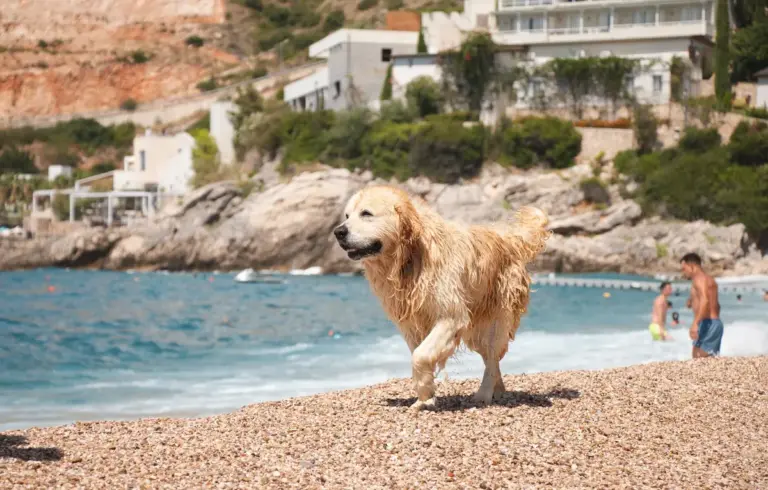
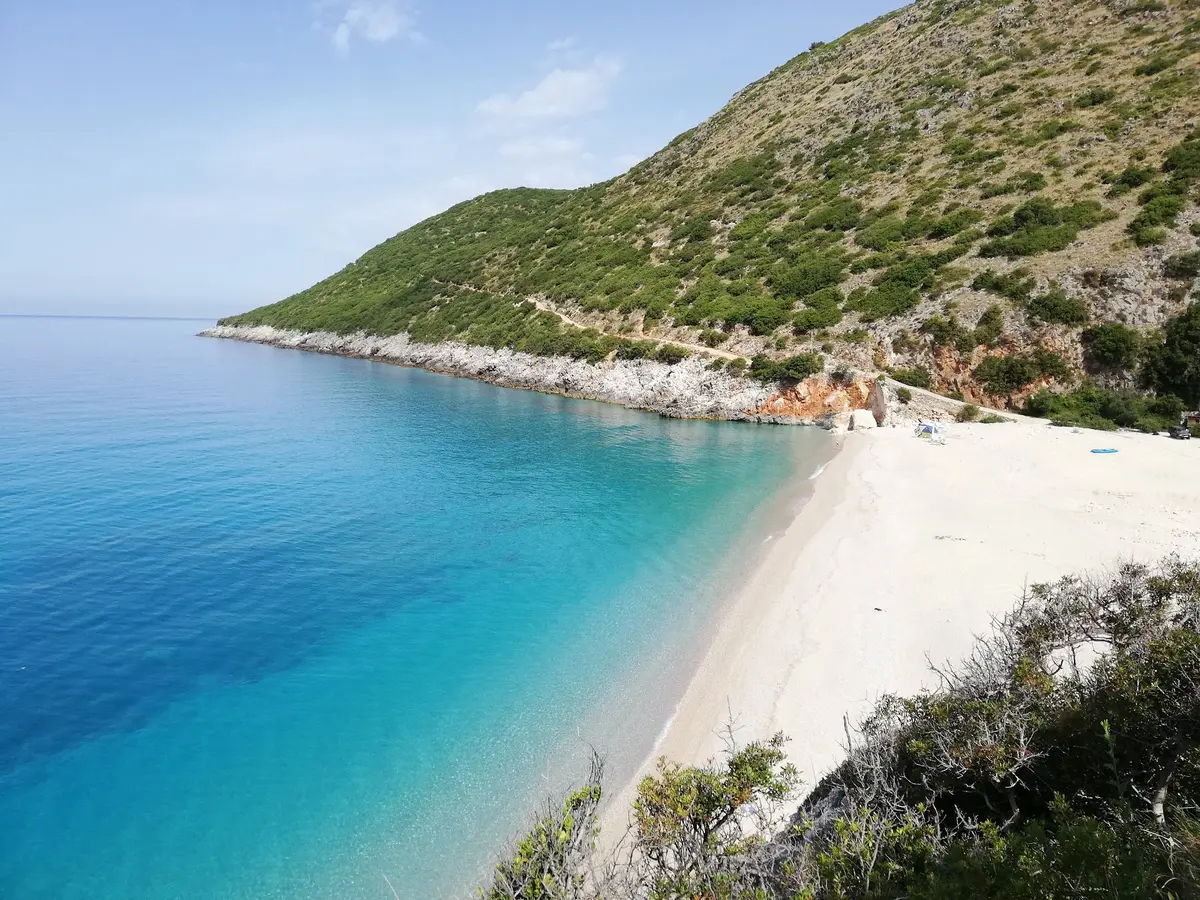
Many of the most sought-after beaches, including Gjipe Beach, require a hike to access and are composed of large, smooth white pebbles. Soft sand is not the norm on the Albanian Riviera.
Essential gear:
- Footwear: Thick-soled water shoes are mandatory, not optional, on pebble beaches.
- Lounge: Sand-proof beach blanket or mat and a quick-dry microfiber towel, both of which matter far more on the unfurnished free-access sections.
- Shade: A compact beach umbrella or UPF sun shirt if you intend to skip the paid sunbed rows.
- Protection: Dry bag for phones and cameras during boat excursions to water-access-only coves.
Toiletries and pharmacy items you cannot buy in Albania
The strategy of buying it there fails in Albania outside of Tirana. Rural and coastal pharmacies stock basic generics, so do not count on finding your preferred formulations.
Sun protection and the coastal markup
High-quality, non-greasy facial SPF 50+, mineral or reef-safe sunscreen, and specialized after-sun aloe vera gel are either imported, heavily taxed, or simply unavailable in smaller villages. Insect repellent deserves more attention than most packing lists give it. The CDC advises repellent containing at least 20 percent DEET for this region, plus permethrin-treated clothing and gear for anyone hiking or sleeping near the outdoors, because ticks, sand flies, and West Nile-carrying mosquitoes are all documented risks across Southern Europe. Populations near the coastal lagoons and marshland are especially aggressive at dusk. Bring what you need from home.
Feminine hygiene and specialized medications
Tampons are scarce outside major cities. When available in rural areas, selection is severely limited, so pack a full supply. Motion sickness medication like Dramamine still earns its place, even though the road map has improved. A six-kilometre tunnel now runs beneath the Llogara Pass, cutting a thirty-minute mountain crossing to roughly seven minutes for a small toll, and most through-traffic takes it. But plenty of buses, furgons, and rental drivers still choose the old road for the view, the coastal highway south of Palasë toward Himarë and Sarandë is relentlessly switchbacked either way, and the Shkodra-to-Theth road is rougher than both. Add the Koman ferry crossing and you have several chances to regret leaving the Dramamine at home.
Technology, electronics, and infrastructure preparedness
Power reliability remains a genuine planning factor. Albania records roughly 40 supply interruptions and about 65 hours without power per customer annually, the weakest performance in Europe, and dry summers that drain hydroelectric reservoirs make late-season rotating outages more likely. Mid-range hotels and above usually run generators; village guesthouses in the Alps often do not. A high-capacity portable power bank of 20,000 mAh minimum keeps your phone, camera, and devices operational through outages and long transit days.
Pack universal European travel adapters, since Albania uses the Type C/F socket at 230V. Most modern US electronics—phones, laptops, camera chargers—are dual-voltage and need only a plug adapter. Older single-voltage items such as hair tools require an actual voltage converter or they will burn out.
Connectivity needs the same forethought. Albania is not in the EU, so European roaming bundles do not apply and some US international plans exclude the country entirely. Confirm coverage before you fly or install an Albanian eSIM instead; Vodafone Albania holds a decisive coverage advantage in the northern mountains, where competing networks simply stop. Download offline maps of the Theth-Valbona corridor before you lose signal, because large stretches of that trail have none.
Power grids and digital security
Public Wi-Fi in cafes and hostels is frequently unencrypted. Use an active VPN subscription to secure banking data and passwords. A frozen bank account or compromised password abroad is a trip-ending event.
The tap water reality and filtration solutions
Tap water in Tirana and other major Albanian cities is treated, monitored, and generally meets national standards, and locals drink it without issue. Most visitors still filter or buy bottled, and outside the cities that shifts from preference to sensible practice. Treatment plants have been upgraded, but the last kilometre of distribution pipe in rural, mountain, and coastal areas is aging, and that is precisely where water quality degrades. Travelers unaccustomed to the local microbiological environment feel it first.
Sulfur, chlorine, and gastrointestinal protection
The tap water in many coastal and mountainous areas carries a distinctly high sulfur content. The smell is noticeable—a faint but sharp mineral odor that becomes more pronounced in older plumbing systems. If you wash synthetic clothing in a rural sink without heavy-duty travel detergent, that odor can linger in the fabric.
Solutions:
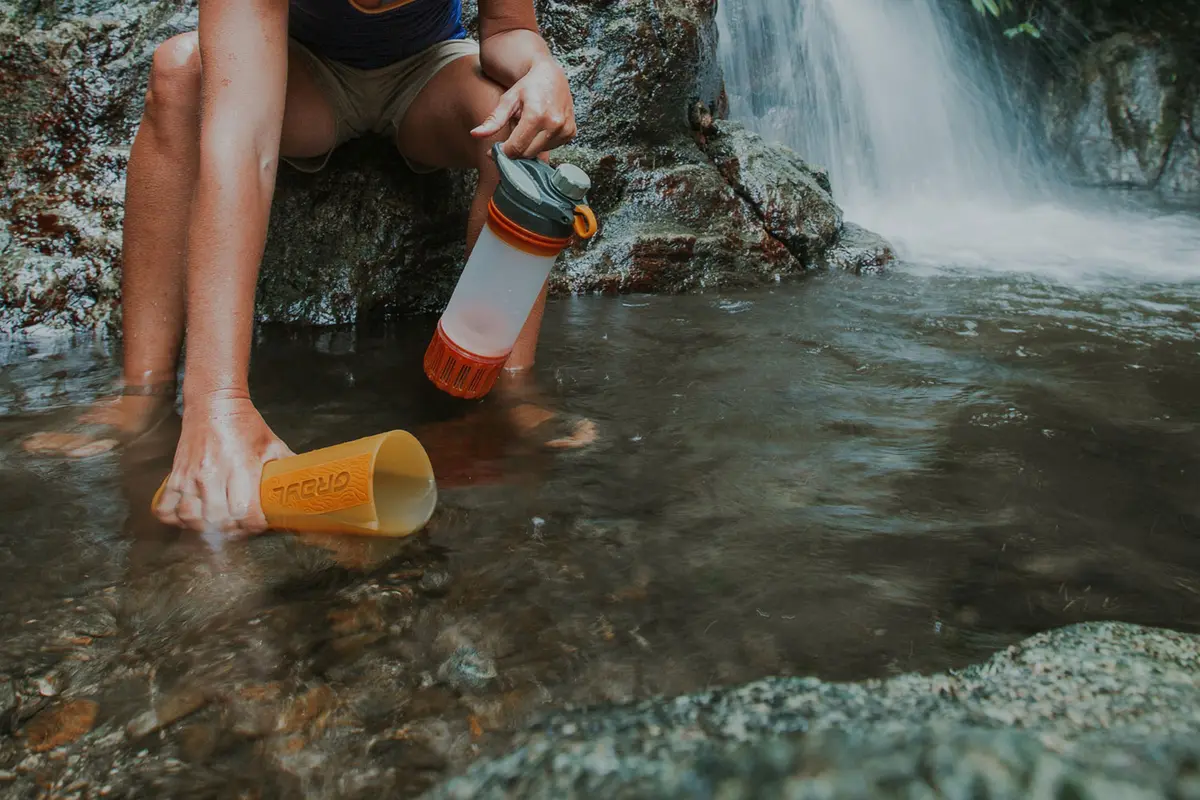
- Active Filtration: A LifeStraw, Grayl, or Sawyer bottle filters as you drink, eliminates the smell, and removes pathogens.
- Chemical Backup: Chemical purification tablets are a lightweight backup for backcountry treks where boiling isn’t practical.
- Cost Factor: Bottled water runs 30 to 80 lek, but both filtration options pay for themselves within days and eliminate single-use plastic waste in a country still building out its waste management.
Pro Tip: Mountain stream water in the Accursed Mountains is often pristine, but always filter or purify before drinking, as upstream agricultural activity is unpredictable.
Luggage decision matrix
| Transit and topography factor | 30-40L travel backpack | Hard-shell rolling suitcase | Verdict |
| Furgon minibus network | Fits under legs or straps securely to roof rack | Too large for narrow aisles; plastic cracks under tie-down pressure | Backpack mandatory for rural transit |
| Ottoman cobblestones in Berat and Gjirokastër | Hands free for balance on slick limestone inclines | Caster wheels crack and jam on uneven grooves | Backpack prevents costly damage |
| Tirana arrival plus long transfer to a single Riviera base | Easier through a crowded terminal and a three to four hour road transfer | Workable if you unpack once and never move again | Rolling luggage acceptable only for single-base, private-transfer itineraries |
Regional climate and wardrobe matrix
| Region | Summer reality | Pack this | Leave this home |
| Albanian Riviera | Mid-30s°C (mid-90s°F) spiking past 40°C (104°F), high humidity, aggressive UV | High-SPF sunscreen, water shoes, linen trousers, dry bag, sarong, beach mat | Heavy denim, thick fleeces, leather boots |
| Accursed Mountains | High daytime UV, near-freezing nights, sudden storms | Moisture-wicking base layers, Gore-Tex jacket, broken-in waterproof boots, fleece mid-layer, headlamp | Cotton hiking socks, flat sneakers, hard-shell luggage |
| Urban centers like Tirana and Shkodër | Hot, dry urban heat; culturally traditional outside nightlife zones | Pashmina scarf, modest loose trousers, sturdy walking sandals | Beachwear outside coastal resort areas |
Albania packing list FAQs
What should you leave out of your Albania packing list?
Leave the hard-shell roller suitcase, heavy denim, cotton hiking socks, and single-voltage hair tools at home. Also skip the euros-only wallet, expensive jewelry, and any expectation that you can buy specialized toiletries once you arrive.
How much cash should you carry in Albania?
Keep 5,000 to 10,000 lek on your person at all times and treat rural days as fully cash-funded. Withdraw large amounts infrequently to blunt the 500 to 800 lek per-transaction surcharge, and top up in Shkodra or Tirana before heading into the Alps.
Do you really need hiking boots for Albania?
You need broken-in waterproof hiking boots for the Theth-to-Valbona crossing and any serious trail in the Accursed Mountains, where sharp shale destroys urban sneakers. For cities, cobbled UNESCO towns, and light trails, sturdy walking shoes with ankle support are enough, and thick-soled water shoes handle the pebble beaches.
What documents should American travelers pack?
Bring a US passport valid at least three months beyond your departure date, plus a photocopy stored separately. US citizens can stay in Albania for up to a year without a visa, but travel insurance covering medical care and evacuation is strongly advised, since many providers expect payment in cash.
When is the best time to visit, and how does that change what you pack?
The best months to visit Albania are May through June and September through October, which deliver the best balance of weather, prices, and crowds, and they demand a genuine rain layer alongside your summer kit. July and August are for beach-focused trips built around sun protection and heat management, while the alpine trekking window runs roughly June to early October.
Albania rewards travelers who respect its infrastructure. The travelers who struggle are the ones who arrive with a hard-shell roller suitcase, no cash, generic sunscreen, and the assumption that it functions like Western Europe. Get the logistics right—the right bag, the right layers, the right financial prep from this Albania packing list—and what’s waiting on the other side is genuinely extraordinary: turquoise water, ancient hill towns, mountain passes with views that stretch to Greece, and a hospitality culture that will leave you planning your return before you have even left.
What part of Albania are you heading to first—the mountains or the Riviera?