Albania delivers UNESCO hill towns, intense communist history, and turquoise Ionian water inside one very tight loop. That only happens if you plan smart and sidestep the logistical traps that swallow most short trips. This 5 days in Albania itinerary cuts the fluff and hands you a tested, logistics-first roadmap for a flawless southern loop.
Need-to-know logistics before you touch down in Tirana
What are the entry rules and connectivity logistics for Albania?
US citizens can enter Albania visa-free for up to one year (365 days) under a bilateral arrangement that is far more generous than the standard 90-day rule most nationalities get. You need no tourist visa and no advance application. Your passport simply must carry at least three months of remaining validity beyond your planned departure date.
One quirk worth knowing: border officers do not always apply the one-year rule automatically, and some default to a 90-day stamp. For a five-day trip it makes zero difference, but check your stamp anyway.
Albania sits outside the EU and the Schengen Area, so EU “roam like at home” allowances do not apply here. US plans are a different story. T-Mobile’s premium plans include Albania in their 215-plus destination list, and Verizon TravelPass covers it for a flat daily fee. Confirm your specific plan before you fly rather than assuming.
If you want a local number, Vodafone Albania and One Albania both run kiosks in the Tirana International Airport (TIA) arrivals hall. Tourist bundles typically run 2,300 to 2,900 lek (roughly $28 to $36) for 40 to 100 GB valid two to three weeks. Albanian law requires every SIM to be registered, so bring your passport to the counter.
If you want data the second your plane lands, load an eSIM from Airalo, Holafly, Saily, or a comparable provider before you leave home. Most of them ride on Vodafone Albania’s network anyway, and there is no registration queue.
Pro Tip: Vodafone holds the strongest coverage footprint for the Central and Southern loop described in this guide. Rural guesthouses in Berat and Gjirokastër have highly inconsistent Wi-Fi, so do not count on it.
Should you rent a car or take local furgons?
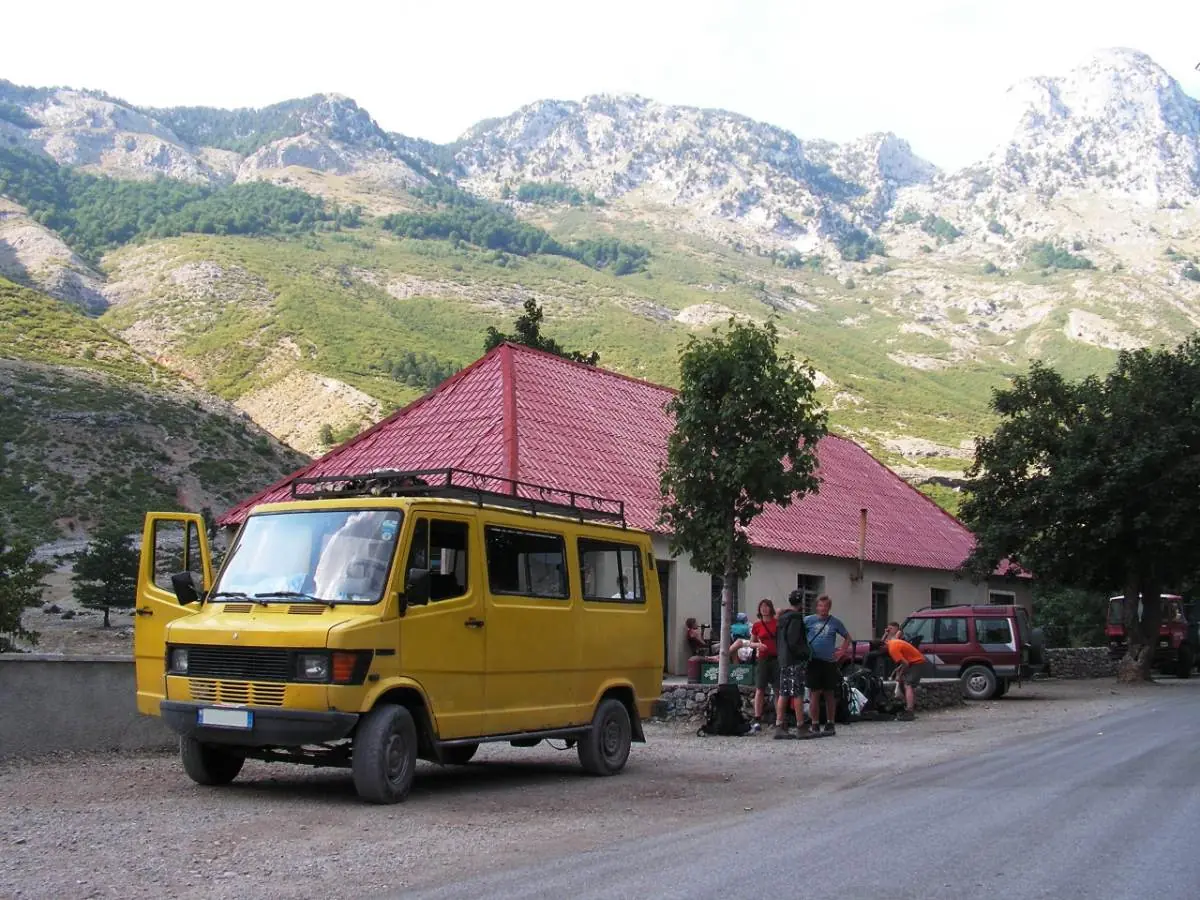
For a five-day trip, absolutely rent a car. The Albanian furgon system of privately owned minibuses runs on no fixed schedule whatsoever. Vans depart only when every seat is filled, they cannot be booked online, and they take cash only. That makes tight itineraries a serious gamble.
US drivers must legally carry an International Driving Permit (IDP) alongside their valid state license. Two organizations are authorized by the US State Department to issue one: AAA and the American Automobile Touring Alliance (AATA). The permit itself costs $20 at a AAA branch, where you can usually walk out with it the same day, or around $30 if you apply online with the digital photo fee, plus shipping. Mail applications need two-plus weeks of lead time. Albanian traffic police do ask for the IDP during routine stops, and driving without one carries a fine of roughly 10,000 lek.
Rental rates swing hard by season. Expect roughly $25 to $35 a day for a compact in spring and fall, and $45 to $60 a day in July and August, before fuel and insurance. Fuel is priced near Western European levels, so budget several times what you would pay at a US pump. Check the collision deductible and the deposit hold before you sign; local agencies often beat the international chains on both.
Albania’s roads demand a highly confident driver. Expect aggressive passing on blind curves, unmarked potholes, wandering livestock on mountain passes, and zero lighting after dark. Headlights stay on at all times, day and night, by law. Never drive mountain sections at night.
Google Maps frequently routes passenger cars down unpaved agricultural tracks to save a few minutes, so ignore those reroutes and stay on the numbered roads.
If you commit to public transit, understand what you are choosing. Tirana has no single central station. The Terminal for South and North Albania sits well outside the center near the Casa Italia complex, international coaches leave from the East Terminal at TEG, and there are no departure boards or ticket windows in the sense you are used to. You walk into the lot, name your destination, and someone waves you toward a van.
| Decision Vector | Rental Car | Furgon |
| Average cost | $25–$35/day shoulder season, $45–$60/day in peak summer, plus fuel and insurance | 300–2,000 lek ($4–$25) per journey, depending on distance |
| Schedule reliability | Total freedom | Poor — departs only when full, no advance booking |
| Stress level | High — mountain roads, erratic drivers | Medium — cramped, but you are a passenger |
| Hidden requirements | IDP from AAA or AATA legally required; card deposit held | Small-denomination lek cash only |
| Best suited for | 5-day tight itineraries | Flexible backpackers with 2+ weeks |
Why is cash so critical in the Albanian economy?
Card acceptance has improved sharply in Tirana and along the coast, and museums like Bunk’Art 2 now take plastic. Step inland, though, and the picture flips fast. Furgons, markets, small beach operators, family tavernas, and most guesthouses in Berat and Gjirokastër still want Albanian lek (ALL) in hand.
Withdraw from ATMs physically attached to a bank branch rather than standalone machines in tourist strips. Be aware that fee-free withdrawals no longer exist here. Albanian banks now charge a flat fee on foreign cards, typically 500 to 800 lek per transaction. Union Bank and ABI Bank sit at the cheap end, while BKT and Raiffeisen sit at the expensive end. Credins used to be free and is not anymore, so ignore older guides that still say otherwise.
Two habits save real money. First, always decline the machine’s offer to convert for you and choose to be charged in ALL, because accepting dynamic currency conversion can quietly absorb a big slice of the withdrawal. Second, take out larger amounts less often, since the fee is flat rather than a percentage.
The airport machines are the priciest in the country. Pull just enough for your bus or first taxi at TIA, then make the real withdrawal downtown. Licensed exchange offices in central Tirana often beat both the airport counter and the ATM rate if you carry dollars or euros.
Remember this non-negotiable quirk: the lek is effectively a closed currency. Almost no bank outside Albania will exchange it back to US dollars. Spend what you have before clearing airport security on departure day.
The perfect 5 days in Albania: mountains, UNESCO towns, and Riviera sunsets
This 5 days in Albania itinerary covers the ultimate Central and Southern loop. You travel from Tirana to Berat, down to Gjirokastër, across the Riviera, and back to Tirana.
Attempting to squeeze the Northern Alps such as Theth or Valbona into this same window is the single biggest planning mistake travelers make. It results in exhausting drives and no time to actually experience either region. Tirana International Airport is your practical gateway either way. A second international airport at Vlora has been built but has not yet opened for scheduled commercial service, so verify its status before you plan a flight around it.
Day 1: Arriving in Tirana and unlocking a communist past
Start at Skanderbeg Square, the geographic center of the capital. The Et’hem Bey Mosque and the brutalist Palace of Culture face each other across a wide pale stone plaza. Treat this vast space as your orientation, not your final destination.
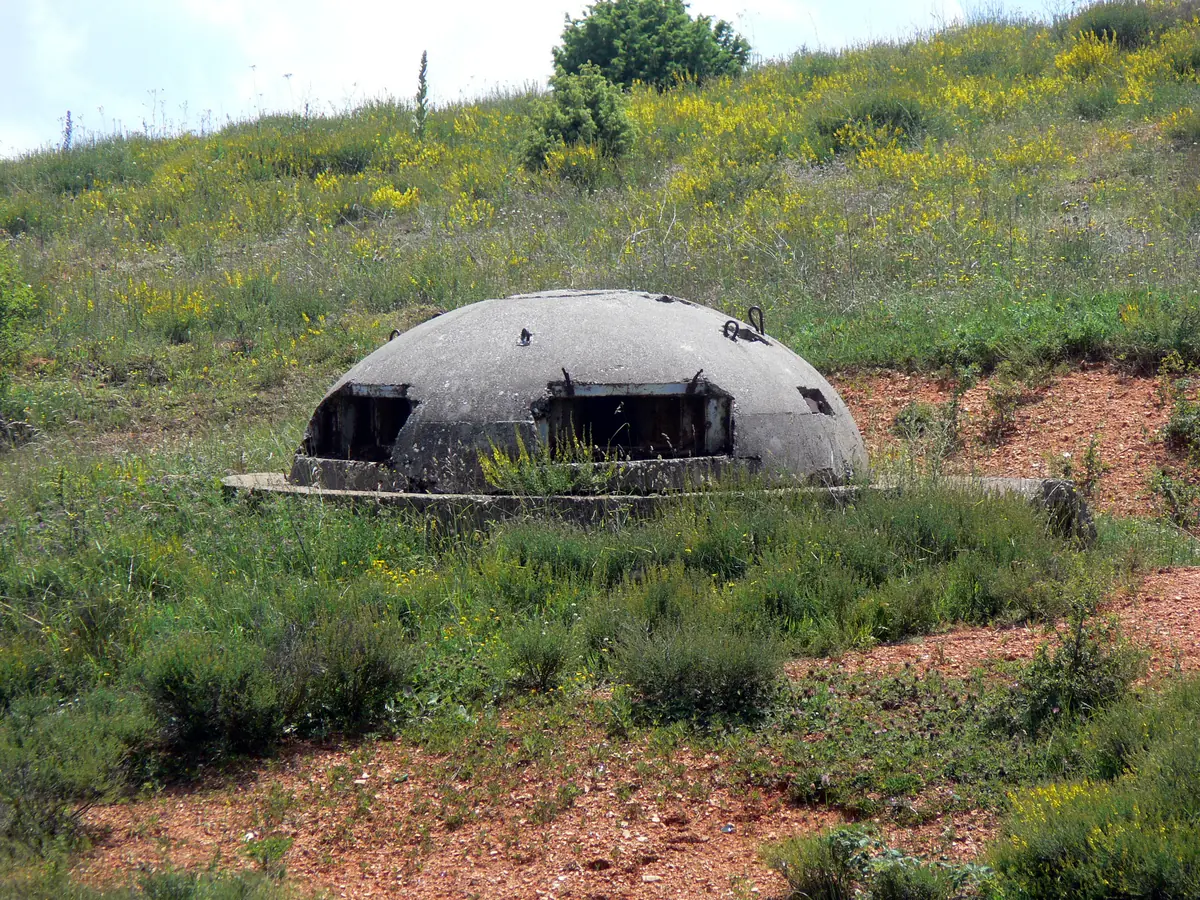
The real priority for day one is Bunk’Art. These are two subterranean anti-nuclear bunkers built under dictator Enver Hoxha, now converted into immersive history and contemporary art museums. Each costs around 900 lek, and a combined ticket runs about 1,300 lek and stays valid for 72 hours.
Bunk’Art 2 sits centrally, opens roughly 9:30 AM to 6:30 PM, and makes the logical choice on arrival day. Bunk’Art 1 is slightly outside the center but vastly larger, with 106 rooms across five underground levels, and it closes earlier in the winter half of the year. Either delivers an extraordinary window into five decades of brutal isolationism that shapes everything you will see on this trip. Bring a layer, because it is cold and damp down there even when the city is baking.
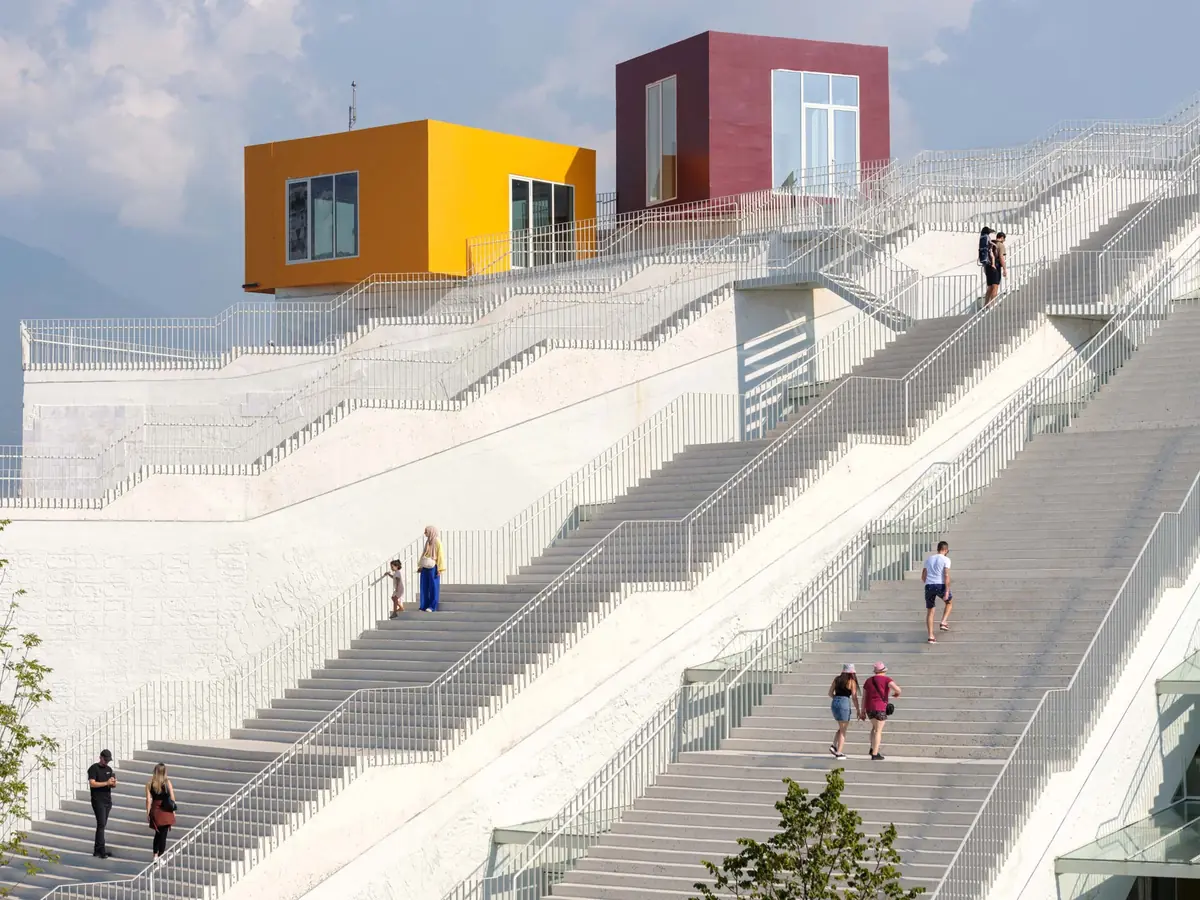
In the late afternoon, walk to the Pyramid of Tirana. Once a crumbling monument to the dictator, it is now a tech and cultural hub whose slanted concrete rooftops can be climbed free of charge, day or night, for city views. As the sun drops, move to Blloku.
For decades this district was a sealed compound reserved exclusively for the communist elite. Today it serves as the epicenter of Tirana’s cafe culture, boutiques, and heavy nightlife. End the evening at the Sky Tower’s rotating bar, which takes about an hour to complete a full turn over the capital basin.
Pro Tip: The Rinas Express shuttle runs between TIA and Skanderbeg Square around the clock, hourly on the hour, for 400 lek (about $5). Uber, Bolt, and Lyft do not operate anywhere in Albania, so download a local ride app such as Clust, Patoko, or Speed Taxi before you fly. An official airport taxi runs roughly 2,000 to 2,500 lek.
Day 2: The journey to Berat and the city of a thousand windows
Drive south to Berat, covering roughly 122 km (76 miles) in about two hours without stops. This UNESCO World Heritage Site is built on one of the most visually distinctive urban footprints in the Balkans.
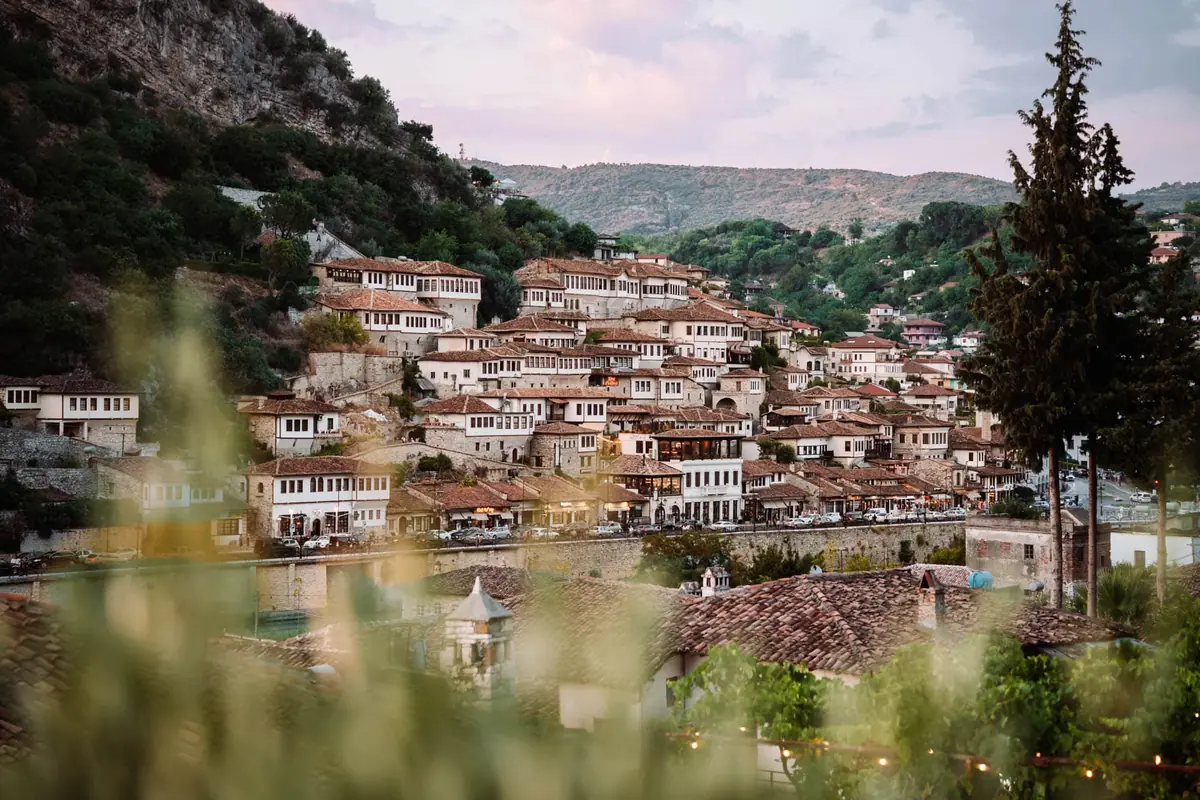
The Osum River splits the town into two historic neighborhoods. Mangalem sits on the western bank with its signature stacked white houses featuring row upon row of dark wooden windows. The quieter Gorica neighborhood waits on the eastern side.
Cross the stone arches of the Gorica Bridge and look back at Mangalem. This is the exact angle that earned Berat its famous reputation.
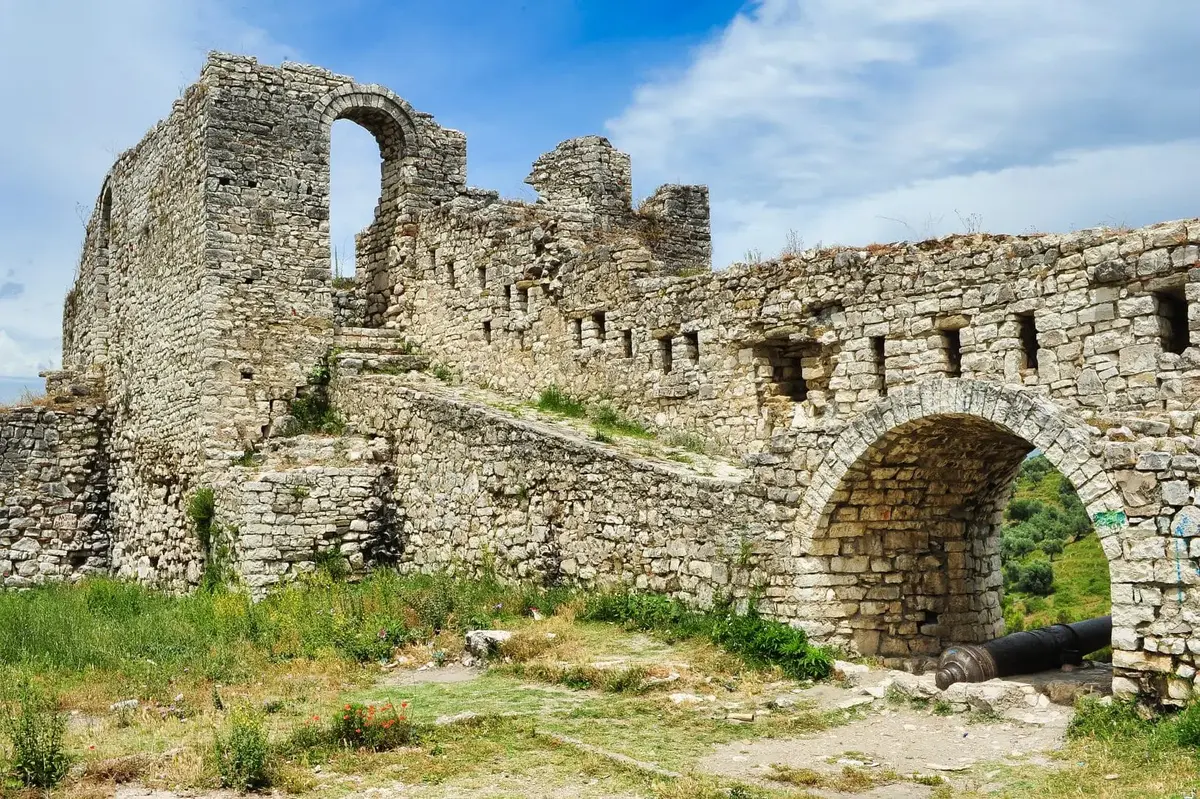
The afternoon belongs to Berat Castle, locally known as Kalaja. The cobblestone climb is steep, but the payoff is a genuinely unusual living neighborhood rather than a roped-off ruin. Families still reside inside the ancient walls while sheep graze among Ottoman-era remains.
Small guesthouses serve strong coffee in the deep courtyard shade. Inside the castle grounds, the Onufri Iconographic Museum sits in the Cathedral of the Dormition of St. Mary and displays 16th-century religious art in brilliant, preserved detail, including the vivid red pigment that carries the painter’s name. An audio guide costs a little extra and is worth it.
Stay the night in a stone-walled guesthouse in the castle district. The heavy day-trip buses depart by late afternoon, leaving the old town entirely yours.
Pro Tip: Wear shoes with a firm grip, because the cobblestones inside the castle are uneven and slick. This is especially true in shaded sections that rarely dry out fully.
- Location: Kalaja neighborhood, Berat.
- Cost: Castle entry around 300 lek; Onufri Museum around 400 lek, plus about 100 lek for the audio guide.
- Best for: History lovers, architecture photographers, and couples.
Day 3: The stone city of Gjirokastër and ancient bazaars
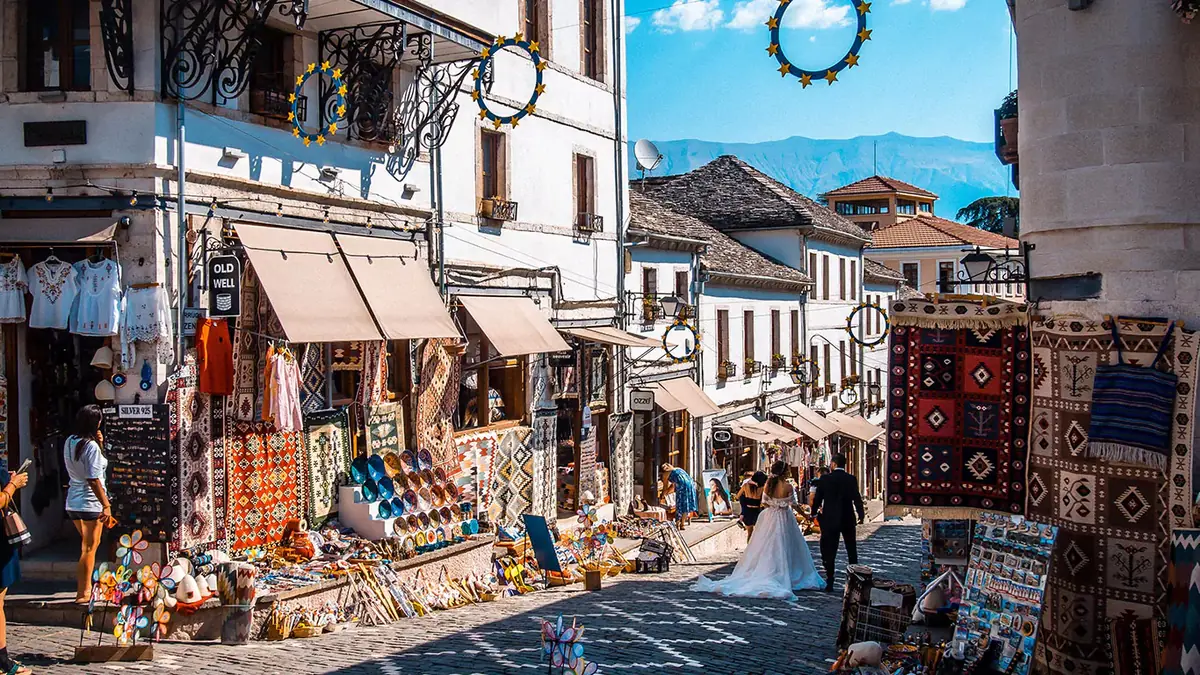
Continue south into the mountains to Gjirokastër, universally known as the Stone City. The drive covers about 150 km (95 miles) and takes close to three hours, longer if you hit roadworks on the Tepelenë stretch. Before you park, understand that the limestone cobblestones in the Old Town are exceptionally steep. They become treacherously slick even in perfectly dry weather.
Proper hiking shoes with real grip are absolutely not optional here. The stones are polished smooth by centuries of foot traffic. They will force you into slow, flat-footed steps to avoid going down hard.
The Gjirokastër Bazaar fills your morning with a network of steep, zig-zagging lanes. Stalls line the streets selling handmade rugs, lacework, and heavy woodcrafts. Above the bazaar, Gjirokastër Castle houses a stark military museum and one of the largest fortress complexes in the Balkans.
It features captured artillery and a downed US Air Force trainer jet whose arrival is still disputed, acting as a physical relic of Cold War paranoia. Nearby, the entrance beside the Town Hall leads down into the Cold War Tunnel, an 800-meter bunker of 59 rooms carved in secret in the early 1970s to shelter around 300 party officials. Visits are short guided walk-throughs of roughly 20 minutes, and the rooms sit largely as they were found, labels and all.
In the afternoon, explore the preserved Ottoman fortress-houses. The Skënduli House in the Palorto quarter is meticulously maintained, often shown by a family member, and offers a raw look at historic living.
Two house museums get confused constantly, so get this straight before you go. The Ethnographic Museum stands on the site of Enver Hoxha’s birth home and is furnished as a model 19th-century Gjirokastër household, with nothing inside relating to the dictator. The childhood home of the late Ismail Kadare, Albania’s most celebrated novelist and the first International Booker Prize winner, is a separate house museum a short walk away in the same neighborhood. Both are cheap and both are worth 30 minutes.
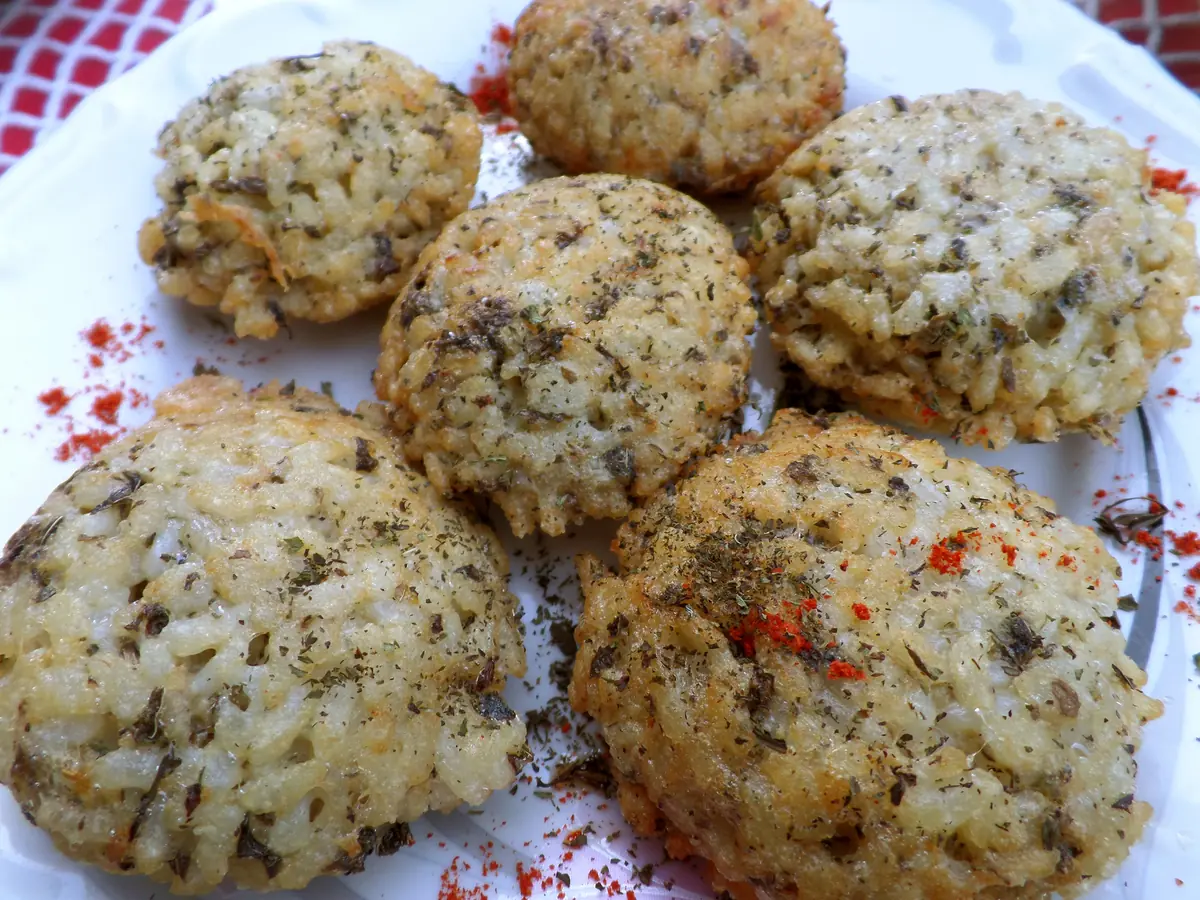
Pro Tip: In Gjirokastër, order qifqi, which are baked rice balls flavored with fresh mint and black pepper. This dish is a specialty unique to this specific town and genuinely difficult to find anywhere else in Albania.
- Location: Old Bazaar district, Gjirokastër.
- Cost: Castle entry around 400 lek; Cold War Tunnel 200 to 400 lek; Skënduli House around 300 lek; bazaar is free.
- Best for: History travelers, architecture enthusiasts, and solo explorers.
Day 4: Riviera dreaming from the Blue Eye to Ksamil
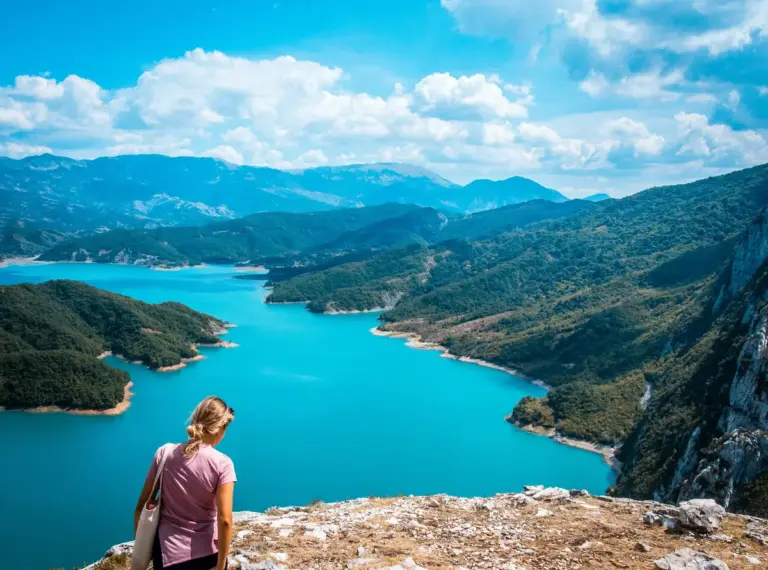
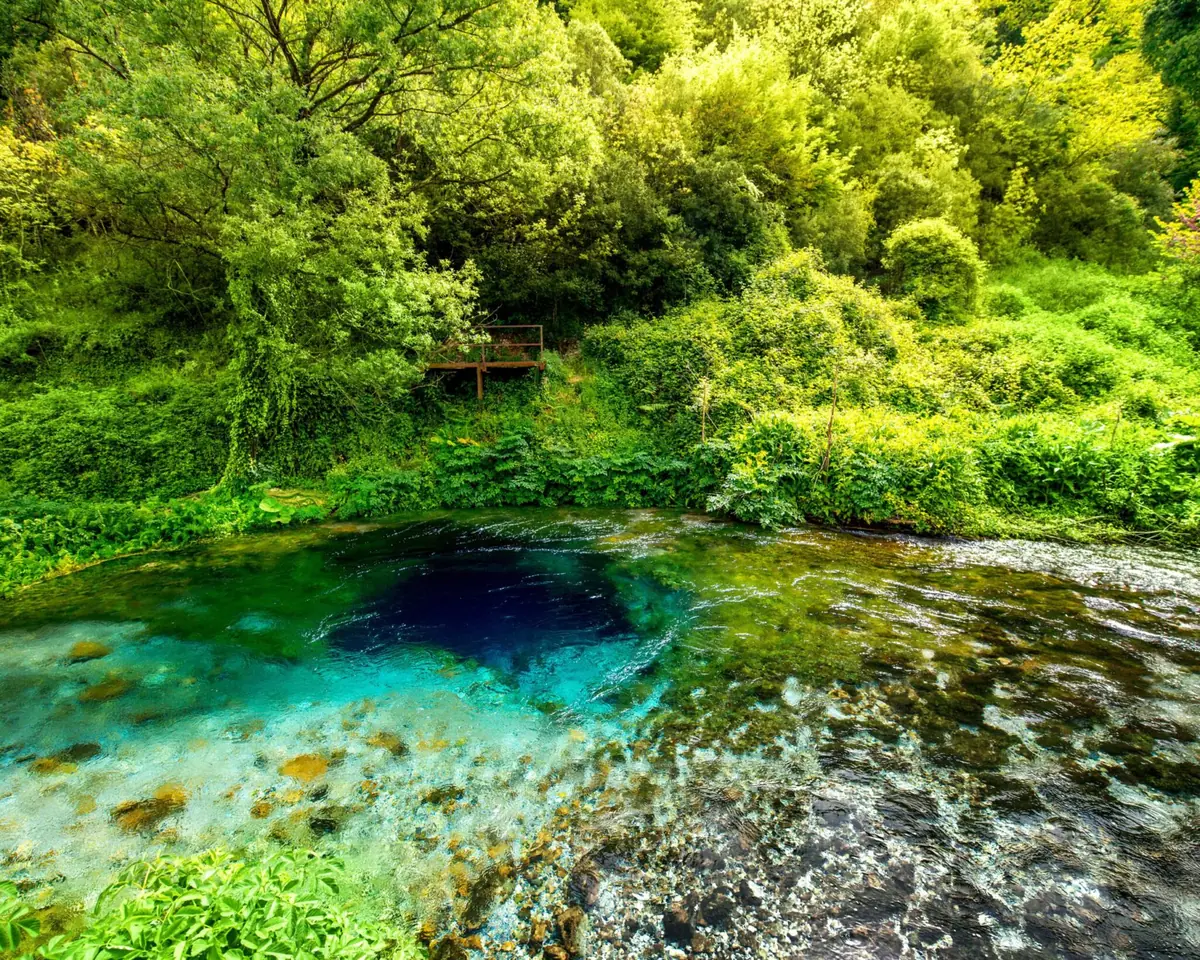
Leave Gjirokastër early for Syri i Kaltër, known as The Blue Eye, roughly 50 km (31 miles) southwest and about 45 minutes to an hour by car. This is a natural karst spring where impossibly turquoise water boils up from a depth no diver has ever fully mapped, pushing out something like 18,000 liters every second.
Entry is tiny, around 50 to 100 lek per person plus 100 to 200 lek for the car, cash only, and the site opens early and closes around sunset. Cars park roughly 2 km from the spring, so plan on a 20-minute walk in, a rented scooter, or the little tourist train. Swimming is now banned. The spring is a protected natural monument and a drinking-water source, rangers do enforce it, and the water sits near 10°C year-round anyway.
As you approach through the dense oak and sycamore forest, the almost deafening hum of cicadas fills the canopy. The noise cuts sharply the moment you reach the viewing platform. It is instantly replaced by the violent rush of icy water forcing its way up from the unseen depths below.
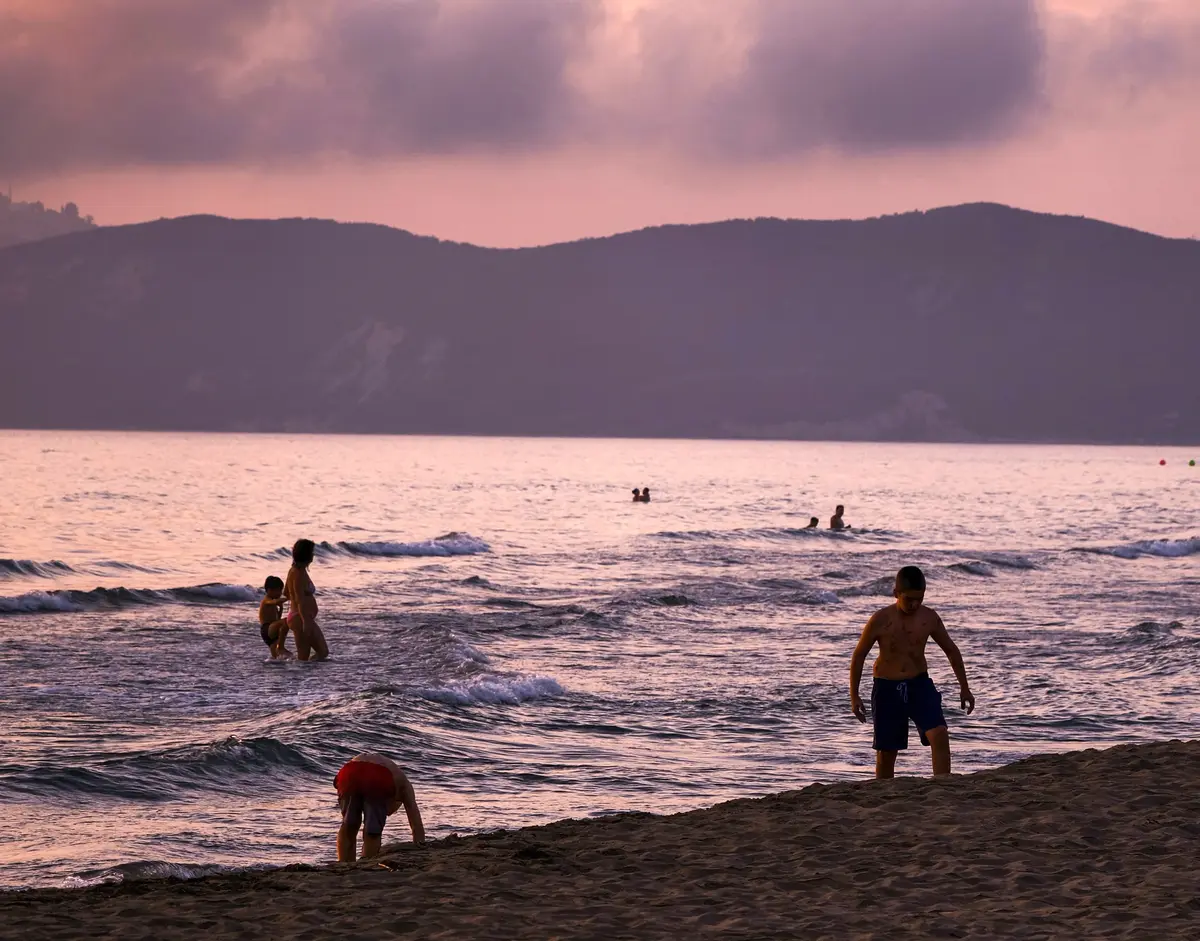
Continue south to Ksamil and the gorgeous Ionian coast. Here is the expectation reset you need: Ksamil is heavily commercialized in peak season, and the main strip is divided among dozens of sunbed operators. The good news is that the rules have tightened. Albanian law prohibits truly private beaches, the strip between the water and the first row of loungers must stay open, and Ksamil and Dhërmi have moved from private concessions to municipal management with designated free public zones.
Expect to pay roughly 1,000 to 3,000 lek for a set of two loungers and an umbrella, with premium clubs charging well above that. The catch is space and timing rather than the law. Central sunbeds sell out by mid-morning in July and August, and the free sections are the first to fill. Arrive before 9 AM or walk five minutes south of the main beaches, where prices drop sharply and the crowds thin.
For quiet and cultural contrast, drive a few minutes further south to Butrint National Park. This UNESCO World Heritage Site sits on a forested peninsula and layers Greek, Roman, Byzantine, and Venetian ruins across a single heavily shaded archaeological park. Standard entry runs 1,000 lek, tickets can be bought online in advance, and in the summer season the last entry is at 6 PM with the gates closing at 8 PM.
The combination of Ksamil’s coastline and Butrint’s layered history makes for the most balanced day of the trip.
Pro Tip: At Ksamil, the Guvat Bar overlooks the small offshore islands and serves fresh-caught local seafood perfectly timed against the Ionian sunset. Book a table ahead in peak season to secure a spot.
- Location: Ksamil, about 17 km (11 miles) south of Saranda.
- Cost: Butrint entry 1,000 lek; Blue Eye 50–100 lek per person plus car fee; Ksamil sunbed sets 1,000–3,000 lek for two loungers and an umbrella.
- Best for: Couples, history travelers, and anyone who wants both coastline and culture in one day.
Day 5: Seaside farewells and the Llogara Pass
Today is a driving day, but you must take the scenic road. Skip the faster inland highway back to Tirana entirely. Head north on the SH8 coastal road instead.
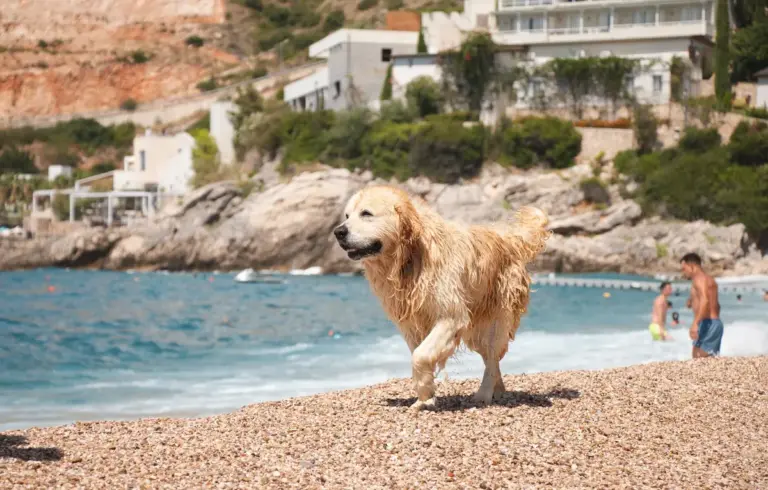
It winds through the Riviera villages of Himarë and Dhërmi, both far less crowded than Ksamil, with sunbed sets often half the Ksamil price. These villages are well worth a final swim stop or a slow coffee by the water.
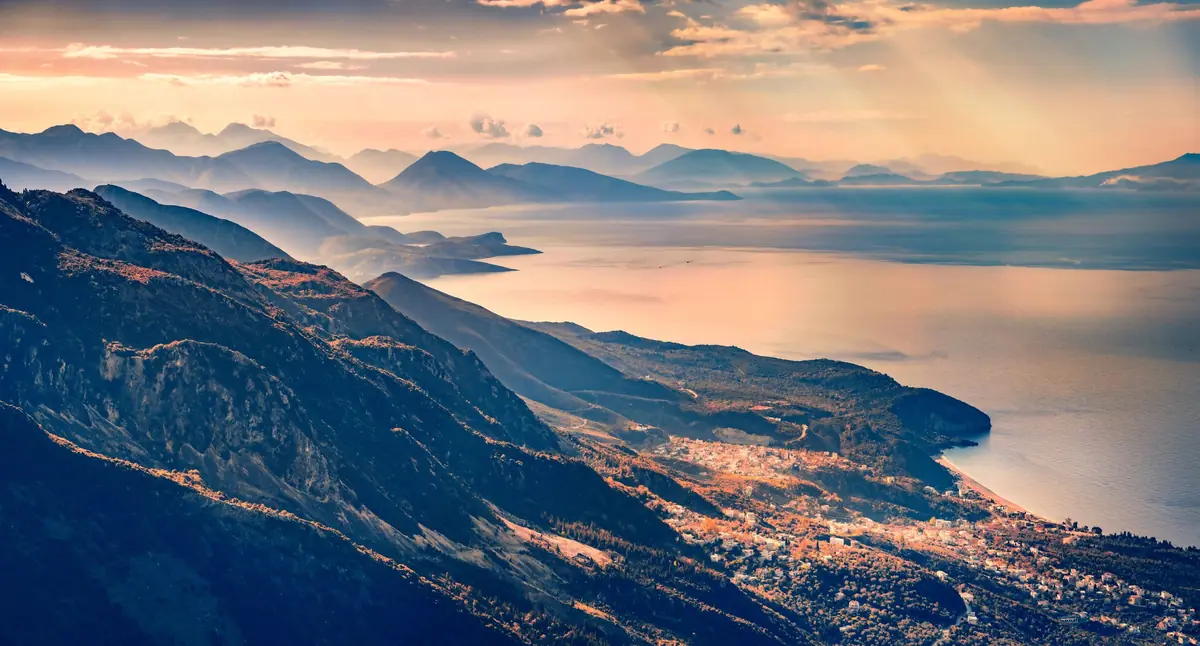
The route climaxes at the Llogara Pass, a narrow ribbon of asphalt carved through the Ceraunian Mountains that tops out above 1,000 meters. It rises sharply from sea level until the Ionian disappears completely behind the treeline.
The water then reappears thousands of feet below as an unbroken sheet of deep blue at the summit overlook. Roll your windows down on the ascent. The warm, salt-heavy humidity of the coast gives way to cool mountain air carrying the sharp scent of pine and woodsmoke from the roadside grills roasting whole lamb at the top.
One change matters here. A 5.9 km tunnel now runs underneath the pass, cutting the climb entirely for a small toll of around 250 lek for a passenger car. It is the sensible choice in fog, in winter when snow can close the summit, or if you are running late for a flight. It is the wrong choice on a clear day, because the pass is the single best stretch of road in the country and it costs nothing. The tunnel has also seen closures for works, so have both options in mind.
Have lunch at one of the alpine restaurants at the Llogara Pass summit. Afterward, drop into the inland plains for the easy final stretch back to Tirana International Airport.
Pro Tip: The Llogara Pass road demands intensely focused driving due to tight switchbacks, occasional stretches without guardrails, and wide buses navigating narrow turns. Morning fog is common and usually burns off by late morning. Give yourself full daylight and absolutely do not rush this section.
Albanian food beyond byrek: what and where to eat
Must-try traditional dishes from tavë kosi to qifqi
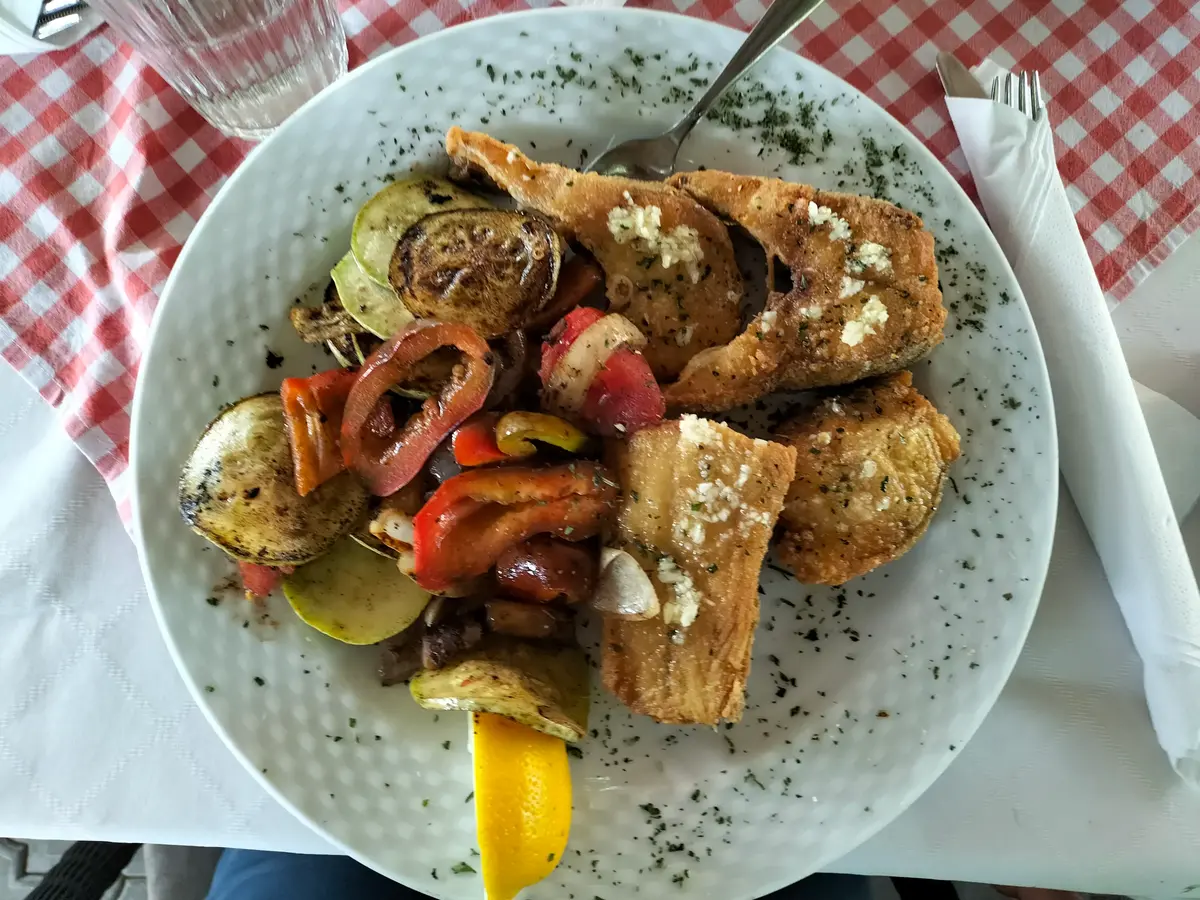
Albanian cuisine is built on high-quality olive oil, fresh vegetables, heavily grilled meats, and rich dairy. Expect plenty of sheep’s yogurt and feta-style cheeses shaped by centuries of Ottoman and Mediterranean influence.
Tavë kosi is the undeniable national dish. It features tender lamb baked in a tart, creamy yogurt and egg mixture that is rich and earthy. You will find it on virtually every traditional menu in the country.
Byrek dominates the breakfast and street food culture as a flaky phyllo pastry stuffed with spinach, cheese, leeks, or meat. For something lighter, try petulla. These are fried dough balls served sweet with local mountain honey or savory with crumbled feta.
In Gjirokastër, order qifqi specifically. These baked rice balls flavored with fresh mint and black pepper are a town-specific dish rarely found anywhere else. Leave without trying them and you have missed something genuinely irreplaceable.
High-altitude dining and sunset views worth booking in advance
In Berat, go straight to Antigoni and ask specifically for a table on the outdoor terrace. At night, the view looks directly across the Osum River at the illuminated Mangalem quarter. Those thousand windows glowing against the stone hillside make for one of the best dinner settings in the country.
In Gjirokastër, Te Kalaja sits just beneath the castle walls with sweeping views across the Drino Valley. The food is hearty, traditional, and family-run, and the high-altitude location does the rest of the atmospheric lifting.
On the Riviera, Guvat Bar in Ksamil faces the offshore islands at sunset and serves exceptional fresh-caught seafood right by the water. Book ahead, because it fills up early in the peak summer season.
Embracing the culture: safety, etiquette, and the evening stroll
What is the daily Albanian xhiro ritual?
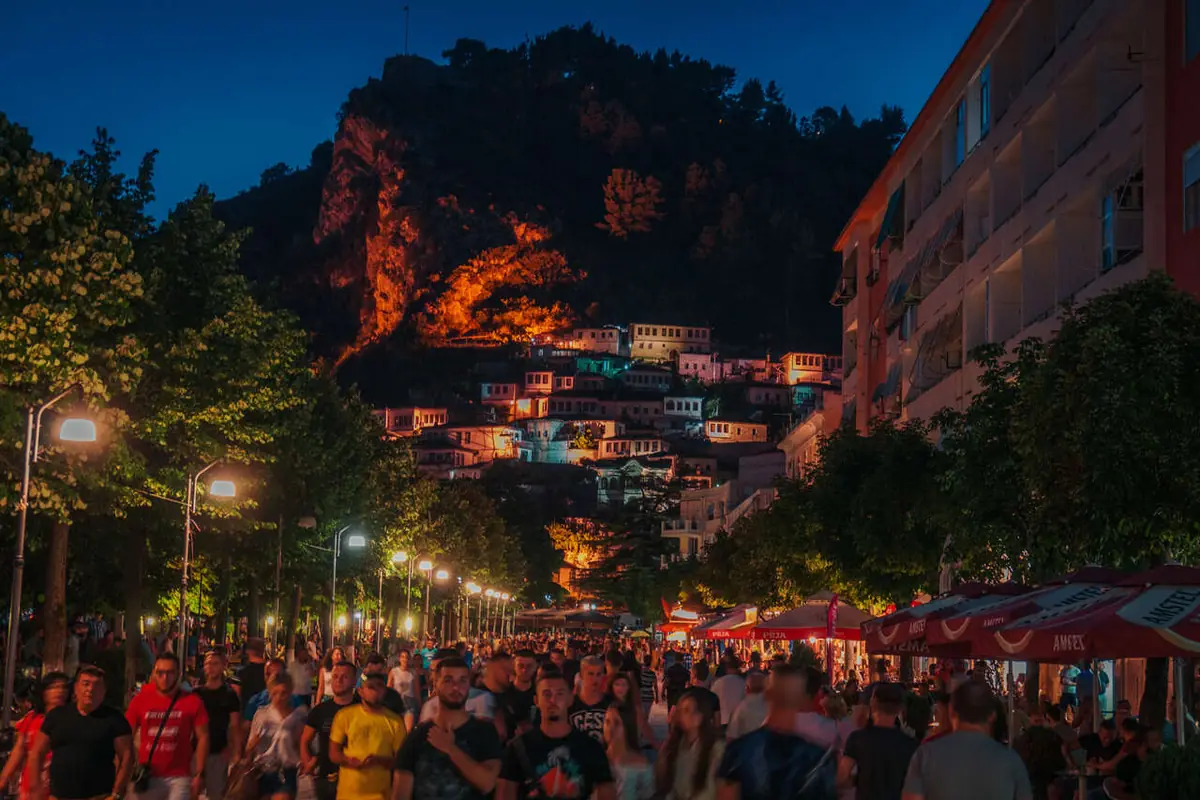
The xhiro, pronounced djee-ro, is a massive daily collective ritual. As the heat of the day breaks at sunset, entire Albanian towns effectively stop what they are doing. Locals take to the main pedestrian boulevards for an unhurried evening stroll.
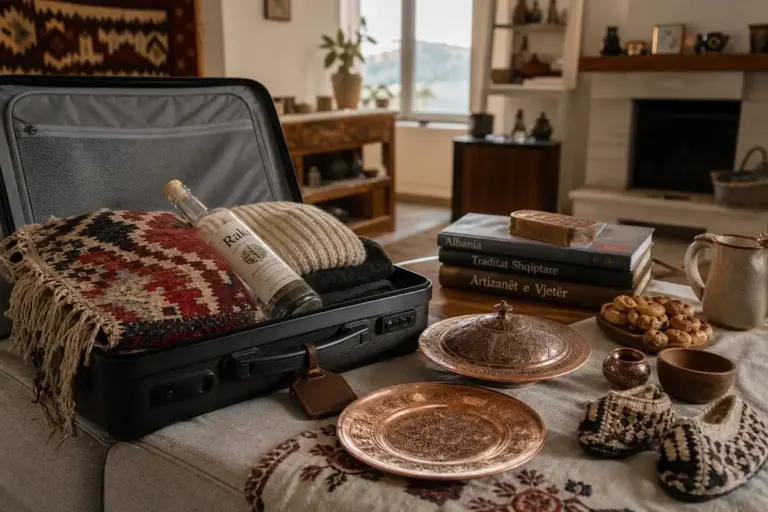
This is absolutely not a walk for physical fitness. It is a centuries-old social institution involving an hour or two of gossip, local politics, and strong espresso. You will see home-distilled fruit raki shared between neighbors, strangers, and three generations of the same family.
In Berat, Bulevardi Republika closes entirely to vehicle traffic during the xhiro. This accommodates the slow-moving influx of families, teenagers, and street popcorn vendors. Put the itinerary away at this hour.
Buy a gelato, sit at a street cafe, and let the crowd carry you.
Safety realities for solo and female travelers
Albania is significantly safer than its exaggerated Western media reputation suggests. That reputation was built largely by fictional films and by memories of the 1997 unrest, neither of which has any relationship to the country’s current ground reality.
Albania is exceptionally welcoming to outsiders, guided in large part by besa. This is an ancient code of honor rooted in the Kanun that demands guests be protected, honored, and treated with heavy respect.
Violent crime targeting tourists is rare, and Albania is consistently regarded as one of the safer countries in the Balkans for solo female travelers, with lower reported street harassment than several other parts of Southern Europe. Occasional catcalling still happens in Tirana nightlife districts. Check the current US State Department advisory before you fly and enroll in the STEP program so the embassy can reach you with local alerts.
Stay alert in crowded transit hubs and markets for petty theft. Since Uber and Bolt do not operate here, use a local ride app or make sure a street taxi’s meter is running before you get in, and agree the fare in advance on longer intercity hops.
The realistic danger in Albania is the wild roads, not the local people. Aggressive passing, unmarked potholes, and unlit mountain sections disrupt more trips than any criminal activity. Drive carefully and carry your IDP at all times.
Never tackle mountain passes after dark during your 5 days in Albania.
Spending 5 days in Albania is a tight window, but the Central and Southern loop delivers immense value. You get more variety per mile than almost any comparable route in Europe. Expect to see raw Ottoman hill towns, a nuclear-age history museum built underground, and a natural spring with no known bottom.
The trip finishes on an Ionian coastline that fully earns its reputation. Get your IDP from AAA or AATA before you fly, and withdraw lek from a bank ATM on arrival while declining the machine’s currency conversion.
Take the SH8 coastal road home so the Llogara Pass can make the drive back to the airport feel like the absolute highlight of the trip.
Which part of this route are you most drawn to? Would you like me to map out specific driving distances between the stone cities of Berat and Gjirokastër for your itinerary?